❚ YES IT’S 30 YEARS SINCE Spandau Ballet scored their only No 1 chart hit single with True, coinciding with their epic “Spandau Over Britain Tour”. By May 3, True the album reached No 1, while the single remained at No 1 as well. The band’s official website is celebrating with a month of recollections from 1983 and asking UK fans to offer their own memories. Naturally Shapersofthe80s was there on the waterfront and has a few inside stories of its own.
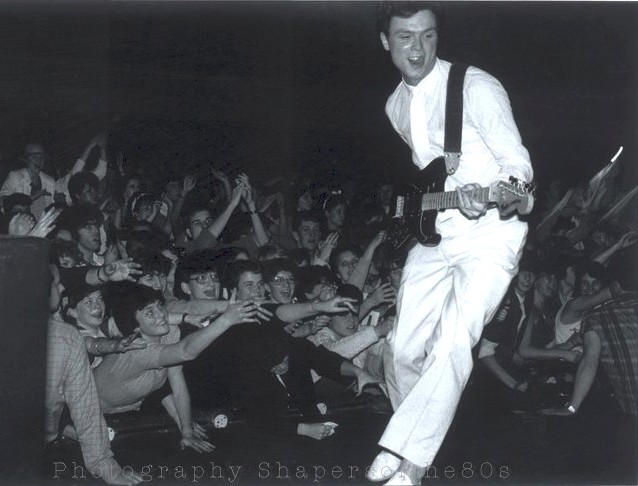
The month-long tour ended in triumph at London’s Royal Festival Hall 30 years ago today, on Friday April 29, because True hit the top spot in the UK singles chart and the night before Spandau topped the bill on Top of the Pops – only two weeks after its release. After the London gig there followed a right old knees-up for friends and family aboard a Thames riverboat. As it cast off Shapersofthe80s was onboard and snapped a True romance as Steve “Spiny” Norman took to the dance floor with bass-player Martin Kemp, while Steve’s mum Sheila tried to muscle in. Here are our snaps, never seen before.
CLICK ANY PIC TO LAUNCH CAROUSEL:
Aboard Spandau’s True riverboat: Steve Norman and Martin Kemp take to the dancefloor, while Sheila Norman asks to join in
Steve and Martin are in heaven… See anybody else you know? Of course: future Spandau biographer Paul Simper in dog-tooth suit from Robot with added Wham!
Steve’s mum Sheila joins the chorus line, and backing singer Sam Brown joins Martin
At last, mother and son get to boogey together
The band’s third album True, produced by Tony Swain and Steve Jolley, had preceded the tour and was to yield several chart hits across the world, Gold among them. The tour moved on to Europe in the summer and to North America in the autumn, when Shapersofthe80s will have some wild eye-witness scenes to report – laters…
➢ Photographer Neil Matthews, another friend of Spandau from their earliest days, has been celebrating with an exhibition of his popstar photos titled My 80s Through the Lens, at The Great British Restaurant, 14 North Audley Street, London W1K 6WE. All images can be viewed online and are for sale in limited editions printed on smart archival paper. As well as Spandau, his subjects include Bananarama, Blue Rondo, Bauhaus, Haysi Fantayzee, Malcolm McLaren, The Jam, Nick Heyward, Bow Wow Wow and more.
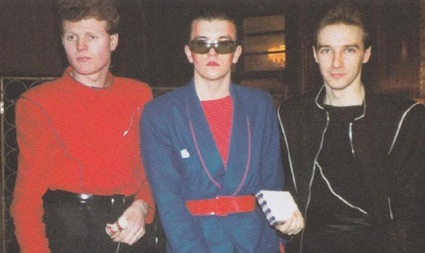
❚ THE STUDIO BAND VISAGE were central to defining the electropop sounds of 1980 thanks to the musical nous of Midge Ure, who had bought his first synthesiser in 1978 because he felt synths “embodied a kind of nostalgia for the future”. He’d been faffing around with Glen Matlock, Steve New and drummer Rusty Egan in the 60s-flavoured one-hit power pop group Rich Kids, and sensed an appetite in the zeitgeist for a more soulful version of Kraftwerk plus a return to melody. Intent on making vibrant dance music for the “visa age”, Ure dreamed up the name Visage, complete with simplified face as its logo, for an new experimental band. Initially Ure rehearsed updating In The Year 2525, using up some spare Rich Kids time booked in an EMI studio. There he played around on synth and drum machine, then asked Egan to take over the drums.
They co-opted Rusty’s flamboyant Welsh pal Steve Strange as face-painted frontman to give visual expression to a range of what were being called “moderne” fashions. Dressing up in the face of a grinding economic recession was the destiny that Bowie’s children were to fulfil. Visage’s songs captured the sidelong humour and knowing irony that came to characterise the 80s, while their explosive backbeats, electronic fills and synth riffs changed the vocabulary of British chart pop. This TV generation dreamed in both sound and vision.
Supercool in ’78: Egan, Strange and Ure establish Visage
What Strange lacked in vocal proficiency he made up for in promotional value, since he soon became a walking advertisement for the cooler-than-cool clothes shop PX in Covent Garden where he was an assistant. Run by Stephane Raynor and Helen Robinson, they more than any other designers in 1980 set the template for New Romantics fashion, favouring oversized chemises, medieval doublets, breeches and frilly lace. The shop’s followers were soon dubbed posers, and the Pose Age was born. Disposable identities, portable events, looks not uniforms – for his disciples, Bowie’s imperatives became the norm.
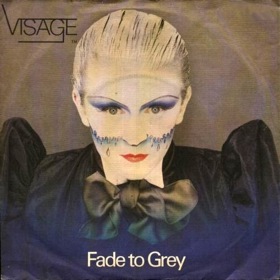
As a studio project the original Visage lineup never played live, and was probably a case of too many cooks. In 1979 it took in four more musicians (Billy Currie, John McGeoch, Dave Formula, Barry Adamson), all of whom had loyalties to existing bands, while the creative drive came from Ure and Currie. Even so, Currie was persuading the restless Ure to help resurrect the synth band Ultravox following John Foxx’s departure. By 1982, when Ure quit Visage in favour of Ultravox, Visage had enjoyed four top-20 singles hits in the UK, two top-twenty albums with Visage and The Anvil, and a smattering of international hits with Fade to Grey.
As we now know, Ure went on to mastermind the Band Aid fundraising hit single in 1984, then the worldwide Live Aid charity concert with Bob Geldof, and duly earned himself an OBE.
In 1984 a Visage lineup comprising Strange and Egan along with newer members Andy Barnett, Steve and Gary Barnacle put out a so-so third album, but when it flopped they soon called it a day. The truth was that Visage failed to invest single-mindedly in themselves as a musical enterprise: their progress simmered rather than blazed as individuals pursued their own favoured goals. Occasional tracks sizzled on the dancefloor – In the Year 2525, Fade to Grey, Mind of a Toy, Night Train – but the band lacked unity and commitment.
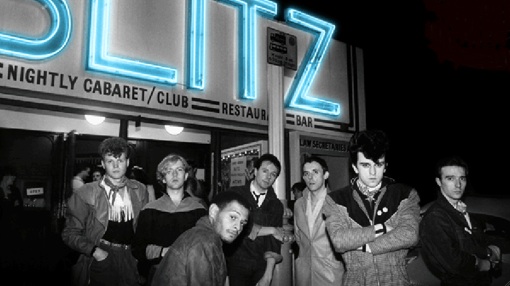
❚ NOBODY CAN DENY STRANGE’S FIZZ and chutzpah which in 1979 coralled a disparate group of post-punk no-wavers and outcast fashionistas when he co-hosted the agenda-setting Neon Night at the Blitz Club in Covent Garden. It lit up London in an explosion of inventive fashion, gender-bending and ridiculous hair. As the club’s stand-out stars suddenly became media celebrities, these exponents of modern dance and stance began forcing the pace of change across the creative industries. Rusty Egan proved to be a mould-breaking deejay who often added his own Syndrum accompaniment at the turntable, and his live mixing did much to change the sound of clubland music. During the early 80s the pair went on to reshape London nightlife at two notable venues, Club for Heroes in Baker Street and the Camden Palace. At the end of the decade, dance music as we knew it was swept aside by the craze for E’s and rave. Egan then set out to make a fine reputation deejaying on London’s boutique nightclub circuit, while Strange can claim a ghosted autobiography as full of fantasy and foggy memories as you’d expect from an arch-poser who’d been out on the town every night for 20 years.
Roll forward to 2010. John Pitcher, who fronts a music services provider called MRC, established a Blitz Club record label and an associated website, and Strange and Egan launched it in January 2011 by throwing a Return to the Blitz party at the site of the former club. The event raised a few media ripples but little groundswell and only three remixes have been released in as many years. With 80s band revivals making waves all around them, that old Blitz magic had lost its charm. Egan said this week: “Pitcher registered everything for us, so he owns everything, including the website and the Visage brand.” Growing personal differences hindered collaboration between the three. These worsened last year when Egan made allegations that Strange had squandered a substantial sum of accrued Visage royalties paid via Strange and that he failed to share them among the original band lineup. This week Egan said: “Try telling John McGeoch’s daughter her dad’s [share] was spent by Strange.”
When Strange proposed reviving the band name of Visage after almost 30 years, neither Ure nor Egan could see the point and they disputed Strange’s right to do so. Ure told an American newspaper in January: “Visage was always something Rusty Egan and I created and controlled. The idea of doing a Visage 2 was never appealing to me so I wasn’t interested. I walked away from Visage when it got ridiculous and supremely hedonistic and I will probably leave it that way.” In response to Strange’s claim on German TV last November that Ure was collaborating on a new album together, Ure tweeted: “He is deluded if he thinks that. He knows that isn’t happening.”
Rusty Egan remains aggrieved that Strange has not resolved recent differences. He is angry that Strange should make any claim to creative input into Visage’s lyrics and music, and maintained this week: “Strange had nothing to do with the music in The Blitz or Visage.” In January Egan said: “There has never been a Visage album without me. It’s my group and Strange is a singer. He is not Visage.”
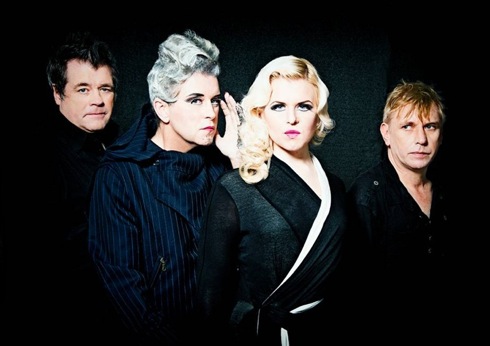
Yet for all this, and Strange’s sad personal saga of ill-health, the vocalist has doggedly set about persuading a new circle of supporters to bring Visage back to life. In the face of widespread disbelief – the garrulous Strange’s little weakness, after all, has always been for exaggeration and melodrama – last year he announced a new “Visage” lineup, with a gorgeous singer called Lauren Duvall, plus Steve Barnacle (fretless bass) and Robin Simon (guitar). Keyboardist Mick MacNeil, from Simple Minds, was enlisted to contribute on a range of vintage analogue synthesisers which include an early Moog Source.
At last, what is being called a fourth “Visage” album titled Hearts and Knives is due to be released on May 27.
“It has been 29 years since the last Visage album and during that period it often seems like we have all lived through several lifetimes,” says Strange. Indeed, “bruised and wounded” declare the rueful lyrics of Shameless Fashion, the new group’s first single, available this week. It isn’t clear whether this refers to the very many contributors we see jostling for credits on the new “Visage” packaging. The Visage 2013 camp is probably keeping fingers crossed.
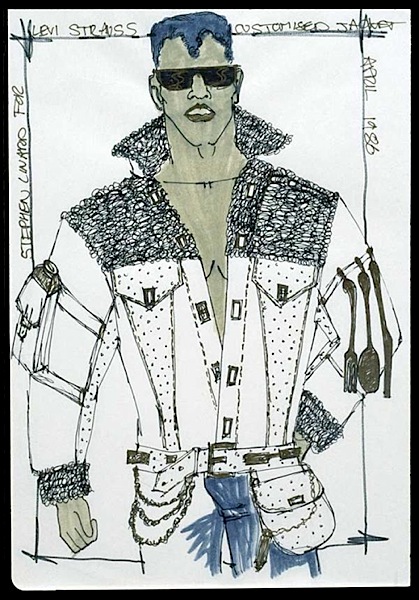
“ The Blitz designer collection of Levis denim jackets celebrates some of the most talented and creative designers working out of London in 1986 and it has been 27 years since London’s V&A museum last displayed them. These unique jackets were commissioned by the 80s style magazine Blitz in 1986 and customised by a host of top designers, including John Galliano, Vivienne Westwood, Bernstock Speirs and Paul Smith. In quirky twists on the classic Levis denim number, the 21 jackets, of which the V&A owns nine, push the boundaries of the term ‘customisation’. Onetime Blitz Kid Stephen Linard experimented by attaching a leather backpack and cutlery to his…
Seven of the nine jackets in the V&A’s collection will be on display in the summer exhibition Club to Catwalk, London Fashion in the 1980s (opening July 10), in addition to a loan of Zandra Rhodes’s jacket, which has been recently reunited with the group, and a Stephen Jones hat that was customised as part of the same project. The jackets will be displayed alongside many of their original sketches and a video wall which will show footage of the 1986 fashion gala… ” / Continued online
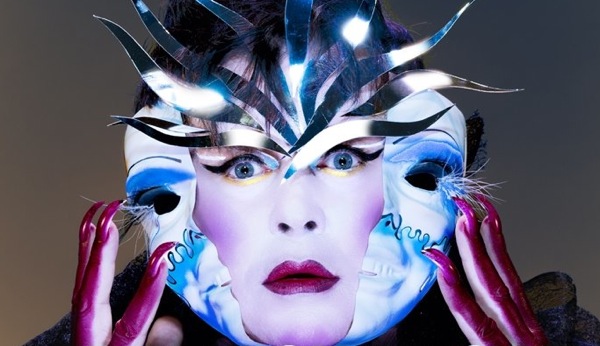
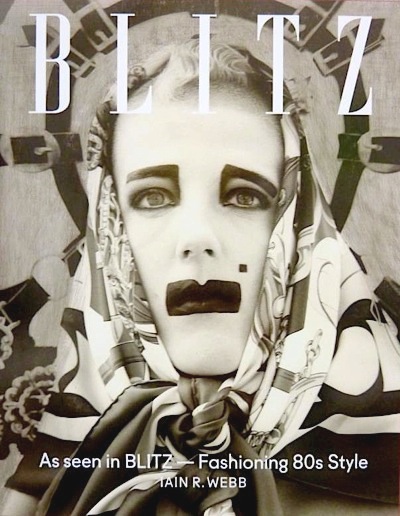
80s club host Scarlett Cannon wears Hermes on the cover of Iain R Webb’s new book: “One of the things I love most about this photograph is that David just drew around Scarlett and darkened the background with a pencil to make her stand out more.” (Photograph by David Hiscock. Make-up, William Faulkner)
❚ FINALLY A BOOK ABOUT THE 80s without George O’Dowd’s face on the cover! Here comes the other version of the Swinging London of 30 years ago, created by the fashionistas, rather than the music entrepreneurs, and the face of Cha-Cha club host Scarlett on the cover defines another version of events exactly. It comes just in time to chime with the V&A’s second landmark exhibition this year. From July 10, following the Bowie extravaganza, comes Club to Catwalk: London Fashion in the 1980s, which includes a display of denim jackets commissioned in 1986 by Blitz magazine from key London-based designers. Who better to sort the Who’s from the Who Nots than one of the seminal clubland Blitz Kids, Iain R Webb.
During those fertile years in the re-energising of the capital’s youth culture through nightlife, when he shared a flat with fellow St Martin’s design students Fiona Dealey and Stephen Jones, Webb says his peers were “cultured clubbers – our aim was to push the parameters and explore the ideals of glamour, imagery, sexuality and taste. We were determined to challenge the status quo and maybe even change the world, even if ‘just for one day’.”
Webb: from Blitz Club to The Times
Having studied fashion at St Martin’s, Webb says he “fell into writing” and went on to become fashion editor of Blitz magazine, the Evening Standard, Harpers & Queen, The Times and Elle.
This week his new book, As Seen In Blitz: Fashioning 80s Style, went off to the printers, to be published in April by ACC (272 pages, £27.30 pre-order price). With previously-unseen archive content and much oral history from key designers, it chronicles the fashion pages Webb created for Blitz magazine 1982–87, after the New Romantics fad had died the death. Webb’s subversive images gave free rein to the imagination and involved a global cast of designers including Comme Des Garcons, Jasper Conran, John Galliano, Jean Paul Gaultier, Katharine Hamnett, Hermes, Pam Hogg, Marc Jacobs.
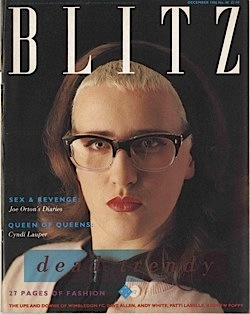
Blitz December 1986: Dead Trendy fashion special. Martine Houghton photographed by Gill Campbell. Make-up, Gregory Davis. Hair, Rick Haylor
Webb says: “The book has over 100 contributors – designers and photographers from the Bodymappers to Nick Knight, and loads of models, make-up and hair peoploids in between.”
At its launch in 1980, Blitz magazine posed little threat to the fondly remembered Face magazine, which majored on music and style. Blitz wandered a disparate social world of its own well to the west of the Soho trendsetters – but eventually, under the influence of Webb, photographer Knight and other cool arbiters of taste, it gradually clicked into the Swinging London groove that saw the UK capital become a crucial stopover for the world’s media and buyers during the biannual round of international fashion shows.
Webb himself went on to win the Fashion Journalist of The Year Award in 1995 and 1996. Today he consults for the Fashion Museum in Bath and is a visiting professor at Central Saint Martins, LCF and the RCA.
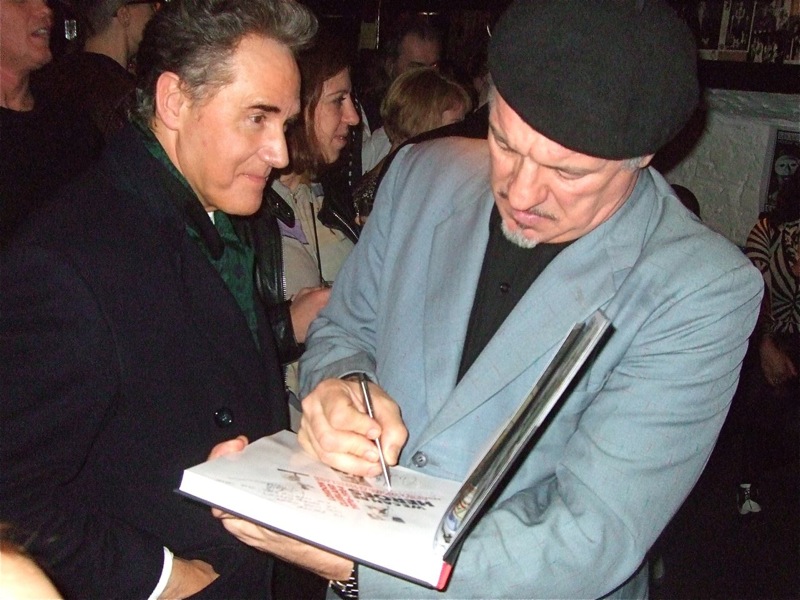
Cultural observer Peter York: eager for the Sullivan autograph on the new edition
❚ THE 80s BLITZ KIDS turned out in force last night. As Kitten Kouturist Franceska Luther King remarks today: “an elegant crowd, older, but still the same spirit.” Those clubbing compulsives who defined the sounds and styles of Soho 30 years ago, swarmed into the tiny steaming Artex-lined cellars of the St Moritz restaurant, the fit all the tighter thanks to a fair few middle-aged paunches. For three months in 1980 this was the site of their milestone one-nighter which signalled the first faction to break away from the futurists at Steve Strange and Rusty Egan’s pioneering electro-diskow, The Blitz. In host Chris Sullivan’s words, this was “the more alert end of the Blitz crowd” – in other words, the hardcore fashionistas.
Initially St Moritz’s music evoked interwar Berlin cabaret but the effect of Charles Fox, the theatrical costumiers, staging its closing-down sale in Covent Garden injected a huge Hollywood movie wardrobe. Sullivan notes: “You could be a gangster, a geisha, or Geronimo.” The New Romantics had been born – just like that!
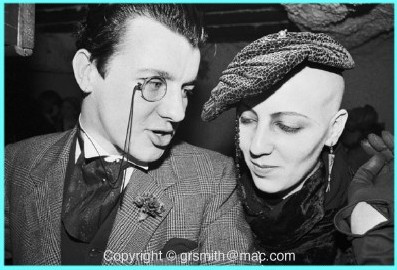
“No single shop sale ever had such an influence on street fashion before or since,” Sullivan writes in the fabulous photo-book, We Can Be Heroes. This ribald account of the dawn of UK clubbing in the 80s, led by the eye-popping photographs of Graham Smith, was the reason for last night’s beano. Soul-music diehards Smith and Sullivan graduated from The Blitz to become two of the St Moritz deejays (along with Robert Elms and Steve Mahoney) and half a lifetime on they were hosting yet another launch party. The book’s revised and amended second edition of 2,500 copies is released this week through regular retail outlets. Copies of last year’s limited edition are still available from the fund-it-yourself publisher Unbound.
St Moritz 1980: Chris Sullivan and Michele Clapton – from Smith’s book We Can Be Heroes
Back in the day, the St Moritz posse distinguished themselves from The Blitz by playing retro lounge-lizard tunes from Lotte Lenya or Nat King Cole. In today’s arts pages of The Times Sullivan recaps how, in their efforts to avoid the present, he and his cohort helped create the future: “We decided to oppose Blitz futurism and turn the clock back with music from Marlene Dietrich, Monroe, Sinatra and soundtracks from A Clockwork Orange, Last Tango in Paris and Cabaret. It was an alarming success.”
Fashions in music moved apace. Within a year successive London club-nights at Hell, Le Kilt and Le Beat Route were stirring into the club mix not only familiar 70s soul but the edgy new urban sounds of North America.
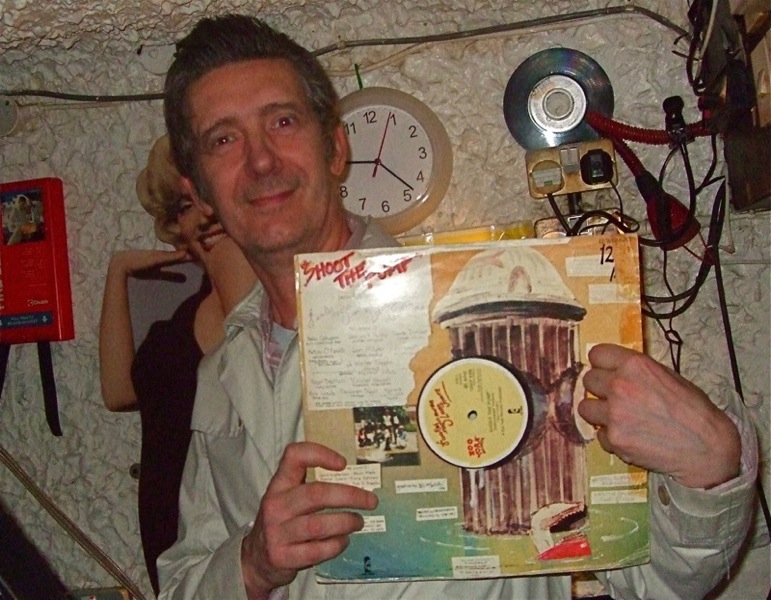
Choosing the soundtrack last night at St Moritz were the were the astute ears of David Hawkes, Christos Tolera and Sullivan himself, plus Dirt Box co-founder Rob Milton, who raked the dancefloor early in the evening with the crazed beats of Shoot the Pump. This intoxicating debut single from 1981 was a state-of-the-art fusion of emergent street sounds – rap, hip-hop and funk with a hint of mutant disco – from the “playin’ brown rapper” and graffiti artist J Walter Negro & the Loose Jointz (on Zoo York Records via Island). J Walter is urging his crew of Zoo Yorkers to spray docile citizens with the water from a fire hydrant: “You make like a monkey with monkey wrench, cos you feel a little funky, got a thirst to quench.” In 1980–81, something similar was pumping the adrenalin in London.
CLICK ANY PIC TO LAUNCH CAROUSEL:
St Moritz 1980: Chris Sullivan and Michele Clapton – from Smith’s book We Can Be Heroes
Rob Milton: Shooting the Pump in the deejay booth
Cultural observer Peter York: eager for the Sullivan autograph on the new edition
➢ Choose “View full site” – then in the blue bar atop your mobile page, click the three horizontal lines linking to many blue themed pages with background article
MORE INTERESTING THAN MOST PEOPLE’S FANTASIES — THE SWINGING EIGHTIES 1978-1984
They didn’t call themselves New Romantics, or the Blitz Kids – but other people did.
“I’d find people at the Blitz who were possible only in my imagination. But they were real” — Stephen Jones, hatmaker, 1983. (Illustration courtesy Iain R Webb, 1983)
“The truth about those Blitz club people was more interesting than most people’s fantasies” — Steve Dagger, pop group manager, 1983
PRAISE INDEED!
“See David Johnson’s fabulously detailed website Shapers of the 80s to which I am hugely indebted” – Political historian Dominic Sandbrook, in his book Who Dares Wins, 2019
“The (velvet) goldmine that is Shapers of the 80s” – Verdict of Chris O’Leary, respected author and blogger who analyses Bowie song by song at Pushing Ahead of the Dame
“The rather brilliant Shapers of the 80s website” – Dylan Jones in his Sweet Dreams paperback, 2021
A UNIQUE HISTORY
➢ WELCOME to the Swinging 80s ➢ THE BLOG POSTS on this front page report topical updates ➢ ROLL OVER THE MENU at page top to go deeper into the past ➢ FOR NEWS & MONTH BY MONTH SEARCH scroll down this sidebar
❏ Header artwork by Kat Starchild shows Blitz Kids Darla Jane Gilroy, Elise Brazier, Judi Frankland and Steve Strange, with David Bowie at centre in his 1980 video for Ashes to Ashes
VINCENT ON AIR 2026
✱ Deejay legend Robbie Vincent has returned to JazzFM on Sundays 1-3pm… Catch up on Robbie’s JazzFM August Bank Holiday 2020 session thanks to AhhhhhSoul with four hours of “nothing but essential rhythms of soul, jazz and funk”.
TOLD FOR THE FIRST TIME
◆ Who was who in Spandau’s break-out year of 1980? The Invisible Hand of Shapersofthe80s draws a selective timeline for The unprecedented rise and rise of Spandau Ballet –– Turn to our inside page
SEARCH our 925 posts or ZOOM DOWN TO THE ARCHIVE INDEX
UNTOLD BLITZ STORIES
✱ If you thought there was no more to know about the birth of Blitz culture in 1980 then get your hands on a sensational book by an obsessive music fan called David Barrat. It is gripping, original and epic – a spooky tale of coincidence and parallel lives as mind-tingling as a Sherlock Holmes yarn. Titled both New Romantics Who Never Were and The Untold Story of Spandau Ballet! Sample this initial taster here at Shapers of the 80s
CHEWING THE FAT
✱ Jawing at Soho Radio on the 80s clubland revolution (from 32 mins) and on art (@55 mins) is probably the most influential shaper of the 80s, former Wag-club director Chris Sullivan (pictured) with editor of this website David Johnson
LANDMARK FAREWELLS. . . HIT THE INDEX TAB UP TOP FOR EVERYTHING ELSE










 ➢➢ Shapers of the 80s ➣➣