Tag Archives: 2010

➤ Miss Parkin regrets that she said no to Cary… and can’t wait to meet Orson, Lee and Walter

Molly Parkin, Mollywood,Barrington De La Roche, Chelsea Arts Club

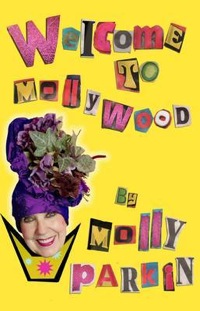
Molly Parkin at her book launch with Barrington De La Roche. Photograph by Inesa and Barrington De La Roche © Dark Theatre

Molly Parkin,Mollywood, Chelsea Arts Club❚ AS ALL READERS OF SHAPERSOFTHE80s should know, the godhead of all things stylish is not “the Posing Doughnut” as gossip columns were once wont to call Steve Strange, but our true icon, Molly Parkin. If you need reminding why, click on the Giants Who Went Before.

Molly has been a font of mischief and outrage for almost eight decades and the 80s were no exception. Yesterday she wowed a launch party at the Chelsea Arts Club for her newest auto-exposé, Welcome to Mollywood, about which actor turned nightclub buccaneer Robert Pereno has said: “Well done Moll.” A couple of newspaper pieces this week give the flavour of a life thoroughly well lived, so click away…

The Sunday Telegraph’s new men’s mag asked Moll for 12 things every man should know about women, and here is one of them:

“You should think of women as goddesses. I regard myself as a goddess. Even if you pluck a few flowers from a neighbour’s garden after dark and bring them in, that is a small gesture towards the goddess. It’s a question of nourishing that romantic spark that was between you when you first got together.”

And the Daily Mail — who else? — trailed a serialisation with this bait: “Molly Parkin’s racy confessions turn to her wild affairs with George Melly, John Mortimer and a host of others”. Among her regrets, Moll writes:

“I regret not accepting Cary Grant’s offer of an evening out in London, when he was flying back to the States the next morning… And I’d like to say to the late Orson Welles, Lee Marvin and Walter Matthau, whom I’ve always fancied more than any of the pretty boys of Hollywood: ‘I’m on my way’.”

Molly Parkin, John Timbers

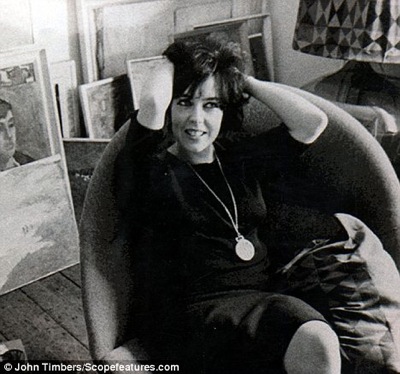
In her heyday: Molly aged 29 at her first art exhibition. Photographed © by John Timbers

FRONT PAGE

➤ How Keith Richards’s life of debauchery became an inexplicable sign of alien invasion at The Times

Keith Richards, autobiography, sex-and-drugs-and-rock-and-roll

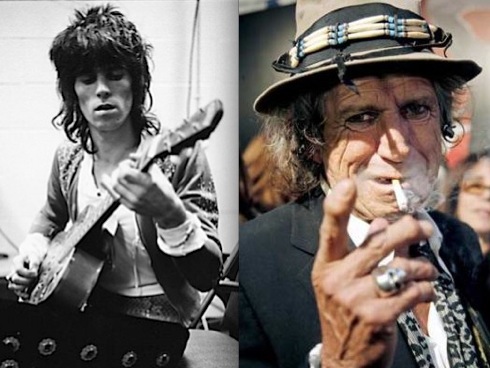
Boy into man: Keith Richards in 1969 and after 40 years of living the life (EPA). Note in particular the hat and read on...

❚ BY THE MID-60S THE ROLLING STONES had become global superstars, though demonised for the raw sexuality of their songs and performance style. Guitarist Keith Richards is the man whose debauchery epitomises the ethos of sex-and-drugs-and-rock-and-roll, and on October 26 his “long-awaited” autobiog called Life is published by Weidenfeld & Nicolson. As if the UK’s tenth richest musician needed the cash — he is worth £175m in The Sunday Times Rich List — reports say he received an advance of £4.8m ($7.3m!!!) after a bidding war for the text, written with James Fox.

It amounts to a tawdry sequence of profane, drug-fuelled, low-life anecdotes from which nobody emerges with much integrity, like a bunch of amoral delinquents. Quite what excited The Times of London to devote three days-worth of space to this book is beyond comprehension. Under the headline Muddy Waters, Saturday’s main editorial in the paper actually damned the Richards yarn as “filthy” and “depraved”, while seeking to justify serialising massive chunks on the ground that “the music of the Rolling Stones has endured”, thanks to the band’s “sheer work ethic” !!! (Since they didn’t rise up to ridicule this lavish serialisation, we can only assume the entire staff of The Times has been zombified under Plan 9 from Outer Space.)

Almost the whole front page of The tabloid Times trailed the Richards extracts with the stark headline “Sex, drugs and me”. Highest common denominators, evidently, for Her Majesty’s newspaper of record. And a spectacular nadir for dignity in the Thunderer’s 225-year history.

As a time-saving service to discriminating readers of Shapersofthe80s, here are the juiciest bits, but be warned — do not raise your expectations above the navel. Ready with the sickbag, James!

In Friday’s interview with 66-year-old Richards, 35-year-old Caitlin Moran called the book a “total hoot” and through its sordid junkie haze introduced us to every mother’s idea of the son-in-law from hell. Right from chapter one, she said, he’d worn a hat made of drugs (“There was a flap at the side in which I’d stowed hash, Tuinals and coke”) and driven a car made of drugs (“I’d spent hours packing the side-panel with coke, grass, peyote and mescaline”).

Moran reports that Richards “gave up heroin in 1978, after his fifth bust, and he reveals today that he has finally given up cocaine, too — in 2006, after he fell from a tree in Fiji and had to have brain surgery:

❏ “Yeah, that was cocaine I had to give up for that,” he says, with a sigh. “You’re like: ‘I’ve got the message, oh Lord’.” He raps on the metal plate in his head. It makes a dull, thonking sound. “I’m just waiting for them to invent something more interesting, ha ha ha. I’m all ready to road-test it when they do.”

Throughout the Moran interview, he was of course smoking Marlboros and drinking vodka. His idea of totally clean, presumably.

Anita Pallenberg ,Barbarella

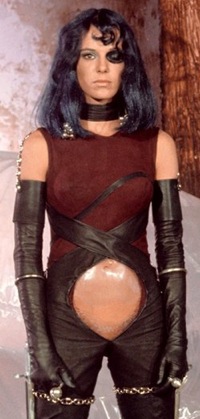
Anita Pallenberg in the Roger Vadim film Barbarella, 1968

In Saturday’s Times serialisation of Life, Richards recalls the Stones’s founding guitarist Brian Jones, who originally proposed the band’s name in 1962 and was to drown needlessly at the age of 27 in circumstances that remain unclear. He was neurotic, suffered from deteriorating health, he pushed friendships to the limit and treated women despicably. In Marrakesh in 1967 he and his girlfriend Anita Pallenberg had reached the end of their tethers. Richards writes:

❏ “They’d beaten the shit out of each other. And of course Brian starts trying to take Anita on for 15 rounds… Once again he breaks two ribs and a finger… Then Brian dragged two tattooed whores down the hotel corridor and into the room, trying to force Anita into a scene, humiliating her in front of them. He flung food at her. At that point Anita ran into my room… She was in tears. She didn’t want to leave but she realised that I was right when I said that Brian would probably try to kill her.”

Having “stolen” Anita Pallenberg from Jones to become Richards’s common-law wife, back in the 1970s some reciprocal bed-hopping took place between Richards and Mick Jagger’s girl Marianne Faithfull, and between Anita and Mick. This was when Richard learned his best friend was a disappointment in the sack, giving rise to his verdict on the over-rated Jagger jewels:

❏ “[Anita] had no fun with his tiny todger. I know he’s got an enormous pair of balls, but it doesn’t quite fill the gap, does it?”

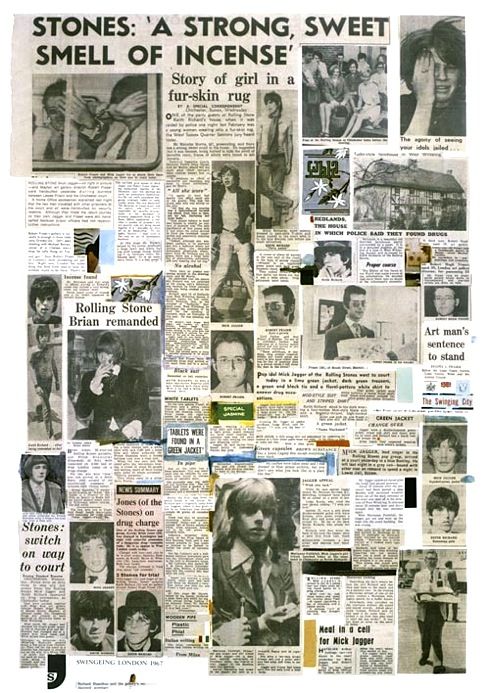
Swingeing London 67 — Poster 1967-8: One of pop artist Richard Hamilton’s protest pictures in his Swingeing London series, commenting on the severe judgment passed on his friend, gallery owner Robert Fraser, and popstar Mick Jagger, for possession of drugs. (Photolithograph © Richard Hamilton published by ED912, in Tate collection)

Marianne Faithfull, Girl on a Motorcycle

Marianne Faithfull in the British film Girl on a Motorcycle, 1968

Life describes in detail the fabled 1967 drug bust at the Richards Sussex house, Redlands [reported in the collage above], which became a totemic cause célèbre when William Rees-Mogg — the down-with-the-kids editor of The Times — took on the crusty old establishment by denouncing the harsh jail sentences which followed. Richards writes that the raid was “a collusion between the News of the World and the cops, but the shocking extent of the stitch-up, which reached to the judiciary, didn’t become apparent until the case came to court”. He also sets the record straight on the role of a legendary Mars bar:

❏ “[Marianne Faithfull] had taken a bath upstairs, and I had this huge fur rug, and she just wrapped herself up in that. How the Mars bar got into the story I don’t know. There was one on the table — there were a couple, because on acid you get sugar lack and you’re munching away. And so she’s stuck for ever with the story of where the police found that Mars bar. And you have to say she wears it well.”
Etc etc etc etc

➢ “The Mars bar was a very effective piece of demonizing” — Marianne Faithfull in her own autobiography. More pictures and background at Another Nickel In The Machine

➢ Who was the Redlands informer? — All about the police drugs raid on Keith Richard’s home on Feb 12, 1967 at the History of Rock Music

Michele Breton ,Mick Jagger, Performance, films

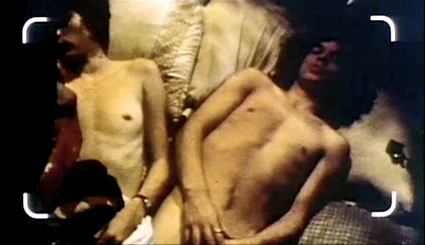
“The most sexually charged film ever”: the androgynous Michele Breton and Mick Jagger in Performance, 1970

➢ Judge the Jagger todger for yourself at Another Nickel: Anita’s footage of Mick’s meat and two veg filmed during the making of Performance at 81 Powis Square in 1968

➢ Rolling Stone magazine has more Richards book excerpts plus slideshow on October 28, 2010

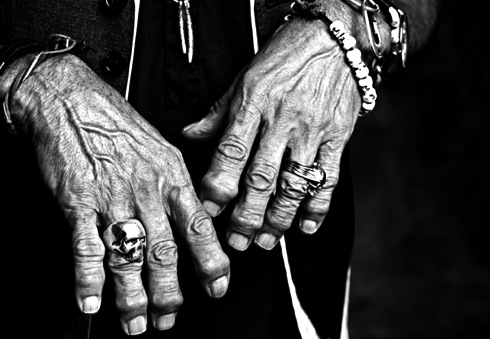
Keith Richards, David Courts , Bill Hackett, skull ring,

The guitarist’s hands in 2010, photographed © by Mario Sorrenti: the original skull ring that has become a rock-and-roll icon was given to Richards by London goldsmiths David Courts and Bill Hackett as a birthday present in 1978

FRONT PAGE

➤ Britain’s top hatter, Stephen Jones OBE, celebrates 30 years of Jonesmanship

On Facebook today Stephen Jones writes:

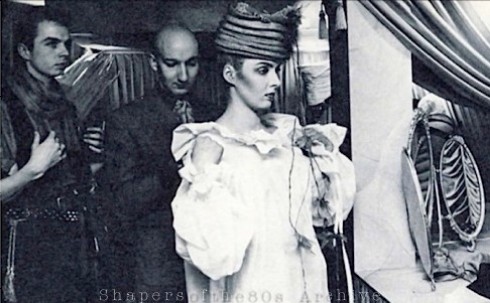
“7pm, 1st Oct 1980, 30 years ago today, I opened my first
hat salon in Covent Garden, with the fabulous Kim Bowen and the super talented Lee Sheldrick (R.I.P). Thank you all, it’s been an amazing adventure! Xs”
Lee Sheldrick, Kim Bowen, Stephen Jones, PX shop

The first Jones salon: star rebels from St Martin’s Lee Sheldrick assisting and Kim Bowen modelling at Stephen Jones’s boutique in PX, October 1980

❚ FROM 1978 HELEN ROBINSON HAD MADE HER SHOP PX the flagship for New Romantic ready-to-wear in James Street, Covent Garden, all velvet suits, Robin Hood jackets and hippy frills. In February, 1980, it moved a few yards round the corner to bigger premises in Endell Street. Since his graduation from St Martin’s in 1979, Stephen Jones’s uncompromising hats had made the perfect accessories for the excesses of PX so Robinson and partner Stephane Raynor made space in the basement for Jones’s own hat salon. He says: “To get the finance I sold my car, an ex-GPO mini-van, for £150, and that’s how I started the business.” Blitz club-host Steve Strange was a regular customer. Inevitably, the whole place became a social centre for fellow Blitz Kids, the clubbing fashionistas who were by then regular faces in fashion pages and gossip columns. Stephen’s wittily titled “First Collection” was previewed on October 1 and commissions came in from the New Romantic pop groups Visage and Spandau Ballet who were releasing debut records that autumn, from Grace Jones and, later, Boy George.
Stephen Jones ,millinery, Kim Bowen, Peter Ashworth

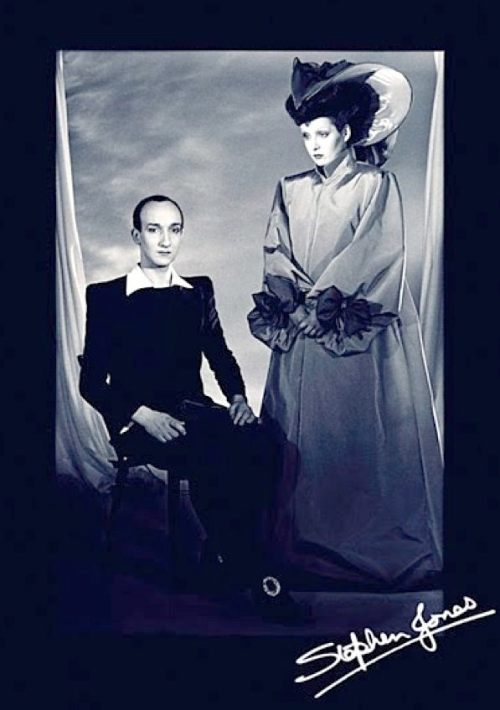
Stephen Jones and Kim Bowen, dressed by PX, topped out by Jones, 1979: business card for the milliner and his mannequin de vie. Photographed © by Peter Ashworth

Stephen Jones, Culture Club, music video, J-P Gaultier

“Very Tangiers in Paul Bowles’s 1950s”: In Culture Club’s first video, 1982, Jones wears the fez that caught J-P Gaultier’s eye. Also a pale blue zoot-suit from Flip, and correspondent shoes in black and pale blue

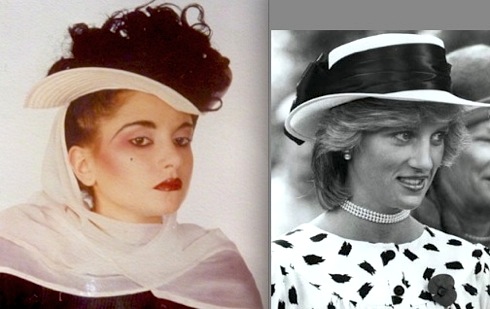
With the dawn of the 1980s, Britain’s outlandish street styles drew the attention of the world’s leading fashion tastemakers who had to start taking London Fashion Week seriously, to the benefit of a new generation of designers and established names alike. The sheer wit and chutzpah of Stephen Jones millinery played brilliantly to both marketplaces and with Diana Spencer’s marriage to the Prince of Wales the Princess became an international icon for classic British elegance, and a huge fan of the quixotic Jones look. Though he says now that he never drew up a career plan, he did enjoy one lucky break after another: “I had a phone call one day from Vogue who were coordinating a wardrobe for the Princess of Wales and I made quite a few hats for her early on.”

Culture Club’s phenomenal global appeal also established Boy George as Britain’s alternative fashion icon. In another stroke of fate, Jones says that it was his red fez worn while sitting in the audience during Culture Club’s first video, Do You Really Want To Hurt Me (filmed in Soho’s Gargoyle club in 1982), that caught the attention of the French designer Jean-Paul Gaultier. Two years later Jones went to design hats in Paris for Gaultier who was building his own reputation as an enfant terrible. He says now: “Working in Paris then was slightly akin to sleeping with the enemy, and I got gyp from the British Fashion Council who didn’t approve.”
Julia Fodor, Princess Diana, Stephen Jones, hats

Early Jones creations: modelled by Julia Fodor, by appointment to Princess Di

Jones’s familiar bald dome came about after he shaved his head as a crazy gesture, only to discover that it was the same size as the average milliner’s model, which is normally a wooden block, and ever since he has played the role of his own hat mould. Jones’s favourite show was his first for another designer, Zandra Rhodes in 1981. “It was huge — extravagant production, hundreds of models, over the top make-up, vertiginous shoes, tantrums, tears. I loved it.”

His reputation soared in the early days on the coat-tails of such provocateurs as Vivienne Westwood, Claude Montana and Thierry Mugler. When in 1996, the younger St Martin’s superstar, John Galliano, crossed the Channel to design for Christian Dior, the fashion world was amazed. Within minutes, he had invited Jones to join his team and be the milliner at Dior. As Galliano’s dreams became the stuff of legend, his runway shows became ever more spectacular, while the Jones confections reached new heights of extravagance.

Stephen Jones, hats, Peter Ashworth

Jones creations from 2002, photographed © by Peter Ashworth

Jones declares: “Just as accents in language lead to the correct reading and rhythm of a text, my hats add the appropriate punctuation to a designer’s fashion statement.”

Today style-icons crave to wear Jones — think of Gwen Stefani, Beyonce Knowles, Kylie Minogue, Alison Goldfrapp — while yet more of the world’s cutting-edge designers commission his creations to enhance their collections. Today they include Rei Kawakubo, Comme des Garcons, Azzedine Alaïa, Loewe, Giles Deacon, Kinder, Issa, Donna Karan, Jason Wu, L’Wren Scott and Marc Jacobs. Back at his Georgian London boutique a few doors along from the former Blitz club, Jones also designs the Miss Jones and JonesBoy diffusion ranges in addition to his Model Millinery collection. “My British milliners are the best in the world,” he maintains. “The hat is a certain British thing that people do love wearing.”
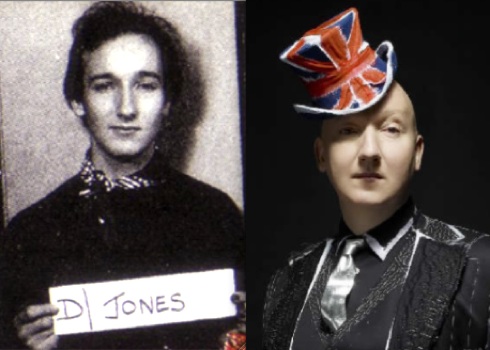
Stephen Jones, hatmaker,Madonna, Madonna, millinery, MoMu, V&A

Then and now: Stephen Jones enlists as a student at St Martin’s 1976, and curates a show of landmark designs at the V&A museum 2009. Union Jack top-hat photographed © by Justine

Last year London’s Victoria & Albert Museum staged a huge exhibition entitled Hats, An Anthology by Stephen Jones, which attracted 100,000 visitors and has since set off on a world tour. This summer he has been working on Sex and the City 2, and told Vogue.com that he had been recruited by Madonna for her latest film, W.E., based on the life of King Edward VIII (played by James D’Arcy) who in 1936 gave up his throne for the American Wallis Simpson (played by Andrea Riseborough). “Madonna is directing it and she asked me to do the hats. Somehow I’ve ended up starring in it, too.”

This autumn Antwerp’s Mode Museum (MoMu) is hosting a solo exhibition of 120 hats, Stephen Jones & The Accent of Fashion (Sept 8-Feb 13, 2011), plus his work in film, music and photography. He explains the magic of the titfer: “A hat makes clothing identifiable, dramatic – and most important, Fashion … It’s the dot on the i, the exclamation mark, the fashion focus. Everyone from showgirls to dictators knows that by wearing a hat they will be the centre of attention.”

The crowning glory for 30 years of dotting the i’s came this spring when Her Maj the Queen recognised the mad hatter’s achievements by appointing him to the Order of the British Empire. Hats off to the Age of Jonesmanship!
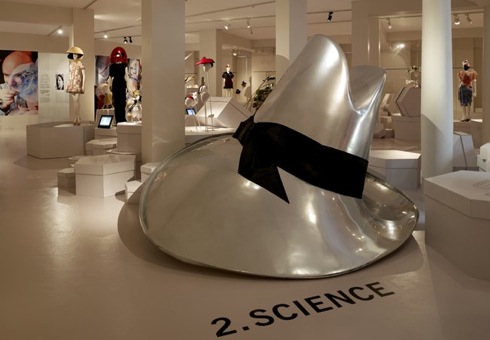
MoMu, Fashion Museum, Antwerp, Stephen Jones, The Accent of Fashion

MoMu Fashion Museum Antwerp: Stephen Jones & The Accent of Fashion photographed © by Frederik Vercruysse

VIEW an i-D video at the Antwerp show in which Jones declares:

“At school science was my best subject. Millinery combines physics and art together in a weird mix — you can’t have one without the other.”

Detailed interview with Stephen Jones in Antwerp for the Independent
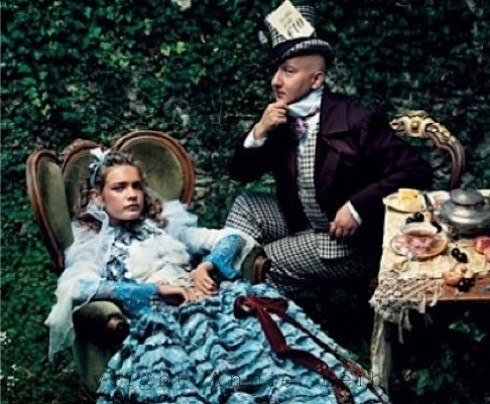
 Stephen Jones

His sobriquet fulfilled by photographer Annie Leibovitz: Stephen Jones as the Mad Hatter in The Mad Tea Party (detail), one of a series of Alice in Wonderland tableaux shot for American Vogue, December 2004

Showstudio has intelligent backgrounders from Jones’s V&A anthology

Stephen Jones, interview, Showstudio, Alex Fury
❚ UPDATE — STEPHEN JONES DISCREETLY MENTIONS A CHARMING, frank, gossipy and self-effacing interview with him which has just popped up on Showstudio (despite being dated May) and, as if by telepathy, addresses many questions begged by the brief Shapers outline above! “Steve Strange was, apart from my Mum, my first paying customer” … “I appear to have reinvented the world of millinery but I didn’t have a grand purpose like that at the beginning. I just wanted to go to a great party.” Who is this perceptive young interviewer Alex Fury? With a name like that he will go far.
➢ Video: Stephen Jones interviewed for Showstudio
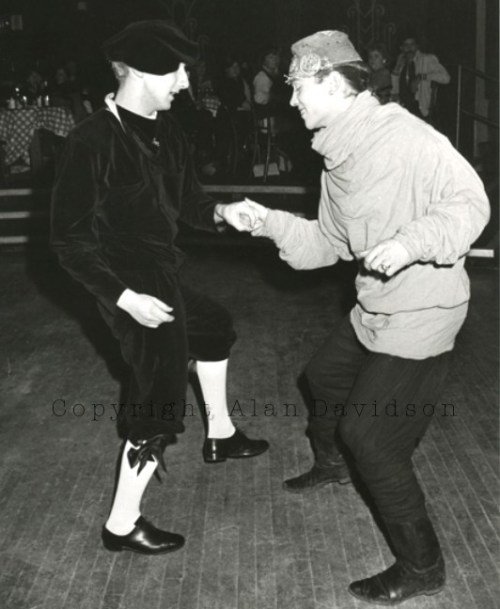
Stephen Jones, David Holah, Blitz Kids, New Romantics,

New Romantics cutting loose, 1981: Stephen Jones in PX’s definitive Little Lord Fauntleroy outfit jives with designer David Holah who went on to co-found the BodyMap empire. Photograph © by Alan Davidson

FRONT PAGE

➤ In the face of Cowell X-culture, Polhemus discovers the style supermarket afresh

Street Style, Ted Polhemus, the Book Club, PYMCA,Viva Las Vegas Festival

Street cred: Janette Beckman’s cover shot of the rude-boy twins, Chuka & Dubem Okonkwo, shot for The Face in London 1980. Right, two 50s fans at the Viva Las Vegas Festival, USA 2006. Photograph © Tim Scott/PYMCA

❚ IN ITS FIFTH ANNIVERSARY ISSUE, i-D MAGAZINE asked its photo-gallery of People of the 80s to sum up that year, 1985. Shapersofthe80s replied: “It is the year the style supermarket repackaged the previous four as an over-the-counter culture.” What was being signalled was the end of the Swinging 80s, the symbolic sub-cultural “decade” which had seen Soho become the crucible for new sounds and new styles as they broke free from the stadium-rock and post-punk past. 1985 saw a torrent of colour and attitude and tunes drive the mainstream of British youth culture that then came to characterise the “Thatcher decade”, at best personified by Stock Aitken Waterman, and at worst traduced by nightclub impresario Peter Stringfellow.

Ted Polhemus, Street Style, PYMCA

Polhemus as 70s hippie — wardrobe master for Starsky and Hutch, or his idea of irony?

Tonight in Shoreditch, the new London pool of cool, an eponymous exhibition opens to launch an updated edition of Street Style, the 1994 picture book by Ted Polhemus that celebrated the style-tribes which postwar Britain’s class-ridden society excelled at evolving, from mods and rockers, to goths and casuals, to ravers and what he called riot grrrls (which inevitably invoked the dread term bricolage, so much more cultural studies than saying DIY). Publication coincided then with a groovy exhibition around the V&A costume court.

Images and graphics from the new Street Style inevitably feature many of our original Shapers of the 80s, if current Facebook twitterings are any indication. These are being exhibited (Sep 30-Oct 31)  in the former Victorian warehouse in EC2 refurbished as The Book Club. Polhemus’s new publisher is PYMCA, the Photographic Youth Music Culture Archive which was established in 1997 by Jon Swinstead, brains behind Jockey Slut and Sleazenation. His aim was “to create a collection of images that capture the real essence of life as a young person”. PYMCA was launched this spring as a research resource, having teamed up with leading cultural commentators to offer detailed analyses of youth subcultures, music and movements around the world. Swinstead maintains: “PYMCA is both edgy and documentary and the newest material will visually reflect the hottest stuff happening among the youth of today.”

Next month Polhemus, the self-styled “anthropologist, author and photographer extraordinaire”, leads a discussion at The Book Club titled “Supermarket of Style in the 21st century” (Oct 27, tickets £8). This is the theme that introduces his new book and which he calls “his latest theory”. Well, better late than never! The supermarket has certainly entertained us for 25 years but a general consensus agrees that Britain’s youthful creative juices finally ran dry in the noughties as Cowell X-culture came to dominate our televised lives. Presumably Ted has fresh observations to offer…

Rockabilly, Paul Sturridge, Ted Polhemus,Dale Cammack, Susan Cammack

The no-socks “hard times” style promulgated by the itinerant Dirtbox club-nights: The ever-photogenic Paul Sturridge caught in 1984 with Dale and Susan Cammack, plus his Volvo Amazon outside the Chelsea Potter. From the Street Style exhibition at the V&A, photographed © by Ted Polhemus

AT THE EVENT, STURRIDGE CATCHES THE MOMENT . . .

Chuka Okonkwo, Dubem Okonkwo , Theola Sturridge, Street Style

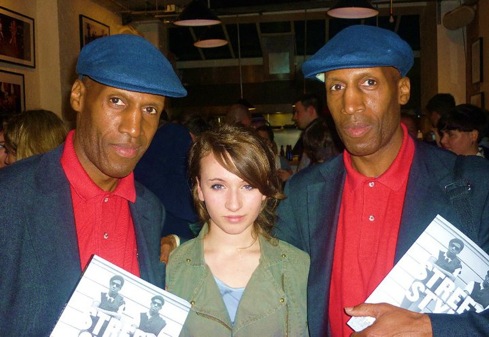
At the book launch: cover stars the Okonkwo twins with Theola Sturridge. Photograph © by Paul Sturridge

Theola Sturridge, Paul Sturridge, Street Style

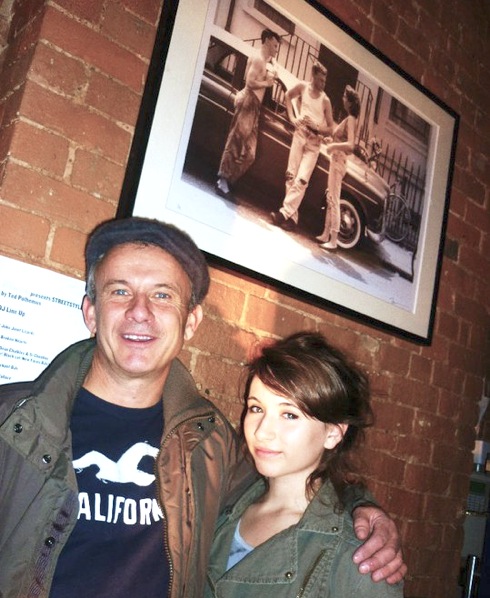
A lifetime later: Paul Sturridge with daughter Theola beneath the photo of him in his “hard times” guise. Photograph © by Paul Sturridge

FRONT PAGE

➤ Six things some people might not know about Bowie

David Bowie, Mick Ronson, Ziggy

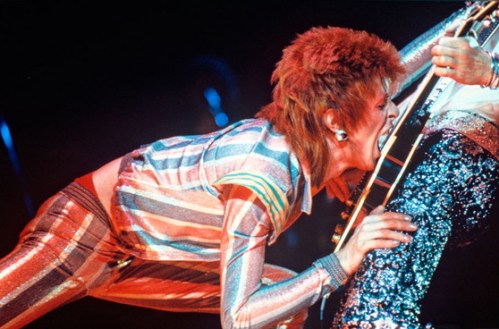
Ziggy shocker: Bowie goes down on Mick Ronson’s guitar in 1972

NME, 29 Sep 2010 WHAT MORE IS THERE TO SAY ABOUT BOWIE? To coincide with this week’s release of the mega-superduper collectable special edition 3-CD box set of Station to Station, an NME photo gallery of the godlike one reveals 50 things it thinks we don’t know about Bowie and here are five of them…

❏ A teenage Bowie was interviewed on a BBC programme as the founder of The Society for the Prevention of Cruelty to Long-haired Men. He complained: “It’s not nice when people call you darling and that.”

Peter Frampton, Herd, Face of 68,

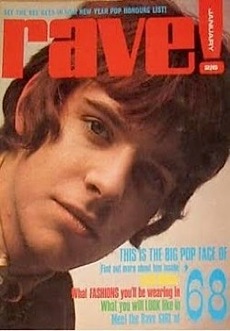
Bowie’s best friend: Herd guitarist Peter Frampton, hailed by Rave as the Face of ’68

❏ Peter Frampton, of Baby I Love Your Way, was Bowie’s friend at school — his dad was head of the art department.

❏ Space Oddity gave Bowie his big break. This now-famous track was used by the BBC in its coverage of the moon landing in 1969. Bowie was practically unknown back then – the song became his first UK hit.

❏ According to a recent [? Jan 24] piece in The Observer, David Bowie’s iPod contains Lorraine Ellison’s Stay With Me, Dinner At Eight by Rufus Wainwright, and Gathering Storm by Godspeed You! Black Emperor.

❏ Below we see David Bowie at London’s Rules Restaurant, 1973, after receiving a presentation of six discs from RCA Records. The occasion? He had six albums in the charts that year.

David Bowie, Rules Restaurant, 1973, RCA Records, presentation

Bowie in 1973: bumper chart success

❚ HERE’S ONE OF OUR OWN: The boy wonder was profiled in 1967 by Fabulous 208 which tells us that at the age of 20 Bowie had already written more than 60 songs. Wowie!

FRONT PAGE