2012 ➤ Soho’s nightowls revisit the club that sifted the Artex monkeys from Bowie’s Heroes

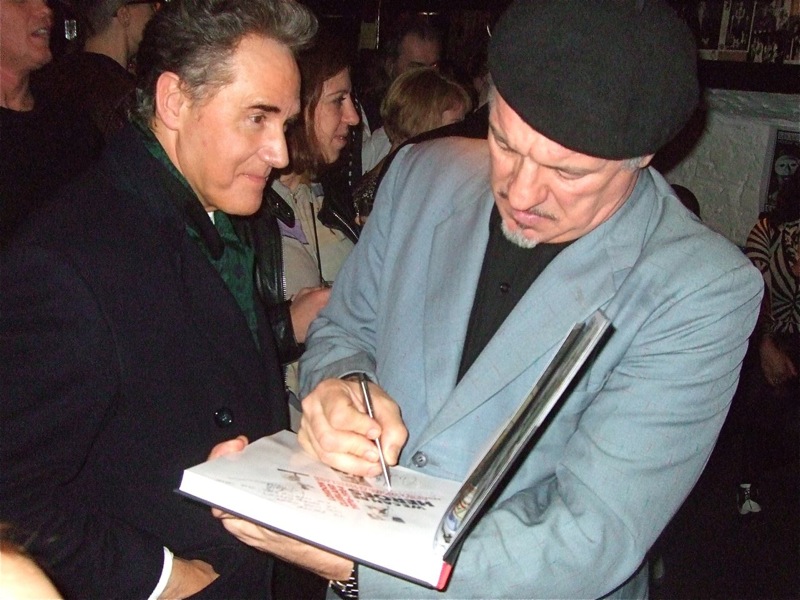
Cultural observer Peter York: eager for the Sullivan autograph on the new edition

❚ THE 80s BLITZ KIDS turned out in force last night. As Kitten Kouturist Franceska Luther King remarks today: “an elegant crowd, older, but still the same spirit.” Those clubbing compulsives who defined the sounds and styles of Soho 30 years ago, swarmed into the tiny steaming Artex-lined cellars of the St Moritz restaurant, the fit all the tighter thanks to a fair few middle-aged paunches. For three months in 1980 this was the site of their milestone one-nighter which signalled the first faction to break away from the futurists at Steve Strange and Rusty Egan’s pioneering electro-diskow, The Blitz. In host Chris Sullivan’s words, this was “the more alert end of the Blitz crowd” – in other words, the hardcore fashionistas.

Initially St Moritz’s music evoked interwar Berlin cabaret but the effect of Charles Fox, the theatrical costumiers, staging its closing-down sale in Covent Garden injected a huge Hollywood movie wardrobe. Sullivan notes:  “You could be a gangster, a geisha, or Geronimo.” The New Romantics had been born – just like that!

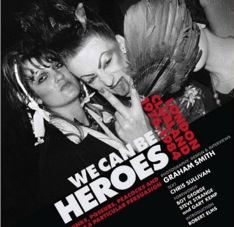
“No single shop sale ever had such an influence on street fashion before or since,” Sullivan writes in the fabulous photo-book, We Can Be Heroes. This ribald account of the dawn of UK clubbing in the 80s, led by the eye-popping photographs of Graham Smith, was the reason for last night’s beano. Soul-music diehards Smith and Sullivan graduated from The Blitz to become two of the St Moritz deejays (along with Robert Elms and Steve Mahoney) and half a lifetime on they were hosting yet another launch party. The book’s revised and amended second edition of 2,500 copies is released this week through regular retail outlets. Copies of last year’s limited edition are still available from the fund-it-yourself publisher Unbound.
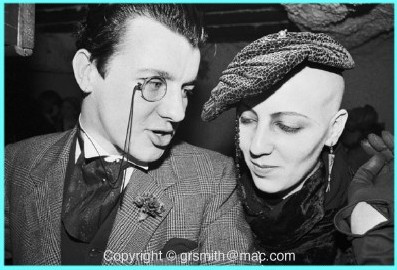
St Moritz 1980: Chris Sullivan and Michele Clapton – from Smith’s book We Can Be Heroes

Back in the day, the St Moritz posse distinguished themselves from The Blitz by playing retro lounge-lizard tunes from Lotte Lenya or Nat King Cole. In today’s arts pages of The Times Sullivan recaps how, in their efforts to avoid the present, he and his cohort helped create the future: “We decided to oppose Blitz futurism and turn the clock back with music from Marlene Dietrich, Monroe, Sinatra and soundtracks from A Clockwork Orange, Last Tango in Paris and Cabaret. It was an alarming success.”
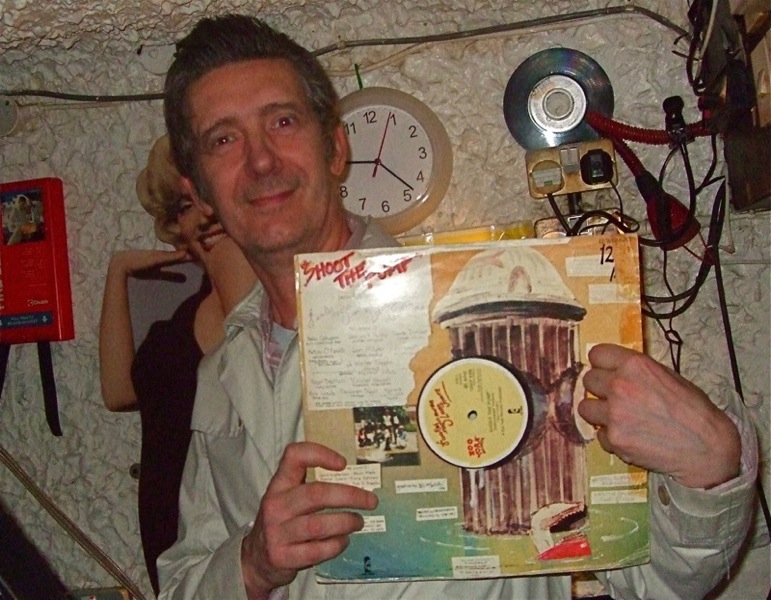
Rob Milton: Shooting the Pump in the deejay booth

♫ Click to hear Shoot the Pump in a new window

Fashions in music moved apace. Within a year successive London club-nights at Hell, Le Kilt and Le Beat Route were stirring into the club mix not only familiar 70s soul but the edgy new urban sounds of North America.

Choosing the soundtrack last night at St Moritz were the were the astute ears of David Hawkes, Christos Tolera and Sullivan himself, plus Dirt Box co-founder Rob Milton, who raked the dancefloor early in the evening with the crazed beats of Shoot the Pump. This intoxicating debut single from 1981 was a state-of-the-art fusion of emergent street sounds – rap, hip-hop and funk with a hint of mutant disco – from the “playin’ brown rapper” and graffiti artist J Walter Negro & the Loose Jointz (on Zoo York Records via Island). J Walter is urging his crew of Zoo Yorkers to spray docile citizens with the water from a fire hydrant: “You make like a monkey with monkey wrench, cos you feel a little funky, got a thirst to quench.” In 1980–81, something similar was pumping the adrenalin in London.

CLICK ANY PIC TO LAUNCH CAROUSEL:

FRONT PAGE

➤ Another knees-up while Amazon discounts We Can Be Heroes second edition

The reviewers said: “A gorgeous history of 80s London clubland” (Alex Petredis, Guardian) … “fascinating and definitive” (Robert Spellman, Sunday Express)

Graham Smith,Chris Sullivan, books,photography, youth culture, We Can Be Heroes , Swinging 80s, clubbing❚ TOMORROW SEES ANOTHER launch party, this time at 1980’s breakaway New Romantics nightspot St Moritz in Soho to celebrate publication of the second (unlimited) edition of the 320-page coffee-table photobook that chronicles the creation of 80s clubbing through Graham Smith’s eye-witness photography, and racy commentary from Wag club host Chris Sullivan. Read the full background to the characters behind the book We Can Be Heroes at Shapersofthe80s. On sale for £35 from its publisher Unbound, or discounted to £25.50 at Amazon (an even cheaper pre-publication offer has finished).

➢ View Shapersofthe80s’ videos of Chris Sullivan telling his “Ribald tales of excess” from the Blitz era

➢ More 80s yarns on video from Robert Elms

➢ Catch-up list of links to all last year’s publicity shenanigans

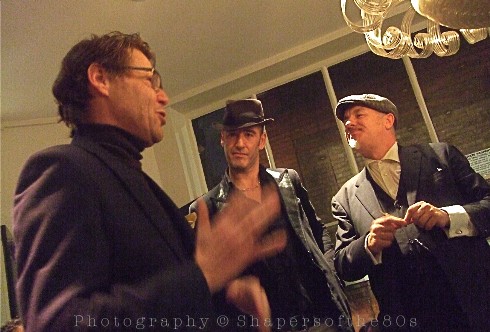
Making up the rules of 80s clubbing: Robert Elms, Phil Dirtbox and Chris Sullivan at last year’s exhibition of Graham Smith’s nightlife pictures. Photograph by Shapersofthe80s

FRONT PAGE

➤ K West sign ‘possibly’ for sale in Bowie memorabilia show

Ziggy Stardust ,K West, Brian Ward,David Bowie,memorabilia ,Movie Poster Art Gallery,Paul Burston,Alex Hopkins

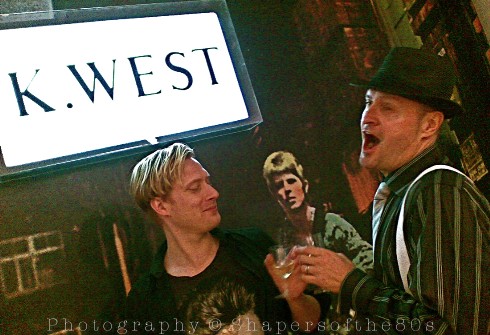
The long-lost K West sign in all its magical luminescence: the restored emblem of the Ziggy Stardust album sleeve is on display at MPAG, London. Captured in its mystic rays (above), writer Alex Hopkins of the quarterly Lifestyle magazine beigeuk.com with the always-on Paul Burston of Time Out London. (Nokia snap © Shapersofthe80s)

❚ AFTER ZIGGY’S 40TH ANNIVERSARY HULLABALOO comes a unique selling exhibition of Bowie graphic art and memorabilia from his golden years 1969–1981. On display this week in London for the first time in 30 years is the original K. West sign that featured in Brian Ward’s covershot for Bowie’s springboard 1972 album, The Rise and Fall of Ziggy Stardust and the Spiders From Mars. The record sleeve itself has long been as iconic a London image as Abbey Road’s zebra crossing. At last, the illuminated sign from 23 Heddon Street has been rescued by a music industry veteran and restored, and is on show at the Movie Poster Art Gallery, run by 80s Mud Club regular, Tim Maddison. He revealed to Shapersofthe80s that it may be for sale “at the right price”.

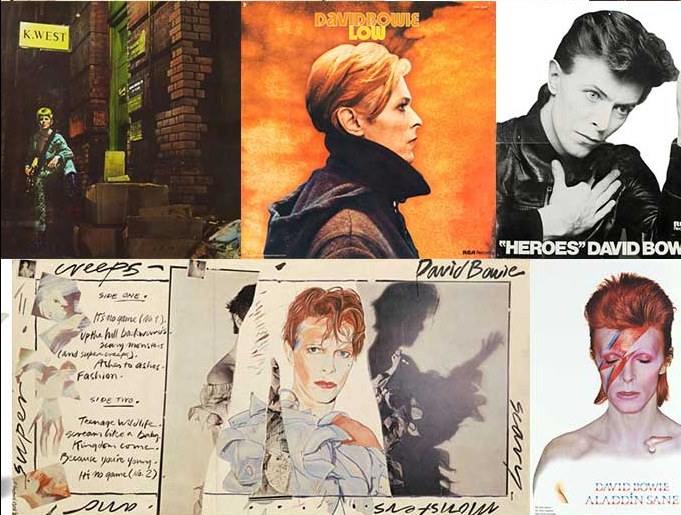
The exhibition highlights celebrated images created for Bowie by talents such as Brian Duffy, Edward Bell, Masayoshi Sukita, Guy Peellaert, Steve Shapiro and Eric Stephen Jacobs. Original posters and large-format promotional displays on Bowie in the 70s are hard to come by, let alone buy, so this show is a treat. At the preview, a 3-ft wide original RCA in-store display for Diamond Dogs was snapped up at £1,250. A fab Scary Monsters in-store stand was still for sale today at £950.

Bowie graphics: five of the images for sale this week

➢ David Bowie: Sound and Vision at the The Movie Poster Art Gallery, London (Nov 17–Dec 1)

➢ View more classic Bowie images for sale this week

This slideshow requires JavaScript.

A MORE PAINTERLY TAKE ON BOWIE

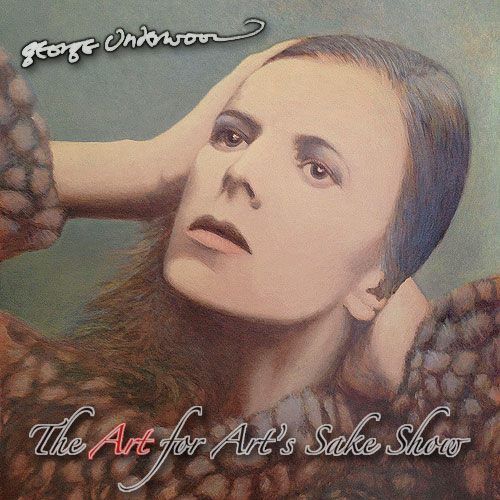
❚ KNOWN AS THE MAN WHO changed the colour of Bowie’s left eye, painter George Underwood is showing his recently discovered 1975 oil painting of the Hunky Dory cover shoot [below] in London next month. He stumbled upon the 32 x 38-inch original while sorting through some old artworks and now it’s on sale for £16,000.

Bowie’s schoolfriend and former musician, Underwood as a painter adopted an imaginative style that refers to Bosch, Bruegel and mannerism. He is among an eclectic mix of ten contemporary artists selling direct through The Art for Art’s Sake Show at The Gallery in Cork Street next month. Rather more affordable Bowie mementoes are his limited edition giclée prints which include Width of a Circle (1969, £500), seen on the back cover of the UK David Bowie LP on Philips… Stardust Memories (1972, £350), a Ziggy era painting that was reproduced as a poster… The Man Who Fell to Earth (1975, £650), seen on the cover of the Pan Books film tie-in.

George Underwood , Hunky Dory,David Bowie,Cork Street, artwork

Rediscovered: George Underwood’s 1975 painting of the Hunky Dory cover

➢ The Art for Art’s Sake Show: the New Kids on the Block (Dec 3–8)

➢ At Underwood’s own online gallery, collectable enamel brooches of Ziggy Stardust cartoons

FRONT PAGE

2012 ➤ Shapersofthe80s clocks up half a million page views

❚ YESTERDAY THIS BLITZ KIDS WEBSITE hit a total of 500,537 page views since we launched in autumn 2009. Last year visitor numbers doubled. See what were the hottest topics at Shapersofthe80s during 2011.

HOW THE MUSIC CHANGED

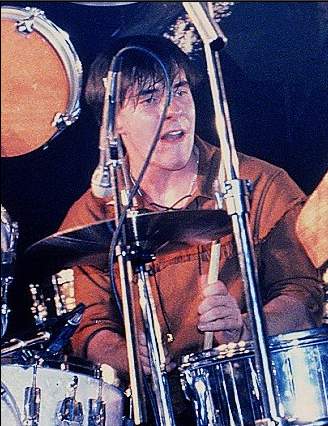
❏ In 1980 Spandau Ballet were the houseband of the Blitz Kids, whose New Romantic manifesto insisted that style was as important as their new synthesised brand of dance music. When London’s Blitz club hosts Steve Strange and Rusty Egan invented the notion of the once-a-week clubnight, they changed British nightlife habits for ever. Spandau’s music made no less a dramatic gear-change by placing the bass guitar and the bass drum at the front of the sound, as a driving rhythm for dancefloor movers. Within a year of their first hit, To Cut a Long Story Short, the rhythm of the UK pop charts shifted from the lead guitar to the 4:4 dance beat of the bass drum.

New Romantics, Blitz Kids,Spandau Ballet, John Keeble, 1980

Spandau at Heaven 1980: Keeble on drums. Pictured by © Shapersofthe80s

Spandau songwriter Gary Kemp claimed at the time: “RnB was the backbone of pop music from 1962 to 1980. And since then, funk. Dance rhythms are the musical basis for all rock bands now. Really, you can’t say ‘rock band’ any more because the music isn’t rhythm-and-blues.”

John Keeble (left): “It’s the difference between listening to funk instead of the RnB they all played in the Sixties.”+++ +++

➢ Keeble: what changed the rhythm of the pop charts

FRONT PAGE

➤ The most ferocious Today grilling despatches the Beeb’s top cat

John Humphrys , Today,

Gotcha! John Humphrys in the Today studio (photo: BBC)

❚ HE’S TENACIOUS, HE’S FORTHRIGHT, his reputation rests on being the toughest interviewer in British broadcasting. And yesterday he claimed the scalp of his boss, the director-general of the BBC. At 8:30am, the nation dropped their marmalade in a united splat on the breakfast table, as John Humphrys humiliated the recently appointed chief of the BBC for not reading the newspapers or listening to his own news service, and for being badly out of touch. That evening, the hopelessly outgunned George Entwistle resigned from the job he had held for 54 days. His own internal report into failures of journalism within the corporation was due to be delivered today.

This was the most rousing interview in memory to be aired by the Today programme, Radio 4’s current-affairs flagship renowned for its rigorous journalism. It was historic. Here was the BBC mired in a continuing controversy over investigations into child-abuse and the calibre of its editorial decision-making. Humphrys the grand inquisitor has a cupboard full of industry awards, and this bout was a model case of having the facts on his side, and of an interviewee, the BBC’s “editor-in-chief”, floundering like a novice because he had not marshalled his defence. On and on and on, Humphrys pressed him, and his quarry had nowhere to run. It was a rout.

➢ BBC Today interviewer John Humphrys to his director-general, George Entwistle:

So you’ve no natural curiosity? You don’t do what everybody else in the country does, read newspapers, listen to everything that’s going on and say, What’s happening here? Do you not read papers, do you not listen to the output?

The most disgraceful admission by the hopeless Entwistle was that neither had he read, nor had he delegated a minion to tell him the news of the BBC’s latest crisis broken by The Guardian’s front page hours earlier. Not only that, but he had embarked on the most important interview of his career unprepared.

Robin Day

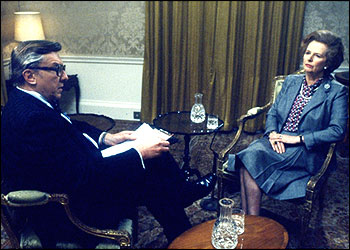
The knack: Robin Day interviews Margaret Thatcher live in 1984

Anybody remotely experienced in pulling the levers of power, from prime ministers to chief executives, rehearses every high-profile interview with an adversarial colleague before entering the arena. On the eve of every interview with prime minister Margaret Thatcher, the hard man of a previous TV generation, Sir Robin Day, rehearsed the burning issues with the Evening Standard’s political editor, Robert Carvel. “Sometimes I played Thatcher,” Carvel reported, “sometimes he did.”

As for how a busy man reads the papers, my own mentor Charles Wintour, editor of the Evening Standard, had to be ready to chair the key editorial conference at 9:10am, after okaying his paper’s first edition. How? He would skim three national papers in the car before reaching the office daily at 8am. An early-bird journalist was employed solely to greet him with the day’s key stories cut from from the entire national press – an instant digest of the burning issues in an era before the internet was invented. That’s how, Mr Hopeless Entwistle. At 10am Wintour read the morning mail: “To help maintain standards of accuracy, I insist that all letters complaining of error [in the Standard] should be shown to me.” That how, Mr Hopeless.

UPDATE NOV 12: NOW THE DIMBLEBY DELUGE

David Dimbleby

David Dimbleby: nailing leaders who lack the stomach to lead. (Photo: BBC)

➢ Broadcaster David Dimbleby talking to Humphrys today about the DG who resigned:
The fact that he didn’t fight back against you on Saturday shows he wasn’t the right man to lead the BBC

❚ TODAY’S TODAY WAS ALMOST AS HISTORIC. Coruscating, trenchant, yet scrupulous. One of the most resonant names in British broadcasting, David Dimbleby, damned the corporation’s management for having “gone bonkers” and speaking “gobbledegook”. He faced John Humphrys in the same studio seat that had helped jettison the director-general, and as a veteran TV journalist he nailed the failings of the BBC’s top brass. “The fact that [Entwistle] chose to resign rather than fight showed that he wasn’t the right choice for director-general, admirable man though he may be. If you are going to be the director-general you have got to fight for the organisation.”

The BBC’s jargonised bureaucracy does not produce good director-generals, he said. “You get people who have played the system carefully, who rise through the ranks and they don’t have the stomach for the kind of leadership that’s needed. The man at the top has to make sure there are systems that tell him: Have you read The Guardian this morning?”

FRONT PAGE