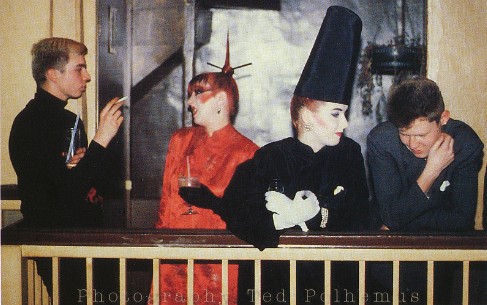
➤ Miss Parkin regrets that she said no to Cary… and can’t wait to meet Orson, Lee and Walter

Molly Parkin, Mollywood,Barrington De La Roche, Chelsea Arts Club

Molly Parkin at her book launch with Barrington De La Roche. Photograph by Inesa and Barrington De La Roche © Dark Theatre

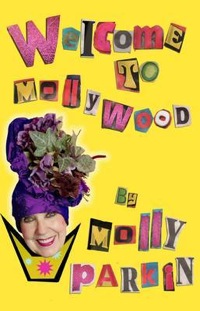
Molly Parkin,Mollywood, Chelsea Arts Club❚ AS ALL READERS OF SHAPERSOFTHE80s should know, the godhead of all things stylish is not “the Posing Doughnut” as gossip columns were once wont to call Steve Strange, but our true icon, Molly Parkin. If you need reminding why, click on the Giants Who Went Before.

Molly has been a font of mischief and outrage for almost eight decades and the 80s were no exception. Yesterday she wowed a launch party at the Chelsea Arts Club for her newest auto-exposé, Welcome to Mollywood, about which actor turned nightclub buccaneer Robert Pereno has said: “Well done Moll.” A couple of newspaper pieces this week give the flavour of a life thoroughly well lived, so click away…

The Sunday Telegraph’s new men’s mag asked Moll for 12 things every man should know about women, and here is one of them:

“You should think of women as goddesses. I regard myself as a goddess. Even if you pluck a few flowers from a neighbour’s garden after dark and bring them in, that is a small gesture towards the goddess. It’s a question of nourishing that romantic spark that was between you when you first got together.”

And the Daily Mail — who else? — trailed a serialisation with this bait: “Molly Parkin’s racy confessions turn to her wild affairs with George Melly, John Mortimer and a host of others”. Among her regrets, Moll writes:

“I regret not accepting Cary Grant’s offer of an evening out in London, when he was flying back to the States the next morning… And I’d like to say to the late Orson Welles, Lee Marvin and Walter Matthau, whom I’ve always fancied more than any of the pretty boys of Hollywood: ‘I’m on my way’.”

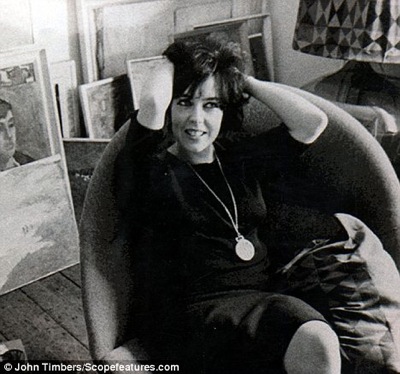
Molly Parkin, John Timbers

In her heyday: Molly aged 29 at her first art exhibition. Photographed © by John Timbers

FRONT PAGE

➤ How Keith Richards’s life of debauchery became an inexplicable sign of alien invasion at The Times

Keith Richards, autobiography, sex-and-drugs-and-rock-and-roll

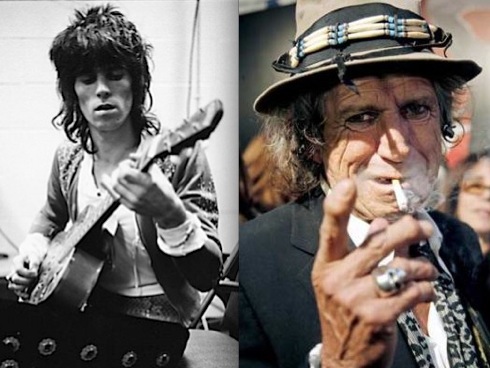
Boy into man: Keith Richards in 1969 and after 40 years of living the life (EPA). Note in particular the hat and read on...

❚ BY THE MID-60S THE ROLLING STONES had become global superstars, though demonised for the raw sexuality of their songs and performance style. Guitarist Keith Richards is the man whose debauchery epitomises the ethos of sex-and-drugs-and-rock-and-roll, and on October 26 his “long-awaited” autobiog called Life is published by Weidenfeld & Nicolson. As if the UK’s tenth richest musician needed the cash — he is worth £175m in The Sunday Times Rich List — reports say he received an advance of £4.8m ($7.3m!!!) after a bidding war for the text, written with James Fox.

It amounts to a tawdry sequence of profane, drug-fuelled, low-life anecdotes from which nobody emerges with much integrity, like a bunch of amoral delinquents. Quite what excited The Times of London to devote three days-worth of space to this book is beyond comprehension. Under the headline Muddy Waters, Saturday’s main editorial in the paper actually damned the Richards yarn as “filthy” and “depraved”, while seeking to justify serialising massive chunks on the ground that “the music of the Rolling Stones has endured”, thanks to the band’s “sheer work ethic” !!! (Since they didn’t rise up to ridicule this lavish serialisation, we can only assume the entire staff of The Times has been zombified under Plan 9 from Outer Space.)

Almost the whole front page of The tabloid Times trailed the Richards extracts with the stark headline “Sex, drugs and me”. Highest common denominators, evidently, for Her Majesty’s newspaper of record. And a spectacular nadir for dignity in the Thunderer’s 225-year history.

As a time-saving service to discriminating readers of Shapersofthe80s, here are the juiciest bits, but be warned — do not raise your expectations above the navel. Ready with the sickbag, James!

In Friday’s interview with 66-year-old Richards, 35-year-old Caitlin Moran called the book a “total hoot” and through its sordid junkie haze introduced us to every mother’s idea of the son-in-law from hell. Right from chapter one, she said, he’d worn a hat made of drugs (“There was a flap at the side in which I’d stowed hash, Tuinals and coke”) and driven a car made of drugs (“I’d spent hours packing the side-panel with coke, grass, peyote and mescaline”).

Moran reports that Richards “gave up heroin in 1978, after his fifth bust, and he reveals today that he has finally given up cocaine, too — in 2006, after he fell from a tree in Fiji and had to have brain surgery:

❏ “Yeah, that was cocaine I had to give up for that,” he says, with a sigh. “You’re like: ‘I’ve got the message, oh Lord’.” He raps on the metal plate in his head. It makes a dull, thonking sound. “I’m just waiting for them to invent something more interesting, ha ha ha. I’m all ready to road-test it when they do.”

Throughout the Moran interview, he was of course smoking Marlboros and drinking vodka. His idea of totally clean, presumably.
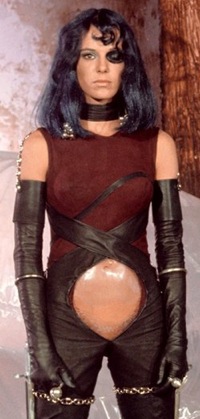
Anita Pallenberg ,Barbarella

Anita Pallenberg in the Roger Vadim film Barbarella, 1968

In Saturday’s Times serialisation of Life, Richards recalls the Stones’s founding guitarist Brian Jones, who originally proposed the band’s name in 1962 and was to drown needlessly at the age of 27 in circumstances that remain unclear. He was neurotic, suffered from deteriorating health, he pushed friendships to the limit and treated women despicably. In Marrakesh in 1967 he and his girlfriend Anita Pallenberg had reached the end of their tethers. Richards writes:

❏ “They’d beaten the shit out of each other. And of course Brian starts trying to take Anita on for 15 rounds… Once again he breaks two ribs and a finger… Then Brian dragged two tattooed whores down the hotel corridor and into the room, trying to force Anita into a scene, humiliating her in front of them. He flung food at her. At that point Anita ran into my room… She was in tears. She didn’t want to leave but she realised that I was right when I said that Brian would probably try to kill her.”

Having “stolen” Anita Pallenberg from Jones to become Richards’s common-law wife, back in the 1970s some reciprocal bed-hopping took place between Richards and Mick Jagger’s girl Marianne Faithfull, and between Anita and Mick. This was when Richard learned his best friend was a disappointment in the sack, giving rise to his verdict on the over-rated Jagger jewels:

❏ “[Anita] had no fun with his tiny todger. I know he’s got an enormous pair of balls, but it doesn’t quite fill the gap, does it?”
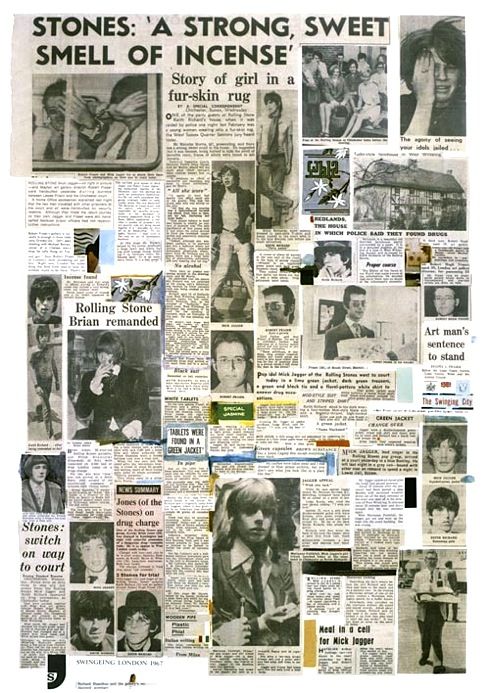
Swingeing London 67 — Poster 1967-8: One of pop artist Richard Hamilton’s protest pictures in his Swingeing London series, commenting on the severe judgment passed on his friend, gallery owner Robert Fraser, and popstar Mick Jagger, for possession of drugs. (Photolithograph © Richard Hamilton published by ED912, in Tate collection)

Marianne Faithfull, Girl on a Motorcycle

Marianne Faithfull in the British film Girl on a Motorcycle, 1968

Life describes in detail the fabled 1967 drug bust at the Richards Sussex house, Redlands [reported in the collage above], which became a totemic cause célèbre when William Rees-Mogg — the down-with-the-kids editor of The Times — took on the crusty old establishment by denouncing the harsh jail sentences which followed. Richards writes that the raid was “a collusion between the News of the World and the cops, but the shocking extent of the stitch-up, which reached to the judiciary, didn’t become apparent until the case came to court”. He also sets the record straight on the role of a legendary Mars bar:

❏ “[Marianne Faithfull] had taken a bath upstairs, and I had this huge fur rug, and she just wrapped herself up in that. How the Mars bar got into the story I don’t know. There was one on the table — there were a couple, because on acid you get sugar lack and you’re munching away. And so she’s stuck for ever with the story of where the police found that Mars bar. And you have to say she wears it well.”
Etc etc etc etc

➢ “The Mars bar was a very effective piece of demonizing” — Marianne Faithfull in her own autobiography. More pictures and background at Another Nickel In The Machine

➢ Who was the Redlands informer? — All about the police drugs raid on Keith Richard’s home on Feb 12, 1967 at the History of Rock Music
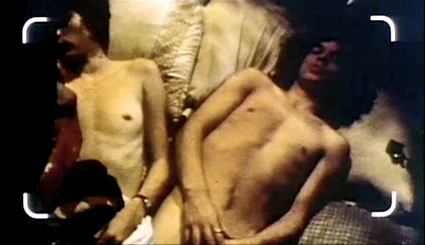
Michele Breton ,Mick Jagger, Performance, films

“The most sexually charged film ever”: the androgynous Michele Breton and Mick Jagger in Performance, 1970

➢ Judge the Jagger todger for yourself at Another Nickel: Anita’s footage of Mick’s meat and two veg filmed during the making of Performance at 81 Powis Square in 1968

➢ Rolling Stone magazine has more Richards book excerpts plus slideshow on October 28, 2010
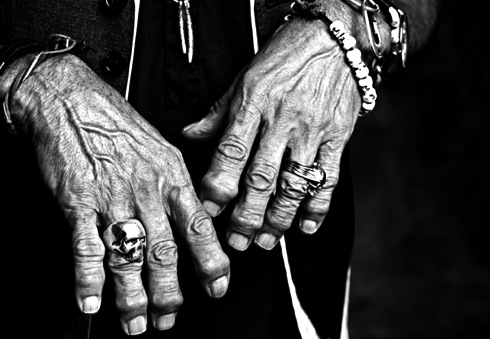
Keith Richards, David Courts , Bill Hackett, skull ring,

The guitarist’s hands in 2010, photographed © by Mario Sorrenti: the original skull ring that has become a rock-and-roll icon was given to Richards by London goldsmiths David Courts and Bill Hackett as a birthday present in 1978

FRONT PAGE

30 years ago today ➤ First survey of their private worlds as the new young trigger a generation gap

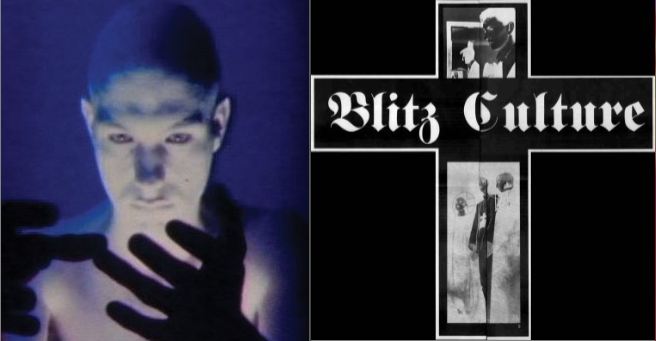
John Maybury, Marek Kohn,Blitz culture,  ZG

Left, film-maker John Maybury in Tortures That Laugh © John Maybury 1978, artist’s collection; right, graphic from ZG magazine, issue one, 1980

❚ THE BLITZ CLUB SCENE EVOLVED RAPIDLY during the summer of 1980 as media coverage caught up, and it became clear that the New Romantics were not the only social group making waves. In the London Evening Standard’s On The Line column I had been following the Blitz Kids all year and, unsurprisingly, my nocturnal antics raised eyebrows at the Standard by day. “Do they talk sort of funny?” colleagues would ask about my bizarre playmates, meaning did they say “Leave it aht” instead of “OK yah”? Over time the generation gap I was reporting caught the attention of the Standard’s perceptive film critic Alexander Walker, who couldn’t read enough about Britain’s self-possessed youth movement. “Not so much a generation gap,” he observed sagely. “More a genus gap!” In this respect, the parallels with the digital natives of today’s Generation Y are spooky.

A key difference was the naked ambition of the media-savvy Blitz Kids who shunned rock music as a stone-age relic. They were spreading inspiration through Britain’s clubland, even as Steve Strange’s Tuesday nights at the Blitz ended suddenly on October 14, as also did Hell, their Thursday offshoot. Key players were changing trains. That very week Spandau Ballet had signed their first record deal, while I had been darting daily from concert to club to Kensington Market surveying the many competing expressions of youthful endeavour, then trying to persuade the editor Charles Wintour that A Significant Youthquake Was About To Break.

A month earlier during London fashion week I’d only just scraped into print with my first Pose Age report showing Melissa Caplan’s unisex tabards which were being worn to shock. “You’re making this up,” raged one senior editor whose veto against publishing was over-ruled by Wintour. Now I was proposing that this sweeping survey for On The Line should make a spectacular centre spread in the paper. Yet the eye-searing kids in our pictures were a bridge too far even for the enlightened Wintour, who sent me a memo saying it was all “Rather too esoteric for us”. Under protest, he finally conceded splitting the survey between two separate pages a week apart.

By Christmas Spandau’s single became a chart hit, along with Fade to Grey by Visage, fronted by Steve Strange. We could not know then how quickly Britain’s clubbing grapevine was to hurtle yet more clubland bands into the charts, many unveiled by sharp young managers the same age as the talent. Or that 1981 would soon be spinning like a New Romantic dynamo.

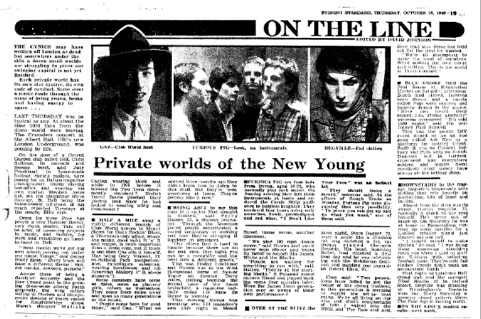
Evening Standard, Oct 16, 1980

First published in the Evening Standard, Oct 16, 1980

THE CYNICS may have written off London as dead in 1980 but somewhere under the skin a dozen small worlds are struggling to prove our swinging capital is not yet finished. Each private world has its own star system and its own code of conduct. Some steer a scenic route through the maze of being young, broke and having energy to spare. . .

➢ Click to continue reading
One week in the private worlds of the new young

Shaping ambitions at the Blitz in 1980: Lee Sheldrick, Melissa Caplan, Kim Bowen and Bob Elms

FRONT PAGE

2011 ➤ Sade comes home to tour UK but even a cheap seat will cost you £158 !

Sade, Soldier of Love,BabyFather,O2 arena,European tour, American tour, first UK tour in 18 years,highest selling British female,Rich List,Kylie
❚ BRITISH FANS GET TO SEE the soul singer and former Blitz Kid Sade Adu live on her first UK tour in 18 years at three dates in 2011: Manchester’s MEN Arena on May 27, then Birmingham’s LG Arena May 29 and London’s O2 Arena May 31. Tickets go on sale officially from Oct 18, though today you can find £134 Upper Tier seats at MEN on sale with £24 booking fee through Stereoboard.

The 70-date global tour starts in Europe at Nice on April 29, reaching Dublin on May 25, and continues through North America from June 16. Since its February launch the group’s sixth studio album Soldier of Love has sold 3m copies, while the British website for “the band Sade” claims Sade is the highest selling “British female artist” of all time (not quite the same thing), with sales of 57m albums worldwide — so as a solo singer Kylie might dispute this with her 40m albums and 60m singles. Earlier this year Kylie just pipped Sade in the Sunday Times Rich List, with an estimated fortune of £35m, against her rival’s £30m.

➢ Official Sade VIP Ticket packages priced from £399 / Euro 399
➢ 2010, Comeback Shard comfy as ‘Auntie Sade’
➢ VIEW ♫ ♫ video for the single BabyFather
➢ More links in sidebar at right

FRONT PAGE

1980 ➤ The day Spandau signed on the line and changed the sound of British pop

Spandau Ballet, Virginia Turbett,Chrysalis,Steve Dagger, New Romantics

The way they wore: Spandau Ballet minutes before signing their record record deal in October 1980. Photographed at London’s Waldorf Hotel © by Virginia Turbett

◼ AS THE COOLEST CULT LEADERS OF 1980, Spandau Ballet’s songwriter Gary Kemp claimed: “We want the band to be at all times the most contemporary statement we could possibly make on modern London.” In the face of the post-punk new wave, it took courage to decide to play fresh sexy dance music in a corporate landscape dominated by adult-oriented rock supergroups. In the event, the five boys from the Angel, Islington, quickly assumed the role of houseband to the Blitz club and by placing the bass guitar and the bass drum at the front of the sound made it hip once more to play pop.

Spandau Ballet were being managed by their onetime schoolmate Steve Dagger, aged only 23, while three record labels competed to secure them. On this day 30 years ago they signed a deal with Chrysalis Records and walked into the future clutching an advance cheque for £85,000 — at the time, a record sum for an untried band that had played all of eight bookings and had refused to cut demo discs.

“We were strong, it was a real gang, a real team mentality. It was: We’re Spandau Ballet, who the f*** are you?” — John Keeble, Spandau drummer

By breaking all the industry rules, Spandau triggered a fashion and dance music movement that had been evolving in the nightclubs of Britain. At the very moment that the Blitz closed its doors, the press dubbed their followers the New Romantics, and a slipstream of more than 100 new image bands was born. The new sounds and new styles of this, the last of the Babyboomer generation, went on to dominate the international landscape of pop and over the next three years put more British acts in the US Billboard charts than the 1960s ever achieved.

ELSEWHERE ON SHAPERS OF THE 80s

➢ Oct 16, 1980: One week in the private worlds of the new young
➢ Birth of the New Romantics and the band who made it hip to play pop
➢ How the rhythm of the pop charts changed

Spandau Ballet, The Makers,The Cut,Roots, Dame Alice Owens

Tony Hadley fronts The Makers: Spandau as a school band playing to the fourth form at Dame Alice Owens — grabbed from video

➢ VIEW ♫ Early footage of Spandau Ballet in the Young Guns documentary from 2000
➢ New Romantics: I Was There — ex-Sounds hackette Betty Page’s recollections for Record Collector, written with the benefit of hindsight in 2004

FRONT PAGE