2010 ➤ Index of posts for October

Birth of electro-pop, synth-pop,Makers, Gentry, Spandau Ballet

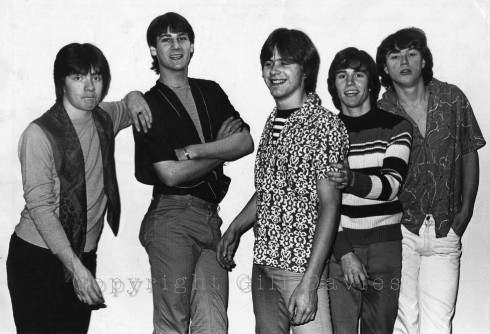
Feb 1978: The Makers, one day to be Spandau Ballet. Photographed by Gill Davies

➢ Classics of 80s graffiti revived by campaigning collective in New York

➢ Final spin confirmed for the Technics 1200, the DJ’s top turntable

➢ On this day in 1980 Spandau fired the starting gun for British clubland’s pop hopefuls: dada didi daaa!

➢ A second squadron of high-octane British artists zaps the Saatchi space

➢ Facebook may well be the mother of all networks but one man needs to check his maths

➢ Cool 21st-century branding for Channel 4, but when will it junk those clunky Bladerunner idents?

➢ A step up in the world for graffitist Eine, thanks to Potus and lady friends who shop in high places

Molly Parkin, John Timbers

In her heyday: Molly aged 29 at her first art exhibition. Photographed © by John Timbers

➢ Miss Parkin regrets that she said no to Cary… and can’t wait to meet Orson, Lee and Walter

➢ How Keith Richards’s life of debauchery became an inexplicable sign of alien invasion at The Times

➢ 30 years ago today: First survey of their private worlds as the new young trigger a generation gap

➢ 2011: Sade comes home to tour UK but even a cheap seat will cost you £158 !

➢ 1980: The day Spandau signed on the line and changed the sound of British pop

➢ 1980: Rik and pals detonate a timebomb beneath another kind of strip for Soho

➢ 1976: When Iain met Stephen, London traffic stopped and St Martin’s stood still

➢ Britain’s top hatter, Stephen Jones OBE, celebrates 30 years of Jonesmanship

FRONT PAGE

➤ Classics of 80s graffiti revived by campaigning collective in New York

graffiti, Subway Art History,Joan of Arc, Hand of Doom, Martha Cooper ,Henry Chalfant

Joan of Arc at a warehouse along a Brooklyn canal: the graffiti collective Slavery is paying homage to a 1980 work that read “Hand of Doom”. © Robert Wright for The New York Times

[From the New York Times, October 26, 2010]

❚ ANYONE WHO HAS BEEN LOST in the last few weeks around the southern reaches of the Gowanus Canal in Brooklyn could be excused for experiencing a powerful Koch administration flashback. On the wall of a brick warehouse there, a huge mural unfurls itself, a loving, seemingly spray-by-spray re-creation of one of the more infamous pieces of graffiti ever to ride the subway: a 1980 work by the artist known as Seen that covered the length of a No 6 train car with the ominous phrase “Hand of Doom”.

It is the work of a newly formed collective of (mostly) former graffiti writers in their 20s and 30s, who have embarked on an unusual citywide campaign to summon 50 or more of the most famous pieces of old-school graffiti out of the history books and back onto the streets. The project, called Subway Art History, is unusual not only because the artists are making the pieces with the permission of businesses, schools and other perhaps nostalgic owners of blank vertical space, but also because of the nature of the pieces themselves. They are expressions of homage in a subculture that has almost always been defined by fierce competition, intense striving for originality and a kill-the-elders attitude toward the past.

“In graffiti it’s like a teenage thing: No way am I going to become my father, no way am I going to make anything that looks like anyone else’s. — Then, of course, you become your father,” said a 32-year-old former graffiti writer who helped form the collective.

➢ Read Graffiti of New York’s past, revived and remade
— in the New York Times

❚ View video — 25th anniversary of Subway Art, bible of the graffiti movement, by Martha Cooper and Henry Chalfant:

➢ The book: Subway Art, bible of the graffiti movement

FRONT PAGE

➤ Final spin confirmed for the Technics 1200, the DJ’s top turntable

Technics SL-1200MK6,DJing , scratching,SL-1200MK2,vinyl ,analogue, turntable

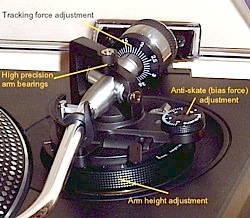
Last of its analogue line: the Technics SL-1200MK6 boasts robust hand-built construction, servo quartz direct drive, high torque and acoustic insulation, plus the universal S-shaped tone-arm for better tracking of the vinyl groove. Since its release in 1978, the MK2 has become the turntable of choice for deejaying and scratching

[From Tokyo Reporter, October 28, 2010]

❚ PANASONIC ANNOUNCED ON OCTOBER 20 that it is discontinuing the audio products within its Technics brand, most notably the legendary line of analogue turntables, of which the Technics SL-1200 MK6 is the last. “Panasonic decided to end production mainly due to a decline in demand for these analogue products and also the growing difficulty of procuring key analogue components necessary to sustain production,” the company said in statement.

Technics sl-1210, S-shaped tone-arm, analogue,turntable,

Tone-arm of the SL-1200 series: high-precision bearings

Last year, Japan’s last remaining vinyl pressing plant, owned by the production company Toyo Kasei, produced around 400,000 discs from its multifloor factory in Yokohama’s Tsurumi Ward, a far cry from the industry’s peak of 70m four decades ago. Panasonic said that sales of analogue decks today represent roughly 5% of the figure from ten years ago.

The SL-1200 series turntable, which enjoys a massive following in the deejay community, had been in continuous production since 1972. Since then 3.5m units have been produced, making the brand’s purple and grey logo (Technics written twice) an icon in clubs.

Tatsuo Sunaga, a leading club deejay in Japan, nevertheless sees those who prefer analogue as too obsessed to allow the format to become extinct. “I don’t think analogue users will lose interest,” he said.

➢ Read more… Dead spin: Panasonic discontinues
Technics analogue turntables — in Toyko Reporter

WATCH THE SCRATCHMASTER WHO CREATED THE GENRE:

FRONT PAGE

On this day in 1980 ➤ Spandau fired the starting gun for British clubland’s pop hopefuls: dada didi daaa!

rel="nofollow"

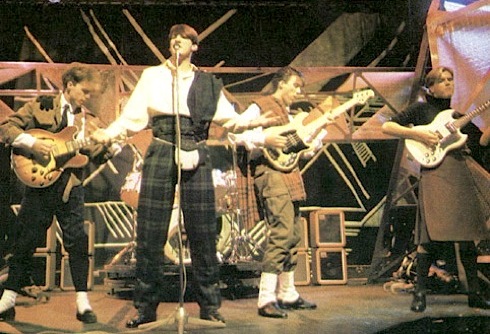
Nov 13, 1980: chart entry qualifies Spandau for their first Top of the Pops

◼ TODAY’S THE DAY THE HOTTEST NEW BAND OF 1980 released their debut single 30 years ago. Inside a year, Spandau Ballet had clicked with clubland’s coolest fan base, played only eight bookings, refused to make any demo tapes but instead spent that year winding up the media and the music industry with word-of-mouth rumours of a youth movement right behind them.

Steve Norman

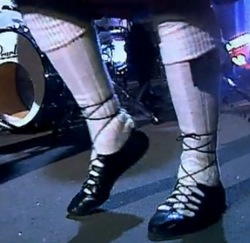
Kilt-wearing Steve Norman’s lace-ups

On October 10 Spandau signed an unprecedented deal with Chrysalis, on October 27 they released To Cut a Long Story Short driven by a monophonic synthesiser: Daa-didi dada dada di-di dada didi daaa! On November 15 the single entered the chart. Bingo – Top of the Pops.

In 1980, for every new band firing up their ambition in the wings, Spandau acted as a fuel injection system. For electro bands who had been nibbling at success  — OMD, Simple Minds, Japan, Ultravox — here was the bandwagon. And they jumped on board.

NOW TURN TO OUR INSIDE PAGE

➢ Full timeline of Spandau Ballet’s wind-up year from tease dates to Top of the Pops in 12 months!

HERE’S THE VIDEO FOR Spandau’s ORIGINAL, NOW IN HD…

➢ My full history of the birth of the New Romantics
in the Observer Music Monthly

➢ Elsewhere at Shapers of the 80s: 190+ acts who set the style for the new music of the 1980s

FRONT PAGE

➤ A second squadron of high-octane British artists zaps the Saatchi space

❚ TODAY’S NEW STARS OF BRITISH ART are quieter and more thoughtful than the YBAs in the Sensation survey of 1997 — this was the progressive critic Waldemar Januszczak’s verdict in June on Part 1 of the millionaire Charles Saatchi’s latest survey when it opened in London. “A rousing exhibition, Saatchi’s best for many a year,” he wrote. Part 2 of Newspeak, British Art Now, opens to the public today and it too proves to be another sprawl of hits and misses, yet the hits do unsettle and send a tingle through your aesthetic nerve. Shapersofthe80s has chosen a dozen of the more hyper-intense images for the gallery below.

This slideshow requires JavaScript.


For the sake of balance, let’s give the caustic old traditionalist his turn. Even after he “walked sickened away” from the 1997 Sensation show, Brian Sewell has actually conceded that “Saatchi did more for British contemporary art and the economic blossoming that it engendered than all the Tates, the Arts and British Councils put together.” Yet faced with the 2010 selection, he pronounced Newspeak Part 1 to be “Oldspeak rather than new, and we have seen it all before… The Newspeak group are hardly new kids on the block, for all have substantial exhibition histories, many of them international, yet very few have reached further than the low levels of skill, aptitude and common sense demonstrated every year in exhibitions mounted by students in the benighted art schools up and down the land.”

He concluded: “Newspeak is at best cliché, kitsch and the ironic subversion that is the joke so often played by the post-postmodernist… One might reasonably conclude that British art is dead.”

Shapersofthe80s sides with Januszczak in finding more experiment and curiosity than indifference at Newspeak. Januszczak identifies the Saatchi touch thus:
“What Saatchi has always done, and what Tate Modern can never do, is back hunches with cash. The Tate doesn’t have any FU money. Its investments are our investments. Which is why it remains so chronically and conspicuously image-conscious. When it comes to rewriting agendas, the Tate is a scaredy-cat. Saatchi, on the other hand, is not.”

Of Newspeak, he concludes: “[The] clash of new and old, scientific and irrational, experiment and belief, is typical of the show’s prevailing mood.”

❏ Newspeak: British Art Now — Part 2 runs at the splendid new Saatchi Gallery in Chelsea, October 27-Jan 16, 2011
➢ “One might reasonably conclude that British art is dead” — Brian Sewell’s review of Part 1 in the Evening Standard, June 3, 2010
➢ “Britain still has talent” — Waldemar Januszczak’s review from the Sunday Times Culture, June 6, 2010

FRONT PAGE