Category Archives: Youth culture

➤ Webb’s flipside of the 80s fashion revolution as seen last night at the ICA

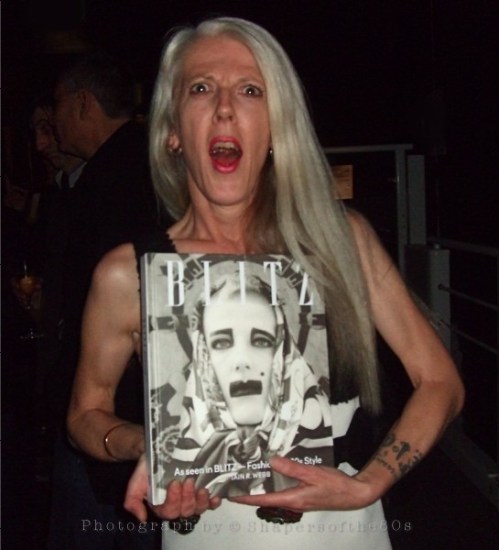
Cover girl: Scarlett Cannon at last night’s book launch . . . and covered in 1985 by photographer David Hiscock, scarfed by Hermès

CLICK ANY PIC TO LAUNCH CAROUSEL:


+++
❚ LAST NIGHT DIEHARD 80s FASHIONISTAS celebrated the launch of an elegant hardback with far greater ambitions than most coffee-table photobooks. It’s a glorious personal CV posing as one man’s record of five energetic years. It doesn’t quite knock the sensationalist Casanova off his perch as the master memoirist, but Iain R Webb’s chutzpah certainly takes your breath away.

As Seen in BLITZ, Fashioning ’80s Style is among the most unabashed, single-minded, focused works of diarism you are likely to have read. In capturing his output as a fashion journalist, this book aspires to present social history expressed through fashion. He brings a new twist to the well-tried technique of oral history, because the 100+ collaborators who contribute to this book are constantly telling the author how marvellous he is, but in the second-person singular. They are talking to “you”, meaning “me”, the author whose name appears on the cover, Iain R Webb.

Its 272 pages record a series of testimonials: “You pulled so many creative people round you” … “We did it because you asked us to” … “You jump-started my career as a photographer” … “You were one of our earliest supporters” … “You had different ways of shooting things” … “You were doing the opposite of high fashion and glamour” … “You showed me a life that was different” … “You were so beautiful and excitingly aloof” … “I would have done anything you asked” … “You were the person who ––”.

There is no place in Webb’s memoir for Eng Lit’s Unreliable Narrator, or for self-doubt or inner struggle. His worldview is confirmed at every turn. Assertion is all: The 80s – we did it my way. We, the readers, are soon rocking on our heels at the sheer brass-necked cheek of it all!

Having said which, consider the credentials of everyone involved. They amount to a Who’s Who of the fashion shapers of the 80s: Jasper Conran, John Galliano, Jean Paul Gaultier, Katharine Hamnett, Marc Jacobs, Stephen Jones, Calvin Klein, Barry Kamen, Baillie Walsh, Martine Sitbon, Princess Julia, Nick Knight, David LaChapelle and many more.
Iain R Webb, fashion,photography, books

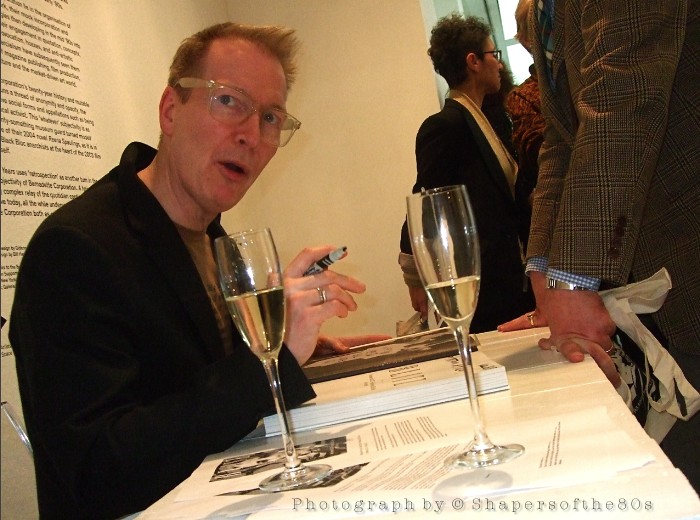
The author last night: Iain R Webb signing his book with lavish tributes to his former colleagues

We’ve heard enough about George O’Dowd’s tawdry version of events. Finally we have a much-needed corrective view of the youth cultural revolution that fired up the Swinging 80s. As Seen in BLITZ celebrates Webb’s own unique take on the decade of egotism through the pages he produced. We hear the voices of his co-stars – the photographers, designers, models and stylists who supported him as a lynchpin fashion editor – all dissecting the nuances of their subversive visions.

The whole momentum of post-punk street style during the decade’s dawn, 1980-83, is what drew the eyes of the world’s fashion industries back to Britain and put London Fashion Week on the agenda of every serious commentator twice a year.

While studying fashion design at St Martin’s, Webb was at the centre of London’s nightlife crowd at the now-legendary club called the Blitz – very much one of the 20 key Blitz Kids, as the media tagged them. He rightly claims: “At the dawn of a hedonistic club scene that saw the birth of the New Romantics … on the pages of Blitz, The Face and i-D, a new breed of young iconoclasts hoped to inspire revolution.” These were three new magazines, soon dubbed “style bibles”, which gave journalistic expression to the fertile innovations in UK pop culture and defined the era.

Blitz was a desultory magazine, almost entirely devoid of character in its early years. It was launched in 1980 with a title that its owner says seemed “catchy”, utterly oblivious to the pivotal club-night of the same name and the precocious youth-quake putting London back at the centre of the pop universe. It took until about 1983 for Webb to recognise the gap in the market for radical and purposeful fashion journalism and to infiltrate Blitz, the magazine.
Iain R Webb, As Seen in BLITZ, fashion, books, photography

Webb’s ICA launch: the author sets the style for the evening. After Godot, out of skip? I stand corrected: After Wild Boys, out of Burroughs

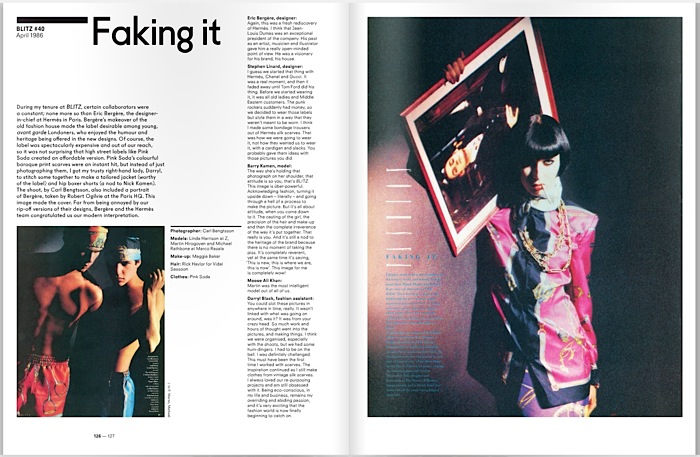
Webb beavered his way up to becoming its fashion editor from Feb 1985 to August 1987 and was often given 20 pages a month to be filled with his “singular vision if they were to be taken seriously”. Webb’s USP was an “ongoing love/hate relationship with the fashion industry. It was not about selling a look, it was about saying something”. He expressed his ethos on a T-shirt in a 1986 photo shoot: “We’re Not Here to Sell Clothes”. When he was headhunted to join the London Evening Standard in 1987, his shoes at Blitz were filled by Kim Bowen, Queen Bee of the Blitz Kids, herself the wildest child in the club.

Webb’s purpose, he writes, “has always been to inspire or provoke, engage or enrage” and his images “manipulated fashion to explore ideas of transformation, beauty, glamour and sex”. His book brims with attitude and evidence that the fashion world did indeed tilt slightly on its axis during the 80s – as eye-witness accounts confirm in entertaining archive interviews.

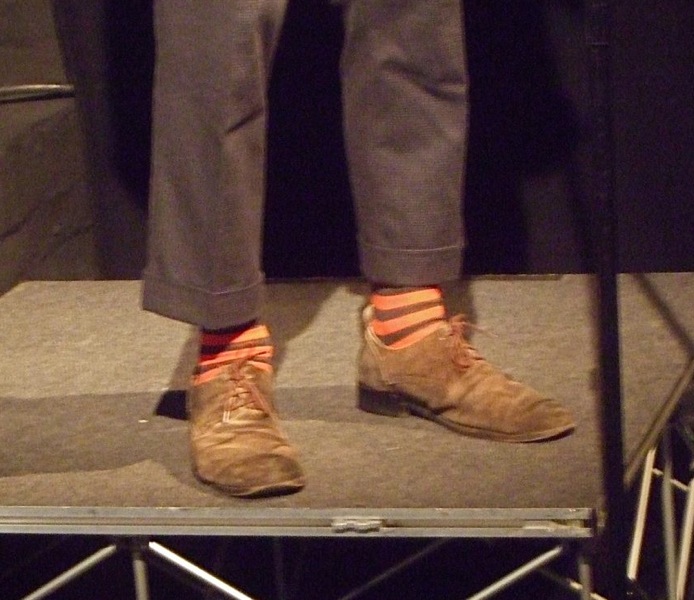
How does an author cap all this? At his launch party last night at the Institute of Contemporary Arts, the savviest fashion editor of his day sported an awkward grey suit, and a battered pair of lucky suede shoes, every inch Beckett’s absurd tramps waiting for Godot, looking to all the world as if he’d spent the night in a skip. Anti-fashion to a T. Who’d have thought Webb had once held plumb posts at Harpers & Queen, The Times and Elle? And won the Fashion Journalist of The Year Award in both 1995 and 1996. And remains Professor of Fashion at the RCA and Central Saint Martins!
Iain R Webb, As Seen in BLITZ, fashion, books, photography

As Seen in BLITZ, 1986: classic Hermès scarves redeployed as boxer shorts and tailored jacket. Model Barry Kamen says says the female model’s attitude is so Webb, so BLITZ

❚ THIS BEAUTIFUL PHOTOBOOK, As Seen in BLITZ, precipitates a weekend of events at London’s ICA. Today there is a pop-up show in the ICA Theatre curated by the author Iain R Webb to display his own highly confessional memorabilia, plus a series of talks with special guests, film screenings.

In the darkened theatre only the 80s ephemera are visible as you enter: an array of toplit boxes on tables, containing notebooks, diary pages, sketches and name-droppy correspondence. These relics of a career lie in plain wooden showcases – “vitrines” would be an overstatement – more like pauper’s coffins. They amount to a novel kind of runway show of “my creations”. On one sheet of paper, Webb outlines his vision as fashion editor of Blitz, explaining London’s appeal: “The young English inherit a fight-back spirit, whilst the old fall sleepily into a heritage of traditional and quality goods … Of late the two have begun to merge, and the results have ensured the envy of the rest of the world.” Another note identifies the icing on a girl’s wardrobe as “an abundance of dishevelled accessorising – 1985 is a time to be ALIVE”.

➢ Webb’s As Seen in BLITZ discounted from £35 to £21

➢ The Victoria & Albert Museum exhibition Club to Catwalk: London Fashion in the 1980s runs from July 10, 2013 to Feb 16, 2014

FRONT PAGE

➤ Synthpop cabaret from a right romantic pair of poseurs

 Terrible Splendour, synthpop,

A Terrible Splendour: the eternal themes of rebellion and shame

➢ If you want to support fresh electropop talent here are A Terrible Splendour – two Londoners called Martin Block and MM Lyle, whose heroes include Duran Duran, Ronny, Japan and Alphaville and they sound a lot like many of them. They say:

A Terrible Splendour are a London-based duo who weave tales of blackmail and despair, of cruelty and of heartbreak. Drawing from the Silver Screen, Romanticism and the New Wave, their sound is a darkly luxurious synthesised pop, fractured through the lens of a cursed Berlin.

Terrible Splendour, synthpop,PoseursTheir live shows are a theatre of love and death, with performances drawing on Weimar-era cabaret. The recent self-made video for their track Victimless Crime displays an aesthetic that references German Impressionist cinema and gothic storytelling.

The band’s debut album Poseurs, is released on the French electronic label Desire, to include a limited edition of 300 copies on white vinyl. It features 11 tracks ranging in style from dissolute disco to sombre cabaret musings. Resolutely modern synth sounds, in turn lush and vicious, combine with lyrics addressing the eternal themes of rebellion, shame and the vagaries of outrage. Plus sparkling new mixes by producer James Aparicio (These New Puritans, Spiritualized).

Er, thassabout it.

FRONT PAGE

➤ Playlists to keep us foot-tapping into May

Basement Jaxx ,video,Back 2 The Wild

Back 2 The Wild: Click on pic to run video in a new window

➢ Bedazzling music video for the new Basement Jaxx single Back 2 The Wild is directed by Mat Maitland at Big Active & Natalia Stuyk. Salient points at Popjustice:

  1. Basement Jaxx are Felix Buxton and Simon Ratcliffe and they hail from London, England.
  2. They’ve collaborated with “everyone” from Kele Le Roc to JC Chasez to Dizzee Rascal to Robyn.
  3. If a song of theirs came on in a club it would not be inappropriate to have a bit of a dance.

➢ Double whammy: view the Wild video in super-high quality and visit their own online playlist at jaxxplayer

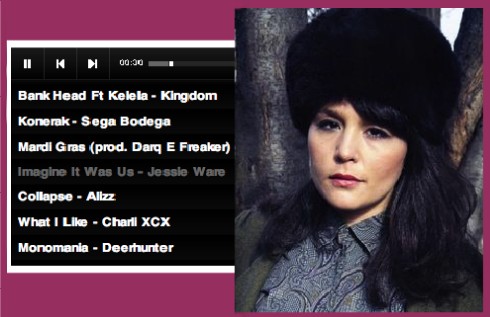
Dazed Digital ,May,Playlist ,Jessie Ware
➢ Dazed Digital has a vibey May playlist alongside its main feature post-punk stars, Savages. It says:
We’ve got a whole lot of Jeremih from his Cassie mixape collab to Shlohmo, new Gold Panda, Co La’s experimental single on Software, the first release from legendary London establishment Fabric’s Houndstooth label as well as an exclusive stream from Pedestrian’s new EP and more from our recently featured avant-garde electronic duo Diamond Version. Not to mention Jessie Ware.

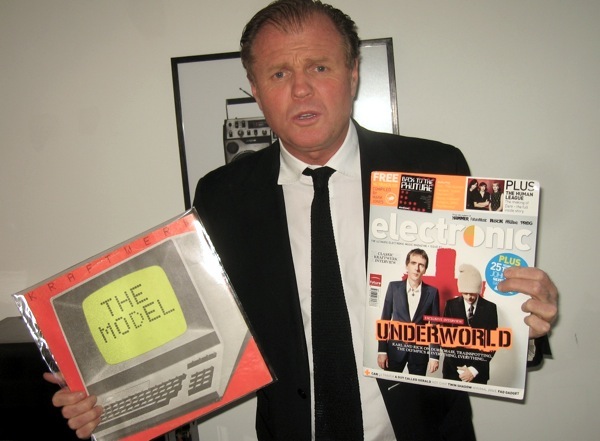
Electricity Club,Kraftwerk, Mi-Soul, radio, Rusty Egan

Electricity Club Showman Rusty Egan: any kind of music so long as it’s electro

➢ Rusty Egan presents The Electricity Club Show every Friday 00:00 till 02:00 BST … Either take this picturesque catch-up route via the Electricity Club which champions the current electropop scene:

Eins-zwei-drei-vier… the fourth programme in the series Egan Presents The Electricity Club on Mi-Soul Radio can now be heard on catchup. The show starts with Kraftwerk and the other featured artists are fine examples of the Düsseldorf foursome’s legacy. These acts include Felix Da Housecat, Tiga & Zyntherius, Afrika Bambaataa, The Knife, Omd, Junkie Xl Featuring Dave Gahan, Mgmt, Simple Minds, Sin Cos Tan, Daft Punk, Inertia And The Presets.

➢ Or tune in live to Egan playing the best in electronic music at Mi-Soul on Fridays 00:00 till 02:00 BST

Mi-Soul is a soul music broadcast platform, providing everything soul everywhere – online, on mobile app and in due course on FM and digital, and any other future platform yet to be invented. Launched by the team responsible for creating Kiss FM in the 1990s, Mi-Soul continues to be supported by many of the original DJ team, augmented by high-profile presenters in every genre. Mi-Soul occupies a self-contained wing in the in the Stephen Lawrence Charitable Trust’s iconic building in Deptford, which was designed by the award-winning architect David Adjaye, and opened in 2008.

RUSTY’S SUMMER IN THE MED

❏ Rusty Egan says: “If you are in Cannes for the film festival I will be there on the Croisette at “Canvas” on the beach opposite Carlton Cannes hotel May 17–19 … then in Ibiza at Nassau Beach Bar with Steve Norman from Spandau Ballet on sax and percussion, from May to Sept every other Friday … I have been very busy writing and recording new music under the title Welcome To The Dancefloor and will be ready to release some stuff very soon. Visit Soundcloud to sample some.”

♫ Rusty Egan’s Playlist at the Blitz

FRONT PAGE

➤ 14,000 words on Bowie’s album – responding to Bowie’s own 42 words telling what it’s all about

❚ AND YOU WON’T STOP READING THEM! A novelist asked David Bowie to explain his comeback album. In his own way, Bowie uttered his first public words on the subject: 42 of them.

Rick Moody,reviews,David Bowie, The Next Day,pop music,Britishness

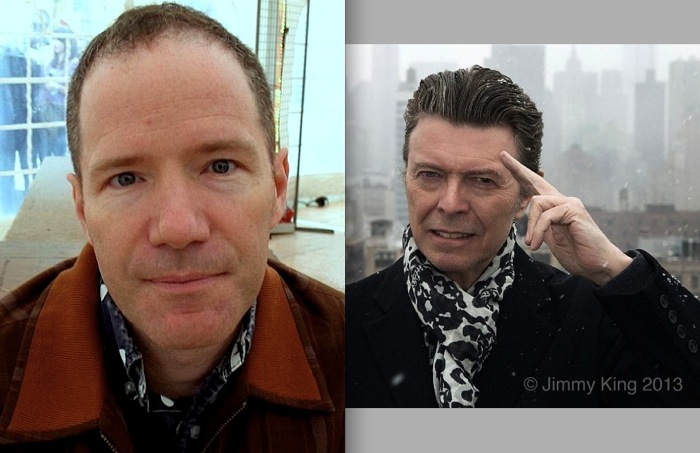
Rick Moody photographed by Seamus Kearney … and a salute from Bowie at 66

“Never has an album been quite as resistant to interpretation as The Next Day,” writes Rick Moody, the 51-year-old American author, tipped by New Yorker magazine as one of its “20 writers for the 21st century”. So he asked Bowie for some clues! We offer a few teasers here to entice you in, but no spoilers. The original piece is so rewarding, you won’t regret setting aside half an hour of your time to devour it… Moody talks of cocktail napkins, albatrosses, a sequence of ghosts and the pressure to be à la mode … of chanson, of papal indulgences, of hatred of rhyme, the ancient temple in Rome, quintessential Britishness, rethinking certainties and the world at war…

SHAPERS OF THE 80S OFFERS AN EXTRACT
FROM HIS MONUMENTAL ANALYSIS

➢ Rick Moody dissects Bowie’s new album with the help of its creator in 14,000 words published yesterday. Read the full essay at the pop-cultural web platform, The Rumpus

BY RICK MOODY: I am writing these lines because The Next Day, the album by David Bowie, is the unlikeliest masterpiece of the recent popular song, the best album by an otherwise retired classic rock artist in many, many years. It kicks the shit out of that recent spate of albums by Neil Young and Crazy Horse, it is better than anything the Stones did since Tattoo You … [etc etc etc]

It’s a remarkable and completely unpredictable masterpiece by a guy in his later sixties, an album that doesn’t sound like anything else happening in 2013, except that it sounds, in some ways, like a lot of the very best work David Bowie has done … [etc etc etc]

In the environment of Taylor Swift and Justin Bieber and One Direction, David Bowie sounds like a titan, like a behemoth of song, but it’s not only because of his context, it’s because he made a great album, which has more passion in each composition than most people manage in entire albums … [etc etc etc]

I wanted to understand the lexicon of The Next Day, and so I simply asked if he would provide this list of words about his album… and yet astonishingly the list appeared, and it appeared without further comment, which is really excellent, and exactly in the spirit of this album, and the list is far better than I could ever have hoped.

David Bowie, The Next Day, Where Are We Now?,video

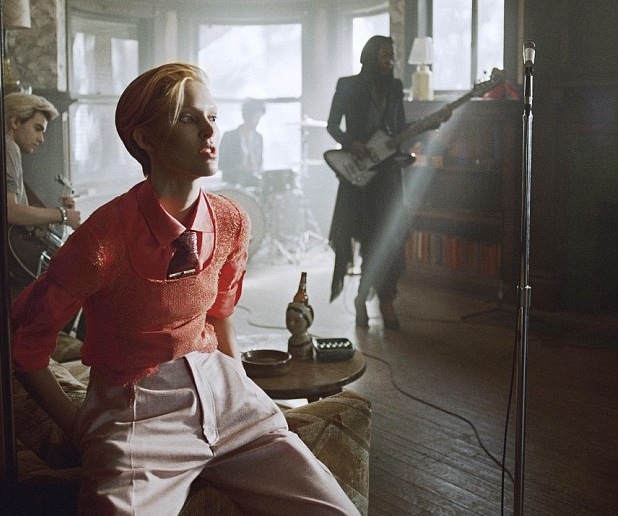
Having asked Where Are We Now? in his first comeback single this year, Bowie’s second posed other enticing questions in a sexually ambiguous video for The Stars (Are Out Tonight) (ISO Records)

BOWIE’S LIST

Effigies

Indulgences

Anarchist

Violence

Chthonic

Intimidation

Vampyric

Pantheon

Succubus

Hostage

Transference

Identity

Mauer

Interface

Flitting

Isolation

Revenge

Osmosis

Crusade

Tyrant

Domination

Indifference

Miasma

Pressgang

Displaced

Flight

Resettlement

Funereal

Glide

Trace

Balkan

Burial

Reverse

Manipulate

Origin

Text

Traitor

Urban

Comeuppance

Tragic

Nerve

Mystification

It’s a great list, and it has the word chthonic on it, and this is one of my very favorite words, and you have to admit, additionally, chthonic is a great word, and all art that is chthonic is excellent art, and art that has nothing chthonic about it, like, let’s say, ‘Don’t Worry, Be Happy’, that is art that’s hard to withstand
➢ Rick Moody continues at The Rumpus

POSTSCRIPT VIA IAN HUNTER

+++
❏ Rick Moody: They have no idea how easy it would be to stop. Still, this neglects the loss you would feel about retirement… Ian Hunter, the British singer-songwriter and Bowie’s acquaintance for whom he once wrote All the Young Dudes, had a song on this subject, on his comeback album called Rant (2001), the song being Dead Man Walking (What am I supposed to do now?/ Crawl down the hole of monotony?/ The silence is deafening/ The phone never rings)

FRONT PAGE

2013 ➤ A ‘blistering’ picture hoard from punk’s formative years

The Clash,book, exhibition,Photography, Sheila Rock

The Clash in 1976. Photographed by Sheila Rock

❚ FOR THOSE WHO SURVIVED the mid-70s, punk was the anti-fashion UK phenomenon that transformed contemporary culture. Now “a blistering 1976-80 photo-hoard” of mostly unseen pictures has been published as a 272-page photobook. Punk+ by Sheila Rock – an American in London – chronicles both designer and street styles that impacted on fashion, society and politics, including Vivienne Westwood’s shop SEX as well as BOY, Robot and Acme Attractions. The collection, which had been stored in a box in Rock’s garden shed, includes formative images of The Clash, Chrissie Hynde, Paul Weller, The Jam, Generation X, Siouxsie & the Banshees and The Sex Pistols.

Paul Simonon of The Clash says: “This book is a great photographic record of a major shift in British street fashion.”

Sheila Rock arrived in London in 1970 to join the David Bowie circle, and it was her friend and Patti Smith guitarist, Lenny Kaye, who took her to a gig by the then-unknown Clash. “That was the first time I was introduced to the punk scene,” she says. “I decided to take my Nikon camera with me and my photography career began.” Her photographs of showbiz performers and musicians have been published in titles from Vogue to The Sunday Times and can also be found in London’s National Portrait Gallery. This month her pix will also be showing in the Punk: Chaos to Couture exhibition at The Metropolitan Museum of Art in New York.

Mick Jones,,book, exhibition,Photography, Sheila Rock

At the Brown’s party tonight: Sheila Rock with Clash guitarist and vocalist Mick Jones. Photograph © by Beki Cowey

Rock’s career took off in 1980 in The Face, the 80s style bible published by Nick Logan, who describes Rock as “self-effacing but sweetly persuasive” in the preface to PUNK+. He notes how she refined her images to capture a style that portrayed what her subjects wanted to personify. She often achieved this better than they understood themselves.

Tonight the book was launched with a two-week exhibition of Rock’s photographs at Brown’s high fashion store in London, and a further show runs for a month from May 28 at Rough Trade East, where there’s also a book signing.

Mojo Magazine reports: “Sheila Rock’s PUNK+ book presents a blistering 1976-80 photo-hoard. The striking and fascinating photo-book collects almost 200 images of groups including The Subway Sect, Eater, Buzzcocks, The Clash and the Sex Pistols, plus documentation of the rapidly changing fashions of the late 70s. She estimates 90 per cent of the shots have never been seen, and that 85 per cent were self-motivated experiments rather than work commissions. Those enthralled by shifts in vintage youth styles will also delight in the images of unselfconscious punks, such as the young Jam fans who mixed the Weller look with the safety-pin aesthetic.”

➢ PUNK+ is published by First Third Books Ltd (London and Paris): 272 pages, size 20 x 27cm, limited edition of 300 copies signed and numbered, £99; standard edition of 1,700 copies, £49. The book includes illuminating conversations with Chrissie Hynde, Tony James, Don Letts, Jeanette Lee, Glen Matlock, Chris Salewicz, Jon Savage, Steven Severin, Paul Simonon, Jah Wobble and more.

➢ Sheila Rock celebrates punk at Brown’s Men’s dept,
London W1K 5QG, April 25–May 7, Vogue preview

➢ Another exhibition of photos by Sheila Rock runs May 28–June 30 at Rough Trade East, 91 Brick Lane, London E1 6QL. On May 29 at 7pm Sheila will be joined by Don Letts and Jeanette Lee plus special guests for a Q&A event and afterwards a signing session for her book Punk+.

FRONT PAGE