“ Around 300,000 people have seen the V&A’s David Bowie is exhibition as it enters its closing week. The V&A has been running regular late-night openings to cope with demand and the exhibition has been open until 22.00 every night for the final two weeks. Tickets are still available for purchase every day at the Museum.
To give people one last chance to see the exhibition in the UK the V&A has also commissioned a special film to be transmitted live to over 200 cinemas across the UK on 13 August. David Bowie is happening now will be a cinematic, behind-the-scenes tour of the exhibition in the company of curators Victoria Broackes and Geoffrey Marsh and celebrity guests.
The exhibition will now commence an international tour. Confirmed venues are:
Art Gallery of Ontario, Toronto, Canada from 25 September to 27 November 2013
Museum of Image and Sound, Sao Paulo, Brazil from 28 January to 21 April 2014
Museum of Contemporary Art, Chicago, USA from September 2014 to January 2015
Philharmonie de Paris/ Cité de la Musique, Paris, France from 2 March to 31 May 2015
Groninger Museum, Groningen, The Netherlands from 15 December 2015 to 15 March 2016
Further international venues are under discussion… ” / Continued at Bowie.com
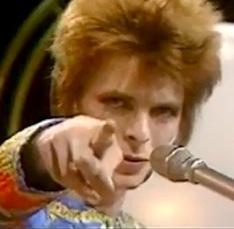
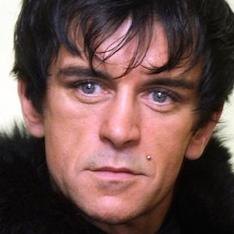
Fresh this week: a new Bowie portrait by Jimmy King, oozing maquillage
❚ WHAT’S THE CULTIEST ROLE in all of television, the one that’s just been given to the cultiest madman in all of TV comedy? Yes the new Doctor Who is announced as Peter Capaldi, aka Malcolm Tucker, foul-mouthed spin-doctor from the multi-award-winning political satire, The Thick of It. The part won him the 2010 BAFTA Award for Best Performance in a Comedy Role.
The 55-year-old Scot will be the 12th actor to play the Doctor, a new hero for a new generation. It is not the first time Capaldi has appeared on the show – he played a Roman merchant in the 2008 Doctor Who adventure The Fires of Pompeii.
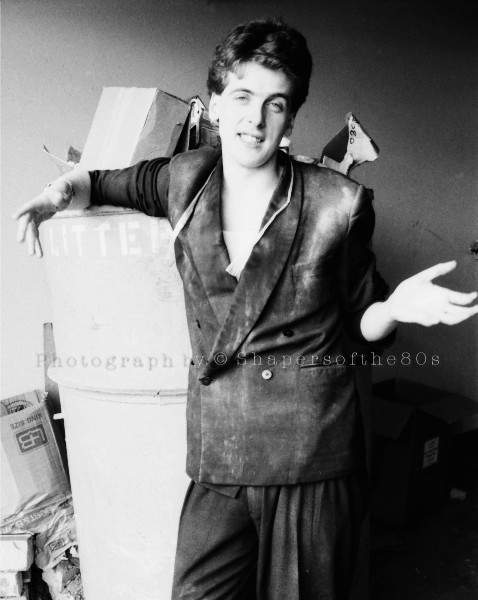
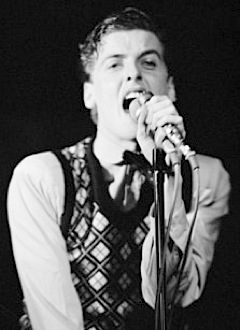
But few people seem to know how he got his big acting break in Bill Forsyth’s 1983 movie Local Hero. As a student at the Glasgow School of Art, Capaldi had been the vocalist in a post-punk band called The Dreamboys. He also took to stand-up comedy and was invited to support Spandau Ballet on their first UK tour in 1982. The famously anti-rock clubland band did not want the usual rock support act and decided a comedian would add piquancy to the uniqueness of their own approach to new music.
Spandau songwriter Gary Kemp is reluctant to take any credit as talent scout, but it just so happened that he spent quite some time in Scotland that year romantically smitten by Clare Grogan, the cute 20-year-old singer in the Glasgow pop group Altered Images.
Kemp, himself then 22, recalls vaguely how Capaldi came to his attention at the age of 23: “It was through Gerry McElhone who managed Altered Images. Maybe he played me a tape, or something.” Clearly he had other more important things on his mind at the time. Gig archives tell us that in May 1981 The Dreamboys played on the same bill as Altered Images at Edinburgh’s Nite Club, and in September Capaldi gave his stand-up routine, so there’s every chance Kemp met him at the bar.
The point was Grogan had starred in Forsyth’s 1981 cinema smash, Gregory’s Girl, and Spandau’s Diamond tour launched in March 1982 with three dates in Scotland and Capaldi live onstage as the warm-up.
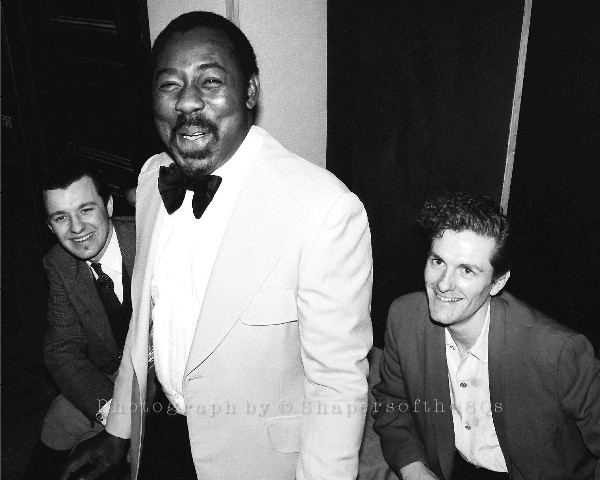
Spandau’s brief tour ended at the Winter Gardens Bournemouth [my pix are previously unpublished] but a year later, when Local Hero was released, Capaldi told me that he got the part only because Bill Forsyth had seen him at the Spandau show in Glasgow. The rest is history: a brilliantly versatile career as an actor of comedy and drama has included a cameo dad in the 2007 series of Skins, and the repressed head of news in last year’s electric BBC series, The Hour.
Steven Moffat, executive producer of Doctor Who, described casting Capaldi as an incendiary combination: “One of the most talented actors of his generation is about to play the best part on television.”
Capaldi said yesterday: “Being asked to play the Doctor is an amazing privilege. Like the Doctor himself I find myself in a state of utter terror and delight. I can’t wait to get started.” Filming begins in the autumn.
The Thick of It writer Armando Ianucci tweeted: “There can’t be a funnier, wiser, more exciting Time Lord than Peter Capaldi. The universe is in great hands.”
❏ PETER CAPALDI DELIVERS Bela Lugosi’s Birthday, the A-side song from the 7-inch single by Scottish rockers, The Dreamboys, on the St Vitus label about 1980 – before Craig Ferguson joined as drummer. YouTuber Ashley Harrison writes: “A little post-punk, goth and power pop, it is reminiscent at times of Bauhaus, Joy Division, Wire, The Fall, The Damned.” Scotland had a fierce underground music scene in the early 80s and I’ve often said a weekend in Glasgow felt as if you were in the trendiest city in the UK, and at least on a par with London.
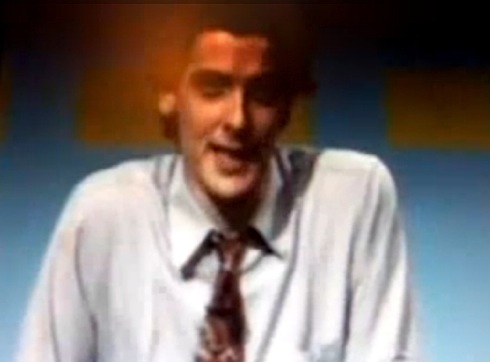
Capaldi in 1983: introducing Sade’s TV debut on Loose Talk
“ It was 27 April 1985 and the opening party for the second floor of the Wag Club – the nightspot I founded and ran in Soho – was in full, unrestrained swing. Fuelled by the unlimited free bar, the place was totally off the hook, the crowd dressed to the nines in their own inimitable fashion – pirates, preachers, punks and picture-postcard peaches – throwing themselves about with Bacchanalian abandon to a soundtrack as arcane and varied as they were.
“ High jinks indeed, yet looking around I realised that we as a group had come of age, were taken seriously and that this moment was ours. George Michael danced next to Siobhan of Bananarama overlooking Sade who nodded to the music in front of Suggs and Martin Kemp. Over the way, John Galliano camped it up alongside Leigh Bowery, Judy Blame, Boy George and one of the scene’s most innovative dressers and designers, Stephen Linard, while behind them stood Steve Strange and Princess Julia chatting to Vivienne Westwood… ” / Continued at High Life
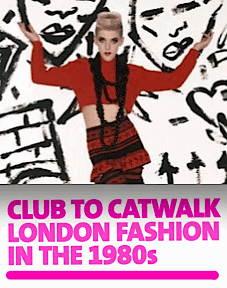
➢ Club to Catwalk: London Fashion in the 1980s runs at the Victoria & Albert Museum, July 10–Feb 16, 2014. Featuring more than 85 outfits, it showcases new looks from the decade’s most experimental designers and some remarkable photography from back in the day
Monica Curtin’s 1985 pic of Scarlett Cannon as “key identity” for the V&A Club to Catwalk show… Outfit by BodyMap’s AW 1984 collection, Cat in the hat takes a rumble with a techno fish. Stylist John Derry-Bunce. Background painting Simon Josebury. Hair and makeup Jalle Bakke
❚ “FASHION???” SCOFFED THE FASHION EDITOR of a leading women’s magazine who shared my flat in 1980, after meeting one of the more ornamental Blitz Kids over our breakfast table. “Those aren’t even clothes!” Yet within five years she was as keen as every other editor to be featuring BodyMap, Galliano, Jones, Auburn, Hogg, Hamnett, Bernstock Speirs et al. Scroll forward 30 years and London’s world-beating decorative arts museum, the V&A, weighs in with a necessary exhibition reappraising the UK’s style revolution of the 80s. What’s coming under scrutiny in its dedicated fashion galleries are the unique silhouettes of that extravagant shape-shifting decade and the clubland forces that moulded them. Only two weeks to go before Club to Catwalk, London Fashion in the 1980s, and there’s one crucial tipping point at its heart: the moment fashion became style.
Let’s hand over to fashion guru Iain R Webb, one of the central figures who defined his generation and whose impressive book As Seen in Blitz was published last month. Here’s a taste of the mighty personal essay he has written for the summer issue of the V&A Magazine…
V&A Magazine summer issue: the 80s deconstructed by Iain R Webb
Webb writes: “ The 1980s were all about being photographed. We dressed as if every day were a photo shoot and every night a party (it usually was). But there was another revolution happening.
The advent of the stylist who approached fashion as an artistic construct was something new. Alongside the contributors to BLITZ, The Face and i-D (Ray Petri, Judy Blame, Caroline Baker, Helen Roberts, Beth Summers, Simon Foxton, Mitzi Lorenz, Maxine Siwan and Caryn Franklin among them) were two thought-provoking arbiters whose importance is often overlooked. Michael Roberts at Tatler and Amanda Grieve at Harper’s and Queen added a subversive edge to their respective glossy titles. Roberts poking fun at old-school mores while Grieve (later Harlech) befriended St Martin’s graduate John Galliano and helped create the romantic whirlwind that shaped fashion for decades to follow.
The images produced by all these stylists merged fashion and art, questioned the accepted ideals of beauty and social status and enjoyed a sense of experimentation. Their vanguard imagery often highlighted specific issues such as the superficiality of fashion and consumerism with humour.
“At that time there was a group of stylists who were as creative as the designers, if not more so,” remembers PR Lynne Franks, who represented BodyMap, Katharine Hamnett and Wendy Dagworthy. “It prompted the question: What came first, the styling or the clothes? It was very spontaneous, like playing dress-up.”
Stefano Tonchi, editor of W magazine, then editor of Westuff, an alternative style periodical published in Florence, says: “Fashion was no longer fashionable. Style was used to describe many areas of the creative arts that came together. It made for a new category. Music dictated a lot of the emerging trends and there was experimentation in both photography and graphic design, but fashion was where these exciting changes were most evident. Think of the BodyMap fashion shows, they weren’t just about the clothes but involved music, graphic design and theatre… ”
Nathaniel Lyles: a prism of enamelled copper wires in crazy colours
➢ On the college blog of Central Saint Martins Derek Cheng reports on this week’s fashion spectacle at the King’s Cross Campus “ We saw a new wave of fashion hopefuls showcasing their graduation collections right at the entrance of Central Saint Martins’ new base. These students have experienced both the historic Charing Cross building and the current contemporary landmark in King’s Cross. From these collections, we saw promises, fresh ideas and of course blood and sweat. It’s clear that these students are still embracing the spirit and tradition of CSM: be rebellious, be different and be yourself!
“ 40 carefully selected fashion design students from five different pathways — womenswear, menswear, knitwear, fashion design with marketing and print — provide us with a wide range of exciting and, for many, shocking concepts. As highlights from the show, we present 13 outstanding collections… ” / Full commentary and many more pix on the CSM blog
CLICK ANY PIC TO LAUNCH CAROUSEL:
Yuki Hagino: exquisite origami sculptures, with 3-dimensional details
Xue Li: an expressive representation of ethnic inspirations
Shinya Kozuka: a quiet, contemplative side of menswear
Krystyna Kozhoma: feminine dresses and bodysuits that are cyber-looking and powerful
Charles Jeffrey: dramatic menswear based on the Scottish Independence referendum
Nicholas Daley: old-school punk and reggae
Beth Postle: 2D garments inspired by 1920s Soviet costumes
Xu Yuan Xin: oversized silhouettes, inspired by industrial workwear and sportswear
Samuel Yang: a white-out of “the aura that exists among people”
Cassandra Verity Green: under-water creatures like seaweed and coral reef-embroidery
Roni Ilan: fashion sculptures with fabric and metal
Alve Lagercrantz: puffy and spacious garments with a parachute finale
+++ ➢ Grazia Daily – “Two things we learnt … 1, Clubbing is coming back. Like, proper clubbing … 2, Womenswear and menswear are increasingly interchangeable”
➢ Choose “View full site” – then in the blue bar atop your mobile page, click the three horizontal lines linking to many blue themed pages with background article
MORE INTERESTING THAN MOST PEOPLE’S FANTASIES — THE SWINGING EIGHTIES 1978-1984
They didn’t call themselves New Romantics, or the Blitz Kids – but other people did.
“I’d find people at the Blitz who were possible only in my imagination. But they were real” — Stephen Jones, hatmaker, 1983. (Illustration courtesy Iain R Webb, 1983)
“The truth about those Blitz club people was more interesting than most people’s fantasies” — Steve Dagger, pop group manager, 1983
PRAISE INDEED!
“See David Johnson’s fabulously detailed website Shapers of the 80s to which I am hugely indebted” – Political historian Dominic Sandbrook, in his book Who Dares Wins, 2019
“The (velvet) goldmine that is Shapers of the 80s” – Verdict of Chris O’Leary, respected author and blogger who analyses Bowie song by song at Pushing Ahead of the Dame
“The rather brilliant Shapers of the 80s website” – Dylan Jones in his Sweet Dreams paperback, 2021
A UNIQUE HISTORY
➢ WELCOME to the Swinging 80s ➢ THE BLOG POSTS on this front page report topical updates ➢ ROLL OVER THE MENU at page top to go deeper into the past ➢ FOR NEWS & MONTH BY MONTH SEARCH scroll down this sidebar
❏ Header artwork by Kat Starchild shows Blitz Kids Darla Jane Gilroy, Elise Brazier, Judi Frankland and Steve Strange, with David Bowie at centre in his 1980 video for Ashes to Ashes
VINCENT ON AIR 2026
✱ Deejay legend Robbie Vincent has returned to JazzFM on Sundays 1-3pm… Catch up on Robbie’s JazzFM August Bank Holiday 2020 session thanks to AhhhhhSoul with four hours of “nothing but essential rhythms of soul, jazz and funk”.
TOLD FOR THE FIRST TIME
◆ Who was who in Spandau’s break-out year of 1980? The Invisible Hand of Shapersofthe80s draws a selective timeline for The unprecedented rise and rise of Spandau Ballet –– Turn to our inside page
SEARCH our 925 posts or ZOOM DOWN TO THE ARCHIVE INDEX
UNTOLD BLITZ STORIES
✱ If you thought there was no more to know about the birth of Blitz culture in 1980 then get your hands on a sensational book by an obsessive music fan called David Barrat. It is gripping, original and epic – a spooky tale of coincidence and parallel lives as mind-tingling as a Sherlock Holmes yarn. Titled both New Romantics Who Never Were and The Untold Story of Spandau Ballet! Sample this initial taster here at Shapers of the 80s
CHEWING THE FAT
✱ Jawing at Soho Radio on the 80s clubland revolution (from 32 mins) and on art (@55 mins) is probably the most influential shaper of the 80s, former Wag-club director Chris Sullivan (pictured) with editor of this website David Johnson
LANDMARK FAREWELLS. . . HIT THE INDEX TAB UP TOP FOR EVERYTHING ELSE