Category Archives: Youth culture

➤ Launching tomorrow, Soho’s new radio station gives Sullivan the wag a place in its shop window

Wag club, London, nightclubbing, Chris Sullivan,1980s,

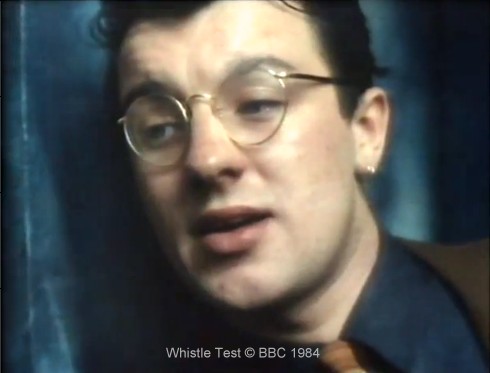
On TV in 1984: Wag club host Chris Sullivan talks of his love for jazz (BBC)

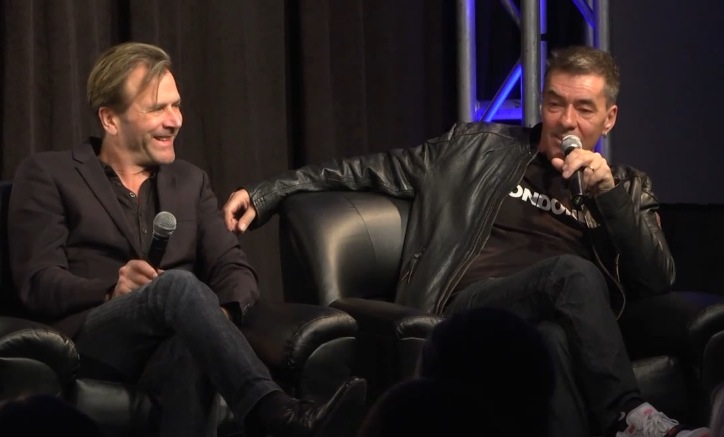
❚ DEEJAY AND WAG CLUB FOUNDER and reinventor of the zoot suit Chris Sullivan writes today: “My first radio show on Soho Radio tomorrow from 4 till 6pm …. Tune in online for an afternoon tickle…. and please like the page if you can. I’d be most grateful.”

➢ His Presenter page at Soho Radio reads like his job app to me:
Soho Radio, online,London, UK The show would be called Sullivan Suits and would cover all the music I come across each week on my quest as a DJ that might be Scorpio by Dennis Coffey, You and Me By Slave, Hustlers Convention by the Last Poets or re-edits by Joey Negro such as Same Old Scene by Roxy or stuff that I refind such as Manhattan Fable by Babs Gonsales, Light My Fire by Erma Franklyn. These would be backed up by old favourites such as A Boy Named Sue by Johnny Cash, Wonderful World by Louis Armstrong, Kooks by David Bowie. Howling Wolf, Little Walter, Aretha etc etc.

I’d throw in odd facts, stories and hoaxes. All in all it would be whatever suits me and the listener that day. I would also get a guest from time to time and get them to pick a few tracks – Mark Powell, Phil Dirtbox, Kevin Rowlands, Bernie from Groucho, Mark Hix etc and perhaps discuss Soho and swop stories.

❏ Launching at 2pm Weds May 7, Soho Radio is a new independent radio station with 24/7 live streaming and pre-recorded programming from its own shop/cafe in Great Windmill Street, next to Paul Raymond’s Windmill Club. Wave to the Cuban Brothers and later to Sullivan through the studio’s large shop window onto the street. The station says it aims to provide an eclectic mix of the vibrant and diverse which this district of central London is renowned for – breaking underground acts and bringing together musicians, artists, film makers, chefs, poets and local piano tuners. Nowhere does the website says who’s behind the radio station, so until it proves itself we’d better assume it’s some Russian oligarch, as usual these days.

TALKING OF THE WAG, HERE’S A RARE OLD VIDEO

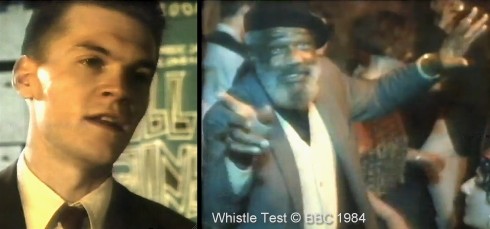
❏ Newly posted at YouTube, here’s a supercool glimpse inside Chris Sullivan’s Wag club on Wardour Street when it was London’s landmark nightspot during 1984. Monday nights were given over to the clubland’s most fashionable music craze – jazz! This segment comes from the BBC2 Whistle Test music programme on the Jazz Room when David Hepwoth ventures into the Wag to meet clubland’s jazz deejay Paul Murphy, old-timers Slim Gaillard and Will Gaines, Jerry IDJ, Dr Bob Jones, Robert Elms, among others. While club dudes complain “There’s no good pop music around at the moment” we see the American vocalist and true legend Slim Gaillard boogeying on the Wag’s dancefloor and also in a great vintage clip from 1946 singing his “groovy orooney” number, Dunkin’ Bagel.

Chris Sullivan comments: “I’ve never seen this … but then again I really didn’t like the interviewer hence my lack of enthusiasm in our chat.”
Wag Club, London, 1980s, Paul Murphy, nightclubbing,Slim Gaillard

At the Wag in 1984: jazz deejay Paul Murphy, and American trouper Slim Gaillard (BBC)

➢ Previously at Shapersofthe80s: When the Wag club shaped the New London Weekend
FRONT PAGE

➤ Mad man dies after skewering the American Dream and bequeathing us Alfred E Neuman

Al Feldstein , Mad magazine, Alfred E Neuman , comics, satire, American Dream,

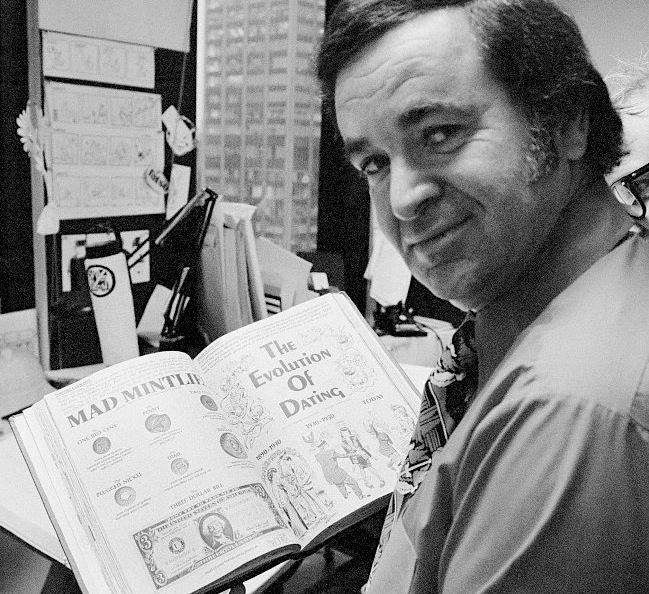
Al Feldstein in 1972 © Photograph by Jerry Mosey/Associated Press

❚ THE CREATIVE GIANT WHO EDITED America’s most influential satirical magazine has died. From 1956 Al Feldstein took the circulation of Mad from 400,000 to a peak of 2,850,000, and spent 29 years not only making a young generation laugh but fearlessly challenging sacred cows and urging scepticism about the American Dream and its furshlugginer advocates (a not-Yiddish word invented for the purpose). One issue a few years ago contained contributions from ten Pulitzer-winning cartoonists. In creating an American institution, Feldstein paved the way for National Lampoon, Saturday Night Live, The Simpsons, South Park, The Onion – and for Britain’s Viz magazine, according to its editor Graham Dury, creator of the Fat Slags…

Al Feldstein , Mad magazine, Alfred E Neuman ,

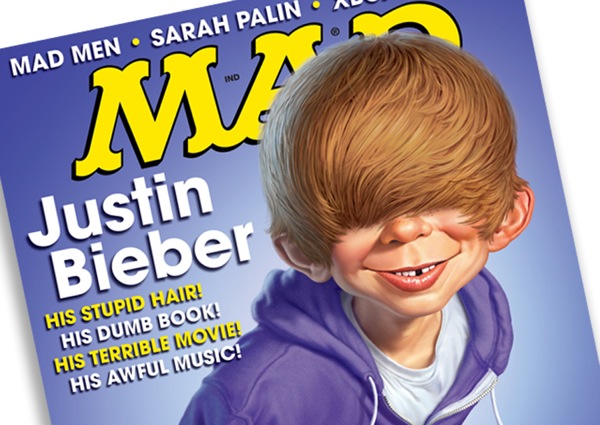
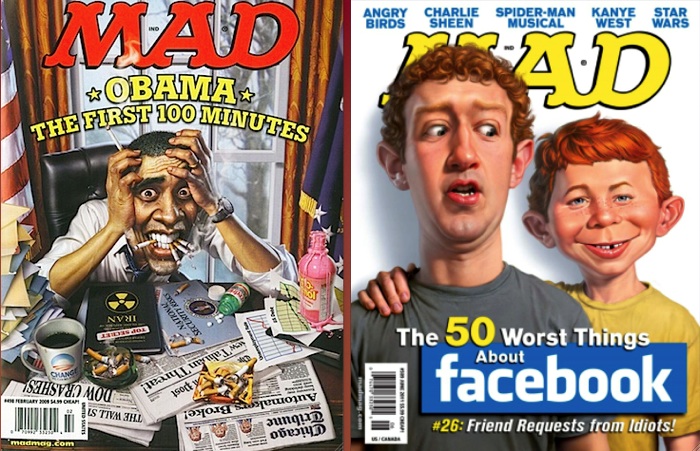
Mad magazine’s trademark, the grinning gap-toothed Alfred E. Neuman created by Feldstein: as an American icon, he is the face of every cover star

➢ The soul of Mad magazine dies at 88 –
by Bruce Weber in the New York Times:

The founding editor, Harvey Kurtzman, established its well-informed irreverence, but Al Feldstein gave Mad its identity as a smart-alecky, sniggering and indisputably clever spitball-shooter of a publication with a scattershot look, dominated by gifted cartoonists of wildly differing styles.

In his second issue, Mr Feldstein seized on a character who had appeared only marginally in the magazine — a freckled, gaptoothed, big-eared, glazed-looking young man — and put his image on the cover, identifying him as a write-in candidate for president campaigning under the slogan “What, me worry?”
At first he went by Mel Haney, Melvin Cowznofski and other names. But when the December 1956 issue, No 30, identified him as Alfred E. Neuman, the name stuck.

He became the magazine’s perennial cover boy, appearing in dozens of guises, including as a joker on a playing card, an ice-skating barrel jumper, a totem on a totem pole, a football player, a yogi, a construction worker, King Kong atop the Empire State Building… Neuman signaled the magazine’s editorial attitude, which fell somewhere between juvenile nose-thumbing at contemporary culture and sophisticated spoofing… / Continued at NYTimes

Click any pic to launch slideshow


➢ He was not a warm and fuzzy guy –
David Colker in the LA Times:

The goofy, cartoon face of Alfred E. Neuman looked out from the cover of Mad magazine for decades in various guises, always with the same message: “What, Me Worry?”

“He looked like a boob, but he had a very interesting philosophy,” said Al Feldstein, who as editor built Mad from near-obscurity in the 1950s into a satirical powerhouse, “meaning no matter how bad things get, if you maintain a sense of humor, you can get through it.” Under Feldstein, who edited Mad from 1956 to 1984, the magazine skewered presidents, the Cold War, the tobacco industry, Madison Avenue advertising, Hollywood and numerous other targets. And its legacy from that time lives on.

“Basically, everyone who was young between 1955 and 1975 read Mad,” comedy writer/producer Bill Oakley said in the book The Simpsons: An Uncensored, Unauthorized History. “That’s where your sense of humor came from… / Continued in LA Times

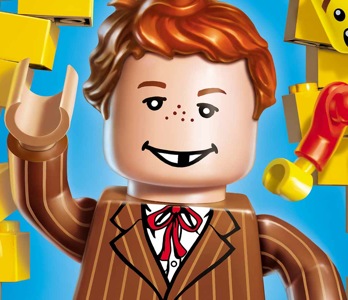
Mad magazine, Alfred E Neuman, Lego issue ➢ Today, Mad is published by DC Entertainment – The latest issue No 526 is the Lego issue (right), after the number one movie in America.

➢ 15 things Mad magazine gave the world:

Comics in the 50s didn’t encourage people to question anything – everything was more about being pleasant and not rocking the boat. Mad came along and started picking holes in the American Dream, suggesting the products Americans were buying were crap, their leaders were clueless and that the people were being treated like dicks. These days everyone’s a cynical bastard, but Mad invented it… / Continued at Anorak online

➢ The UK edition of Mad Magazine, published by Thorpe and Porter, began in 1959 – Over the years there were a number of UK sourced covers and sometimes UK produced interior stories. View a few Mad UK covers from the 1970s with such topics as British Rail, Doctor Who, the Royal Family… even the long-running TV soap opera Coronation Street.

Mad magazine, Alfred E Neuman , comics

Feldstein’s spirit still alive and well in recent issues of Mad

FRONT PAGE

➤ Another emotional gem on Spandau’s long walk to freedom

Soul Boys of the Western World, interview, Spandau Ballet, SXSW, Austin, premiere, movie, pop music,

Spandau Ballet’s post-gig interview at SXSW in Texas: Steve Norman finds the humour in St John Keeble’s healing homilies

❚ NOT TO BE MISSED! Freshly posted at YouTube is yet another heart-on-sleeve prequel to Spandau Ballet’s promised Reconciliation and Redemption tour. A group interview on video unexpectedly becomes a very moving and positive expression of the band’s solidarity as friends. Famously “sticky moments” from the kamikaze wrecking of the band at the height of its success and the atomic fall-out during the 90s are glancingly referred to in the spirit of mild self-flagellation. The five musicians who defined Britain’s New Romantic movement are discussing Soul Boys of the Western World, their warts-and-all documentary biopic premiered last month at SXSW, the cool new-media festival at Austin in Texas.

“The film is pretty honest and hard for us to watch at times,” says songwriter Gary Kemp. “You can see in the film I was a bit precious.”

“That Kray twin moment [a reference to the Kemps making a feature film about the Krays in 1990]: for me that’s really embarrassing cos me and Gary’s answer is really conceited, but that’s who we were at the time,” says brother and bass player Martin. “The film lets us examine where we went wrong.”

SOUL BOYS SET FOR CANNES

The Spandau Ballet documentary that proved a hit at SXSW in March, is to be screened to buyers at the ➢ Cannes Marché next month, handled by UK sales company Metro International

“We’re human, we didn’t always get it right, we were young kids thrust into the limelight,” says singer Tony Hadley.

“We went through that terrible time facing each other in court at one point,” says instrumentalist Steve Norman. “It was awful. I put my saxophone on the top shelf and didn’t want anything to do with it for about four or five years cos it was symbolic of Spandau.”

Throughout the interview St John of the Drums emerges as the Kentish Town savant with a healing prayer for the sins that destroyed lifelong friendships between the five soulboys. “You can’t be revisionist,” Keeble observes. “It was a major thing when we got back together five years ago. You cannot unknow stuff that’s gone on but I think everyone felt in their hearts that it was now better to focus on the future. The whole world’s still in front of us.”

Click any pic to launch slideshow

➢ Why the trailer for Soul Boys of the Western
World stops you in your tracks

What’s sad from a fan’s perspective is that the live gig in Texas which followed the film’s screening was the first and only time Spandau have played together since their year-long Reformation tour ended in 2010. That comeback tour was a sensational success, just as this gig has proved to be. The video interviewer, writer Lori Majewski, called Spandau a formidable live band: “I was surprised how tight you guys were, how great the live show was!” Entertainment Weekly reported the gig exuding “a rare atmosphere for a very youth-centrict fest, and a truly inspired musical moment – not bad for a bunch of fifty-somethings”.

The documentary has received keen reviews for its sole use of vintage footage and director George Hencken’s intelligent deployment of the band’s hit tunes from the 80s. The SXSW interview also reveals that at the 1985 Live Aid concert Steve Norman shot some under-cover footage backstage where cameras officially weren’t allowed. John Keeble remarks on the amount of original footage in their movie which the band themselves had never seen before – much shot by Martin Kemp as a Super8 enthusiast – while there’s plenty more footage that didn’t make the cut. So come on, lads. Let’s stage a premiere for the Spandau out-takes.


Click on video title above, then scroll to No 7 in the playlist

❏ This meeting of travellers at a crossroads in Austin has all the signs of a mystical resurrection sent from heaven, yet we’re told a Spandau tour is unlikely to happen this side of New Year. How patient must fans be? They had to wait three years for this film to be finished, having evolved naturally from a gifted film-maker recording the Reformation tour.

Two superb books on Spandau have been in preparation for years: one, a smart limited edition photobook, still awaits a strategic publication date to support a career jump-start.

The other was commissioned ten years ago, yes ten, in a wishful gesture of reconciliation while band members roamed the wilderness of solo careers. The showbiz writer Paul Simper was rightly deemed the only person qualified and trusted to capture the fascinating inside story of Spandau Ballet. His manuscript was revised five years ago to boost the Reformation tour, then publication was postponed in order to embrace the selfsame Reformation tour. His gripping text is far more thorough than many rock biogs because of the extraordinary times it describes and the wide-ranging context his research has captured. Currently, Simper is re-retuning his words which could become the book-of-the-film – once the film is given a release date. “Hearing the band talk so eloquently and emotionally gives me new impetus,” he said today. “It’s thrilling to hear them looking to the future.”

For the fans camped at the tiny Oasis of Hope, the road to truth and reconciliation for the band who’ve been pals since schooldays is a long one, as it has been for post-apartheid South Africa, and for Ireland since partition. But y’know, those two were nations with histories riven by British politics. Not a chart-topping pop group. Why doesn’t somebody ask Jerry for his Final Word then we can all get back to the music?

SPANDAU BALLET LIVE AT SXSW 2014

AND AT THE LOU REED TRIBUTE AT SXSW


➢ Previously at Shapersofthe80s: Curtain up on Spandau’s rollercoaster saga of war and peace

CHEEKY CHAPPIES: THE WAY THEY WERE IN ’81

FRONT PAGE

➤ Calling fashionistas for their tales of Spandau Ballet in the New Romantic 80s

Spandau Ballet, Blitz Kids, New Romantics, Liverpool Empire, 1982, Diamond Tour, fans,

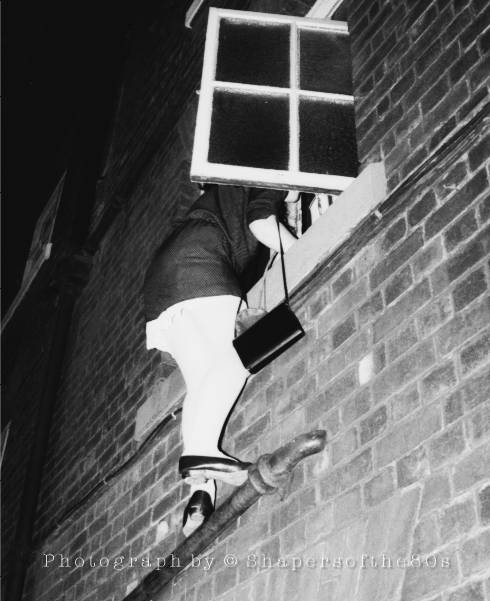
IS THIS YOU? May 8, 1982: A teenage fan shins the drainpipe at the Liverpool Empire giving access to Spandau Ballet’s dressing room on their first nationwide tour with the Diamond album. Snapped by © Shapersofthe80s

❚ WERE YOU A FAN of Spandau Ballet in the 1980s? Here’s an appeal for your experiences from a reputable documentary film-maker…

We are looking to speak to people who lived through the early years of the band’s success in the 80s for a BBC 4 documentary on the history of music and fashion in post-war Britain.

We are particularly interested in hearing from people who took fashion inspiration from them and the New Romantics scene and may still have some clothing from that period. If you can identify with this and wouldn’t mind speaking to a member of the team about your experiences please contact Lucy Joyner: ljoyner [ a t ] oxfordscientificfilms.tv

Spandau Ballet, Blitz Kids, New Romantics, 1982, Diamond Tour, Martin Kemp, fans, Gary Kemp,Steve Norman, Tony Hadley, Peter Capaldi

Unrivalled adulation in the early 80s: Tony Hadley faces the audience during Spandau Ballet’s Diamond tour of 1982. Photograph by © Shapersofthe80s

DID YOU WITNESS POP HISTORY IN THE MAKING?

❏ Who are the two Liverpool music fans so keen to meet their idols that they shinned the drainpipe at the Empire theatre leading to the dressing room of Spandau Ballet, Britain’s premier New Romantic band of the 80s? After knocking on the window, the girls achieved their goal when bass player Martin Kemp helped them to safety inside.

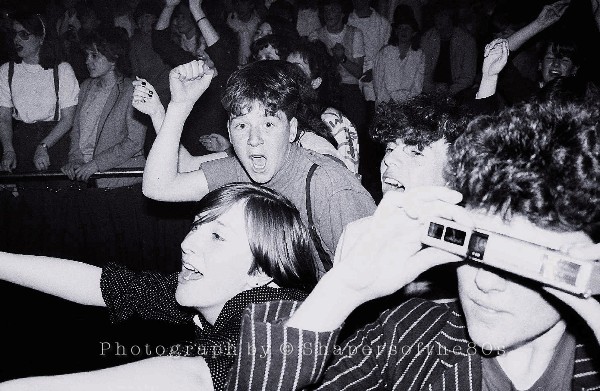
The year was 1982. Spandau’s seventh single Instinction had put them on Top of the Pops during Easter week and sales were rocketing. The night of May 8, towards the end of Spandau’s first nationwide tour, with stand-up comedian Peter Capaldi in support, has become known as The Return of the Scream. The moment the house lights dimmed, a mighty roar lifted the roof off the Empire, the city’s legendary music venue. It didn’t stop for 75 minutes. The band hadn’t heard anything so intense and were visibly shaken when they came offstage. Guitarist Gary Kemp said in disbelief: “I had to stop playing. I couldn’t hear my own monitor.”

What we had all witnessed was the return of the true teenybop scream, the continuous bellow from the lungs, little heard since the days of the Beatles. Security men and women were clearly caught out by the pandemonium as they wrestled to persuade the screamers back to their seats. One Empire veteran said that night he’d heard nothing like it since the Bay City Rollers in the mid-1970s.

A crowd of at least 500 fans surrounded the stage door afterwards and a shadow had only to fall across a dressing-room window for the scream to start again in the street. Two girls then decided to shin the drainpipe and beat the second-storey window with their handbags until they were let in.

Police with batons eventually arrived and the band managed to escape through the front doors of the theatre, but only after two decoy departures had been staged. Even so, in the murderous dash through the crowd packing the pavement, saxophonist Steve Norman lost a bracelet and singer Tony Hadley a chunk of his scalp. As their coach pulled away, I was stranded on the kerb photographing the mayhem.

Spandau Ballet, Blitz Kids, New Romantics, Liverpool Empire, 1982, Diamond Tour, Martin Kemp, fans, Gary Kemp,Steve Norman, Tony Hadley, Peter Capaldi

Inside the Liverpool Empire, May 8, 1982: fans shocked security staff with the roar that greeted Spandau Ballet. Photograph by © Shapersofthe80s

Spandau Ballet, Blitz Kids, New Romantics, ,1980,Scala Cinema, concert,OMM,pop music,
➢ An early Spandau Ballet date at the Scala cinema described above in The Blitz Kids and the birth of the New Romantics – in the Observer Music Monthly 2009

FRONT PAGE

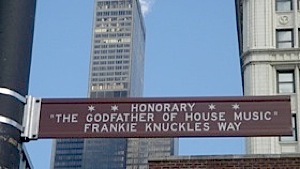
1955–2014 ➤ Frankie Knuckles, the Godfather of House Music, is gone

Frankie Knuckles,house music, tributes, deejay, Chicago,

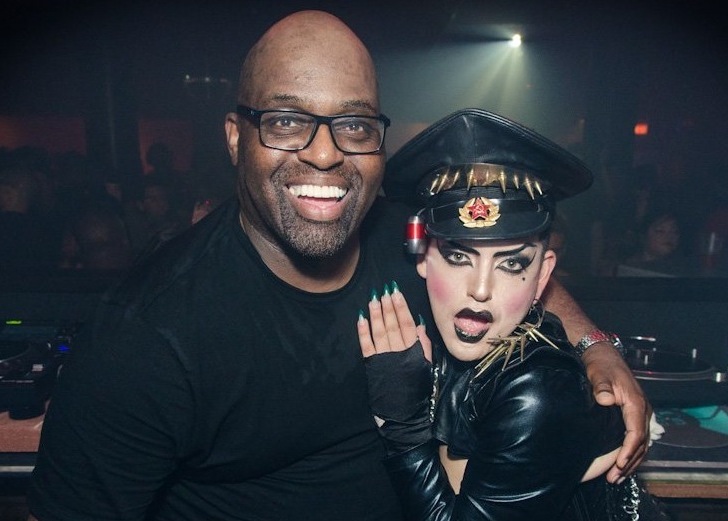
2012: an Evening with Frankie Knuckles at Smart Bar, Chicago (© Tasya Menaker). His final live deejay set was at Ministry of Sound in London on Saturday. He had been scheduled to return to the UK for shows at Gatecrasher in Birmingham and The Arches in Glasgow later this month


+++
➢ Today’s tribute to Frankie Knuckles at Rolling Stone,
by Michaelangelo Matos:

Nobody can agree on who invented the blues or birthed rock & roll, but there is no question that house music came from Frankie Knuckles, who died Monday afternoon of as-yet-undisclosed causes at age 59. One of the 80s and 90s’ most prolific house music producers and remixers, Knuckles is, hands down, one of the dozen most important deejays of all time.

 Chicago, Warehouse,clubbing

The Chicago block where the Warehouse stood

At his Chicago clubs the Warehouse (1977-82) and Power Plant (1983-85), Knuckles’ marathon sets, typically featuring his own extended edits of a wide selection of tracks from disco to post-punk, R&B to synth-heavy Eurodisco, laid the groundwork for electronic dance music culture — all of it.

Knuckles made an abundant number of dance classics, including early Jamie Principle collaborations Your Love (1986) and Baby Wants to Ride (1987); Tears (1989), with Satoshi Tomiiee and Robert Owens; The Whistle Song (1991); and his remixes of Chaka Khan’s Ain’t Nobody (1989), Sounds of Blackness’s The Pressure (1992), and Hercules and Love Affair’s Blind (2008) … / Continued at Rolling Stone

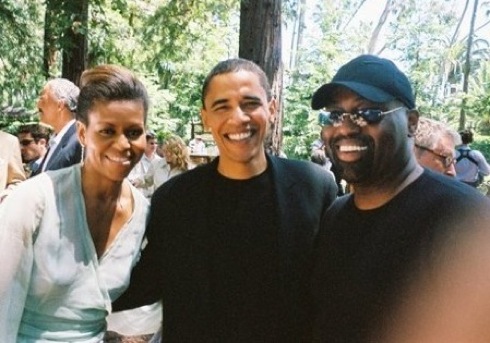
Frankie Knuckles Day, Chicago, Barack Obama

August 25, 2004: declared Frankie Knuckles Day in Chicago by the then-senator Barack Obama

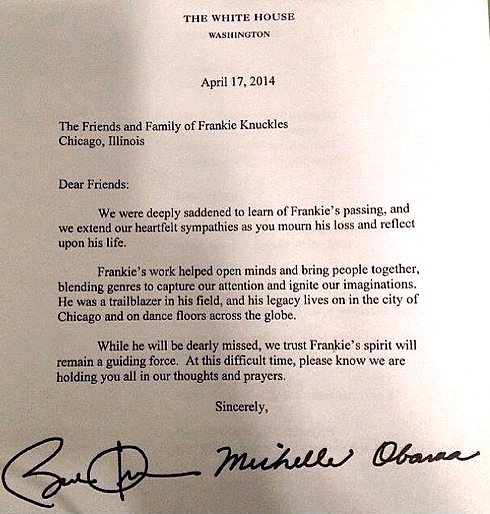
Barack Obama, Frankie Knuckles, condolence

Update April 17, 2014: letter of condolence from the Obamas

➢ Knuckles, the man I knew, by Clive Morgan in the Daily Telegraph

➢ Priest of the dancefloor, by Alexis Petridis in The Guardian

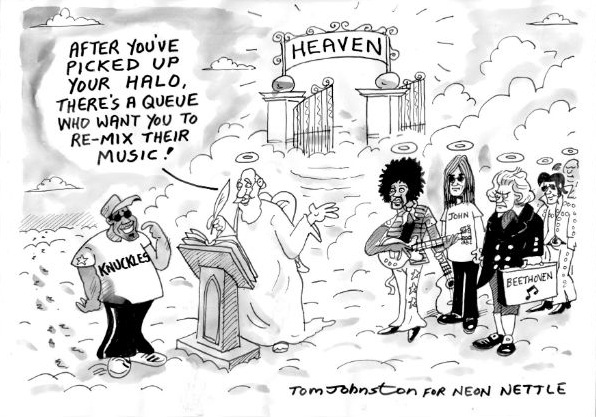
tom johnston, frankie knuckles, cartoon

VIDEO INTERVIEW IN LONDON 2012

FRONT PAGE