Posted on January 11, 2016
All-Bowie search here at Shapers of the 80s

11 Jan 2016 in Culture, Fashion, History, London, Media, North America, Pop music, Youth culture
Tagged cancer, David Bowie, dead, Duncan Jones, genius, organ, St Albans Cathedral, tribute
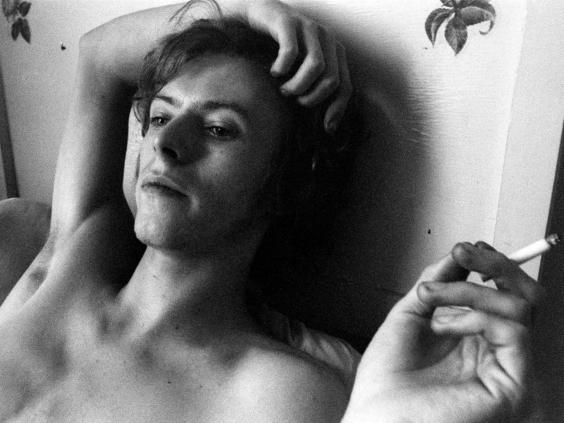
David Bowie at home in Beckenham in 1969, where he became the lodger and lover of Mary Finnigan. (Photo by Ray Stevenson/Rex)
◼ AS A STRUGGLING FOLK SINGER David Bowie was 22 years old and living with his parents in south-east London when, by chance, he met journalist Mary Finnigan, eight years his senior, and moved into her flat in Foxgrove Road, Beckenham, where she lived with her two children from an early marriage.
They became lovers and launched a successful folk club which became the iconic Beckenham Arts Lab at The Three Tuns pub (now a Zizzi restaurant) on the High Street. Mary’s new book, Psychedelic Suburbia, offers new insights about Bowie in 1969, the year in which his first single Space Oddity reached the pop charts. Today The Independent runs a fabulously revealing extract:
“ We do not observe landlady-lodger conventions. I am happy with this arrangement – we share tincture of cannabis and Lucy’s deliveries of high-quality hashish. We share the space, cook and eat together. And a few days after he moves in, David and I sleep together.
The seduction is a work of art and takes me totally by surprise, when I come home one Saturday evening after a shift at The Sunday Times (edited in those days by my friend and journalistic mentor, Harry Evans). Usually I return to a messy kitchen and a sink full of dishes, showing evidence of baked beans, fried egg and tomato ketchup. But on this occasion, interesting cooking smells greet my arrival, the kitchen is clean and tidy, with the table laid for two plus flowers, candles and incense. The kids are fed, washed and tucked up in bed.
After a spliff and a nice dinner, David creates a nest of cushions on the floor of his room. He settles me into it and places speakers close to my ears on each side. Then he plays me a selection of his current favourite musical influences. Some are obscure, others well known – Jacques Brel, for example, and mind-blowing stereo phasing from Jimi Hendrix. . . ” / Continued at The Independent online

Friend, lover and landlady: Mary Finnigan and her personal new book about living with Bowie
“ Living from hand to mouth, David also does
casual shifts from time to time at Legastat, a copying office in central London ”
– Bowie as a Brook Street temp ?!?!
Posted in books, Culture, History, London, Pop music, Youth culture
Tagged 1969, Beckenham Arts Lab, biography, David Bowie, Mary Finnigan, Psychedelic Suburbia, Space Oddity
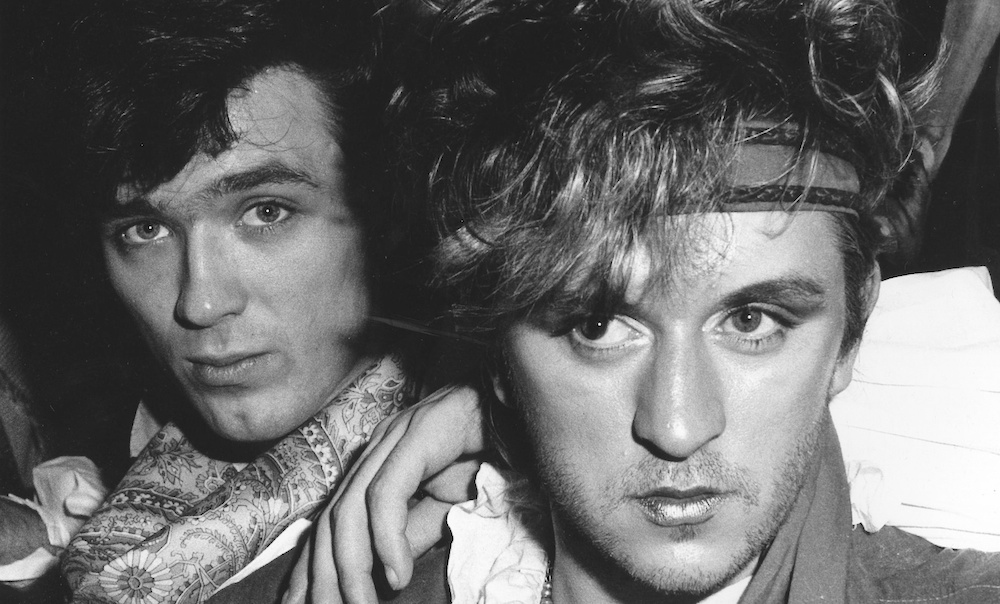
Steve Strange, right, and Martin Kemp at Tokyo Joe’s in London in 1981. Photograph by Robert Rosen/Rex
“ It’s lovely being asked to talk about Steve now, because I couldn’t right after he died. I’d start, but then I’d just burst into tears. He was one of my best friends and he created a big part of my personality. He showed me how exciting life could be, but how you could be a decent person with it. I also genuinely believe that everything that the 80s was, he started it. What people wore, how they did their hair, the decade of excess – that was all him. . .
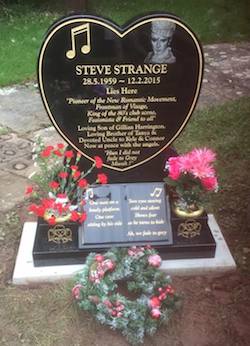
Steve Strange’s gravestone erected 18 December in Porthcawl, South Wales
We were both working-class boys who had always wanted to do something else and here he was, doing it brilliantly. I looked up to him. He’d set up punk gigs back home in Wales, came up to London to work for Malcolm McLaren, and now he was carving out his own path away from punk. . . He succeeded because he was smothered in charisma. It drew everyone to him – the working class and the middle class loved him, but even the most upper-class people were immediately in the palm of his hand.
London made Steve, but it wasn’t good for him. He was a very intelligent man, but he got scrambled and crossed the line with drugs. . . The saddest thing is that I could see the end of Steve’s story long before it had been told. I’d waited for the phone call for years, so it wasn’t a shock. But to go to his funeral in Wales… it was incredibly sad. . . ” / Read the full tribute at the Observer online
Posted in Clubbing, Fashion, London, Pop music, Youth culture
Tagged Blitz Kids, Martin Kemp, New Romantics, nightclubbing, Steve Strange, tribute
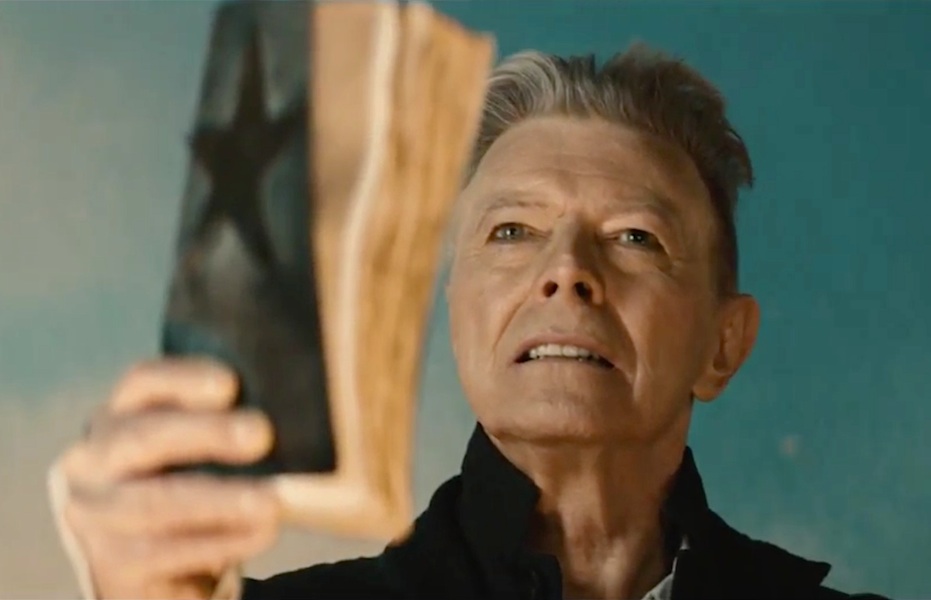
Late-life melancholy with jazzy modulations: Bowie in messianic mode in the video for the album’s title track Blackstar
“ For his 27th studio album, has Bowie gone jazz? On first listens to Blackstar, released on 8 January, Bowie’s 69th birthday, it certainly sounds like rock’s oldest futurist has dusted down his saxophone. They are tooting, parping, wailing and gusting all over the place, occupying rhythmic, atmospheric and lead parts, with guitars and keyboards intermingling in a weave of supporting roles.
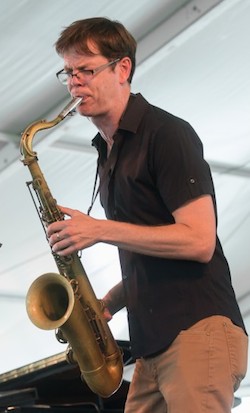
Donny McCaslin: Bowie’s new-found friend
The saxophone was Bowie’s first instrument, which he started learning in his pre-teens inspired by a bohemian, jazz-loving elder half-brother, Terry Burns. Bowie once said that, aged 14, he couldn’t decide if he wanted “to be a rock’n’roll singer or John Coltrane”. Even in his rise to rock fame, Bowie remained a creature of the jazz age, at least in the sense of the boundary-crashing freedom that characterises his work.
A new single, Lazarus, released today, may kick off in the vague realm of contemporary music, with spectral guitar and stuttering rhythms calling to mind the young British trio the xx, but it is not long before those saxophones are sighing and the beat is fragmenting. Just about holding it together are the familiar tones of Bowie’s teeth-gritted, tight-chested whisper of a vocal, proclaiming it is This way or no way / You know I’ll be free / Just like that bluebird / Now ain’t that just like me? Sure sounds like jazz to me. . .
What Bowie has created with this hardcore jazz crew, though, is not something any jazz fan would recognise and is all the better for it. At its best, free jazz is amongst the most technically advanced and audacious music ever heard but it can be uncompromisingly difficult to listen to for the non-aficionado. The improvisational elements that make it so gladiatorial and hypnotic live can make it over complex and inaccessible on record. Bowie’s intriguing experiment has been to take this wild, abstract form and try to turn it into songs. Blackstar is an album on which words and melody gradually rise from a sonic swamp to sink their hooks in. It is probably as close as free jazz has ever got to pop. . . ” / Read the full review at Telegraph online
◼ IN AN UNNERVING SIMULATION OF BOWIE’S VOICE, the star of Bowie’s new musical Lazarus, Michael C. Hall, sings its title track for the CBS Late Show (below) the day it is released as a single. The maestro himself is watching the show at home in his armchair. How meta-modern is that?!
➢ Bowie fulfills his jazz dream – Listen to an NPR Music interview with the two main characters who accompany Bowie on this new adventure in music – his longtime friend and producer Tony Visconti and his new-found friend/saxophonist and band leader Donny McCaslin.
➢ Nov 23, more background revelations in Rolling Stone – “We were listening to a lot of Kendrick Lamar,” says producer Tony Visconti. “The goal was to avoid rock & roll”
➢ PLUS: The Blackstar album reviewed track by track by Neil McCormick
Posted in North America, Pop music, TV, Youth culture
Tagged album, Blackstar, David Bowie, Donny McCaslin, Interview, jazz, Lazarus, Michael C. Hall, Neil McCormick, NPR, pop music, Reviews, Tony Visconti, Video
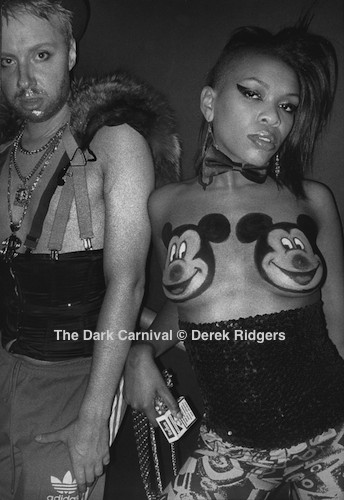
Clubbers at the Astoria in 2000 photographed by Derek Ridgers
◼ HERE’S A PROMO VIDEO FEATURING some preposterous talking heads who include photographer Yasmine Akim and dancer Constantine Flowerz, describing a new large-format book of spicy photographs from Derek Ridgers’ travels through London clubland… The Dark Carnival: Portraits from the Endless Night is being published next week by Carpet Bombing Culture.
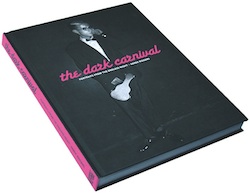 If you’re in it, you’ll be on the list for the launch party on Friday 27th from 5pm at the Lights of Soho gallery, followed on by a free Soho Swag night from 9.30pm at the 68 and Boston bar at the top end of Greek Street, hosted by 80s shapers Christos Tolera and Chris Sullivan.
The Dark Carnival is Derek’s second book published this month. He modestly calls it “my 40-year wander through nightclubs” but this delicous cornucopia selected by Derek himself proves much more of an adult shocker where anything goes on the themes of sexuality, seduction and shame (lack of), with eye-poppers shot at Anarchy, Smack, Submission, Wacko, Wicked, Rubber Ball and coming right up to date at Torture Garden.
➢ Buy The Dark Carnival direct from Carpet Bombing Culture, 216 huge pages for £30
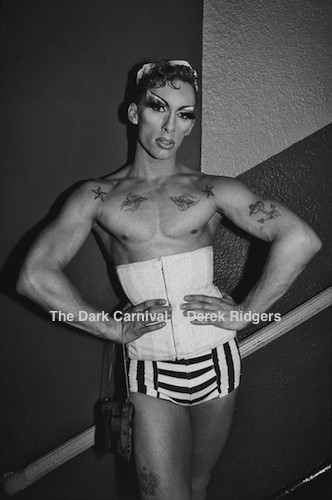
Anonymous clubber in Brixton 2011 photographed by Derek Ridgers
Q: Does this kind of nightlife still exist?
“Yes it does. It’s not quite so focussed today and readily categorisable. Hardly any of the little basement clubs are left in Soho. I think the St Moritz is the only one” – Derek Ridgers on BBC Radio London
Posted in books, Clubbing, History, London, photography, Youth culture
Tagged Carpet Bombing Culture, Christos Tolera, Constantine Flowerz, Dark Carnival, Derek Ridgers, Interview, Lights of Soho, New Romantics, nightlife, Robert Elms, Soho Swag, street style, Swinging 80s, UK, Yasmine Akim, youth culture


✱ Deejay legend Robbie Vincent has returned to JazzFM on Sundays 1-3pm… Catch up on Robbie’s JazzFM August Bank Holiday 2020 session thanks to AhhhhhSoul with four hours of “nothing but essential rhythms of soul, jazz and funk”.

◆ Who was who in Spandau’s break-out year of 1980? The Invisible Hand of Shapersofthe80s draws a selective timeline for The unprecedented rise and rise of Spandau Ballet –– Turn to our inside page

✱ If you thought there was no more to know about the birth of Blitz culture in 1980 then get your hands on a sensational book by an obsessive music fan called David Barrat. It is gripping, original and epic – a spooky tale of coincidence and parallel lives as mind-tingling as a Sherlock Holmes yarn. Titled both New Romantics Who Never Were and The Untold Story of Spandau Ballet! Sample this initial taster here at Shapers of the 80s

✱ Jawing at Soho Radio on the 80s clubland revolution (from 32 mins) and on art (@55 mins) is probably the most influential shaper of the 80s, former Wag-club director Chris Sullivan (pictured) with editor of this website David Johnson
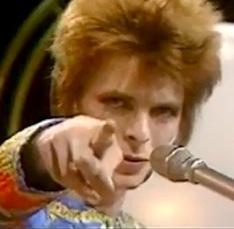
➢ Search for all on Bowie here
at Shapers of the 80s
✱ “I’m not a rock star” Bowie often said – No, David, you were a messiah – Obituaries and key videos about
the godlike one
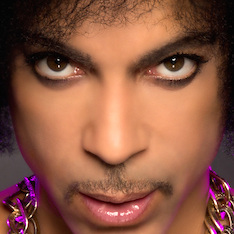
✱ Prince Rogers Nelson RIP: ‘A funny cat’ and ‘sole authentic genius’ of the 1980s


 ➢➢ Shapers of the 80s ➣➣