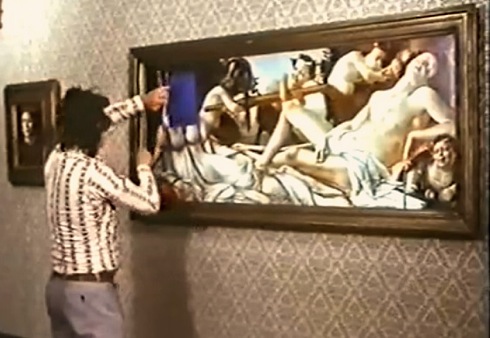
❚ 40 YEARS AGO AN ART CRITIC TOOK A STANLEY KNIFE to a Botticelli masterpiece in the National Gallery, and cut the head of Venus out from the canvas. (No, not the real painting, but a reproduction, obviously.) And what he held in his hand was the typical picture postcard by which many of us know this beautiful and all-conquering goddess. The critic and iconoclast John Berger was making a point that it is through reproductions that most of us view the world’s great art. He argued that paintings had been stripped of their context to raise money through sales of reproductions.
“With the invention of the camera, everything changed,” he said, meaning the ways our perceptions shifted. “The days of pilgrimage are over. It is the image of the painting which travels now. The meaning no longer resides in its unique painted surface which it’s only possible to see in one place and at one time. Its meaning has become transmittable. It comes to you, like the news of an event.”
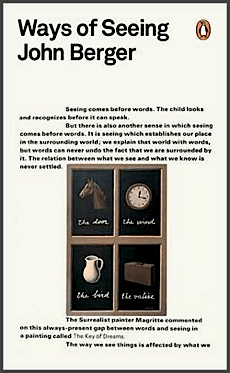
This is how Berger launched Ways of Seeing on Jan 8, 1972 — four pioneering TV films which themselves were extended into a Penguin Modern Classic (set entirely in a heavy Univers font for a reason the author explains), and itself in turn is considered a seminal university-level text for current studies of visual culture and art history.
Yesterday’s BBC radio strand Archive on 4 made exciting listening of judicious extracts. Titled The Politics of Art, it teased out Berger’s then revolutionary way of discussing paintings as commodities, under the themes of society and context, the nude, the power of money and advertising.
The historian Tim Marlow, currently director of exhibitions at White Cube, shows how Ways of Seeing was provocative and up-to-date in seeking out the opinions specifically of women and children. He believes the politics still matter. Berger challenged 600-year-old notions of ownership. “Previously art celebrated wealth and power: gods, princes and dynasties were worshipped… But the European oil painting served a different kind of wealth. It glorified not a static order of things, but the ability to buy, to furnish and to own.” In the late 20th century Berger subjects art to a Marxist critique that reminds us of the role of the makers. Being naked, he argues, is to be oneself. But a woman posing nude “is to be seen as an object”.
Berger’s phwoarr factor: charisma and intellect
Marlow asks how far the message of this series is pertinent again today. As a powerful corrective to glibness in much contemporary culture, The Politics of Art is well worth catching on the radio iPlayer, for Berger’s own bluff opinions, and those of several pundits, including the British novelist Marina Warner who is hooked on his phwoarr factor as well as his intellect: “Physically he was a powerful, beautiful man. And then his Mick Jagger-like charisma: he’s a thrilling performer. It’s a shame this kind of sexual magnetism is rarely seen now on TV — because it’s not permissible”!
There’s also a priceless sequence where the patrician connoisseur Lord Clark (of Civilisation, the earlier landmark TV survey of Western art) confesses to incomprehension before Picasso’s gigantic anti-war painting, Guernica, which invokes the aerial bombing of a Basque town during the Spanish civil war in 1937. Then Berger the passionate ideologue gives an assured deconstruction of the images of slaughter, its screaming civilians and symbols of freedom.
Now aged 85, Berger said recently of his TV series: “The programmes seem as urgent now as then. That’s because what’s happening in the world hasn’t changed very much — it’s only got more extreme. This political approach was prophetic about the world today.”
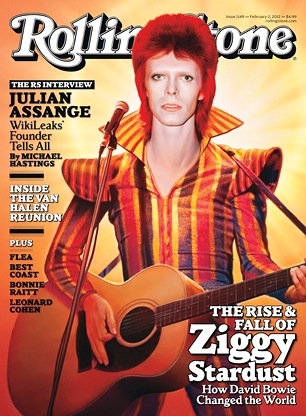
❚ THERE’S A BREATHLESS FOUR-PARAGRAPH teaser online at Rolling Stone magazine’s website in an attempt to sell the February 2 issue. It’s headlined How David Bowie Changed The World. Yet it promises nothing we haven’t read a million times before. Instead, try our own tribute on Bowie’s 65th birthday, linked further down this post.
“ He phoned Angela in London, asking for her help: witches intended for him to impregnate one during Walpurgis Night. He later said Satan was living in his indoor swimming pool. David needed an exorcism (“I really walked into other worlds,” he later said), and Angela got him one – though it was by way of a long-distance phone call. “David was never insane,” Angela wrote. “The really crazy stuff coincided precisely with his ingestion of enormous amounts of cocaine, alcohol and whatever other drugs.” In any event, the rite may have helped break Bowie’s fear of a fiend possessing him. “It was time to get out of this terrible lifestyle I’d put myself into, and get healthy,” he later said. “It was time to pull myself together ” … / Continued online at Rolling Stone
❏ Update Feb 8: Now this Bowie issue has reached the UK, Mikal Gilmore’s account of the Ziggy phenomenon proves a workmanlike retelling of the familiar, but is oh-so relentlessly downbeat. He even cites an alleged quotation from 1998: Bowie is supposed to have said that, “Without Iman, I’d have put my head in the oven by now”. It’s a cheap shot because the quote has never been attributed, so counts for nothing more than hearsay. Rolling Stone claims a circulation of 1.45m.
“ As a cultural lightning rod Bowie has bequeathed insights into the realm of the imagination. As a performer he has delivered a repertoire of life-skills through a cast of mythical personalities invented for himself as a popstar, from the self-destructive Ziggy Stardust and the amoral Thin White Duke, to his romanticised “Heroes” (his own quote marks added to emphasise self-awareness). Through their formative years, Bowie invited his acolytes to do A…. and B…. and C…. ” / Read on to discover what
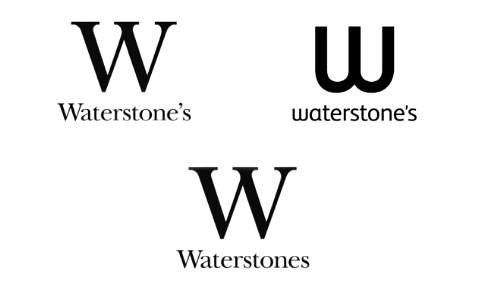
Three logos in as many years: >2010 classic font and grammatically correct, 2010–12 contemporary font and illiterate, 2012< classic font, illiterate but digitally expedient. And this shop sells books.
❏ A press release dated Jan 11 declares: “Waterstones, the UK’s largest high street bookseller, has today revealed a new logo for the company. It reinstates the much-loved Baskerville serif font with a capital W and no longer features an apostrophe. James Daunt, Managing Director of Waterstones said: “Waterstones without an apostrophe is, in a digital world of URLs and email addresses, a more versatile and practical spelling.”
The change is also a slight to the founder Tim Waterstone, who set up the company more than 30 years ago, though long ago stopped having any involvement. Mr Daunt further explained the change in logo: “It also reflects an altogether truer picture of our business today which, while created by one, is now built on the continued contribution of thousands of individual booksellers.” Many on Twitter pointed out that this explanation made no sense, because if the new logo really was meant to reflect the contribution of many, it should include an apostrophe after the S. ”
➢ No apostrophe? No catastrophe — David Marsh at The Guardian “ As many shopping centres boast a Tesco, a Morrisons, a Sainsbury’s, a Marks & Spencer, a Waterstones and a McDonald’s, it is hardly surprising that many young people, and greengrocers of all ages, find apostrophes so difficult. But however much the Apostrophe Protection Society huffs and puffs about it, these businesses are not going to change their orthography so we might as well get used to it and fight to save apostrophes where they are really needed: to aid communication and avoid ambiguity. The example in the Guardian style guide is:
❏ my sister’s friend’s books (refers to one sister and her friend).
❏ my sister’s friends’ books (one sister with lots of friends).
❏ my sisters’ friend’s books (more than one sister, and their friend).
❏ my sisters’ friends’ books (more than one sister, and their friends).
So if anyone tells you we don’t need apostrophes, they are wrong. Another tip: always carry a large felt-tip pen and bottle of Tipp-Ex with you to add apostrophes to signs where appropriate and remove them from plurals. It will make you feel much better. ”
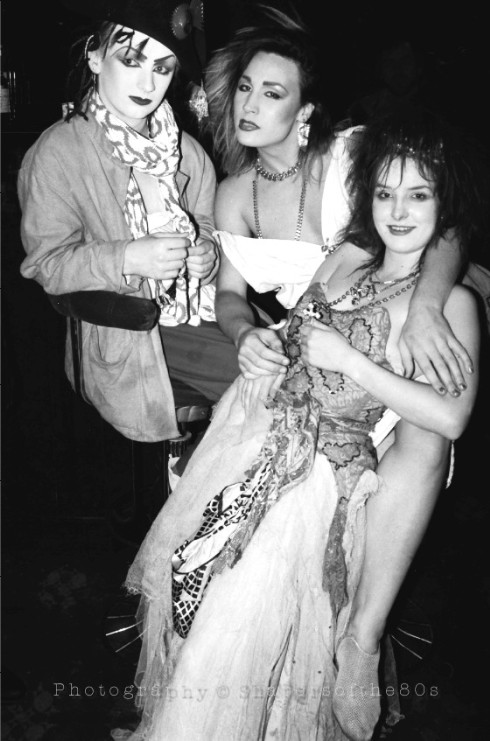
Planets club in Piccadilly, 1981: George O’Dowd before he became Boy, his sidekick and future singer Marilyn, and fashion goddess Kim Bowen. Photographed by Shapersofthe80s
❚ 2011 WAS A BUMPER YEAR for Shapersofthe80s. Visits to this website have doubled year on year, to a total of 174,658 page views during 2011. Also during the past six months, views increased by 40% over the previous six months — driven substantially by our exclusive pictures of Steve Norman’s wedding, and by exploring the heritage which informs We Can Be Heroes, Graham Smith’s definitive new photobook about 80s clubbing.
1 — Spandau Ballet — Total page views include Tony Hadley’s international tour with John Keeble, Steve Norman’s wedding, Martin Kemp’s cinematic triumphs and Gary Kemp as cultural pundit, as each of the band members has been pursuing his own interests since their farewell performance in July 2010.
2 — Boy George whose rise and fall seems Greek in its tragedic possibilities.
3 — Duran Duran who have patiently rebuilt their credibility over the past year. (Of their total page views here, almost half came in one day, yesterday*)
4 — Paradise Point — Britain’s brightest new pop musicians who mysteriously vanished from the stage almost as soon as they had published one of the most seductive videos of the year [see below].
5 — Sade whose long-awaited world tour slaked her fans’ thirst and gave her a No 1 album on both sides of the Atlantic.
6 — George Michael — another 80s survivor whose vulnerability almost renders him indestructible.
+++
Steady attractions at Shapersofthe80s are the post about John Rutter’s royal wedding anthem, and historically important interviews with the painter David Hockney (1983) and with Beatle John Lennon (1966).
❏++++++❏++++++❏
* It is an astonishing statistical exception that yesterday proved our busiest day of the year thanks entirely to Duran Duran sharing on Facebook the link to our choice of the 10 most creative tribute videos celebrating their comeback. So, despite our having followed Duran’s world tour since their newest album was launched in 2010, almost as many fans visited in a single day as during the entire year to date. ❏ iPAD, TABLET & MOBILE USERS PLEASE NOTE — You may see only a tiny selection of items from this wide-ranging website about the 1980s, not chosen by the author. To access fuller background features and site index either click on “Standard view” or visit Shapersofthe80s.com on a desktop computer. ➢ Click here to visit a different random item every time you click
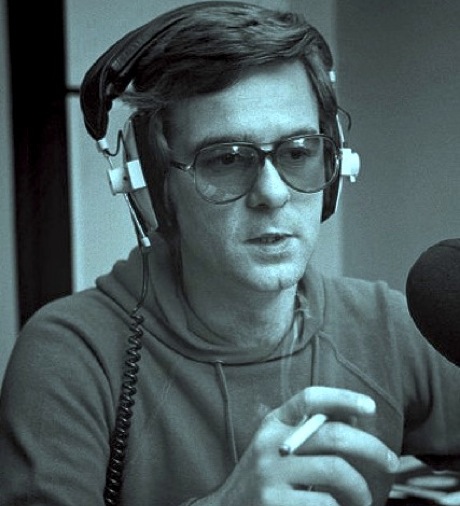
Robbie Vincent at BBC Radio London in the mid-70s: from sparring phone-in host to soul master. (Photographed by Roger G Clark)
♫ Before you read on, click herefor the perfect soundtrack from Robbie’s Radio London shows three decades ago: Friends & Strangers, recorded by saxophonist Ronnie Laws for the album Mountain Dance on Blue Note, 1977
◼ TUNE IN ONLINE AT 10AM TODAY and “If it moves, funk it”. Wherever you are in the world, your internet connection will deliver one of Britain’s great musical tastemakers who 35 years ago had teenagers expressing their musical allegiances in fanatical yet playful rival groups known as soul tribes who adopted saucy names such as the Dartford Tunnel Moles, Medway Maggots, Sherwood Softshoe Shufflers, Welwyn Wobblers and scores more. More important, in an age of casual racism, this white radio and club deejay opened their ears and hearts to the rhythms of black music which they couldn’t hear anywhere else — certainly not in the pop charts and precious few places on the radio dial.
In Britain, your skin colour wasn’t necessarily reflected in your musical tastes but if you danced with your hips, your feet and your soul, black music definitely became the rallying point for frustrated dancers unable to find release in dancehalls of the Saturday-night meat market tradition. The soul tribes of Britain saw white and black kids gathering together in underground clubs discovered only through the grapevine, and often unlicensed for alcohol. Then came marathon all-day soul festivals — the first Purley all-dayer in 1978 springs to mind, with music amplified through the UK’s first serious sound system designed by soul disc jockey Froggy, and a mixing console to provide seamless cross-fades. On dancefloors across the land, the acrobatic tribes competed to improvise the wildest dance moves and to build the highest human pyramids. None of this could have been imagined in America, with its strict apartheid between black and white music, and limited chances even for Motown artists to cross over into mainstream charts and playlists.
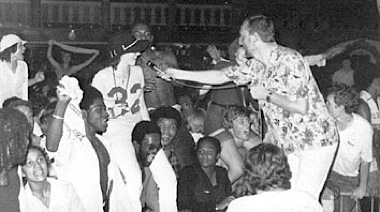
1978: Chris Hill entertains dancers from across the south-east during the first all-day soul event at Tiffany’s in Purley, the London suburb
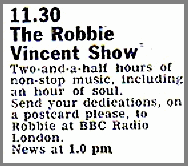
From 1976 the BBC Radio London deejay Robbie Vincent commanded a high-profile lunchtime show on Saturdays which featured imported albums and the novel vinyl format of 12-inch singles to introduce dance fans to a galaxy of consummate musicians pushing the frontiers of hard soul, up-front jazz and raw funk … Ronnie Laws, Eddie Henderson, Weather Report, The Crusaders, Lonnie Liston Smith, Johnny Guitar Watson, Bootsy Collins, George Benson, Wilton Felder, Maze, Roy Ayres, Al Jarreau, Hi Tension, The Fatback Band, Brass Construction, Funkadelic.
Vincent was one of three deejays who soon headed what became known as the Soul Mafia working in London and the south-east and bringing real pressure to bear on record companies to release quality US acts in the UK. His counterpart at the commercial Capital Radio station was black deejay Greg Edwards, Grenada-born and New York-raised. He won his own cult following with his Saturday evening Soul Spectrum and its romantic “Bathroom call”.
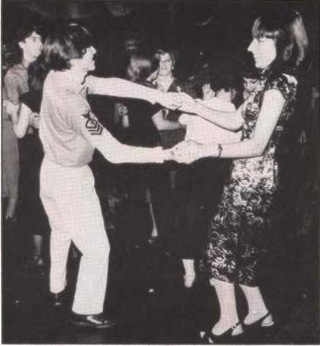
Essex’s Gold Mine in 1975: GI uniforms and swing (courtesy Brian Longman, CanveyIsland.org.uk)
At about the same time that Vincent had a residency at the spanking new Flick’s disco in Dartford, Kent (south of the Thames), Chris Hill was already a legend as resident deejay at the Gold Mine on Canvey Island (north of the Thames). If anywhere in the mid-70s, this was where novelty dressing up began, influenced by several MGM compilation musicals in the cinema (That’s Entertainment!, 1974) and blockbusters such as The Great Gatsby (1974) rekindling nostalgia for vintage Hollywood fashion. For a while, and encouraged by Hill, the Gold Mine had the monopoly on GI uniforms and scarlet-lipped jive-dolls during its Glenn Miller and swing revival.
As a club deejay Vincent was the least theatrical in his presentation. Yet, as an ex-Evening Standard journalist and “devil’s advocate” phone-in veteran, his consummate broadcast interviews with American soul giants (James Brown, Marvin Gaye, Sly Stone, Bobby Womack, Chaka Khan, Luther Vandross, Teddy Pendergrass, Herbie Hancock, Roy Ayers) not only educated a generation of teen clubbers but reinforced the credibility of the music at the very moment when a hitherto cathartic disco scene turned to dross. The destructive effect of the dire film Saturday Night Fever and its musically inane Bee Gee soundtrack cannot be overstated as its infection swept the globe in 1978.
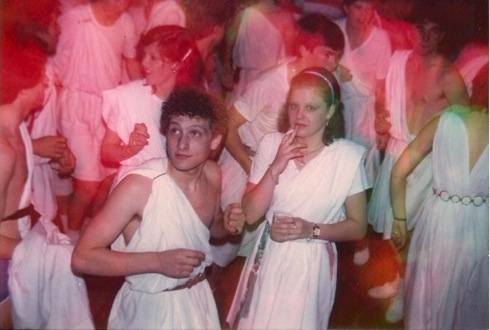
Dressing up for the dancefloor: toga parties were popular on the soul circuit, here in 1979 at Papillon club, Brighton. (Photograph by Paul Clark)
One consequence for the UK was that the emergent soul scene dived back underground and partially reemerged only in 1980 with the New Romantics, disguised in a sharp new wardrobe. There were mutations within the family, but most danced to music with soul and many new young bands had funky beats and jazz pretensions. Mainstream jazz itself came back into favour with young clubbers in the early 80s when the black Brits Courtney Pine and Sade Adu were among the first to make good. All the emergent subcults lived to dance, and dressed up to do so as the 80s matured, while the whole flavour of UK music shifted away from rock guitar to the more upfront dance beats led by the bass guitar and bass drum.
This lineage does get overlooked these days: a substantial generation of 70s music lovers acquired taste, style and feet that knew how to move. This was precisely the audience-in-waiting who demanded and created vibrant world-beating pop and fashion as Swinging London was reinvented in the 80s. Only with the so-called Second Summer of Love in 1988 and the ecstasy-fuelled hurricane of aceed house that swept in from Ibiza did UK youth almost overnight abandon a long history of dancing with its feet. The trance-inducing techno beats of rave music proved so alien to the soul heritage that kids chose instead to wave their hands in the air as if to commune mystically with the lazer light.
Ever since, only their elders can remember how to cut a dash on a sprung-maple dancefloor. Those include the cool soulboys and girls of the early 80s who favoured the funky post-Blitz London clubs such as Le Beat Route, the Wag and Dirtbox. And they express fond gratitude to Vincent, Edwards and Hill as their musical mentors.
New technology: Chris Hill and Robbie Vincent in front of Froggy’s Matamp console
◼ REFLECTING THIS WEEK on the heady rise of the soul movement in Britain, Robbie Vincent identified some of the reasons: “The whole thing grew because as the years went by we had more and more access to a core group of really important American black artists. In the UK, Loose Ends and Soul II Soul are fine examples of bringing not just great home-grown R&B to our ears but style and fashion too.
“Popular black music writing royalty like Kenny Gamble, co-founder of the mighty Philadelphia International Records label, says his favourite cover version of one of his tracks is Now That We Found Love by Third World. It is real credit to UK dancefloors that the track was adopted almost as an anthem. But it needed that pool of musicians like The O’Jays and jazz crossover men like Donald Byrd and Grover Washington to influence and excite those new young kids on the block.”
Robbie Vincent himself deserves credit as an enthusiast with missionary zeal. From the 1978 launch of the then Labour-leaning tabloid, the Daily Star, he wrote an influential weekly column recognising the inventive camaraderie of Britain’s soul tribes, long before other media woke up to the phenomenon. For most of the 80s Vincent’s career saw him curating soul in regular strands at Radio 1, the BBC’s nationwide flagship, then at key music stations ever since. In 1995 he was voted Independent Radio personality of the year at the annual Variety Club awards. In 1997 he contributed profiles to The Sunday Times’s partwork the 1,000 Makers of Music. Of Berry Gordy’s Motown label during the 60s he wrote: “The Sound of Young America became a way of life, especially for Britain’s Mods: if it wasn’t Motown, it wasn’t hip.”
Philly’s Kenny Gamble interviewed by Robbie Vincent today and next Sunday
These days, following a spell of ill-health, Vincent is ensconced at JazzFM airing his jazz-funk credentials every Sunday from 10am in a three-hour masterclass. And Christmas Day’s coup is an extensive interview with Kenny Gamble, who founded the Philly label as one half of the independent producing and writing team Gamble and Huff with 170 gold and platinum records to their credit. On air Gamble talks of its stars such as The O’Jays [view vid], Billy Paul, Michael Jackson and Teddy Pendergrass. In the late 60s Atlantic offered G&H one massive act after another — Aretha Franklin, Wilson Pickett, Dusty Springfield, Archie Bell & the Drells. Gamble says: “We did the background singing on I Can’t Stop Dancing. There were no Drells. There was me, Huff and Karl Chambers. I’ve been a Drell, I’ve been a Stylistic, I’ve been a Blue Note and a few other things.”
As a man of taste he declares The Temptations [view vid] the best group ever and Motown the greatest record company ever. When G&H formed Philly Int in 1971, they set up MFSB as the in-house band, a pool of 30 musicians exactly as the Funk Brothers were for Berry Gordy. “Motown was the blueprint for what we did. The Motown sound was so powerful, everybody wanted it. But we wanted our own sound [view vid]”. Here in MFSB’s The Sound of Philadelphia we hear the driving bass, hi-hat rhythms and lush orchestration that defined what came to be called disco in the eternal battle between rock guitars and dancing feet. The JazzFM interview continues on New Year’s Day.
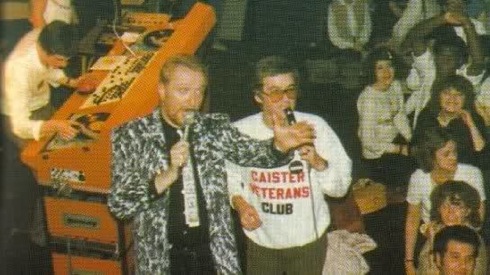
◼ AMONG VINCENT’S FANS TODAY is the young black British mixer-producer Fitzroy Facey, who describes himself as a religious listener to Robbie Vincent’s radio shows through the late 1970s and early 80s. It was 1979 when Robbie helped instigate the National Soul Weekenders at Caister holiday camp, which are still going strong (see video below). In a recent interview for his magazine The Soul Survivors (edited extract at JazzFM), Fitzroy acknowledged that Vincent has been as important as some of the artists he has interviewed because he touched so many people’s lives, to create the “one nation under a groove” [view vid].
Robbie: My phone-in show helped here as I suffered a lot of abuse and would not tolerate racism or bigots. I’m very proud to have stood up to those views and the great uniter is music, which is a universal language.
Fitzroy: I was one of those coming from an Afro-Caribbean background who remember the racist door policies in the 70s and early 80s.
Robbie: Tell me about it; don’t forget I grew up in an era where Tamla Motown didn’t put their artist photographs on the cover sleeves because they were black and they worried they might alienate a white audience. This is an often missed point and an utter disgrace… We should hang our heads in shame.
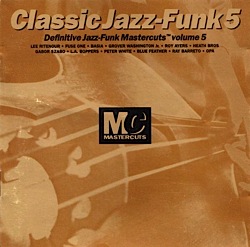
“The Robbie Vincent Edition” 1994: his Classic Jazz-Funk selection for Mastercuts ranges from Grover Washington, Roy Ayers and Gabor Szabo to Blue Feather and OPA
Fitzroy: There are huge testaments on the net to both you and Greg Edwards for opening doors to pirate stations and presenters of black music. The younger generation have no concept that back in the 70s access to black music was totalling less than 10 hours a week. Today it’s 24/7 and you couldn’t possibly imagine 30-plus years later that Kiss, Jazz, Choice FM would grow out of that.
Robbie: That’s what made the scene so exciting — it was pioneering. The people who danced and were enthusiastic about the music made me very proud to be part of it. Because people were so passionate… Remember, the young black musicians were inspired by their brothers in America. You didn’t have to become a boxer — you learned an instrument. It was so infectious, it was inevitable that the music back then would be integral to popular music today.
➢ Choose “View full site” – then in the blue bar atop your mobile page, click the three horizontal lines linking to many blue themed pages with background article
MORE INTERESTING THAN MOST PEOPLE’S FANTASIES — THE SWINGING EIGHTIES 1978-1984
They didn’t call themselves New Romantics, or the Blitz Kids – but other people did.
“I’d find people at the Blitz who were possible only in my imagination. But they were real” — Stephen Jones, hatmaker, 1983. (Illustration courtesy Iain R Webb, 1983)
“The truth about those Blitz club people was more interesting than most people’s fantasies” — Steve Dagger, pop group manager, 1983
PRAISE INDEED!
“See David Johnson’s fabulously detailed website Shapers of the 80s to which I am hugely indebted” – Political historian Dominic Sandbrook, in his book Who Dares Wins, 2019
“The (velvet) goldmine that is Shapers of the 80s” – Verdict of Chris O’Leary, respected author and blogger who analyses Bowie song by song at Pushing Ahead of the Dame
“The rather brilliant Shapers of the 80s website” – Dylan Jones in his Sweet Dreams paperback, 2021
A UNIQUE HISTORY
➢ WELCOME to the Swinging 80s ➢ THE BLOG POSTS on this front page report topical updates ➢ ROLL OVER THE MENU at page top to go deeper into the past ➢ FOR NEWS & MONTH BY MONTH SEARCH scroll down this sidebar
❏ Header artwork by Kat Starchild shows Blitz Kids Darla Jane Gilroy, Elise Brazier, Judi Frankland and Steve Strange, with David Bowie at centre in his 1980 video for Ashes to Ashes
VINCENT ON AIR 2026
✱ Deejay legend Robbie Vincent has returned to JazzFM on Sundays 1-3pm… Catch up on Robbie’s JazzFM August Bank Holiday 2020 session thanks to AhhhhhSoul with four hours of “nothing but essential rhythms of soul, jazz and funk”.
TOLD FOR THE FIRST TIME
◆ Who was who in Spandau’s break-out year of 1980? The Invisible Hand of Shapersofthe80s draws a selective timeline for The unprecedented rise and rise of Spandau Ballet –– Turn to our inside page
SEARCH our 925 posts or ZOOM DOWN TO THE ARCHIVE INDEX
UNTOLD BLITZ STORIES
✱ If you thought there was no more to know about the birth of Blitz culture in 1980 then get your hands on a sensational book by an obsessive music fan called David Barrat. It is gripping, original and epic – a spooky tale of coincidence and parallel lives as mind-tingling as a Sherlock Holmes yarn. Titled both New Romantics Who Never Were and The Untold Story of Spandau Ballet! Sample this initial taster here at Shapers of the 80s
CHEWING THE FAT
✱ Jawing at Soho Radio on the 80s clubland revolution (from 32 mins) and on art (@55 mins) is probably the most influential shaper of the 80s, former Wag-club director Chris Sullivan (pictured) with editor of this website David Johnson
LANDMARK FAREWELLS. . . HIT THE INDEX TAB UP TOP FOR EVERYTHING ELSE

 Yesterday’s BBC radio strand Archive on 4 made exciting listening of judicious extracts. Titled The Politics of Art, it teased out Berger’s then revolutionary way of discussing paintings as commodities, under the themes of society and context, the nude, the power of money and advertising.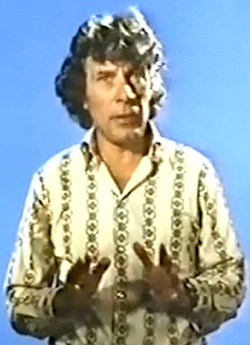












 ➢➢ Shapers of the 80s ➣➣