Category Archives: nightlife

2025 ➤ Finally a candid insight into the glittering New Romantics revolution

Photography, fashion, clubbing, exhibitions, Social trends, Swinging 80s, Youth culture, newbook, New Romantics, Blitz Club, Nightlife Rebels, Blitz Kids, Derek Ridgers, Kim Bowen, David Johnson, John Maybury,

Contributors to Nightlife Rebels: Derek Ridgers, Kim Bowen, David Johnson and John Maybury. (Photo by David Jenkins)

❚ DURING THE SWINGING 80s two seasoned eye-witnesses watched Britain’s young ignite a glittering New Romantics revolution… Myself David Johnson as a Fleet Street journalist explored their intriguing carnival of style-setting cults across Britain, Paris and New York, while straight-up photographer Derek Ridgers captured the libertines in their dark dens.

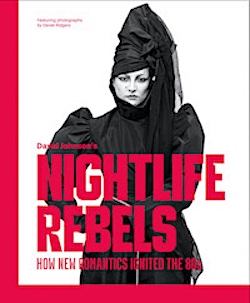
Our new illustrated hardback NIGHTLIFE REBELS reveals the candid history of the celebrated Blitz Club’s hedonists who insisted “One look lasts a day”. Featuring unseen photos, stats, a unique timeline and Who Really Was Who.

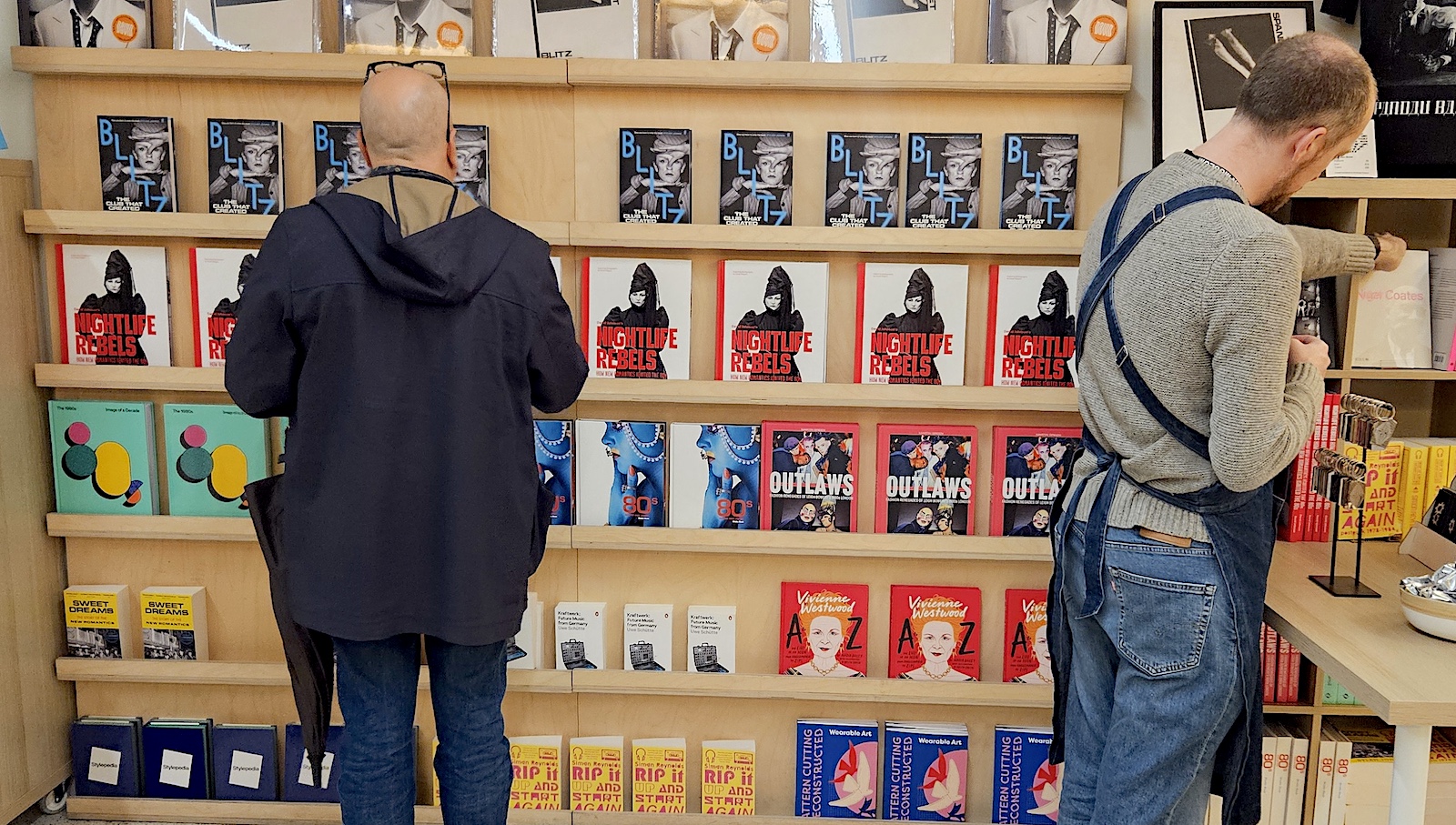
Last week the book’s four chief contributors gathered for a team picture at London’s Design Museum where an exhibition about Blitz culture runs for six months and our book is on sale in its shop – The Design Museum

WHAT EACH OF US SAYS ABOUT THE 80s

“Some nights it was like walking into Hieronymus Bosch’s Garden of Earthly Delights” – Photographer Derek Ridgers, top left

Photography, fashion, clubbing, exhibitions, Social trends, Swinging 80s, Youth culture, newbook, New Romantics, Blitz Club, Blitz Kids,“A full night-time economy flourished around these clubs where graphic designers, artists, deejays, writers, producers and musicians of every kind refined and developed their skills by working with club-owners” – Stylist and costume designer Kim Bowen, former Queen of the Blitz, second left

“In the shabby Blitz wine bar on Tuesdays precocious 19-year-olds presented an eye-stopping collage, posing away in wondrous ensembles, emphatic make-up and in-flight haircuts. This spectacle shouted newness” – Journalist David Johnson, third along

“Being photographed served as a kind of affirmation that your particular ‘look’ set you apart as a somebody” – Video artist John Maybury, and former Blitz star, pictured right

Photography, fashion, clubbing, Social trends, Swinging 80s, Youth culture, newbook, New Romantics, Blitz Club, Blitz Kids, David Johnson, Design Museum, Blitz Club exhibition,

There’s our book on the second shelf at the Design Museum: Dare we assume the two lads thumbing through the options might have been Blitz Kids back in the day? (Photo by Shapersofthe80s)

➢ Previously at Shapersofthe80s: Here’s an extravaganza of a show to confirm the Blitz Kids’ place in history

FRONT PAGE

2025 ➤ In a busy week, Derek Ridgers relives his addictive past

Photography, books, talks, nightlife Derek Ridgers, Yasmine Akim, Hollywood Reporter, Cannes

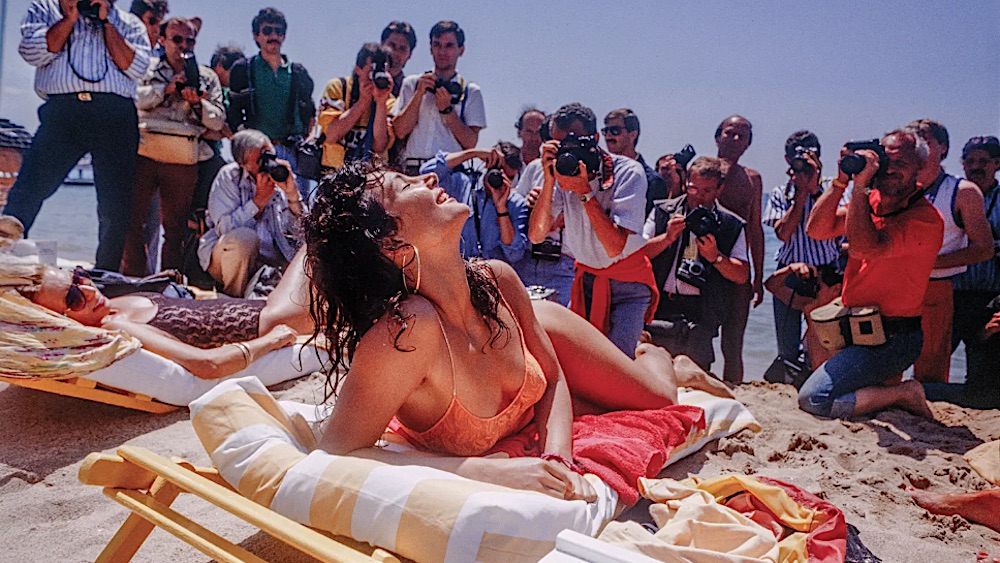
Jasmine on Carlton Beach in Cannes, 1988: captured by Derek Ridgers

❚ MY PAL THE STRAIGHT-UP PHOTOGRAPHER Derek Ridgers is making headlines this week on two accounts. Yet another book goes on sale, with the unlikely title of Cannes, being as he says himself, “something completely different”. He explains: “One original title option was Nuts In May. It was thought that that reference might be a bit too obscure. I have no idea what the Cannes Film Festival is like these days, I haven’t been there for nearly 30 years, but it was certainly more than a bit nuts, at times, back in the Eighties and Nineties.”

The Hollywood Reporter has splashed on a major review of Derek’s book from IdeaLtd, in which the picture we see here is typically full-on, showing Jasmine on Carlton Beach in 1988. “There’s the sun, sea, beach, girls, crowds, the beautiful French Riviera… and you’ve got famous film stars wandering around all over,” says our author. “For a photographer, it’s utterly addictive.”

➢ See several more of Derek’s Cannes photographs
at the Hollywood Reporter

Having also said “After 45 years, I can afford to lighten up a little,” this week also sees Derek featuring in a talk at London’s major gallery Tate Modern, as part of its Offprint weekend. According to the blurb, Derek sits down with fellow photographer Yasmine Akim to talk about what it’s like behind the camera on the dancefloors of boundary-pushing queer parties, clubs and raves across generations. She has especially documented parties and performances at INFERNO.

➢ Queer Time and Space: Photographing Nightclubs
with Derek Ridgers and Yasmine Akim
(admission free at 4:40pm on Saturday 17th)

FRONT PAGE

2015 ➤ Steve Strange’s anniversary: deciphering the pen portraits of the man of masks

Steve Strange, Stephen Harrington, Blitz Kids, New Romantics, nightclubbing, Swinging 80s, London, fashion, pop music, Visage, tributes, youth culture, obituaries

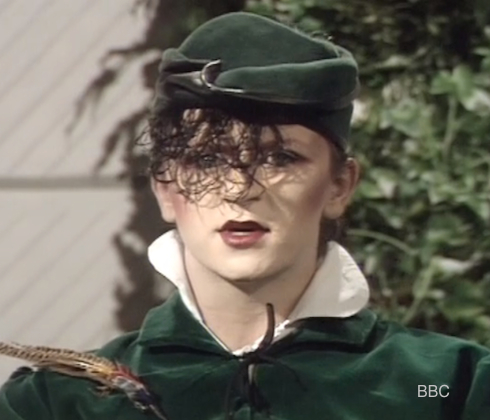
Steve Strange in 1981: here in Robin Hood guise (BBC)

FIRST PUBLISHED 13 FEBRUARY 2015

◼ ONE OF STEVE STRANGE’S TALENTS was persuading the press to believe in his latest wheeze, however fantastic. He had a way of convincing himself that a story was already written and a mission achieved before he had pressed the accelerator and set off. This irritated as many journalists as it amused and many were consequently very sceptical of his next big announcement – like saying he’d booked a big American star to do her first live promotional performance in Britain at his crowning glory, the Camden Palace, capacity 1,410. But in fact he had and she did, and in June 1983 the unknown Madonna was launched in the UK singing to backing tapes for half an hour.

The myths surrounding Steve were always the stuff of self-promotion. Dressing up was part of the same story-telling ritual. Today, he would say, I am Robin Hood, tomorrow Ruritanian Space Cadet, the next day Marionette with the mind of a toy. A compulsive man of masks presents a tricky subject for the scribblers obliged to capture that life once it is spent, so we must tiptoe through the obituaries like a minefield, and beware of tripping over Steve’s much-spun versions of history that were pure fantasy. Even national newspapers seemed to fall for many of the dreams he spouted, as well as the exceedingly vague memories committed to his 2002 book, Blitzed. As the mainstream obituary writers lead you through those New Romantic years, see if you can spot the porkies. . .

➢ The Times obituary:
As the head boy of the “new romantics”, Steve Strange was the flamboyant scene-maker of a colourful subculture that dominated early 1980s British pop music as a showily garish counter-reaction to the stylistic austerity of punk. If punks were the roundheads in pop’s civil war, the “new romantics” were the cavaliers, ushering in a restoration of glitz and glamour, with a delectably decadent flourish… / Continued online

➢ Adam Sweeting, Guardian:
In 1978, Strange and Rusty Egan (then drummer with the Rich Kids) began holding David Bowie nights on Tuesdays at Billy’s club in Soho, a squalid bunker situated beneath a brothel. “We played Bowie, Roxy Music and electro,” said Strange. “It was where our friends could be themselves.” Billy’s could hold only 250 people [not quite!] but swiftly developed an outsize reputation, numbering among its garishly clad clientele such stars-to-be as George O’Dowd (the future Boy George), Siobhan Fahey, later of Bananarama, and Marilyn. . . / Continued online

Billy’s club,Helen Robinson, nightlife, London ,Steve Strange, PX

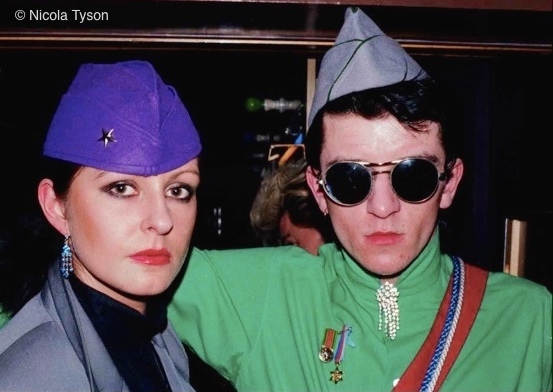
Billy’s club 1978: Strange as Ruritanian Space Cadet alongside PX designer Helen Robinson. (Photograph by © Nicola Tyson)

➢ Daily Telegraph obituary:
Strange fronted sleek operations, such as Club For Heroes in Baker Street and the Camden Palace in north London, where Madonna performed her first British live concert. But Visage split amid acrimony over the division of royalty payments, and his nightspots fell out of vogue in the mid-1980s with the rise of rap, hip-hop and dance music. By this time Strange had a reputation for high-handedness. Years later, Boy George lampooned Strange as the preposterous club host character “Nobby Normal” in his biographical musical Taboo. Strange was not amused. “I don’t think I have that strong a Welsh accent,” he complained. . . / Continued online

➢ The Scotsman obituary:
Although his career as a pop star afforded him only one real hit as frontman of the band Visage, 1980’s austere synthesiser anthem Fade to Grey, Steve Strange’s distinctive image and party-loving persona saw him help invent London’s New Romantic scene. . . Visage’s time in the sun flared all too briefly; with Strange being courted to repeat the clubbing success of places like the Blitz in various US cities, he dived wholeheartedly into the life of the international rock star, with all the pitfalls that entailed. Put off by Strange’s drug use, spending sprees and debauched behaviour, Midge Ure left to concentrate on Ultravox and Visage’s 1984 third album Beat Boy was a critical and commercial failure. The band split the following year, the same year that Strange first took heroin. . . / Continued online

➢ Pierre Perrone in The Independent:
A flamboyant figure with a self-destructive streak . . . By the late 90s he was back in Wales and, by his own admission, acting “very bizarrely”. He spent six weeks in a psychiatric hospital, was arrested for shoplifting and given a suspended sentence. “I don’t know whether it was cry for help,” he told The Independent in 2000, blaming an over-reliance on Prozac, though he seemed comfortable with his avowed bisexuality. . . / Continued online

FRONT PAGE

2024 ➤ Welcome to much unseen photography by Duran’s first lensman

Birmingham, books , photography, Rum Runner, Paul Edmond, Duran Duran, Maggie K de Monde, APS Books
❚ ANY FAN OF DURAN DURAN remembers the very first photographs of the band in 1980 as they finalised their line-up which was to win a recording contract by year’s end and secure their first chart hit with Planet Earth. The five musicians were young and handsome and while they emerged as lucky leaders of the New Romantic music and fashion movement based on Birmingham’s Rum Runner nightclub, so local teenager Paul Edmond learned the skills of photography by capturing their frilly shirts. These Pose Age outfits took inspiration from Jane Kahn and Patti Bell’s futurist boutique, but in those DIY days before stylists had been invented, it fell to Paul to inject a sense of cool nonchalance into his images of the budding pop stars as they too practised how best to look a camera in the eye.

➢ Order your set of Duran Duran En Scène,
three volumes of Paul Edmond’s photographs,
direct from APS Books

Four decades later, after selling 100 million records, winning umpteen music awards, and being welcomed into the Rock & Roll Hall of Fame, Duran themselves revel in releasing new material and reworking the old, their latest album being Danse Macabre. How appropriate then that the photographic archive of Paul Edmond – which embraces a wider world of youth culture than only that of Duran – is being published this spring. A trio of books filling 200 A4 pages has been initiated by his sister Maggie K de Monde, herself an all-round song-writer and performer. Nick Rhodes makes a contribution. Advance orders for the £90 package are being invited by APS Books of Yorkshire, with delivery expected in June.

Tragically, Paul himself cannot share this poignant moment because he was killed in a road accident in 2015. He and I became great friends working on the monthly magazine New Sounds New Styles in 1981, for which he took an arresting cover picture of Jane Farrimond and the flamboyant Martin Degville, a pair of Brummie style leaders who both ended up in the band Sigue Sigue Sputnik.

➢ Previously at Shapersofthe80s: 1980, Out of the blue,
Duran’s first gig pictured at the Rum Runner

➢ Previously at Shapersofthe80s:
1981, Birth of Duran’s Planet Earth

➢ Previously at Shapersofthe80s: 1981,
New Sounds New Styles: Will it all be over by next week?

➢ Previously at Shapersofthe80s: 2023, Celebrating
Kahn and Bell’s role at the centre of Brummie fashion

FRONT PAGE</

2023 ➤ The Blitz Kid poser who reshaped Eighties fashion

An exhibition of fashion legend Stephen Linard’s archive of drawings, photographs and garments runs for a month from 8 September and provides eye-opening insights into his startling influence on the other Blitz Kids and on the fashion jetset…
rel=nofollow

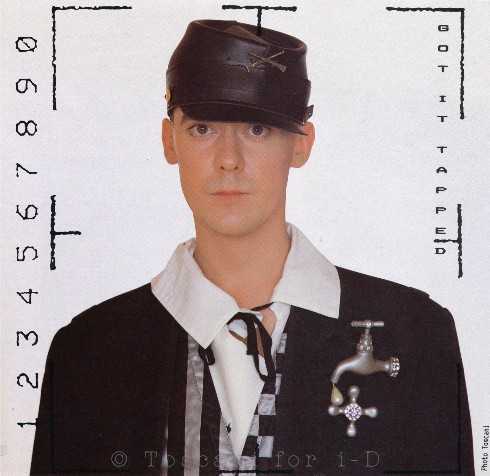
Ex-St Martin’s fashion designer Stephen Linard at the height of his commercial success in 1984, when he worked for three years for Jun Co in Japan. Here pictured by Toscani for i-D magazine’s issue No 15 in “An illustrated guide to detail”. He sports a leather Confederate Army cap $15 bought in transit through Anchorage airport in Alaska. The jacket £250 over giant-collared shirt £120, and trousers £200 are all by Yohji Yamamoto. Waistcoat £180 by Gianni Versace. Artfully placed on his left lapel is a silvered bathroom tap £60 and faucet brooch £40, both from a jewellery collection for Chloe, Paris. He said: “It was worth it for the stir it caused at the Paris collections.”

❚ THE PRESS CALLED THEM the New Romantics and the Blitz Kids, declaring the Eighties the Age of the Pose. Art-school tutor Rosetta Brooks compared their self-consciously styled poses to “street theatre ultimately extended into continuous performance as a post-punk embodiment of Gilbert and George in one person (the individualist).” Each poser, she believed, is a ready-made. Step forward fashion student Stephen Linard for ticking all the above boxes – a flamboyant Canvey Island boy from Southend School of Art (1975-78) who yearned to make a statement in every street or room he graced.

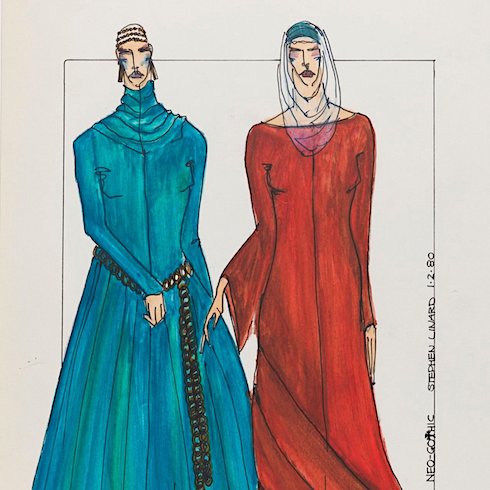
Arriving at St Martin’s School of Art in London (1978-81), Linard pushed the boundaries of excess. Annually, second-year students organised an Alternative Fashion Show but in May 1980 the college’s resoundingly prim middle-class students were out-gunned when Linard sent out his sensational Neon Gothic collection – a stark collision of Space 1999 meets liturgical Gothic meets the masonic livery which was displayed in shops serving the Freemasons’ Hall just along the street from the Blitz Club, the capital’s coolest nightspot.

The audience erupted in cheers. Strutting the runway to the Human League came the then-unknown George O’Dowd sporting a soaraway post-punk mullet atop sharp grosgrain suit with dog collar, Michele Clapton and Myra Falconer wearing risen-from-the-dead pallor beneath shaven heads, along with Fiona Dealey and Julia Fodor (today a Princess). Their vestments were accessorised with religious motifs while emanating a curiously spare chic. Finally, all in white as a “space-age pope”, came gifted Lee Sheldrick, modelling a white silk grosgrain suit with his head shaved bald to become the embodiment of Nosferatu the Vampyre. Resonances abounded for the show’s title to be adopted by the nascent Goth movement.

Stephen Linard, Total Fashion Victim, St Leonards on Sea, East Sussex, Graham Smith, Rogue Gallery, September 2023, exhibition, fashion illustrations, art for sale,

A stark collision of Space 1999 meets liturgical Gothic: Two robes from Stephen Linard’s sensational Neon Gothic collection in his second year at St Martin’s

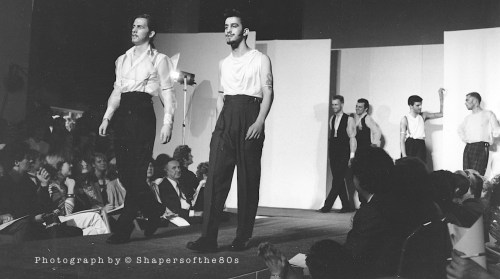
One year later Linard was determined to submit menswear for his degree collection, despite the efforts of the head of the fashion department to insist on women’s wear. She actually threatened to eject Linard from the college until strong internal protests backing Linard’s pursuit of menswear ultimately prevailed. Modelled by six of his hunky clubland pals, his collection titled Reluctant Emigrés featured swishy draped cashmere greatcoats, patched pinstripe trousers and city shirts that all evinced an Edwardian air of immaculate tailoring punctuated with edgy details.

Linard’s street-savvy lads made a gasp-out-loud impact, as Fleet Street’s Suzy Menkes noted in print. Historians Alan J. Flux and Daryl F. Mallett have also written: “The clothes were instantly covetable, thoroughly masculine in an entirely new way, and electrifying as only the truly innovative can be.” Linard won his first-class Honours degree.

The fashion press feted him upon graduation. His outrageous fashion details flagged direction for the two dozen sharpest Blitz Kids who shaped the New Romantics silhouette from the Blitz onwards. Most significantly, Linard changed his own appearance daily from his foppish Fauntleroy dandy, to the Endangered Species outfit made from animal skins, to the cowboy gilded from hat to toe. Linard has admitted: “The competition pushed you on, especially Lee Sheldrick. At the Warren Street squat [where they lived] you might change what you were going to wear eight times on a Tuesday to try to outdo everyone else at the Blitz.”

Inspiration was all around. In 2020 Linard said: “The Blitz was an art students’ club. The place was choc-a-bloc with artists: Brian Clarke, Zandra Rhodes, Molly Parkin, Antony Price, Duggie Fields, Kevin Whitney and us because it was halfway between Central School and St Martin’s. People who said ‘Oh you Blitz Kids don’t DO anything’ were talking rubbish, because WE all did. We were the ones with our work in the glossy magazines long before the rest.”
Stephen Linard, Total Fashion Victim, St Martins School, degree show, Reluctant Emigres, menswear

Smiles from the press at Linard’s degree show: The Reluctant Emigrés wore pinstripe trousers in Savile Row fabrics and city shirts in feminine couture fabrics evoking Edwardiana. (Photo by Shapersofthe80s)

Linard’s styles had always been sought after by pop-star contemporaries from Spandau Ballet, Boy George, Frankie Goes to Hollywood, Haysi Fantayzee and The Slits, to U2, the Bee Gees, Womack & Womack, even Cliff Richard and Johnny Mathis, and ultimately to the great god David Bowie himself.

In 1982 the Railway Children collection of stripey Edwardian coats and frocks for school-girls became the first of Linard’s two womenswear collections. He was one of six budding British designers taken to Paris by Blitz Club host Steve Strange to help launch his Anvil album, but also to show that the English could be as stylish as the French – staged at Europe’s coolest nightclub, Le Palace.

Meanwhile Linard’s reputation went on growing among the international fashion set. 1983 brought his collection Angels with Dirty Faces, inspired by the Bogart-Cagney gangster movie set in the Thirties depression. It was both pretty and poignant and it sold worldwide. That year, the snappiest magazine of the day, New York, headlined a special fashion section “The British Are Here”, and selected as the UK’s five leading lights Jean Muir, Zandra Rhodes, Katharine Hamnett, Vivienne Westwood — and Stephen Linard, “one of the most creative of the young designers”.

As recently as 2018, Laird Borrelli-Persson was writing in Vogue online: “Stephen Linard deserves credit for many innovations in fashion and its presentation that we take for granted… One of the Blitz Kids whose dandyish ways had an outsize impact on 1980s style, his early work was distinguished not only by irreverence, but also by a strong sense of narrative… Linard insists his aim was not to cause outrage. ‘I was into doing couture stuff and I was ‘just making clothes,’ really, as Sonia Rykiel used to say’.”

PS: Since you ask, Total Fashion Victim was the name of the one-nighter Linard hosted at the Wag Club during the Eighties.

➢ The Total Fashion Victim exhibition is hosted by Ray Gange at the Rogue Gallery, 65 Norman Road, St Leonard’s On Sea TN38 0EG

rel="nofollow"

St Martin’s Alternative Fashion Show 1980: Linard’s Neon Gothic collection modelled by his most stylish Blitz Kid friends – from the left, Michele Clapton, George O’Dowd, Lee Sheldrick in white as a space-age pope, and Myra Falconer

➢ Previously at Shapersofthe80s: 1980, The year the Blitz Kids took their first steps into the headlines

POSTSCRIPT FROM i-D’s FIFTH ANNIVERSARY
Stephen Linard, Total Fashion Victim, i-D magazine, Nick Knight, photography, fashion,

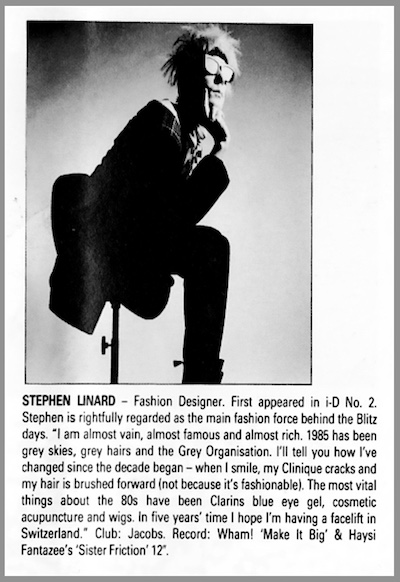
Stephen Linard seen in i-D magazine’s fifth birthday issue, No 30 in 1985, as one of their gallery of creative protagonists they titled 99 People of the 80s, all photographed by Nick Knight.

FRONT PAGE