Category Archives: History

➤ Ex-Blitz Kid Rusty Egan and friends dress 80s electro-pop in brilliant new clothes

Welcome to the Dancefloor, Rusty Egan, electro-pop, Blitz Kids, New Romantic, EDM, synthesisers,

Egan deejaying at Tramp this week: a nightclub launch for Welcome to the Dancefloor

AFTER FIVE YEARS OF BLAGGING, and five years of feuding with former collaborators, 80s Blitz Club deejay Rusty Egan’s own “electro-diskow” album, Welcome to the Dancefloor, amounts to a superb sonic landmark. He and his guest performers engage an impressive range of emotions by dramatically humanising the potential starkness many associate with electronica.

ALBUM REVIEW
Welcome to the Dancefloor
Rusty Egan

Spookily, their energy rockets us immediately into that vast clean stereo soundscape that uniquely defined the new music of 1980. Here synthesiser chords are stretched and layered and cracked like a whip, as if by an invisible hand in another time and space, which of course was precisely the sound of London clubland when its youth culture erupted as a volcano of creativity. The album’s pacey opening track finds ex-New Order’s Peter Hook on The Other Side spinning through the Milky Way, his thin 80s vocal style querulous and wistful, yet poppily optimistic.

That era did after all abandon the overpowering noise of the rock stadium and the punk nihilists to celebrate a return to melodious singing voices and to arch lyrics meant for listening, while synthesisers defined a fresh musical ambience. Inexperienced young artists unsure about their singing ability half shouted, half vocodered their limited vocal range to re-imagine their teenage dreams on a different planet.

Egan’s collaborators: click any pic below to launch slideshow

While Egan has carefully selected 13 tracks reflecting the wide spectrum of synth possibilities, half are love songs in the spirit of the 80s generation who were dubbed by the press New Romantics. Nevertheless he has created a consummate showcase for electronic music, co-produced by Nick Bitzenis (aka Nikonn). He has had a hand in writing a majority of the songs, many co-written with Chris Payne (of Fade to Grey fame), these being subsequently endorsed and expressed by a handful of starry friends such as Midge Ure and Tony Hadley on tracks of their own.

Despite its title, this is not dance music that the funk nation would groove to. Laying down a dominant 4-4 beat is not conducive to free-form movement unless you think you’re Tik or Tok. Exceptions include Egan’s own pulsating title track with robo vocals as if by Stephen Hawking and knowing breaks parodying Tenek and the Human League; also the nippy number Hero, which gains spiritual resonance from Andy Huntley’s richly textured delivery.

➢ Listen online to Welcome to the Dancefloor
track by track

The stand-out track is Midge Ure’s transformation of an Egan/Payne song titled Glorious. He rewrote lyrics and melody so as to construct one magnificent crescendo filled with space and tension reminiscent of “Ohhhhh, Vienna!” A close second for reconjuring the authentic 80s is Egan’s own Wunderwerke, driven by his Trans-Europe vocals through classic synth sweeps, hypnotic repeats and bass stabs. Third comes Erik Stein on the astonishingly contemplative Ballet Dancer, basking in a wonderful waterfall of synths.

Like Brexit, Tony Hadley *is* Tony Hadley and here (without the Ballet) on the coltish lovesong Lonely Highway he canters to the top of a whole new hill as a crooner. What distinguishes this album is that it’s awash with affecting lyrics and fine voices to listen to in the name of electro pop – among the gentlest are Be The Man featuring the gorgeous inflections of Kira Porter; Nicole Clarke’s ethereal contribution to Love Can Conquer All; and Love Is Coming My Way, a second number from the silken-voiced Stein.

And just wait for the Chariots of Fire finale: Egan’s intensely personal track, Thank You, which unleashes a shock of the best kind. To describe more would be to spoil a gifted idea. It is emotional and all too evidently sincere. Thank you, Rusty.

Welcome to the Dancefloor, Rusty Egan, electro-pop, Blitz Kids, New Romantics, EDM, synthesisers,

Rusty Egan: co-producer, co-writer and much else – has created a landmark album in Welcome to the Dancefloor

➢ Pre-order Welcome To The Dancefloor as 180g vinyl LP and CD variants, plus bonus mixes, at Pledge Music. – All pledges immediately receive MP3 downloads of the album, with the physical products promised by Rusty Egan “once we reach a target” (unspecified). At worst, PledgeMusic clearly says it “will refund you if the Artist doesn’t reach their target”.

➢ Previously at Shapersofthe80s:
1980, First sighting of the Blitz Kids

FRONT PAGE

2016 ➤ Britain’s first robot Eric comes back to life

science, robotics, Eric-the-robot, Science Museum, exhibitions,demonstrations, London,

Eric the robot, then and now: Emerging from the workshop in 1928, left, and today on gleaming display in London’s Science Museum. His former tight-lipped expression has been enlivened with spiky teeth by his builder Giles Walker

MEET ERIC, BRITAIN’S FIRST ROBOT, built in 1928 and reincarnated as this full-size working replica by London’s Science Museum in a preview of next year’s blockbuster exhibition on 500 years of robotics. Within a decade of the word robot being coined in Karel Čapek’s 1920 play R.U.R. (Rossum’s Universal Robots), the 6ft-tall Eric toured the world as superstar but four years later he suddenly vanished. More than 800 backers of the museum’s Kickstarter campaign funded an Eric lookalike to be recreated by artist and robot builder Giles Walker. The new Eric has now joined the permanent collection and you can see him on static display until 30 November, though he’s giving three animated demos daily as a sparky mechanical person. Free.

The world’s first robots: inrobots, Karel Čapek, RUR , theatre

The world’s first robots: in Čapek’s play R.U.R. of 1921

Originally built by Captain W.H. Richards & A.H. Reffell to stand in for the Duke of York and open a model engineers exhibition, Eric was everything we now imagine a robot to be: humanoid, metallic and able to talk, though he moved only in limited ways, standing and sitting and moving his limbs. Giles Walker’s reincarnation maintains Eric’s primitive charm but has added some sleek touches, such as flexible elbows. The original had 35,000 volts sparking through his lips as he spoke. Today Giles has given Eric LEDs flashing across some spiky teeth instead, which is “a lot safer”.

Of the insides, he adds: “I’ve converted what was originally a load of pulleys and electromagnets into a digital system.” This makes Eric a very modern old robot, despite the verdict of TV star John Barrowman when Eric appeared on BBC TV’s One Show last week. He thought Eric looked like “an older-type cyberman”. Actually, John, the truth is probably the exact opposite: that Doctor Who’s cybermen were inspired by the Eric of the 1920s.

➢ Visit Eric on display in London

➢ At the Science Museum curator Ben Russell reveals more about the building of Eric

FRONT PAGE

➤ 40 years on, Ridgers casts an honest spotlight on the birth of punk

Derek Ridgers, punk ,Vortex , Clare Thom

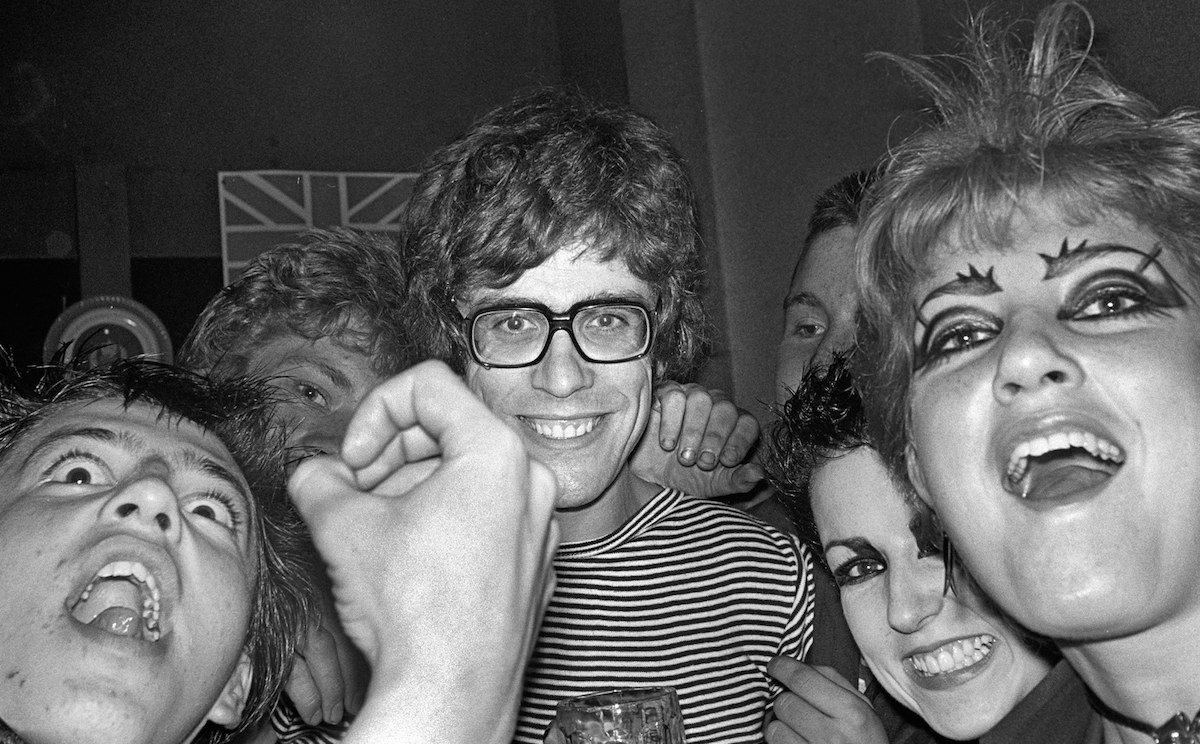
“I didn’t make a very good punk,” says photographer Derek Ridgers, here snapped by a passing punk at the Vortex in 1977, with future Blitz Kid Clare Thom at right

◼ THE CLICHES ABOUT PUNK are the rage, the nihilism, the safety pins. In fact, punk dawned in 1976, like all British youth cults, as a fashion statement that trumped those clichés. A new and powerful photo book from Derek Ridgers titled Punk London 1977 shows in 152 pages just how considered were its style leaders who had to invent their own iconoclastic looks before they could be bought off the peg. There were no mohican haircuts at the Roxy club when it opened in December 1976 and for 100 days became the platform for Generation X, the Clash, the Jam, the Heartbreakers, the Boys, Buzzcocks, Siouxsie and the Banshees and a raucous wave of rebel music that spread to Soho’s Vortex and the 100 Club.

Ridgers says: “In ’76 the audience became more interesting than the bands.” As he turned his camera away from the stage, he focused on the unique characters in the audience who were creating a new movement through self-expression. “Most of the early punks didn’t look like punks anyway. They just looked like young people who would alter their clothes: very often it would be school uniform or there would be bin liners, a few safety pins but not very many. The ethos of punk is really ‘Do it yourself’. It’s not dressing up in leather and having a mohican.”

Click any pic below to launch slideshow

The book launched last night in Mayfair with a vibrant exhibition of its photos and a swell party hosted by menswear designer Paul Smith and the British Fashion Council. Rightly Vogue.com asked Ridgers yesterday: What did you wear while documenting these kids? He replied: “Often I’d be going to gigs straight from work, so I simply wore what I’d worn there—usually a jacket, open-neck shirt, and jeans. I was not a punk by any means.” There’s a key picture of the Damned playing the Roxy in early 1977 where Ridgers is visible in the top right-hand corner, standing on the stairs, in glasses, open-neck shirt, cardigan, smiling. “I didn’t make a very good punk,” he says. No, just a very perceptive footnote to history!

Dazed Digital probed further and asked: Out of all the scenes you’ve photographed, which have you most felt part of? Ridgers replied: “There must be a part of me that wanted to be part of all of them. I see my photography as a very vicarious thing. I suppose if I didn’t wear glasses and if I’d been a little bit more of a macho type of guy, I would have been a skinhead. I don’t think I could’ve ever been a punk or a new romantic.”

As an observer he carved out his own beat along the labyrinthine path British youth culture took during the exotic 80s and became the go-to lensman for his take on more extreme outsider cults. Ridgers told Dazed: “There were a lot of photographers around but I stuck it out longer. Woody Allen said something about success is 80% just being there. It’s the thing with me – I was there. I can’t make any other claims apart from the fact that I was there. Through everything. On the edge looking in. With a camera I was able to stare with some legitimacy.”

The trash mag Polyesterzine asks Ridgers if he could compare today’s Zeitgeist to any of the eras he had shot. “No, not at all,” he replies. “The late ’70s and early ’80s was a very different, much darker time. The streets of London were a mess. The poor guy [I photographed] who had ‘We are the flowers in your dustbin’ tattooed across his forehead had it exactly right. They did all seem like the flowers in a dustbin. . . Things are very different now because a lot of those little clubs don’t exist. Soho for instance, where nearly half my nightlife photographs were taken, is rapidly changing. There isn’t the same after dark frisson of excitement about the place any more. Gentrification and the need for developers to maximise the profit from every square inch of the place means that there just aren’t any scruffy, little basement clubs left. Those scruffy, little basement clubs were the area’s lifeblood.”

➢ Punk London 1977 is published by Carpet Bombing Culture

Adam Ant, Jordan, Vortex, punk, Derek Ridgers,

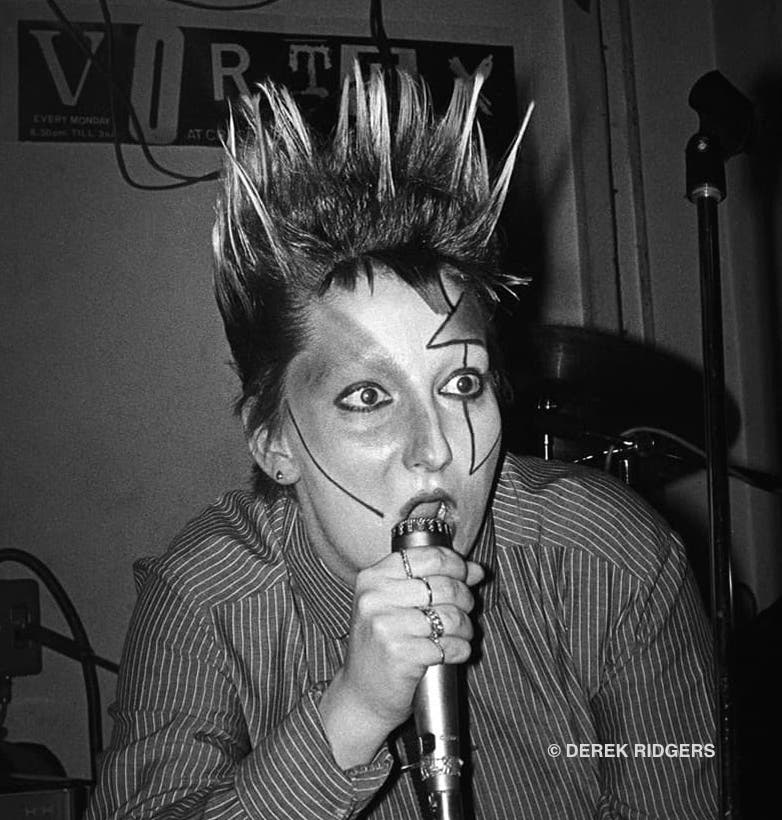
Derek Ridgers immortalises the night that the pioneering punk icon Jordan sang with The Ants at the Vortex, and says today: “They played far better music IMHO than when Adam became a big star in the 80s”

A GALAXY OF GALLERIES OF RIDGERS’ PIX

➢ At i-D – light on punk’s incendiary early days

➢ AllAccess Online in the cauldron of youth culture

➢ Dazed Digital pictures Punk London

➢ Accent shoots Brutus SS16 with Derek Ridgers

Captain Sensible , Damned , punk music, Roxy , Derek Ridgers

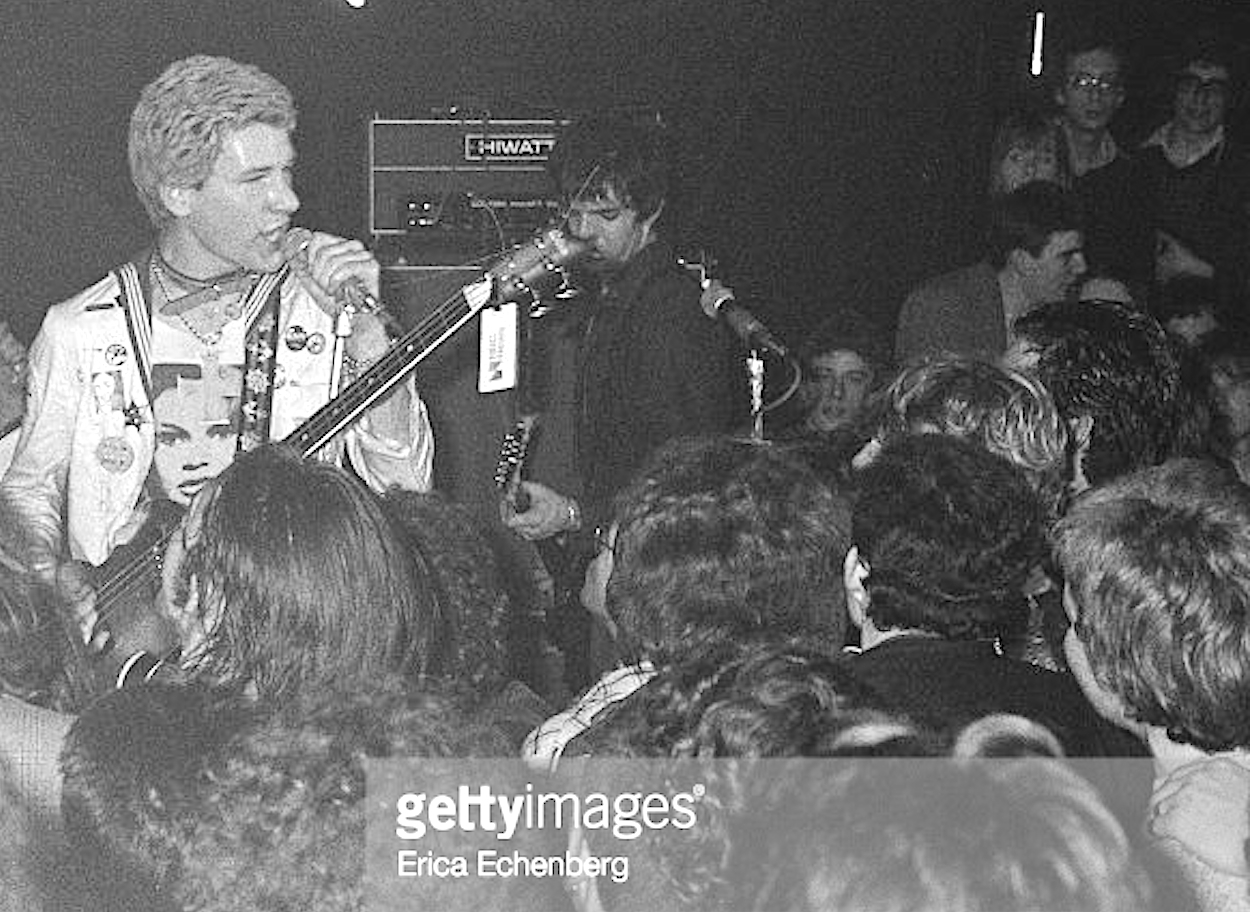
Captain Sensible fronts the Damned at the Roxy in 1977: spot Ridgers the cameraman top right in glasses and open-neck shirt. Photographed by Erica Echenberg

Don Letts, Andrew Czezowski , punk,Roxy

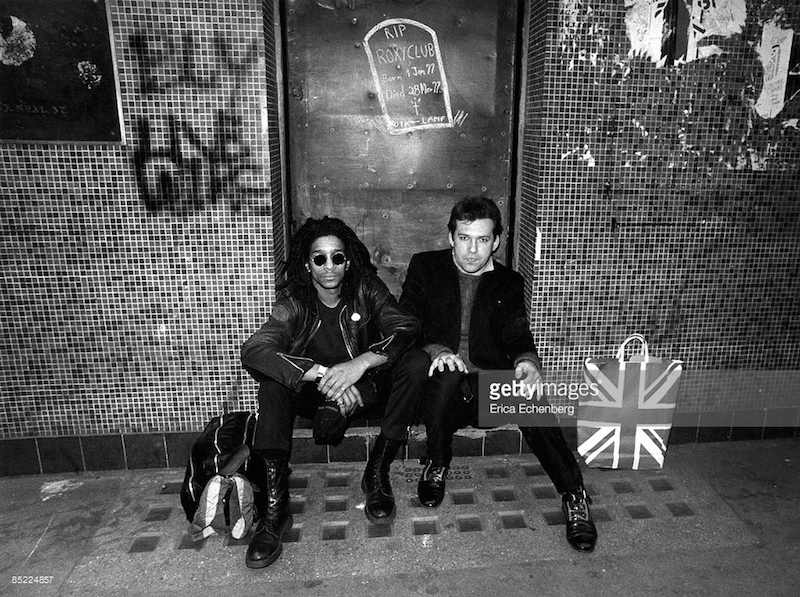
28 March 1977: deejay Don Letts and club promoter Andrew Czezowski outside the Roxy when it closed, three months after giving birth to punk. Photographed by Erica Echenberg

FRONT PAGE

2016 ➤ Prince Rogers Nelson: his raunchy earliest videos and his last

Prince Rogers Nelson
(7 June 1958 – 21 April 2016)

1979: I WANNA BE YOUR LOVER (OFFICIAL VIDEO)

http://www.dailymotion.com/video/x15zj5c_prince-i-wanna-be-your-lover-official-video_music

1980: MIDNIGHT SPECIAL IN ZEBRA UNDERWEAR

I Wanna Be Your Lover ,Why You Wanna Treat Me So Bad, Prince Rogers Nelson , TV, Midnight Special, pop music,

➢ Above: For his first TV performance in January 1980 Prince sports zebra-print underwear, black leggings, stack-heeled boots, and long hair giving us the first two tracks from Prince the album, I Wanna Be Your Lover and Why You Wanna Treat Me So Bad. On NBC’s The Midnight Special host Wolfman Jack says: “There’s nothing our next guest can’t do. He arranged, produced, composed, and performed his last album entirely by himself.”

1991: GETT OFF FOR MTV

Prince, Gett Off , New Power Generation, funk, MTV Video Awards,

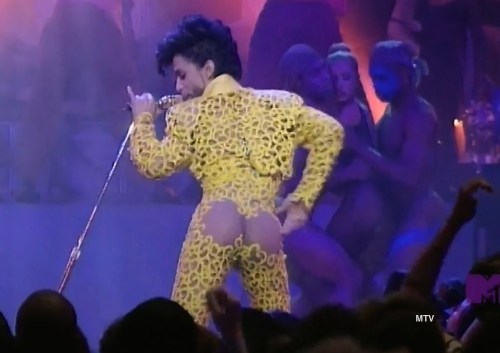
Prince’s 1991 MTV Video Awards performance of Gett Off with The New Power Generation might be the sexiest thing ever aired on TV. Click on pic to run video in new window

2014: BREAKFAST CAN WAIT (OFFICIAL, almost as sexy)

➢ WATCH 7 OF PRINCE’S BEST TV PERFORMANCES

Beyonce, Grammys 2004, Prince Rogers Nelson , TV, Purple Rain

Grammy Awards 2004, on video: Another killer rendition of Purple Rain with Beyoncé before duetting in Baby I’m a Star

➢ Previously at Shapersofthe80s:
Prince RIP: ‘A funny cat’ and ‘sole authentic genius’
of the 1980s

FRONT PAGE

➤ A sensational portrait of Bowie as the man who shaped our responses to an age of shattered dreams

David Bowie, genius, pop music, obituary, Major Tom, The Economist, alienation, annihilation, 1970s, Space Oddity, music videos, Apollo 11,

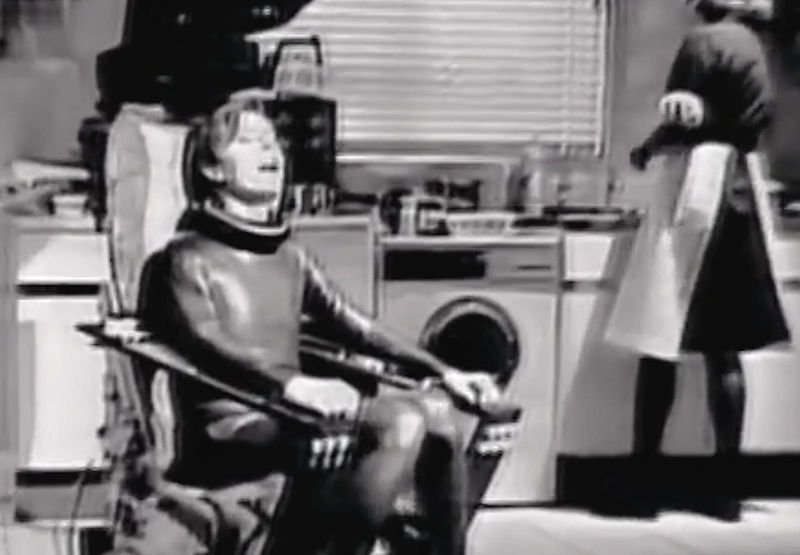
1969: “This is Ground Control to Major Tom / You’ve really made the grade / And the papers want to know whose shirts you wear”

➢ Today’s issue of The Economist pulls out the plum – a superb obituary casting David Bowie as a wonderful epitome of alienation who saw a way through the world’s fears of imminent annihilation:

IN JULY 1969 men walked on the moon, a technological leap all but unthinkable 50 years before. Three years later they abandoned it, and have renounced all return ever since. What boosters saw as the great opening act of the space age turned out to be, in effect, its culmination. Within a few years presidential corruption, economic stagnation, military ignominy and imagined catastrophe had warped post-war America’s previously impervious belief in progress, a belief that had resonance across the then free world. After Apollo, the future would never again be what it used to be.

The Economist, Space Oddity, David Bowie,tributes, David Bowie’s greatest years began nine days before Apollo 11 touched down in the Sea of Tranquillity, with the release of his single Space Oddity; they ended 11 years later, with the single Ashes to Ashes. Over that decade he used imagined futures to turn himself into something contradictory and wonderful — an epitome of alienation with whom the alienated flocked to identify. In doing so, he laid bare one of the key cultural shifts of the 1970s: the giving up of past dreams. . . / Continued online

“In Space Oddity Major Tom, floating in a most peculiar way, had been an isolated spaceman;
by Ashes to Ashes his isolation was a junkie’s”
– The Economist

David Bowie, genius, pop music, obituary, Major Tom, The Economist, alienation, annihilation, 1980s, Ashes to Ashes, music videos,

1980: “Ashes to ashes, funk to funky / We know Major Tom’s a junkie / Strung out in heaven’s high / Hitting an all-time low”

➢ Previously at Shapersofthe80s: “I’m not a rock star” Bowie often said – No, David, you were a messiah

OVER TO YOU, MAJOR TIM:

➢ Update on the first Friday of the new era AD (After David), Britain’s first official astronaut Major Tim Peake takes his first walk outside the International Space Station

International Space Station, ESA, NASA, British, astronaut,Union Jack,

2016: The British astronaut Major Tim Peake – sporting the Union Jack on his shoulder – takes his first spacewalk at 2pm today from the International Space Station (via NASA Television)

NOT FORGETTING COMMANDER CHRIS HADFIELD


❏ This is the cover version Bowie called “possibly the most poignant version of the song ever created”, recorded by Commander Chris Hadfield on board the International Space Station in 2013.

Today’s hits on mainstream media!

➢ Tim Peake on live NASA Television

➢ David Bowie Breaks Adele’s Vevo record

FRONT PAGE