A New Romantics keynote was your invented image: startling make-up and a towering hat complete Blitz superstar Peter Probert’s wicked witch of the west
+++ ◼ EVEN AMONG THE UK ROCK PRESS, few of its music historians have conceded that the New Romantics amounted to an ambitious subculture that changed the rules of the game – largely because the rockists completely missed the boat by idolising guitar idols, never went to nightclubs, and what’s more, couldn’t dance.
The most audible consequence of the clubbing underground was to fundamentally change the rhythm of the pop singles charts within a year – from the rock guitar to the bass-and-drum, namely, to dance music. After 1981 scarcely any significant new rock groups made the singles charts, only the old dinosaurs, if at all. Rock was relegated to the album chart and new dance-music stars such as Madonna and Prince transformed the pop music of the new decade.
The other New Romantics keynote was the central role of image with the dawn of MTV as a platform for music videos. A band became the leaders of fashion, while their style-conscious nightlife followers collaborated in promoting them through the clubbing grapevine. As synth-pop pioneers during 1980 Spandau Ballet pushed a button for the fashion-conscious young. They were signalling that the language of pop called for new styles as much as new sounds.
During the first five years of the decade, more than 100 “image bands” and acts entered the UK charts – most of them new, led in the South-East by Ultravox, Linx, Spandau Ballet, Visage, Landscape, Depeche Mode, Kid Creole, Blue Rondo a la Turk. Many more emerged from clubland across the UK: Duran Duran, Soft Cell, Heaven 17, Altered Images, Imagination, Eurythmics, Thomas Dolby, ABC.
During Spandau’s North American tour in November 1983, alongside their hit True among the Billboard Top 40 singles in the USA, there were 17 other British bands – more than the Swinging 60s ever knew. Insolence and narcissism lit a torch that led a generation of school-leavers through what threatened to be Britain’s dark age of unemployment. As clubs became workplaces and nightlife the essential engine of cultural evolution, they liberated music, design and, especially, ambition for the young.
The two Welsh soul-boys, one straight, one gay, who shaped the future of 80s clubland: Chris Sullivan went on to run Soho’s Wag club for 19 years… And Steve Strange, whose Blitz legacy landed him and deejay Rusty Egan the mighty Camden Palace in 1982
+++ ◼ IN 1980 THE BLITZ CLUB ENTERED its second year: here was your invitation to the Swinging 80s, where daily life would never sound or feel the same again. Paris and New York had taken the cultural lead during the recessionary 70s; now London was to become the creative powerhouse as Britain rode out dark times and its youth culture leapt back into the world spotlight.
In February 1979, the axis of Steve Strange as Tuesday-night greeter and Rusty Egan as deejay had graduated from Billy’s in Soho to the Blitz in Covent Garden. This was a bar decorated with Second World War austerity that was thought to echo the down at heel 70s: bare floorboards, gingham tablecloths, hanging lights with dusty enamel shades, framed pictures of our wartime leader Churchill.
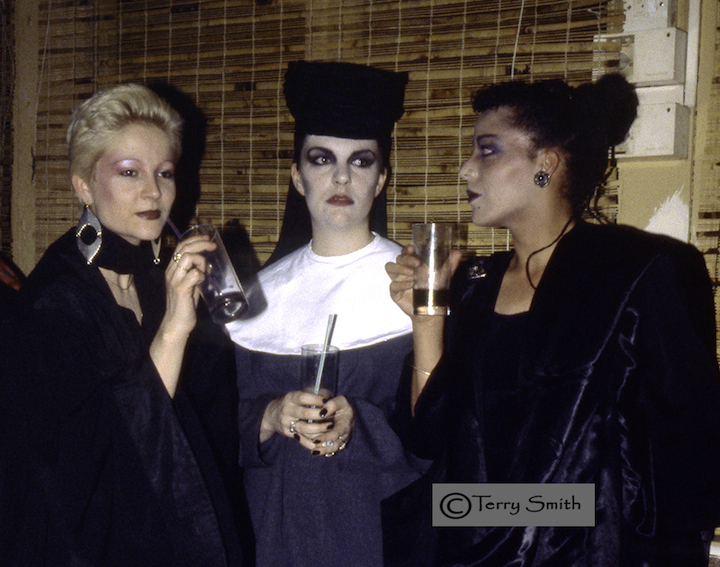
In the post-punk no-wave vacuum, the Blitz’s manager, Brendan Connolly, had been struggling to promote intimate cabaret, and the dressy crowd fostered at Billy’s were cabaret incarnate. Nevertheless it took a full year before the new spirit of optimism expressing itself through fashion caught the attention of the savvy media which in April 1980 included photographer Terry Smith shooting for TIME magazine.
Now in retirement, Terry has exhumed rolls of his film and chosen the best of his colour slides for Shapers of the 80s to publish exclusively. Earlier this week we unveiled 20 of his choice images inside the Blitz and today we showcase a further ten. More to follow on Tuesday.
“Double, double, toil and trouble” . . . Mandy d’Wit, Judith Frankland and Darla-Jane Gilroy await the casting call in case Mr Bowie drops in at the Blitz
+++ ◼ A SURPRISING NEW CACHE of photographs of the Blitz Club in colour has been discovered from the spring of 1980 when TIME magazine asked British photographer Terry Smith to turn his lens on the nightlife posers at Covent Garden’s Blitz Club. They were to become feted as the New Romantics.
Tuesdays at the Blitz were all ritual. Everyone supped and danced on the same spot every week according to some invisible floorplan: downstairs near the bar stood the boys in the band (no make-up), their media and management by the stairs, credible punk legends such as Siouxsie Sioux along the bar, suburban wannabes beside the dancefloor.
Deep within the club, around Rusty Egan’s deejay booth, were the dedicated dancing feet, the white-faced shock troops, the fashionista elite – either there or near the cloakroom, ruled first by Julia Fodor (still going strong as deejay Princess Julia) and later by George O’Dowd (known today as ex-jailbird Boy George). Downstairs, the women’s loo was hijacked, naturally, by boys who would be girls. Upstairs on the railway banquettes might be respected alumni from an earlier London: film-maker Derek Jarman, artists Brian Clarke and Kevin Whitney, designers Antony Price and Zandra Rhodes…
Above: Two bands who played in London as Spandau Ballet…
SBv1 originated the name and here play their final gig at the
Hope & Anchor in 1979 with singer Mark Robinson, drummer
Gordon Bowman, bass guitarist David Wardill, (guitarist Mick Austin
off-camera) . . . SBv2, here in their previous incarnation as Gentry,
playing Camden School for Girls in December 1978, with Tony Hadley
on vocals and the chart-topping single True five years in the future
❚ DID YOU KNOW LONDON HAD TWO POP GROUPS called Spandau Ballet in 1979? The one who became famous adopted their name from the one who didn’t. That’s the claim in a jaw-dropping new history of the New Romantics scene, unauthorised and meticulously researched by David Barrat, a long-time music fan. His book is published this week titled New Romantics Who Never Were: The Untold Story of Spandau Ballet.
Barrat has gathered a mind-boggling compilation of spooky coincidences and things we never knew before in his 117,000-word paperback, self-published today on his own imprint Orsam Books. Here is no mere fan, but an obsessive one who has made himself the Mastermind champion in the two themes identified in his tongue-twisting title: Who exactly were the New Romantics of the early 1980s, who many of us believe powered one of the most transformational youth cultures of Britain’s postwar years? Barrat discusses how “New Romantics” as a two-word description came to characterise the style-leaders of British clubland when those leaders unanimously rejected it themselves.
His second theme is the true story of Spandau Ballet, the five-piece from Islington who set out with a cunning plan to weave a tapestry of fictions around their launch as electro-synth popsters in 1979. At the outset the band were coolly vague about their origins, as if they’d sprung from nowhere – or rather, from the dancefloor of the trendiest London nightspot in years, Covent Garden’s Blitz Club. You’d also have to be a fan with Barrat’s persistence to piece together spasmodic revelations about the band’s genesis as these slipped out during the succeeding decades. Spandau subsequently became global superstars in that momentous decade when image-conscious new British bands invaded the American pop charts. Then they quarrelled, as pop groups do, and arrived in the High Court in 1996 rowing over royalty payments. Individual members remained belligerent for years.
Whether or not you care for Spandau and the 80s music scene, Barrat’s forensic approach to reassessing this creative landscape is utterly hypnotic and unlike anything you’ve read by the hacks of the creaking rock press. He has spent years in deep Holmesian research delving into official records, newspaper cuttings, TV interviews and conducting first-hand interviews. The result is gripping, original and epic. For instance: he reveals all about another band sharing exactly the same distinctive name a matter of months before Tony Hadley stepped onto the stage at the Blitz Club! Here is a well-informed juggernaut delivering into our laps mighty fact upon tiny fact, laid out for inspection and challenge. Barrat’s intent is resolute: to convince us he knows his stuff, and he has purged the popular version of events of their mutability.
David Barrat contacted me a few years back in order to check dates and events against my own detailed diaries and his aggregation of facts and assumptions is mostly hard to fault. His book now pays extraordinary and generous tribute to this website, Shapers of the 80s, and to myself as a former features editor of the Evening Standard who set out to celebrate the potency of the youthquake erupting in 1980.
SO WHO WERE THE OTHER BAND?
❑ The musicians originally called Spandau Ballet (hereafter called SBv1) were four lads who met in 1978 during their teens in Bedfordshire: guitarist Mick Austin, singer Mark Robinson, drummer Michael Harvey and punky bass guitarist David Wardill. They agonised for ages over a band name and Austin remembers a “eureka” moment while they were using the Dadaist method of juggling words on random scraps of paper. They arrived at the darkly Germanic first word (originally with an incorrect umlaut over the U, as in Spandaü) and then paired it with “the softer, romantic” word Ballet. The package was deemed “nicely decadent”, a debut gig was planned for 30 August 1978 and accordingly Robinson designed a poster for it, which we see below. Wardill declared his ambition: “We were going to go to London and become rock stars.”
So how on earth did their oddball band name transfer itself to a struggling five-piece from Islington? The reader’s mind boggles at the number of spooky coincidences that Barrat’s book uncovers. Wardill had fallen in love with journalism graduate Deanne Pearson who rented a flat at 32 Sibley Grove in East Ham, so in October 1978 he moved in and subsequently members of SBv1 often came to crash on the floor. Coincidentally . . . this flat was shared with the yet-to-become seminal Blitz Kids, Kim Bowen and Lee Sheldrick while freshers at St Martin’s School of Art, who soon joined up with a stylish posse mainly lodged in Battersea’s Ralph West halls of residence which served the population of all London’s art schools. These included graphics student Graham Smith and the social dynamo Chris Sullivan who would soon find himself running the seminal Wag club for nearly 20 years.
Click any pic below to view complete images
In her forthcoming autobiography Kim relates how, in mid-1979, she fled far-flung East Ham and, accompanied by “a trio of self-described Nelly Queens”, penetrated an empty Georgian house in Fitzrovia to establish a squat in Warren Street, a leisurely walk away from St Martin’s. It was to become notorious. “Within weeks the creme de la creme of young London was living there,” Kim writes, and her bold manuscript spares no detail about their very un-private lives. This stylish property became the hub of social life for the Blitz Kids who were meeting every Tuesday at the Covent Garden Blitz Club since Steve Strange’s Neon Nights had begun that February. As milliner Stephen Jones’s mannequin de vie, the wild and startlingly elegant Kim elevated herself to Queen of the Blitz. Many of the Kids’ high-style antics were documented by Graham Smith while he – coincidentally – became the official photographer of the second Spandau Ballet (SBv2) who announced their name for their first public concert on 5 December that year, with invitations designed by Smith. (His lavish photo-book We Can Be Heroes, with authoritative text by Chris Sullivan, was published in 2011 and remains an unbeatable record of both style and excess).
In October 1978, the Beds boys SBv1 had started working as busboys as well as rehearsing at The Venue, Virgin’s new nightclub in Victoria, where they immortalised their band’s name by spraying it in green paint on the toilet walls and on other public walls elsewhere in central London. Amid all the ancient myths about where SBv2 found their name, this band’s early propagandist and future broadcaster Bob Elms has said he first spotted the phrase “Spandau Ballet” as graffiti variously on prison walls or toilet walls in the Spandau district of Berlin during a soulboy group trip in summer 1979.
Coincidentally – however, during an interview way back in 1984 one prominent Blitz Kid told me the graffiti had been very visible on the toilet wall of The Hope, a favourite pub in Tottenham Street in London, not far from the Warren Street squat. “Some boys from north-east London were using that name in a school-type band.” Also coincidentally – along the same block as The Hope stood the trendy new Scala cinema, whose programmer then was 22-year-old Stephen Woolley (today a major player in the British film industry), who was a contemporary of SBv2 manager Steve Dagger and their stage designer Simon Withers, all of whom coincidentally attended Dame Alice Owen’s school in Islington and grew up there with the other members of SBv2 – Gary and Martin Kemp, Tony Hadley, John Keeble and Steve Norman.
Barrat’s fabulous cascade of coincidences throws up at least SIX PRIME SUSPECTS in The Ballet Great Mystery: Who really did feed the name Spandau Ballet through to the Islington band SBv2, who during 1978–79 were known as Gentry, a power-pop combo? Barrat’s new book draws its own conclusion.
PS: EVEN MORE SPOOKILY
ON MY DOORSTEP. . .
David Wardill: bass guitarist with SBv1, who joined The Passions in 1980
❑ Scroll forward a few years from the birth of SBv2. . . After my day-jobs in journalism, I taught an adult evening class in Creative Writing for 16 years in west London, after which it was traditional for the more entertaining students to continue the evening at a nearby pub. Among several who became long-standing friends was – coincidentally – the same David Wardill of SBv1 (also visible in the video below). His musical background meant we had lots to discuss when we met in 1989, including his earlier life in East Ham with Kim Bowen and Lee Sheldrick.
David and I drifted apart but had a sudden email reunion while I was building this website in 2009. He told me that soon after completing the writing class he sent a story to the BBC which turned up two years later as a film from BBC Birmingham. These days he was a father and teaching art in a secondary school.
As for SBv2, he admitted: “I never really cared much that they had borrowed our band’s name, as I didn’t see much chance of us wanting it back.” SBv1 ground to a standstill in May 1979 and David soon joined another band called The Passions who enjoyed airplay by Radio 1’s influential deejay John Peel and eventually made it to Top of The Pops in 1981 with their song on Polydor, I’m in Love with a German Film Star, which reached No 25. (Coincidentally – SBv2 arrived at No 17 with Musclebound in the same edition of TOTP and we hear them being announced at the end of the clip below. Oo, er.)
David added: “The Passions reunited recently for a day at a studio in Shepherd’s Bush. That laid a lot of ghosts to rest. Our main song has been covered by the Foo Fighters and Pet Shop Boys. Strange how the past hangs around, although I find the continued interest gratifying, as well as financially useful.” Spoken like a star.
❑ And here today we still have not given away the truly spookiest coincidence among those that Barrat reveals about SBv1 & v2 when their paths almost crossed in May 1979 – it’s a goose-pimples moment that stops you in your tracks, so we’re not going to spoil it. However, other reflections on this vital addition to our bookshelves will follow here at Shapers of the 80s as we read on…
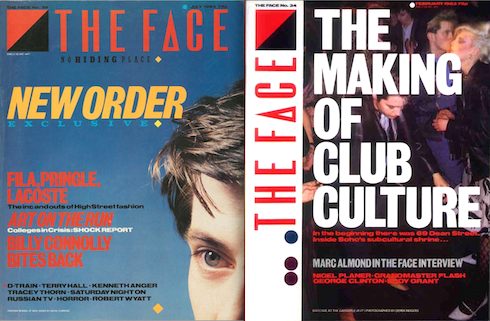
◼ 1983 PROVED TUMULTUOUS for British youth culture. By December, London’s leading club deejay Jay Strongman declared “This was the year of Go For It”, after 17 new British pop groups lorded it in the US top 40 chart that autumn, while our spirited fashionistas were making waves around the world, with Princess Diana playing ambassador for the classic designers, and Boy George pushing the wilder extremes of street style. Among major features I wrote for The Face was February’s cover story The Making of Club Culture, and in the Evening Standard Posing with a purpose at the Camden Palace, a centre spread on the runaway megaclub hosted by Strange and Egan.
Nightlife was a burgeoning story as black beats took over dancefloors everywhere and Manchester’s tearaway megaclub was the Hacienda, despite the oppressive clean-up being imposed by the city’s infamous Chief Constable. Clubbers from across the nation swarmed in to create a grand coalition of all the cults – “your complete i-D line-up, minus the Worlds End spendthrifts”. In my January report for The Face one inmate bemoaned Hacienda music as “too funk-based” though another, a flat-top lad called Johnny Maher, revealed his secret, despite having launched some new indie rock band minutes earlier. “I schtupp to funk,” he said.
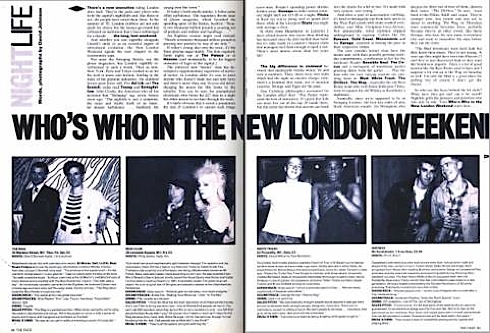
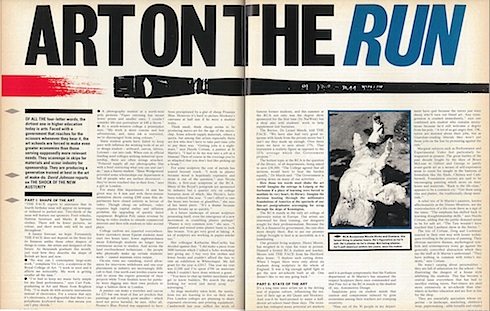
In July The Face published a major piece of reportage, Art on the Run, prompted by numerous friends in fine-art education, and billed it as a “shock report” on the Conservative government’s debilitating squeeze on the art schools. Ironically in the same issue my regular Nightlife column identified the four hottest clubland teams as a Who’s Who in the New London Weekend: “Not since the Swinging Sixties had London nightlife reverberated to such a boom.” These clubs were the unofficial job centres that kept a generation in freelance employment and introduced the verb to vop into the language (derivation: “What are you up to these days?” – “Oh, a Variety Of Projects”). Some of that effort was fuelling the rise of computer games which in the June issue Virgin assured me was “the new pop industry”!
Brighton hotspot 1983: Ian, Oliver Peyton and Kate hosting The Can (Photo Shapersofthe80s)
My Nightlife column in The Face’s October issue featured Brighton’s trendiest hotspot (seconds before the very word trendy passed its sell-by outside the Greater London stockade). The Can was presided over by a young Oliver Peyton with Andy Hale as the deejay breaking funk there. Years later Oliver thanked me for this exposure and said he would never have come up to London and started opening restaurants without The Face’s prompt! (One of the few people who have ever thanked me for writing about them! Cheers, Oliver.)
Jay Strongman in 1983: ruling London’s three hottest turntables
By this fertile year’s end I had FIVE indicative pieces of reportage published in the December issue of The Face including a detailed rundown on the new dance music by club deejay Jay Strongman, plus news of the imminent Westwood/ McLaren break-up which I’d scented from body language backstage at their Paris runway show.
The launch of the first London Fashion Week that same October confirmed that British street style was being feted in the international spotlight, yet it begged the question how on earth had this suddenly come about? Click through to our inside page to read the feature investigation that set out to answer such questions, by asking decision-makers in the industry to identify the best of Britain’s young designer talent under the headline Eight for ’84. . .
➢ Choose “View full site” – then in the blue bar atop your mobile page, click the three horizontal lines linking to many blue themed pages with background article
MORE INTERESTING THAN MOST PEOPLE’S FANTASIES — THE SWINGING EIGHTIES 1978-1984
They didn’t call themselves New Romantics, or the Blitz Kids – but other people did.
“I’d find people at the Blitz who were possible only in my imagination. But they were real” — Stephen Jones, hatmaker, 1983. (Illustration courtesy Iain R Webb, 1983)
“The truth about those Blitz club people was more interesting than most people’s fantasies” — Steve Dagger, pop group manager, 1983
PRAISE INDEED!
“See David Johnson’s fabulously detailed website Shapers of the 80s to which I am hugely indebted” – Political historian Dominic Sandbrook, in his book Who Dares Wins, 2019
“The (velvet) goldmine that is Shapers of the 80s” – Verdict of Chris O’Leary, respected author and blogger who analyses Bowie song by song at Pushing Ahead of the Dame
“The rather brilliant Shapers of the 80s website” – Dylan Jones in his Sweet Dreams paperback, 2021
A UNIQUE HISTORY
➢ WELCOME to the Swinging 80s ➢ THE BLOG POSTS on this front page report topical updates ➢ ROLL OVER THE MENU at page top to go deeper into the past ➢ FOR NEWS & MONTH BY MONTH SEARCH scroll down this sidebar
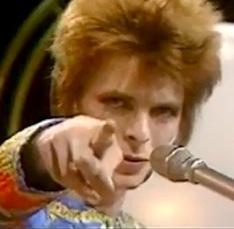
❏ Header artwork by Kat Starchild shows Blitz Kids Darla Jane Gilroy, Elise Brazier, Judi Frankland and Steve Strange, with David Bowie at centre in his 1980 video for Ashes to Ashes
VINCENT ON AIR 2026
✱ Deejay legend Robbie Vincent has returned to JazzFM on Sundays 1-3pm… Catch up on Robbie’s JazzFM August Bank Holiday 2020 session thanks to AhhhhhSoul with four hours of “nothing but essential rhythms of soul, jazz and funk”.
TOLD FOR THE FIRST TIME
◆ Who was who in Spandau’s break-out year of 1980? The Invisible Hand of Shapersofthe80s draws a selective timeline for The unprecedented rise and rise of Spandau Ballet –– Turn to our inside page
SEARCH our 925 posts or ZOOM DOWN TO THE ARCHIVE INDEX
UNTOLD BLITZ STORIES
✱ If you thought there was no more to know about the birth of Blitz culture in 1980 then get your hands on a sensational book by an obsessive music fan called David Barrat. It is gripping, original and epic – a spooky tale of coincidence and parallel lives as mind-tingling as a Sherlock Holmes yarn. Titled both New Romantics Who Never Were and The Untold Story of Spandau Ballet! Sample this initial taster here at Shapers of the 80s
CHEWING THE FAT
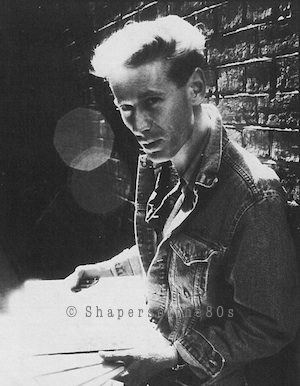
✱ Jawing at Soho Radio on the 80s clubland revolution (from 32 mins) and on art (@55 mins) is probably the most influential shaper of the 80s, former Wag-club director Chris Sullivan (pictured) with editor of this website David Johnson
LANDMARK FAREWELLS. . . HIT THE INDEX TAB UP TOP FOR EVERYTHING ELSE










 ➢➢ Shapers of the 80s ➣➣