Category Archives: Clubbing

2025 ➤ The New Romantics history book currently turning heads

Photography, fashion, clubbing, exhibitions, Social trends, Swinging 80s, Youth culture, newbook, New Romantics, Blitz Club, Blitz Kids,

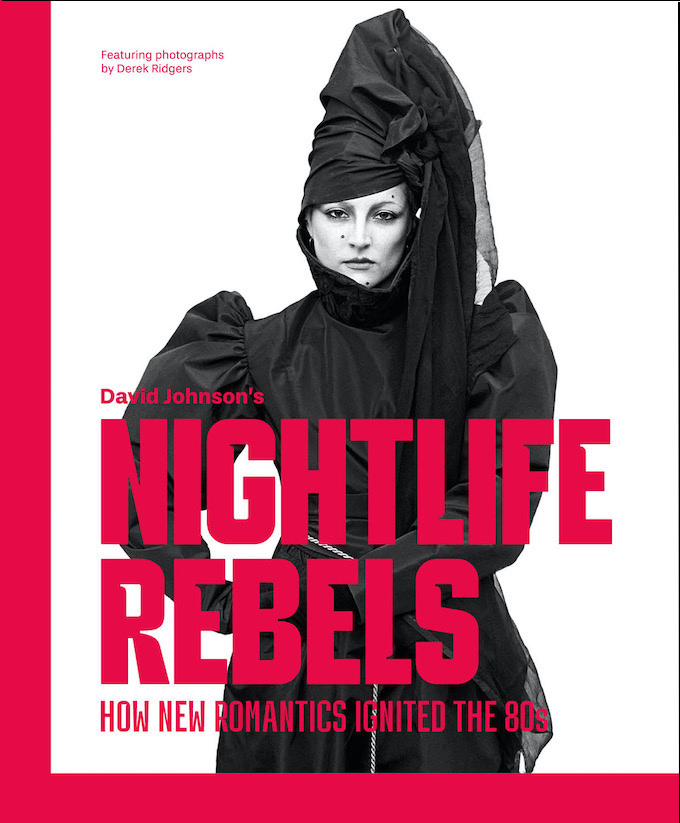
Nightlife Rebels: my new book published September 2025

❚ DURING THE SWINGING 80S two seasoned eye-witnesses watched Britain’s young ignite a glittering New Romantics revolution… As a Fleet Street journalist I explored their intriguing carnival of style-setting cults across Britain, Paris and New York, while straight-up photographer Derek Ridgers captured the libertines in their dark dens.

Our new illustrated hardback NIGHTLIFE REBELS reveals the candid history of the Blitz Club’s hedonists who insisted “One look lasts a day”. It has gone on sale in the shop outside the Blitz Club exhibition at London’s Design Museum. Alas, it is not available online, only in this shop. We hope to broaden availability soon. Contact us at Nightlife.Rebels@shapersofthe80s.com

FRONT PAGE

2025 ➤ Finally a candid insight into the glittering New Romantics revolution

Photography, fashion, clubbing, exhibitions, Social trends, Swinging 80s, Youth culture, newbook, New Romantics, Blitz Club, Nightlife Rebels, Blitz Kids, Derek Ridgers, Kim Bowen, David Johnson, John Maybury,

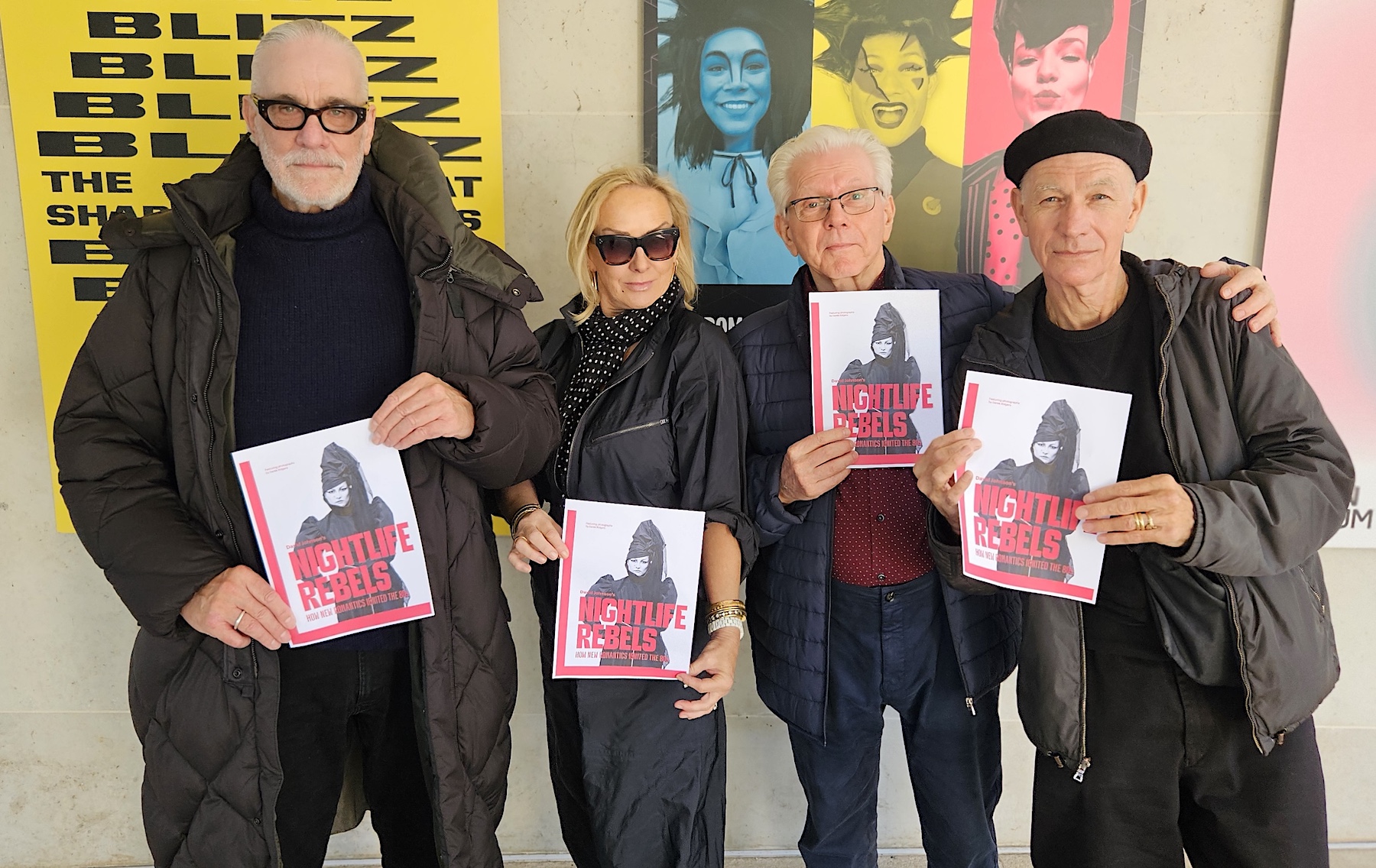
Contributors to Nightlife Rebels: Derek Ridgers, Kim Bowen, David Johnson and John Maybury. (Photo by David Jenkins)

❚ DURING THE SWINGING 80s two seasoned eye-witnesses watched Britain’s young ignite a glittering New Romantics revolution… Myself David Johnson as a Fleet Street journalist explored their intriguing carnival of style-setting cults across Britain, Paris and New York, while straight-up photographer Derek Ridgers captured the libertines in their dark dens.

Our new illustrated hardback NIGHTLIFE REBELS reveals the candid history of the celebrated Blitz Club’s hedonists who insisted “One look lasts a day”. Featuring unseen photos, stats, a unique timeline and Who Really Was Who.

Last week the book’s four chief contributors gathered for a team picture at London’s Design Museum where an exhibition about Blitz culture runs for six months and our book is on sale in its shop – The Design Museum

WHAT EACH OF US SAYS ABOUT THE 80s

“Some nights it was like walking into Hieronymus Bosch’s Garden of Earthly Delights” – Photographer Derek Ridgers, top left

Photography, fashion, clubbing, exhibitions, Social trends, Swinging 80s, Youth culture, newbook, New Romantics, Blitz Club, Blitz Kids,“A full night-time economy flourished around these clubs where graphic designers, artists, deejays, writers, producers and musicians of every kind refined and developed their skills by working with club-owners” – Stylist and costume designer Kim Bowen, former Queen of the Blitz, second left

“In the shabby Blitz wine bar on Tuesdays precocious 19-year-olds presented an eye-stopping collage, posing away in wondrous ensembles, emphatic make-up and in-flight haircuts. This spectacle shouted newness” – Journalist David Johnson, third along

“Being photographed served as a kind of affirmation that your particular ‘look’ set you apart as a somebody” – Video artist John Maybury, and former Blitz star, pictured right

Photography, fashion, clubbing, Social trends, Swinging 80s, Youth culture, newbook, New Romantics, Blitz Club, Blitz Kids, David Johnson, Design Museum, Blitz Club exhibition,

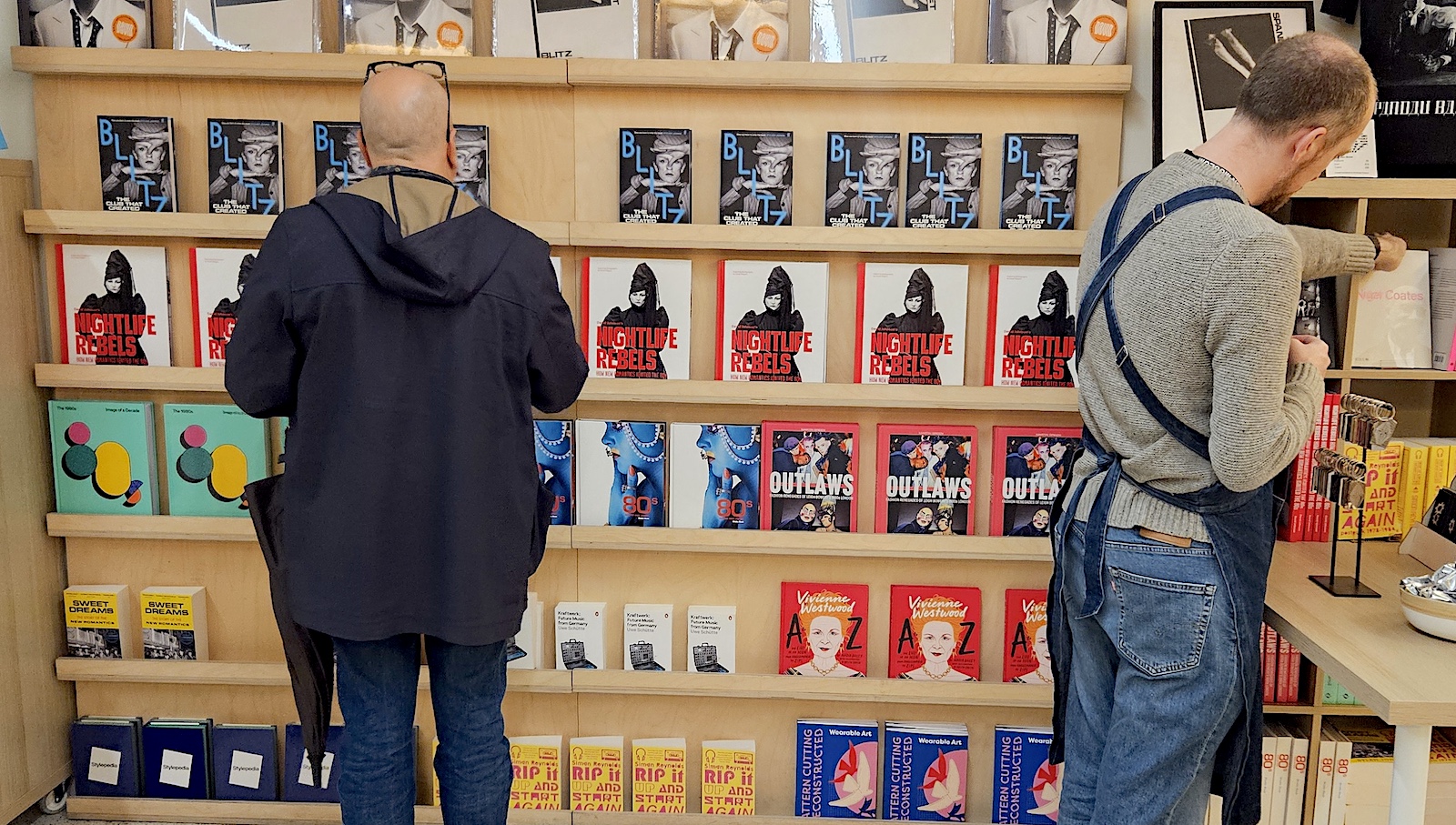
There’s our book on the second shelf at the Design Museum: Dare we assume the two lads thumbing through the options might have been Blitz Kids back in the day? (Photo by Shapersofthe80s)

➢ Previously at Shapersofthe80s: Here’s an extravaganza of a show to confirm the Blitz Kids’ place in history

FRONT PAGE

2025 ➤ Here’s an extravaganza of a show to confirm the Blitz Kids’ place in history

Blitz Kids, Clubbing, exhibitions, Fashion, influencers, London, New Romantics, Swinging 80s, Youth culture, Blitz Kids, Design Museum,

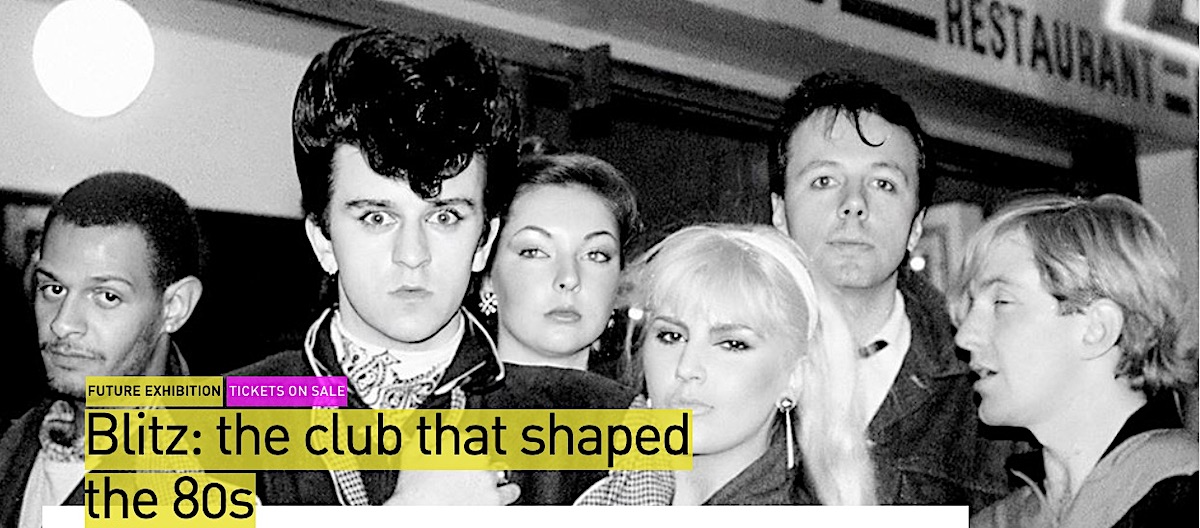
Blitz Club host Steve Strange: Posing outside his club with Visage and friends in 1979 – today promoting an exhibition. (Detail from photo by Sheila Rock)

❚ A HANDFUL OF EVER-STYLISH CLUBLAND POSERS stepped forward this week to help London’s Design Museum to announce its autumn exhibition titled Blitz: the club that shaped the 80s. It has been developed in close collaboration with the leading Blitz Kid and later costume designer Fiona Dealey, plus broadcaster Robert Elms, Spandau Ballet’s manager Steve Dagger and music executive Graham Ball, formerly one of Dagger’s firm – three clubland contemporaries who were the least like die-hard Blitz Kids! The trendy Tuesday clubnight which opened in Covent Garden’s Blitz wine bar in 1979 is best known as home to the New Romantics movement which revolutionised Eighties youth culture across fashion, music, media, film, art, design and retail.

The chapter some of us dubbed the Pose Age launched the careers of many talents, from hosts Steve Strange (who died in 2015) and deejay Rusty Egan to popstars Spandau Ballet, Visage, Boy George, Sade, Andy Polaris, and Marilyn, as well as key influencers Perry Haines, Chris Sullivan, Midge Ure, Iain Webb, and stylist Kim Bowen, couture milliner Stephen Jones and Game of Thrones costume designer Michele Clapton, deejay Princess Julia, Darla Jane Gilroy, Stephen Linard, Melissa Caplan, Judith Frankland, Dinny Hall, John Maybury, Cerith Wyn Evans, Simon Withers, Ollie O’Donnell, Richard Ostell, Paul Sturridge, Franceska King, Milly Dwit, Vivienne Lynn, Theresa Thurmer, Lesley Chilkes, David Holah and a hundred more.
Blitz Kids, Clubbing, exhibitions, Fashion, influencers, London, New Romantics, Swinging 80s, Youth culture, Blitz Kids, Design Museum,

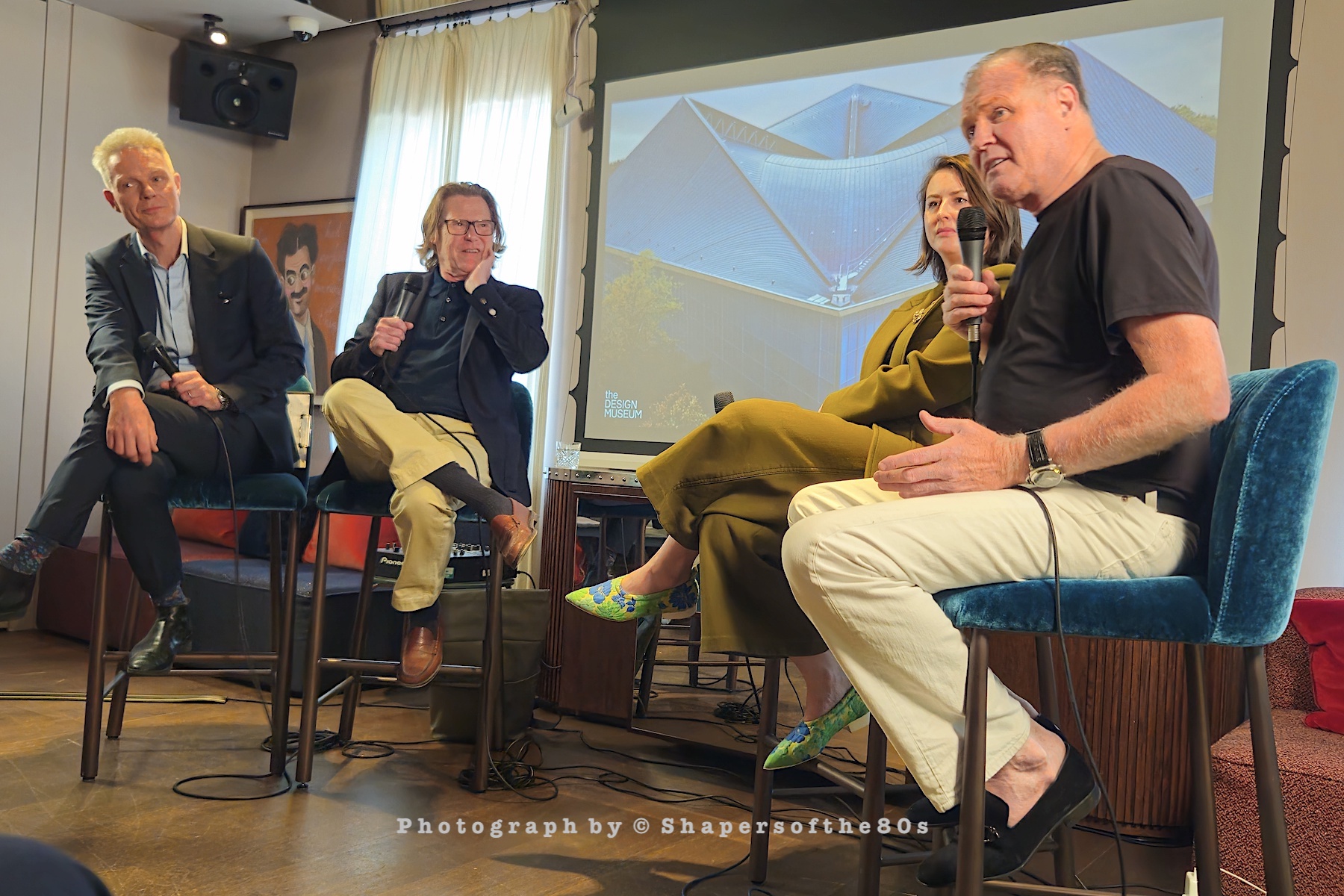
Press call: Tim Marlow, Robert Elms, Danielle Thom and Rusty Egan

The exhibition will feature over 250 items, many unseen by the public, ranging from clothing and accessories, design sketches, musical instruments, flyers, magazines, furniture, artworks, photography, vinyl records and rare film footage.

Yesterday’s press launch at the Groucho club proved one of the liveliest in a long while with spontaneous banter between the Museum director Tim Marlow, Robert Elms, Rusty Egan and curator Danielle Thom. They promised a sensory extravaganza which will surprise us when we walk into the exhibition.

Among other things, Elms reminded us how young his pals all were: “We were called Blitz Kids because we were kids, almost no one over the age of 21 – some of us 16/17… Most of us were really young and creative but also really mischievous. One of the things about the Blitz is that it’s sometimes portrayed as a bit po-faced, all these people posing – we were certainly doing that but it was anything but po-faced. It was scurrilous, dangerous, naughty, it was sexy, all those things.
Blitz Kids, Clubbing, exhibitions, Fashion, influencers, London, New Romantics, Swinging 80s, Youth culture, Blitz Kids, Design Museum,

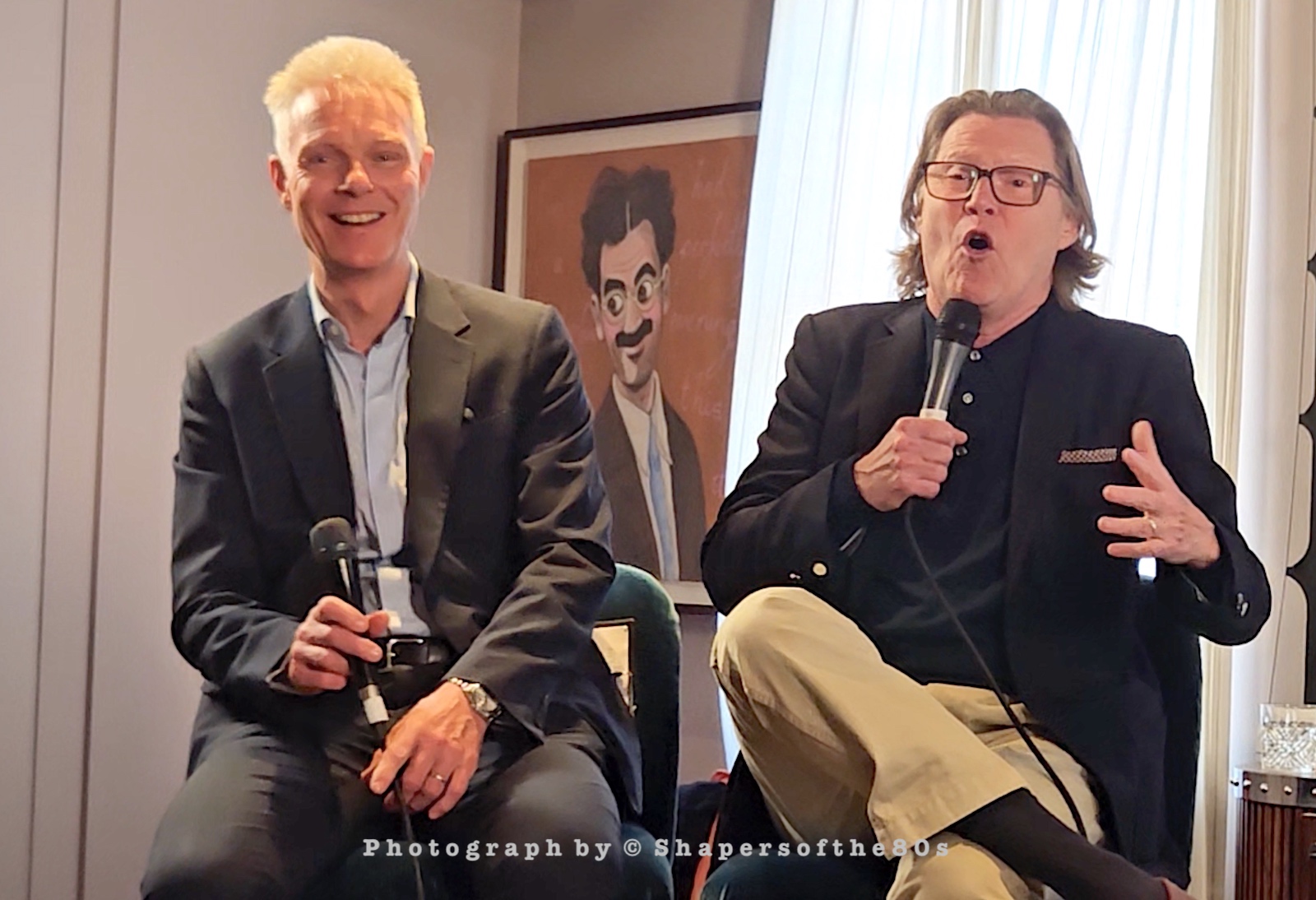
The Last Word: Robert Elms entertains museum director Tim Marlow (not to mention Groucho Marx, at rear)

“Rusty provided this wonderful backdrop. He never played too loud, so people could dance but at the front end you could still talk. I could get Steve Dagger in my ear saying ‘We’re going to take over the world!’ It wasn’t a disco but a club in the best sense of the word, of like-minded individuals.”

Egan proved as sentimental as ever, reminding us of the legacy of the 1970s: “A hundred kids were coming in on a Tuesday night in the Winter of Discontent. It was a very miserable time, it was also really miserable to be not sure if you’re a boy or a girl but ‘Hey man, Let’s go out into the night’ – and as a DJ I played songs which said ‘He was a she and then, Hey babe, take a walk on the wild side’ … Lyrics were very important as they were for the Rolling Stones in 1977 when disco was get up, stand up, boogie oogie. We wanted lyrics.”

Elms had the last word on the Blitz as the event came to an end: “My mates were quite cool. There were a couple of hundred Herberts and urchins, over-dressed, undervalued, who actually went on to define the decade. This is our place in history and this exhibition is overdue. It’s a recognition that this wasn’t just a load of silly kids with high hair.”

➢ Blitz: the club that shaped the 80s runs from
20 Sept 2025 until 29 March 2026 at the Design Museum
in Kensington. Tickets on sale now.

FRONT PAGE

2025 ➤ Here’s to those Faces who created a new breed of journalism for the 1980s

Swinging 80s, Club Culture, Nick Logan, Steve Dagger, photography, exhibitions, London, National Portrait Gallery, Face Magazine,

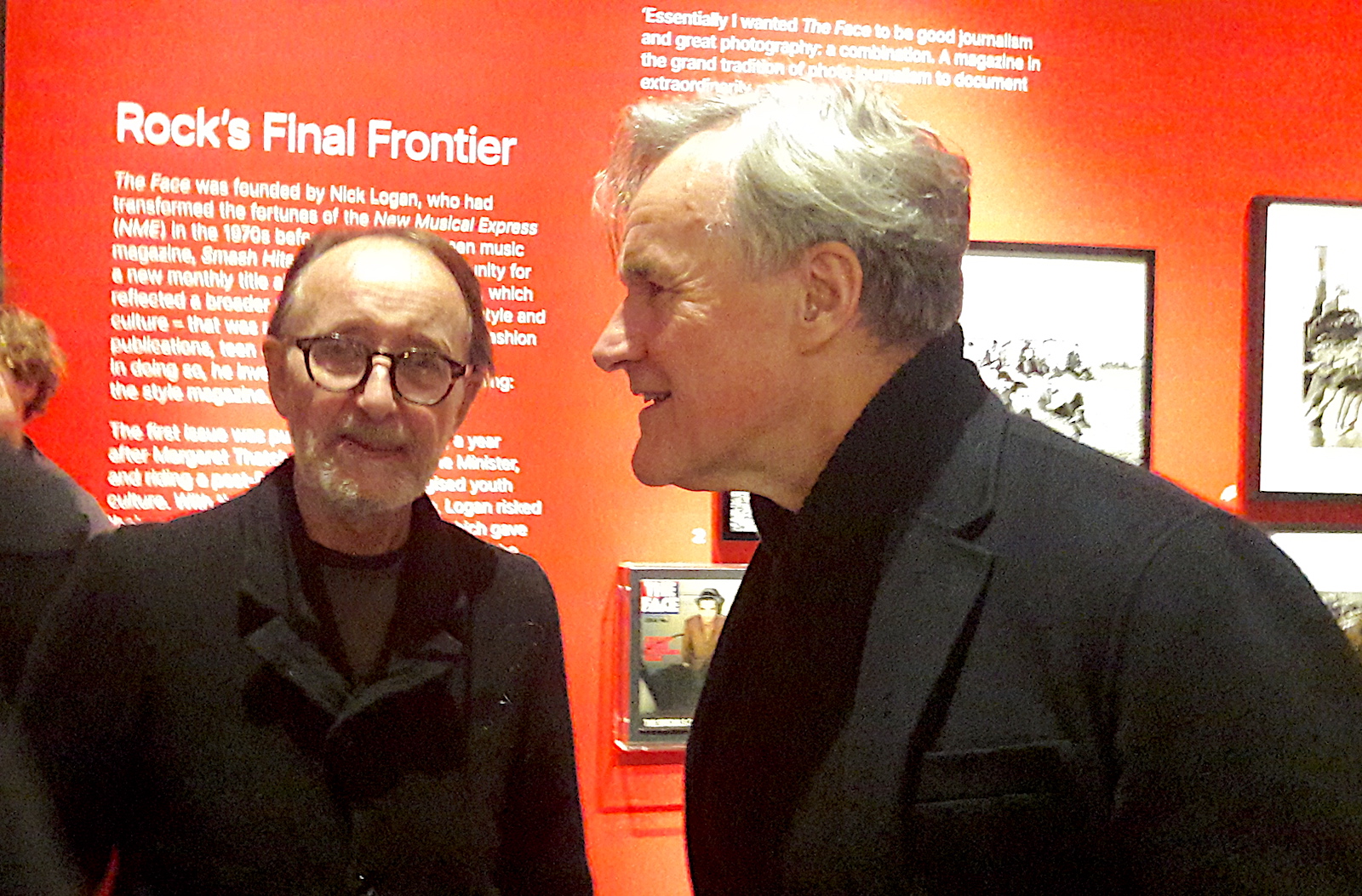
Kings among influencers: Nick Logan and Steve Dagger, at the NPG private view. (Photo © Shapersofthe80s)

❚ AN EXCEPTIONAL CHAMPAGNE PARTY last night launched a compelling exhibition celebrating The Face magazine’s role as Britain’s “style bible” (*see below) for just over 20 years. A thorough display of photos and glass-boxed showcases of the magazine itself confirmed what a revolution in fashion and design took place between 1980 and 2004. And London’s National Portrait Gallery invited several generations of survivors to revisit their contributions, chief among them Nick Logan, founding owner and editor of The Face, as sociable yet bashful as he’s ever been, along with his partner Mia.

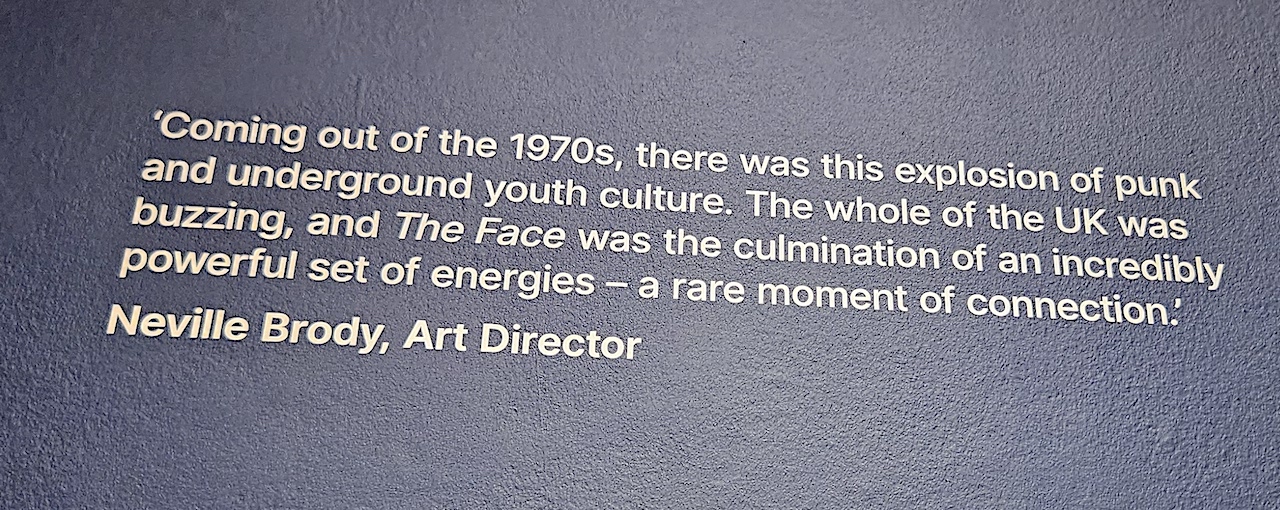
His gift, apart from investing £3,500 of his savings, was to put cool design and quality writing to the fore, at a time when Britain’s four weekly rock newspapers were a very narrowly acquired taste. Logan’s brief also went way beyond music into all aspects of culture and anthropology. That’s the main reason that both he and his radical designer Neville Brody – *who in five years established an inspired new visual language in print – both reject the description “style bible”, just as none of the New Romantics has ever owned up to that name dumped on them by the media.

Click any pic to enlarge in a slideshow:

No less a king influencer was Steve Dagger whose band Spandau Ballet changed the dreary noise of 70s pop into a new kind of dance music for the 80s. Two more such kings who helped shape the Swinging 80s were the St Martin’s graduate milliner Stephen Jones whose hats graced the heads of the first Blitz Kids then went on adding bazzazz to designer collections across the globe… And Peter Ashworth whose super-lit photographs have captured musical and fashionable excess just as far across the globe ever since.

Other vintage faces included Lesley White (the first front-desk copytaster at The Face’s various offices), St Martin’s star fashionista Fiona Dealey, clubland deejay Jeremy Healey, film-maker and musician Jamie Morgan, pioneering music journalist Paul Simper, and Derek Ridgers the straight-up photographer whose pictures illustrated many of my own nightlife reports in The Face’s early years.

Swinging 80s, Club Culture, photography, exhibitions, London, National Portrait Gallery, Face Magazine, Nick Logan, Neville Brody, Kathryn Flett

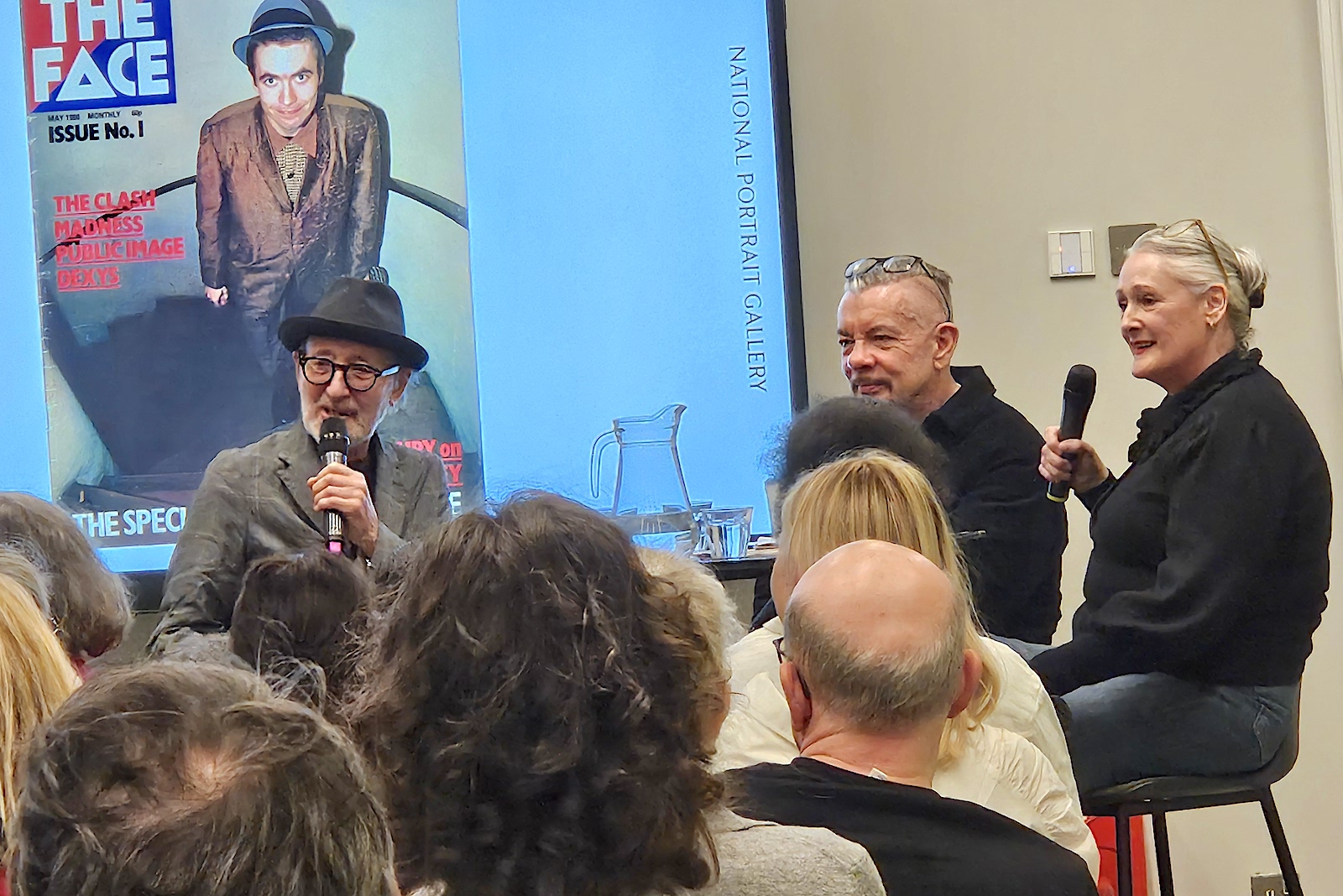
NPG talk about the Face exhibition: editor Nick Logan, art director Neville Brody and from 1987 the mag’s first fashion editor Kathryn Flett. (Photo © Shapersofthe80s)

Swinging 80s, Club Culture, photography, exhibitions, London, National Portrait Gallery, Face Magazine, Chris Sullivan, Ollie O'Donnell

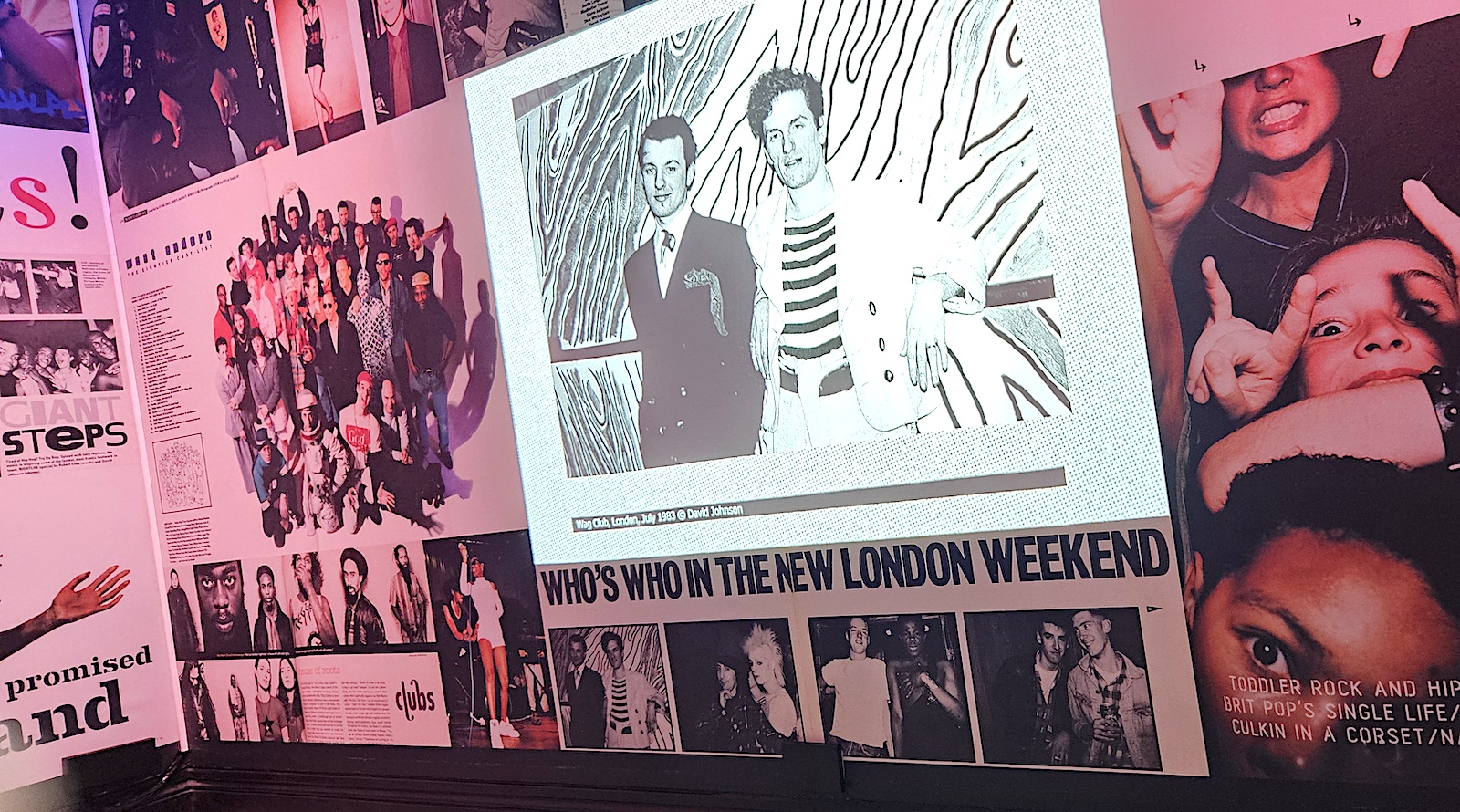
Face exhibition video display: Who’s Who in clubland reportage by Yours Truly, featuring Chris Sullivan and Ollie O’Donnell. (Photo © Shapersofthe80s)

➢ The Face Magazine: Culture Shift exhibition
(20 February–18 May 2025 at the National Portrait Gallery) brings together the work of 80 photographers, featuring 200 photographs as a unique opportunity to see many of these images away from the magazine page.

Swinging 80s, Club Culture, photography, exhibitions, London, National Portrait Gallery, Face Magazine, Neville Brody,

Wise words from the man who subverted graphic design. (Photo © Shapersofthe80s)

➢ Previously at Shapersofthe80s:
1980, Power brokers of the fourth estate

➢ Also at Shapersofthe80s: 1980, How three wizards
met at the same crossroad in time

FRONT PAGE

2023 ➤ Fans vote for Bowie’s Top 26 best videos

Favourite Bowie Videos, David Bowie, Ashes to Ashes, David Mallet, Tony Visconti, pop music, jazz

❚ THE OFFICIAL DAVID BOWIE WEBSITE has polled his fans to elect their five favourite videos by the musical genius whose career transformed pop music over 50 years. No surprise perhaps that Ashes to Ashes came out top, capturing a crucial turning point in Bowie’s own progress in 1980 and becoming his second No 1 UK single and an international hit. It was an arty track from his 14th studio album, Scary Monsters, with a funky bassline, refined lyrics reaching back to his debut single Space Oddity and its astronaut Major Tom, while its dreamy solarised visual effects also reflected Bowie’s own experiences with drugs. Several critics declare Ashes to be among Bowie’s best songs musically and for inventiveness, and the video itself stands at number 44 in Rolling Stone’s 100 best.

For both its sleeve and video, Bowie commissioned a Pierrot pantomime costume. Significantly, the video starred four overdressed figureheads (including Steve Strange) from London’s nightlife scene, which was exploding into a gloriously colourful new subculture as a reaction to the bleakness of punk. Let’s not forget that Ashes was the most expensive music video made to date, costing £35,000 (about £140,000 in today’s money) and MTV had yet to be launched. [Read the full background story behind recruiting and filming the Blitz Kids for Ashes here at Shapersofthe80s.]

The team at DBHQ doff their hats to video director David Mallet for achieving nine entries in their video top 20, more than a third.

BEST VIDEOS HIS FANS VOTED FOR

#01 – Ashes to Ashes 1980 – David Bowie and David Mallet
#02 – Life on Mars? 1973 – Mick Rock
#03 – Boys Keep Swinging 1979 – David Mallet
#04 – Jump They Say 1993 – Mark Romanek
#05 – I’m Afraid of Americans 1997 – Dom and Nic
#06 – ★ Blackstar – 2016 – Bo Johan Renck
#07 – DJ 1979 – David Mallet
#08 – The Hearts Filthy Lesson 1995 – Samuel Bayer
#09 – Lazarus 2016 – Bo Johan Renck
#10 – The Stars (are out Tonight) 2013 – Floria Sigismondi
#11 – The Next Day 2013 – Floria Sigismondi
#12 – Let’s Dance 1983 – David Mallet
#13 – Look Back in Anger 1979 – David Mallet
#14 – Strangers when We Meet 1995 – Samuel Bayer
#15 – China Girl 1983 – David Mallet
#16 – Loving the Alien 1985 – David Bowie and David Mallet
#17 – Little Wonder 1997 – Floria Sigismondi
#18 – Blue Jean / Jazzin’ for Blue Jean 1984 – Julien Temple
#19 – Fashion 1980 – David Mallet
#20 – Wild is the Wind 1981– David Mallet
#21 – Thursday’s Child 1999 – Walter Stern
#22 – Where are We Now? 2013 – Tony Oursler
#23 – Absolute Beginners 1986 – Julien Temple
#24 – Space Oddity 1972 – Mick Rock
#25 – The Jean Genie 1972 – Mick Rock
#26 – Be my Wife 1977 – Stanley Dorfman

AMONG THE COMMENTS AT FACEBOOK:

Adam Paramore: Great list, interesting that there’s nothing from Ziggy Stardust (IIRC, some concert clips were used as music videos), no Labyrinth tracks, no Modern Love, and no Dancing in the Street with Bowie & Jagger.
Anthony LeBaron: One notably absent video from the list I would add is No Plan. Released a year after his passing, it captures the enormous loss and despair I still felt at losing him.
Rudy Fuentez: Ashes to Ashes is probably his best video, but to me his best song is too hard to decide. Cat People (Putting out the Fire), Always Crashing in the Same Car, Young Americans, Absolute Beginners, This is not America… too many songs. Might as well ask what do you think is the brightest star in the heavens.
Andrew Seear: I agree. Always Crashing in the Same Car I think is an astonishing piece, even by Bowie’s standards. I’ve never heard despair expressed so elegantly.
Stacey Rich: Coolest thing was cycling to Pett Level [where Ashes was filmed] – totally unchanged on the day, a little overcast, the beach empty. Grew up in America & never realised it was an actual place but had shown my partner the video and he recognised the beach immediately. Actually teared up.
Stephen Oldfield: The lyrics and music on this track [Ashes] are stunning. The closing synthesiser must be the greatest on any song ever.

PLUS TWO VERY SPECIAL
PERFORMANCES ON VIDEO

rel="nofollow"

In December 1979 Saturday Night Live aired the most immaculate performance of TMWSTW by Bowie, Klaus Nomi, Joey Arias, Stacey Hayden on guitar and Jimmy Destri on keyboards, which some say was the night “he transformed live television”. This nine-minute clip also includes brilliant versions of TVC 15 with Bowie in skirt and heels, plus a hilarious performance of Boys Keep Swinging where he sports a life-sized nude puppet costume. Click on the picture to view, though don’t be surprised if you cannot reach the video. For rights reasons, this unrivalled video keeps being removed from the web by its broadcaster, so we stay on our toes scouting for alternative postings!

❏ I TOTALLY AGREE with the first three videos topping this DB poll, and draw special attention to Mick Rock’s remarkable promo for Life on Mars. Another that haunts my imagination is 2014’s Where are We Now? Moving on, I’d urge those who haven’t seen two other very special performances by Bowie to seek them out. One is an exquisite interpretation of his enigmatic song The Man who Sold the World which some claim “transformed live television” [pictured above]. Admittedly this is not a promotional video and yet it was uniquely choreographed and costumed for live performance on American TV’s Saturday Night Live in 1979 before its audience of millions. Idiosyncratic backing singers Klaus Nomi and Joey Arias provide immaculate support, while carrying Bowie forward as a kind of giant pierrot, clad in an oversized black plastic dinner jacket over a tapered tubular body – all inspired by artist Sonia Delaunay’s designs for a subversive Dadaist play from 1923. When written in 1970, the lyrics and the singer were evidently sharing an identity crisis and since his death Rolling Stone has regarded this number as “essential”.

❏ HERE’S A SECOND profoundly affecting video that’s often ignored yet it reveals the extraordinary range of Bowie’s singing voice. Possibly the purest experimental jazz number of his career, the nerve-tingling Sue (or in a Season of Crime) was created in 2014 during a session with 17 jazz soloists including saxophonist Donny McCaslin, all improvising under Maria Schneider’s guidance and running beyond seven minutes. The role of jazz in Bowie’s musical temperament seldom gets discussed, though his producer Tony Visconti says the jazz influence had always been there in the music but beneath the surface. The haunting four-minute video was directed in monochrome by Tom Hingston to promote Bowie’s “best-of” collection, Nothing Has Changed.

All taking place as Bowie was being diagnosed (discreetly) with liver cancer, Sue evokes a discomfiting tale of infidelity inspired by the poet Robert Browning, in which the narrator murders his wife and the last verse begins with the phrase “Sue, I never dreamed”, the title of the first song he recorded in 1963. Such a weepie. (An edgier, punchier, superior re-recording of Sue followed on Bowie’s final album Blackstar, released two days before his death.)

➢ Previously at Shapersofthe80s:
12 January 2016, David Bowie is dead

FRONT PAGE