Tag Archives: Princess Julia

2010 ➤ Index of posts for November

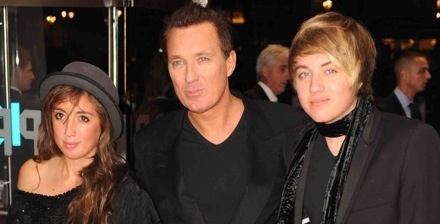
Martin Kemp, HarleyMoon Kemp, Roman Kemp, Paradise Point

On the town: Spandau's Martin Kemp with his children HarleyMoon and Roman, whose band Paradise Point made their debut this month. © Richfoto

➢ This £5m iPhone has to be a spoof! Yes, that’s $7.8m or €6m or 52m Chinese Yuan or 245m Russian Rubles

➢ Amazon “Fail” — no show for Kevin Cann’s new Bowie photo-book

➢ Rottweiler Dawkins croons his way into our hearts and minds

➢ 1984, On this day, pop made its noblest gesture but the 80s ceased to swing

➢ If Paradise Point aren’t the pop tip for 2011, you decide who is!

➢ How Roman Kemp helped his dad Martin to pick up the bass again

➢ 1918, War: the 20th-century way to build a new world

➢ The Princess known as Julia becomes an art object for sale

➢ Hear a clip from Duran Duran’s new album — lucky No 13?

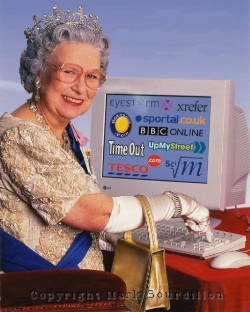
Her Majesty Queen Elizabeth II, Facebook

Her Majesty Queen Elizabeth II goes networking

➢ Status update: QueenLiz2 goes live on Facebook, though Her Maj will not be abused

➢ Killing a king tells you who you are — so do your haircut and shoes

➢ 2011, Pulp: the Britpop comeback everyone’s been waiting for, hooray!

➢ 19 gay kisses in pop videos that made it past the censor

➢ Why Lady Gaga “gets it”, Pixie Lott doesn’t, and the jury is out on Rihanna

➢ Was the Band With No Past truly wafted here from Paradise?

FRONT PAGE

➤ The Princess known as Julia becomes an art object for sale

Ben Ashton, Princess Julia ,

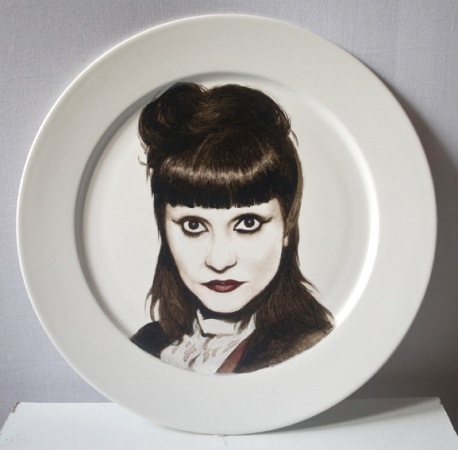
One of Ben Ashton’s unique Princess Julia hand-painted plates on sale at the House of Voltaire pop-up shop. Image courtesy of Simon Oldfield Gallery

❚ PRINCESS JULIA, deejay, former Blitz Kid and a work of living art in daily life, has now been immortalised in the form of a pair of hand-painted ceramic plates. They are newly created by 27-year-old Slade graduate Ben Ashton, a painter and performance artist whose themes include celebrity and voyeurism. The plates go on sale priced £1,250 each in a pop-up shop being run by Studio Voltaire, a not-for-profit independent arts organisation that provides education and studio space in London. Throughout the month, familiar faces from the arts and fashion worlds will be fronting the shop. Julia herself plans to attend on Sunday 21st.

An exclusive edition of canvas bags with leather details, £120, by Stefania Pramma is available through Studio Voltaire online

The House of Voltaire is a fund-raising outlet open until Dec 4 in the heart of Mayfair selling a diverse selection of limited editions and original pieces by leading contemporary artists. Gift notions include creative Christmas cards by Cary Kwok, editioned T-shirts by Clunie Reid, lambswool blankets by Renee So, a David Noonan screenprint and splendid canvas tote bags by Darbyshire & Spooner.

Studio Voltaire produces portfolios and affordable editions (£50-£100 per print) of such artists as Linder, Cerith Wyn Evans, Spartacus Chetwynd, Mark Titchner, Dawn Mellor, Daniel Sinsel, Ryan Gander, Hilary Lloyd and Mark Leckey. These are on sale through the Studio’s online gallery.

For Ashton himself the portraits of Julia are the start of a year-long collaboration with other creative talents in The Bloomsbury Studio, a subsidised space opened in 2008 by Simon Oldfield, a 32-year-old former lawyer turned gallerist. Part of his gallery’s profits go to support charitable organisations such as the Whitechapel Gallery and the Contemporary Art Society in its centenary year.

➢ House of Voltaire pop-up shop — Upstairs at Rupert Sanderson, 
19 Bruton Place, London W1 (Nov 11-Dec 4, Mon–Sat 11am-7pm, Sun 12-6pm)
➢ Studio Voltaire online gallery and shop
➢ Inquire about Ben Ashton’s work through the Simon Oldfield Gallery where he has a solo show Feb 11-March 19

Joel Croxson,Clunie Reid, House of Voltaire

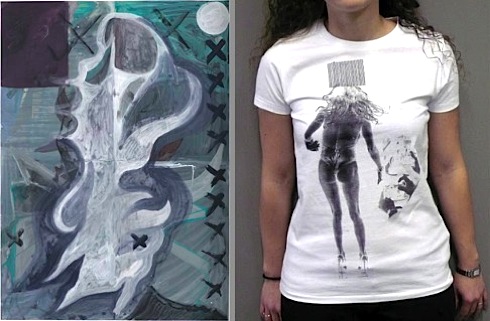
At the pop-up House of Voltaire: unique works donated by painters such as Joel Croxson, left, and silkscreened 100% cotton T-shirts by Clunie Reid

➢ Watch artist Ben Ashton live in his Bloomsbury studio

FRONT PAGE

1980 ➤ 2010, the stage magic that inspires Romantics ancient and Neo

An exceptional cabaret performer called Taylor Mac
hit London this week in 2010. He subverted not only
theatrical conventions but several classic Bowie songs
to glorious effect. His shimmering presence sent out
echoes of how we defined itzy-Blitzy when 1980 dawned…
Billy’s club,Helen Robinson, nightlife, London ,Steve Strange, PX

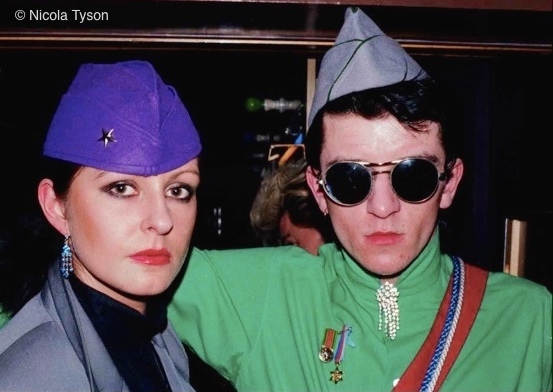
Billy’s club 1978: Strange as Ruritanian Space Cadet alongside PX designer Helen Robinson. (Photograph by © Nicola Tyson)

❚ LET’S RECALL WHAT MADE THE BLITZ KIDS unique in 1980. Singer Andy Polaris said soon after: “Anyone who thought it was all a pantomime got the wrong end of the Pan Stik. Blitz people had to be larger than life. It was a compulsion. If it doesn’t possess you, you can’t acquire it.”

An evening within the orbit of London’s Blitz club superstars – and we’re talking about 50 people here – was more than entertaining. You were zapped with a very tangible electric shock – what we’d call today “sensory overload” – as if these exquisite, compulsive posers had revitalised Gilbert & George’s notion from 1969 of processing through the world as living sculptures. The Blitz Kids generated their own crackling versions of hyper-reality that defined the space around them. They included Kim, Julia, Judi, Melissa, Fiona, Jayne, Theresa, Myra, Scarlett, Clare, Michele, Darla, Sade, Kate, Stevie, Naomi, Mandy, Helen, Jo, Perri, Christine and Franceska . . . the Stephens Linard and Jones, Lee, John, Cerith, Simon, Iain, Andy, George, Marilyn, Wilf, Greg, Jeffrey, Christos, Graham, Neil, Dencil, Robert, the Holah brothers, the Richards Ostell and Sharah. A fair few other Blitz Kids, like Strange, Egan, Elms, Sullivan, Dagger, Haines, Ure, O’Donnell, Mole, Ball and Lewis, had the motormouth skills of energetic talkers and schemers who were, as we say today, “good in the room”. Above all, the best among them “made things happen” wherever they set foot. That’s why spending time with them was the best kind of fun – stimulating, argumentative and constructive, whether idling at a bar or bounding around the beach on Bournemouth bank holidays.

Kim Bowen, Stephen Linard, Blitz Kids, London

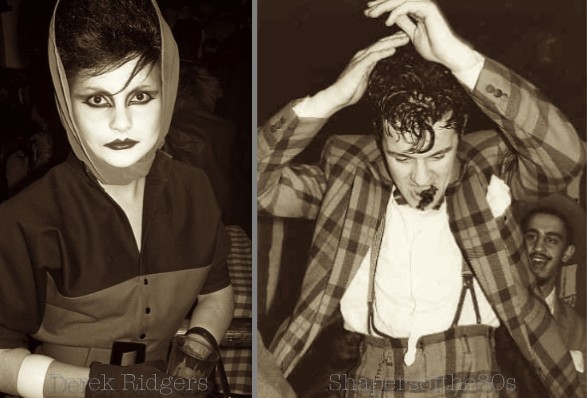
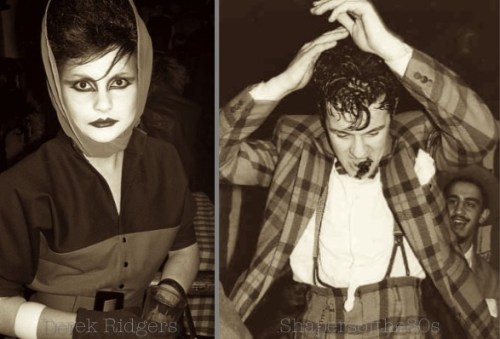
Doyennes among the Blitz Kids, 1980: Kim Bowen and Stephen Linard stamp themselves on that week’s zombie leitmotif. Photographed © by Derek Ridgers

Even so, what marked out the fashionistas especially was that, not only in the club, but in shop, café and bus, the style stars were constantly emitting auras of the force you imagined once surrounded Dietrich or Garland or Bogart or Caine. There’s nothing accidental about style. It is by definition a considered stance. In the presence of the Blitz superstars you could hold up your hands and almost feel the crumpet-toasting tingle. Even jaded Londoners turned their heads when Kim walked the half mile from Warren Street to St Martin’s school of art swathed only in surgical bandages. Or when George paraded past Buckingham Palace as a helmeted and toga’d Britannia at the annual royal ceremony of trooping the colour.
Princess Julia, Chris Sullivan, deejays, Vintage 2011,Southbank Centre, clubbing

Vintage deejays: original Blitz Kids such as Princess Julia and Chris Sullivan have continued spinning the vinyl that recreated legendary 80s club soundtracks from the Blitz to the Wag

Wherever there was a party, premiere, exhibition or club opening you’d see a dozen more such creatures who lived hyper-reality 24 hours a day… Lee perhaps as Nosferatu, Julia as Bride of Frankenstein, Fiona saying “Non!” to couture by wearing a grosgrain coat back-to-front, Sullivan as 1920s cad, blue-lipped Linard as 1920s flapper, Marilyn as, well, Monroe, Stewart as geisha boy, Theresa as Little Bo Peep, a part she played at work in the Fleet Street offices where our paths often crossed.

Aplomb came naturally to Kim Bowen as the queen of the Blitz Kids. One night when some friends came back to mine after celebrating my birthday, Kim walked into the kitchen and said: “I’m not going to let you live with this wallpaper one more day.” She picked at the edge of a stiff vinyl-coated strip, printed with very 1960s pepperpots and pans. Then she ripped it off the wall in one heave. The kitchen walls were bare within 20 minutes. Kim declared: “Minimalism, David, that’s you need.”
Clare Thom, Michele Clapton, Blitz Kids

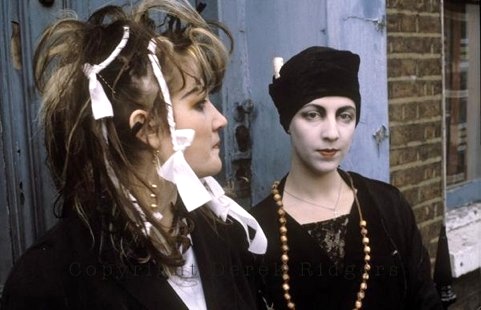
Blitz Kid style: Outside the Carburton Street squat, Clare-with-the-Hair and Michele Clapton displaying awesome repose. Photographed © by Derek Ridgers

As time would reveal, the lead Blitz Kids outflanked not only their peers, but most of the copyists who followed their Bowie-inspired passion for change. You’d find the second-league clubbers at Studio 21 in Oxford Street, or in a back barrel at Birmingham’s Rum Runner – those were the self-proclaimed New Romantics you see dancing in the YouTube videos, and being photographed wearing too much of everything, from Boots No 7 to lacy frills. A couple of years after the Blitz caravanserai had passed, designer Fiona Dealey said candidly: “You look at these little Bat-people with it dribbling down their necks and you feel like saying, ‘Sorry darling, not enough loose powder’. The difference was that our make-up was stage slap, Leichner not Factor. The clothes came from a costumier, Charles Fox, not Flip. Dressing for the Blitz was real theatre. It wasn’t just another uniform. You felt glamorous.”
Stephen Jones, Blitz Kids

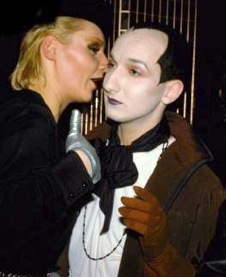
Immaculate: Hatter Stephen Jones

Aha, real theatre! This is the realm Shakespeare championed as “an improbable fiction” and John Updike blasted as the “unreality of painted people”. A flesh-and-blood craft where the basic requirement is for a living audience to be watching living actors. The Blitz Kids fully understood what Shakespeare’s Player has to explain to Rosencrantz and Guildenstern in Tom Stoppard’s spoof version of Hamlet: “We’re actors. We’re the opposite of people.” Actors pledge themselves to the belief that somebody will be watching. Nothing to do with vanity. Entirely a means of confirming their identity. Ditto the Blitz Kids.

The digital natives (and the self-styled Neo Romantics) of Generation Z who today are being raised on computer shoot-em-ups and quaking cinema enjoy precious little exposure to live theatre, to the “magic” that emanates from the contract eagerly agreed between actor and audience – for the one to perform at the same time as the other watches. Only when, as one towering example, Sir Michael Gambon allows a Pinteresque pause to elapse onstage can auras crackle “in the moment” with sufficient intensity to be felt physically, and thrillingly, by a theatre audience. Gambon’s aura crackled like a fire god’s last Christmas in No Man’s Land, before a wrapt audience the day after its author Harold Pinter had died.

Max Wall, Ken Dodd

Masters of the comedian’s art: Max Wall and Ken Dodd

Comedy is where the theatrical contract of give-and-take fights for life most ostentatiously. As you laugh helplessly at the veteran comic Ken Dodd’s rapid-fire patter, you needn’t know that he has subjected his live stand-up routine to a lifelong time-and-motion study that concluded he must hurl eight gags per minute at his audiences to ensure everybody laughs at least once every minute he’s onstage.
Travesties, Tom Stoppard, theatre

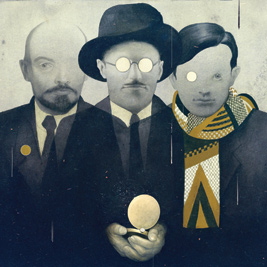
Travesties: what a coincidence that in 1917 the revolutionary Lenin, the novelist James Joyce and the Dadaist poet Tristan Tzara all happened to live in Zurich

In London in 1982 it was no less a pleasure to witness the top-of-the-bill variety legend Max Wall give wondrous live masterclasses entitled An Evening with Max Wall in which, aged 74, he laid bare how comedic timing works from one second to the next, how facial expression and vocal cadence, as well as silly walks can turn laughter instantly on and also off. Demonstrating with us as guinea-pigs how performer’s and viewer’s mutual responses keep each other on their toes.

The playwright Tom Stoppard has spent his career writing pyrotechnic scripts that read wittily enough sitting on the page, but are transformed several hundredfold the moment they are enacted on the stage, by for example exploiting the improbability of time-warps where the actors and the action are rewound and rerun in “unreal time” – actors reverse back through doors to leave the stage and re-enter immediately giving a subtly adjusted performance – as in Travesties, his hilarious comedy of coincidence. His plays are overtly “about” theatricality, yet shrouded by the mischievous apologia that, as one of his characters ultimately insists, “It’s a mystery”.

☐++++++☐++++++☐

GETTING BACK TO Taylor Mac,
his little bit of itzy-Blitzy glitz gives
shape to all of the above

Taylor Mac, Glasgow, London, Bowie, Comparison is Violence,cabaret

Taylor Mac 2010: sequinned, painted and bewigged as Bowie-cum-Tiny Tim. Photographed © by Tim Hailand

SO WHERE MAY TODAY’S young Neo Romantic seek inspiration if he or she wishes to aim beyond the slap and the zhoosh to summon up solar-powered charisma of Blitz Kid proportions? The answer is in the UK right now (Soho Theatre London this week, The Arches in Glasgow next) and he is an incandescent and witty Californian called Taylor Mac.

TAYLOR MAC

Mac as himself

Clad in more sequins than a sultan’s harem could shake at you, he gives a full-throttle musical cabaret that is unexpectedly poignant, invigorating and original. You also laugh more than you ever did at Eddie Izzard’s last side-splitting tour. Mac’s audacious dissection of the essence of theatre, vaudeville and other performing arts evokes Merman and Garland, Wainwright and Brel while asserting his own unique brio. He reinvents pop classics by David Bowie and Tiny Tim (yes, you do remember his hits Tiptoe Through the Tulips and I’ve Never Seen a Straight Banana) by delivering them with an earnestness that moistens the tear-ducts. The evening’s ironic sub-title is The Ziggy Stardust Meets Tiny Tim Songbook, because these are the comparisons reviewers draw about Mac, yet they seldom remark on how he turns Starman and Heroes, those holy invocations of the 80s Bowie fan, into altogether heart-rendingly new songs.

His themes are love and longing and role-play and tolerance for what society calls a gender-bending misfit who sprang fully formed from the egg, craving the glue that fixes eyelashes. What results is the most stupendous spectacle, charged with insights as mere as how to signal the end of a song, one way being a sustained high note, another to deliver a wide-eyed “Cha-cha-cha!” through smiling teeth, but the coup de grace is a solemn downward arm gesture LIKE SO! For 90 minutes Mac fills the Soho Theatre many times over with a sustained rush of theatre magic. And yes of course he’s on YouTube, but that entirely defeats the point the past 1,700 words have been making.

➢➢ Read Donald Hutera’s London review of Mac
in The Times, June 3, 2010

➢➢ Read Charles Isherwood on Mac’s 2009 play
The Lily’s Revenge in the New York Times

FRONT PAGE

1978 ➤ Midge stakes his claim as the weathervane of synth-pop who helped shape the British New Wave

Rusty Egan, Steve Strange, Midge Ure, Visage, synth-pop, new wave, electro-pop, Rocking the Blitz,BBC

Visage Mk 1: Egan, Strange and Ure in 1978 searching for sounds and styles

❚ “I’LL NEVER FORGET FIRST TIME I SAW a synthesiser on Tomorrow’s World. For the first time I saw the possibility to create sounds that had only existed in my head. I’d had no chance of getting my hands on one because they were size of house or at least the cost of one. But then cheaper Japanese synths came on the market, so I bought one. It changed my life because I could make music in a small home studio. The possibilities for young musicians like myself seemed endless.”

This was Midge Ure enthusing during Rocking the Blitz Club (audio at YouTube), another remarkably well-informed BBC Radio 4 documentary on our favourite scene that went out this morning. It was also remarkable for handing over the commentary to Ure, who — despite having earned an OBE for being half the brains behind Band Aid’s smash hit for charity in 1984, and being a founder member of Visage and the voice of Ultravox’s directional chart hit Vienna — is not among the first rank of mythologists programme-makers wheel out to explain the Blitz phenomenon.

This R4 slice of the 80s gave us a refreshingly different take on the familiar fables recycled by the usual suspects, but mediated in this show by Midge’s deeply un-London Lanarkshire lilt. He’s more than qualified to stake his claim to have shaped the music of the Blitz Kids, though he’s reluctant to be described as one of them, being a good four years older, and having had fingers in more pop pies than most on the post-punk scene. Even as the word punk was given the heave-ho in favour of the term “new wave”, Ure was probably the first active player of a synth among any of his clubbing pals, having bought his first, the polyphonic CS-50, at cost direct from Yamaha in the summer of ’78.

His was an obsession shared by fellow Rich Kid, the drummer Rusty Egan, and it led the way to a whole new British dancefloor sound. Ure felt synths “embodied a kind of nostalgia for the future”.

Visage, Fade to Grey,He says: “Rusty and his friend Steve Strange realised our crowd needed somewhere to try out our styles and listen to Euro synth bands like Kraftwerk, Dusseldorf and Telex, whose cutting edge sounds seemed to represent the future.” In almost no time the tribal forces of fashion had granted their wish. Rusty’s deejaying at Billy’s in Soho was augmented by Strange vetting the door to ensure an extreme clubbing attitude, then as 1979 dawned their band of outlandishly dressed clubbing heroes descended on the Blitz.

In his straight-from-the-hip autobiography, If I Was, Midge Ure makes the bold claim: “I had this idea to make music to play in the club. We had to invent our own musical style because our points of reference were very limited — after Kraftwerk, Yello and early Bowie we ran out of influences.” His own taste was for the very textured sounds of the synth built round classic songs, which intuitively caught a mood, unarticulated at that time, for a return to melody. And yet …

“A synth is just a software program and it has a very specific sound — a cold European soulless sound that drummers couldn’t emulate. Only a machine could do this,” he says with eagerness appropriate to a new-wave innovator. “Everybody aspired to be a robot — we didn’t want any human element in there at all, so people sang in a very robotic way. It was not going to sound like Jimi Hendrix. It was going to sound like a watered down version of Kraftwerk.”

❚ MIDGE IS THE ONLY PERSON AMONG THE NEW ROMANTICS to go on record and acknowledge the role of Gary Numan, an otherwise dread name who was perceived as an aloof and unclubbable loner. He definitely never signed in at the Blitz. Yet as 1979 unfolded Numan’s dystopian sci-fi synth sound sidestepped the Blitz Kids to reach No 1 in the UK charts, twice: in May with Are Friends Electric? and in September with Cars. They were blatantly commercial records and that wasn’t how Blitz Kids defined cool.

But Ure recognised Numan had broken down barriers of disapproval within the old guard of the music biz. He was being a great spur. Ure dreamed up the name Visage for his new band who knocked out a demo covering the classic In The Year 2525, with Egan on drums and the eye-catching Strange posing away as vocalist after a few lessons from Ure. Despite music industry scepticism, it won them a deal with Radar Records, the attention of producer Martin Rushent who had an office above the Blitz, and helped rope in Magazine members Dave Formula, John McGeoch and Barry Adamson, and Ultravox keyboardist Billy Currie. A single called Tar was released that September. It didn’t chart, but did clinch them a bigger deal with Polydor in 1980.

Midge Ure, Vienna, Ultravox

The day job: in 1979 Midge Ure (moustachioed) resurrected the name of Ultravox along with (l-r) Warren Cann, Chris Cross and Billy Currie. © Getty

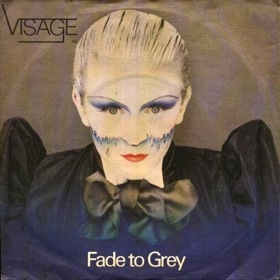
Ure says: “Visage was never really a proper band, just a group of our favourite musicians who we brought together to make experimental music for the Blitz club. Because they were all signed to other labels we chose Steve Strange as our frontman because he looked the part.” This worked well enough. Even while Ure and Currie part-timed with the seven-man studio-only Visage line-up, while steering Ultravox along similar synth-pop lines, Visage put out two successful albums, and a handful of chart singles (the most enduring being Fade to Grey in November 1980). What laid the pathfinding flares for the movement were some uber-stylish art-videos — the first starred Blitz coat-check girl Julia Fodor before she became the fabulous princess and deejay — which disseminated the OTT New Romantic ethos for fans to emulate.

Ure scored the significant double of taking Ultravox’s majestic Vienna to No 2 a month later and for four weeks, then seeing it win Single of the Year at the 1981 Brit Awards. It was produced by the German Conny Plank with an evocatively romantic landmark video stunningly directed by Russell Mulcahy who was creating a whole visual vocabulary for the then novel music video. Ure can take full credit as lead singer and guitarist for breathing a subtle blend of Roxy Music’s style and krautrock clarity into Ultravox and building them into a credible vanguard for the electronic New Wave.

Reflecting back in the R4 doc, Ure says: “There’s no doubt the early 80s was a golden age of music made by real popstars who created themselves. It was more than just padded shoulders and asymmetrical haircuts. It was a pivotal moment in our cultural history when new tech mixed with new ideas to create something really good. All in the pressure cooker environment that was the Blitz club.”

FRONT PAGE

1978 ➤ To the edge and back with the lovely Julia

❚ PRINCESS JULIA IS A NATIONAL TREASURE. After three decades, she remains one of the UK’s coolest dance deejays, music editor at i-D and co-runs The P.i.X fanzine. She is as beautiful and immaculately attired as she was in the Swinging 80s. In those days Julia Fodor turned heads as the star sales assistant in PX, Helen Robinson’s inspirational New Romantic clothes shop in Covent Garden.

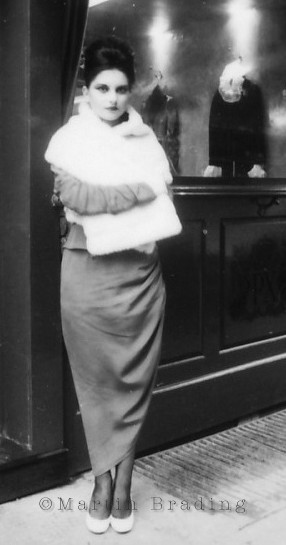
Nouvelle vague, Feb 1980: Julia outside PX, designer Helen Robinson’s home of New Romantic fashion. Photographed © by Martin Brading

Stunningly coiffed in a beehive hairdo, she could have stepped out of a French nouvelle vague movie – until she opened her mouth. “’Ello dahhlin’,” she greeted you, in broad Eliza Doolittle Cockney.

Once Steve Strange had put Julia in the cloakroom at the Blitz in 1979, her unique style ensured her a place at the centre of all the press coverage the club provoked, as well as in the Visage video for Fade to Grey. As one of the few true Blitz Kids, Julia never ventured into public without her Look.

This month, Julia began a photo-blog called The World of Princess Julia to record her nightlife activities in London and abroad – for her deejay residency at Queen in Paris, she has enjoyed being delivered to work by cross-Channel helicopter. Her first blog post introduces us to her life of what some might call notoriety. Here’s a taste, in Julia’s own words…

A lot of tinsel, that’s London, we love
our veneer, we love our sleaze

❚ I’M EIGHTEEN, ’78, [Covent Garden is] still boarded up ready for gentrification, coming down soon though. I work in a shop – PX. There’s a rehearsal space downstairs, band music bleeds up, Chrissie’s down there with her Pretenders, she tells me all about it. One day Michael Jackson came by, another time some local kids locked us in for a laugh, it was Cameron McVey and his mates.

I had a “look” then, one of many. I hobbled around in tight, tight skirts and high, high heels from Seditionaries. I took speed and learnt to smoke. I had a good beehive. What’s his name, Paul [Smith] from up north moved into Floral Street, Paul Howie and Lynne Franks had jumpers in Long Acre. There was nothing else round there then shop wise.

We had Bowie on, we played Kraftwerk, we kept a lookout for new music, new makeup, the future, futuristic. Dance moves, soul static robot. Berlin, film-noir. London ’79, cross-dressing melting vista of possibilities. No money, poverty breeds creativity, that’s what they say. Nevertheless perhaps it’s true, especially in London where people seem to gravitate towards seeking out an identity more vital than the one they’ve left behind. I did the same, left north London and headed uptown, central, on the Piccadilly line. London’s built on ley-lines, heard someone say that somewhere, I think it’s true because there’s certain energy here in London…

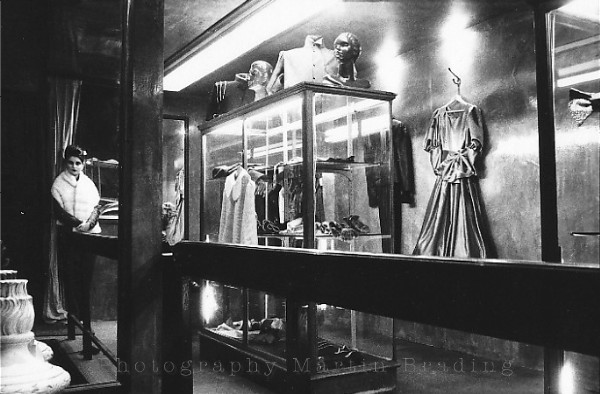
PX moves into Endell Street in Feb 1980: New Romantic satin gowns, Fauntleroy collars – and Julia. Photographed © by Martin Brading

FRONT PAGE