Tag Archives: photography

➤ Six rewrites punk history with an outlandish claim about the Not-Really-From-Bromley Contingent

Simon Barker, Six, Punks Dead, Jordan, photography, exhibition

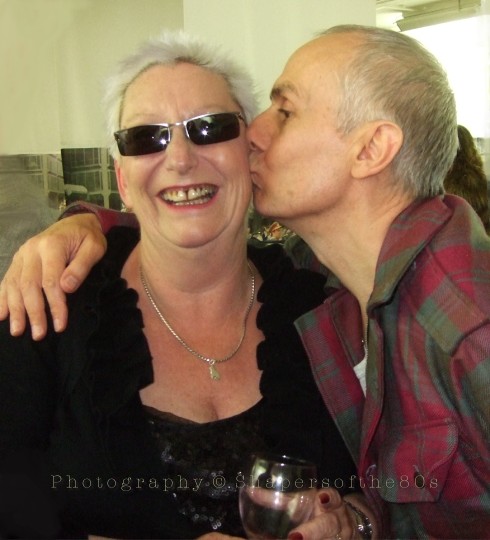
Reunited: a plonker from Six for Jordan at Divus Gallery © Shapersofthe80s

❚ OLD HABITS, EH? A day in the spotlight and Simon Barker, aka Six, starts rewriting history! There we were last night in a Spitalfields gallery, chatting for the first time in 20 years at Punk’s Dead, his new show of early photographs of the now fabled Bromley Contingent, the posse of a dozen fashionistas who helped put the Sex Pistols on the map back in 1976. Having staked his claim to fame as the only person clapping at the end of the Pistols’ sixth gig (Dec 9, 1975, at Ravensbourne College) and being one of four fans with the band during the infamous “Filth & Fury” TV interview (Dec 1, 1976), Simon today works as a photographer in Prague.

Why Prague, I ask, as a big fan of the Bohemian medieval city? He groans: “Oh no! Why Prague? Why does everyone ask me the same question?” You’d never guess Simon and I used to natter away as if we liked each other back in the 80s when I’d pop into Viv’s Worlds End shop after going for a haircut next door at Smile. OK then, Six, why *Bromley*? As in Bromley Contingent. What was in the water in Bromley that produced his posse of poser punks?

“Ah, excellent question!” he replies. “We hated the name. It was created by the media — that woman Caroline Coon.” This is a double-edged dig at both the middle-class, ex-hippy Melody Maker writer who coined the phrase after seeing the “very striking” posse at three Pistols gigs in a row and asking where they came from (Bromley is a town in the south London commuter belt)… and also at me for being another member of the despised legion of journalists.

His Always-a-Punk gene is really kicking in now. “In actual fact, only two of us — me and Steve [Bailey, aka Severin] — came from Bromley. Siouxsie [Susan Ballion, later singer with the Banshees] was from Chislehurst. Billy [Broad, later Idol] lived in Bickley. And Jordan [born Pamela Rooke] came up from Seaford.

“For me and Steve, living in that bit of suburbia, Bromley had the best connection into London — 20 minutes by train. Any further away and it wouldn’t have been so easy to visit for gigs, sex, Louise’s…”

Aha, the location-location transport solution! A recurring theme, because in a surprisingly cooperative interview in 2002 Six did admit that his reason for moving to the Czech Republic “was its location. It is the heart of Europe and a great base to travel from.”

Six was either being pure-punk cussed by splitting hairs about his posse, or possibly was having a bit of a hashtag_Senior_Moment. Bickley is after all the next stop down the line from Bromley, only 2,000 metres away, and Chislehurst another 1,000 metres further on. But fair enough, he’s got a point. Even if you include Sioux and Idol and Bertie “Berlin” Marshall, who lived three doors away from Bowie’s mum in Bromley, five out of a posse of 12 does not a “Bromley” Contingent make. So last night, we witnessed history being rewritten.

WHO waS WHO in the “Bromley” Contingent
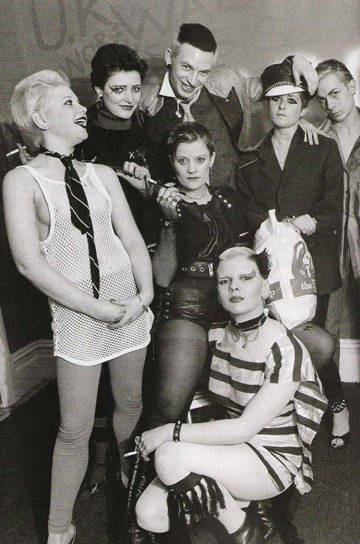
Bromley Contingent, Soo Catwoman, Jordan, punks

Ray Stevenson’s classic 1976 pic of some of the Bromley Contingent, plus Soo Catwoman who came from Ealing

According to Wikipedia: Siouxsie Sioux, Jordan, Soo Catwoman, Simon “Boy” Barker, Debbie Juvenile (née Wilson), Linda Ashby, Philip Sallon, Alan Salisbury, Simone Thomas, Bertie “Berlin” Marshall, Tracie O’Keefe, Steve Severin, Billy Idol and Sharon Hayman.

Caroline Coon’s 1977 book The New Wave Punk Rock Explosion remains a fresh and pro-fan account of the movement’s origins, less prone to mythologising than later histories

➢ Fresh pix from the “14 months” of punk and the last word on what it all meant

➢ Simon Barker chats to Dazed about the anarchic punk era

➢ Another epic Stevenson picture of the Bromley Contingent, 1976

Simon Barker, Six, Punks Dead, Jordan, photography, exhibition

Jordan then and now: the Queen of Punks with Simon Barker’s 1977 photo showing for a month at Divus Temporary Gallery, London E1 6QF © Shapersofthe80s

❏ Mind you, the true superstar present in the Spitalfields gallery was Jordan herself, Queen of Punks, artfully positioned in front of Six’s truly iconic portrait of her on the wall, priced at £300 a pop. There wasn’t a moment all evening when she wasn’t surrounded by a buzz of fans and old stars of punk and she was such easy company, chatting away without airs or graces. She said: “I’m a veterinary nurse now and I breed Burmese cats. Look at the number of photos here of me and Siouxsie with cats.”

She has returned to live in Seaford but loves telling the 70s stories about travelling up to London from the south coast resort, being harangued by commuters for her spiky hair and outrageous bondage clothes from McLaren and Westwood’s Chelsea shops Sex and Seditionaries. To keep her out of trouble, one British Rail guard told her to go sit in first class. “The day I came up to apply for a job at Sex, it was shut, so I wandered over to Harrods and applied there in my blonde spikes and green face foundation. They gave me a part-time job in Way In” (their trendy top-floor fashion department).

As the single most inventive pioneer of definitive punk looks, Jordan soon joined Sex, however, becoming their totemic house model and honorary fifth member of the Sex Pistols, all too willing to flash her tits for the press at their ninth gig in Andrew Logan’s loft. In 1977 she briefly managed Adam & The Ants in their hardcore phase, but most notoriously starred in Derek Jarman’s dystopian fantasy movie, Jubilee, singing a raunchy version of Rule Britannia.

➢ Punk’s Dead by Simon Barker is an exhibition of his intimate punk photographs, open for a month from June 7, at Divus Temporary Gallery, 4 Wilkes Street, London E1 6QF.

➢ Punk’s Dead the book by Simon Barker is published by Divus

Click any pic below to launch slideshow

The Year Of Punk 19/12/77

Six, Simon Barker, Punk 1977, LWT, Janet Street-Porter, video

“You don’t have to be a fantastic musician”: Six explains the magic at 7:15 in Janet Street-Porter’s LWT documentary, The Year of Punk, 1977 … Click pic to view video at YouTube
FRONT PAGE

➤ Fresh pix from the “14 months” of punk and the last word on what it all meant

Punk’s Dead , Derek Dunbar ,, Jordan,

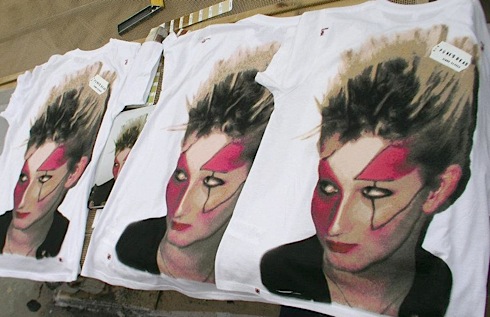
Jordan the queen of punk: pantone matched first samples fresh from the printers on Derek Dunbar’s Facebook page today

❚ HOW MUCH MORE IS THERE TO KNOW ABOUT PUNK? Not much, you might think. Yet today Derek Dunbar — the King’s Road fixer, model, singer, Jarmanite and McLaren acolyte, now styling himself as project manager — announced on Facebook that he is producing some T-shirts emblazoned with Jordan’s image (Jordan the queen of punk, immortalised in Derek Jarman’s movie Jubilee). “These are the first samples we will produce once Six has finished at his exhibition in London so I hope to start in 3 weeks or 4 weeks.”

Exhibition? Six? Who? Those in the know know that Six is aka Simon and Simon was the quiet one in among Susan Dallion (later Siouxsie Sioux), Steve Severin, Debbie Juvenile and Soo Catwoman in those seminal 1976 snaps of the Bromley Contingent — first followers of the Sex Pistols and the Chelsea retail outlets of Malcolm McLaren and Vivienne Westwood. Some of the Contingent became headliners in the punk explosion, Simon playing his part by appearing with the Pistols on the infamous teatime TV show that lost television journalist Bill Grundy his job. More discreetly, as a resident of the St James’s Hotel in Westminster, Simon provided a refuge for punk’s suburban protagonists.

Punk’s Dead , books,photography, Simon Barker , Jordan

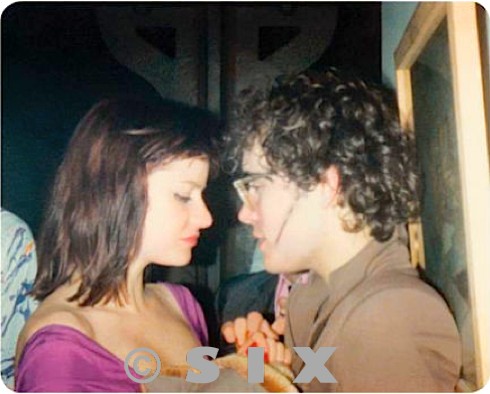
1976: Jordan and Simon Barker aka Six (from Derek Dunbar’s Facebook album)

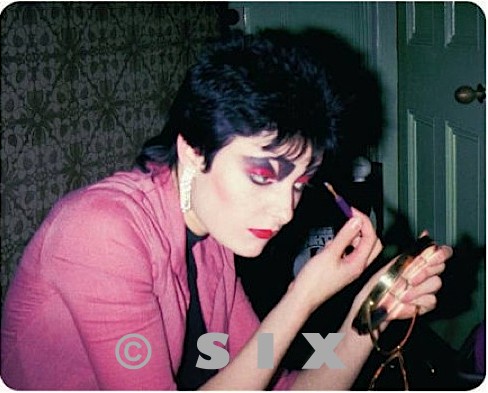
Under his pseudonym Six, he now reveals: “In 1976, I bought myself one of the cheapest pocket cameras available. Fully automatic, with no controls or settings… Subconsciously I concentrated on the women and artists at the heart of what would later be known as punk in London. The photos you see were spur-of-the-moment shots taken by myself for myself and, up until now, I used to think they weren’t good enough to show people.”

Far from it. A quick google reveals these early snapshots to be “a rare and intimate account of punk’s ability to mint newness” and they evince “the cool stillness of seeming to live beyond the end of history.” Ohhhhh!!! Orgasmic! And you’re asking, Who said THAT?

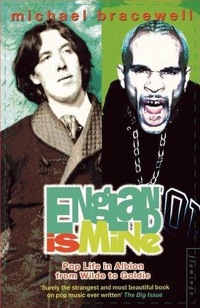
Michael Bracewell,books,England is Mine, Pop LifeGoogle, please tell. The verdict comes from Michael Bracewell (author of England is Mine: Pop Life in Albion from Wilde to Goldie, 2009), one of those writers whose cultural observations you know are worth the effort to read, wrapped though they are in ripely purple prose. And in a recent article about Six, he announces what these days is the official line, that “Punk lasted in the UK for little more than 14 months, between 1976 and the Jubilee summer of 1977.” Anything later was accounted an offshoot of punk, or dubbed simply New Wave!!!

You raise an eyebrow, salivating for more. And more is delivered in his Independent piece from last March…

➢ Beneath the headline Anarchy in the UK, Bracewell declares
these FIVE PRINCIPLES OF PUNK:

  • 1 To some, punk was primarily political in its energy, carrying class war or a reclamation of the Situationist desire to ‘wreck culture’ to the brutalist Britain of the pre-Thatcher 1970s.
  • 2 To others, it was an avant-garde fashion parade: a damply British reclamation of the Zurich Dada or the Ballets Russes.
  • 3 And to yet others it was the gleeful desecration of rock music’s Church of Authenticity, in which had been worshipped the sanctity of the Blues.
  • 4 Speaking with Malcolm McLaren – arguably punk’s architect – shortly before his death in 2010, the case was put more simply: if punk could lay any claim on historic status, he said, it would best be remembered as ‘like doing the Twist in a ruin’.

Sensational, whichever way you take your pick! But he’s warming to his own conclusion:

  • 5 Punk … appeared to confront the stagnation of cultural consumerism – by describing, in a language of self-parody, the notion of modernity itself reaching critical mass and unsurprisingly imploding. Hence, perhaps, the slogan above the door of the SEX boutique at 430 King’s Road in Chelsea: ‘Modernity Killed Every Night’.

Divine! We can go to our graves sure about the meaning of punk, once and for all. Or rather, five times and for all.

Punk’s Dead , books,photography, Simon Barker,Little Nell, Adam Ant

1977: Little Nell with Adam Ant at a Butler’s Wharf party. Photographed by Six

Punk’s Dead , books,photography, Simon Barker , Siouxsie Sioux

1977: Siouxsie Sioux at the St James hotel. Photographed by Six

➢ Punk’s Dead by Simon Barker is an exhibition of his intimate punk photographs, open for a month from June 7, at Divus Temporary Gallery, 4 Wilkes Street, London E1 6QF.

➢ Punk’s Dead the book by Simon Barker is published by Divus

Punk’s Dead , books,photography, Simon Barker

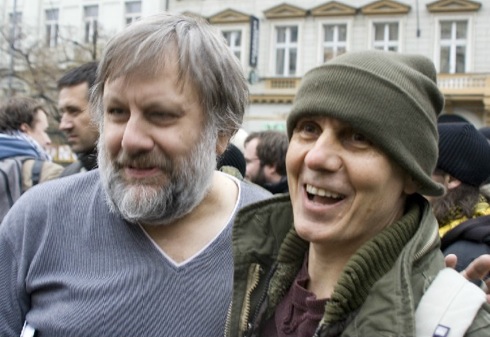
Six in Prague: Barker demonstrating with Slovenian philosopher Slavoj Žižek who has become the zeitgeist interpreter of social phenomena in the 20-tweens

The Year Of Punk 19/12/77

Six, Simon Barker, Punk 1977, LWT, Janet Street-Porter, video

“You don’t have to be a fantastic musician”: Six explains the magic at 7:15 in Janet Street-Porter’s LWT documentary, The Year of Punk, 1977 … Click pic to view video at YouTube
FRONT PAGE

➤ Sukita-san’s eye view of the weird world according to Bowie

David Bowie, Masayoshi Sukita,Speed of Life, Genesis Publications,

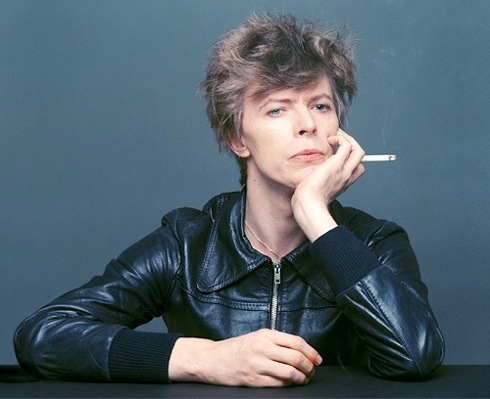
Heroes-era Bowie in 1977 © by Masayoshi Sukita

David Bowie,Yamamoto Sukita, Kansai Yamamoto ,Speed of Life, Genesis Publications

Bowie as Ziggy in 1973 costumed by Kansai Yamamoto and photographed © by Masayoshi Sukita

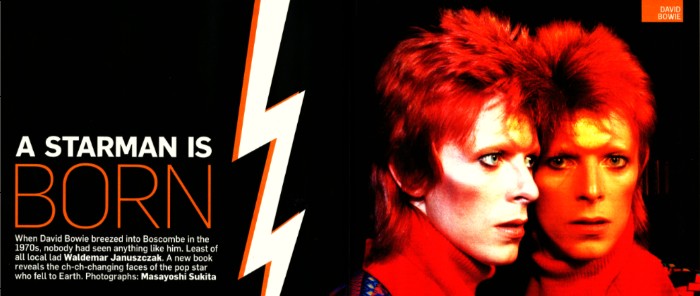
❚ HERE WE SEE CLASSIC PIX of the early glam incarnations that broke the rules of rock and roll and put the gender-bending David Bowie into the headlines. Since 1972 Japanese photographer Masayoshi Sukita has gone on capturing the prolific flow of creations from the ever-inventive Bowie. This week in London his long-awaited book Speed of Life documenting their 40-year collaboration is launched by Genesis Publications in its 2,000-copy limited edition. Signed by both Bowie and Sukita, it is priced at £360 ($581) for 300 pages which they caption with their own recollections and memories. Bowie says: “It’s very hard for me to accept that Sukita-san has been snapping away at me since 1972 but that really is the case… May he click into eternity.”

Meanwhile in today’s Sunday Times Magazine art critic Waldemar Januszczak recalls his teenage outing in 5-inch platforms when he paid 90p on the door of Starkers in Boscombe, Dorset, to discover the eye-popping mystique of Ziggy Stardust in August 1972 — minutes after Sukita the photographer arrived in Britain and caught Bowie’s shock show at London’s Royal Festival Hall. He described it as “like an astronomer finding a new planet”.

David Bowie, Masayoshi Sukita,Speed of Life, Genesis Publications,

Today’s Sunday Times Magazine: Bowie in 1972 © by Masayoshi Sukita

Januszczak writes: “It was Andy Warhol who invented the immensely attractive cultural idea that anyone could be whoever they wanted to be. It became Bowie’s big idea as well. And the tour he set out on in 1972 featured his most determined efforts yet to become lots of people at once: Ziggy Stardust, Aladdin Sane, Major Tom, The Man Who Saved the World. That was just the beginning. The bewildering multi-identitied career photographed for us so sympathtically by Sukita-san in Speed of Life features enough different David Bowies to constitute a football crowd…”

David Bowie, Masayoshi Sukita,Speed of Life, Genesis Publications,

Bowie in 1989 © by Masayoshi Sukita

Above images copyright Masayoshi Sukita, courtesy Genesis Publications

David Bowie, Masayoshi Sukita,Speed of Life, Genesis Publications,

Sukita then and now: left, with Bowie in the 70s

MAY 8: INVETERATE LIGGERS AT THE LONDON
BOOK LAUNCH PARTY

Paul Simper, Steve Norman, Bowie, Sukita, books, Speed of Life,Genesis Publications,Dover Street Arts Club,

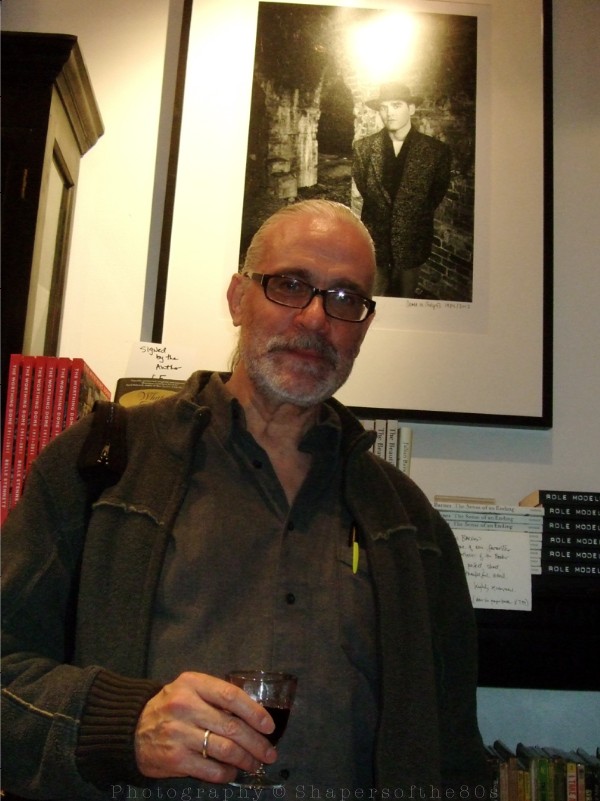
Lads insane: The Spand sax-man also known as Spiny Norman ingratiates himself with Ballet biographer Paul “Scoop” Simper at tonight’s Speed of Life book launch. Spandau’s own official photo-book is promised for 2013 from Genesis Publications. Photograph by © Shapersofthe80s

➢ Condé Nast president Nick Coleridge tells book-launch party of his teen obsession with Bowie and his encounter with Angie — Evening Standard Diary, May 9

FRONT PAGE

➤ Proustian frissons aplenty as Derek Ridgers’ photographs revisit three decades

Derek Ridgers, photography, exhibition, Society Club,Morrissey

Derek Ridgers in Soho last night: his portrait of Morrissey a bridge between two eras. Photographed by Shapersofthe80s

❚ SOME PHOTOGRAPHERS ARE as extrovert as their famous sitters, but Derek Ridgers has captured the essence of British street style and achieved a uniquely influential status by tip-toeing through the margins of life, feather-footed as the questing vole. Anyone who has followed the Punk and New Romantic scenes recognises the Ridgers types — “transient beings moving across an urban landscape, experimenters, flamboyant souls who cared more than anything about how they looked and whose greatest fear was of being ordinary”, as writer Val Williams noted in the Ridgers photobook of 2004, When We Were Young: Club and Street Portraits. His straight-up photographic style pinned those clubbing butterflies like curios into the display case labelled Swinging 80s. They trigger the involuntary remembrance of the texture of an era as readily as cake did for Marcel Proust: each image has the potential to become the “vase filled with perfumes, sounds, places and climates”.

Throughout April and May we may relish the Ridgers back catalogue in a new exhibition titled Unseen at Soho’s Society Club. The selection documents celebrities and street stylists from 35 years of commissions by music mags and national press. Here is an engaging mix of concert shots and powerfully intimate portraits in which eye-contact is key: Nick Cave, David Lynch, J G Ballard, Boy George, Tom Waits, The Cramps, Mick Jagger, plus the image of Keith Richards which is currently touring in the Sunday Times Magazine 50th anniversary show.

Another exceptionally striking portrait has the singer Morrissey eyeballing the Ridgers lens with an intense gaze that definitely says misunderstood but could just as easily be saying cussed. It was shot in London in 1985, year of The Smiths’ second album, Meat Is Murder, when Moz began raising the temperature with political views about the Thatcher government and the monarchy.

Derek Ridgers, photography, exhibition, Society Club, Keith Richards

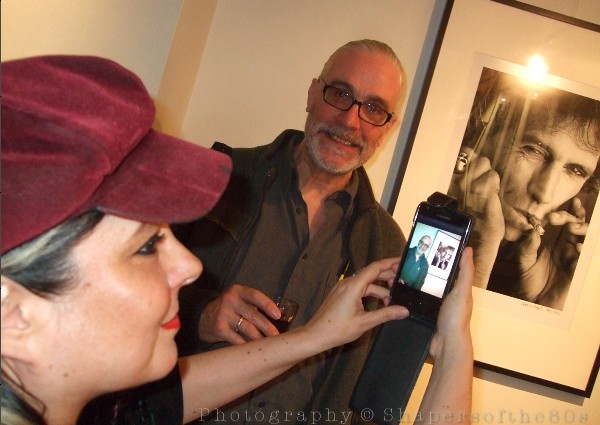
Soho last night: Ridgers, Richards and a new snapper called Tracy Jenkins. Photographed by Shapersothe80s

Ridgers said: “He’s a bit of a strain to photograph in the sense that there is so little of his personality coming back at you. Or at least there wasn’t in those days. Maybe he was very shy but he seemed taciturn in the extreme. The two times we met, he gave the impression of not wanting to say boo to a goose. He honestly hardly said a word to me. Nothing at all like the extremely opinionated personality that comes across in interviews these days.”

The two characteristic Morrisseys of then and now — the one taciturn, the other curmudgeonly — bestride three decades which completely reinvented British notions of youth culture, music, sexuality and success, yet at last night’s preview it was salutory to be pulled up by a 26-year-old illustrator among the guests who had to ask: Who was Morrissey?

All the more reason to buy ourselves a cool black-and-white print as a Proustian trigger, either directly from the Ridgers Archive or from an earlier catalogue viewable at the Society Club. Titled Previously Unpublished, this takes us from an iconic 1982 lineup of the ever-evolving band The Fall, through Culture Club, John Galliano, Roddy Frame, Tim Roth, into the 90s of the Charlatans, Ray Winstone, Lee Scratch Perry and a pensive Kylie Minogue to a raunchy Boo Delicious and more in the new century.

Ridgers has published three books of photographs, has exhibited frequently, and was a judge in How We Are Now, an online photography project launched by Tate Britain in 2007.

➢ Derek Ridgers Unseen runs until May 31 at the Society Club, 12 Ingestre Place, London W1F 0JF

➢ Previously Unpublished can be bought in various formats from Blurb, “a creative publishing service”

➢ 50 Years of The Sunday Times Magazine is viewable in Bristol, Manchester and Birmingham until June

FRONT PAGE

➤ Dan Stern keeps an eye on the street in London Fashion Week

❚ DAN STERN, A STYLE-WISE OLD OWL from the 80s, was described by his pal at LSE Robert Elms as “always a pioneer” in his book The Way We Wore. These days Stern has been making a new life as the lensman behind the year-old photoblog, Street Fashion Monitor. He claims it is “the next generation of online fashion monitoring, combining the immediacy of street style blogging with the search facility of subscription-based trend forecasting services”. Your search can be refined simultaneously by choosing from 200 categories that include the prevailing weather and accessories such as walking canes and eye patches.

Here we see some of his images of the Pam Hogg and KTZ collections shown in London Fashion Week which seek to fulfil his maxim, which is also that of Jean Paul Gaultier: “Clothes are only interesting when they are on a body in motion.” Stern believes he offers “a real insight into what people do once they purchase the garments to make them their own”.

This slideshow requires JavaScript.

➢ View more London Fashion Week pix at Street Fashion Monitor

FRONT PAGE