Tag Archives: Graham Ball

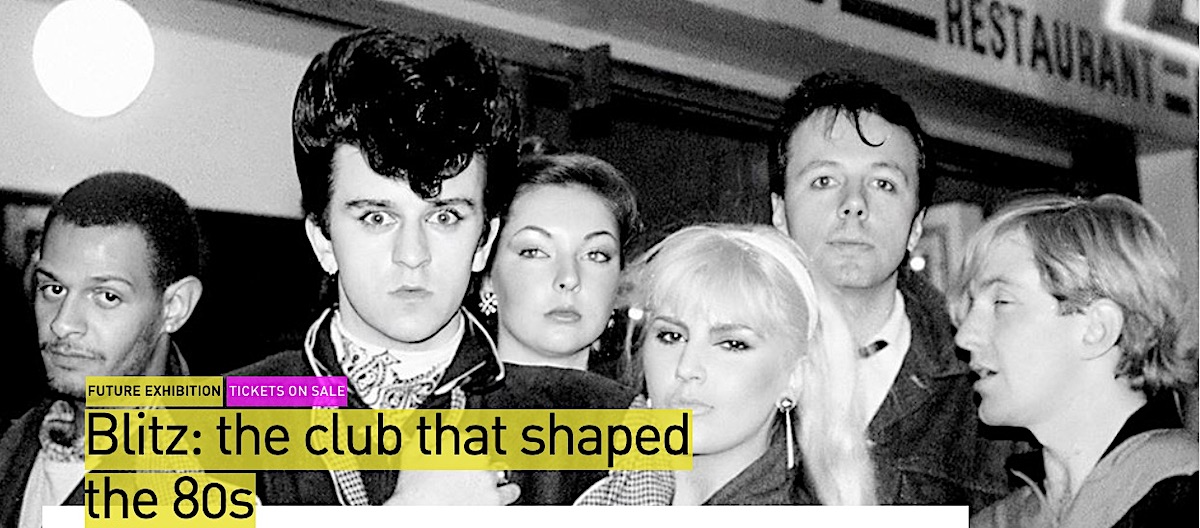
2025 ➤ Here’s an extravaganza of a show to confirm the Blitz Kids’ place in history

Blitz Kids, Clubbing, exhibitions, Fashion, influencers, London, New Romantics, Swinging 80s, Youth culture, Blitz Kids, Design Museum,

Blitz Club host Steve Strange: Posing outside his club with Visage and friends in 1979 – today promoting an exhibition. (Detail from photo by Sheila Rock)

❚ A HANDFUL OF EVER-STYLISH CLUBLAND POSERS stepped forward this week to help London’s Design Museum to announce its autumn exhibition titled Blitz: the club that shaped the 80s. It has been developed in close collaboration with the leading Blitz Kid and later costume designer Fiona Dealey, plus broadcaster Robert Elms, Spandau Ballet’s manager Steve Dagger and music executive Graham Ball, formerly one of Dagger’s firm – three clubland contemporaries who were the least like die-hard Blitz Kids! The trendy Tuesday clubnight which opened in Covent Garden’s Blitz wine bar in 1979 is best known as home to the New Romantics movement which revolutionised Eighties youth culture across fashion, music, media, film, art, design and retail.

The chapter some of us dubbed the Pose Age launched the careers of many talents, from hosts Steve Strange (who died in 2015) and deejay Rusty Egan to popstars Spandau Ballet, Visage, Boy George, Sade, Andy Polaris, and Marilyn, as well as key influencers Perry Haines, Chris Sullivan, Midge Ure, Iain Webb, and stylist Kim Bowen, couture milliner Stephen Jones and Game of Thrones costume designer Michele Clapton, deejay Princess Julia, Darla Jane Gilroy, Stephen Linard, Melissa Caplan, Judith Frankland, Dinny Hall, John Maybury, Cerith Wyn Evans, Simon Withers, Ollie O’Donnell, Richard Ostell, Paul Sturridge, Franceska King, Milly Dwit, Vivienne Lynn, Theresa Thurmer, Lesley Chilkes, David Holah and a hundred more.
Blitz Kids, Clubbing, exhibitions, Fashion, influencers, London, New Romantics, Swinging 80s, Youth culture, Blitz Kids, Design Museum,

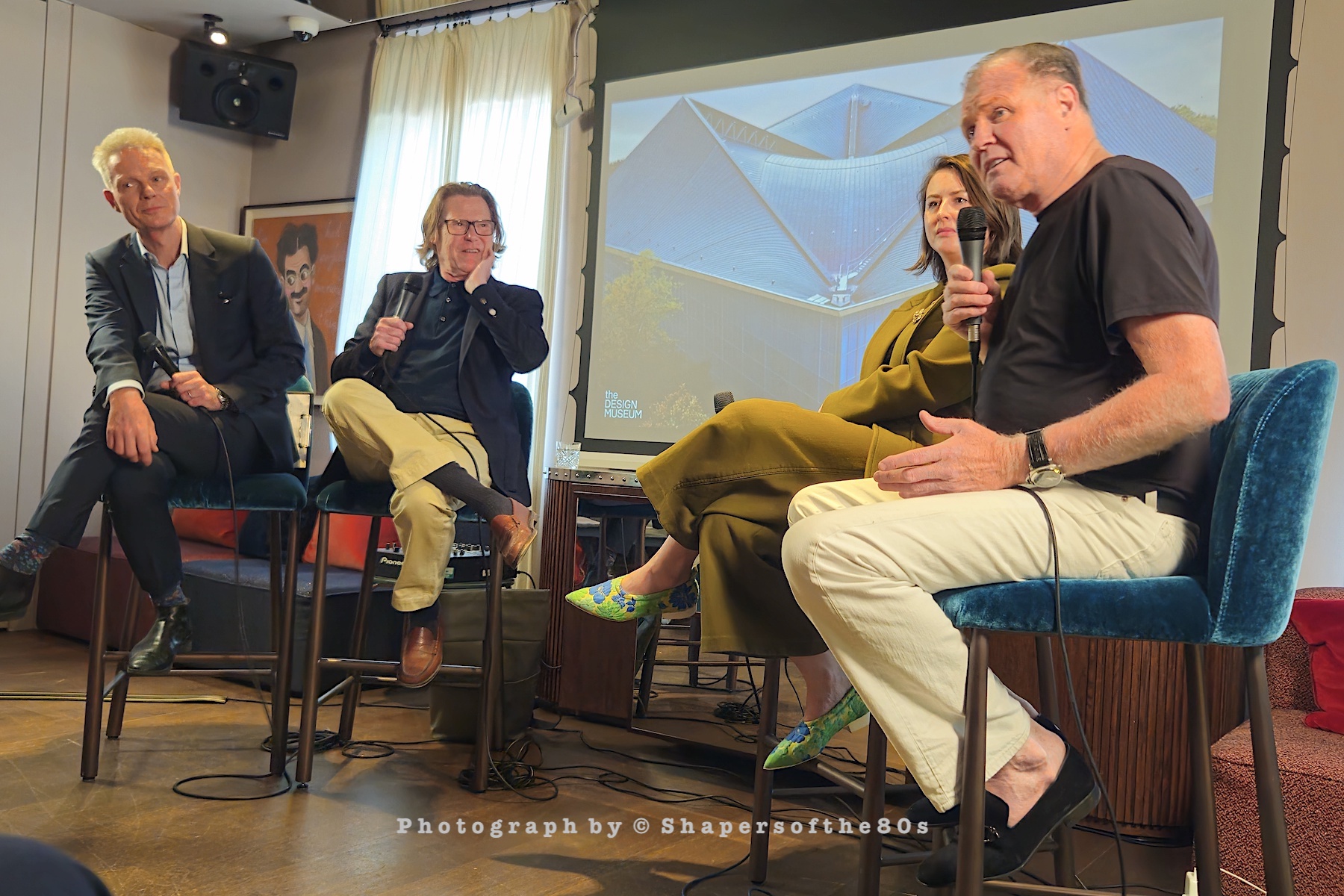
Press call: Tim Marlow, Robert Elms, Danielle Thom and Rusty Egan

The exhibition will feature over 250 items, many unseen by the public, ranging from clothing and accessories, design sketches, musical instruments, flyers, magazines, furniture, artworks, photography, vinyl records and rare film footage.

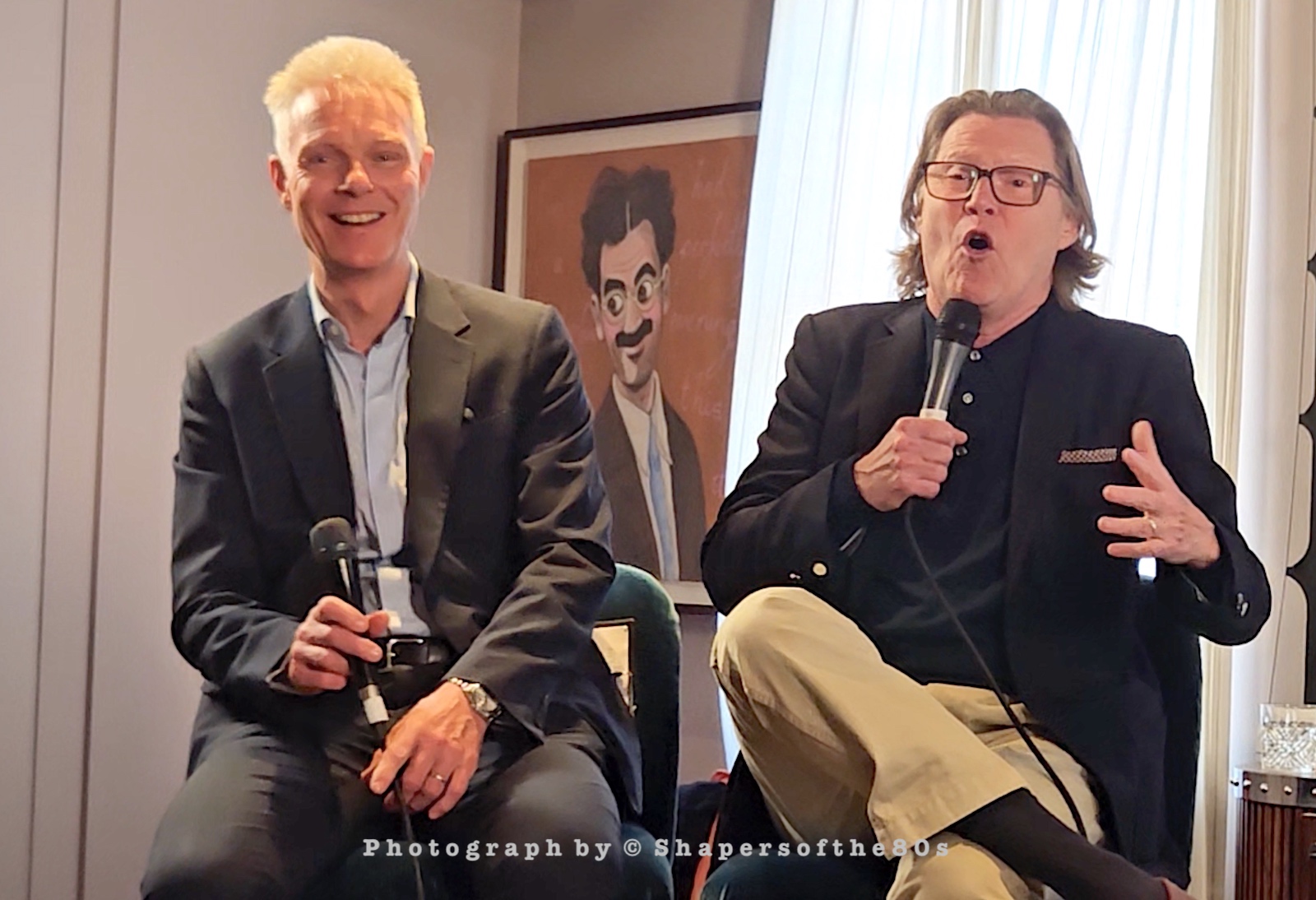
Yesterday’s press launch at the Groucho club proved one of the liveliest in a long while with spontaneous banter between the Museum director Tim Marlow, Robert Elms, Rusty Egan and curator Danielle Thom. They promised a sensory extravaganza which will surprise us when we walk into the exhibition.

Among other things, Elms reminded us how young his pals all were: “We were called Blitz Kids because we were kids, almost no one over the age of 21 – some of us 16/17… Most of us were really young and creative but also really mischievous. One of the things about the Blitz is that it’s sometimes portrayed as a bit po-faced, all these people posing – we were certainly doing that but it was anything but po-faced. It was scurrilous, dangerous, naughty, it was sexy, all those things.
Blitz Kids, Clubbing, exhibitions, Fashion, influencers, London, New Romantics, Swinging 80s, Youth culture, Blitz Kids, Design Museum,

The Last Word: Robert Elms entertains museum director Tim Marlow (not to mention Groucho Marx, at rear)

“Rusty provided this wonderful backdrop. He never played too loud, so people could dance but at the front end you could still talk. I could get Steve Dagger in my ear saying ‘We’re going to take over the world!’ It wasn’t a disco but a club in the best sense of the word, of like-minded individuals.”

Egan proved as sentimental as ever, reminding us of the legacy of the 1970s: “A hundred kids were coming in on a Tuesday night in the Winter of Discontent. It was a very miserable time, it was also really miserable to be not sure if you’re a boy or a girl but ‘Hey man, Let’s go out into the night’ – and as a DJ I played songs which said ‘He was a she and then, Hey babe, take a walk on the wild side’ … Lyrics were very important as they were for the Rolling Stones in 1977 when disco was get up, stand up, boogie oogie. We wanted lyrics.”

Elms had the last word on the Blitz as the event came to an end: “My mates were quite cool. There were a couple of hundred Herberts and urchins, over-dressed, undervalued, who actually went on to define the decade. This is our place in history and this exhibition is overdue. It’s a recognition that this wasn’t just a load of silly kids with high hair.”
➢ Blitz: the club that shaped the 80s runs from
20 Sept 2025 until 29 March 2026 at the Design Museum
in Kensington. Tickets on sale now.

FRONT PAGE

2020 ➤ Steve Dagger recalls Spandau Ballet’s fifth gig and why it detonated their lift-off

rel="nofollow"

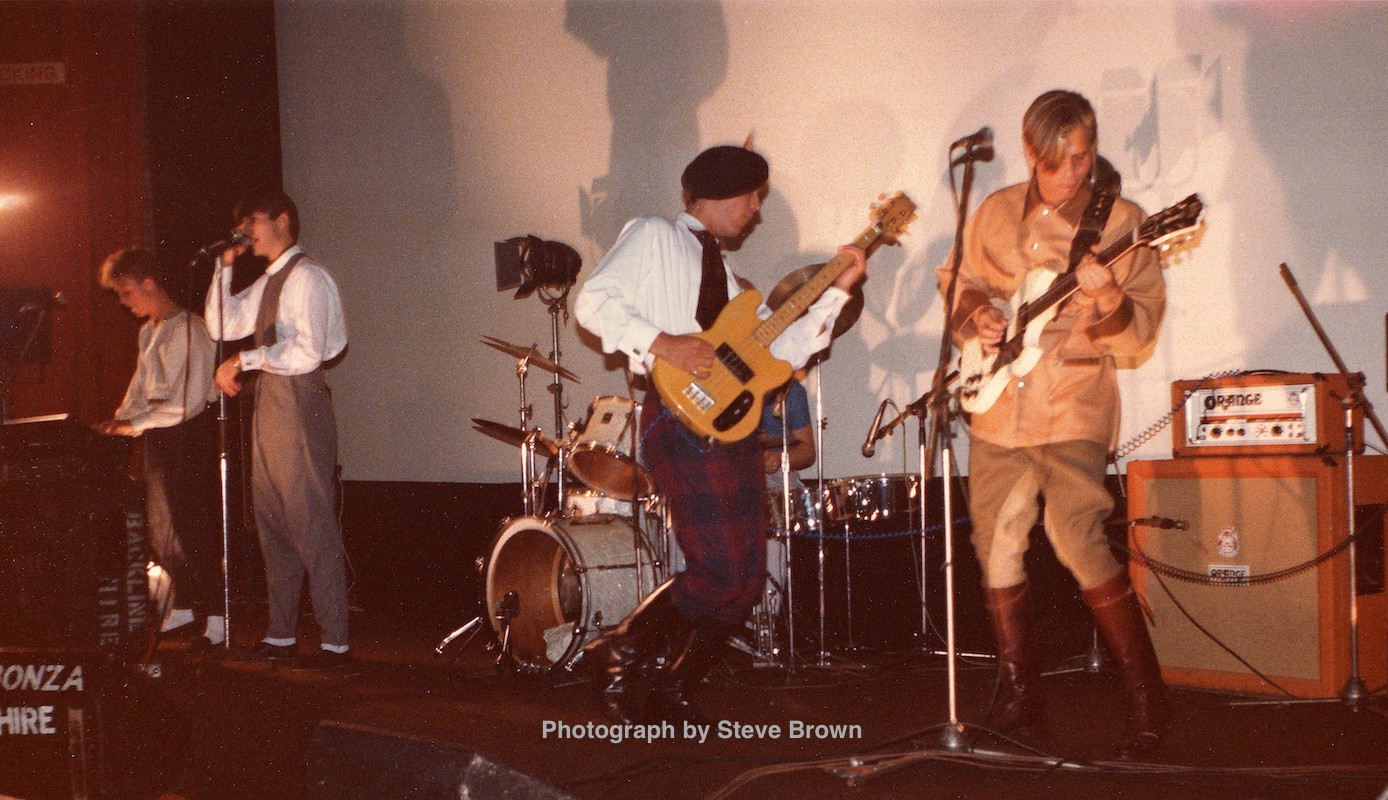
A picture from the archive: sharply styled Spandau Ballet in 1980 playing the dramatically lit Scala cinema concert that eventually brought the record companies scrambling to sign them. (Photograph © by Steve Brown, processed by Shapersofhe80s)

40
YEARS
ON

To celebrate the 40th anniversary of Spandau Ballet’s performance at the trendy Scala cinema on 13 May 1980, their manager Steve Dagger recalls how the event propelled his unsigned band towards the charts and to stardom. Prompted by the waves the band had been making, this – only their fifth live concert – was recorded by London Weekend Television and provided lift-off for the band’s ambitions.

Their first shows were always mounted in secrecy and in novel venues such as the Blitz Club in Covent Garden, which was rapidly becoming the focus for the hippest young people in London who had yet to become known as the New Romantics. The story of those sensational early days is extracted here with Steve’s permission from the full version on the band’s website.

Spandau Ballet, 20th Century Box, Scala cinema, pop music

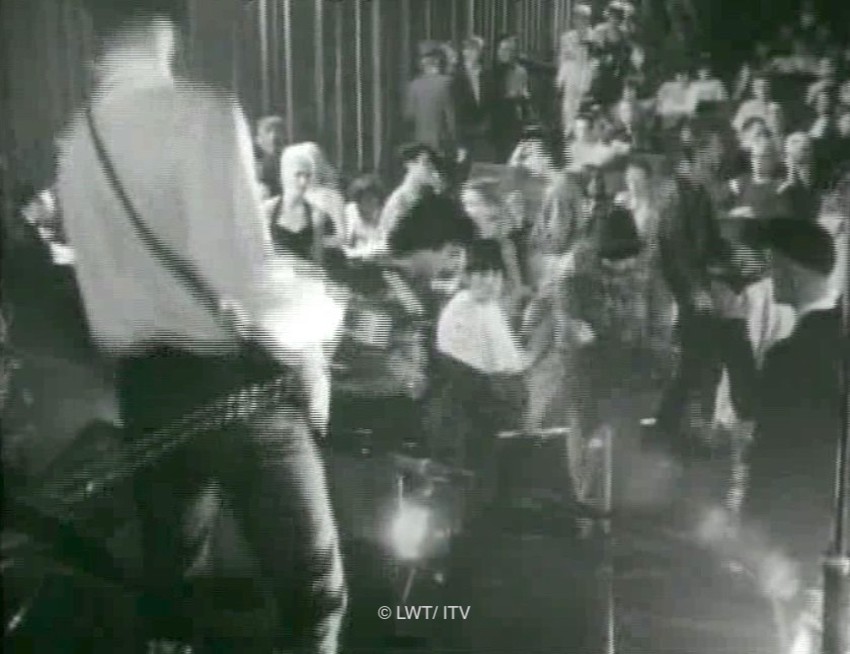
Spandau at the Scala cinema, May 1980: bass-player Martin Kemp surveys the wild dancing by the audience of Blitz Kids captured for TV by 20th Century Box

Steve Dagger writes:

❏ 40 YEARS AGO, on a warm London May evening, at the Scala Cinema, which was then situated on the rather nondescript Tottenham Street, in the heart of what is now Fitzrovia, Spandau Ballet and its previously underground sub-sect of youth culture emerged blinking into the daylight.

Steve Dagger, Spandau Ballet, live concert, pop music

Spandau manager Steve Dagger on the road with the band in 1980

Before the show, the crowd, previously not seen en-masse outside of a nightclub, spilled over the pavement clutching drinks from the nearby pub and eying each other up as they arrived, each dressed in their own highly personalised version of the heightened street fashion/plundering of the history of style/Fritz Lang vision of the future that was going to be dubbed “New Romantic” or “Blitz Kids”. All the stylistic cards were being thrown up in the air in a post-modern reset to prepare for a new decade. The event had been advertised by our version of social media, word of mouth, as were all our early shows.

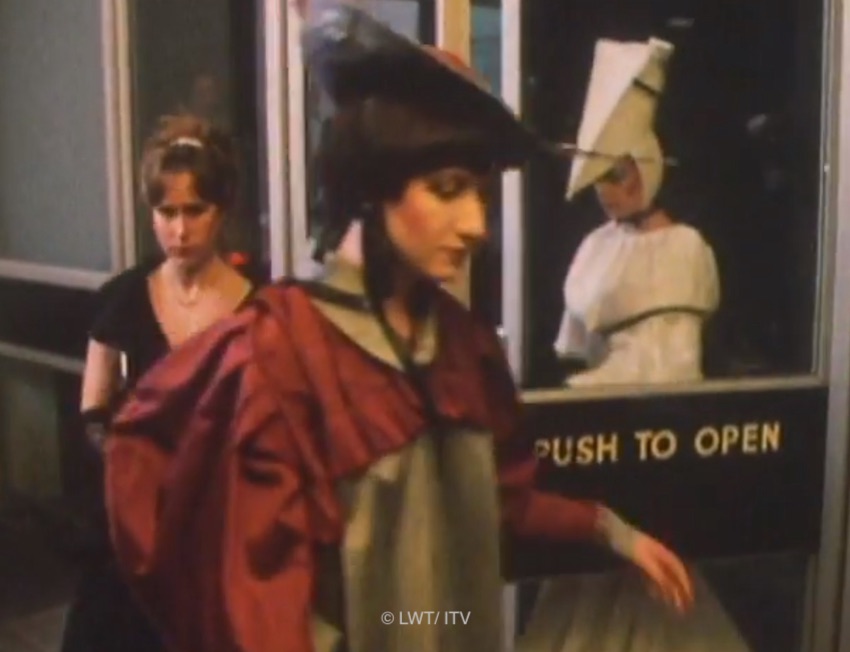
It had the atmosphere of a bizarre red carpet event before a film premiere. There was a TV crew filming and interviewing the arrivals. There were photographers recording the scene. Spandau Ballet were to play live and the performance and the audience were being filmed by LWT for a Janet Street-Porter documentary as part of a TV series called 20th Century Box. The audience was joined by various journalists, photographers and media people, including Radio 1 DJ and TV presenter Peter Powell, numerous record company execs including impresario Bryan Morrison. It was a potent mix which we could have only dreamed of six months earlier before our Spandau Ballet rebirth and was entirely consistent with our title of “The Next Big Thing” and the hottest unsigned band in the country and the new decade.

Since their first performance as Spandau Ballet at the Blitz five months earlier, the band’s career trajectory had been such that it seemed to have been fired out of some powerful pop culture cannon. A lot had happened! We had exploded from a standing start like Usain Bolt.

rel="nofollow"

Spandau at the Scala: Blitz Kids arrive in high style to watch the band perform in an auditorium for the first time, captured by 20th Century Box

At that first Blitz show in December 1979, Chris Blackwell, legendary founder and owner of Island Records – the world’s coolest record company – had approached me offering to sign the band “on the spot”. It was a hugely seductive and exciting opportunity but there was a deal to be done.

Accompanied by our newly appointed lawyer, Brian Carr, the band and I went to meet Chris at the Island HQ in London, a large relaxed converted villa on St Peter’s Square in Hammersmith. Posters and gold and platinum discs of Bob Marley, Roxy Music, Stevie Winwood and Grace Jones greeted us. Chris showed us around. He was charming and smart. It all seemed so right. For a while. He introduced us to Nick Stewart, an A&R man who was to be our point person. He had the demeanour of an army officer. I think he was a friend of Chris’s from public school. He listened to our ideas about the band – it seemed very hard to explain the band’s ethos to him. Chris was not a UK resident at the time and had a limited time in the country each year. We would be dealing with Nick day-to-day. Not good. Then they showed us the terms of the deal they were proposing.

We retired for lunch at a local Chinese restaurant with Brian to consider it. I suppose it was an OK deal for a new band, but both Brian and I thought we could do better. We went back to Island HQ after lunch and after a short discussion about the terms, on a pre-arranged cue from Brian, we turned down the deal and ended the meeting abruptly and walked out. It was spectacular! Their jaws dropped. It showed huge confidence on our part. It was a bold effective tactic. It did mean however that we were very shortly in Hammersmith Broadway, on foot, without a record contract.

Although there was a vigorous discussion about the wisdom of this move with the band and myself later that evening, so powerful was our newly acquired self-confidence everyone soon settled down. Shortly afterward Chis left town for Paris or Jamaica and although we kept in contact and he maintained interest, we didn’t sign to them. We were soon to be distracted by other suitors and opportunities.

Spandau Ballet, 20th Century Box, Scala cinema, pop music

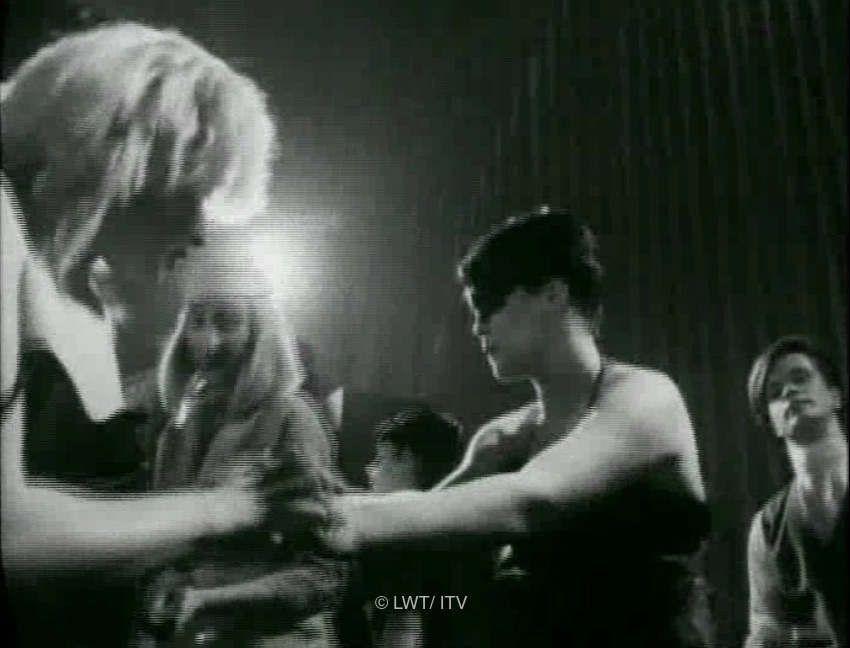
Spandau at the Scala: the moment the band began playing, the audience filled the aisles with their dancing, captured by 20th Century Box

Meanwhile, our progress continued apace. Days after the visit to Island the band played their second show as Spandau Ballet at Mayhem Studios Battersea at a multi-media event party organised by a number of our friends and now collaborators from the Blitz. It was in effect the first Warehouse Party Brand that would morph eventually into the ubiquitous rave format. There were art-house and porn films projected onto the ceiling, DJs, alcohol, drugs, Spandau Ballet and hundreds and hundreds of people crammed into a relatively small space. The combined word of mouth powers of Chris Sullivan, Graham Ball, Robert Elms and Graham Smith reached every hip club person in London. Blitz Kids, Soul Boys and Rockabillies. All soon to merge together into “Club Culture”. It was rammed.

Hundreds couldn’t get in. It was bloody chaos. The band performed and were well received, but most people that were there couldn’t see them, it was so crowded. But that wasn’t the point. The value to us was that we were for the second time in as many weeks performing at the epicentre of hipness in the new London. Even if you hadn’t seen the band or even couldn’t get in, everyone knew that Spandau Ballet had played there. It was most certainly an event.

On New Year’s Eve as the 80s started, I remember feeling utterly satisfied with the band’s progress in the last month. We were right in the sweet spot of being the coolest band in the hippest scene in London. The decade seemed to be opening up before us. Great, but what next? . . . / Continued at Spandauballet.com

Spandau Ballet, 20th Century Box, Scala cinema, pop music

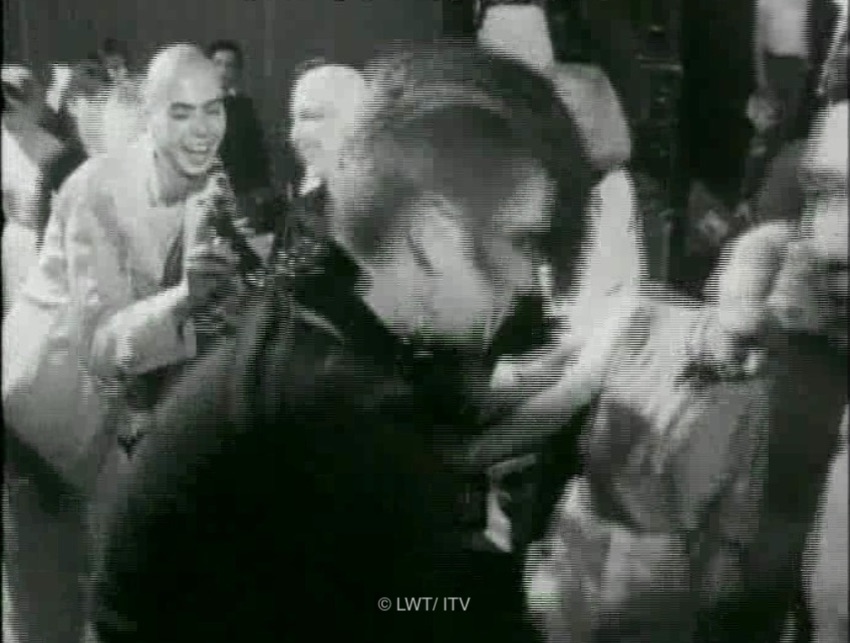
Spandau at the Scala: their audience of dancing Blitz Kids confirmed their status as the hottest unsigned band in the land, captured by 20th Century Box

ELSEWHERE AT SHAPERS OF THE 80S:

➢ A selective timeline for the unprecedented rise and rise
of Spandau Ballet

➢ Spooky or what? The amazing revelation that two bands went by the name of Spandau Ballet

➢ Private worlds of the new young setting the town ablaze

➢ Just don’t call us New Romantics, say the stars of the Blitz

FRONT PAGE

1981 ➤ Hot days, cool nights, as Blue Rondo join the new Brits changing the pop charts

Blue Rondo à la Turk , pop music, 1981

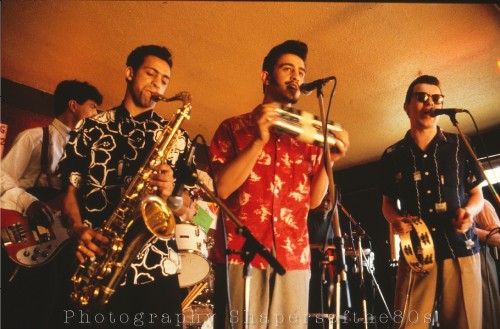
Blue Rondo’s official debut in Chelmsford, June 1981: Moses Mount Bassie, Christos Tolera and Chris Sullivan front the seven-piece. Photograph © Shapersofthe80s

◼ “GET IN THE BACK OF THE VAN,” I was told on this day 30 years ago. “You’re coming for a ride.” Graham Ball was a club host empowered to open the trendiest of doors in Soho, so “No thanks” was not an option. “I’ve got a new band to show you. And you’re not quite going to believe what you’ll hear and see.” He was, apparently, now also a manager. We arrived in blisteringly hot sunshine at a characterless modern pub in Chelmsford, Essex, well away from Soho clubland, and there of course were the rest of The Firm — the handful of sharp young dudes at least half the age of the grunters who dominated the pop industry, all being groomed by Spandau’s 23-year-old Steve Dagger to inherit the mysteries of management for a new generation of bands.

Assembling an assortment of instruments onstage were five, six, no, seven of the most variegated musicians you felt might belong in a special institution for their own safety. I had been invited to write the first piece about the craziest combo  inspired by London’s Blitz Club, which had closed the previous autumn, and by this summer they were but one among the slipstream of bands erupting on London’s burgeoning nightlife scene. From their opening vocals — “Oo-oo, aa-aa, mm-mm ah!” — Blue Rondo à la Turk were sensational, and my review appeared in the second issue of New Sounds New Styles. It took only three months before Rondo signed a deal and charted in November.

➢ Read that first review of Blue Rondo as they create a buzz with their new Latin sounds — from NSNS August 1981

This was the summer
of New Romance

Spandau Ballet, Ultravox, Duran Duran, 1981

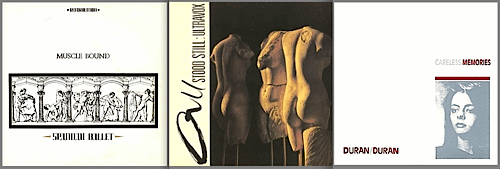
Leaders of the Romantics in 1981: Spandau Ballet, Ultravox, Duran Duran

ON THIS DAY in 1981 the UK charts were bursting with the new generation of image-conscious British groups who whose linking of soul and electro-pop were to change the style and the rhythm of pop charts for ever. . .

Ultravox were enjoying their fifth hit single All Stood Still.
Linx were enjoying their third hit Throw Away the Key.
Spandau Ballet were enjoying their double-sided third hit single, Muscle Bound/Glow. At Easter they had also signalled their new funky direction by introducing Chant No 1, which would become London’s clubbing anthem and reach No 2 later this summer.
Duran Duran were enjoying their second hit Careless Memories.
Orchestral Manoeuvres in the Dark were enjoying their second hit Messages.
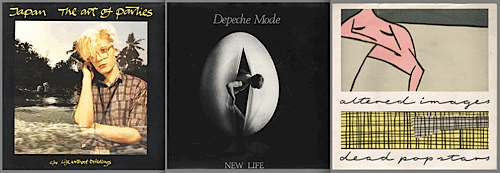
Japan were charting with The Art of Parties.
Landscape were charting with Norman Bates.
Shalamar (with honorary Brit and body-popping pioneer Jeffrey Daniel) were charting with A Night to Remember.

➢ Elsewhere at Shapers of the 80s: 100+ acts who set the style for the new music of the 1980s

Light of the World were charting with I’m So Happy.
Imagination were charting with their debut Body Talk.
The Human League entered the charts on this day with Empire State Human.
Depeche Mode’s second single New Life was soaring towards No 11.
Visage’s second hit single had just fallen out of the chart.
❏ Likewise Heaven 17’s debut Fascist Groove Thang.
❏ Likewise Altered Images’ debut Dead Pop Stars.
❏ Likewise Level 42 with their second hit, Love Games.
❏ And the honorary Brit, Kid Creole, was heading into the charts with his Coconuts and their debut single, Me No Pop I — a compulsively danceable new sound on Antilles introduced to London last year by i-D co-editor Perry Haines.

New Romantics, bands, Swinging 80s,Japan the band, pop music, Depeche Mode, Altered Images

Going Romantic in 1981: Japan the band, Depeche Mode, Altered Images

Oh, and two nights earlier at Le Beat Route I’d snapped the new boy in George O’Dowd’s life enjoying their first date. Nobody dreamt that George and Jon Moss would one day be putting together their own band.

♫ VIEW fine Northern Soul footwork from Rondo mentalists in this performance of Me and Mr Sanchez shot at the Venue in London:
+++

FRONT PAGE