Tag Archives: Books

➤ Webb’s flipside of the 80s fashion revolution as seen last night at the ICA

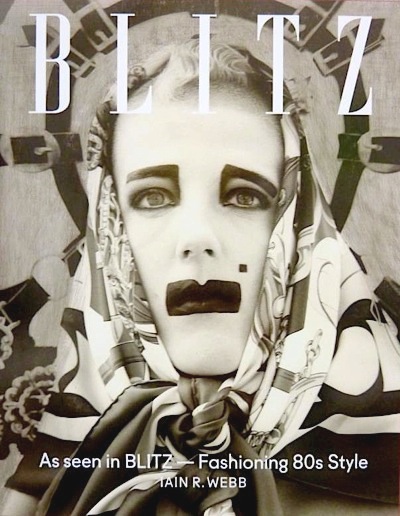
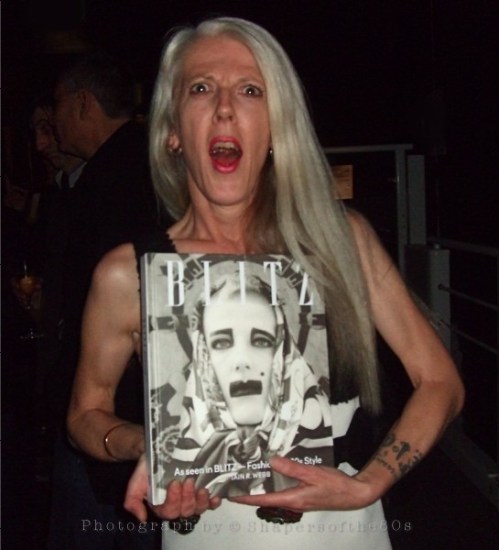
Cover girl: Scarlett Cannon at last night’s book launch . . . and covered in 1985 by photographer David Hiscock, scarfed by Hermès

CLICK ANY PIC TO LAUNCH CAROUSEL:


+++
❚ LAST NIGHT DIEHARD 80s FASHIONISTAS celebrated the launch of an elegant hardback with far greater ambitions than most coffee-table photobooks. It’s a glorious personal CV posing as one man’s record of five energetic years. It doesn’t quite knock the sensationalist Casanova off his perch as the master memoirist, but Iain R Webb’s chutzpah certainly takes your breath away.

As Seen in BLITZ, Fashioning ’80s Style is among the most unabashed, single-minded, focused works of diarism you are likely to have read. In capturing his output as a fashion journalist, this book aspires to present social history expressed through fashion. He brings a new twist to the well-tried technique of oral history, because the 100+ collaborators who contribute to this book are constantly telling the author how marvellous he is, but in the second-person singular. They are talking to “you”, meaning “me”, the author whose name appears on the cover, Iain R Webb.

Its 272 pages record a series of testimonials: “You pulled so many creative people round you” … “We did it because you asked us to” … “You jump-started my career as a photographer” … “You were one of our earliest supporters” … “You had different ways of shooting things” … “You were doing the opposite of high fashion and glamour” … “You showed me a life that was different” … “You were so beautiful and excitingly aloof” … “I would have done anything you asked” … “You were the person who ––”.

There is no place in Webb’s memoir for Eng Lit’s Unreliable Narrator, or for self-doubt or inner struggle. His worldview is confirmed at every turn. Assertion is all: The 80s – we did it my way. We, the readers, are soon rocking on our heels at the sheer brass-necked cheek of it all!

Having said which, consider the credentials of everyone involved. They amount to a Who’s Who of the fashion shapers of the 80s: Jasper Conran, John Galliano, Jean Paul Gaultier, Katharine Hamnett, Marc Jacobs, Stephen Jones, Calvin Klein, Barry Kamen, Baillie Walsh, Martine Sitbon, Princess Julia, Nick Knight, David LaChapelle and many more.

Iain R Webb, fashion,photography, books

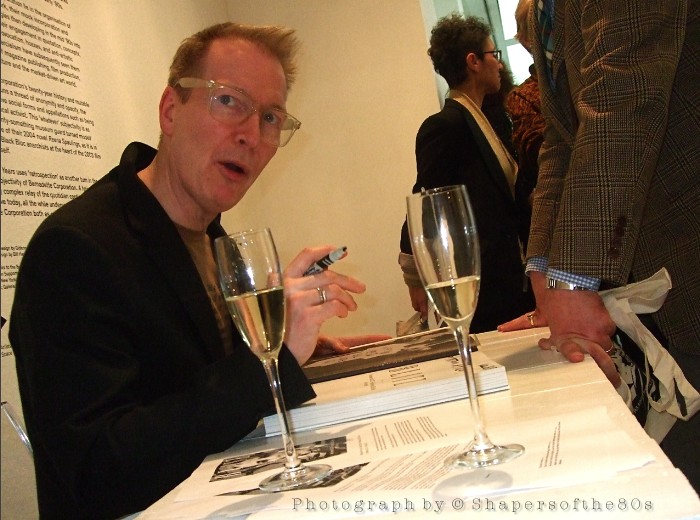
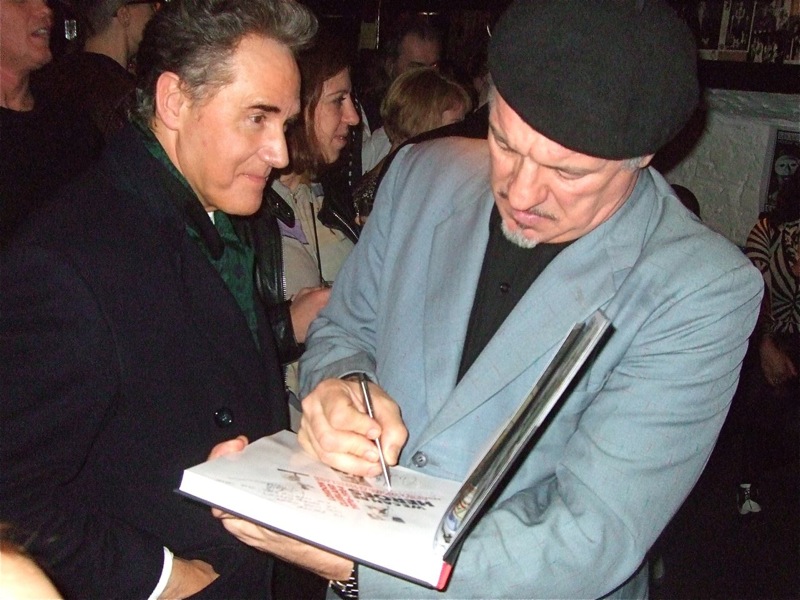
The author last night: Iain R Webb signing his book with lavish tributes to his former colleagues

We’ve heard enough about George O’Dowd’s tawdry version of events. Finally we have a much-needed corrective view of the youth cultural revolution that fired up the Swinging 80s. As Seen in BLITZ celebrates Webb’s own unique take on the decade of egotism through the pages he produced. We hear the voices of his co-stars – the photographers, designers, models and stylists who supported him as a lynchpin fashion editor – all dissecting the nuances of their subversive visions.

The whole momentum of post-punk street style during the decade’s dawn, 1980-83, is what drew the eyes of the world’s fashion industries back to Britain and put London Fashion Week on the agenda of every serious commentator twice a year.

While studying fashion design at St Martin’s, Webb was at the centre of London’s nightlife crowd at the now-legendary club called the Blitz – very much one of the 20 key Blitz Kids, as the media tagged them. He rightly claims: “At the dawn of a hedonistic club scene that saw the birth of the New Romantics … on the pages of Blitz, The Face and i-D, a new breed of young iconoclasts hoped to inspire revolution.” These were three new magazines, soon dubbed “style bibles”, which gave journalistic expression to the fertile innovations in UK pop culture and defined the era.

Blitz was a desultory magazine, almost entirely devoid of character in its early years. It was launched in 1980 with a title that its owner says seemed “catchy”, utterly oblivious to the pivotal club-night of the same name and the precocious youth-quake putting London back at the centre of the pop universe. It took until about 1983 for Webb to recognise the gap in the market for radical and purposeful fashion journalism and to infiltrate Blitz, the magazine.

Iain R Webb, As Seen in BLITZ, fashion, books, photography

Webb’s ICA launch: the author sets the style for the evening. After Godot, out of skip? I stand corrected: After Wild Boys, out of Burroughs

Webb beavered his way up to becoming its fashion editor from Feb 1985 to August 1987 and was often given 20 pages a month to be filled with his “singular vision if they were to be taken seriously”. Webb’s USP was an “ongoing love/hate relationship with the fashion industry. It was not about selling a look, it was about saying something”. He expressed his ethos on a T-shirt in a 1986 photo shoot: “We’re Not Here to Sell Clothes”. When he was headhunted to join the London Evening Standard in 1987, his shoes at Blitz were filled by Kim Bowen, Queen Bee of the Blitz Kids, herself the wildest child in the club.

Webb’s purpose, he writes, “has always been to inspire or provoke, engage or enrage” and his images “manipulated fashion to explore ideas of transformation, beauty, glamour and sex”. His book brims with attitude and evidence that the fashion world did indeed tilt slightly on its axis during the 80s – as eye-witness accounts confirm in entertaining archive interviews.

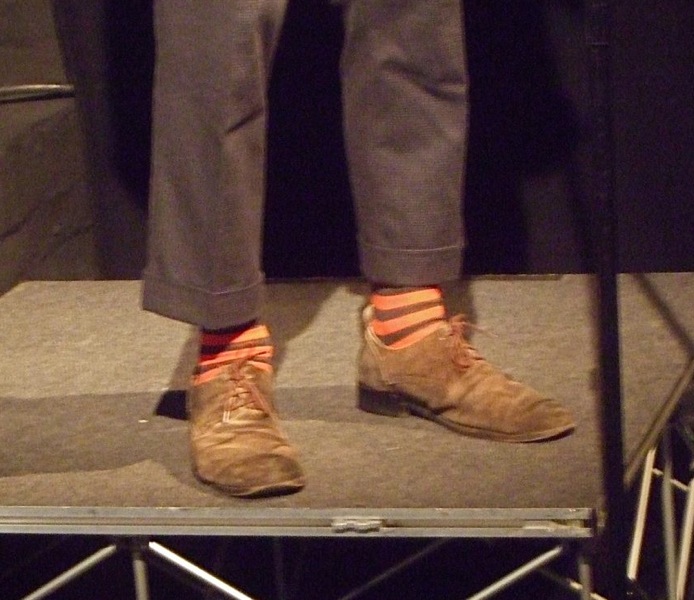
How does an author cap all this? At his launch party last night at the Institute of Contemporary Arts, the savviest fashion editor of his day sported an awkward grey suit, and a battered pair of lucky suede shoes, every inch Beckett’s absurd tramps waiting for Godot, looking to all the world as if he’d spent the night in a skip. Anti-fashion to a T. Who’d have thought Webb had once held plumb posts at Harpers & Queen, The Times and Elle? And won the Fashion Journalist of The Year Award in both 1995 and 1996. And remains Professor of Fashion at the RCA and Central Saint Martins!

Iain R Webb, As Seen in BLITZ, fashion, books, photography

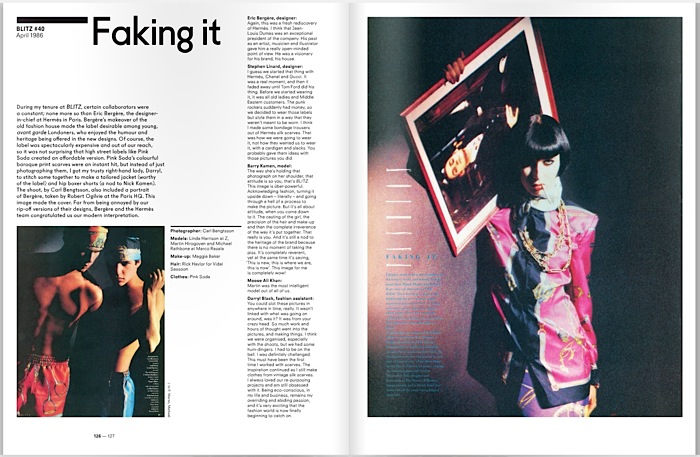
As Seen in BLITZ, 1986: classic Hermès scarves redeployed as boxer shorts and tailored jacket. Model Barry Kamen says says the female model’s attitude is so Webb, so BLITZ

❚ THIS BEAUTIFUL PHOTOBOOK, As Seen in BLITZ, precipitates a weekend of events at London’s ICA. Today there is a pop-up show in the ICA Theatre curated by the author Iain R Webb to display his own highly confessional memorabilia, plus a series of talks with special guests, film screenings.

In the darkened theatre only the 80s ephemera are visible as you enter: an array of toplit boxes on tables, containing notebooks, diary pages, sketches and name-droppy correspondence. These relics of a career lie in plain wooden showcases – “vitrines” would be an overstatement – more like pauper’s coffins. They amount to a novel kind of runway show of “my creations”. On one sheet of paper, Webb outlines his vision as fashion editor of Blitz, explaining London’s appeal: “The young English inherit a fight-back spirit, whilst the old fall sleepily into a heritage of traditional and quality goods … Of late the two have begun to merge, and the results have ensured the envy of the rest of the world.” Another note identifies the icing on a girl’s wardrobe as “an abundance of dishevelled accessorising – 1985 is a time to be ALIVE”.

➢ Webb’s As Seen in BLITZ discounted from £35 to £21

➢ The Victoria & Albert Museum exhibition Club to Catwalk: London Fashion in the 1980s runs from July 10, 2013 to Feb 16, 2014

FRONT PAGE

2013 ➤ Duran’s Rhodes exhumes a 90s art-rock project that anticipated the downside of the internet

Duran Duran, Nick Rhodes, TV Mania, albums, photography, Bored with Prozac,

Never ask an artist “Why?” An inner Rhodes and another Cuccurullo, step up to brand their new project, TV Mania

➢ Nick Rhodes will exhibit a collection of original photographic works for sale at The Vinyl Factory Soho, London W1F 7BE, March 8-April 5. The collection, entitled Bei Incubi – translated as Beautiful Nightmares – will feature 20 Polaroids, and more than 30 original photographs and prints that have all been taken and signed by Nick.

❚ THE PHOTO SHOW celebrates the release on Monday of Nick Rhodes’s new experimental electronic album Bored with Prozac and the Internet? in a collaboration with former Duran Duran guitarist Warren Cuccurullo. Originally created in the mid-90s for the Broadway stage as the music to a “bizarre TV soap opera”, the tracks tell the tale of Cathy and Ray (named from the cathode ray tube) and their two children Sassy and Snoop, a fame-hungry family who give away their freedom to scientists in exchange for reality-show fame.

Bored was culled from a collection of tunes recorded when the band were between day jobs. Using samples from such sources as The Outer Limits and the British TV show Planet Fashion, TV Mania’s pastiche of cool beats and melodic hooks proved surprisingly prescient.

“It was innocently masquerading as an art-rock project, but there was a deep concept behind it all,” Cuccurullo says. “We were envisioning a world where a family would give up their day-to-day privacy and allow their existence to be televised to the masses, and this was two years before Truman showed and four years before Survivor. Now everyone is giving away their most intimate details online and on reality TV.”

“In 1996 the internet was still in its infancy,” Rhodes adds. “I was fascinated by communication and how things were becoming more instant and this was decades before all the sites we have now to communicate in different ways.”

A few months after Rhodes and Cuccurullo finished recording Bored with Prozac, a series called Big Brother hit the airwaves. “We looked at each other in absolute disbelief,” Rhodes says. “It was an idea that was in the ether at the time. We decided to lock it in the bottom drawer whilst we changed the story.”

➢ More details at TV Mania’s website

TAYLOR’s TALE FROM LOST SOUL TO HUMAN BEING

 John Taylor, Duran Duran, interview, books, video, In the Pleasure Groove,

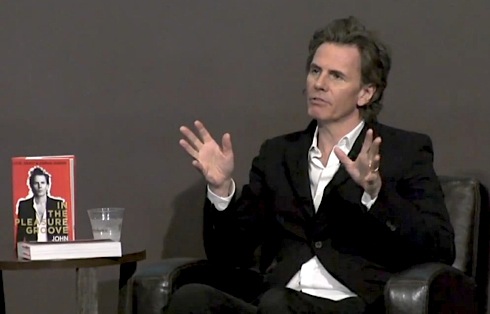
John Taylor grilled for Google… Click on pic to run video in another window

❏ Also published today: John Taylor bassist and cofounder of Duran Duran can now be seen on video visiting Google Los Angeles last November to discuss his frank autobiography In the Pleasure Groove: Love, Death and Duran Duran. [Click on the pic to run video in another window]

Taylor tells his audience: “I have to fight to hold onto my memory these days, because there’s so much info coming at me… I started formulating an idea for the book, which is in three parts. There’s growing up in the 60s in the Midlands of England and becoming ‘John’… It’s a coming-of-age book, watching this little kid, an only child, and how he got into music. I had to find it for myself, at that time, 12-13-14, where the desire to remake my identity was so strong, and music in the UK had a lot of very strong personalities: David Bowie, Freddie Mercury, Rod Stewart, Bryan Ferry. And for a kid who was not really connecting with school, I started connecting with these guys.

“The second section is hysteria and that’s really about the first five years of the 80s, this wild ride Duran Duran took. Then the third part is about becoming an adult human being … some of the more profound highlights of the last 15 years: losing parents, gaining children, marriages, divorces, all of that sort of real-life stuff. But through the lens of an ex-popstar.”

FRONT PAGE

➤ Webb lays bare the subversive story of British fashion in the 80s

Scarlett Cannon ,Iain R Webb, books,As Seen In Blitz, Fashion, 1980s,Style,Blitz Kids

80s club host Scarlett Cannon wears Hermes on the cover of Iain R Webb’s new book: “One of the things I love most about this photograph is that David just drew around Scarlett and darkened the background with a pencil to make her stand out more.” (Photograph by David Hiscock. Make-up, William Faulkner)

❚ FINALLY A BOOK ABOUT THE 80s without George O’Dowd’s face on the cover! Here comes the other version of the Swinging London of 30 years ago, created by the fashionistas, rather than the music entrepreneurs, and the face of Cha-Cha club host Scarlett on the cover defines another version of events exactly. It comes just in time to chime with the V&A’s second landmark exhibition this year. From July 10, following the Bowie extravaganza, comes Club to Catwalk: London Fashion in the 1980s, which includes a display of denim jackets commissioned in 1986 by Blitz magazine from key London-based designers. Who better to sort the Who’s from the Who Nots than one of the seminal clubland Blitz Kids, Iain R Webb.

During those fertile years in the re-energising of the capital’s youth culture through nightlife, when he shared a flat with fellow St Martin’s design students Fiona Dealey and Stephen Jones, Webb says his peers were “cultured clubbers – our aim was to push the parameters and explore the ideals of glamour, imagery, sexuality and taste. We were determined to challenge the status quo and maybe even change the world, even if ‘just for one day’.”

Iain R Webb,Blitz Kid, fashion, journalism

Webb: from Blitz Club to The Times

Having studied fashion at St Martin’s, Webb says he “fell into writing” and went on to become fashion editor of Blitz magazine, the Evening Standard, Harpers & Queen, The Times and Elle.

This week his new book, As Seen In Blitz: Fashioning 80s Style, went off to the printers, to be published in April by ACC (272 pages, £27.30 pre-order price). With previously-unseen archive content and much oral history from key designers, it chronicles the fashion pages Webb created for Blitz magazine 1982–87, after the New Romantics fad had died the death. Webb’s subversive images gave free rein to the imagination and involved a global cast of designers including Comme Des Garcons, Jasper Conran, John Galliano, Jean Paul Gaultier, Katharine Hamnett, Hermes, Pam Hogg, Marc Jacobs.

Blitz magazine,fashion,style,1980s, London, pop music

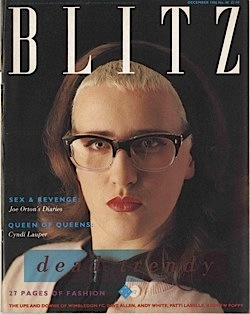
Blitz December 1986: Dead Trendy fashion special. Martine Houghton photographed by Gill Campbell. Make-up, Gregory Davis. Hair, Rick Haylor

Webb says: “The book has over 100 contributors – designers and photographers from the Bodymappers to Nick Knight, and loads of models, make-up and hair peoploids in between.”

At its launch in 1980, Blitz magazine posed little threat to the fondly remembered Face magazine, which majored on music and style. Blitz wandered a disparate social world of its own well to the west of the Soho trendsetters – but eventually, under the influence of Webb, photographer Knight and other cool arbiters of taste, it gradually clicked into the Swinging London groove that saw the UK capital become a crucial stopover for the world’s media and buyers during the biannual round of international fashion shows.

Webb himself went on to win the Fashion Journalist of The Year Award in 1995 and 1996. Today he consults for the Fashion Museum in Bath and is a visiting professor at Central Saint Martins, LCF and the RCA.

FRONT PAGE

2012 ➤ Soho’s nightowls revisit the club that sifted the Artex monkeys from Bowie’s Heroes

Cultural observer Peter York: eager for the Sullivan autograph on the new edition

❚ THE 80s BLITZ KIDS turned out in force last night. As Kitten Kouturist Franceska Luther King remarks today: “an elegant crowd, older, but still the same spirit.” Those clubbing compulsives who defined the sounds and styles of Soho 30 years ago, swarmed into the tiny steaming Artex-lined cellars of the St Moritz restaurant, the fit all the tighter thanks to a fair few middle-aged paunches. For three months in 1980 this was the site of their milestone one-nighter which signalled the first faction to break away from the futurists at Steve Strange and Rusty Egan’s pioneering electro-diskow, The Blitz. In host Chris Sullivan’s words, this was “the more alert end of the Blitz crowd” – in other words, the hardcore fashionistas.

Initially St Moritz’s music evoked interwar Berlin cabaret but the effect of Charles Fox, the theatrical costumiers, staging its closing-down sale in Covent Garden injected a huge Hollywood movie wardrobe. Sullivan notes:  “You could be a gangster, a geisha, or Geronimo.” The New Romantics had been born – just like that!

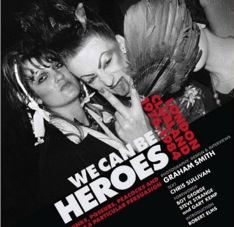
“No single shop sale ever had such an influence on street fashion before or since,” Sullivan writes in the fabulous photo-book, We Can Be Heroes. This ribald account of the dawn of UK clubbing in the 80s, led by the eye-popping photographs of Graham Smith, was the reason for last night’s beano. Soul-music diehards Smith and Sullivan graduated from The Blitz to become two of the St Moritz deejays (along with Robert Elms and Steve Mahoney) and half a lifetime on they were hosting yet another launch party. The book’s revised and amended second edition of 2,500 copies is released this week through regular retail outlets. Copies of last year’s limited edition are still available from the fund-it-yourself publisher Unbound.

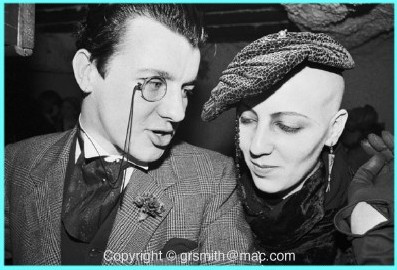
St Moritz 1980: Chris Sullivan and Michele Clapton – from Smith’s book We Can Be Heroes

Back in the day, the St Moritz posse distinguished themselves from The Blitz by playing retro lounge-lizard tunes from Lotte Lenya or Nat King Cole. In today’s arts pages of The Times Sullivan recaps how, in their efforts to avoid the present, he and his cohort helped create the future: “We decided to oppose Blitz futurism and turn the clock back with music from Marlene Dietrich, Monroe, Sinatra and soundtracks from A Clockwork Orange, Last Tango in Paris and Cabaret. It was an alarming success.”

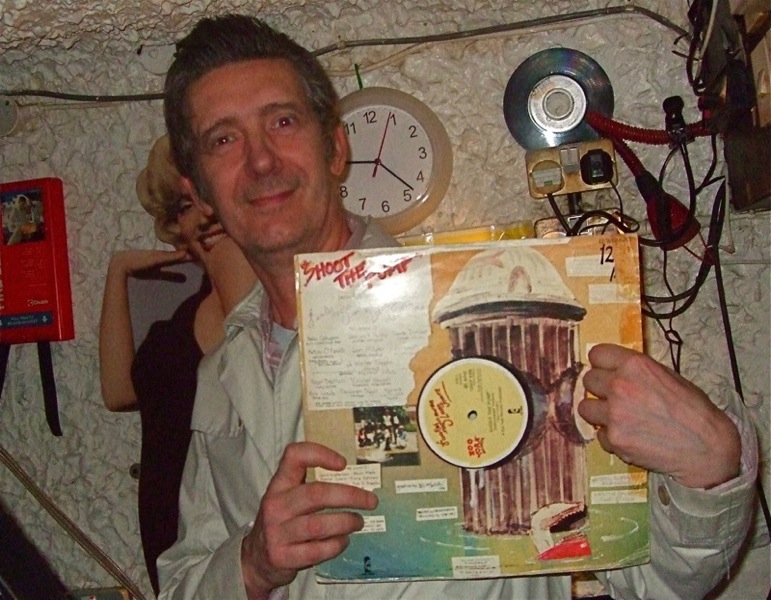
Rob Milton: Shooting the Pump in the deejay booth

♫ Click to hear Shoot the Pump in a new window

Fashions in music moved apace. Within a year successive London club-nights at Hell, Le Kilt and Le Beat Route were stirring into the club mix not only familiar 70s soul but the edgy new urban sounds of North America.

Choosing the soundtrack last night at St Moritz were the were the astute ears of David Hawkes, Christos Tolera and Sullivan himself, plus Dirt Box co-founder Rob Milton, who raked the dancefloor early in the evening with the crazed beats of Shoot the Pump. This intoxicating debut single from 1981 was a state-of-the-art fusion of emergent street sounds – rap, hip-hop and funk with a hint of mutant disco – from the “playin’ brown rapper” and graffiti artist J Walter Negro & the Loose Jointz (on Zoo York Records via Island). J Walter is urging his crew of Zoo Yorkers to spray docile citizens with the water from a fire hydrant: “You make like a monkey with monkey wrench, cos you feel a little funky, got a thirst to quench.” In 1980–81, something similar was pumping the adrenalin in London.

CLICK ANY PIC TO LAUNCH CAROUSEL:

FRONT PAGE

➤ Another knees-up while Amazon discounts We Can Be Heroes second edition

The reviewers said: “A gorgeous history of 80s London clubland” (Alex Petredis, Guardian) … “fascinating and definitive” (Robert Spellman, Sunday Express)

Graham Smith,Chris Sullivan, books,photography, youth culture, We Can Be Heroes , Swinging 80s, clubbing❚ TOMORROW SEES ANOTHER launch party, this time at 1980’s breakaway New Romantics nightspot St Moritz in Soho to celebrate publication of the second (unlimited) edition of the 320-page coffee-table photobook that chronicles the creation of 80s clubbing through Graham Smith’s eye-witness photography, and racy commentary from Wag club host Chris Sullivan. Read the full background to the characters behind the book We Can Be Heroes at Shapersofthe80s. On sale for £35 from its publisher Unbound, or discounted to £25.50 at Amazon (an even cheaper pre-publication offer has finished).

➢ View Shapersofthe80s’ videos of Chris Sullivan telling his “Ribald tales of excess” from the Blitz era

➢ More 80s yarns on video from Robert Elms

➢ Catch-up list of links to all last year’s publicity shenanigans

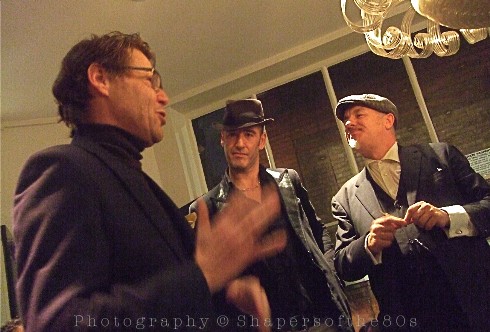
Making up the rules of 80s clubbing: Robert Elms, Phil Dirtbox and Chris Sullivan at last year’s exhibition of Graham Smith’s nightlife pictures. Photograph by Shapersofthe80s

FRONT PAGE