1983 ➤ A turning point in David Hockney’s vision of the world

rel="nofollow"

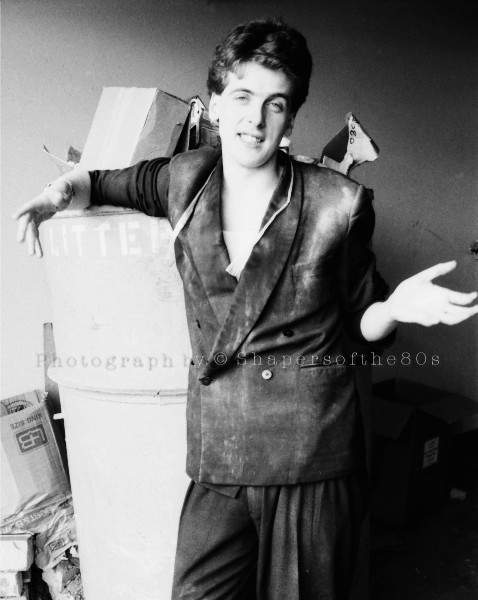
Hockney wielding his Pentax in London, July 10, 1983: having devoted two years to photography, in this his second week on a trip to Britain, a further new canvas in the studio confirms a return to painting. Photograph © by Shapersofthe80s

❚ 30 YEARS AGO THIS WEEK the British painter David Hockney made a discovery so monumental that he called it “a truer way of seeing”. I’d gone to interview him about the education cuts Margaret Thatcher was inflicting on British art schools and found myself receiving an exhilarating tutorial while the artist tested his new ideas.

“Have you been to the cubism exhibition at the Tate?” Hockney enthused during a trip to London from his home in Los Angeles. “I’ve been seven times! Suddenly I see cubism differently, more clearly… That’s what I’m only starting to grasp. Cubism is about another way of seeing the world, a truer way. But the moment you grasp it, you can’t give it up.”

Photography had preoccupied Hockney for the previous couple of years and in the week of his 46th birthday, we’d met at a Cork Street gallery during the hanging of his show New Work With A Camera, fresh from its Los Angeles run. Yet on two visits to his Kensington studio that week, fresh canvases on the easel signalled that Hockney had returned to painting. He said: “I had to deal with the ideas that are bubbling away. Cubism is hard enough to grasp, but it’s even harder to do, which actually is why not many people have been able to do anything with it. Starting to paint again is very refreshing.”

Four days later when the resulting interview appeared in the London Evening Standard, he’d been again to the Tate and said on the telephone: “Your article is pretty much the first time I have talked about this – of course I’ve discussed these things with friends but the article does make it clear to people.”

rel="nofollow"

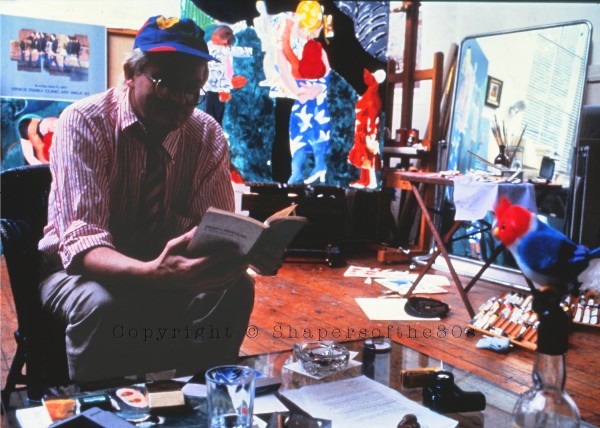
Hockney with fresh paintings in his London studio, July 3, 1983: so keen to deal with his new ideas, he reads aloud from a book about Marcel Proust’s theories of vision. Photographed © by Shapersofthe80s

He added: “You must go to the Tate retrospective [The Essential Cubism], it’s marvellous. You go from one cubist picture to another and another. In other galleries, like Moma, you might have one cubist room but go to the Tate show because you’ll never see so many cubist paintings together again. I found I began to develop this way of seeing them, it’s very rich. You do have to stand in front of the Picassos and spend time looking. When you’re physically in front of a cubist painting, once you start looking, especially the early analytical ones, it slowly reveals itself. It doesn’t pounce off the wall.”

The next day, when I returned to his studio with a camera, Hockney had begun yet another huge cubistic canvas which seriously took the breath away. It was a privilege to view the unfinished paintings with their images outlined in charcoal and he remarked that few people get to see inside the studio. I made sure to snap the 1,001 mementoes and influences scattered throughout the space suggestive of a restless imagination. The three substantial conversations I was fortunate to enjoy that week remain a turning point in my own appreciation of art. By a stroke of fate, my presence had provided the artist with a sounding board at the very moment when he urgently needed to kick around some bold new thoughts.

➢ Click through to read the full fascinating interview with Hockney, in an elision of two pieces first published in the Evening Standard, July 8, 1983, and The Face, Sept 1983

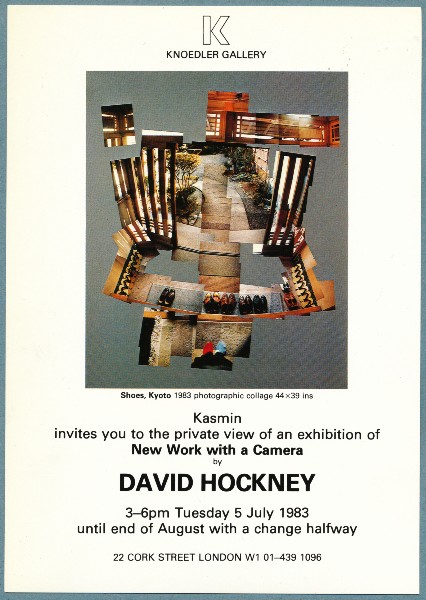
David Hockney,New Work With A Camera, photography, London, 1983

Fresh from its Los Angeles run: Invitation to Hockney’s latest show of three-dimensional photo collages in London, 1983

FRONT PAGE

➤ Babyboomers at war with their kids: sad fact of recession or generational theft?

generation gap, guilt, citizenship, babyboomers, Moral Maze,

“It’s war!” – Babyboomers v. their kids

➢ Moral Maze, June 26 – catch up on iPlayer:

They’ve been called the Dick Turpin generation but time could be up for the babyboomers this week as the Chancellor announces spending cuts and universal benefits, like free bus passes and winter fuel payments for rich pensioners, start to look tempting targets. But for some this is more than just an argument about balancing the books – it’s about inter-generational equity. Instead of being custodians of future generations the babyboomers are accused of busily raiding their kids’ piggy-banks, saddling them with a vast and increasing national debt to fund for their own generous pensions and welfare payouts.

❏ The knives were out in last night’s combative episode of Radio 4’s Moral Maze, the weekly debate chaired by Michael Buerk. With Anne McElvoy, Giles Fraser, Matthew Taylor and Melanie Phillips. Witnesses: Ros Altmann, Former Director-General of Saga; Angus Hanton, co-founder of the Intergenerational Foundation; Ed Howker, co-author of Jilted Generation: how Britain has bankrupted its youth; and Stuart Prebble, producer of Grumpy Old Men TV series and books.

VOCABULARY FOR THE ZEITGEIST

“grumpy babyboomer”… “generational theft”… “generational guilt”… “generationally selfish”… “inter-generational equity”… “income imbalance”… “politics of envy”… “power of the grey vote”… “transfer of reserves”… “stewardship”… “compact of citizenship”… “human sustainability”

A REMINDER OF HOW EASILY WARS BEGIN

FRONT PAGE

➤ Bowie ’n’ Lexi papped taking Serenissima taxi

The Bowies’ day out: beaming from ear-to-ear, Lexi and friend climb aboard a water taxi in Venice yesterday

The Bowies’ day out: beaming from ear-to-ear, Lexi and friend climb aboard a water taxi in Venice yesterday

➢ David Bowie with daughter Lexi in Venice
– from today’s Daily Mail:

He’s scarcely seen out in public and is known for his somewhat reclusive lifestyle. But David Bowie made a rare appearance with 12-year-old Lexi – the star’s daughter with supermodel wife Iman – as they were spotted hopping on board a Venetian taxi boat to explore their holiday destination… And Bowie looked a far cry from his usual zany stage appearances in his holiday outfit… / Continued at Mail online

Bowie the holidaymaker: green button-down shirt, jeans, trainers, straw fedora, dark shades and man bag slung across his shoulder

Bowie the holidaymaker: green button-down shirt, jeans, trainers, straw fedora, dark shades and man bag slung across his shoulder

FRONT PAGE

➤ Book now for the Bowie finale – if you can

❚ DAVID BOWIE IS A LIVE NATIONWIDE cinema event

 at 7pm on August 13 as the finale to the V&A’s successful exhibition, when special guests offer insights into the stories behind the artefacts from the Bowie Archive.

Picturehouse Entertainment, V&A,Martin Roth ,cinema ,event

s, , David Bowie Is,It is to be screened in 19 UK cinemas named today by Picturehouse Entertainment. 
Members’ priority booking started from today Monday June 24, and the public get what’s left on Friday June 28. So if we are to judge from the V&A’s track record of Bowie-related talks and special events at the Museum itself, this will mean none at all.

V&A Director Martin Roth is deluded if he thinks – as his quote suggests in today’s announcement – that he is reaching “the widest possible audience” when tickets to these 19 tiny cinemas are on sale for four priority days to V&A Members and Picturehouse Members, before being offered to Joe Public.

The biggest cinema at Greenwich Picturehouse, for example, seats only 174 people! “Wide” that is not.

❏ Update June 24 – the Victoria and Albert Museum replies: “We will be announcing further cinemas on Friday when all tickets go on sale. It will be screened at over 200 cinemas nationwide – the first 4 days of booking are Picturehouse Cinemas only. Do check back on the website for new cinemas as we confirm them.”

❏ Shapersofthe80s comments: At a generous estimate, then, going by the Greenwich auditorium, this event might eventually be seen at 200 cinemas by up to 4,000 people. The V&A claims that the Bowie exhibition itself has received nearly 200,000 visits – so it’s an absurd imaginative leap to suggest that a further 4,000 people represent “the widest possible audience”. His marketing department should choose museum Director Martin Roth’s sound-bites for him with more care.

Tickets for Joe Public are apparently only available direct from participating cinemas – not online – from Friday 28th priced £10–£14 and do not yet appear on the museum’s map. Fans lucky enough to be in fulltime employment on Friday will thus have to wait till Saturday morning to hightail it to the selected cinema in their nearest big town. Do any of these museum people lead real lives?

FRONT PAGE

1980 ➤ Club to Catwalk: when fashion became an arena for all the arts

V&A ,fashion,Club to Catwalk , BodyMap, Scarlett Cannon, Monica Curtin,

Monica Curtin’s 1985 pic of Scarlett Cannon as “key identity” for the V&A Club to Catwalk show… Outfit by BodyMap’s AW 1984 collection, Cat in the hat takes a rumble with a techno fish. Stylist John Derry-Bunce. Background painting Simon Josebury. Hair and makeup Jalle Bakke

❚ “FASHION???” SCOFFED THE FASHION EDITOR of a leading women’s magazine who shared my flat in 1980, after meeting one of the more ornamental Blitz Kids over our breakfast table. “Those aren’t even clothes!” Yet within five years she was as keen as every other editor to be featuring BodyMap, Galliano, Jones, Auburn, Hogg, Hamnett, Bernstock Speirs et al. Scroll forward 30 years and London’s world-beating decorative arts museum, the V&A, weighs in with a necessary exhibition reappraising the UK’s style revolution of the 80s. What’s coming under scrutiny in its dedicated fashion galleries are the unique silhouettes of that extravagant shape-shifting decade and the clubland forces that moulded them. Only two weeks to go before Club to Catwalk, London Fashion in the 1980s, and there’s one crucial tipping point at its heart: the moment fashion became style.

Let’s hand over to fashion guru Iain R Webb, one of the central figures who defined his generation and whose impressive book As Seen in Blitz was published last month. Here’s a taste of the mighty personal essay he has written for the summer issue of the V&A Magazine…

V&A Magazine summer issue: the 80s deconstructed by Iain R Webb

V&A Magazine summer issue: the 80s deconstructed by Iain R Webb

Webb writes: “ The 1980s were all about being photographed. We dressed as if every day were a photo shoot and every night a party (it usually was). But there was another revolution happening.

The advent of the stylist who approached fashion as an artistic construct was something new. Alongside the contributors to BLITZ, The Face and i-D (Ray Petri, Judy Blame, Caroline Baker, Helen Roberts, Beth Summers, Simon Foxton, Mitzi Lorenz, Maxine Siwan and Caryn Franklin among them) were two thought-provoking arbiters whose importance is often overlooked. Michael Roberts at Tatler and Amanda Grieve at Harper’s and Queen added a subversive edge to their respective glossy titles. Roberts poking fun at old-school mores while Grieve (later Harlech) befriended St Martin’s graduate John Galliano and helped create the romantic whirlwind that shaped fashion for decades to follow.

Club to Catwalk, exhibition, London, Fashion,1980s, V&AThe images produced by all these stylists merged fashion and art, questioned the accepted ideals of beauty and social status and enjoyed a sense of experimentation. Their vanguard imagery often highlighted specific issues such as the superficiality of fashion and consumerism with humour.

“At that time there was a group of stylists who were as creative as the designers, if not more so,” remembers PR Lynne Franks, who represented BodyMap, Katharine Hamnett and Wendy Dagworthy. “It prompted the question: What came first, the styling or the clothes? It was very spontaneous, like playing dress-up.”

Stefano Tonchi, editor of W magazine, then editor of Westuff, an alternative style periodical published in Florence, says: “Fashion was no longer fashionable. Style was used to describe many areas of the creative arts that came together. It made for a new category. Music dictated a lot of the emerging trends and there was experimentation in both photography and graphic design, but fashion was where these exciting changes were most evident. Think of the BodyMap fashion shows, they weren’t just about the clothes but involved music, graphic design and theatre… ”


➢ Revolt into Style Revisited: continued at Webb’s blog

V&A ,fashion,Club to Catwalk , BodyMap, Scarlett Cannon, Monica Curtin,

Showing in Club to Catwalk: Cotton dress by Willy Brown, 1980… Fallen Angel suit
 by John Galliano,
1985. © Victoria and Albert Museum, London

➢ Elsewhere at Shapers of the 80s: Eight for ’84 –
BodyMap flavour of the season topping the labels international buyers tip for success

Above: Needlessly doomy spin-off video from the V&A exhibition
Club to Catwalk in 2013

FRONT PAGE