➤ Nick Davies declared “the greatest living British journalist” as Carl Bernstein declares “Murdoch’s Watergate?”

 Nick Davies, News of The World, phone-hacking, journalism

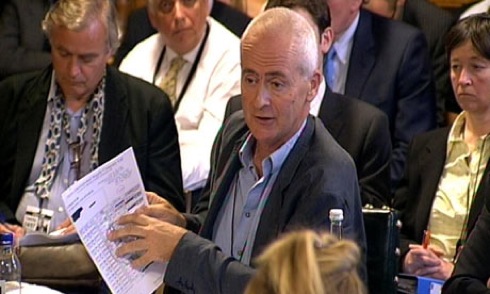
The Guardian’s Nick Davies: giving evidence to the Commons media committee in 2009. Photograph by PA

◼ BRITAIN’S BIGGEST-SELLING NEWSPAPER, the tabloid News of the World, closes tomorrow, a victim of its own phone-hacking scandal. First published 168 years ago, this hugely powerful title became the most toxic media brand in the land, all within the week. And much of the cause was down to the work of one investigative journalist, Nick Davies of The Guardian newspaper.

“ I have no doubt at all that Nick Davies is the greatest living British journalist ” — Peter Oborne, chief political commentator on the rival newspaper, The Daily Telegraph, speaking on Radio 4 tonight

➢ Listen to Jonathan Maitland’s profile of Nick Davies,
on BBC Radio 4 (July 9 and on iPlayer)

➢ “Cameron is in the sewer” — Peter Oborne at his
Daily Telegraph blog

Nick Davies is considered one of Britain’s leading investigative journalists. 
He has broken numerous stories, mostly for The Guardian. His scoops include the story about the nurse turned serial child murderer, Beverley Allitt, and the recent WikiLeaks revelations in classified US military and diplomatic documents. He it was who tracked down Julian Assange and persuaded him not to post his latest secrets on the WikiLeaks website but to hand them over to The Guardian. 
Among his published books, Flat Earth News accuses British newspapers of what he calls “churnalism”, churning out stories based entirely on PR, press releases or wire copy, without further fact-checking.

One irony is that in this year’s Society of Editors awards, Davies lost the award for News Reporter of the Year to Mazher Mahmood (the “Fake sheikh”) of the News of the World, whose winning submissions included exposing the Pakistan cricket match-fixing ring, and the claim that Fergie “sells” Andy for £500k. [Update July 10: In the NoW’s final issue, “crimebuster” Mahmood reminds us of the 250 successful prosecutions his investigations have achieved over 20 years, from paedophiles, arms dealers, drug peddlers and people traffickers to bent doctors and lawyers.]

Among the awards listed in his Debrett’s People of Today profile, Davies is cited as Feature Writer of the Year 1997, Journalist of the Year 1998, Reporter of the Year 1999, Martha Gellhorn Award 1999, European Journalism Prize 2003.

The Milly Dowler story changed the politics of the whole saga and made it impossible for anybody to defend the News of the World and that included the prime minister and the Tory leadership… And so they’ve switched sides, specifically on the question of whether there should be a public inquiry.
➢ Davies on pursuing the phone hacking investigation — on video at Guardian online

Davies decided to become an investigative journalist after seeing the brilliant film All the President’s Men, about the US journalists who cracked the Watergate conspiracy that brought down president Richard Nixon in 1973 and helped indict and jail numerous Nixon aides…
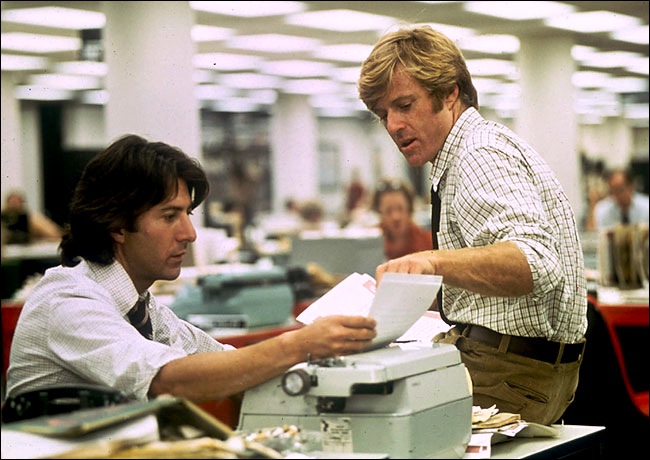
All the President’s Men, Dustin Hoffman, Robert Redford

All the President’s Men, 1976: Dustin Hoffman and Robert Redford playing the Woodstein investigative team in a film studio

➢ VIEW the terrific trailer for All the President’s Men

◼ OF ALL THE MOVIES ABOUT JOURNALISM the best by far is All the President’s Men. It tells the real-life story of how two young reporters on the Washington Post saw the corrupt American president Richard Nixon out of office. Robert Redford and Dustin Hoffman play the “Woodstein” team of Bob Woodward and Carl Bernstein, both hitting 30 when they pulled off their scoops about conspiracy in the White House. The Oscar-winning film is a gripping thriller that also gives the most authentic view of newspaper life yet, shot in an exact replica of the colour-coded Washington Post newsroom, built by knocking together two Warner soundstages in Burbank and ensuring all the coffee-cups and paperwork came from the real office 2,000 miles away.

Jason Robards won the 1976 Oscar as Best Supporting Actor for his charismatic depiction of the executive editor Ben Bradlee. “WOODSTEIN!!! Get in here!” At the press screening this writer attended, he raised repeated cheers for his oh-so-true-to-life rigour as he harried the young reporters again and again when they failed to convince him they had the scoop of the century. Our hearts sank, along with theirs, as Bradlee took his pen to their report and deleted line after line after line. We’ve all had bosses like him. “Get some harder information.” – “We haven’t had any luck yet.” – “Get some.” This film excels for showing how good newspapers work.

➢ Read: Murdoch’s Watergate? by Carl Bernstein FOR Newsweek
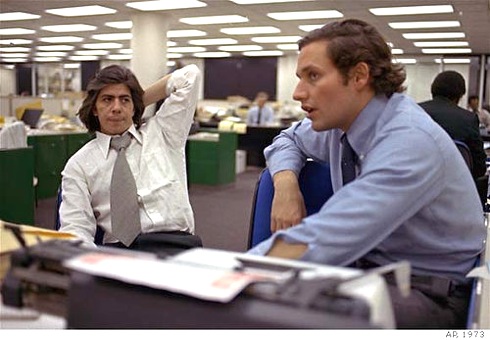
Watergate ,Bob Woodward , Carl Bernstein ,Washington Post

The real thing: Bob Woodward and Carl Bernstein in the Washington Post offices at the height of the Watergate investigation. (Associated Press)

◼ TODAY ON NEWSWEEK’S WEBSITE Pulitzer Prize-winning Carl Bernstein draws a comparison between Nixon’s downfall and the anything-goes approach of News of the World owner Rupert Murdoch and how it threatens to undermine the influence he so covets…

The hacking scandal currently shaking Rupert Murdoch’s empire will surprise only those who have wilfully blinded themselves to that empire’s pernicious influence on journalism in the English-speaking world. Too many of us have winked in amusement at the salaciousness without considering the larger corruption of journalism and politics promulgated by Murdoch Culture on both sides of the Atlantic.

The facts of the case are astonishing in their scope. Thousands of private phone messages hacked, presumably by people affiliated with the Murdoch-owned News of the World newspaper, with the violated parties ranging from Prince William and actor Hugh Grant to murder victims and families of soldiers killed in Iraq and Afghanistan.

➢ How The Guardian broke the story — Murdoch papers paid £1m to gag phone-hacking victims

➢ Yesterday’s Media Talk podcast: Alan Rusbridger, Nick Davies, Roy Greenslade and Janine Gibson

➢ A message for the times we live in: How good journalism worked at the Washington Post
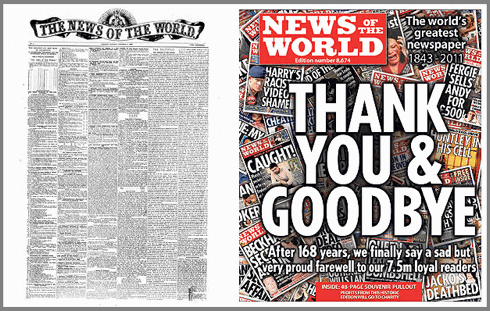
News Of The World, final issue,first issue,

48-page freebie: today’s News Of The World includes a souvenir of famous pages since the paper was first published on Sunday October 1, 1843, including “Crippen’s life at sea” as the killer doctor fled abroad in 1910 and “Prince Harry’s racist video shame” in 2009. During the 1950s — under its slogan Henry James’s phrase “All human life is there” — sales averaged 8.4m copies weekly. Its latest average sale was 2.6m copies


➢ News of the World doubles print run to 5m for final issue and all proceeds go to charity — Sunday update: local shop sent 50 copies instead of its usual six. The website notw.co.uk will be free to the public all July 10

FRONT PAGE

➤ Oh, Steve you old villain, what big fangs you’ve grown!

Strippers Vs Werewolves,Martin Kemp,Black & Blue Films, horror movie

Pop star, soap star gone bad in Strippers Vs Werewolves — but who?

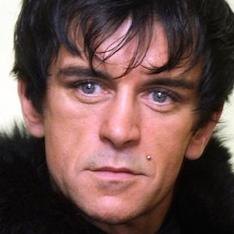
❚ THOSE JAUNDICED EYES are usually piercingly blue. And if the ears are few sizes larger than in real life, those fierce fangs won’t please his hordes of female fans either. This poster for a new spoof horror movie features one of Britain’s favourite pop musicians and ex-TV soap stars, but we’ll leave you to put a name to the wolverine face he is given in Strippers Vs Werewolves.

Due for release in October, SvW is one of the most hotly anticipated British films of 2011, and promises to be a rip-roaring gorefest, according to Hollywood News. It is is directed by Jonathan Glendening (of last year’s werewolf film 13 Hrs) and the ultimate horror movie star Robert (Freddy) Englund was persuaded to make his British feature film debut as a sinister werewolf pack leader. Producer Jonathan Sothcott of Black & Blue Films said: “Robert has a dignity as an actor that lifts any film he’s in.”

Superman actress Sarah Douglas plays the owner of Vixens, a London strip-club where a werewolf chief played by Billy Murray is accidentally killed, prompting his bloodthirsty wolfpack to seek retribution. Which is when our jaundiced pop star falls foul of the next full moon. Guessed who he is yet? Click here for a clue.

FRONT PAGE

1981 ➤ Chant No 1: Spandau revive the rumble of funk while hard times loom

❚ ON THIS DAY IN 1981 Spandau Ballet, spearhead band of the New Romantic movement, were flying off to Spain and Portugal by way of a working holiday with sun and sand — a brief tour of principal cities to establish their first European fan base, which remains strong today. Most significantly, on Ibiza, the island which young British sunseekers were starting to make their own, Spandau played at the then spanking new Ku club, as one of the first fashion bands whose visits were to make Ku one of the Mediterranean’s destination nightspots.

Spandau Ballet, Ibiza, 1981

Spandau Ballet in 1981: a quick sprint to the Iberian peninsular as well as a hot date at Ibiza’s Ku club

But the day before their departure, Spandau had lit the fuse to a musical bombshell. They changed their sound to outflank the emergent slipstream of new image bands invading the British charts with synth-pop.

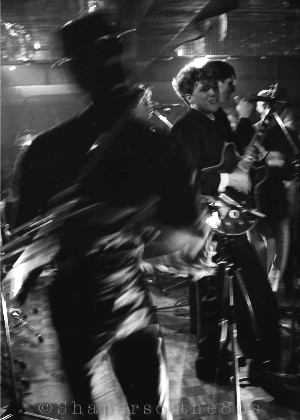
That Thursday they had taken over Le Beat Route in Soho, a mythical Mod club during the 60s, now fronted by Ollie O’Donnell, a suited but laid-back young crimper from Keith-at-Smile’s cool salon in Knightsbridge. The downstairs hideaway in Soho was the current Friday-night HQ of London’s nightlife leaders whose jackets and printed ties were hastily shaking off the New Romantic tag even as Duran Duran’s second single revelled in it. The bamboo decor helped: hints of a tropical holiday-camp with baskets for lampshades. South Seas tongue-in-cheek, maybe. Glamorous it was  not. The ethos for new one-nighters was never to be smart, always gently ironic.

Here before an invited audience of Friday regulars the innovative Russell Mulcahy directed Spandau’s promotional video for their fourth single, Chant No 1. The bombshell was a surprise change of direction, announced by rat-a-tat congas and a burst of brass. The new tune, Gary Kemp said, had been inspired directly by the dissonant brass on the disco-funk track Wheel Me Out, the debut 12-inch dance single on Ze from US new-wave group Was (Not Was). The eerie sound had been introduced to keen Brit ears during the Axiom fashion show that had preceeded Spandau’s set in New York that May, during the first Blitz Invasion.

Chant No 1 was a blue-eyed funk mover that echoed the band’s teen years on the soul circuit, musically fresh while the lyrics seeped a certain seedy paranoia. There on-camera was a black trio of brass instrumentalists, Beggar & Co, who were the horn section for the British funksters Light of the World, and who’d already had their own hit with Somebody Help me Out.

Gone were the artsy settings and OTT costumes of Spandau’s early videos. This razor-sharp musical documentary intercuts Soho streetlife with a live club  performance by Spandau. “Down, down, down, pass the Talk of the Town” urges the deejay’s Chandleresque rap as Tony Hadley sweeps past The Talk, the cobwebbed Mecca of international cabaret from the Judy Garland era. Inside the steamy Beat Route itself we take in the stylish ambience where the “mobile knives” now live to dance, as well as dress up in a distinctly more boy-meets-girl way than the incessant camperie of the Blitz, the long-gone poser-paradise. We glimpse the deejay Steve Lewis before his portrait of Lenin, in a season when Soviet button badges are also de rigueur, and it’s evident that, yes, things are different here.

Stephen Jones, Graham Smith, Ollie O’Donnell, Robert Elms

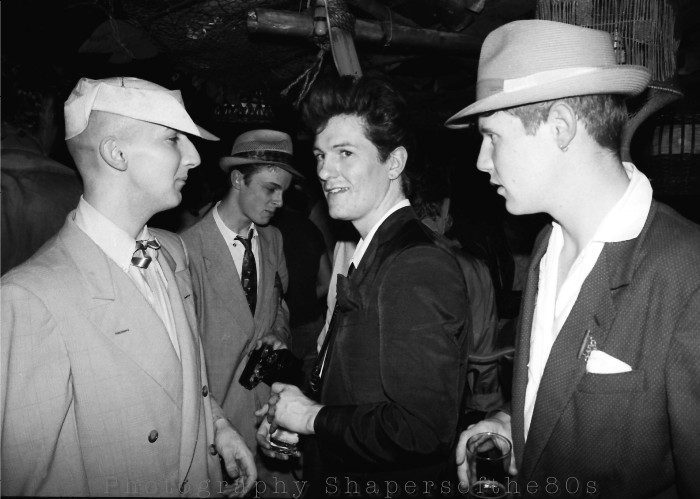
Three hats and a quiff: Stephen Jones, Graham Smith, Robert Elms and at centre Beat Route host Ollie O’Donnell, during the shooting of the Chant No1 video in 1981. Photography © Shapersofthe80s

The video emphatically makes the point that clubland rules. Spandau drummer John Keeble spoke with only slight exaggeration when he said: “For the next couple of years, no new band played live on a stage.” What he meant was that rock venues as the source for original music had been superseded by nightclubs. White socks and hedonism were the key: girls in swirling party frocks with hair cropped like chives, and boys wearing braces and rolled-up sleeves soon walked the streets of every town. Ha! Why, even the NME finally conceded by introducing a “Dance Chart” alongside their lists of Indie garage bands.

Spandau Ballet, Gary Kemp, Chant No 1, video, Beat Route, clubbing

Chant No 1: Gary Kemp with one of Beggar & Co’s brass section at front

Once released on July 6, Chant No 1 rocketed straight up the charts to reach No 3 on August 1 (the NME chart actually placed it at No 1). Simultaneously remixed by Richard Burgess as a B-side and as an extended twelve-incher for clubs, the track immediately became an upbeat dance anthem for the school-leavers who were discovering what economic “hard times” were going to mean.

“I Don’t Need This Pressure On” ran Spandau’s chorus as a timely slogan for that summer when Britain went into shellshock from the rare experience of repeated race riots on the streets of London, Manchester and Liverpool. The fashion-conscious band who had been dismissed by the rockist press as fascists and dandies hit back with supreme optimism. This vibrant tune pressed the pop button with fans as well as rival bands who envied the chemistry of Spandau plus Beat Route. It announced a new brand: Team Soho. For ten weeks in the charts, Chant No 1 confirmed its rhythm as the sound of the new pop: once-and-for-all the dominance of the rock guitar was shifting to the supremacy of bass and drum for pop generations to come.

Ironies were everywhere. Not only did the crepe-shoed rocker Shakin’ Stevens occupy the No 1 spot for four consecutive weeks with Green Door, a comforting throwback to 50s nostalgia. By contrast, the cool young band who also held Chant off the top spot for another three consecutive weeks were The Specials, whose haunting single Ghost Town (where “all the clubs have been closed down”) became a poignant epitaph for the inner-city angst starting to erupt among the ranks of the hard-pressed in Margaret Thatcher’s Britain. The times were changing, not entirely for the better.

Beat Route, nightclubbing, Soho, Spandau Ballet, video,Chant No 1,

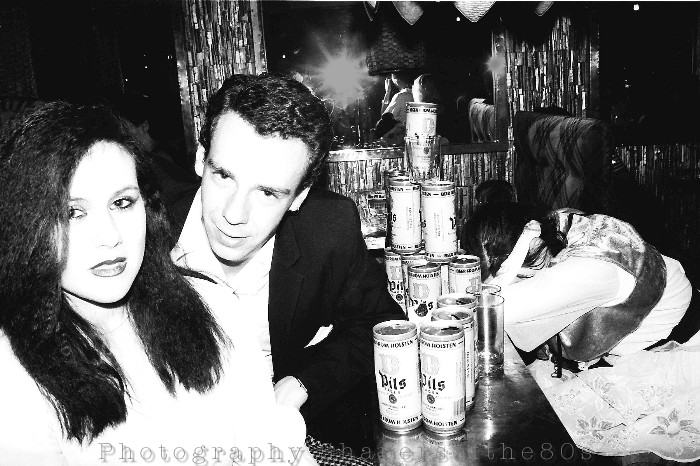
The legend that became Le Beat Route: a little light romancing, a lot of heavy drinking. Photography © Shapersofthe80s

THE SPANDAU STORY SO FAR

➢ 1980, Spandau fire the starting gun for British clubland’s pop hopefuls: dada didi daaa!
➢ 1980, The day Spandau signed on the line and changed the sound of British pop

How many people dID it take to launch an electro-diskow band?

Waldorf Hotel, Spandau Ballet, Covent Garden, Blitz club, New Romantics, youth culture,youth movement, Blitz Kids , To Cut a Long Story Short, London, UK, singles chart, aged 20, club-hosts, DJs, Herbie Knott

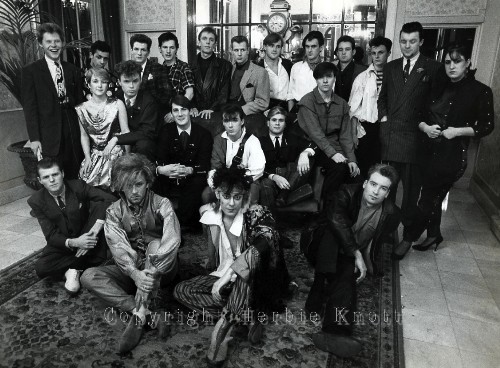
Waldorf Hotel 1980: seated at centre, Spandau Ballet, house band of Covent Garden’s Tuesday-night Blitz Club, home of the New Romantics movement, plus support team of Blitz Kids who helped put their first single To Cut a Long Story Short into the UK singles chart at No 5, on Dec 6, 1980. Average age 20, everyone had a specific role to play in staging and promoting the band: seven musicians, six designers, three media and management, three club-hosts, two DJs, one crimper and 22 egos. Photographed for the Evening Standard © by Herbie Knott

FRONT PAGE

1981 ➤ “Rare Cancer Seen in 41 Homosexuals” — the world is alerted to the Aids epidemic

❚ 30 YEARS AGO TODAY, a report in The New York Times brought first confirmation to the public of the sudden and puzzling appearance of a fatal form of cancer which one year later would be termed AIDS (for acquired immune deficiency syndrome).

In May 1981, two Los Angeles doctors submitted a brief account of five of their patients to the US Centers for Disease Control’s newsletter, the Morbidity and Mortality Weekly Report. Dated June 4, this was the first clinical description of the disorder. The Los Angeles Times reported under the headline, Outbreaks of Pneumonia Among Gay Males Studied: “Researchers are investigating mysterious outbreaks of pneumonia that have occurred among male homosexuals in Los Angeles and several other cities.”

A month later, the CDC ran another bulletin [linked below]. Doctors from New York and California were seeing another rare disease in gay men. “During the past 30 months, Kaposi’s Sarcoma (KS), an uncommonly reported malignancy in the United States, has been diagnosed in 26 homosexual men.”

The New York Times received an advance copy of the report and ran its first article on the syndrome on July 3. It mixed together deaths from Pneumocystis pneumonia and KS and was headlined: Rare Cancer Seen in 41 Homosexuals…

New York Times, Aids, first report

By Lawrence K. Altman
Published: July 3, 1981

Doctors in New York and California have diagnosed among homosexual men 41 cases of a rare and often rapidly fatal form of cancer. Eight of the victims died less than 24 months after the diagnosis was made.

The cause of the outbreak is unknown, and there is as yet no evidence of contagion. But the doctors who have made the diagnoses, mostly in New York City and the San Francisco Bay area, are alerting other physicians who treat large numbers of homosexual men to the problem in an effort to help identify more cases and to reduce the delay in offering chemotherapy treatment.

Alvin E. Friedman-Kien,New York University, Medical Center

Friedman-Kien: “rather devastating”

The sudden appearance of the cancer, called Kaposi’s Sarcoma, has prompted a medical investigation that experts say could have as much scientific as public health importance because of what it may teach about determining the causes of more common types of cancer.

In a letter alerting other physicians to the problem, Dr Alvin E. Friedman-Kien of New York University Medical Center, one of the investigators, described the appearance of the outbreak as ‘rather devastating’.

➢ Read the full “Rare Cancer” report in The New York Times, July 3, 1981

REFERENCES
➢ Pneumocystis Pneumonia — Los Angeles: MMWR 1981, June 5; 30 (21); 1-3
➢ Kaposi’s sarcoma and Pneumocystis pneumonia among homosexual men — New York City and California: Friedman-Kien A; Laubenstein L; Marmor M; et al. MMWR 1981, July 4; 30: 305 (#J0005787)
➢ Aids timeline at AVERT, an international HIV and AIDS charity, based in the UK: “In the United Kingdom it is estimated that 1 in 4 people who are living with HIV do not know they are infected as they have not been diagnosed”

FRONT PAGE

➤ Get up! James Brown is now the The Godfather of Soup

❚ GOING VIRAL — Recently posted at YouTube, a pair of Nissin Cup Noodle commercials from 1992 show the Godfather of Soul James Brown adapting his classic Sex Machine to sell miso soup. In Japanese!

Tags: 曲名, (原曲)

カップヌードル ジェームズ・ブラウン ゲロッパ セックス・マシーン 90年代

FRONT PAGE