Category Archives: Youth culture

2010 ➤ Duffy, the man who shot Aladdin Sane

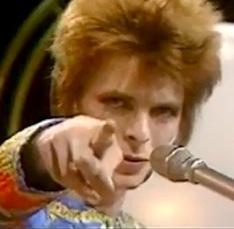
❚ BRIAN DUFFY, THE PHOTOGRAPHER who helped to capture the spirit of the Swinging 60s, has died. Among the many showbiz stars he shot was David Bowie, and if any images deserve to be called iconic, these do. Known to friends and colleagues by his surname alone, Duffy was a rival of David Bailey and Terence Donovan throughout the 1960s. Film producer Lord Puttnam said Duffy helped push the stultifying conservatism of the 1950s into permanent retreat. Duffy is also famed for once burning part of his work in a bin in 1979.

➢➢ Read the full BBC News report

David Bowie, Aladdin Sane, Brian Duffy

Duffy shot three album covers for Bowie, here Aladdin Sane, 1973, artfully created long before Photoshop had been invented. © The Duffy Archive Limited

Vogue, Brian Duffy, photographer

In May 2003, Vogue magazine paid tribute to Bowie by dressing up Kate Moss in some of his original costumes. A nod to the 1973 Duffy photo graced its cover, which Vogue’s editor Alexandra Shulman said was his favourite cover of all time (see Iconic Photos, below). Right, the photographer Duffy at his lightbox

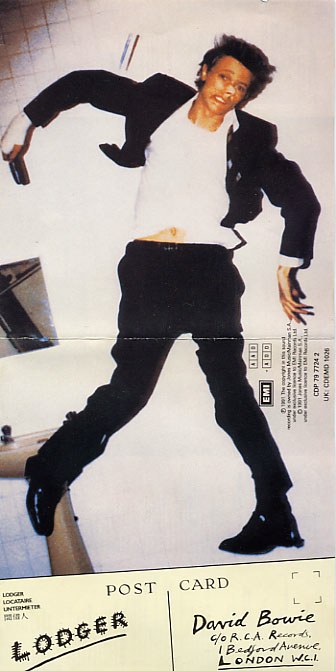
David Bowie, Lodger, Brian Duffy, Derek Boshier

Bowie’s Lodger album, 1979, photograph © The Duffy Archive Limited. Artist Derek Boshier wrote: “The cover for Lodger was a collaboration between David, the photographer Duffy, and myself. I loved the resolution to the problem of David being photographed falling. Shooting him from above, on a specially made table built to match the falling form. The table was designed to be completely obscured by David’s body”

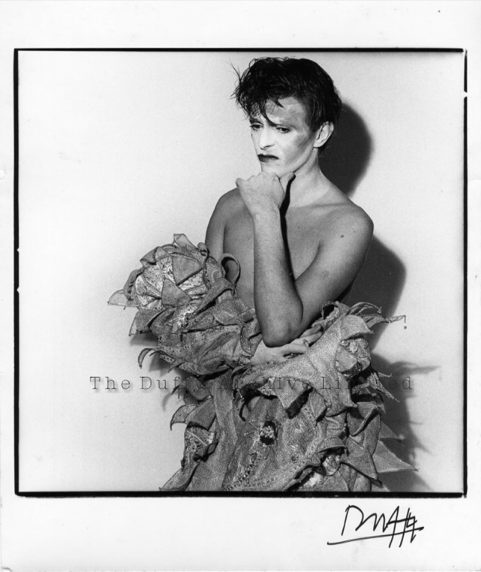
Brian Duffy, David Bowie, Scary Monsters

Duffy’s shoot for Bowie’s Scary Monsters album, 1980 © The Duffy Archive Limited

David Bowie, Brian Duffy

Bowie by Duffy, 1980: not chosen for Scary Monsters and published only once, in a blog last September. © The Duffy Archive Limited

➢➢ Sara Wiseman, Duffy’s archive assistant, wrote last September in her blog:

“Whereas Duffy’s more iconic images such as his Aladdin Sane cover, have been retouched, consciously selected and then admired by many to achieve such status, I love the fact that this one [shot but not chosen for Scary Monsters and never before been published] was forgotten for thirty years and for that reason I loved discovering it. I could perhaps align the thrill to that of finding buried treasure. There is something about Bowie’s unperfected facial expression that gets me every time. In a way I find the photograph to be extremely revealing in that it humanizes Bowie. This scornful look which, was not included in his contrived and manufactured public image, lowers him from the elevated, almost superhuman level of the pop/rock star. What we have before us here, is a man in a ridiculous costume looking pretty indifferent.

“I asked Duffy what his thoughts on the photograph were: ‘You like it? Yes me too. You may have noticed that in many of my male portraits my subjects look as if they’re on the verge of smacking me … ha! (Duffy acquired a reputation, of which he is proud, for being a bit of an anarchist.) That was my technique, I would say something to rile them or wind them up. It won me some great photographs – full of genuine male aggression. You may also notice that the same can not be said for my female portraits!’ ”

☐ ☐ ☐


➢➢ Visit Duffy’s website

➢➢ Surviving contact sheets from the Aladdin Sane session
➢➢ Famous, Infamous and Iconic Photos
➢➢ Derek Boshier Art

THE TRIBUTES

➢➢ Fearlessly innovative photographer who in countless striking images helped to define the mood and style of the Swinging Sixties – The Times, June 5, 2010
❏ Duffy, Bailey and Donovan invented a new documentary style of fashion photography, and fed off each other’s creativity. Duffy produced a body of work that spanned everything from portraits and reportage to advertising — he was one of the few photographers to have shot two Pirelli calendars, and successfully undertook campaigns for brands including Smirnoff, Aquascutum and Benson & Hedges, for whom he created a series of surreal advertisements in 1977.

➢➢ Central figure in the visual revolution that echoed the wider changes in British society during the 1960s – The Daily Telegraph, June 6, 2010
❏ With David Bailey and Terence Donovan, he formed what was dubbed the “Black Trinity” by Norman Parkinson, the photographer whose pastoral style seemed to embody all that the young trio wanted to challenge. If Bailey was the most creative of them, and Donovan the most amusing, the art school-trained Duffy was the most provocative and intellectual. “Before 1960 the fashion photographer was tall, thin and camp,” he reflected. “But we three were different: short, fat and heterosexual.”

➢➢ One of the “terrible trio” with David Bailey and Terence Donovan who broke the mould of fashion photography – The Guardian, June 6, 2010
❏ The three men became far more famous than many of the models with whom they worked, and were – for a while – bigger than the glossy magazines that published their pictures. The photographer Norman Parkinson called Duffy, Bailey and Donovan the “black trinity”. There was some merit in the label. The cravat-wearing old guard felt threatened by these freewheeling young men in leather jackets, who took their models on to the streets and snapped them with newfangled, small 35mm cameras.

➢➢ Brian Duffy: The Man Who Shot The 60s by George’s Journal

FRONT PAGE

2010 ➤ Manc agog at Gaga’s Monster Ball tour

Gary Ryan’s eyes were out on stalks last night for Lady Gaga’s concert in Manchester’s MEN Arena – here’s a taste of his review for City Life

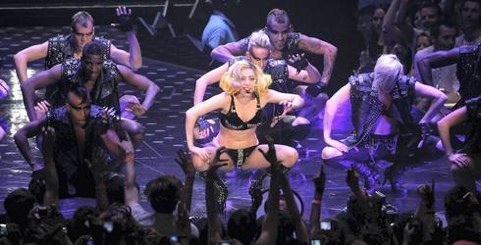
Lady Gaga, Monster Ball, tour,

Gaga on tour with her merry men: Has she just killed Madonna?

❚ THOSE WHO MIGHT DOUBT THE LIBERATING FORCE for good Lady Gaga represents need have only glanced around the audience of her Monster Ball tour. Everywhere you look, there are women with their faces painted in the singer’s lightning flash make-up, and men wearing so much kohl, they resemble the Hamburgler.

At its core, the concept of the show is that she’s a Pied Piper for the misfits and the freaks; and has created the show as a place where “you can be free”. It’s heartening when you remember that ten years ago, the same audience would have been watching S-Club…

“You know what I hate more than money?”, says the woman who is charging £70 per ticket. “The truth.” It shows: she works harder to maintain a smoke-and-full-length-mirrors aura than any other act around. And, with an ambition and confidence that suggests she’s just killed Madonna and is wearing her skin as a tribal pelt, this night proves she’s the first true pop icon of the 21st century.

➢➢ READ Gary Ryan’s full review for City Life

FRONT PAGE

1980 ➤ 2010, the stage magic that inspires Romantics ancient and Neo

An exceptional cabaret performer called Taylor Mac
hit London this week in 2010. He subverted not only
theatrical conventions but several classic Bowie songs
to glorious effect. His shimmering presence sent out
echoes of how we defined itzy-Blitzy when 1980 dawned…
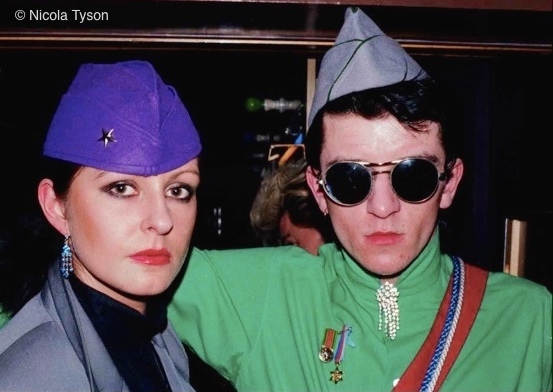
Billy’s club,Helen Robinson, nightlife, London ,Steve Strange, PX

Billy’s club 1978: Strange as Ruritanian Space Cadet alongside PX designer Helen Robinson. (Photograph by © Nicola Tyson)

❚ LET’S RECALL WHAT MADE THE BLITZ KIDS unique in 1980. Singer Andy Polaris said soon after: “Anyone who thought it was all a pantomime got the wrong end of the Pan Stik. Blitz people had to be larger than life. It was a compulsion. If it doesn’t possess you, you can’t acquire it.”

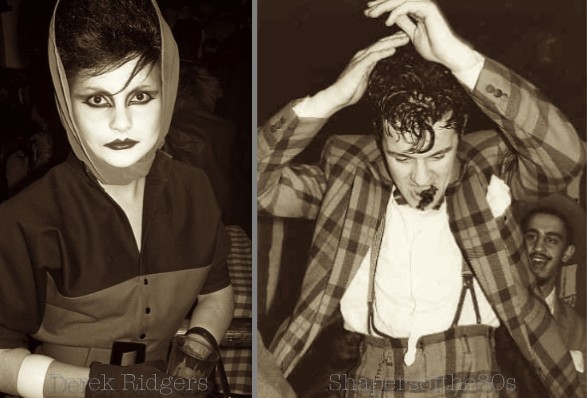
An evening within the orbit of London’s Blitz club superstars – and we’re talking about 50 people here – was more than entertaining. You were zapped with a very tangible electric shock – what we’d call today “sensory overload” – as if these exquisite, compulsive posers had revitalised Gilbert & George’s notion from 1969 of processing through the world as living sculptures. The Blitz Kids generated their own crackling versions of hyper-reality that defined the space around them. They included Kim, Julia, Judi, Melissa, Fiona, Jayne, Theresa, Myra, Scarlett, Clare, Michele, Darla, Sade, Kate, Stevie, Naomi, Mandy, Helen, Jo, Perri, Christine and Franceska . . . the Stephens Linard and Jones, Lee, John, Cerith, Simon, Iain, Andy, George, Marilyn, Wilf, Greg, Jeffrey, Christos, Graham, Neil, Dencil, Robert, the Holah brothers, the Richards Ostell and Sharah. A fair few other Blitz Kids, like Strange, Egan, Elms, Sullivan, Dagger, Haines, Ure, O’Donnell, Mole, Ball and Lewis, had the motormouth skills of energetic talkers and schemers who were, as we say today, “good in the room”. Above all, the best among them “made things happen” wherever they set foot. That’s why spending time with them was the best kind of fun – stimulating, argumentative and constructive, whether idling at a bar or bounding around the beach on Bournemouth bank holidays.

Kim Bowen, Stephen Linard, Blitz Kids, London

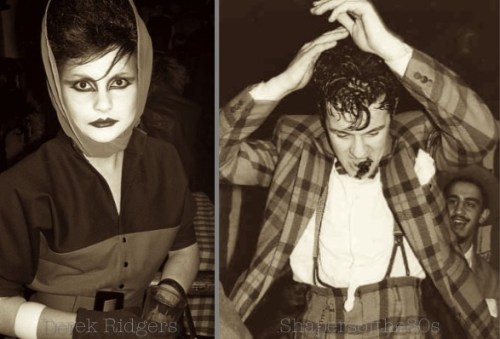
Doyennes among the Blitz Kids, 1980: Kim Bowen and Stephen Linard stamp themselves on that week’s zombie leitmotif. Photographed © by Derek Ridgers

Even so, what marked out the fashionistas especially was that, not only in the club, but in shop, café and bus, the style stars were constantly emitting auras of the force you imagined once surrounded Dietrich or Garland or Bogart or Caine. There’s nothing accidental about style. It is by definition a considered stance. In the presence of the Blitz superstars you could hold up your hands and almost feel the crumpet-toasting tingle. Even jaded Londoners turned their heads when Kim walked the half mile from Warren Street to St Martin’s school of art swathed only in surgical bandages. Or when George paraded past Buckingham Palace as a helmeted and toga’d Britannia at the annual royal ceremony of trooping the colour.
Princess Julia, Chris Sullivan, deejays, Vintage 2011,Southbank Centre, clubbing

Vintage deejays: original Blitz Kids such as Princess Julia and Chris Sullivan have continued spinning the vinyl that recreated legendary 80s club soundtracks from the Blitz to the Wag

Wherever there was a party, premiere, exhibition or club opening you’d see a dozen more such creatures who lived hyper-reality 24 hours a day… Lee perhaps as Nosferatu, Julia as Bride of Frankenstein, Fiona saying “Non!” to couture by wearing a grosgrain coat back-to-front, Sullivan as 1920s cad, blue-lipped Linard as 1920s flapper, Marilyn as, well, Monroe, Stewart as geisha boy, Theresa as Little Bo Peep, a part she played at work in the Fleet Street offices where our paths often crossed.

Aplomb came naturally to Kim Bowen as the queen of the Blitz Kids. One night when some friends came back to mine after celebrating my birthday, Kim walked into the kitchen and said: “I’m not going to let you live with this wallpaper one more day.” She picked at the edge of a stiff vinyl-coated strip, printed with very 1960s pepperpots and pans. Then she ripped it off the wall in one heave. The kitchen walls were bare within 20 minutes. Kim declared: “Minimalism, David, that’s you need.”
Clare Thom, Michele Clapton, Blitz Kids

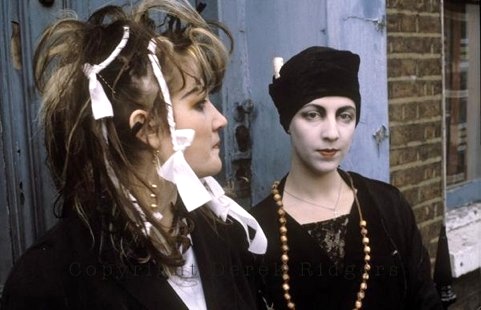
Blitz Kid style: Outside the Carburton Street squat, Clare-with-the-Hair and Michele Clapton displaying awesome repose. Photographed © by Derek Ridgers

As time would reveal, the lead Blitz Kids outflanked not only their peers, but most of the copyists who followed their Bowie-inspired passion for change. You’d find the second-league clubbers at Studio 21 in Oxford Street, or in a back barrel at Birmingham’s Rum Runner – those were the self-proclaimed New Romantics you see dancing in the YouTube videos, and being photographed wearing too much of everything, from Boots No 7 to lacy frills. A couple of years after the Blitz caravanserai had passed, designer Fiona Dealey said candidly: “You look at these little Bat-people with it dribbling down their necks and you feel like saying, ‘Sorry darling, not enough loose powder’. The difference was that our make-up was stage slap, Leichner not Factor. The clothes came from a costumier, Charles Fox, not Flip. Dressing for the Blitz was real theatre. It wasn’t just another uniform. You felt glamorous.”
Stephen Jones, Blitz Kids

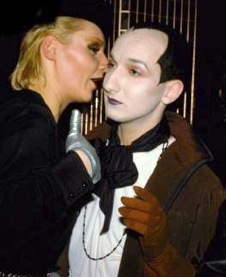
Immaculate: Hatter Stephen Jones

Aha, real theatre! This is the realm Shakespeare championed as “an improbable fiction” and John Updike blasted as the “unreality of painted people”. A flesh-and-blood craft where the basic requirement is for a living audience to be watching living actors. The Blitz Kids fully understood what Shakespeare’s Player has to explain to Rosencrantz and Guildenstern in Tom Stoppard’s spoof version of Hamlet: “We’re actors. We’re the opposite of people.” Actors pledge themselves to the belief that somebody will be watching. Nothing to do with vanity. Entirely a means of confirming their identity. Ditto the Blitz Kids.

The digital natives (and the self-styled Neo Romantics) of Generation Z who today are being raised on computer shoot-em-ups and quaking cinema enjoy precious little exposure to live theatre, to the “magic” that emanates from the contract eagerly agreed between actor and audience – for the one to perform at the same time as the other watches. Only when, as one towering example, Sir Michael Gambon allows a Pinteresque pause to elapse onstage can auras crackle “in the moment” with sufficient intensity to be felt physically, and thrillingly, by a theatre audience. Gambon’s aura crackled like a fire god’s last Christmas in No Man’s Land, before a wrapt audience the day after its author Harold Pinter had died.
Max Wall, Ken Dodd

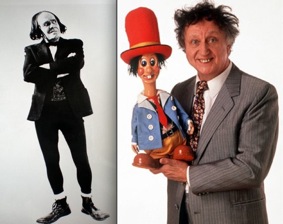
Masters of the comedian’s art: Max Wall and Ken Dodd

Comedy is where the theatrical contract of give-and-take fights for life most ostentatiously. As you laugh helplessly at the veteran comic Ken Dodd’s rapid-fire patter, you needn’t know that he has subjected his live stand-up routine to a lifelong time-and-motion study that concluded he must hurl eight gags per minute at his audiences to ensure everybody laughs at least once every minute he’s onstage.
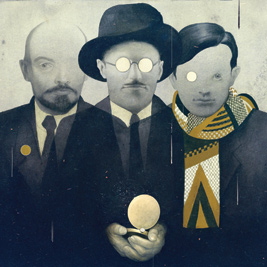
Travesties, Tom Stoppard, theatre

Travesties: what a coincidence that in 1917 the revolutionary Lenin, the novelist James Joyce and the Dadaist poet Tristan Tzara all happened to live in Zurich

In London in 1982 it was no less a pleasure to witness the top-of-the-bill variety legend Max Wall give wondrous live masterclasses entitled An Evening with Max Wall in which, aged 74, he laid bare how comedic timing works from one second to the next, how facial expression and vocal cadence, as well as silly walks can turn laughter instantly on and also off. Demonstrating with us as guinea-pigs how performer’s and viewer’s mutual responses keep each other on their toes.

The playwright Tom Stoppard has spent his career writing pyrotechnic scripts that read wittily enough sitting on the page, but are transformed several hundredfold the moment they are enacted on the stage, by for example exploiting the improbability of time-warps where the actors and the action are rewound and rerun in “unreal time” – actors reverse back through doors to leave the stage and re-enter immediately giving a subtly adjusted performance – as in Travesties, his hilarious comedy of coincidence. His plays are overtly “about” theatricality, yet shrouded by the mischievous apologia that, as one of his characters ultimately insists, “It’s a mystery”.

☐++++++☐++++++☐

GETTING BACK TO Taylor Mac,
his little bit of itzy-Blitzy glitz gives
shape to all of the above
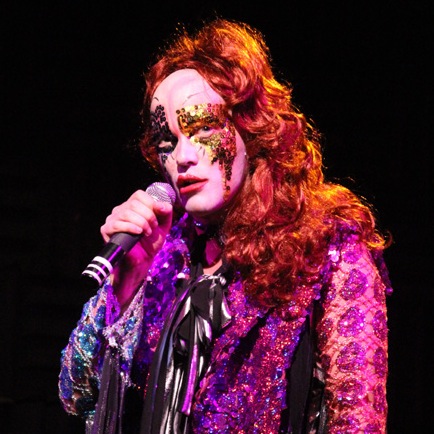
Taylor Mac, Glasgow, London, Bowie, Comparison is Violence,cabaret

Taylor Mac 2010: sequinned, painted and bewigged as Bowie-cum-Tiny Tim. Photographed © by Tim Hailand

SO WHERE MAY TODAY’S young Neo Romantic seek inspiration if he or she wishes to aim beyond the slap and the zhoosh to summon up solar-powered charisma of Blitz Kid proportions? The answer is in the UK right now (Soho Theatre London this week, The Arches in Glasgow next) and he is an incandescent and witty Californian called Taylor Mac.
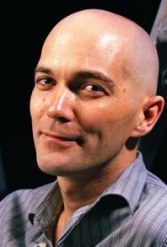
TAYLOR MAC

Mac as himself

Clad in more sequins than a sultan’s harem could shake at you, he gives a full-throttle musical cabaret that is unexpectedly poignant, invigorating and original. You also laugh more than you ever did at Eddie Izzard’s last side-splitting tour. Mac’s audacious dissection of the essence of theatre, vaudeville and other performing arts evokes Merman and Garland, Wainwright and Brel while asserting his own unique brio. He reinvents pop classics by David Bowie and Tiny Tim (yes, you do remember his hits Tiptoe Through the Tulips and I’ve Never Seen a Straight Banana) by delivering them with an earnestness that moistens the tear-ducts. The evening’s ironic sub-title is The Ziggy Stardust Meets Tiny Tim Songbook, because these are the comparisons reviewers draw about Mac, yet they seldom remark on how he turns Starman and Heroes, those holy invocations of the 80s Bowie fan, into altogether heart-rendingly new songs.

His themes are love and longing and role-play and tolerance for what society calls a gender-bending misfit who sprang fully formed from the egg, craving the glue that fixes eyelashes. What results is the most stupendous spectacle, charged with insights as mere as how to signal the end of a song, one way being a sustained high note, another to deliver a wide-eyed “Cha-cha-cha!” through smiling teeth, but the coup de grace is a solemn downward arm gesture LIKE SO! For 90 minutes Mac fills the Soho Theatre many times over with a sustained rush of theatre magic. And yes of course he’s on YouTube, but that entirely defeats the point the past 1,700 words have been making.

➢➢ Read Donald Hutera’s London review of Mac
in The Times, June 3, 2010

➢➢ Read Charles Isherwood on Mac’s 2009 play
The Lily’s Revenge in the New York Times

FRONT PAGE

2010 ➤ Index of posts for May

Steve New, Rich Kids, Revolver,Index May 2010, Shapersofthe80s➢ Spider-woman Bourgeois created her art as meditations on sexuality

➢ Foxx celebrates his life as the Duchamp of electropop

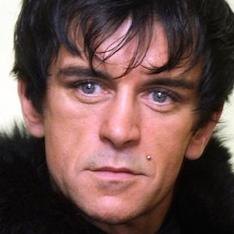
➢ Rich Kid Steve New (left, aka Stella Nova) dies at 50

➢ Just the birthday present Steve Strange really wanted this week of all weeks

➢ ‘A triumph’ – George’s verdict before transmission of his biopic

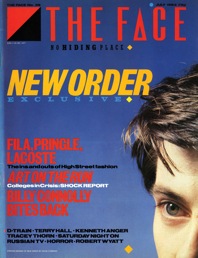
The Face, magazines, July 1983, New Order, Art on the Run➢ Ex-Blitz Kids give their verdicts on Worried About the Boy

➢ Three key men in Boy George’s life

➢ Can Generation Y be bovvered to vote?

➢ Lest we forget, on this day Britain sank the Belgrano

➢ Birth of The Face: magazine that launched a generation of stylists and style sections

FRONT PAGE

2010 ➤ Foxx celebrates his life as the Duchamp of electropop


+++
❚ “THERE’S A GREAT SURGE OF INTEREST in electronic music. I don’t know why that’s happened, but it’s fortunate for me because I did it a long time ago.” After three low-profile yet prolific decades as a graphic artist, photographer and teacher, the elder statesman of electropop John Foxx is curating Short Circuit, a festival of the best of British electronic music at London’s Roundhouse next week. The day-long event will see Foxx playing his original Moogs, an ARP Odyssey, an Elka String Machine and CR-78 drum machine in a 30th anniversary celebration of his debut solo album, Metamatic.

John Foxx, Short Circuit, Roundhouse, electropop

Foxx’s own verdict on Metamatic: “carcrash music tailored by Burtons”

Foxx’s lyrics and vocal style characterised the original band Ultravox! (1974–79), whose 1978 album Systems of Romance, co-produced by Conny Plank, not only introduced the R-word into the post-punk zeitgeist, but set the mould for British electronica.

After going solo, Foxx’s stark and visionary 1980 album Metamatic, rendered on a range of synths and “rhythm machines”, yielded two futuristic chart hits he summarised as “carcrash music tailored by Burtons”. Two new songs Burning Car and Miles Away charted later the same year. As a pathfinder who imagined himself to be “the Marcel Duchamp of electropop”, he has always enjoyed cult status among the emergent new wave of electronic musicians.

A decade ago Foxx embarked on a new lease of life and Short Circuit will reunite him with former Ultravox guitarist Robin Simon to perform songs from Systems of Romance.

➢ At BBC News online, Tim Masters writes:

❏ Foxx wants his festival of electronica to capture the spirit of a concert he attended in 1967. “It was like a glimpse of the future,” says Foxx, who hitchhiked down from his native Lancashire to attend the 14-hour Technicolor Dream at Alexandra Palace in London. “I watched Pink Floyd with Syd Barrett, Lennon was around, and Brian Jones, and I saw European art movies like Un chien andalou for the first time — so it was really a life-changing event.” With its art displays, video installations and deejay sets, Foxx promises Short Circuit will be “a sort of hallucinogenic musical afternoon”.

➢ Short Circuit 2010 is curated by John Foxx at
The Roundhouse on June 5

30th anniversary boxset

John Foxx,Metatronic, boxset, electropop Metatronic is a wonderful survey of one man’s post-glam responses to urban dislocation through modernist music that can be as jarring as it is also seductive. Released this month as double CD, plus DVD of relevant promo vids including the early hits Underpass and No-One Driving

FRONT PAGE