Category Archives: Swinging 80s

2018 ➤ Revealed: The secret role of Shapersofthe80s in the rise and rise of Spandau Ballet

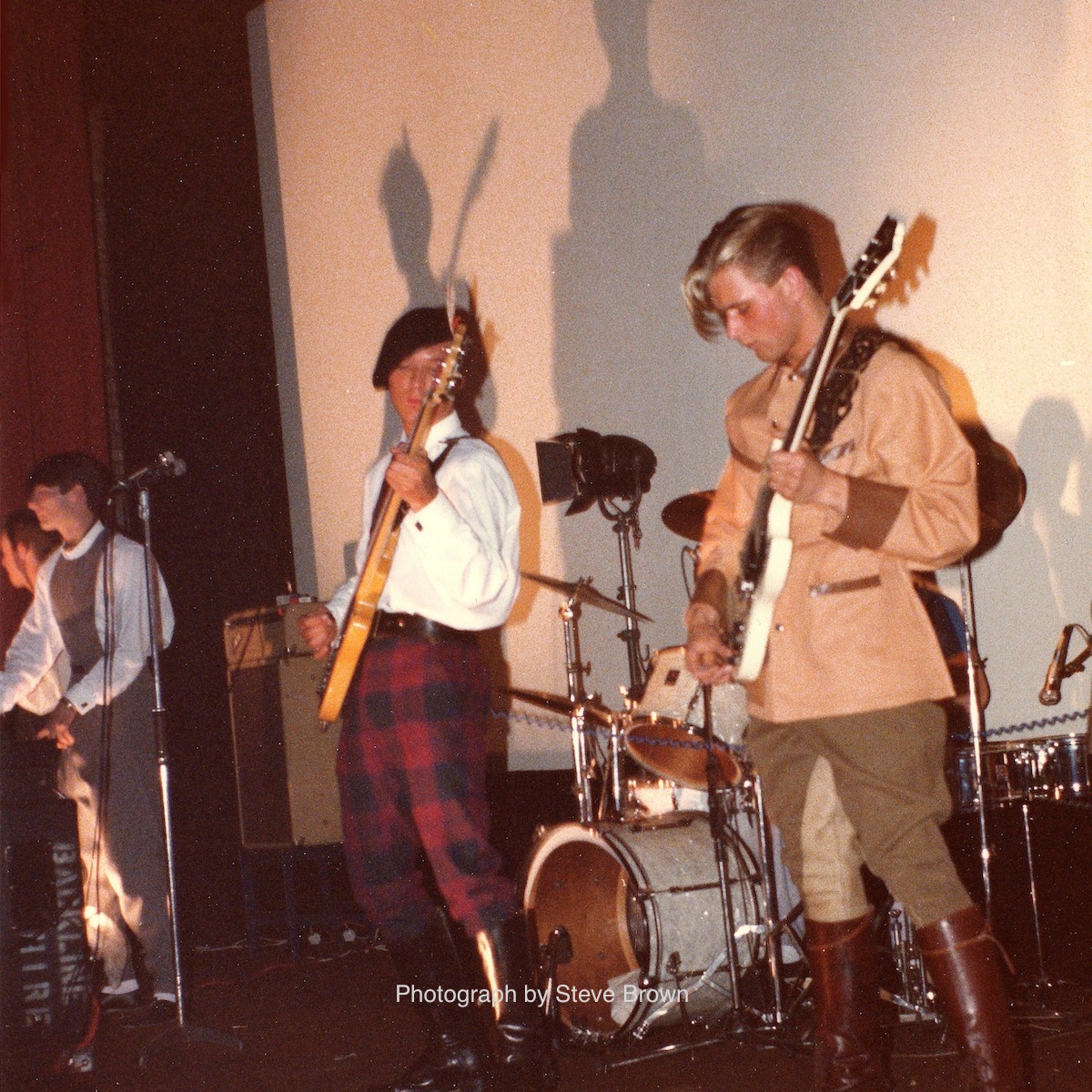
Spandau Ballet, 1980,Scala Cinema, performance,

A photograph never before published: sharply styled Spandau Ballet in 1980 playing the dramatically lit Scala Cinema gig that eventually brought the record companies scrambling to sign them. Photograph by Steve Brown

FIRST COMES THIS UNAUTHORISED BOOK that tells the world there were two bands called Spandau Ballet back in 1979 and turns over the whole myth about where their name came from. There are a least two huge marmalade-dropper revelations, plus several dozen eye-openers about the birth of Blitz culture, however well you think you knew the early 80s. The author David Barrat even knows John Keeble’s middle name. In fact he gives us everybody’s middle name, just to prove his overdue diligence. Barrat is also very revealing about the band’s legal falling-out that ended in the high court before an apparently congenial judge who quite liked their music.

Then out of the blue I find there are about 100 shockingly well-informed pages not exactly about me, long before this website existed, but following my every footstep through every month of 1980 as the second SB with the stolen name takes its first tentative steps toward a record deal and the UK charts all within a single year – which was indeed good going for a new band by any standards. Very flatteringly Barrat suggests that I am waving some Invisible Hand behind the scenes to make the Spandau magic happen and actually writes that “their success can be pinned on one Evening Standard journalist”. Talk about blush!

New Romantics Who Never Were: The Untold Story of Spandau Ballet, David Barrat, Orsam Books, pop music, historySo what we’re doing here today is offering a modest extract from Barrat’s book for you to read how he theorises about my ducking and diving as a regular young journalist about town who suddenly fell into five years of rollicking night-clubbing. Then on an inside page you can read my own parallel account of falling under the spell of the real Svengali, Steve Dagger, Spandau’s manager. I blow the gaff on his game called Squeeze the Lemon.

David Barrat says he became “just an ordinary fan of the band” at the age of 16, who two decades later created a cult SB-related MSN group online called Deformation. It focussed on three subjects: 1, origins of the band’s name; 2, whether SB were real “New Romantics” or not, as a friend’s mum claimed; 3, the legal battle that tore the band apart in the late 1990s. He tackles other questions such as “When was Gary Kemp visited at home by a bishop? What was the real story behind Bob Geldof’s idea for the Band Aid Christmas single?” All the while he unnervingly debunks myths put about by celebrities with faulty memories.

He has also dug up a mass of colourful detail about London clubland in the past when the police were as dodgy as the club-owners, the notorious Roxy in particular, which adds quite a bit to the sum of human knowledge.

So tuck into Barrat’s own book in the extract embedded here as a PDF which will open in a new window. Then contrast it with my own account at the link below.
David Barrat

Click on this image to read the David Barrat book extract

WHEN YOU’RE READY FOR MY OWN STORY…
➢ 1980 was one frantic year – Follow my version of Spandau Ballet’s unprecedented rise, penned by the Invisible Hand of Shapersofthe80s

➢ Previously at Shapers of the 80s:
Spooky or what? When two bands went by the name of Spandau Ballet – the most amazing revelation made in Barrat’s book

rel="nofollow"

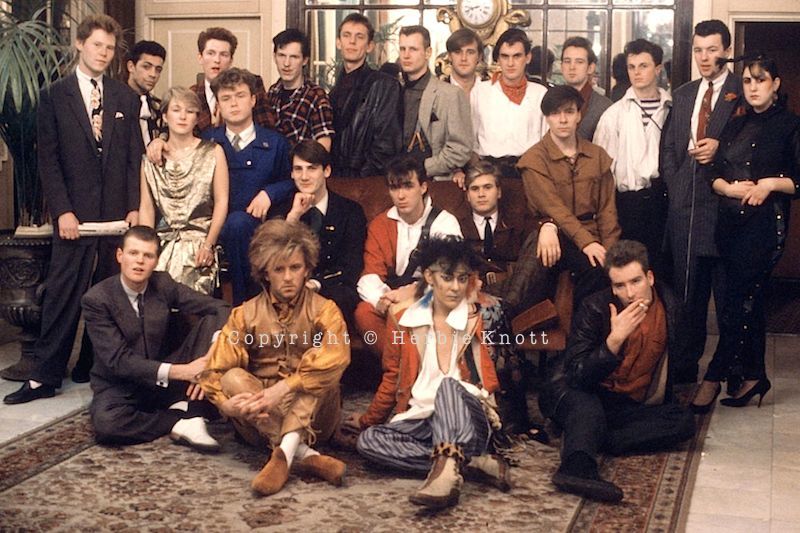
Waldorf Hotel 1980: seated at centre, Spandau Ballet, house band of Covent Garden’s Blitz Club, home of the New Romantics movement, plus support team of Blitz Kids who helped put their first single To Cut a Long Story Short into the UK singles chart at No 5, on 6 December. Average age 20, everyone had a specific role to play in staging and promoting the band: seven musicians, six designers, three media and management, three club-hosts, two DJs, one crimper and 22 egos.
Commissioned by Yours Truly and photographed on 16 December for the Evening Standard © by Herbie Knott

➢ Click to buy New Romantics Who Never Were: The Untold Story of Spandau Ballet, by David Barrat, from Orsam Books, 330pp, £16.99

FRONT PAGE

2018 ➤ That Spandau comeback: breaking news about the venue

New Romantics,youth culture, London, Spandau Ballet, comeback, breaking news, concert, vocalist,

Click on image to visit Spandau’s website in a new window – from 10am May 31

➢ Previously at Shapers of the 80s: Whither Spandau? Expect a bombshell today!

➢ Previously at Shapers of the 80s: So who can fill Tony Hadley’s big Ballet shoes?

FRONT PAGE

➤ Still more unseen pix from the 1980 Blitz Club up for sale next week

ONE WEEK UNTIL YET MORE unseen Blitz Club pix by Terry Smith – this time in black and white – go on show at the Lucy Bell Fine Art gallery in St Leonards, Sussex. All for sale, various sizes, contact Lucy (pictured here) about the 7 June PV.

Blitz Club, Blitz Kids, Terry Smith, New Romantics, clubbing, Swinging 80s, fashion, history, journalism, nightlife, photography, Lucy Bell Fine Art,,
➢ Previously at Shapers of the 80s:
Days 1 + 2 of Terry Smith’s unseen Blitz Club pix in colour

➢ Previously at Shapers of the 80s:
Days 3 + 4 of Terry Smith’s unseen Blitz Club pix . . . plus the resulting Time magazine feature in September 1980

➢ Visit the Lucy Bell Fine Art gallery website

FRONT PAGE

1980 ➤ Day Four of Terry Smith’s unseen photos inside the Blitz Club – exclusive

Nik & Trick Photo Services, Folkestone

A New Romantics keynote was your invented image: startling make-up and a towering hat complete Blitz superstar Peter Probert’s wicked witch of the west

➢ DAY FOUR:
CLICK HERE TO VISIT OUR
GALLERY OF TEN MORE FAB IMAGES
OF THE BLITZ CLUB IN 1980

+++
EVEN AMONG THE UK ROCK PRESS, few of its music historians have conceded that the New Romantics amounted to an ambitious subculture that changed the rules of the game – largely because the rockists completely missed the boat by idolising guitar idols, never went to nightclubs, and what’s more, couldn’t dance.

The most audible consequence of the clubbing underground was to fundamentally change the rhythm of the pop singles charts within a year – from the rock guitar to the bass-and-drum, namely, to dance music. After 1981 scarcely any significant new rock groups made the singles charts, only the old dinosaurs, if at all. Rock was relegated to the album chart and new dance-music stars such as Madonna and Prince transformed the pop music of the new decade.

The other New Romantics keynote was the central role of image with the dawn of MTV as a platform for music videos. A band became the leaders of fashion, while their style-conscious nightlife followers collaborated in promoting them through the clubbing grapevine. As synth-pop pioneers during 1980 Spandau Ballet pushed a button for the fashion-conscious young. They were signalling that the language of pop called for new styles as much as new sounds.

During the first five years of the decade, more than 100 “image bands” and acts entered the UK charts – most of them new, led in the South-East by Ultravox, Linx, Spandau Ballet, Visage, Landscape, Depeche Mode, Kid Creole, Blue Rondo a la Turk. Many more emerged from clubland across the UK: Duran Duran, Soft Cell, Heaven 17, Altered Images, Imagination, Eurythmics, Thomas Dolby, ABC.

During Spandau’s North American tour in November 1983, alongside their hit True among the Billboard Top 40 singles in the USA, there were 17 other British bands – more than the Swinging 60s ever knew. Insolence and narcissism lit a torch that led a generation of school-leavers through what threatened to be Britain’s dark age of unemployment. As clubs became workplaces and nightlife the essential engine of cultural evolution, they liberated music, design and, especially, ambition for the young.

➢ Previously at Shapers of the 80s:
Spandau Ballet create a new template for pop success

FRONT PAGE

➤ Day Three of Terry Smith’s unseen photos inside the Blitz Club – exclusive

Nik & Trick Photo Services, Folkestone

The two Welsh soul-boys, one straight, one gay, who shaped the future of 80s clubland: Chris Sullivan went on to run Soho’s Wag club for 19 years… And Steve Strange, whose Blitz legacy landed him and deejay Rusty Egan the mighty Camden Palace in 1982

➢ DAY THREE:
CLICK HERE TO VISIT OUR
GALLERY OF TEN FAB NEW IMAGES
OF THE BLITZ IN 1980

+++
◼ IN 1980 THE BLITZ CLUB ENTERED its second year: here was your invitation to the Swinging 80s, where daily life would never sound or feel the same again. Paris and New York had taken the cultural lead during the recessionary 70s; now London was to become the creative powerhouse as Britain rode out dark times and its youth culture leapt back into the world spotlight.

In February 1979, the axis of Steve Strange as Tuesday-night greeter and Rusty Egan as deejay had graduated from Billy’s in Soho to the Blitz in Covent Garden. This was a bar decorated with Second World War austerity that was thought to echo the down at heel 70s: bare floorboards, gingham tablecloths, hanging lights with dusty enamel shades, framed pictures of our wartime leader Churchill.

In the post-punk no-wave vacuum, the Blitz’s manager, Brendan Connolly, had been struggling to promote intimate cabaret, and the dressy crowd fostered at Billy’s were cabaret incarnate. Nevertheless it took a full year before the new spirit of optimism expressing itself through fashion caught the attention of the savvy media which in April 1980 included photographer Terry Smith shooting for TIME magazine.

Now in retirement, Terry has exhumed rolls of his film and chosen the best of his colour slides for Shapers of the 80s to publish exclusively. Earlier this week we unveiled 20 of his choice images inside the Blitz and today we showcase a further ten. More to follow on Tuesday.

➢ Previously at Shapers of the 80s:
Days 1 & 2 of Terry’s Blitz pix in colour

FRONT PAGE