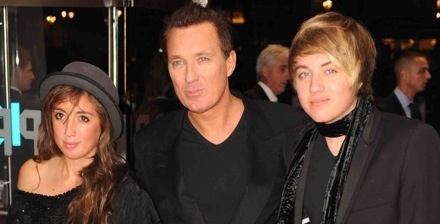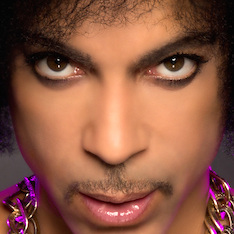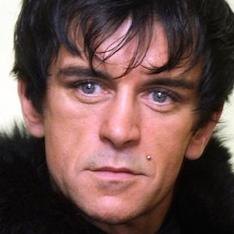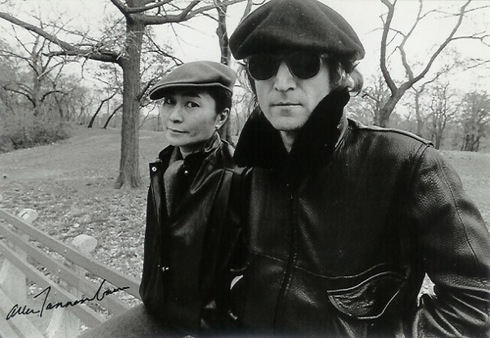
The last pictures: Allan Tannenbaum photographed John Lennon and Yoko Ono throughout November 1980, the month before the murder. The couple were emerging from a self-imposed five-year seclusion to prepare for the release of Double Fantasy, Lennon’s final album
❚ ON THIS DAY IN 1980, ex-Beatle John Lennon, one the few gods in the international pantheon of pop, was shot dead in a New York City street, aged 40. Today it’s impossible to describe convincingly the impact of The Beatles throughout the exhilarating decade we call the Swinging 60s, when their songs themselves became barometers of change.
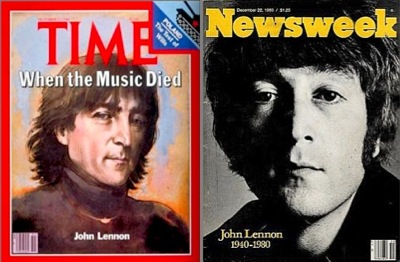
Here is how music journalist and Beatles expert Paul Du Noyer encapsulated the contribution of the Lennon & McCartney partnership (1957-1970) in a mighty partwork published by The Sunday Times in 1997 titled 1000 Makers of Music:
“Whether measured in statistics or simply the love of the common people, the Beatles’ achievement looks unbeatable. And the engine of it all was the songwriting team of John Lennon and Paul McCartney. Before them, nobody dreamt that rock and roll would spawn enduring songs or that English rock could rule the world. Musically illiterate, the two Liverpool teenagers began by aping their American heroes and grew into writers of prolific originality. From the sunny simplicities of She Loves You, or A Hard Day’s Night, to the artful ingenuity of Penny Lane and Strawberry Fields Forever, they dazzled at every turn. Each was rocker and balladeer, lyricist and composer. They were a marriage of truth and beauty: Lennon soul-baring and verbally acrobatic (Norwegian Wood, I Am the Walrus); McCartney having the greater gift for melody (Yesterday, Hey Jude). Mostly they wrote alone, but raised one another’s game. Neither displayed the same consistency after the split [in 1970]. They lacked anyone with the nerve to say ‘Why don’t you change that bit?’ Their key work was A Day In the Life, 1967.”
➢ An index to Paul Du Noyer’s
published work on The Beatles
Today The Beatles hold the records for selling more albums in the United States than anybody else, and they head Billboard’s all-time top-selling Hot 100 list of singles artists, compiled in 2008. At home The Beatles have enjoyed more number one albums in the UK charts than anyone.
In the 60s, the mass media we know had scarcely left the starting line. This was a simpler era when any globally successful pop group was a novelty. When Beatlemania burst, it was a bombshell. The Fab Four, as the band were dubbed, found themselves writing many new rules in the celebrity game which fan worship then transmuted into the cultural phenomenon called Beatlemania — hordes of girls who stalked, pounced and screamed in frenzy — all accurately parodied in Dick Lester’s effervescent films, Help! and A Hard Day’s Night, based on the Beatles’ sudden worldwide fame. It also resulted in a deranged fan shooting his hero Lennon dead.

Typical Beatlemania: the band fly out from Heathrow bound for Austria and public vantage points are abrim with fans. Picture from Getty
Such sway did The Beatles hold, that their Merseyside cheek inspired provincial British pop groups not only to dare take on the unimaginative impresarios of the London entertainment mafia for whom blandness was the key to an act’s success, but then to take on the world showbiz mafia dominated by America, where within corporate frameworks artistic spontaneity might actively be indulged. The Beatles’ music — like the self-expressiveness of rock and roll — had a passion that chimed with the forces of grassroots social change, of liberation, emancipation, the debunking of authority figures, and the reform of cobwebbed institutions such as government, church and unions, all of which had been under attack by the stormtroopers of the satire movement since its dawn in 1960 with Beyond the Fringe.
The early Beatles hits captured the essential “sunny simplicities” of pop, though these acquired darker overtones as the decade matured and the increasingly “affluent society” of the West drew criticism from the New Left. By 1968, the daftness of the hippy dream saw The Beatles setting up Apple Corps. In 25-year-old Paul McCartney’s words this was to be “a business with a social and cultural environment where everyone gets a decent share of the profits. I suppose it’ll be like a sort of Western Communism”. Whateva.
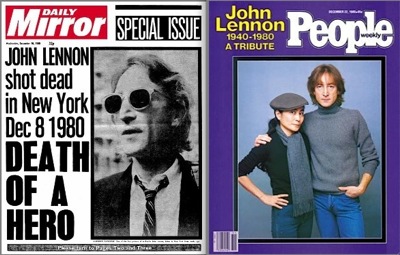
One secret to The Beatles becoming fab was being born in the port city of Liverpool, which had long bred its own resilient sense of humour. The band empathised with the working-class values of their community in ways the few young bloods in London’s middle-aged mainstream media found refreshing. Their heritage also included Liverpool’s role as the “New York of Europe” and home to Britain’s oldest Black African community. Little Richard and Berry Gordy’s Motown were in their blood, and The Beatles maintained the noble trade between Britain and North America which has seen each enhance and export the other’s music in a continuing chain of call-and-response since World War 2.
The songwriting partnership of Lennon & McCartney was unique, as also was their distinct vocal style absorbed from heroes such as Ben E King, and they transformed popular music utterly, never to be equalled. In his most infamous article, The Times’s music critic William Mann concluded in 1963: “They have brought a distinctive and exhilarating flavour into a genre of music that was in danger of ceasing to be music at all.” [See more, below]
Lennon’s own undoubted greatness was co-dependent on McCartney. Moreover, it becomes impossible to estimate the loss to music caused by his early death, when many people feel that, despite his wit and intelligence, his shortcomings hindered him from fully realising his true potential. This was the unsentimental verdict of journalist Maureen Cleave — who had known The Beatles since writing the first significant piece about them — as expressed in her frank and moving obituary for The Observer magazine in December 1980.

My other Evening Standard colleague who knew Lennon well during the Beatles’ later years is Ray Connolly, Liverpudlian author of many illuminating articles on Lennon. Connolly was due to meet him the day after he was shot. (“The last phone call I made before going to bed was to the Lennons’ apartment in New York to tell them that I would be in New York at lunchtime the following day.”) He agrees the Beatle was no saint, but he was “someone who wrote and played rock and roll music better than virtually anyone else”. In addition: “When he died millions of people mourned the loss of a friend. His real genius was in his ability to communicate. He was to perfection a creature of his times.”
In his instant paperback published by Fontana within two months of Lennon’s shooting, Connolly writes:
“[The American composer] Aaron Copland once said that when future generations wanted to capture the spirit of the 60s all they would have to do was to play Beatle records. That’s true, but I would go further. Future historians will find that understanding of the 60s and the 70s widened immeasurably by focusing on the life of John Lennon. From Liverpool war baby to killer’s victim just across the road from Central Park, Lennon’s every interest told a story of the times. The widespread grief at his death was compared with the mourning which followed the assassination of President Kennedy [in 1963]. No one should have been surprised, though many were.”
One of the reasons was that “Lennon chose the role of anti-hero for much of his life, casting off the trappings of glamour, throwing aside the shell of lovable immortality. John Lennon would never have made a politician. Political heroes are pragmatists. That is their job. John Lennon had no time for pragmatism. He was outspoken about everything and everybody, and then bore the consequences for his outrageousness.”
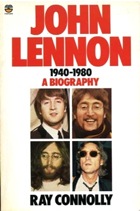 — Extracted from John Lennon 1940-1980, a biography by Ray Connolly (Fontana 1981). For many more interviews with all the Beatles, visit Connolly’s website and archive that includes Lennon: The Lost Interviews in which the journalist claims that “arguably one of Lennon’s most inspired acts was his deliberate destruction of The Beatles in 1969”. Connolly’s latest novel The Sandman arose from his years writing about rock music, not least about John Lennon and the Beatles, and is now available on Kindle
HARMONIC ORIGINALITY AND RICHNESS
UNKNOWN TODAY
In 1000 Makers of Music critic Ian MacDonald summarised the contribution of the Beatles as a band:
“As expressive of England in the 1960s as the music of Benjamin Britten in the 1950s, The Beatles made some of the world’s best music during their decade (1960-1970)… from the infectious melodies of their early beat-group years, through the LSD adventure of their central period (Revolver, 1966, and their key work Sgt Pepper’s Lonely Hearts Club Band, 1967). Each member of this Liverpool foursome made a vital contribution to a sound that blended boldness of melody and rhythm with a harmonic originality and richness of detail unknown in today’s pop… The Beatles redefined pop, revolutionised studio recording and completely dominated the culture of the 1960s. Their influence remains omnipresent.”
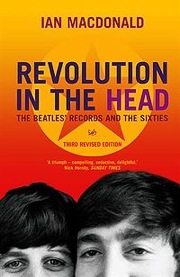 — Ian MacDonald was the author of the monumental song-by-song analysis, Revolution in the Head: The Beatles Records and the Sixties (Pimlico).
His real name was Ian MacCormick and the book is worth consulting also for his essay Fabled Foursome, Disappearing Decade, on the social effects of the 1960s.
FOOTNOTES TO HISTORY
Richard Williams’s obituary for Ian MacDonald (1948-2003) in the Guardian noted: “Probably no other critic — not even the late William Mann of The Times, with his famous mention of pandiatonic clusters — contributed more to an enlightened enjoyment of the work of The Beatles than Ian MacDonald, who has died aged 54. In his book Revolution In The Head, first published in 1994, MacDonald carefully anatomised every record The Beatles made, drawing attention to broad themes, particular examples of inspiration and moments of human frailty alike. What could have been a dry task instead produced a volume so engagingly readable, so fresh in its perceptions and so enjoyable to argue with that, in an already overcrowded field, it became an immediate hit.”
Sample William Mann’s legendary and hilarious critique of Beatles technique from 1963:
“… One gets the impression that they think simultaneously of harmony and melody, so firmly are the major tonic sevenths and ninths built into their tunes, and the flat submediant key switches, so natural is the Aeolian cadence at the end of Not A Second Time (the chord progression which ends Mahler’s Song of the Earth) … Those submediant switches from C major into A flat major, and to a lesser extent mediant ones (eg, the octave ascent in the famous I Want To Hold Your Hand) are a trademark of Lennon-McCartney songs … The other trademark of their compositions is a firm and purposeful bass line with a musical life of its own; how Lennon and McCartney divide their creative responsibilites I have yet to discover, but it is perhaps significant that Paul is the bass guitarist of the group.”
➢ Extracted from What Songs The Beatles Sang
by William Mann, music critic of The Times
➢ William Mann’s monumental review of the Sgt Pepper album in 1967: The Beatles revive hopes of progress in pop music
FRESH INSIGHTS INTO BOY AND MAN
Over the past year Lennon’s life has twice been intelligently dramatised. In Nowhere Boy, visual artist Sam Taylor-Wood made her film debut directing several exceptional acting perfomances in an emotionally convincing evocation of Lennon’s adolescence during the austere 1950s, based on a novel by Lennon’s sister. For BBC television, Edmund Coulthard directed Lennon Naked, an unsentimentally credible account of Lennon’s confronting the desperate emotional crossroad that caused him to destroy the Beatles and abandon his wife and son for Yoko Ono.
DISILLUSIONED LENNON ON SELLING OUT
“When we played straight rock, there was nobody to touch us in Britain. As soon as we made it [as The Beatles], the edges were knocked off us, and Brian put us in suits. But we sold out. The music was dead before we even went on the theatre tour of Britain [Feb-June 1963, supporting other acts such as Roy Orbison]. We had to reduce an hour or two of playing to 20 minutes and go on and repeat the same 20 minutes every night. The Beatles’ music died there. As musicians we killed ourselves then.”
➢ John Lennon speaking in The New York Years
— this week’s BBC Radio 2 documentary by Susan Sarandon
Lennon’s Aunt Mimi Smith on his music
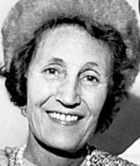 “He used to drive me mad with his guitar playing, and I’ll always remember telling him, ‘The guitar’s all right for a hobby, John, but it won’t earn you any money’.”
➢ View the complete 1981 video interview
with Aunt Mimi
➢ 20 most underrated John Lennon tracks in NME Dec 14, 2010
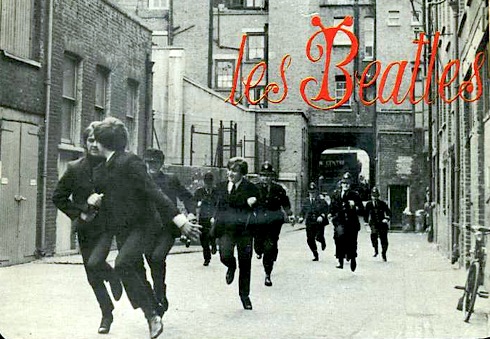
Beatlemania: the band on the run from fans and police in Dick Lester’s 1964 film A Hard Day’s Night
FRONT PAGE