Category Archives: Pop music

2010 ➤ What a tear-jerker! McLaren mashes up his own musical ‘Requiem to Myself’

LISTEN TO MCLAREN’S REQUIEM
EXCLUSIVELY AT SHAPERS OF THE 80S

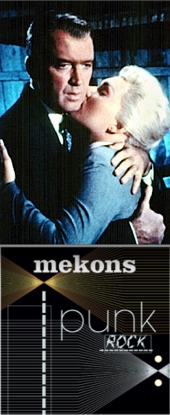
Hitchcock , Vertigo, The Mekons,

Romance and anguish: James Stewart and Kim Novak in the psycho-drama Vertigo (top), and the post-punk Mekons

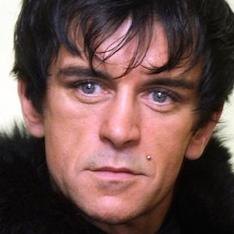
◼︎ TWO UNEXPECTED RECENT VIDEOS have acquired poignant new life in the wake of Malcolm McLaren’s death, Svengali of punk that he was. Few people could have guessed that the soundtrack to one of last month’s Paris ready-to-wear fashion shows [in the video above] would be McLaren’s final creative achievement.

It was completed after his diagnosis of cancer and possibly in acceptance of his own mortality.

What seduces the listener is the overwhelming melancholy McLaren evokes, in what suddenly amounts to a Requiem to Myself. It was commissioned by Dries Van Noten – to set a deliberately discomfiting mood for his runway show amid the gilded opulence of the Hôtel de Ville in Paris on March 3.

After McLaren’s funeral, his partner Young Kim described the piece to Shapers of the 80s as “quintessential Malcolm McLaren – an entirely original and powerful, elegant but punk collage”. She gave us permission to run the full 13-minute mash-up in clean mp3 format, featuring the Vertigo theme, Mekons, Roxy, Raincoats and Burundi Beat.

➢ CLICK HERE for the full McLaren/Dries Van Noten soundtrack and background report on its creation on our inside page

➢ The Raincoats perform The Raincoats for Don’t Look Back in London, May 20, 2010, at The Scala in London

➢ More at Shapersofthe80s: Svengali of Pistols and punk remembered by those who knew him

++++++++++++

McLaren on how to fail brilliantly
in this ‘karaoke world’

◼︎ “THIS WORLD WE LIVE IN TODAY is no more than a karaoke world, an ersatz society, which provides us with only the opportunity to revel in our stupidity… A karaoke world is one in which life is lived by proxy.” So said Malcolm McLaren last October, only days before he discovered he was unwell. He was presenting a keynote speech to 1,000 delegates in London at the Handheld Learning Conference 2009 about the future of learning and education.

➢ Details from the Learning Conference also on our inside page

FRONT PAGE

2010 ➤ Punk glitterati see McLaren noisily to his grave

Malcolm McLaren ,funeral, punk, 2010, London

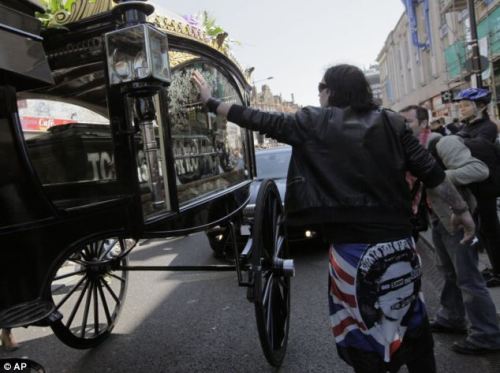
Black horses, black plumes, black-toppered pall-bearers: In Camden, a tattooed punk honours the hearse carrying McLaren while sporting a God Save the Queen souvenir from his hero’s Jubilee collection of 1977. Picture © AP

❚ THE ARCHITECT OF BRITISH PUNK was buried in bright sunshine in London’s Highgate Cemetery this afternoon, not many plots away from that other revolutionary, Karl Marx. For all the cheering and irreverence and mild expressions of anarchy that made this an exuberant funeral for Malcolm McLaren, the former manager of the Sex Pistols, few people beyond the fashion world appear to have discovered his last musical creation, an astonishing romantic soundtrack to a Paris fashion show, aired only the month before he died. It can be heard in part on the fashion video in the post dated April 23 (above) and in full as an mp3 audio stream. The music now assumes near gut-wrenching poignancy.

funeral , Malcolm McLaren, 2010, London, Jordan, Mark Moore

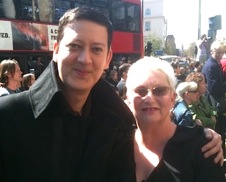
Seeing Malcolm off: At the church club deejay Mark Moore met up with McLaren’s punk protégé Jordan, the platinum-blonde who appeared in Sex Pistols shows and starred in the movie Jubilee. Today she works as a veterinary nurse. Photograph © by Richard Law

Music was a constant accompaniment to today’s events. When told the mourners would be asked to sing You Need Hands, which McLaren immortalised in the Sex Pistols film The Great Rock’n’Roll Swindle, his ex-partner, fashion designer Vivienne Westwood said: “It’s actually better when you hear Malcolm’s version. He sang it so well and so beautifully. I’ve been playing that song more than anything since he died. It makes me cry.”

Boy George had sent a wreath of crimson flowers shaped in an A for anarchy sign which sat on the horsedrawn hearse during its four-mile procession from a secular gathering at the deconsecrated church of St Mary Magdalene in Marylebone, central London, northwards through Camden Town. Sex Pistol Sid Vicious’s version of My Way blared from the bus carrying celebrants.

Dozens of punks followed the black coffin sprayed with the mantra “Too Fast To Live Too Young To Die” — the name of the Chelsea shop McLaren opened in 1972 with Westwood. Joseph Corré, McLaren’s son with her, asked that people mark his passing with a “minute of mayhem” at midday. Among the selection of mayhems reported at Guardian Online was one from Gareth100 who wrote: “I managed to shrug my shoulders in apathy for a full minute. Now I’m going for a nap. Will this do?”

➢➢ McLaren’s funeral cortege videoed by irencid

➢➢ View the ITN video of McLaren’s funeral

➢➢ View The Guardian picture gallery of McLaren’s funeral

➢➢ Tributes following McLaren’s death, from those who knew him

FRONT PAGE

1985 ➤ Nnnnn-na-na-na, nnnnn-na-na, Nineteen

Paul Hardcastle, Nineteen,pop video

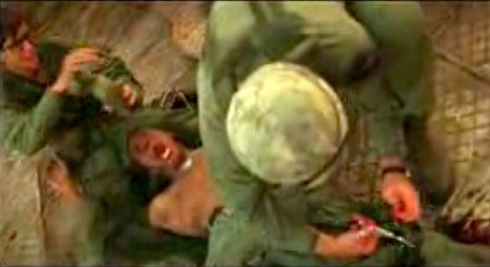
Vietnam conscripts: their average age was 19

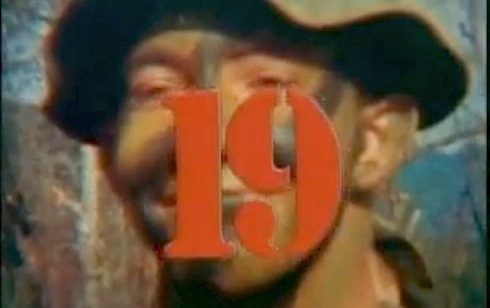
◼ IN 1985 THE LONDON MUSICIAN Paul Hardcastle stunned Europe with his hynotic anti-war hit, 19, which spent weeks at No 1 in the charts. It was effectively a rap sampled from the voiceover to the Emmy-nominated documentary Vietnam Requiem, which made the shock claim that “In World War Two the average age of the combat soldier was 26. In Vietnam he was 19.” This year, Hardcastle was watching a documentary about British soldiers serving in Afghanistan when he heard an officer say: “I looked at my men. The average age was 19 — my God, I’m taking boys to war.” For the 25th anniversary of his hit Hardcastle updated and wrote a new version of 19 called Boys To War which was released yesterday in the UK.

Sadly, the infinitely more visceral original from 1985 knocks spots off the languid new version, while this stark Tribute To Vietnam Vets achieves its own stomach-churning effect.

Paul Hardcastle, Nineteen, Vietnam war, video

The grim truth: field surgery for a teenage Vietnam combatant

FRONT PAGE

1978 ➤ Midge stakes his claim as the weathervane of synth-pop who helped shape the British New Wave

Rusty Egan, Steve Strange, Midge Ure, Visage, synth-pop, new wave, electro-pop, Rocking the Blitz,BBC

Visage Mk 1: Egan, Strange and Ure in 1978 searching for sounds and styles

❚ “I’LL NEVER FORGET FIRST TIME I SAW a synthesiser on Tomorrow’s World. For the first time I saw the possibility to create sounds that had only existed in my head. I’d had no chance of getting my hands on one because they were size of house or at least the cost of one. But then cheaper Japanese synths came on the market, so I bought one. It changed my life because I could make music in a small home studio. The possibilities for young musicians like myself seemed endless.”

This was Midge Ure enthusing during Rocking the Blitz Club (audio at YouTube), another remarkably well-informed BBC Radio 4 documentary on our favourite scene that went out this morning. It was also remarkable for handing over the commentary to Ure, who — despite having earned an OBE for being half the brains behind Band Aid’s smash hit for charity in 1984, and being a founder member of Visage and the voice of Ultravox’s directional chart hit Vienna — is not among the first rank of mythologists programme-makers wheel out to explain the Blitz phenomenon.

This R4 slice of the 80s gave us a refreshingly different take on the familiar fables recycled by the usual suspects, but mediated in this show by Midge’s deeply un-London Lanarkshire lilt. He’s more than qualified to stake his claim to have shaped the music of the Blitz Kids, though he’s reluctant to be described as one of them, being a good four years older, and having had fingers in more pop pies than most on the post-punk scene. Even as the word punk was given the heave-ho in favour of the term “new wave”, Ure was probably the first active player of a synth among any of his clubbing pals, having bought his first, the polyphonic CS-50, at cost direct from Yamaha in the summer of ’78.

His was an obsession shared by fellow Rich Kid, the drummer Rusty Egan, and it led the way to a whole new British dancefloor sound. Ure felt synths “embodied a kind of nostalgia for the future”.

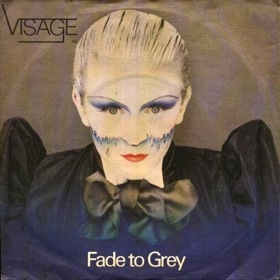
Visage, Fade to Grey,He says: “Rusty and his friend Steve Strange realised our crowd needed somewhere to try out our styles and listen to Euro synth bands like Kraftwerk, Dusseldorf and Telex, whose cutting edge sounds seemed to represent the future.” In almost no time the tribal forces of fashion had granted their wish. Rusty’s deejaying at Billy’s in Soho was augmented by Strange vetting the door to ensure an extreme clubbing attitude, then as 1979 dawned their band of outlandishly dressed clubbing heroes descended on the Blitz.

In his straight-from-the-hip autobiography, If I Was, Midge Ure makes the bold claim: “I had this idea to make music to play in the club. We had to invent our own musical style because our points of reference were very limited — after Kraftwerk, Yello and early Bowie we ran out of influences.” His own taste was for the very textured sounds of the synth built round classic songs, which intuitively caught a mood, unarticulated at that time, for a return to melody. And yet …

“A synth is just a software program and it has a very specific sound — a cold European soulless sound that drummers couldn’t emulate. Only a machine could do this,” he says with eagerness appropriate to a new-wave innovator. “Everybody aspired to be a robot — we didn’t want any human element in there at all, so people sang in a very robotic way. It was not going to sound like Jimi Hendrix. It was going to sound like a watered down version of Kraftwerk.”

❚ MIDGE IS THE ONLY PERSON AMONG THE NEW ROMANTICS to go on record and acknowledge the role of Gary Numan, an otherwise dread name who was perceived as an aloof and unclubbable loner. He definitely never signed in at the Blitz. Yet as 1979 unfolded Numan’s dystopian sci-fi synth sound sidestepped the Blitz Kids to reach No 1 in the UK charts, twice: in May with Are Friends Electric? and in September with Cars. They were blatantly commercial records and that wasn’t how Blitz Kids defined cool.

But Ure recognised Numan had broken down barriers of disapproval within the old guard of the music biz. He was being a great spur. Ure dreamed up the name Visage for his new band who knocked out a demo covering the classic In The Year 2525, with Egan on drums and the eye-catching Strange posing away as vocalist after a few lessons from Ure. Despite music industry scepticism, it won them a deal with Radar Records, the attention of producer Martin Rushent who had an office above the Blitz, and helped rope in Magazine members Dave Formula, John McGeoch and Barry Adamson, and Ultravox keyboardist Billy Currie. A single called Tar was released that September. It didn’t chart, but did clinch them a bigger deal with Polydor in 1980.

Midge Ure, Vienna, Ultravox

The day job: in 1979 Midge Ure (moustachioed) resurrected the name of Ultravox along with (l-r) Warren Cann, Chris Cross and Billy Currie. © Getty

Ure says: “Visage was never really a proper band, just a group of our favourite musicians who we brought together to make experimental music for the Blitz club. Because they were all signed to other labels we chose Steve Strange as our frontman because he looked the part.” This worked well enough. Even while Ure and Currie part-timed with the seven-man studio-only Visage line-up, while steering Ultravox along similar synth-pop lines, Visage put out two successful albums, and a handful of chart singles (the most enduring being Fade to Grey in November 1980). What laid the pathfinding flares for the movement were some uber-stylish art-videos — the first starred Blitz coat-check girl Julia Fodor before she became the fabulous princess and deejay — which disseminated the OTT New Romantic ethos for fans to emulate.

Ure scored the significant double of taking Ultravox’s majestic Vienna to No 2 a month later and for four weeks, then seeing it win Single of the Year at the 1981 Brit Awards. It was produced by the German Conny Plank with an evocatively romantic landmark video stunningly directed by Russell Mulcahy who was creating a whole visual vocabulary for the then novel music video. Ure can take full credit as lead singer and guitarist for breathing a subtle blend of Roxy Music’s style and krautrock clarity into Ultravox and building them into a credible vanguard for the electronic New Wave.

Reflecting back in the R4 doc, Ure says: “There’s no doubt the early 80s was a golden age of music made by real popstars who created themselves. It was more than just padded shoulders and asymmetrical haircuts. It was a pivotal moment in our cultural history when new tech mixed with new ideas to create something really good. All in the pressure cooker environment that was the Blitz club.”

FRONT PAGE

2010 ➤ McLaren – Svengali of Pistols and punk remembered by those who knew him

❚ MALCOLM McLAREN, THE SVENGALI OF PUNK, DIED YESTERDAY AGED 64. One of his most quotable quotes was delivered to Shapersofthe80s in 1983: “What we create on the streets out of the dustbins of England is an extremely exportable commodity.”

❚ CHRIS SULLIVAN, club-host, Blue Rondo singer and author of Punk (Cassell) “I first met Malcolm McLaren in 1976. I was a naive 16-year-old hot off the bus from South Wales and wandered into his shop Sex, in the armpit of the King’s Road. He invited me to a Sex Pistols concert that night and it changed my life.” ➢➢ Read Sullivan’s full appreciation in The Times, April 10
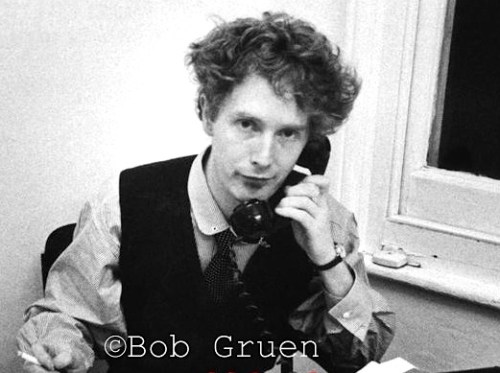
Malcolm McLaren, 1977, Bob Gruen

Malcolm McLaren in 1977: Sex Pistols manager and punk’s Svengali

❚ GARY KEMP of Spandau Ballet was first to summarise McLaren’s influence for Shapersofthe80s: “He drew up the road map by which we all found success. I am shocked and reminded of my own mortality.”

❚ KIM BOWEN, fashion stylist and former Blitz Kid, said “Malcolm left his diary at my house once. I nosed, obviously: ‘There are Fashion Victims everywhere, I’m a Fashion Beast.’ He was.”

❚ RUSTY EGAN, deejay and former Blitz Kid “Malcolm was the Fagin of entertainment, teaching the young how to sell their youth for his benefit.”

❚ DEREK RIDGERS, photographer of the punk years “He had a lot of radical ideas but his true talent was the ability to wind up and goad the media.”

❚ GRAHAM K SMITH, TV exec “Talcy Malcy? The arch Situationist, cultural prankster and near-psychic futurist. He was a seer, who took glee in monetising tomorrow – classically, chaos into cash.”

❚ ANDY POLARIS, former singer with Animal Nightlife “A master manipulator, a magpie and a maverick.”

❚ JAY STRONGMAN, club deejay, said “Malcolm was a true cultural visionary … an alchemist who mixed history, politics, rock’n’roll and fashion to try and create an alternative future and had fun doing it. Some say Malcolm was Britain’s Andy Warhol but I think that does Malcolm a disservice… In terms of popular culture Malcolm was much more influential than Andy Warhol.”
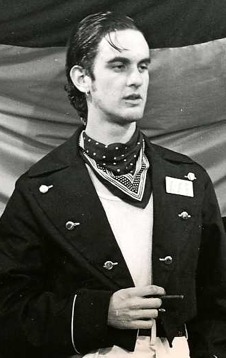
Simon Withers, 1980, Neil Matthews

Simon Withers in 1980. Photographed © by Neil Matthews

❚ SIMON WITHERS, one of the original fashion designers who defined the New Romantic era, and in 1983 worked on the final Worlds End collection before McLaren and Westwood split “I am really shocked by the news. Malcolm was dangerous and inspiring. I have been lucky enough to work with five mentors, he and then Vivienne being the first. Nothing compared to the scale, ambition and sheer Dickensian cheek of what I was shown working with Malcolm and Vivienne. There was a fundamental inquisitiveness about them.

“I worked three days and two nights making stuff in Paris for the last Worlds End catwalk. Vivienne and Malcolm were about to split up, as was the company. What I saw working with them both was that Vivienne had the tenacity and the intense focus, but certainly it came to little without Malcolm. After Paris, I left Vivienne’s workshop for Malcolm’s. He, Andrea Linz and I worked for a year on two or three collections. We did some really good work to find that Malcolm sold our ideas to Jean Paul Gaultier.

“One side of Malcolm that seems to be little written about is that he was a remarkably generous and attentive host and was very kind in surprising ways.”

Read how Shapersofthe80s broke the exclusive news
of the Worlds End split in Paris, 1983

➢➢ Pictured together on the very day Malcolm and Vivienne parted
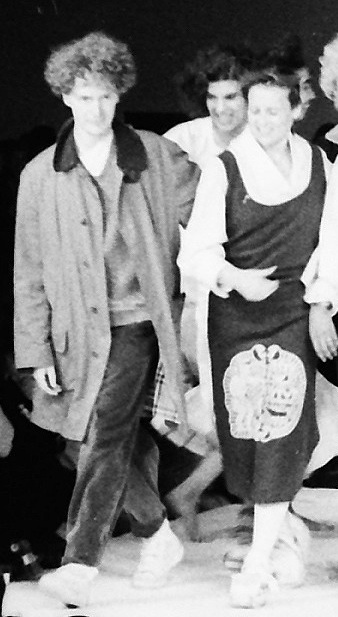
Vivenne Westwood, Malcolm McLaren, Paris 1983, Worlds End, Picture © by Shapersofthe80s

Their last public appearance together, on a Paris runway in 1983... Westwood says: “Malcolm has one more chance to be good.” McLaren says: “I’m not incapable of designing the next collection myself.” Photographed © by Shapersofthe80s

AMONG THE FIRST TRIBUTES THAT WERE PAID

❚ DAME VIVIENNE WESTWOOD, ex-lover and business partner and fashion icon “The thought of Malcolm McLaren dead is really something sad. When we were young and I fell in love with Malcolm, I thought he was beautiful and I still do. I thought, he is a very charismatic, special and talented person. We hadn’t been in touch for a long time. Ben [her son] and Joe [the couple’s son] were with him when he died.”
Vivienne Westwood, Joe Corre, 2008, Condenast

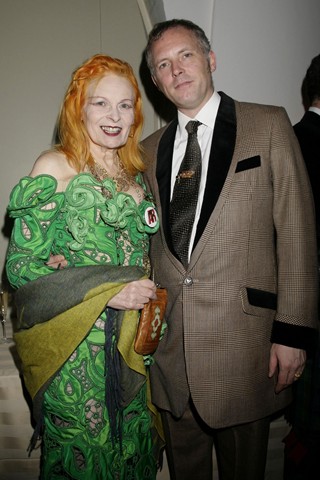
Mother and son: Vivienne Westwood and Joe Corre in 2008

❚ JOSEPH CORRE, son and co-founder of Agent Provocateur “He was the original punk rocker and revolutionised the world. He’s somebody I’m incredibly proud of. He’s a real beacon of a man for people to look up to.”

❚ YOUNG KIM, his partner of 12 years “Everything he did was groundbreaking, as an artist he carried on the link from Andy Warhol. I think Malcolm recognised he had changed the culture.”

❚ BARRY MARTIN, his tutor at Goldsmiths college, 1968 “Where he was clever was in using other people to do his bidding without them realising. I didn’t like him much – I didn’t like the manipulation of people’s souls.”

❚ JOHN LYDON, ex-Sex Pistol “For me Malc was always entertaining and I hope you remember that. Above all else he was an entertainer and I will miss him, and so should you.” ➢➢ Video: despite Fox News spoiling for some dirt on McLaren, Lydon does the decent thing “I missed him almost immediately I heard.”

❚ MARCO PIRRONI, Ants guitarist “He didn’t need to accept people who disagreed with him. He wasn’t a stroll in the park.”

❚ ANNABELLA LWIN, singer with Bow Wow Wow “He was a strange creature from another planet” ➢➢ Full interview with Annabella Lwin at EntWeekly

❚ JULIEN TEMPLE, who directed the 1980 Sex Pistols film The Great Rock’n’Roll Swindle “Malcolm was an incredible catalyst. To be in the room with him was to be bombarded with energy.”

❚ SYLVAIN SYLVAIN, founding member of punk rock band the New York Dolls “Malcolm opened up the doors for punk music around the world. He was a visionary and took what was going on in New York City and made it global. His passing represents the final chapter in an era when music was exciting.”

❚ BOB GRUEN, veteran celebrity photographer “What he really wanted was for the New York Dolls to wear his clothes, but the Dolls were falling apart at that time. They credited him with saving their lives because he put [some of them] into rehab… and revitalized them for a little while – long enough to wear his clothes.”

❚ GARY ‘MANI’ MOUNFIELD, Primal Scream and former Stone Roses bassist “What Malcolm and the Sex Pistols started was a generation of musicians who had the balls to think for themselves and challenge the normal working practices of the recording industry.”

❚ TONY PARSONS, author and 70s music journalist “Malcolm gave us our haircuts, our direction and even our clothes. He gave us our look and our swagger.”

❚ NEIL SPENCER, editor of music weekly NME 1978-85 “Malcolm was a loveable rogue, but he wasn’t always loveable either.”

AND ON FACEBOOK

❚ MARK MOORE, club deejay “The man was always such an inspiration and a real pleasure to work with. So very sad.”

❚ JANETTE BECKMAN, photographer
“Malcolm McLaren R.I.P. – impresario, music and fashion genius.” See pix: “Hey DJ let’s play that song keep me dancin’ all night”


BBC REPORT, April 8, at 22:08 GMT

“Malcolm McLaren, the former manager of punk group the Sex Pistols, has died aged 64, his agent has said. McLaren, the ex-partner of designer Vivienne Westwood, was believed to have been diagnosed with cancer a while ago. He set up a clothes shop and label with Westwood on London’s King’s Road in the 1970s and was later a businessman and performer in his own right. The couple had a son, Joseph Corre, the co-founder of lingerie shop Agent Provocateur. His agent told the BBC that McLaren passed away on Thursday morning. He died in Switzerland, according to his family. His body is expected to be returned to the UK for burial.”

GOOGLE, April 9, midday

“Results 1 – 10 of about 83,200,000 for ‘Pistols manager Malcolm McLaren dies’.”

Vivienne Westwood, Malcolm McLaren, 1971

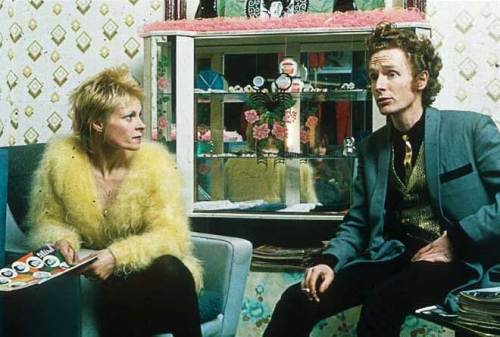
Vivienne in her new spiky dyed-blonde hair and the newly graduated Malcolm in summer 1971 when he changed his name from Edwards to McLaren... They became home-makers and business partners in their first retail outlet done out as a 1950s Teddy Boy’s suburban sitting-room in Paradise Garage at 430 King’s Road, Chelsea. They named it Let It Rock and a great British subcultural saga had begun as they took over the shop, which evolved into Too Fast To Live Too Young To Die, SEX, Seditionaries, and in 1980 into Worlds End which is still there today

VIDEO MEMENTOES OF McLAREN

➢➢ Adam Ant on Malcolm “Skin like Napoleon and a nose to match” – MTV video from 1990 of Adam telling the story of how he met one of Britain’s most irrepressible cult figures
➢➢ McLaren’s Enough Rope interview for ABC TV, 2008 Q: What is it you actually do for a living? A: Somehow I remain permanently cool
➢➢ McLaren’s solo performances include the landmark Buffalo Gals video, which parodied a 19th-century US black-face minstrel standard in weird square-dancing style, complete with Westwood silly hats in 1982
➢➢ Inspiration for Madge? The Bootzilla Orchestra, Deep In Vogue, 1989


How punk bridged the class divide

❚ JON SAVAGE, music writer and author of England’s Dreaming (Faber) “That Malcolm McLaren’s death has made such an impact should not come as a surprise, as it reinforces the privileged place that punk had and still has on our national consciousness. Anyone under 40 or so will have grown up with this as a fact, but for those who were there at the time, there will always be a slight sense of wonder: how did a minority cult have such a powerful impact?”
➢➢ Read Savage’s full piece in The Independent, April 10


A MUSICAL HISTORY LESSON FROM DURAN DURAN’S BASS PLAYER

❚ JOHN TAYLOR on his band’s website “Before Malcolm being a musician in England meant you had to read music, and clock up years of dues and motorway miles, hours of practice and play interminable solos wherever possible. Malcolm’s attitude changed everything. Without him, no punk rock revolution, no Anarchy in The UK, no Never Mind The Bollocks. No Sex Pistols, no Clash. No Duran Duran…”
➢➢ Read on – “Just check out the playlist on the jukebox of ‘Sex’.”


THE OBITUARIES

➢➢ The Times of London McLaren, punk who shook up the Seventies
➢➢ New York Times “I Will Be So Bad”
➢➢ The Guardian Blood, spit and tears as the punk provocateur dies
➢➢ Financial Times Punk Svengali: “Beaten up several times during his time in the Sex Pistols, McLaren was an uncaring dilettante who treated the violence unleashed by punk as just another ironic stunt.”
➢➢ The Daily Telegraph Svengali and arch media manipulator
➢➢ The Independent Drab world of pop needs McLaren’s brand of anarchy
➢➢ BBC News “Charlatan, hustler, plagiarist and … the most evil person on earth”

POSTSCRIPT

➢➢ The Independent Asbestos from his punk shop “killed McLaren”

FRONT PAGE