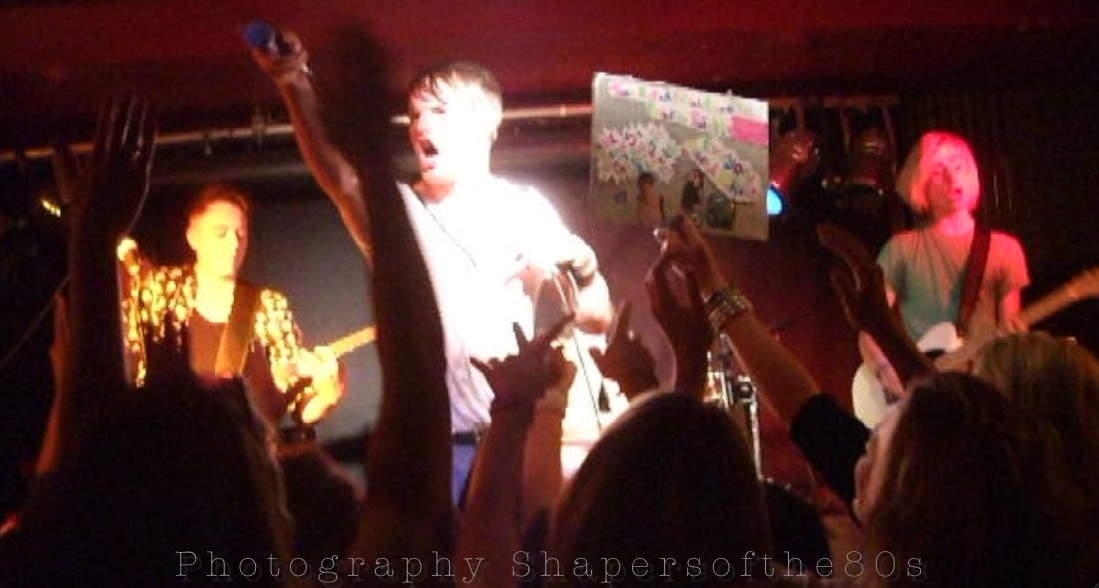
◼ THIS WEEK BASSIST ROMAN KEMP told Hemel FM: “We’ve only been around for eight months so we’re amazed by how it’s been going. The other day we were confirmed for the Wireless Festival on Sunday. We were amazed. Playing before Pulp!”
OK, a bit of artistic licence there. The club scene’s dynamic pure-pop teen band Paradise Point are scheduled to strike up at exactly 15:20 in Hyde Park, which is about four hours before Grace Jones goes on, to be followed by Jarvis Cocker’s band Pulp who top the bill at the three-day fest. All the same, Kemp wasn’t exactly overdoing the crowing rights. This gig is a huge coup for a bunch of live 18-year-old popsters without a recording deal.
In the audience for Paradise Point at Islington’s O2Academy: Spandau manager Steve Dagger and Martin Kemp vote Roman Kemp’s band a hit. So no surprises there, then.
Call of the Wyld is a blogger who “tracks young, new and exciting bands as they emerge” and last month he wrote: “This lot are sex on legs and even if they weren’t actually any good they would still find it hard to walk on stage without being shrieked at. Fortunately their music is excellent too. These are real pop gems — certainly 80s inflected, but delivered with a whomp and panache that would put a lot of other acts to shame. The Only One is a track that is going to get them a lot of attention.” As a taster or three, view PP’s live debut last November (below), videoed by Shapersofthe80s, scan our first PP concert review and give the Hemel FM interview a spin:/%20
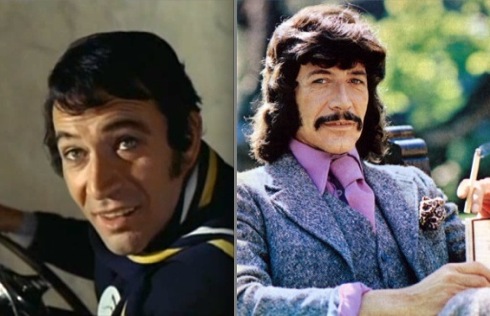
From villainous to tasteless: At the age of 32 Peter Wyngarde was distinguished enough to guest-star as the sinister Number Two in the epic TV series The Prisoner (1967). Two years later he created the novelist-cum-sleuth Jason King in Department S
❚ EMMA PEELPANTS is a keen-eyed blogger who plunders magazine and retail archives in search of 60s clothes and the whole vulgar, vibrant style of that swinging decade. Once in a while, she has a mensday and today she exhumes that male stereotype, “the heel” — the overbearing, amoral lothario who 40 years ago fancied himself rotten and treated women as playthings. Miss Peelpants publishes a hideously recognisable illustration of a heel from a copy of the teenage magazine 19, dated 1972, where one such sophisticat is grinding his heel into a bevvy of scantily clad girls. 19’s Guide to Recognising a Heel shows the just-got-out-of-bed coiffed hair, the bandito moustache, the whisky-and-cigarette in one hand, plus total absence of a smile, which he would have deemed too uncool.
To anybody of a certain age, the dandy in the illustration is all too visibly based on the actor Peter Wyngarde who shot to fame playing exactly this kind of international playboy in two late-night TV espionage series at the dawn of the 70s, Department S and Jason King. These expressed notions of contemporary glamour by being set in airports and beside Riviera pools. Their action-hero won awards as the “Best Dressed Man In Britain” while Sun readers voted him the “Man With the Sexiest Voice on Television”.
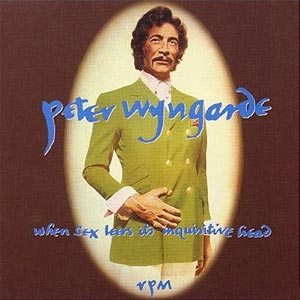
What Emma links us to is possibly the most offensive song ever recorded by a star considered suave in his day. The one-off “comedy” album for RCA in 1970 was titled Peter Wyngarde and billed as dwelling on “the darker side of human behaviour”. It was said to have been withdrawn from sale after four days. Unbelievably it was re-released on RPM in 1998 retitled When Sex Leers Its Inquisitive Head with a “Don’t buy this” warning on the sleeve. As a model of appalling bad taste it not only leaves no innuendo unturned, but contains one track actively celebrating rape.
Lest we doubt that political correctness has delivered a few benefits over the years, the Lipstick Thespians have posted this number on YouTube. For those who wish to avoid hearing Wyngarde’s ripe spoken-word rendition, the Thespians have posted the full wince-making lyrics (words and music by Hubert Valverde and Peter Wyngarde). Many people feel that the actor met his just desserts when he wrecked his career in what politicians euphemistically call a moment of madness in 1975. He’s still alive and kicking and signing autographs, now aged 77.
Now feel the pain of date rape
❏ RHODA DAKAR (left), lead singer of The Bodysnatchers, but here as The Special AKA, made The Boiler the strongest single of 1982 in this writer’s opinion, and deeply chilling. Despite being shunned by the safe daytime BBC radio deejays, it was well played by John Peel and spent five weeks in the UK singles chart, reaching No 35. The rare video below has ropey vision but good audio and it pays to listen right to the end.
Jerry Dammers formed The Special AKA, along with Dakar and John Bradbury, after The Specials announced their break up in 1981. Their first single release was The Boiler by Rhoda with The Special AKA (written jointly by the band and produced by Dammers on 2-Tone Records in Jan 1982).
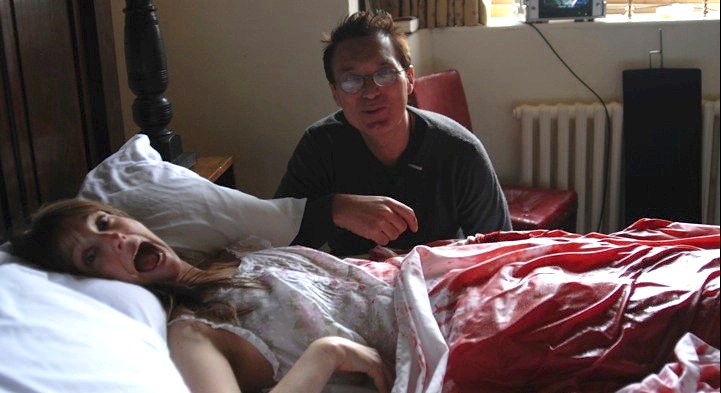
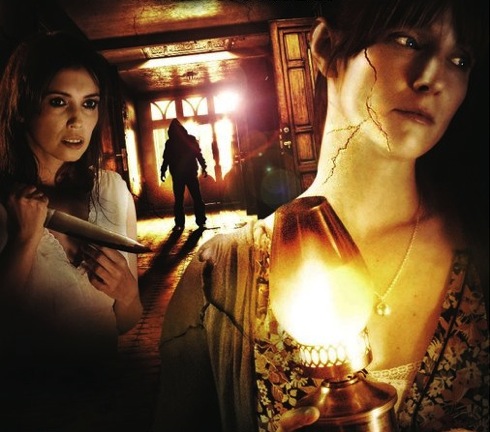
Martin Kemp turns manic murderer? No, just directing his star Anna Brecon on the set for Stalker
❚ WONDERING WHAT HAD HAPPENED TO Martin Kemp’s debut as a horror movie director? Keen readers of Shapersofthe80s will recall a video interview last summer in which Spandau Ballet bassist Kemp discussed his movie mogul plans for the production company Black & Blue Films. Now Variety reports that the Hammer-style psycho-drama Stalker will be the first release this autumn on B&B’s own DVD label. [Update August 25: Stalker gets two cinema premieres, Oct 7 in Manchester, Oct 15 in London, and goes on general release October 10.]
Kemp’s partner, 30-year-old producer Jonathan Sothcott who was previously head of programming for The Horror Channel, said: “I have always intended to grow Black & Blue into a mini studio.” His indie outfit recently announced a nine-film co-production deal with Soho based post-production company The Mews, and it will include the upcoming horror spoof Strippers Vs Werewolves as well as Stalker. The DVD arm is being launched in the UK with indie distributor 4Digital Media.
Stalker is about a best-selling author, played by TV actress Anna Brecon, who moves into an old dark house to get her creative juices flowing. “People start dying,” says Sothcott and Kemp adds: “All in one house. That’s a good premise for low-budget film.”
Sothcott told Dread Central: “We had an amazing cast — a bona fide Hollywood star in the brilliant Jane March, a versatile leading lady in Anna Brecon, and a really offbeat turn from Billy Murray as a slippery journalist. And Martin directed them all with real skill, drawing out subtle performances of the type you don’t often get in this genre.”
Poster for Stalker: due for October cinema release in the UK. (Publicity photo by Harleymoon Kemp)
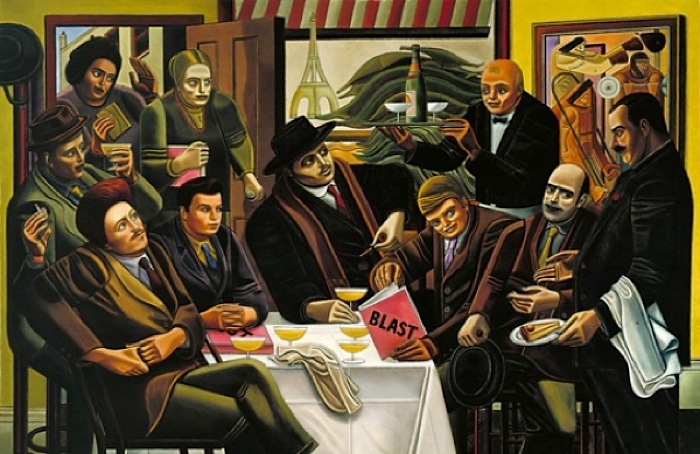
BLAST! Hackney-born William Roberts was an apprentice poster designer, who at the age of 14 attended evening classes at St Martin’s School of Art in London. Within four years he was taken up by Wyndham Lewis, who was forming a British version of the avant-garde Futurist movement. Ezra Pound suggested the name Vorticism, and 19-year-old Roberts’s work was featured in the radical Vorticist magazine BLAST in 1914, a seminal text of 20th-century modernism. A lifetime later, Roberts painted the group (he is seated third from left) in one of the defining images in European art — The Vorticists at the Restaurant de la Tour Eiffel, Spring 1915 (detail) — currently showing in The Vorticists: Manifesto for the Modern World at Tate Britain until September. (Courtesy of the Estate of William Roberts/Tate)
London’s grooviest art school is leaving the bright lights for the wide open spaces two miles north of their historic manor, where the impoverished Marx wrote Das Kapital and Hazlitt the finest essays in English, and the painter Francis Bacon was a founding member of the Colony Room, a notorious watering hole for misfits. Can our savviest creative spirits really thrive once uprooted from Soho’s 300-year heritage, its dissenters, eccentrics, streetlife and dens of inquity?
King’s Cross Central: the University of the Arts at Granary Square will form the hub of a new cultural quarter, a 67-acre development that is the largest in London for 150 years. (Courtesy of Anderson-Terzic)
❚ AT MIDNIGHT LAST NIGHT, before an artsy audience spanning many generations, Jarvis Cocker and Pulp were bashing out their hit song Common People in the heart of his ramshackle old college, St Martin’s School of Art, as it was still called in 1988 when he met that girl made famous by its lyrics. While he studied film-making, she seemingly “studied sculpture”. The song says she came from Greece and her Dad was loaded, yet she wanted to slum it by going to live in down-at-heel Hackney. Jarvis explained years later: “It stuck in my mind what she was saying — that she wanted to sleep with common people like me.”
Common People has become much more than an anthem for Jarvis’s generation. Everybody knows the words and the 800 former St Martin’s graduates — gathered to bid farewell to their alma mater as it leaves Soho for King’s Cross — erupted into a riotous sing-along, because those lyrics are stiff with truths that aren’t entirely universal, but they are, or were, peculiarly British. What we now know is that, in real life, Jarvis hardly knew the girl and in the end they didn’t get it together, but what the encounter had triggered in him was an awareness about class differences in our society that, as a lad from Oop North, even at age 25, he’d been oblivious to: that she would always have Daddy to help her “never fail”.
The definitive song of the Britpop era begins as satire but ends in anger. In deeply felt rage. As with the socially mobile 60s, this was the edginess in the 80s that divided British society and in our art schools sparked tangible creative tension, when talented working-class lads came up against genteel gals from the moneyed middle-classes, especially those on the smartest degree course for fashion in the land. Many posh parents saw this as an alternative kind of finishing school, yet the sloganeering designer Katharine Hamnett tells fashion historian Judith Watt in a forthcoming film documentary about St Martin’s, directed by Oleg Mitrofanov: “I actually had to change the way I spoke because I’d come from public school and nobody would take me seriously.”
Radical sculptors of the 60s: Richard Long outside St Martin’s in 1967 (Alammy) . . . One of Barry Flanagan’s giant bronze hares in O’Connell Street, Dublin, in 2006
Why the Blitz Club became the potent subcultural melting pot that it did in 1979 was down to its geography — located midway between St Martin’s on Charing Cross Road, and Central School of Art & Design in Holborn, in the no-man’s land between the then trendily refurbished market area of Covent Garden and the sleazy, yet always cool red-light district of Soho. As one early 80s fashion graduate reminds us: “Essentially, the Blitz was an art students’ club.” Then into their midst, lured by new music, came the working-class soulboys and girls who were themselves several sharp steps ahead of their own class for style. Naked one-up-manship inflamed ambitions all round.
Graduation 1993: for his collection, The Tangent Flows, Hussein Chalayan buried silk garments in his back garden, then exhumed them. Joan Burstein of Browns put the entire collection on show in her windows
The pole position of St Martin’s has been reconfirmed with each generation of graduates who become household names: from Frank Auerbach and Joe Tilson, Lucian Freud and James Dyson, Terence Conran and his son Sebastian, Isaac Julien and Belinda Eaton, Bruce Oldfield and John Galliano, to Stella McCartney and Sarah Burton who stepped into Alexander McQueen’s shoes following his sudden death.
Through the 60s and 70s, both under Anthony Caro’s tutorship then in revolt against it, abstract sculpture had been St Martin’s strength, but with the 80s the fashion department responded to the force of Britain’s subversive street style which was exciting the international media. The impact of alumni such as Jacques Azagury with his New Romantics collection made London Fashion Week an essential stop-over for the fashion world’s globetrotting commentariat.
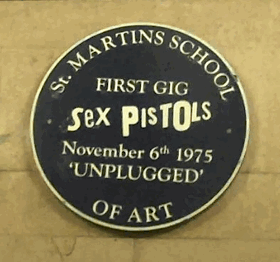
30 years on: Pistols bassist and St Martin’s painter Glen Matlock unveiled this plaque at his old college. It was designed and made by potter Douglas Fitch and graphic designer Mike Endicott
Is the old Soho alchemy about to lose its magic? Last night’s party for alumni was organised by one of them, Birmingham-reared Katie Grand, stylist and editor of Love magazine and coincidentally partner of Pulp’s bass player, Steve Mackey. It was a generous and fitting farewell to the shabby seven-storey building on Charing Cross Road that has blazed as the beacon among London’s half-dozen undergrad art schools for the past 50 years. Though technically St Martin’s School of Art (founded 1854) merged with Central School of Art and Design (founded 1896) two decades ago, only now does the resultant Central Saint Martins College of Art and Design have a purpose-built new home to house its 3,800 staff and students — two miles away from the life of spice that energises Soho.
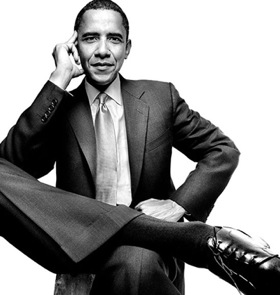
President Obama by photographer and St Martin’s alumnus Platon Antoniou: he succeeded to Richard Avedon’s job at the New Yorker magazine
Not for nothing did the anarchic Sex Pistols choose to play their first gig at St Martin’s in November 1975. GQ editor Dylan Jones, who graduated in 1980, told The Independent a while back: “We were 400 yards from the 100 Club, 200 yards from the Marquee, and a mere spit from the Cambridge, which is the pub everyone used to congregate in before they went onstage — the Pistols, the Clash, Adam and the Ants… St Martin’s at the time felt like the most exciting place on earth, not just because of all the wonderful painters, designers and boulevardiers who had studied there, but also because it was central to the whole punk explosion.”
So will the renegade artistic heritage that evolved with the growth of Soho over 300 years become somehow dissipated? Britain’s most visible sculptor Antony Gormley, another St Martin’s graduate, made a case more detached from bricks and mortar in Wednesday’s Guardian: “The place stands for a certain anarchic idea of permanent revolution – of every generation overturning the orthodoxies of the previous one.” Indeed, from the stage in the old St Martin’s studio last night, Jarvis Cocker capped his anthemic song by criticising the government’s introduction of £9,000 annual student fees that are bound to deter new generations of common people from even considering art school. He then indicated the walls of the buliding, and said, “It’s not about THIS … It’s about THAT”, pointing at the heaving dance-floor.
Which seems to suggest that the spirit of the age will ultimately trump any spirit of place. Aha! Germanic Zeitgeist versus the classical genius loci. Discuss.
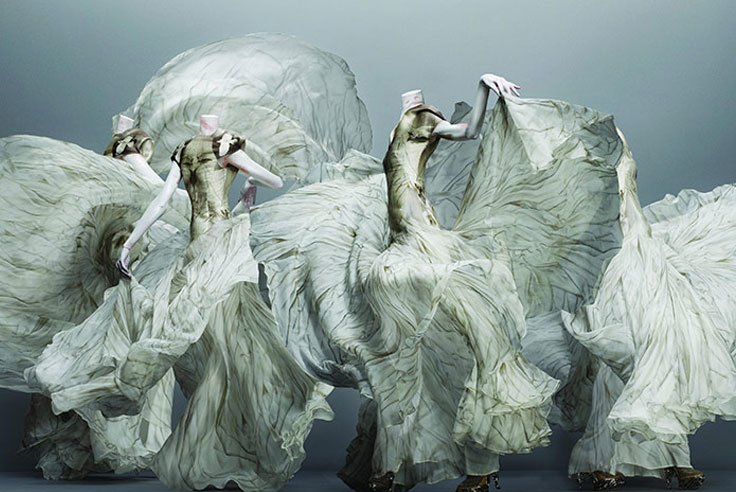
McQueen lives on: The 2011 Costume Institute Met Gala, held in New York on May 2, honoured the life of the British fashion designer Alexander McQueen who died in February 2010 at the age of 40. His Savage Beauty exhibition is running at the Metropolitan Museum of Art until July 31
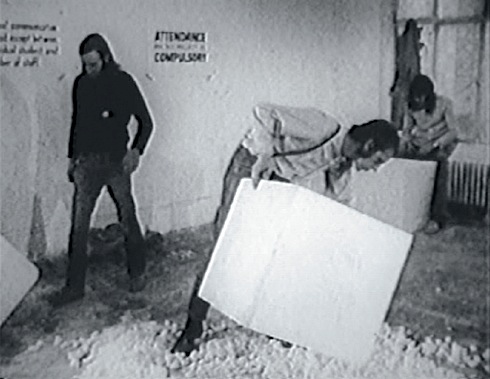
❏ SOME OF US WHO were later required to recruit new talent in our workplaces learnt a novel lesson in 1970 by watching a compelling BBC documentary shot at St Martin’s. How do you assess somebody for a creative job which has few boundaries and rests heavily on self-reliance? Invite them to an interview, don’t say a word and see how they react! Such was the inspiration yielded by Christopher Burstall’s documentary A Question of Feeling, which observed a dozen first-year sculpture students including Richard Deacon who were locked in an empty studio and not allowed to speak. Each was given one particular material — a block of polystyrene, say, or a bag of plaster. They were left to deduce for themselves that these were raw materials with which to work, without critical feedback, despite their tutors’ constant surveillance.
The experiment known as “The Locked Room” came in response to the prevailing trend towards non-objective art, itself a reaction to Anthony Caro’s giant abstract works in steel, all of which posed the problem of how you set about teaching conceptual art. This was a bold attempt to erase tradition. Tutor Peter Kardia said: “I wanted to put them in an experiential situation where they couldn’t grasp what they were doing. What I wanted was ‘existence before essence’.”
❏ JUDITH WATT, fashion historian who has taught the history of fashion and writing to Fashion Communication and Promotion BAs since 1998, reports:
“Most current students were not invited to the party; so it was helpers — many my lovely students — and those who graduated this June. It was a shame, as students are so much of what makes up St Martin’s unique character (with the added magic dust of some staff). There was a mix in terms of the alumni, but so many of the youngsters have no idea about those important days of the late 70s to the mid-1980s, when St Martin’s was the beating heart of British fashion and style; who the people were, or the magic uniqueness of it. Stephen Linard was there, and I thought of how many of my students have xeroxed pictures of him and his work from The Face, i-D and Blitz but didn’t know he was in their midst. Which spoke volumes about them, and the hideous metamorphosis of fashion, not him.
“John Galliano (obviously) was not there but homages of all kinds to him were graffiteed on the walls. I saw Dean Bright, Jacques Azagury, Ninevah Khomo, Claire Angel, Paddy Whitaker and Keir Malem, Christopher Brown, Andrew Groves, David Kappo, Tristan Webber, the lovely Christopher Kane. Sadly not there were Fiona Dealey, Rifat Ozbek, John McKitterick, Ike Rust, John Maybury, Simon Ungless, and, of course, Amanda Lear. Great line up really … Most asked-about former tutor was Bobby Hillson, who set up the MA Fashion course and was the person who arranged for Lee McQueen to enroll as a student and who supported him in those early days. She was sadly not there … and was sorely missed.
“Jarvis Cocker hit just the right note … it’s a long time since St Martin’s has felt like an art college to me — and last night it did again. Pulp playing Common People was particularly apt, as of course it’s the thread that binds so many of the people who make up the subversive British music and style underground. With the fees now at around £9,000 a year, that may be a lot more difficult to find.”
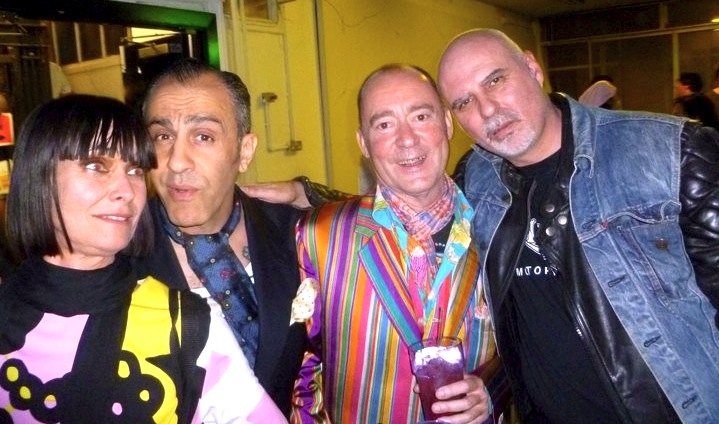
Two alumni, two gatecrashers, four ex-Blitz Kids: At St Martin’s farewell to CXR party, Corinne Drewery (fashion, Swing-Out Sister), Christos Tolera (ex-college cafe customer), Stephen Linard (fashion, own silk suit), Robert Leach (ex-Kingston — photo from his Facebook album, Goodbye Charing Cross Road, June 24, 2011)
❏ HOW TO DRESS FOR A ONCE-IN-A-LIFETIME PARTY — Fashion note by Stephen Linard (class of ’81, pictured above):
“That suit is a one off from 1990, silk rep candy stripes, to my own design. I was the belle of the ball. Etro print shirt, Drake’s linen madras check scarf, printed pastel paisley hank, lime-green suede Paul Smith Hush Puppies.”
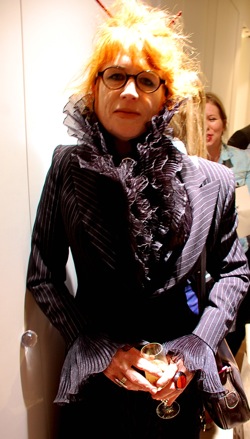
Partying with her stars: Willie Walters, BA fashion course director, in a shirt by Lucie Sutton. Photographed by Alexandra Gordienko
❏ Kay Barron, FCP/CSM graduate, reports at Grazia Daily:
“Everyone regressed to their student selves. In fact some (sorry) became even younger when Pulp took to the stage. I would like to apologise for pushing, screaming and bouncing on people’s feet like a 16-year-old as Jarvis (an ex-student himself) wiggled his way through Disco 2000, Sorted for Es and Whizz, Misfits and Common People (natch). They have never sounded better.
“This party was as legendary as the college. Beyond any fashion party, as no-one was putting on airs and graces, everyone was relaxed and felt bloody lucky to be there.
“St Martin’s is bigger than a building. Give it a year or two and the spanking new building in King’s Cross will be as rough around the edges as CXR, and another 72 years of creative genius will be shaped there. And there will be 800 new alumni enjoying Absolut cocktails, and drawing obscenities on the wall — really, all that talent, and penises are still the illustration of choice!”
Iain R Webb Absolutly aglow. Photographed by Robert Leach
❏ Iain R Webb, CSM professor of fashion, reveals all about his 1970s soulmates at the Harper’s Bazaar blog, and puts Friday’s bash in perspective:
“The Farewell to Fashion at Charing Cross Road party was a strange cocktail (fuelled by lashings of Absolut vodka) of nostalgic sad tidings and glittering ecstasies. Past generations of graduates, from Swing Out Sister’s Corinne Drewery (who DJ’d in the Illustration studio) to Katie’s ex-classmate Giles Deacon, rubbed shoulder pads with the current cohort and a Sex Pistol — Glen Matlock, who along with the original Pistols line-up played their first gig at St Martin’s. Dressed up to the nines (and tens in some cases — the boy in the gold knitted dress that unravelled as the evening wore on), the colourful crowd (who says fashion folk only wear black?) displayed a flagrantly flamboyant individuality that is the very lifeblood of the college and has played no mean part in the success of its alumni who have over the decades become big players on both sides of the catwalk.
“The St Martin’s media mafia still fills the international front rows, Twitter on about trends and play dress-up with popstars and supermodels. The party on Friday night was an appropriately loud, glittering and bumptious, sexy and downright messy affair. Confirmation of the enduring talent born out of St Martin’s School of Art.”
Farewell CXR<3 thanks for the amazing memories: fashion print-maker Chi He from Shanghai (second right) and friends at the St Martin’s party. From her Facebook album
❏ CHRISTOS TOLERA, painter, musician and not a former student, who nevertheless idled many away teenage hours in the St Martin’s cafe, reports:
“Pulp started with Misfit and ended with Common People which I listened to in the rain from Charing X Rd as I left. If I was 22 I think I would have thought it was one of the best gigs ever. Jarvis was charming in between songs and had presence but was drowned out during the enthusiastic performance.
“However the energy in the room was palpable and reminded me of the olden days, of gigs in warehouse spaces and a certain abandon rarely seen in these overly organised and calculated times. I left because I wasn’t drunk and had seen enough. It made me feel old. I didn’t really have anyone with me who was looking through the same eyes, seeing what I was seeing. There was something quite romantic about listening to the last song from under an umbrella on the street, with no one really aware that the very audible racket coming from the first-floor window was actually Pulp and not a dodgy covers band.
“All in all I found it sad. Not the band but the memory of me as a 17-year-old hanging out in the cafe at St Martin’s thinking I’d arrived only to find out I was just passing through like the rest of us. My night was summed up when the girls in the cloakroom asked why I was there and I told them I’d modelled in a seminal show (Stephen Linard’s) there in 1980. ‘Oh, that was nine years before I was born’…”
HELLO TO THE SPECTACULAR NEW UNIVERSITY CAMPUS BESIDE THE CANAL AT KING’S CROSS
King’s Cross Central: The focus for CSM’s new home will be the Grade II listed Granary Building of 1851, built to a design by Lewis Cubitt
❏ THIS WEEK marks the end of an era, as CSM leaves its two buildings in central London and moves to a new premises in King’s Cross, just across the road from The Guardian. The move won’t be welcomed by Professor Louise Wilson, legendary course director of MA fashion, who believes that the very grottiness of the Charing Cross Road building has helped drive her students – from McQueen to Christopher Kane – to succeed. “You feel that you’re better than this corridor,” she says. “In the new building you want to hide…”
Glenn Gregory and Martyn Ware: sharing their favourite electronica on web radio. Picture by Mike Prior
❚ SPOTTY TEENAGERS DIDDLING WITH TWO FINGERS. Electronic music has usually had a dourly downbeat image for most of us. Synths in bedsits, and all that. Yet the tunes of our youth are the spark that fuel our creative adventures. That’s the inspirational notion behind a new monthly radio show titled Music for… Growing Up To, compiled by Glenn Gregory and Martyn Ware of Heaven 17 for Radio Ditto. Drawing from their own idiosyncratic record collections and their undiminished curiosity, these electronic pioneers of the early 80s — founders of The Human League who broke away in 1980 — will also be scanning the web for new discoveries in a segment they call Found on Soundcloud. And, they say, anybody can also submit their own new tunes for the webcast.
All of which is by way of a trailer for their British Electric Foundation’s two-day festival, Music of Quality and Distinction Live, at London’s Roundhouse venue in the autumn. They were encouraged by the full houses during Heaven 17’s Penthouse and Pavement 30th anniversary tour last year, built around what many of us regard as the most progressive album of 1981. Playing synthesisers live onstage seldom offers the most dramatic of experiences. Yet, despite the pretentiously named BEF, their original production company, Heaven 17’s imaginatively presented tour generated a real party atmosphere thanks to exceptional supporting musicians and innovative digital light displays — rather more than you’d expect from paunchy veterans standing at keyboards, and a darn sight more good-humoured than some recent po-faced electro-revivals. From Soul Warfare and Let’s All Make A Bomb to Fascist Groove Thang, Ware & Gregory’s rebel anthems lent themselves to enthusiastic singalongs.
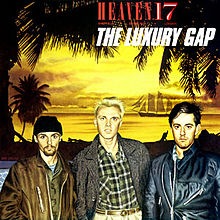
➢ The Roundhouse celebration of seminal electronic music from the past 30 years consists of a major concert each night. Friday October 14 sees a live premiere of Heaven 17’s top-ten album The Luxury Gap from 1983… October 15 will be BEF’s first live show featuring guest vocals from Elly Jackson (LaRoux), Green Gartside (Scritti Politti), Shingai Shoniwa (Noisettes), Boy George (Culture Club), Midge Ure (Ultravox), Andy Bell (Erasure), Sandie Shaw, Polly Scattergood and Kim Wilde.
➢ Other summer festival gigs by Heaven 17 — brilliantly backed by Billie Godfrey, Asa Bennett, Joel Farland being dynamite on LinnDrums, Julian Crampton being a god on bass and Me’sha Bryan — include Coventry, Sheffield, London, Whitstable, Perth and Nottingham.
H17’s Penthouse and Pavement tour 2010: bright lights and sexy music
➢ Choose “View full site” – then in the blue bar atop your mobile page, click the three horizontal lines linking to many blue themed pages with background article
MORE INTERESTING THAN MOST PEOPLE’S FANTASIES — THE SWINGING EIGHTIES 1978-1984
They didn’t call themselves New Romantics, or the Blitz Kids – but other people did.
“I’d find people at the Blitz who were possible only in my imagination. But they were real” — Stephen Jones, hatmaker, 1983. (Illustration courtesy Iain R Webb, 1983)
“The truth about those Blitz club people was more interesting than most people’s fantasies” — Steve Dagger, pop group manager, 1983
PRAISE INDEED!
“See David Johnson’s fabulously detailed website Shapers of the 80s to which I am hugely indebted” – Political historian Dominic Sandbrook, in his book Who Dares Wins, 2019
“The (velvet) goldmine that is Shapers of the 80s” – Verdict of Chris O’Leary, respected author and blogger who analyses Bowie song by song at Pushing Ahead of the Dame
“The rather brilliant Shapers of the 80s website” – Dylan Jones in his Sweet Dreams paperback, 2021
A UNIQUE HISTORY
➢ WELCOME to the Swinging 80s ➢ THE BLOG POSTS on this front page report topical updates ➢ ROLL OVER THE MENU at page top to go deeper into the past ➢ FOR NEWS & MONTH BY MONTH SEARCH scroll down this sidebar
❏ Header artwork by Kat Starchild shows Blitz Kids Darla Jane Gilroy, Elise Brazier, Judi Frankland and Steve Strange, with David Bowie at centre in his 1980 video for Ashes to Ashes
VINCENT ON AIR 2026
✱ Deejay legend Robbie Vincent has returned to JazzFM on Sundays 1-3pm… Catch up on Robbie’s JazzFM August Bank Holiday 2020 session thanks to AhhhhhSoul with four hours of “nothing but essential rhythms of soul, jazz and funk”.
TOLD FOR THE FIRST TIME
◆ Who was who in Spandau’s break-out year of 1980? The Invisible Hand of Shapersofthe80s draws a selective timeline for The unprecedented rise and rise of Spandau Ballet –– Turn to our inside page
SEARCH our 925 posts or ZOOM DOWN TO THE ARCHIVE INDEX
UNTOLD BLITZ STORIES
✱ If you thought there was no more to know about the birth of Blitz culture in 1980 then get your hands on a sensational book by an obsessive music fan called David Barrat. It is gripping, original and epic – a spooky tale of coincidence and parallel lives as mind-tingling as a Sherlock Holmes yarn. Titled both New Romantics Who Never Were and The Untold Story of Spandau Ballet! Sample this initial taster here at Shapers of the 80s
CHEWING THE FAT
✱ Jawing at Soho Radio on the 80s clubland revolution (from 32 mins) and on art (@55 mins) is probably the most influential shaper of the 80s, former Wag-club director Chris Sullivan (pictured) with editor of this website David Johnson
LANDMARK FAREWELLS. . . HIT THE INDEX TAB UP TOP FOR EVERYTHING ELSE

 ◼ THIS WEEK BASSIST ROMAN KEMP told Hemel FM: “We’ve only been around for eight months so we’re amazed by how it’s been going. The other day we were confirmed for the Wireless Festival on Sunday. We were amazed. Playing before Pulp!”

















 ➢➢ Shapers of the 80s ➣➣