Category Archives: Film

1928–2012 ➤ Sassoon’s revolution: No teasing. No hair spray. Just the cut.

Vidal Sassoon,the bob, Mary Quant, hairstyles

1963: Sassoon creates the “bob” on designer Mary Quant. (Photo: Getty)

“He revolutionised not just hair but fashion” — model-turned-Vogue fashion editor Grace Coddington

Vidal Sassoon , Albert Hall,

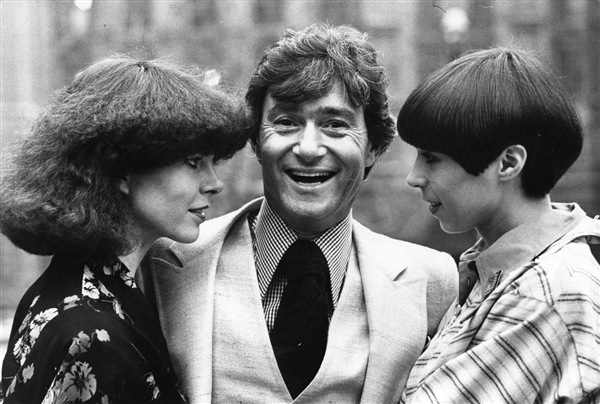
Comeback 1975: Vidal Sassoon between two contrasting examples of his hairdressing for a teach-in at the Albert Hall, where he returned to hairdressing after a five-year break. (Photograph by Tim Graham / Getty)

➢ The Daily Telegraph reports the death at 84 of celebrity hairstylist Vidal Sassoon, whose 1960s wash-and-wear cuts freed women from the tyranny of hairspray…

Vidal Sassoon, who was found dead at home on Wednesday, was at the cutting edge – literally and metaphorically – of hairdressing. His sharp, geometric, low-maintenance 1960s hairstyles revolutionised his craft, sounding the death knell for the stiff, set hairdos of the 1950s. An astute businessman, he made a fortune from his salons and products, and became a household name. “I wanted to eliminate the superfluous and get to the basic angles of cut and shape,” he said… / continued online

+++
❏ Craig Teper’s 2010 documentary Vidal Sassoon: The Movie follows the true rags-to-riches tale of how a boy from a London orphanage went on to open his own Bond Street salon in 1958 and — influenced by the Bauhaus designs he had studied — he create the “shape” that became his signature cut, the five-point bob. It revolutionised hairdressing. His geometric wash-and-wear cuts marked the end of the beehive and the bouffant hair styles of the 50s. Admirers included the Duchess of Bedford, model Jean Shrimpton, actor Terence Stamp, and film star Mia Farrow. In 1963 he devised the classic “bob” for fashion designer Mary Quant, who called him the “Chanel of hair”. By 1964 he’d gone international by opening his first salon in New York.

Vidal Sassoon, Movie

Sassoon The Movie: the London crimper freed women from 50s bouffants by pioneering the low-maintenance hairstyles that defined the 60s

FRONT PAGE

1912–2012 ➤ My pal Tucker’s Titanic moment and the truth about the “Unsinkable” Molly Brown

A Night To Remember ,Tucker McGuire ,movies,Unsinkable Molly Brown,centenary, Titanic,Mrs James Joseph Brown,

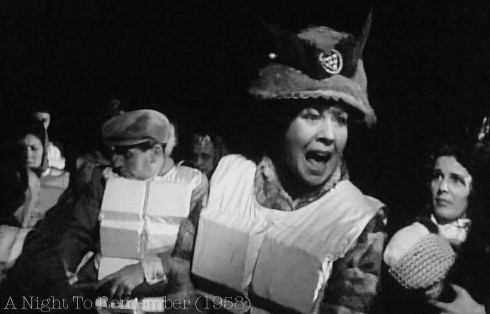
“Come on girls!” — Tucker McGuire as the Unsinkable Molly Brown in A Night To Remember, 1958. (ITV Studios Home Entertainment DVD)

❚ TUCKER McGUIRE WAS SOMEBODY I’D KNOWN for years before we actually met in London in 1982. She was an American-born actress who’d made her home in England in the 1930s and she played 34 screen roles, according to IMDb, and hundreds more on radio. But the one I knew her from — along with thousands of other British cinema-goers — was her feisty performance in what endures today as the most thrilling version of the Titanic disaster, A Night To Remember, directed as an authentic docu-drama by Roy Ward Baker at Pinewood Studios not far from London in 1958.

As well as the stars Kenneth More and Honor Blackman, this J Arthur Rank mini-epic featured a galaxy of British character actors playing cameo roles from boiler-room to bridge. Tucker was cast as the American millionairess Mrs Margaret “Molly” Brown. And she delivers the scene-stealing line everybody remembers, moments after the mightiest ocean liner of its day slipped beneath the calm mirror-like North Atlantic 100 years ago today.

Though Lifeboat No 6 had capacity for 65 people, it held only 19 women and four men who now stared in horror and awe as the broken Titanic ultimately stood up on end, paused and then vanished in one vertical plunge. Unexpectedly, say eye-witness survivors, the clear night air was suddenly torn with an appalling crescendo of wailing from the hundreds of fellow-passengers struggling for their lives and drowning in the bitter freezing water.

A Night To Remember, DVD, Blu-Ray, Titanic,Roy Ward Baker,Pinewood Studios

A Night To Remember, 1958: the most accurate telling of the Titanic tragedy in its day thrilled audiences long before CGI effects were invented. This mighty mock-up of the doomed liner was built in a field at Pinewood and water scenes shot at Ruislip Lido. (2012 DVD cover from ITV Studios Home Entertainment)

In Rank’s movie, 44-year-old Mrs Brown grabs her oar and insists they turn their lifeboat round and return to save the desperate swimmers: “Come on girls! Row!” She is straight-away rebuked by quartermaster Robert Hichens, the 29-year-old crewman at the helm (who had been at the wheel of the Titanic itself at the liner’s moment of impact with the iceberg). He yells that turning back risked swamping the boat with too many people, whereupon the millionaire women’s rights activist becomes immortalised for ever as the heroic and “Unsinkable” Molly Brown. She tells him: “You get fresh with me son, and I’ll throw you overboard.”

It took 40 minutes after the Titanic sank for the wails of 1,514 doomed souls to be silenced. Hichens gloomily allowed the women to row around for a while, then his boat joined up with Lifeboat No 16 to await rescue in the silent night. With the dawn, a total of 710 survivors were taken aboard by the RMS Carpathia.

Titanic, Lifeboat No 6, Frederick Fleet , Carpathia, Robert Hichens, Unsinkable Molly Brown

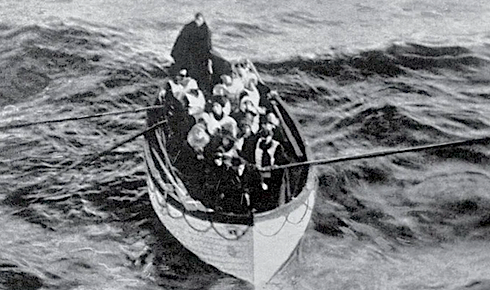
Titanic’s Lifeboat No 6 approaches RMS Carpathia to be rescued in 1912: Quartermaster Hichens can be seen at the rear manning the tiller and Frederick Fleet, the look-out who first saw the iceberg, is seen at the bow preparing to catch a tow-line. Is it too fanciful to imagine the large hat at centre belonging to the “Unsinkable” Molly Brown? (Photograph by Louis Mansfield Ogden © Royal Museums Greenwich)

❏ Tucker McGuire is among 13 actresses, including Debbie Reynolds, to have portrayed the “Unsinkable” Molly Brown, and like so many thespians, proved to be a hugely entertaining character when we met 30 years ago. She had been widowed three years earlier so wanted to widen her social circle by joining an evening class I used to give in creative writing in central London. She didn’t let on about her most famous role for a long while, but when she did I knew exactly who she was, along with the rest of the nation’s vintage movie fans who had seen A Night To Remember on TV seemingly every other Sunday afternoon since 1958.

Though at 69 she was old enough to be granny to most of us, Tucker was vivacious company and after the class often invited the regulars for drinks at her basement flat where she’d show us snapshots from her career and her yearbook for the class of 1930 at Handley High School in Winchester, Virginia. As part of the written coursework she submitted an affecting review of Katherine Mansfield’s Taking the Veil, “an unhappy daydream with a happy ending — a perfect love story. It has drama and comedy and leaves one glad to have read it”. In March 1982 our group went to the Lyric Theatre in Hammersmith to see Patricia Routledge and Paul Eddington starring in the newest comedy by Michael Frayn. It proved achingly hilarious and Tucker’s verdict was, in true billboard tradition, that “this one will run and run”. How prescient: a brilliant revival of Noises Off is playing to packed houses at the Old Vic right now.

Tucker died in 1988. Despite her extrovert demeanour, she’d never talked about her family or why she had left America so young. Last month’s DVD rereleases of A Night to Remember gave new life to Tucker’s line “Come on girls!” and prompted a sentimental search session with Google which revealed a daughter Janie Booth, who is also an actress here in Britain. Anne Tucker McGuire was born in Winchester, Virginia, where her father was President of the American Medical Association. Tucker’s first mentions in England include playing in Three Men on a Horse at the Wyndham’s Theatre, London, and making the Albert de Courville film Strangers on Honeymoon, both in 1936.

Tom Macaulay,Dark Stranger, Tucker McGuire,

Tucker’s husband, Tom Macaulay, in Dark Stranger, 1946

Her old Harrovian husband called himself Tom Macaulay as an actor but his fuller name Thomas Macaulay Booth resonates with British history. The Macaulays included Zachary, the 18th-century slavery abolitionist, and Thomas Babington, the celebrated historian and Whig politician.

The Booth family was no less distinguished: Charles Booth was a 19th-century shipowner and social researcher whose study of working-class life in London led to the founding of old-age pensions. His greatest innovation, documented in Life and Labour of the People in London, included the socially coded Maps Descriptive of London Poverty 1898-99, and revealed that 35% were living in abject poverty. He was elected president of the Royal Statistical Society (1892–4).

A Night To Remember ,Tucker McGuire ,movies,Unsinkable Molly Brown,centenary, Titanic,Mrs James Joseph Brown

Two faces of Mrs James Joseph Brown: the real Denver socialite and women’s activist around 1912, and (right) feisty Tucker McGuire in the 1958 Titanic movie A Night To Remember

❏ Back in the real world of Mrs James Joseph Brown, “Molly” had been born Margaret Tobin in 1867 to Irish immigrants in Hannibal, Mo. From becoming a teen bride in Denver, she struck it rich with her husband, joint-owner of a Colorado gold mine, and enjoyed devoting her life to philanthropy and campaigning for labour rights and women’s suffrage. Mrs Brown eventually separated amicably from her husband and in 1912 went to explore Egypt along with Colonel John Jacob Astor and his wife Madeleine, stars of New York society.

On returning, all three boarded the Titanic at Cherbourg, along with their servants, for the voyage to the States. In the ship’s final hour, the chivalrous Colonel Astor kissed his wife goodbye, saw her into a lifeboat and went to his death smoking a cigarette by the bridge. He was the richest passenger aboard the Titanic, and left a $150 million fortune ($11.92 billion, today).

Mrs Brown died in 1932 pursuing another lifelong passion — acting. Incidentally, she didn’t use either of the famous nicknames Molly or “Unsinkable”. These were given her by a gossip columnist in her hometown of Denver, Colorado.
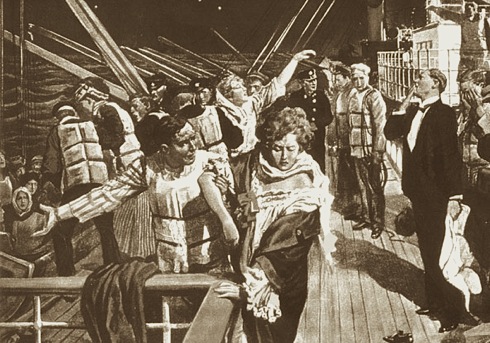
A Night To Remember,centenary, Titanic,John Jacob Astor,lifeboats

“Women and children first”: The Edwardian code of chivalry prevented men from boarding the Titanic’s 20 lifeboats before all the women had done so. The grim truth was that there was lifeboat capacity for only half the passengers and crew. The agony for American millionaire John Jacob Astor (depicted here) was deepened by knowing his wife Madeleine was pregnant with their first child. (Illustration by Fortunino Matania)

➢ Museum located in her Denver home tells story of Titanic survivor Molly Brown – by Colleen Slevin, Associated Press

➢ A Night to Remember (1958,digitally remastered DVD)

➢ Criterion Collection: Night to Remember (1958, Blu-ray US import)

FRONT PAGE

2012 ➤ A change of life for Gary Kemp: actor, popstar, biker, curator

Gary Kemp, cycling, Huffington Post, columnist

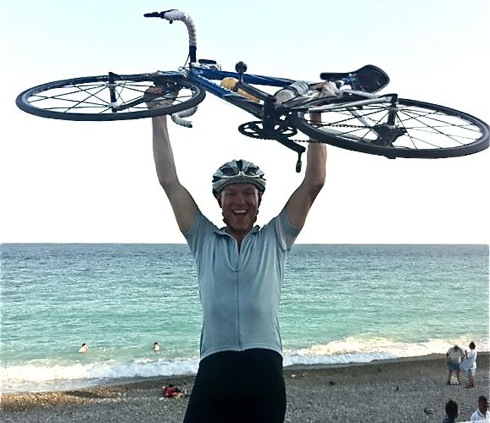
Gary Kemp: popstar as cyclist as online sports columnist

❚ HARD TO KEEP TRACK OF THE NEW DAY JOB as songwriter Gary Kemp turns his hand to, well, a portfolio of new careers. Since their year-long Reformation tour ended in 2010, it has become clear that any further life for Spandau Ballet as a band is dependent on the good will of singer Tony Hadley. Meanwhile, every other band member has taken Hadley’s cue to strike out in new directions and establish his own website and Twitter account through which to promote his own solo skill-set.

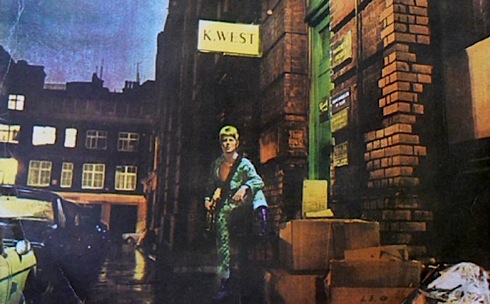
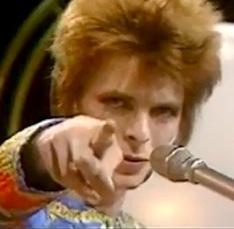
What’s the latest venture for 52-year-old Gary Kemp? This week, among other things, he is a sports columnist. Later this month he reverts to his popstar guise by unveiling a plaque to Ziggy Stardust, the definitive rock icon created by David Bowie, on the site of his seminal 1972 album cover photo in central London. Within recent weeks Kemp has also launched a book of his lyrics, curated a filmed Dickens tribute for a new culture website, and incidentally became father to a third son, Rex.

The commemorative wall plaque anticipates the 40th anniversary on June 6 of the release of The Rise and Fall of Ziggy Stardust and the Spiders from Mars. The honour is being bestowed by, wait for it, The Crown Estate, which represents all property owned by the reigning monarch, the oldest dating from the Norman conquest of 1066. Today’s total is estimated to be worth £7billion.

Ziggy Stardust,Crown Estate, David Bowie, Brian Ward, plaque,

Commemorative wall plaque imminent in Heddon Street: Bowie photographed by Brian Ward in 1972 for the iconic Ziggy Stardust album sleeve. Gary Kemp describes the scene as a set for a film noir

The Estate is landlord of the building at 23 Heddon Street W1B 4BQ, where Brian Ward photographed Bowie in the rain beneath the yellow sign for the furriers K. West. (Shot in black and white, the cover pic was hand-tinted by the artist Terry Pastor which is why Bowie’s green stage jumpsuit here looks blue.) Today this is a pedestrianised strip of foodie destinations, yet a regular stream of Bowie fans makes the pilgrimage to this enclave off Regent Street to be photographed in the same pose on the same spot, thrilled also to find the red phonebox from the back cover still there. Undoubtedly at 9.45 on Tuesday 27th many more will be joining the speechifying at a press photocall as Gary Kemp pulls the unveiling cord.

➢ Update March 23: Hear Robert Elms interviewing Gary Kemp on BBC London, on the impact of Bowie’s creation Ziggy Stardust, and the concept album which sees a messiah arriving to save the last rock’n’roll star on planet Earth. All of which had peculiar resonance in the Cold War era, and on the teenaged Kemp in 1972 when many felt rock music was finished. Bowie’s album was, he says, “something to upset my parents with”

Yesterday, however, it was Kemp the cyclist who was announced as a sports columnist in the UK edition of the Huffington Post, the liberal-left American news website founded in 2005 by Greek-American Arianna Huffington and acquired last year by AOL for $315million. Born Arianna Stasinopoúlou, she attended Cambridge University in England, became president of the union, and met Britain’s most prolific newspaper columnist Bernard Levin who was twice her age and proved an inspired mentor during their nine-year relationship. She broke with him in 1980 and moved to New York, later marrying Republican congressman Michael Huffington, and divorcing him shortly before he disclosed he was bisexual. She campaigned as an independent candidate against Arnold Schwarzenegger to become governor of California in 2003. (Colourful background, huh?)

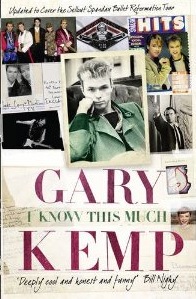
Gary Kemp, I Know This MuchBack to Kemp: his new column represents a novel way to express his undoubted literary talents which made his own book I Know This Much almost unique among rock autobiographies for being compulsively readable, as well as “a touching testament to spiritual growth”. Yesterday he introduced his passion for cycling in the HuffPost under the headline Bikes and Babies …

As birds begin to re-discover their song and Tarmac becomes sticky with the falling dew of budding trees, the Lycra-clad roadie reaches for his shaving cream and attempts to remove the thick, bee-catching hair that has formed around his legs during winter. This act will almost certainly upset my wife, who considers such things the territory of transvestites; but as I trickle blood down the plughole, the approval of my roadie peers is uppermost in my mind; after all, the aesthetics of riding, along with its tribal camaraderie, are why I came here in the first place.

‘Training’ has begun. Training turns cycling into a job of work; something earnest, painful; it eases our guilt — and oh boy, am I guilty! My wife and I have just increased our brood of young children to three, and chamois-creaming my crotch while she’s soothing the baby’s nappy rash just doesn’t seem right… / Continued online

Gary Kemp , Highgate Cemetery , Charles Dickens, John Waite, bicentenary, HiBrow, video,

Gary Kemp in Highgate Cemetery: discussing Charles Dickens with John Waite. (Videograb courtesy of HiBrow.tv)

But the big event of the week came on Monday when Kemp took his first steps to inherit the mantle of Melvyn Bragg and become an arts guru of the small screen by dreaming up a 200th anniverary celebration of the author Charles Dickens.

A classy new culture website called HiBROW was recently launched under the guiding hand of film-maker Don Boyd. He has invited an eclectic selection of professionals across the arts to play the role of curators and create original, high-definition video arts programming for exclusive viewing online. The first project Gary Kemp proposed was a live “post-modern” chat show, A Mighty Big If, hosted by 80s musician Richard Strange. Now Kemp can be seen prowling the snow-covered Victorian gravestones of Highgate Cemetery in search of Dickens’s family. With broadcaster John Waite, Kemp also discusses Tom Sayers, a Victorian champion bare-knuckle prize-fighter who attracted 10,000 mourners to his funeral there.

Joanna Lumley ,Simon Callow, Charles Dickens, bicentenary, Highgate Cemetery, HiBrow, video,

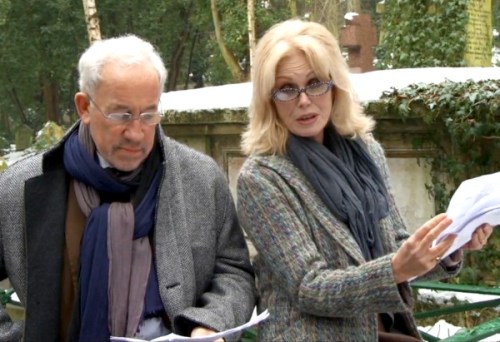
Simon Callow and Joanna Lumley in Highgate Cemetery: reading extracts from Charles Dickens. (Videograb courtesy of HiBrow.tv)

True,Gary Kemp, sheet musicWe also see Joanna Lumley and Simon Callow, famous thespian fans of Dickens, introduced by great-great-grandson Mark Dickens before they give readings from Charles’s work between the graves. Callow, who has depicted Dickens onstage acting out his stories, insists the author today would have been directing and starring in his own screenplays.

As for GK, all that’s left for him to try are tinker, tailor, soldier, spy!

➢ The true story of how love helped along The Lyrics of Gary Kemp

Gary Kemp , Spandau Ballet, Ivor Novello Award,

PS MAY 17: SUCCESS REAPS ITS REWARD

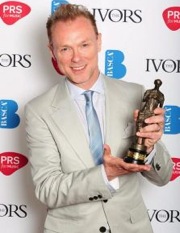
➢ May 17 update: Gary Kemp wins Outstanding Song Collection Award at the 2012 Ivor Novellos — “It’s made me feel very nostalgic for that 12-year-old boy, who in 1972 started writing songs alone in his bedroom and wondered if he was weird.”

FRONT PAGE

2012 ➤ If David Jones hadn’t become Bowie what would have become of the rest of us?

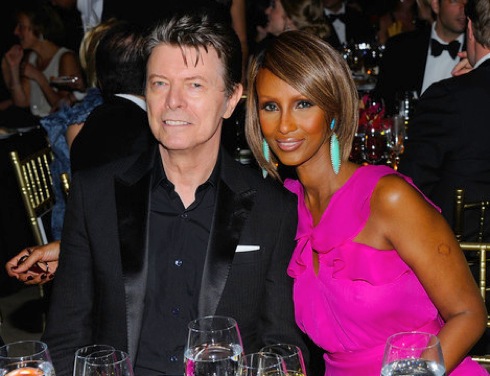
What, me, pensioner? David Bowie and his wife the supermodel Iman attend the DKMS Annual Gala in New York City last April. (Photo by Andrew H. Walker/Getty)

David Bowie, 65th birthday, New Romantics, Ziggy Stardust, glam-rock
❚ HAPPY BIRTHDAY MR BOWIE. And thanks for the boggling, inspirational, poptastic ride so far —140 million albums sold and the rules of rock rewritten. You will be the genie waiting at the end of time. Boy George has this to say in his foreword to Graham Smith’s new book on 80s clubland, named after David Bowie’s song We Can Be Heroes: “Of the New Romantic moment I have always said, It was all Bowie’s fault.” What he refers to is the Bowie bequest to the teen generations he entertains. As a cultural lightning rod he has bequeathed insights into the realm of the imagination. As a performer he has delivered a repertoire of life-skills through a cast of mythical personalities invented for himself as a popstar, from the self-destructive Ziggy Stardust and the amoral Thin White Duke, to his romanticised “Heroes” (his own quote marks added to emphasise self-awareness). Through their formative years, Bowie invited his acolytes:

✰ to explore identity, androgyny, the primacy of the visual.

✰ to adopt stances: individualism, alienation, decadence, transgression.

✰ to follow his principles for living amusing lives: disposable identities, portable events, looks not uniforms, tastelessness “on purpose”.

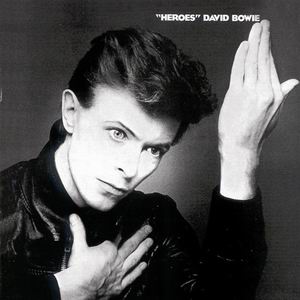
David Bowie, Heroes,His signature tune, “Heroes”, still echoes today as a heart-stirring anthem because he was passionate and optimistic and musically this number is brimming with awe. He sang about intimacy and love triumphing over the horrors of the outside world. Finding joy in simple pleasures could make heroes of us all, “just for one day”. As a creed to live by, it has underpinned his own life. “I’m an instant star,” he said. “Just add water and stir.”

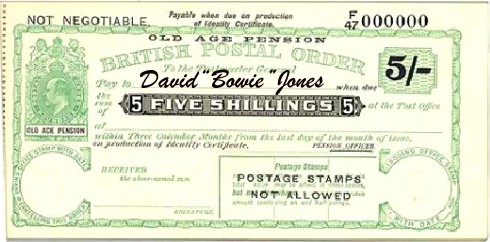
Were he still living in the UK, today’s birthday would designate him, in the idiom, “an old-age pensioner”, and the state would pay him slightly more than the five shillings a week handed over when the scheme began 100 years ago. He can’t be 65, you’re saying as you inspect the picture of him and his wife Iman [above] at a leukemia charity gala in New York last year. He looks too good for 65. “Waddayamean?” he’d be bound to snap, flinging back the old feminist line, “This is how 65 looks in the 21st century.”

True, if you start young, break the rules and push yourself to the max, as all geniuses do. While in short trousers, the little suburban Londoner David Jones was nothing if not prolific. At 11 he was playing a skiffle bass, buying and collecting the NME for future reference, learning the sax at 13 and soon moving up through a succession of bands: Konrads, Hookers, King Bees, Manish Boys, Lower Third, Buzz, and Riot Squad.

At school he fell under the spell of an art teacher, Owen Frampton, whose own son Peter went on to musical fame. Bowie has said: “I went to one of the first art-oriented high schools in England, where one could take an art course from the age of 12. Three-fourths of our class actually did go on to art school.”

Everybody knows how this liberal education shaped his outsider stance, how he redefined glam-rock, and how his incarnation as Ziggy Stardust made him an international star and one of the most iconoclastic forces in 70s music. How much more fun though to celebrate a grand milestone by looking back to the earliest expressions of that genius and to wonder aloud how else might the talents of the young David Jones have developed? Today, we find whole chapters of his formative experiments on video online, from mime artist and music-hall hoofer, to actor and fin-de-siècle soothsayer. In all the springboard moments pictured in the slideshow above, Bowie is no older than 24. At any moment the fickle finger of fate could as easily have pointed in any number of directions…

➢ VIEW a dozen video turning points
in David Bowie’s early career 1965–1974

INSTEAD, THIS IS WHAT HAPPENED

In 1969 Bowie’s manager Kenneth Pitt proposed to showcase his talents by producing a half-hour film called Love You Till Tuesday. The compilation showcased tracks from his 1967 debut album, plus a spanking new song, Space Oddity, which introduced Major Tom and became his first hit. Cleverly anticipating the first Nasa Moonwalk in 1969, the filming for this number pastiches Stanley Kubrick’s cine-epic premiered the previous year. It effectively proposed what today we call the promo video which, as Kevin Cann reveals in his exhaustive 2010 Bowie biography Any Day Now, remained substantially unseen by the public until its release as a clip in 1984. The whole half-hour showreel went online for the first time only yesterday…

THEN HE MET WILLIAM BURROUGHS

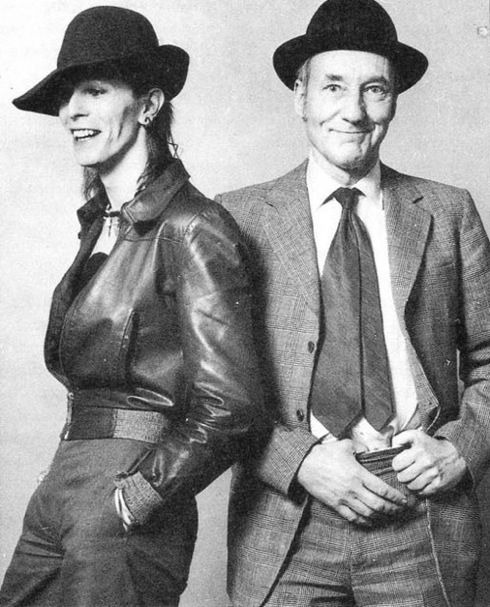
David Bowie , William Burroughs

1973: Bowie is interviewed for Rolling Stone with novelist Wiliam Burroughs and photographed by Terry O’Neill

THEN HE MET LIZ TAYLOR

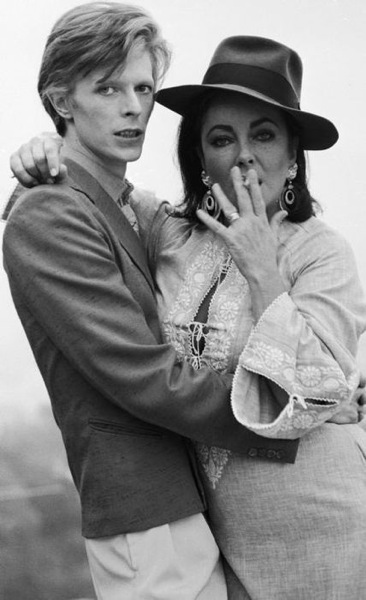
David Bowie , Liz Taylor, Terry O'Neill

1975: Bowie meets Hollywood legend Liz Taylor. Photographed by Terry O’Neill

THEN HE WROTE A SONG WITH JOHN LENNON

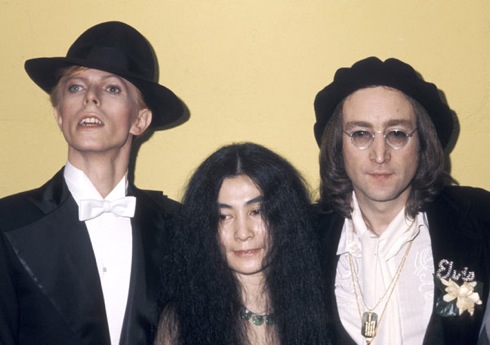
David Bowie , Yoko Ono, John Lennon, Grammys

1975: At the Grammys, Bowie upstages Yoko Ono and John Lennon — one day he gets jamming with David in a studio and turns a lick into the song Fame

AND THE REST IS, WELL, BOWIE…

➢ Radio 2’s clips from Inspirational Bowie at iPlayer — Marc Almond: “I climbed over the orchestra pit and David Bowie took my hand. He sang Give me your hand in Rock ’n’ Roll Suicide and it was an epiphany”

➢ Happy 65th Birthday Bowie: BBC 6Music audience curates a playlist of favourite tracks, on iPlayer until Jan 13

FRONT PAGE

2011 ➤ Other picky people’s year-ending Best Ofs in music of all styles

BEST ALBUMS OF 2011 AT ALLMEDIANY

+++
AllMediaNY.com offers the next step in the evolution of modern journalism — “free media” — an outlet where journalists and readers together decide on what is newsworthy and what is not. Editor-in-Chief Drew Kolar says it was “a great year for real music”, sadly marred by the death of Amy Winehouse.

50 SEVENS THAT REALLY STRUCK ME AT DIS

+++
❏ At Drowned in Sound Wendy Roby whittles her year’s reviewing down to a top 50 “that really struck me”, starting at Africa Hitech’s Do U Really Wanna Fight, via Metronomy’s The Look and ending on Jamie Woon’s Lady Luck.

POPJUSTICE READER POLL’S BEST SINGLE

Rihanna — We Found Love feat. Calvin Harris.

RUSTY EGAN: WHAT’S ON MY IPOD MIX

❏ An hour’s-worth of vintage sounds mixed by former Blitz Club deejay Rusty Egan: “Some lost classics here plus some bands born in the 80s that sound like they wrote and recorded the songs in the 80s.”

CHRIS SULLIVAN’S TEN BEST MUSIC
DOCUMENTARIES EVER

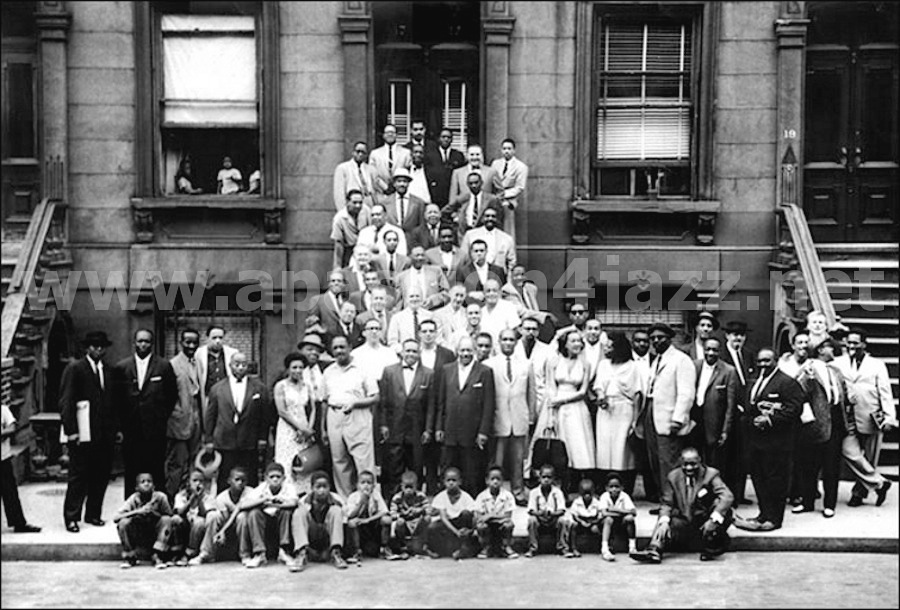
Great Day In Harlem,photography,Art Kane, Esquire ,jazz,Count Basie,documentary
A Great Day In Harlem (1995) — “A must for any serious black music aficionado,” writes Zeitgeist-Meister Sullivan at RedBull.com. This documentary by Jean Bach tells the story of one summer’s day in 1958 when 57 musicians from jazz history met at 126th Street in Harlem to have their picture taken by Art Kane for Esquire magazine. Keen eyes will spot such greats as Horace Silver, Charles Mingus, Coleman Hawkins, Thelonious Monk, English-born Marian McPartland OBE, Sonny Rollins, Lester Young, Gerry Mulligan, Roy Eldridge, Dizzy Gillespie and Count Basie. Kane called it “the greatest picture of that era of musicians ever taken”.

KATY PERRY’S FIREWORK SHOCKER

❏ The video for Firework not only outraged British TV stations into censoring the gay kiss, but it then won Video of the Year at the MTV Video Music Awards. Result: the single remained in the UK charts for 58 weeks, way longer than in Billboard’s.

J J WHEELER’S JAZZ PICK

❏ A refreshing selection of five CDs and five gigs from 2011 offered at The Jazz Breakfast by a much-lauded British drummer/percussionist currently studying at the Royal Academy of Music after graduating from Birmingham Conservatoire. Listen to clips from his own quintet’s imminent album Unconventional at Soundcloud.

MUSIC BOOKS ROUND-UP

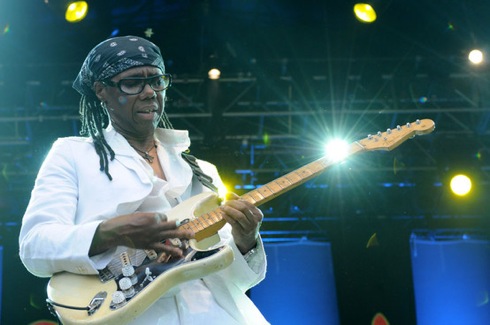
Nile Rodgers, books,Le Freak, Upside Down Story, disco, autobiography
❏ A broad survey of the year’s music books by the Evening Standard’s David Smyth reveals that in his collected lyrics Jarvis Cocker says “seeing a lyric in print is like watching the TV with the sound turned down: you’re only getting half the story”… Le Freak: An Upside Down Story of Family, Disco and Destiny gives us a tour of the fascinating life story of Nile Rodgers [pictured] — conceived when his mother was 13, raised by beatniks who’d have Thelonious Monk over, he joined the Black Panthers and jammed with Jimi Hendrix, all before he wrote a vast collection of mega-hits, virtually lived in Studio 54’s bathroom and produced Madonna and David Bowie.

LADY GAGA: GOOD THING, BAD THING?

PopJustice’s 2011 In Review asks singer Will Young: As a notorious homosexual, did you feel empowered by Born This Way by Lady Gaga?
Will replies: “When it came on the radio I thought ‘She’s basically written this song for me’. Amazing. I actually think I shed a tear as I was driving up to Wales. I stopped at a petrol station and I thought ‘You know what, I don’t care what they think’ and I brought some pink bon bons. Normally I would just go for a Wispa.”

STEVE NORMAN’S HOTTEST DANCE VIDEO

+++
Tightrope by Janelle Monáe feat. Big Boi — “Amazing. Here’s to a year to remember, like 1981 only better!” says Spandau’s sax player Steve Norman.

➢ Don’t miss: Other picky people’s year-ending
Best Ofs from fashion, TV, web and film

FRONT PAGE