Category Archives: 20th century

2025 ➤ The New Romantics history book currently turning heads

Photography, fashion, clubbing, exhibitions, Social trends, Swinging 80s, Youth culture, newbook, New Romantics, Blitz Club, Blitz Kids,

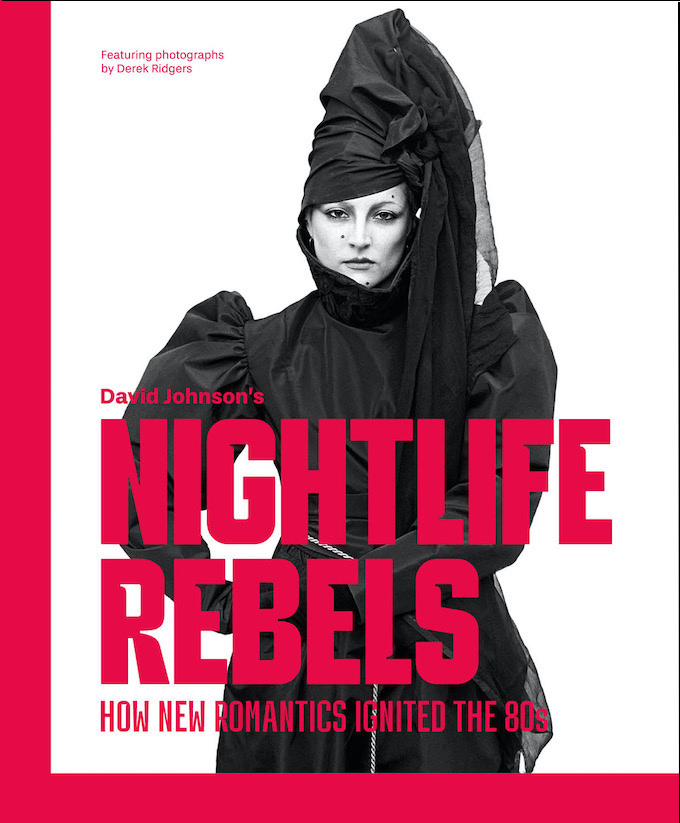
Nightlife Rebels: my new book published September 2025

❚ DURING THE SWINGING 80S two seasoned eye-witnesses watched Britain’s young ignite a glittering New Romantics revolution… As a Fleet Street journalist I explored their intriguing carnival of style-setting cults across Britain, Paris and New York, while straight-up photographer Derek Ridgers captured the libertines in their dark dens.

Our new illustrated hardback NIGHTLIFE REBELS reveals the candid history of the Blitz Club’s hedonists who insisted “One look lasts a day”. It has gone on sale in the shop outside the Blitz Club exhibition at London’s Design Museum. Alas, it is not available online, only in this shop. We hope to broaden availability soon. Contact us at Nightlife.Rebels@shapersofthe80s.com

FRONT PAGE

➤ Possibly the first post here at Shapersofthe80s in 2009

1 = GEORGE MICHAEL £90m ($138m)
2 = MICK HUCKNALL £35m ($54m)
3 = KYLIE MINOGUE £35m ($54m)
The richest UK popstar of all is ex-Beatle
Sir Paul McCartney £475m ($731m).
Source: Sunday Times Rich List 2010

De Finibus Bonorum
et Malorum, Cicero:

[Alas this sound recording no longer works]

FRONT PAGE

➤ Six magazines that changed the course of postwar British journalism

journalism, Picture Post, influencers, magazines pre-war

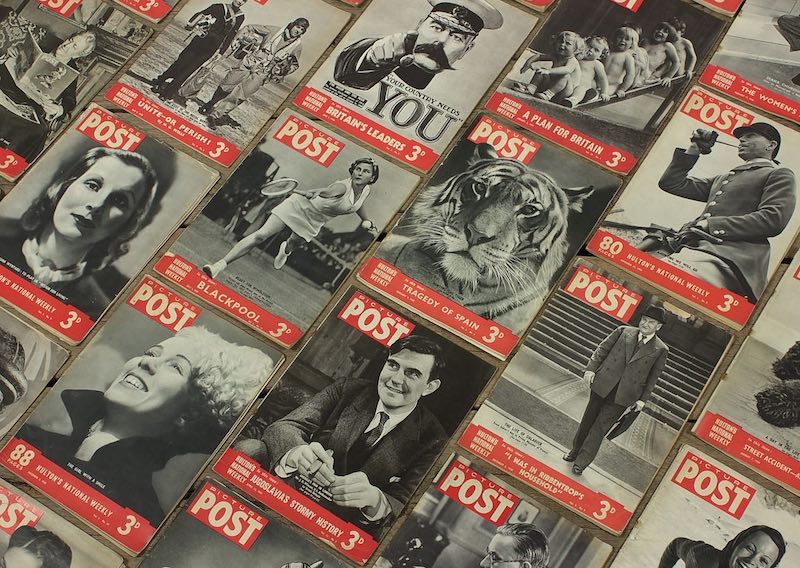
Picture Post covers from 1938 onwards

[This post was among the first to be published at
Shapersofthe80s in March 2009]

PICTURE POST 1938-57

The pioneer of photo-reportage. At the height of its powers during the Second World War this was the most widely read periodical in the country, selling 1,950,000 copies a week. Its inspirational editor from 1940 Tom Hopkinson recruited the photographers Bill Brandt, Bert Hardy, Kurt Hutton, Felix Man, Francis Reiss, Thurston Hopkins, John Chillingworth, Grace Robertson, Leonard McCombe. Staff writers included MacDonald Hastings, Lorna Hay, Sydney Jacobson, J. B. Priestley, Lionel Birch, James Cameron, Fyfe Robertson, Anne Scott-James, Robert Kee and Bert Lloyd; freelance contributors included George Bernard Shaw, Dorothy Parker and William Saroyan.

SUNDAY TIMES MAGAZINE 1962-today

The first colour supplement to be published as a weekly addition to a UK newspaper. The first editor was Mark Boxer. From the outset, “photographer first” was the benchmark and required serious investment in photo-reportage from the world’s trouble spots. Michael Rand, its art director for 30 years from 1962, said the credo was “grit plus glamour – fashion juxtaposed with war photography and pop art”. He went on to champion the work of such photographers as Terry O’Neill, Brian Duffy, Richard Avedon, Eugene Richards, Diane Arbus, Mary Ellen Mark. The magazine featured images from the Vietnam war by the photographer Don McCullin, a photo-essay on the Vatican by Eve Arnold, many portraits and photo-essays by Lord Snowdon, and Bert Stern’s final photoshoot with Marilyn Monroe, among many other photographic collections.

NEW SOCIETY 1962-1988

A weekly magazine of social inquiry and cultural comment, it drew on the disciplines of sociology, anthropology, psychology, human geography, social history and social policy, and it published wide-ranging social reportage. The cultural commentator Robert Hewison wrote that New Society became “a forum for the new intelligentsia” created by the expansion of higher education in Britain from the early 1960s. The editor Paul Barker (1968–86) was described by the labour historian Eric Hobsbawm as the “most original of editors”.

NOVA 1965-75

Launched under the slogan A new kind of magazine for the new kind of woman, Nova created its own unique niche in the British consumer magazine market under gifted editor Dennis Hackett, together with visionary art director Harri Peccinotti. They swiftly established their magazine as an influential must-read for the movers and shakers of Swinging London, among men as well as the original target audience of women becoming devotees of its heady mixture of social issues and cutting-edge fashion and modern lifestyle features. Nova’s agenda of journalistically taboo subjects included contraception, abortion, cancer, race, homosexuality, divorce and royal affairs, invariably boosted by stylish and provocative cover images, making it a rarity among magazines. Ultimately Nova had more male readers than female.
[Nova incidentally is where my own career began – DJ, creator of Shapersofthe80s]

RADIO TIMES 1968-88

Programme listings magazine transformed with provocative feature articles under editor Geoffrey Cannon and art director David Driver to create Britain’s biggest weekly magazine sale which rocketed as TV itself became the mass medium, from 8 million to 11.2 million for the Christmas edition of 1988.

THE FACE 1980-2004

In 1980, Nick Logan, a respected ex-editor of NME, staked his house on launching a new magazine that was to make style the focus of youth culture, as much as music. The Face was quickly dubbed Britain’s “style bible”. Even with a top monthly sale of only 120,000, it had an impact not only on the pop press, but the mainstream media too which spawned style pages in newspapers and magazines and “yoof” TV shows across the enlarged landscape of broadcasting. His influential art director Neville Brody single-handedly revolutionised the way magazines were conceived while contributing many new fonts to the canon.

FRONT PAGE

1992 ➤ Who’s the keenest fan of Marcel Proust?

David Hockney, A S Byatt, Lewis Wolpert, Marcel Proust, In Search of Lost Time,

Hockney, Wolpert and Byatt: leading the pack?

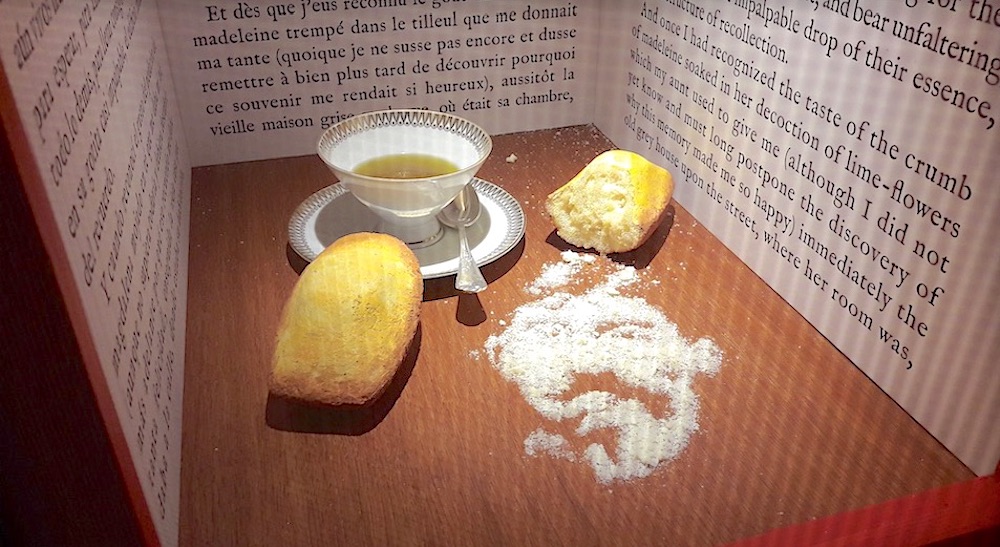
❚ HOW MANY OF US CAN CLAIM to have read the whole of Marcel Proust’s literary masterwork, originally titled for its English edition Remembrance of Things Past, in seven volumes, containing 1.2million words? Not many of us. What about reading it twice? As a journalist I interviewed painter David Hockney on his 46th birthday when he revealed that he had enthusiastically read the epic twice, drawing parallels between the act of looking around Proust’s world by reading his lengthy descriptions and the time it takes for our eyes to dart around a cubist painting. They are both about duration. And the great device Proust donated to literature was his episode of the madeleine, when a simple cake triggers a moment of involuntary memory.

In 1992, when a new English edition titled In Search of Lost Time was published, novelist A S Byatt admitted, without being boastful, that she too had read Proust twice. This happened at a party thrown by the highly sociable biologist Lewis Wolpert who raised the topic as a Proustian two-timer himself, though a viral buzz through this party could find no others. More impressive still, when our paths crossed a couple of years later, Antonia remarked: “Make that three readings now. But this time in French.”

David Hockney, A S Byatt, Lewis Wolpert, Marcel Proust, In Search of Lost Time, madeleine,

Proust’s episode of the madeleine: involuntary memory evoked in a French exhibition of 2015

➢ A S Byatt died last month and received this splendid
obituary in The Guardian

➢ Lewis Wolpert’s obituary in The Guardian, 2021
➢ Previously at Shapersofthe80s:
1983, Hockney’s new vision of the world

FRONT PAGE

2023 ➤ Linard snapped in the footsteps of Duchamp

Stephen Linard, Total Fashion Victim, St Leonards on Sea, Rogue Gallery, September 2023, Blitz Kid, New Romantic, exhibition, fashion illustrations,

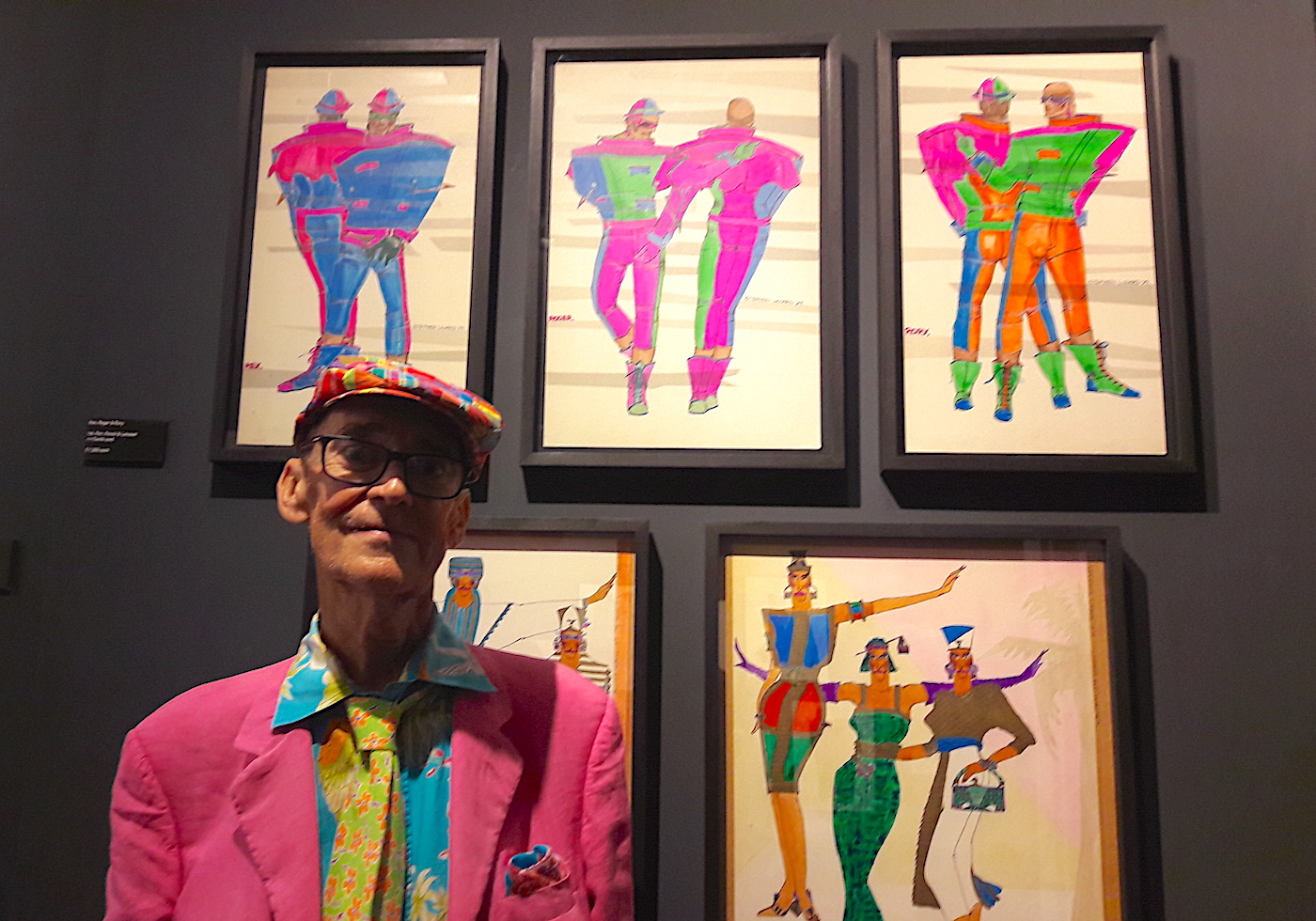
At his TFV PV: a colourful Linard with some of his early illustrations inspired by Tom of Finland. (Photo © Shapersofthe80s)

❚ NORMAN ROAD in St Leonard’s on Sea hosted more than its usual share of Eighties art fans this weekend. At Lucy Bell’s a book signing by Bowie’s travelling companion and photographer Geoff MacCormack drew fans seeking a signature on his latest title. Only yards away the newish Rogue Gallery was hosting Total Fashion Victim, an archive exhibition of one-time Blitz Kid Stephen Linard’s earliest fashion illustrations while a student from 1978 onward. As his tutor at St Martin’s Rosetta Brooks declared, he was a leader among the small pack of London fashionistas noted for their poser talents. “Each poser,” she believed, “is a ready-made,” exactly as defined by Marcel Duchamp in New York around 1914 when modernism was being born. (His own most famous ready-mades included Bicycle Wheel, Bottle Rack and the urinal titled Fountain.)

Partying with Linard – Click any pic to launch slideshow:

Here we can judge for ourselves from more than 40 pieces of artwork on sale for the next month, and enjoyed by a considerable crowd at the private view. Among them one of Linard’s designer contemporaries at St Martin’s School of Art was Corinne Drewery, later to become a pop singer with Swing Out Sister, here eye-catching in one of his flapper dresses in ikat with faded rose print which she used to wear circa 1983, “and it still fits”!!!

Linard’s previously unseen work – Click any pic to launch slideshow:

➢ Total Fashion Victim exhibition hosted by Ray Gange at the Rogue Gallery, 65 Norman Road, St Leonard’s On Sea

➢ Previously at Shapersofthe80s: 2023, My guide to the Linard exhibition which runs until 8 October at the Rogue Gallery

FRONT PAGE