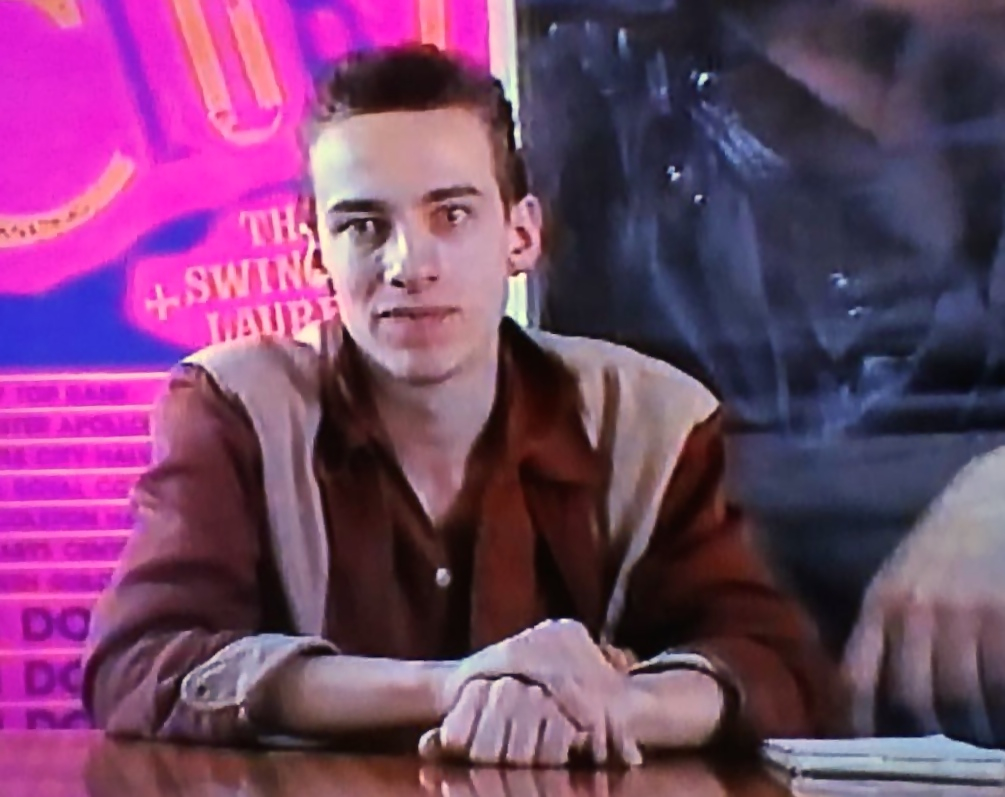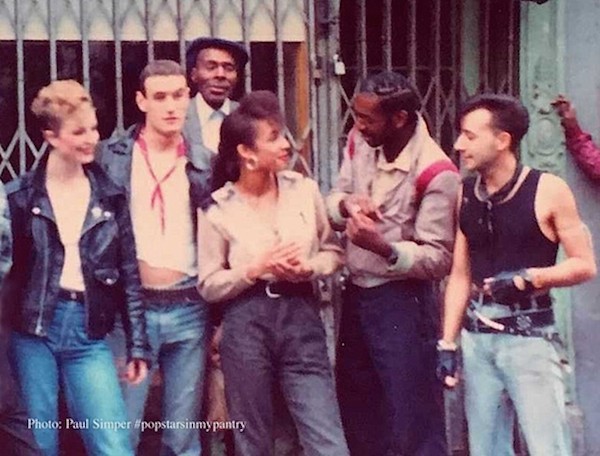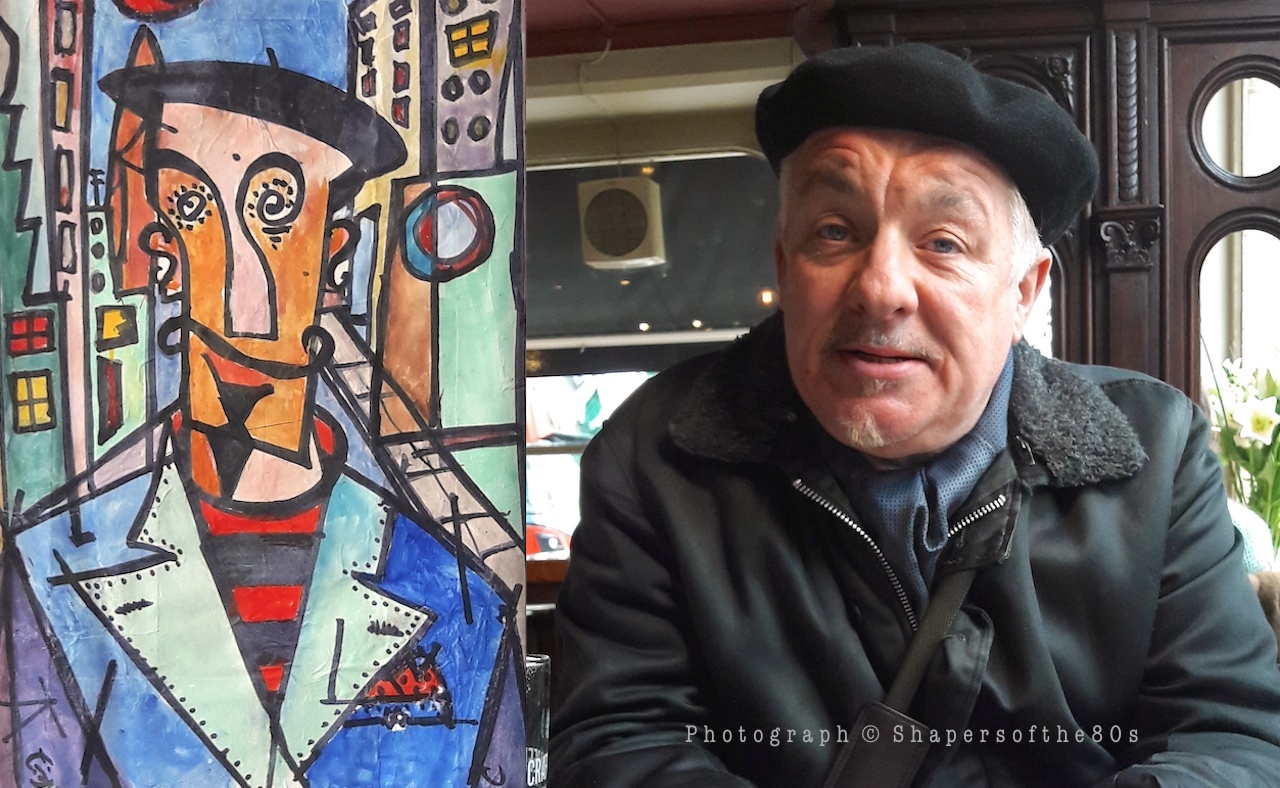
Club-host and artist Chris Sullivan: as he renders himself sporting Dennis-the-Menace T-shirt in NYC 1981 and as he is today in Portobello Road
◼ NOT MANY PEOPLE KNOW that Chris Sullivan – mischievous Welsh frontman of Soho’s Wag Club which he founded in 1982 – switched from the fashion course at St Martin’s to pursue painting instead. Despite his instinctive sense of style, he says today: “I was great at the design and fashion drawings, but not very good at actually making things, stuff like sewing and pattern cutting. So I moved over to fine art. At the time I kept on being in the newspapers, and the college didn’t care what I did, just happy another St Martin’s student was getting press. It was good for their PR.”
It also positioned him as a pivotal influence on the whole British youthquake that transformed London nightlife, music and fashion in the Eighties, while his own mantra of “One look lasts a day” has propelled him through such guises as flaneur, deejay, journalist, nightclub host, pop star, northern soul dancer, style commentator, entrepreneur and fashion designer. A terrific route-map to the Sullivan cosmos occupies 12 pages of the April issue of GQ magazine, blessed with a photo-portrait by David Bailey.
Click any pic below to enlarge all in a slideshow
All illustrations by Chris Sullivan
This month Sullivan publishes his third book, an anthology of “people and things that broke the mould” titled Rebel Rebel: How Mavericks Made the Modern World. What he dubs a “paperback manifesto” is an excuse to celebrate his own outsider approach to life: never having a proper job and always staying one step ahead of the pack. The book was launched in 2015 as a crowd-funded project through Unbound Books and for reasons unknown it seemed to take four years either to raise the cash or finish the writing, at which point Sullivan says there was still no money set aside for photographs of the 34 subjects he was profiling (some new essays, some vintage). “So I said I’ll paint or draw them, all these people like Rod Steiger, Fela Kuti, Louise Brooks, Orson Welles, Anita Pallenberg, David Bowie. . .”
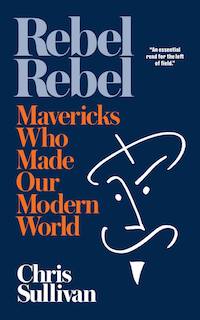
In the mix are criminals (Brilliant Chang), musicians (Lemmy), actors (Robert Mitchum), artists (Egon Schiele, Jackson Pollock), directors (Martin Scorsese), photographers (Robert Capa), as well as iconic topics such as film noir, Berlin in the Twenties, Levis, the pork pie hat, the Zoot Suit and the white T-Shirt.
“Because I was so worried as the deadline loomed,” Sullivan says, “I did 35 illustrations for the book, really quickly b-b-boom! Then a friend Barnsley saw one of a zoot suit I wasn’t using for a chapter on outsider clothing, and he snapped it up. Before I knew it someone else was asking could they have one, then I did another one as a commission and stuck that up online and since then I’ve had more than 10 commissions to do these paintings.” Some of the results are here for all to see, inspired by time spent in New York back in the day.
As for the book’s other 400-odd pages, they read like Sullivan in his element. Vigorous prose and serious research substantiate his invitation to “an exceptional party” of cultural giants. Take Capa for instance, who “captured a world and it was Capa’s world”, according to John Steinbeck. Sullivan empathises: “He seems like a chap with whom you’d want to hang out, chew that fat and then go on a humongous bender – a man who was charismatic, brave, egalitarian and funny.” It’s intense stuff that exonerates malcontents and free-thinkers. Ultimately, wag as a tag is not the last word.
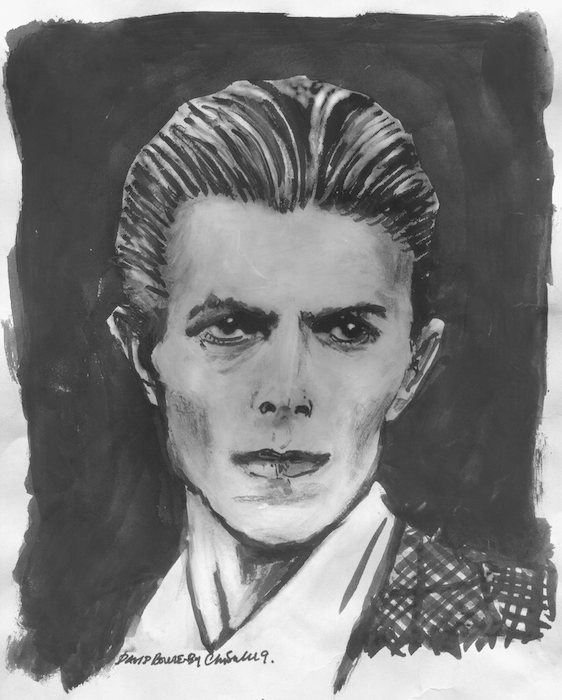
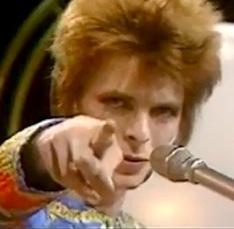
David Bowie: Sullivan’s illustration of the Thin White Duke for his Rebel book
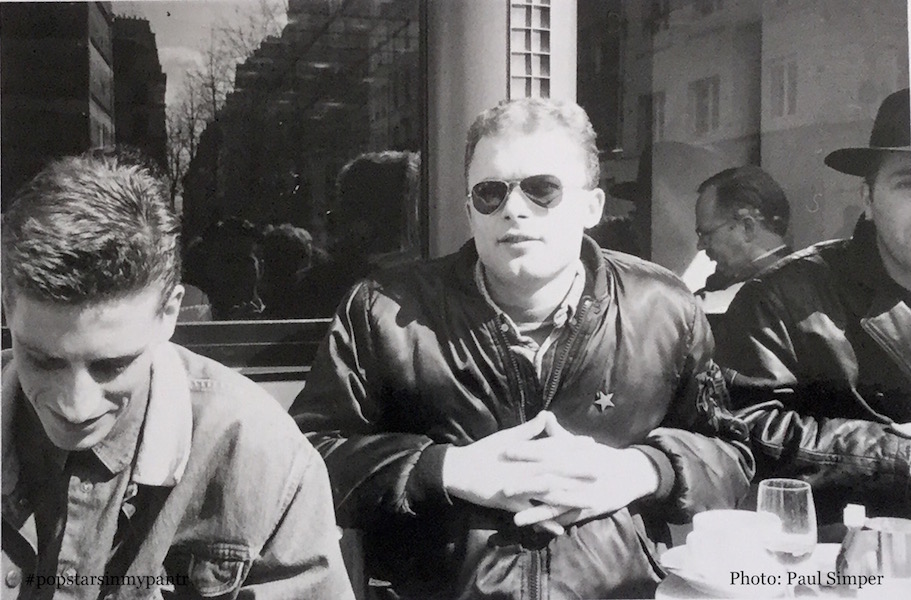
The boy wonder: “Scoop” Simper plugging No1 on Switch, the TV pop show
A rare book is published this month giving a vivid eye-witness account of one of the most creative eras for British pop music, the Swinging 80s. Paul Simper himself says: “It’s the pop life story pop-pickers have been gagging for.”
He should know, having emerged from London clubland to become the leading commentator on the New Pop led by image-conscious young bands when the rock press at large was giving them short shrift. Not only was he genuinely The Friend of The Stars but was one of the few writers who could also give it pure laldy dancing his socks off down Le Beat Route. Pop Stars in My Pantry is his confessional memoir and today Shapers of the 80s reprints an exclusive extract. . . But first, who is the man called Simper?
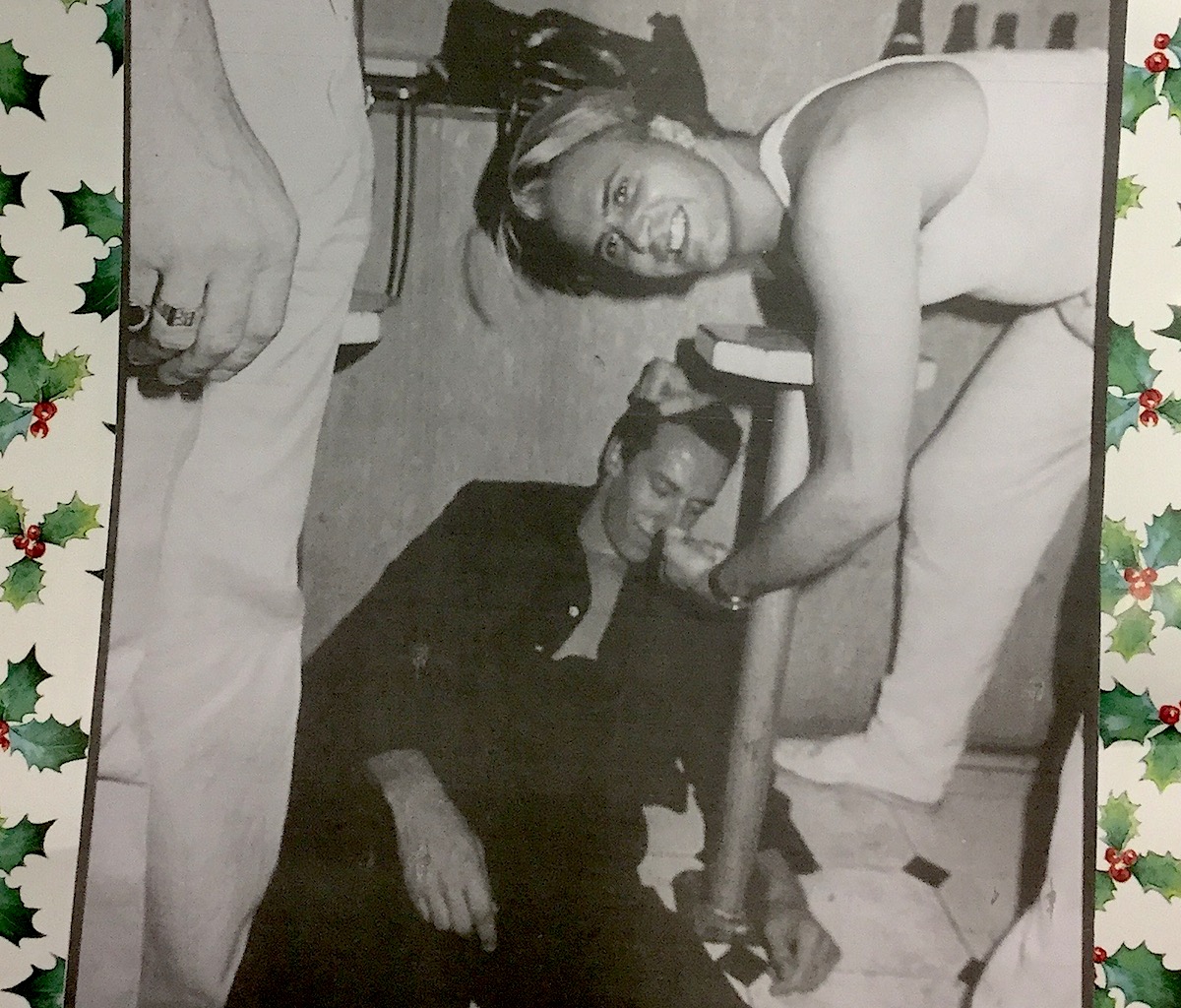
Wakey-wakey! Spandau Ballet sax player Steve Norman discovers our hero Simper relaxing during a characteristic night out on the town during London’s Swinging 80s
◼ THERE’S NO EXPLAINING PAUL SIMPER except as a life force which is Always On – sometimes as a mouse, sometimes a bunny, often in a skirt or a sequinned tuxedo. Not usually at same time, obvs. He’s obsessive, definitely bonkers, extremely good “in the room” and, oh yes, quite an entertaining showbiz writer.
Now he’s had the nerve to bring out his life story as a book called Pop Stars in My Pantry (PSIMP for short) when you’d think people in the music biz would have learned a lesson from Morrissey’s Pooterish own goal. Luckily Simper seems to have had massively more fun than Moz, actually likes the people he writes about and, oh yes, brings a wicked sense of humour to an industry not noted for knowing how to laugh.
As a singer in Slippry Feet – a marriage of supper-club in a circus ring meets David Lynch in a disco – Simper only ever got as far as being the best group of December 1993. Bar none. Fortunately for this book he has the day job to fall back on and he is SUCH a namedropper. Look at the puffery adorning his book’s back jacket: “Always a joy to hang with” – Siobhan Fahey; “The most trusted person in 80s pop” – Patsy Kensit; “Truly the epitome of the embedded journalist” – Gary Kemp.
Goes with territory when you have become Friend of The Stars, having leapfrogged from Melody Maker within minutes of coming up from the sticks in 1981, onto smart new fan mags like New Sounds New Styles and No 1 which counted clubbing on-the-town as research. There from the off, he was friends with the burgeoning new generation of self-invented nightlife stars who were storming off fashionable dancefloors across the UK and into the singles charts to knock the rock dinosaurs for six. Fellow clubbing names being dropped go from George Michael to Frankie Goes to Hollywood, Bananarama to Boy George. Not to mention Madonna, Prince, Whitney, Elton and Weller. Woohoo!
Early on I nicknamed him “Scoop” Simper because even though I worked for a Deeply Influential Mainstream Newspaper, whenever any big sexy pop star, like, y’know Debbie Harry, flew in from abroad *he* got the exclusive interview even though he “only” worked for one of those pure-pop weeklies full of pinups and lyrics and breathless reviews.
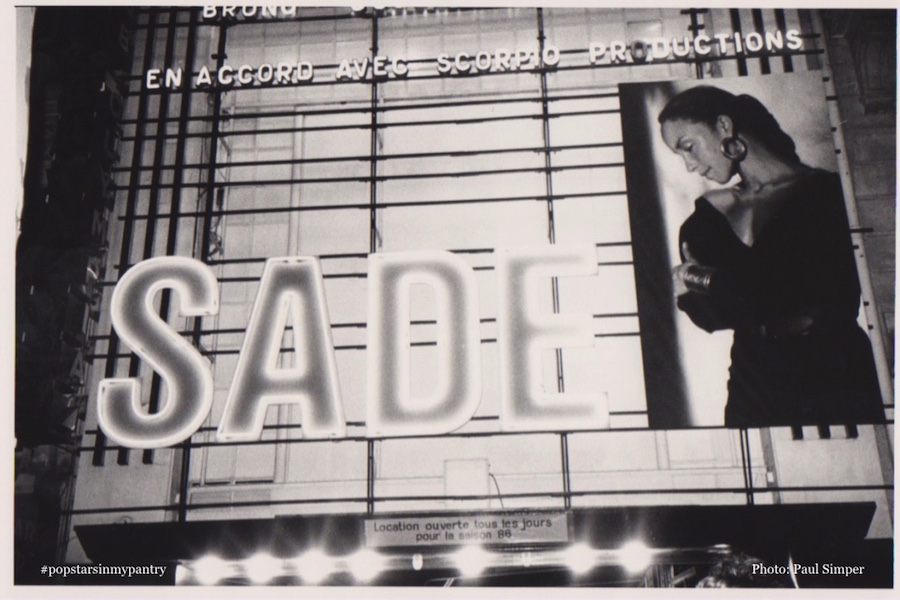
So who’s having the last laugh now?! Well probably Scoop, as usual, since PSIMP proves to be “a right frollicking read for the adults in your family”, while my own book has blurted itself out and into this website for several years, clocking up barely a handful of Wikipedia footnotes to credit. And now His Majesty is entrusting Shapers of the 80s with running an excerpt from one of the best chapters in his book, the story of Sade Adu, the Essex girl who rose via St Martin’s School of Art to become one of the UK’s biggest Grammy-award winning pop exports, described by Robert Sandall in The Sunday Times in 2010 as “the most successful solo British female artist in history”.
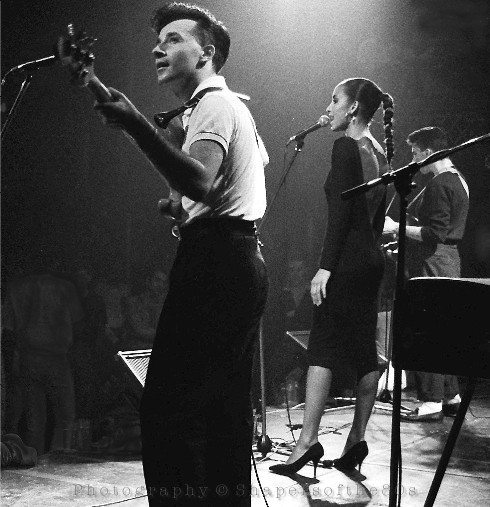
Scoop spills the beans: “Sade was very much a part of my early years as a young pop writer living in London. She even used to kindly let me sleep on her sofa.” So here’s a short teaser-taster from PSIMP, but do click through to our inside page for the full extract when Sade’s first band Pride goes in search of Manhattan’s edgy Village scene. . .
“ I owed Sade and Bob Elms plenty. When I first moved to London I couldn’t have been more grateful for the existence of their north London home tucked away in multi-cultural Wood Green on the Noel Park Estate.
Their old sofa didn’t exclusively have my name on it – fresh-down-from-Hull saxophonist Stuart Matthewman was pretty much clothed, housed and fed by them over the same period – but on the occasions I was invited back, I took some shifting. Sade reckoned that a pair of my old socks stuck around even longer than me until she ceremonially buried them, like high-grade plutonium, in the back garden.
I was never so bold as to turn up unannounced, but if Bob suggested a home viewing of an under-the-counter video of Texas Chainsaw Massacre or The Hills Have Eyes that he’d got his mitts on in Soho (I’d discovered in my early days in London there was a black market for everything), then I was more than up for it.
My telly viewing habits were not of primary importance to the residents at No 64 Hewitt Avenue by the spring of 1982, though, when Bob and Lee Barrett started talking up this new band called Pride that “Shard” was in. Stuart Matthewman was also involved, as were fellow Hull lads drummer Paul Cooke and bass player Paul Denman.
Back in Hull, Stuart had been in The Odds, a pop/mod band similar to The Piranhas that had started out doing speeded-up punk versions of 60s hits like The Dave Clark Five’s Glad All Over. He then played sax in a ten-piece Elvis impersonator show called Ravin’ Rupert, which covered the whole spectrum of The King’s career from rockabilly to Vegas delivered by a front man sporting a quiff and wearing Rupert-the-Bear checked trousers. A tad cooler was Paul Cooke and Paul Denman’s prog-rock band, The Posers, which Stuart credits as being the only band in Hull trying to do something new.
As for Sade, her singing career had only begun a few months previous when she sang onstage for the first time as part of another London band, Ariva. Considering Ariva were viewed as a bit of a Blue Rondo rip-off, ironically it was on the way to a Rondo gig on Barry Island that Lee first clocked Sade singing along to the radio and asked her if she could sing. She thought she probably could so said Yes. . . ”
➢ Choose “View full site” – then in the blue bar atop your mobile page, click the three horizontal lines linking to many blue themed pages with background article
MORE INTERESTING THAN MOST PEOPLE’S FANTASIES — THE SWINGING EIGHTIES 1978-1984
They didn’t call themselves New Romantics, or the Blitz Kids – but other people did.
“I’d find people at the Blitz who were possible only in my imagination. But they were real” — Stephen Jones, hatmaker, 1983. (Illustration courtesy Iain R Webb, 1983)
“The truth about those Blitz club people was more interesting than most people’s fantasies” — Steve Dagger, pop group manager, 1983
PRAISE INDEED!
“See David Johnson’s fabulously detailed website Shapers of the 80s to which I am hugely indebted” – Political historian Dominic Sandbrook, in his book Who Dares Wins, 2019
“The (velvet) goldmine that is Shapers of the 80s” – Verdict of Chris O’Leary, respected author and blogger who analyses Bowie song by song at Pushing Ahead of the Dame
“The rather brilliant Shapers of the 80s website” – Dylan Jones in his Sweet Dreams paperback, 2021
A UNIQUE HISTORY
➢ WELCOME to the Swinging 80s ➢ THE BLOG POSTS on this front page report topical updates ➢ ROLL OVER THE MENU at page top to go deeper into the past ➢ FOR NEWS & MONTH BY MONTH SEARCH scroll down this sidebar
❏ Header artwork by Kat Starchild shows Blitz Kids Darla Jane Gilroy, Elise Brazier, Judi Frankland and Steve Strange, with David Bowie at centre in his 1980 video for Ashes to Ashes
VINCENT ON AIR 2024
✱ Deejay legend Robbie Vincent has returned to JazzFM on Sundays 1-3pm… Catch Robbie’s JazzFM August Bank Holiday 2020 session thanks to AhhhhhSoul with four hours of “nothing but essential rhythms of soul, jazz and funk”.
TOLD FOR THE FIRST TIME
◆ Who was who in Spandau’s break-out year of 1980? The Invisible Hand of Shapersofthe80s draws a selective timeline for The unprecedented rise and rise of Spandau Ballet –– Turn to our inside page
SEARCH our 800 posts or ZOOM DOWN TO THE ARCHIVE INDEX
UNTOLD BLITZ STORIES
✱ If you thought there was no more to know about the birth of Blitz culture in 1980 then get your hands on a sensational book by an obsessive music fan called David Barrat. It is gripping, original and epic – a spooky tale of coincidence and parallel lives as mind-tingling as a Sherlock Holmes yarn. Titled both New Romantics Who Never Were and The Untold Story of Spandau Ballet! Sample this initial taster here at Shapers of the 80s
CHEWING THE FAT
✱ Jawing at Soho Radio on the 80s clubland revolution (from 32 mins) and on art (@55 mins) is probably the most influential shaper of the 80s, former Wag-club director Chris Sullivan (pictured) with editor of this website David Johnson
LANDMARK FAREWELLS. . . HIT THE INDEX TAB UP TOP FOR EVERYTHING ELSE