Tag Archives: Steve Strange

1980 ➤ 2010, the stage magic that inspires Romantics ancient and Neo

An exceptional cabaret performer called Taylor Mac
hit London this week in 2010. He subverted not only
theatrical conventions but several classic Bowie songs
to glorious effect. His shimmering presence sent out
echoes of how we defined itzy-Blitzy when 1980 dawned…
Billy’s club,Helen Robinson, nightlife, London ,Steve Strange, PX

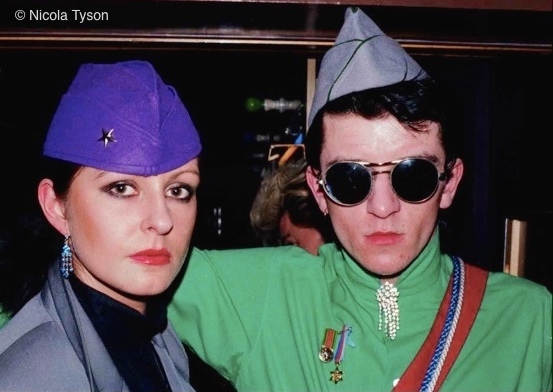
Billy’s club 1978: Strange as Ruritanian Space Cadet alongside PX designer Helen Robinson. (Photograph by © Nicola Tyson)

❚ LET’S RECALL WHAT MADE THE BLITZ KIDS unique in 1980. Singer Andy Polaris said soon after: “Anyone who thought it was all a pantomime got the wrong end of the Pan Stik. Blitz people had to be larger than life. It was a compulsion. If it doesn’t possess you, you can’t acquire it.”

An evening within the orbit of London’s Blitz club superstars – and we’re talking about 50 people here – was more than entertaining. You were zapped with a very tangible electric shock – what we’d call today “sensory overload” – as if these exquisite, compulsive posers had revitalised Gilbert & George’s notion from 1969 of processing through the world as living sculptures. The Blitz Kids generated their own crackling versions of hyper-reality that defined the space around them. They included Kim, Julia, Judi, Melissa, Fiona, Jayne, Theresa, Myra, Scarlett, Clare, Michele, Darla, Sade, Kate, Stevie, Naomi, Mandy, Helen, Jo, Perri, Christine and Franceska . . . the Stephens Linard and Jones, Lee, John, Cerith, Simon, Iain, Andy, George, Marilyn, Wilf, Greg, Jeffrey, Christos, Graham, Neil, Dencil, Robert, the Holah brothers, the Richards Ostell and Sharah. A fair few other Blitz Kids, like Strange, Egan, Elms, Sullivan, Dagger, Haines, Ure, O’Donnell, Mole, Ball and Lewis, had the motormouth skills of energetic talkers and schemers who were, as we say today, “good in the room”. Above all, the best among them “made things happen” wherever they set foot. That’s why spending time with them was the best kind of fun – stimulating, argumentative and constructive, whether idling at a bar or bounding around the beach on Bournemouth bank holidays.

Kim Bowen, Stephen Linard, Blitz Kids, London

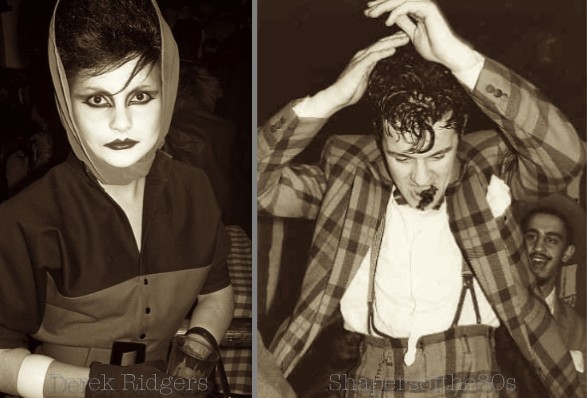
Doyennes among the Blitz Kids, 1980: Kim Bowen and Stephen Linard stamp themselves on that week’s zombie leitmotif. Photographed © by Derek Ridgers

Even so, what marked out the fashionistas especially was that, not only in the club, but in shop, café and bus, the style stars were constantly emitting auras of the force you imagined once surrounded Dietrich or Garland or Bogart or Caine. There’s nothing accidental about style. It is by definition a considered stance. In the presence of the Blitz superstars you could hold up your hands and almost feel the crumpet-toasting tingle. Even jaded Londoners turned their heads when Kim walked the half mile from Warren Street to St Martin’s school of art swathed only in surgical bandages. Or when George paraded past Buckingham Palace as a helmeted and toga’d Britannia at the annual royal ceremony of trooping the colour.
Princess Julia, Chris Sullivan, deejays, Vintage 2011,Southbank Centre, clubbing

Vintage deejays: original Blitz Kids such as Princess Julia and Chris Sullivan have continued spinning the vinyl that recreated legendary 80s club soundtracks from the Blitz to the Wag

Wherever there was a party, premiere, exhibition or club opening you’d see a dozen more such creatures who lived hyper-reality 24 hours a day… Lee perhaps as Nosferatu, Julia as Bride of Frankenstein, Fiona saying “Non!” to couture by wearing a grosgrain coat back-to-front, Sullivan as 1920s cad, blue-lipped Linard as 1920s flapper, Marilyn as, well, Monroe, Stewart as geisha boy, Theresa as Little Bo Peep, a part she played at work in the Fleet Street offices where our paths often crossed.

Aplomb came naturally to Kim Bowen as the queen of the Blitz Kids. One night when some friends came back to mine after celebrating my birthday, Kim walked into the kitchen and said: “I’m not going to let you live with this wallpaper one more day.” She picked at the edge of a stiff vinyl-coated strip, printed with very 1960s pepperpots and pans. Then she ripped it off the wall in one heave. The kitchen walls were bare within 20 minutes. Kim declared: “Minimalism, David, that’s you need.”
Clare Thom, Michele Clapton, Blitz Kids

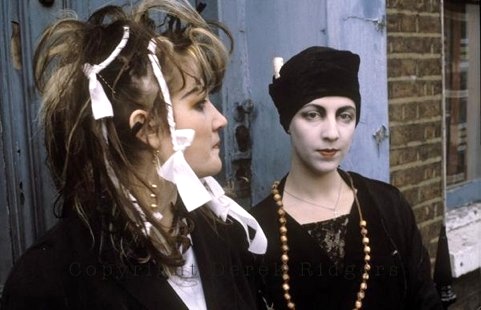
Blitz Kid style: Outside the Carburton Street squat, Clare-with-the-Hair and Michele Clapton displaying awesome repose. Photographed © by Derek Ridgers

As time would reveal, the lead Blitz Kids outflanked not only their peers, but most of the copyists who followed their Bowie-inspired passion for change. You’d find the second-league clubbers at Studio 21 in Oxford Street, or in a back barrel at Birmingham’s Rum Runner – those were the self-proclaimed New Romantics you see dancing in the YouTube videos, and being photographed wearing too much of everything, from Boots No 7 to lacy frills. A couple of years after the Blitz caravanserai had passed, designer Fiona Dealey said candidly: “You look at these little Bat-people with it dribbling down their necks and you feel like saying, ‘Sorry darling, not enough loose powder’. The difference was that our make-up was stage slap, Leichner not Factor. The clothes came from a costumier, Charles Fox, not Flip. Dressing for the Blitz was real theatre. It wasn’t just another uniform. You felt glamorous.”
Stephen Jones, Blitz Kids

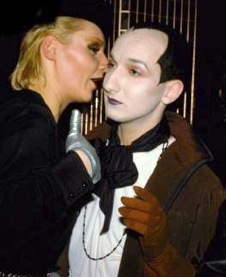
Immaculate: Hatter Stephen Jones

Aha, real theatre! This is the realm Shakespeare championed as “an improbable fiction” and John Updike blasted as the “unreality of painted people”. A flesh-and-blood craft where the basic requirement is for a living audience to be watching living actors. The Blitz Kids fully understood what Shakespeare’s Player has to explain to Rosencrantz and Guildenstern in Tom Stoppard’s spoof version of Hamlet: “We’re actors. We’re the opposite of people.” Actors pledge themselves to the belief that somebody will be watching. Nothing to do with vanity. Entirely a means of confirming their identity. Ditto the Blitz Kids.

The digital natives (and the self-styled Neo Romantics) of Generation Z who today are being raised on computer shoot-em-ups and quaking cinema enjoy precious little exposure to live theatre, to the “magic” that emanates from the contract eagerly agreed between actor and audience – for the one to perform at the same time as the other watches. Only when, as one towering example, Sir Michael Gambon allows a Pinteresque pause to elapse onstage can auras crackle “in the moment” with sufficient intensity to be felt physically, and thrillingly, by a theatre audience. Gambon’s aura crackled like a fire god’s last Christmas in No Man’s Land, before a wrapt audience the day after its author Harold Pinter had died.
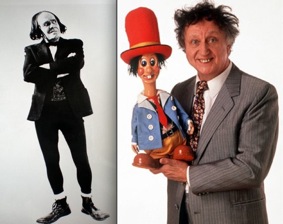
Max Wall, Ken Dodd

Masters of the comedian’s art: Max Wall and Ken Dodd

Comedy is where the theatrical contract of give-and-take fights for life most ostentatiously. As you laugh helplessly at the veteran comic Ken Dodd’s rapid-fire patter, you needn’t know that he has subjected his live stand-up routine to a lifelong time-and-motion study that concluded he must hurl eight gags per minute at his audiences to ensure everybody laughs at least once every minute he’s onstage.
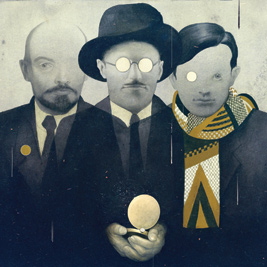
Travesties, Tom Stoppard, theatre

Travesties: what a coincidence that in 1917 the revolutionary Lenin, the novelist James Joyce and the Dadaist poet Tristan Tzara all happened to live in Zurich

In London in 1982 it was no less a pleasure to witness the top-of-the-bill variety legend Max Wall give wondrous live masterclasses entitled An Evening with Max Wall in which, aged 74, he laid bare how comedic timing works from one second to the next, how facial expression and vocal cadence, as well as silly walks can turn laughter instantly on and also off. Demonstrating with us as guinea-pigs how performer’s and viewer’s mutual responses keep each other on their toes.

The playwright Tom Stoppard has spent his career writing pyrotechnic scripts that read wittily enough sitting on the page, but are transformed several hundredfold the moment they are enacted on the stage, by for example exploiting the improbability of time-warps where the actors and the action are rewound and rerun in “unreal time” – actors reverse back through doors to leave the stage and re-enter immediately giving a subtly adjusted performance – as in Travesties, his hilarious comedy of coincidence. His plays are overtly “about” theatricality, yet shrouded by the mischievous apologia that, as one of his characters ultimately insists, “It’s a mystery”.

☐++++++☐++++++☐

GETTING BACK TO Taylor Mac,
his little bit of itzy-Blitzy glitz gives
shape to all of the above
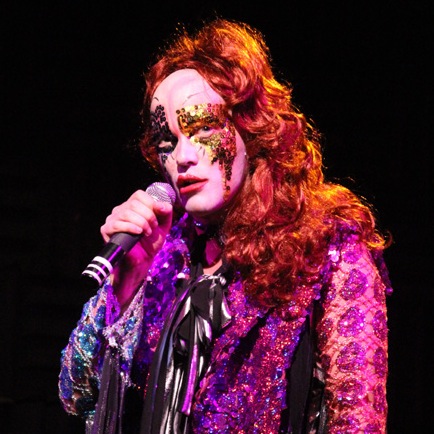
Taylor Mac, Glasgow, London, Bowie, Comparison is Violence,cabaret

Taylor Mac 2010: sequinned, painted and bewigged as Bowie-cum-Tiny Tim. Photographed © by Tim Hailand

SO WHERE MAY TODAY’S young Neo Romantic seek inspiration if he or she wishes to aim beyond the slap and the zhoosh to summon up solar-powered charisma of Blitz Kid proportions? The answer is in the UK right now (Soho Theatre London this week, The Arches in Glasgow next) and he is an incandescent and witty Californian called Taylor Mac.
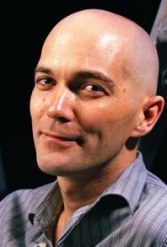
TAYLOR MAC

Mac as himself

Clad in more sequins than a sultan’s harem could shake at you, he gives a full-throttle musical cabaret that is unexpectedly poignant, invigorating and original. You also laugh more than you ever did at Eddie Izzard’s last side-splitting tour. Mac’s audacious dissection of the essence of theatre, vaudeville and other performing arts evokes Merman and Garland, Wainwright and Brel while asserting his own unique brio. He reinvents pop classics by David Bowie and Tiny Tim (yes, you do remember his hits Tiptoe Through the Tulips and I’ve Never Seen a Straight Banana) by delivering them with an earnestness that moistens the tear-ducts. The evening’s ironic sub-title is The Ziggy Stardust Meets Tiny Tim Songbook, because these are the comparisons reviewers draw about Mac, yet they seldom remark on how he turns Starman and Heroes, those holy invocations of the 80s Bowie fan, into altogether heart-rendingly new songs.

His themes are love and longing and role-play and tolerance for what society calls a gender-bending misfit who sprang fully formed from the egg, craving the glue that fixes eyelashes. What results is the most stupendous spectacle, charged with insights as mere as how to signal the end of a song, one way being a sustained high note, another to deliver a wide-eyed “Cha-cha-cha!” through smiling teeth, but the coup de grace is a solemn downward arm gesture LIKE SO! For 90 minutes Mac fills the Soho Theatre many times over with a sustained rush of theatre magic. And yes of course he’s on YouTube, but that entirely defeats the point the past 1,700 words have been making.

➢➢ Read Donald Hutera’s London review of Mac
in The Times, June 3, 2010

➢➢ Read Charles Isherwood on Mac’s 2009 play
The Lily’s Revenge in the New York Times

FRONT PAGE

JUNE ➤ 30 or so years ago today

ON THIS DAY IN 1978…

Human League, Being BoiledJune 17 — Fast Product releases the darkly mystical Being Boiled by Sheffield’s original Human League, and Bowie declares it “the future of music”. John Peel also champions the single on radio and it becomes a cult among the Billy’s and Blitz clubbing circle in London, though it does not chart until January 1982 on its second release. In the present day this is considered to be the first massively influential British electronic pop track.
VIEW ♫ Being Boiled live in 1978 on Granada TV, though the audio is dire!

+++

June 21 — Tim Rice and Andrew Lloyd Webber’s musical Evita opens at London’s Prince Edward Theatre to run for 2,900 performances. A novel ploy has been to release a double album two years earlier — some songs are already chart hits
June 29The Swinging 80s start here as David Bowie plays Earl’s Court, London. Sundry misfits recognise kindred spirits in the audience and gather afterwards at Billy’s club in Soho, long before the phrase New Romantics has been invented.

ON THIS DAY IN 1979…

June 9 — Music weekly Sounds publishes Mods Without Parkas by Garry Bushell
June 14 — The 70s “dressing up” imperative sees Flick’s in Dartford throw a VE Night deejayed by Radio London’s Robbie Vincent

ON THIS DAY IN 1980…

June 14 — George O’Dowd parades past Buckingham Palace as a helmeted and toga’d Britannia at the annual royal ceremony of trooping the colour

ON THIS DAY IN 1981…

June — The mainstream deejay’s bible Disco International publishes a plain man’s guide by yours truly, titled Who are the New Romantics and how do they dance?
June — John Boorman’s epic Arthurian movie Excalibur opens in London starring Nigel Terry and Helen Mirren
June 4 — Steve Strange and Rusty Egan open Club for Heroes in Baker Street
June 21 — Arty Latin popsters Blue Rondo à la Turk are unveiled in Chelmsford after weeks of secret tease dates. Yours truly is there to introduce the band to readers of New Sounds New Styles under the headline He thinks he is Geronimo but Chris Sullivan is turning fantasy into fact

ON THIS DAY IN 1982…

Blitz Kids, Kate Garner, Jeremy Healy ,Haysi Fantayzee ,Paul Caplin, John Wayne Big Leggy

Haysi Fantayzee 1982: ex-Blitz Kids Kate Garner, Jeremy Healy and manager Paul Caplin

June 9 — Kasper de Graaf, editor of New Romantic magazine New Sounds New Styles, tells the Rebel Writers the title is to close and they are out of jobs. We retire to the Red Lion to seek consolation!
June 14 — The Falklands War ends with the Argentine surrender. Its occupation of the Falkland Islands in the South Atlantic had provoked a war that lasted 74 days and results in the deaths of 260 Britons and 649 Argentinians
June 21 — At the V&A the Middlesex fashion degree show is stolen by Stevie Stewart and David Holah. Their Matelots and Milkmaids collection establishes Bodymap as the label for the young and daring
June 25 — As Haysi Fantayzee, Blitz Kids Kate Garner and Jeremy Healy release their debut single John Wayne is Big-leggy

ON THIS DAY IN 1983…

June 14 — Capital Radio’s Gary Crowley starts deejaying at Bogart’s club, Harrow

FRONT PAGE

2010 ➤ Index of posts for May

Steve New, Rich Kids, Revolver,Index May 2010, Shapersofthe80s➢ Spider-woman Bourgeois created her art as meditations on sexuality

➢ Foxx celebrates his life as the Duchamp of electropop

➢ Rich Kid Steve New (left, aka Stella Nova) dies at 50

➢ Just the birthday present Steve Strange really wanted this week of all weeks

➢ ‘A triumph’ – George’s verdict before transmission of his biopic

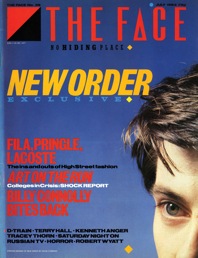
The Face, magazines, July 1983, New Order, Art on the Run➢ Ex-Blitz Kids give their verdicts on Worried About the Boy

➢ Three key men in Boy George’s life

➢ Can Generation Y be bovvered to vote?

➢ Lest we forget, on this day Britain sank the Belgrano

➢ Birth of The Face: magazine that launched a generation of stylists and style sections

FRONT PAGE

2010 ➤ Just the birthday present Steve Strange really wanted this week of all weeks

Steve Strange’s verdict on Marc Warren, the actor who
recreated his role as gatekeeper of the 1980s Blitz club on TV: “Perhaps he was a bit too harsh.”

© by Shapersofthe80s

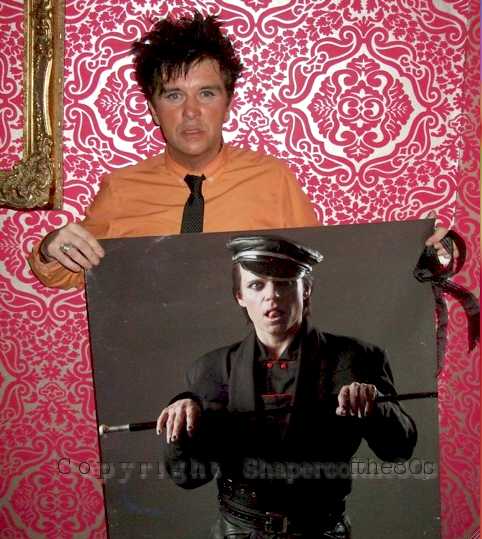
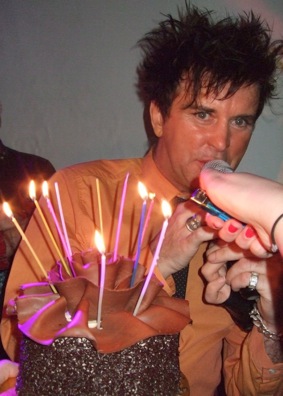
❚ ONE PRESENT WAS GOING straight into the smallest room in the house. At Steve Strange’s 51st birthday party last night at the Green Carnation in Soho, Rosemary Turner, co-host with Alejandro Gocast of the monthly club-night called The Face, presented him with a poster of his favourite pinup of the moment, the actor Marc Warren giving his rottweiler portrayal of Strange in last Sunday’s TV drama, Worried About the Boy.

Steve Strange © by Shapersofthe80sAll highly amusing, except that the TV drama had cruelly rendered Strange as some kind of tyrant on the door to the 1980 Blitz club which had a legendarily ruthless admissions policy long before red ropes became de rigueur. You were only admitted if you sported an OTT “look”. Even so, by common consent, Warren’s performance was a bit of a harsh portrait. What did you think Steve? “A bit too harsh,” Steve reckoned, biting his lip and holding back the tears.

Still, friends rallied round and champagne corks popped. In the roped-off VIP escape pod veteran clubbers could have put names to a few veteran popsters such as Steve Norman and Martin Kemp of Spandau Ballet, with partners Shelley, Shirlie and their family formation pose teams in tow. There too were Andy Bell of Erasure (new album out next month, with a Vince Clarke remix of the title track, Non-Stop, if you’re sharp), Studio 54 star Windy Tiger who is currently urging us to support Unison over public-sector cuts, trend-shaping photographer Gitte Meldgaard and Paul (Scoop) Simper “from Number One magazine”. The sudden summer weather meant that in the street outside, leading the smokers contingent was fashionista Stephen Linard, on temporary leave from his new roost in Australia.

A new generation of clubbers peered over the rope and moved along, possibly wondering who the heck all the old-timers were. Rose has established a winning formula of mixing the generations at her club-nights, not to mention sprinkling a generous dose of double-barrelled names into the mix. Some of those scarcely out of their acne are being dubbed the Neo Romantics, sporting extreme colourful looks, provocative names and an instinctive eye for a camera.

Strange’s birthday party photographed © by Shapersofthe80s – CLICK TO ENLARGE

➢➢ More birthday pix at Strange’s Facebook page

FRONT PAGE

2010 ➤ Three key men in Boy George’s life, but why has TV changed some of the names?

rel="nofollow"

Romance blossoms: Drummer Jon Moss gives George a peck at Planets club in July 1981 way before Culture Club existed. Photographed © by Shapersofthe80s

OK boys and girls, fasten your seat belts. This Sunday sees another Boy George media event… and it’s gonna be a bumpy ride. The Beeb has turned the pop star’s teens ’n’ twenties into a TV bio-drama titled Worried About the Boy (BBC2, 9pm Sunday May 16). We get 90 minutes of foot-stamping, chair-throwing, cry-baby tantrums over his self-confessed “dysfunctional romances”, all of which were documented in his eye-wateringly frank 1995 autobiography Take It Like a Man, which has inevitably inspired Tony Basgallop’s script . . .

Culture Club, Worried About the Boy, BBC, TV, 2010

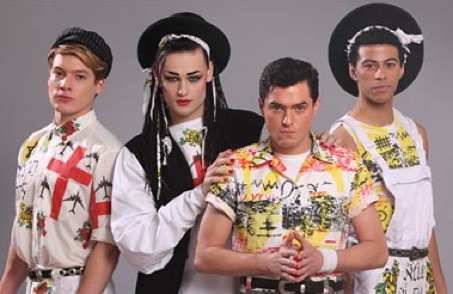
Culture Club 2010: recreated by Jonny Burt, Douglas Booth, Mathew Horne and Dean Fagan for the TV drama, Worried About the Boy. © BBC

Culture Club, pop, 1982, Boy George

Culture Club IRL: Roy Hay, Boy George, Jon Moss and Mikey Craig in 1982

◼ NOBODY, NEITHER FRIEND NOR VIEWER, ESCAPES from Worried About the Boy without their heart and mind being put through the kitchen blender, though this biographical TV drama has been heavily sugared to make it palatable even for BBC2 audiences. Amusing acto-r-r-r chappies play George and his courtiers and, as a result of advertising for lookalikes to flesh out the cast – some lucky extra even plays The Hand of David Bowie – we see every one of you too who came within a gnat’s whisker of the Blitz Club in 1980. Three decades may have added a few pounds to those skinny Blitz Kids preserved in your Facebook albums, but nobody forgets how this London club proved to be the nightlife crucible where the decade’s new pop scene was forged, and where George was almost the last among the dozens there who put bands together.

Worried About the Boy, 2010, BBC, drama,lookalikes

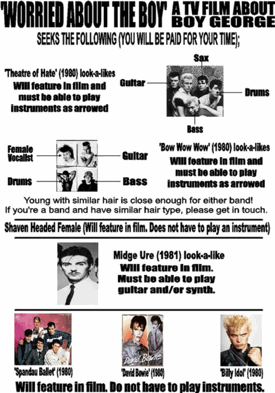
Lookalike call: “You will be paid”

In this Red Production for the BBC we see Mathew (Gavin & Stacey) Horne playing Culture Club drummer Jon Moss, Marc Warren from Hustle playing Blitz host Steve Strange like some Cruella de Vil (George likens him to Caligula), but the one who’ll steal all the Bafta awards is Royston Vasey’s Mark Gatiss as a dead-ringer for Malcolm McLaren. Gifted. A far-too-pretty newcomer called Douglas Booth plays George himself – but then G. O’Dowd is down in the credits as a programme consultant, so there’s the prettiness explained. As Mathew Horne told GMTV: “George helped out by providing clothes and [coughs] rectifying any inaccuracies.”

We enjoy plenty of comedic moments, yet the crucial line is delivered wearily by Jon Moss: “You’re a needy bastard, aren’t you!” The heroes in the sentimental plotline – petulant boy can’t get his life into gear – are not only his long-suffering boyfriend and colleague in the band, Jon, but as depicted onscreen George’s infinitely patient Dad, Jerry O’Dowd.

The early scenes offer a visual Who’s Who of the New Romantics and the director jollies things along with a comic-strip approach, using captioned freeze-frames to make sure we can tick off the celebs from 30 years ago. The essential dinginess of Covent Garden’s infamous Blitz Club, with its ambience of a steam-age railway station buffet, has been captured in Salford’s Racecourse Hotel in Greater Manchester. For anybody who lived through the real thing, this recreation of the 80s and the sheer electricity of the Blitz itself look hyper-realistic onscreen in HD, yet much of it feels somehow only half-realised, and seriously short on pizazz. “Dressing for the Blitz was real theatre,” the St Martin’s designer Fiona Dealey once observed about the New Romantic credo. “It wasn’t just another uniform.” At full-throttle the 24/7 Blitz Kids became living works of art and crackled with charisma you could have toasted crumpets on.

Stephen Linard, Blitz Kids, Andy Polaris, 1980, worried About the Boy, 2010, TV, Daniel Wallace

Blitz Kids: Daniel Wallace plays “Christopher” in Worried About the Boy (BBC), while being closely modelled on fashion designer Stephen Linard (picture, Derek Ridgers); Andy Polaris is airbrushed out of the TV drama after appearing in an early script. (Picture: Richard Law)

◼ OF COURSE THIS PLAY TELLS only one Blitz Kid’s tale. Your immediate reaction is: ah, well, this is a TV drama about, let’s face it, a very odd boy who dressed as a girl then called himself Boy and today still lives life as the Man in the L’Oréal Mask. In his 1995 book Take It Like a Man (TILAM for short), co-authored with journalist Spencer Bright, George wrote that as a teen “I felt like a freak… I was so paranoid, I never let anyone see me without my clothes or face on”. Yet on another page he claimed: “I craved normality.”

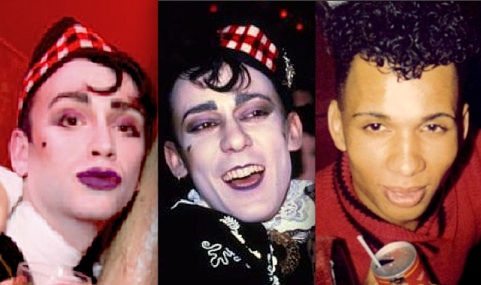
Blitz Kids, Boy George, Christos Tolera, 1979

Blitz Kids: Christos is another of George’s friends airbrushed out of the TV drama, Worried About the Boy

Before Culture Club finally saved his bacon at the age of 21, his mum said of working in the Blitz’s cloakroom “That’s not real work”, to which he complained that “Mum didn’t understand the disco celebrity concept”.

What is George’s problem? You don’t have to be Freud to guess. His book depicts his life as an epic shagathon and the TV play gives us a quick glimpse of one love story. And another. And a third. “I chased after those boys with trouble in their eyes,” George himself wrote, elaborating his sexual deeds in far more detail than we need. After publication, one of those boys, Theatre of Hate singer Kirk Brandon, took a “malicious falsehood” charge against George to the High Court where it failed, and Brandon was ordered to pay costs which subsequently meant declaring himself bankrupt and George forking out £600,000. This Sunday, sorry Kirk, but you’re going to have to brace yourself for some perfectly respectable snogging scenes which your actor performs on nationwide TV, not to mention being captioned to make sure we’ve checked your full name.

Blitz Kids, Myra, Philip Sallon, Boy George

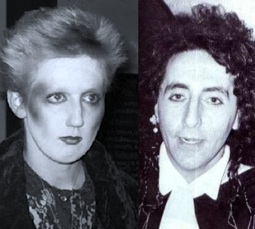
Blitz Kids Myra and Philip Sallon: two more of Boy George’s circle airbrushed out of the TV drama, Worried About the Boy

Both book and play parade basketsful of dirty washing in public and some of George’s former pals will be grateful for having been air-brushed out of history. In this TV drama some names have been changed. The puzzle is that others have not. Kirk is Kirk, Jon is Jon… but Wilf becomes “Vernon”.

The past decade has produced a clutch of TV docs that reckoned the Blitz scene was full of “gender-benders” (the tabloids’ sanitised euphemism for gays and, worse, transvestites). In reality you’d be hardpressed to find any 100% trannies at the Blitz, not even George or his bitter-sweet sidekick Marilyn (a handsome boy called Peter Robinson who lived daily life as a Monroe doppelganger). Yes, the fashion was for New Romantic lads to wear mascara and frilly shirts and flouncy pants and even Big Tone Hadley makes jokes about wearing his grannie’s blouse onstage, but most Blitz boys didn’t actually wear girls’ clothes, at least not underneath. (Don’t ask me how I know; there are some things a man has ways of knowing.) Even the brief “men in skirts” era revolved round plaid kilts, not your actual skirts.

The truth is that for all the media-bending, the Blitz divided down the middle into a club of at least four or five halves where the screaming queens comprised but one of them. By mid-1980 when the Blitz standouts were clocking column inches as hot media celebs and record contracts began to look possible, at the earliest opportunity the straight factions broke away to establish distinctly less gay clubnights at Hell, Le Kilt and ultimately the legendary and exceedingly hetero Beat Route.

Boy George, Blitz Kids, London, 1980, 1981, Wilf, Kirk

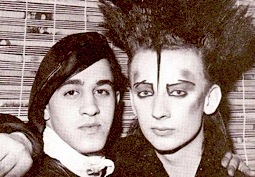
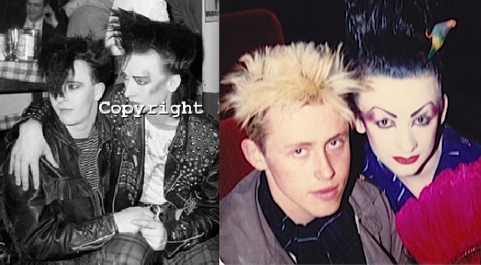
Early pashes: George at the Blitz in March 1980 with Wilf, whose name has been changed for the 2010 TV play (photograph © by http://www.homersykes.com); right, with Kirk aboard a coach for a daytrip to Brighton in spring 1981 (photograph © by Richard Law)

Inevitably there was always overlap. What certainly caused confusion among both the gay boys and the envious girls was the nonchalant gender-bending by some straight boys, either just for the sake of adopting a trendy stance before the cameras in this burgeoning Pose Age, or to bait the girls (campness can present a very effective challenge to the fair sex), or simply because being what today’s dating websites dub “bi-curious” was, you know, “a phase they were going through”. So feistier females became fighting termagants in order to stake their claims on the goodlooking males. Never doubt, however, that hell hath no fury like a jealous queen.

◼ THIS IS WHERE GEORGE O’DOWD’S TRACK RECORD landed him in the poo. By his own account in TILAM, life was a shagathon, he was always “eager” for one-night stands and landed “a long line of boys who couldn’t make their minds up until they’d had a few beers”. The BBC drama dwells on three nice straight lads who fell for him – “Vernon”, Kirk and then Jon (pictured here on their first date). Today IRL (such a neat online term) they are all family men whose pasts seem fated to guarantee them no chance of a private life.

Blitz Kids, Marilyn, Peter Robinson, Planets club, London, 1981

Marilyn at Planets club, 1981: Peter Robinson lived his life as the Hollywood legend. Photographed © by Shapersofthe80s

Other onscreen characters have had their names changed possibly for fears of legal action, though probably out of sheer expedience and economy of casting. Actors play Rusty Egan and Marilyn under those names, but George’s immediate circle of friends has been creatively down-sized around the 1980 squat at No 19 Great Titchfield Street (an onscreen amalgamation of the four Soho squats the Blitz Kids liked to call homes).

An early version of the Worried script included Christos Tolera (expunged), Andy Polaris (expunged), and it had even changed Barry Brien’s pet rat to a guinea pig (both expunged)! The broadcast version sees Slag Sue and Myra seemingly merged into a punkette called Mo (guesswork, this), while Hilda is renamed Sarah and the tragic Mitsu becomes Dawn. The real offence against humanity is to have dispensed with two Blitz superstars, sarky Philip Sallon and witty Stephen Linard – the beacon of his year on the St Martin’s fashion course – and to see them combined into one sharp queen called Christopher. Both were (*are*) very possessive about their distinctive lines in banter which now tumble from one boy’s lips, even though he is dressed head to toe in one of Linard’s unique silhouettes, his renowned tartan Culloden outfit.

In fact, the script is mighty short on the acid oneliners that ricocheted between George’s bitchy friends, despite the talent assembled by Red Productions. The person who comes out worst is club host Steve Strange, depicted as a thoroughly nasty piece of work (which he wasn’t IRL), seated on a throne beckoning to his minions within the Blitz (pure fiction). This is naked point-scoring by George who was famously sacked by Strange for pilfering in the cloakroom. George used to rage with envy over Strange’s media appeal. “We resented his self-appointment as king of the weird,” George explained. His envy was impotent, however. At this stage George was, as Malcolm McLaren says in Worried, “notorious for doing nothing”.

Boy George, Blitz club, London , 1979

Reluctant cloakroom attendant, 1979: George took the job at the Blitz for the money, and was sacked by Steve Strange for pilfering

Sunday’s play ends in 1986, with George an international superstar, millionaire and heroin junkie, sacked by his band, bravely facing the future. Yet within a decade he’d returned to point-scoring, writing the book, TILAM, as payback for his downfall, in which he tears to shreds virtually all his friends, outing straight lovers and settling scores with venom.

Only last month in Midge Ure’s radio documentary, Rocking the Blitz, onetime i-D editor Dylan Jones reminded us that along with the energy and the fun, many young people became casualties of that decadent decade, as some perceive the 80s. “The New Romantic period for a lot of people was just extreme hedonism,” he says. “And as we know extreme hedonism only leads to one conclusion. A lot of people got off the track. I know at least five people who died of serious drug problems during that period.”

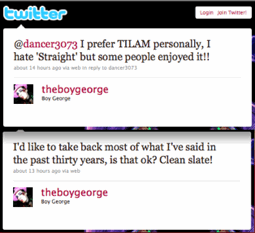
Boy George, Twitter, May 15, 2010

Boy George tweeting, May 15, 2010

Sudden fame, fabulous wealth and tragic fates are not unique to 80s popstars, as the long saga of rock ’n’ roll testifies.

George O’Dowd did indeed sail a flagship for hedonism yet today at the age of 48 he is alive and kicking and back on the road singing, despite his jailbird past. After watching Worried About the Boy, any viewers looking for the secret to his survival, could give the book a glance. Take It Like a Man is an I-don’t-believe-it horror story and runs to 500 pages. It is also a page-turner, so do plough on. Examine his life because amid the histrionics George has quite a few lessons to teach us.

Text © Shapersofthe80s.com

➢ ABOVE: ♫ The real Culture Club’s first appearance on Top of the Pops, 1982, which is recreated for the play, Worried About the Boy

FRONT PAGE