Tag Archives: Steve Dagger

➤ “Yes this is a Wag rerun” — Sullivan on his Sussex alternative to London’s carnival

Chris Sullivan, Wag club, Jon Baker, nightclubbing, Swinging 80s,West Dean Festival,

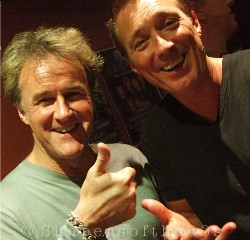
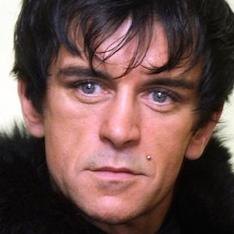
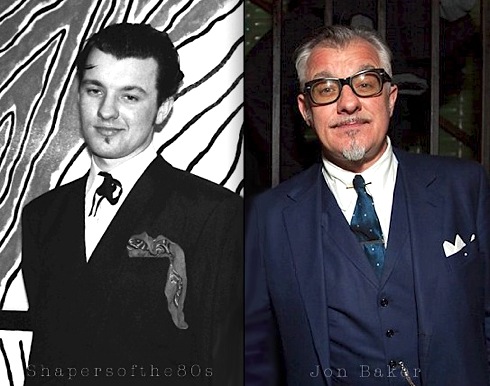
Sullivan then and now: the Wag club host in his painted pavilion in 1983 and, right, deejaying for Jon Baker’s Jolly Boys concert in New York this spring

❚ NOT ONLY IS ADAM ANT TOPPING THE BILL on Saturday but half-price tickets were still available today to followers of Chris Sullivan, joint host for 19 years of Soho’s legendary Wag club which he founded in 1982. This bank-holiday weekend Aug 26–28 he plays deejay and music programmer at the three-day West Dean Festival near Chichester in rural West Sussex. The knees-up 90 minutes from London will be a “nice alternative” to the annual Notting Hill Carnival, he says. In fact, “a Wag rerun… for parents”!

As undoubtedly the most influential club host of the 80s, as well as vocalist in the crazy Latin band Blue Rondo à la Turk, Sullivan commands one of the fattest contacts books in clubland. So while this weekend’s festival across two stages and late-night café bar aims to celebrate all aspects of the arts, it’s no surprise that the day-long live music is designed to attract the aficionado. Friday headliners are Natty Bo and The Top Cats, plus The Third Degree … Saturday boasts the reborn Adam Ant and his band The Good The Mad & The Lovely Posse, plus Polecats, Dulwich Ukulele Club, and 80s warehouse deejay Phil Dirtbox … Soul singer James Hunter headlines on Sunday.
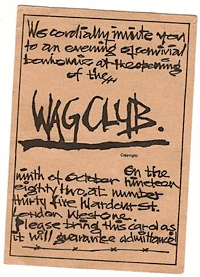
When I reminded 51-year-old Sullivan that the locals are billing it as “A magical escape for all the family” he was keen to promise this would not put a damper on the fun. “Kids go to bed at 9-10ish and when there’s a few of them they look after each other with the supervision of one adult maybe. Meanwhile we let rip in the knowledge that they are near and we save money on babysitters and have a right old beano.”

That’s the Wag spirit! In fact, beano was the very word he used in 1983 when my report in The Face rounded up the four hottest nightposts in the swinging New London Weekend. The Wag had been open less than a year and his pitch was: “We’d like people to come in with a sense of beano and to leave with hangovers and blisters on the feet.”
Chris Sullivan,Christos Tolera, Blue Rondo à la Turk, pop group, nightclubbing, Swinging 80s,

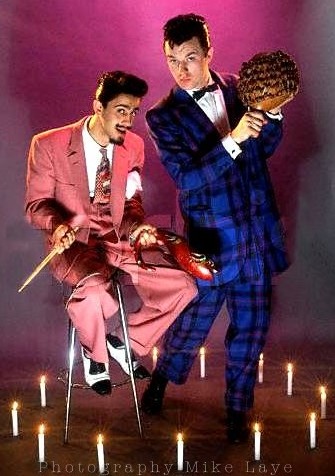
Sullivan and Christos Tolera in 1981: vocalists with Blue Rondo à la Turk, photographed for The Face by Mike Laye

Despite his origins in the Welsh Valleys and being built like a rugby player – “I’m six foot two and sixteen stone” — Sullivan’s unswerving sense of personal style got him into two London art schools while his exuberant warehouse parties during 1978-9 established him as a pivotal tastemaker in the post-punk vacuum. It goes without saying that his two passions were music and clothes. And that his wit was as quick as silver.

By 1980 he was the highly articulate pathfinder for the non-gay men’s team putting the Blitz Kids in the headlines. The ultimate soundbite “One look lasts a day” was Sullivan’s. Here was a New Romantic dandy whose ever-changing attire referenced every movie matinee idol from zoot-suited gangster to straw-hatted playboy to Basque bereted separatist. Here was an MC who along with his deejay contemporaries displaced electronics in favour of funk — drawn initially from his own collection of 7-inch singles — at a string of creative weekly club-nights, St Moritz, Hell, Le Kilt and then the Wag in the huge premises that had been known as the Whisky-A-Go-Go since the Swinging 60s.

During three helter-skelter years British music trended from punk, Bowie, electro-pop and mutant disco back to James Brown and funk. “Things moved so fast then, that the 80s heralded a completely new era,” Sullivan said. The claim he will not make is about his own enormous circle of influence. Back in the dark age before mobile phones the defining measure of his social clout came from Steve Dagger, manager of Spandau Ballet. He gave me the priceless paradigm: “You could put Sullivan outside a public lavatory, announce a party and within two hours you’d have a queue of 500 people paying £3 to get in.”

Few other individuals on the London scene of the early 80s had a greater impact than Chris Sullivan on shaping the intimate relationship between sound and style in the private worlds of the new young.
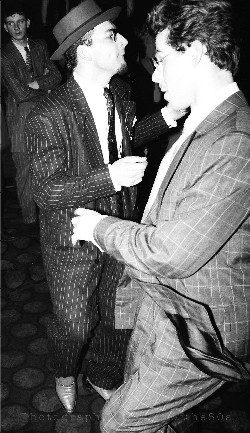
Blue Rondo gig 1982: zoot-suited fans mashing up a dancefloor in Bournemouth. Photography by Shapersofthe80s

Under his partnership with Ollie O’Donnell, who himself had already made a clubland institution of Le Beat Route, the Wag eventually ran seven nights a week to become Soho’s coolest hangout for artful posers and musical movers and shakers. In Sullivan’s own words, the place “basically predicted the future of music for the next 15 years” which gratifies him no end.

The club’s unique appeal was a reflection of his sub-cultural instincts, which were refined as a teenage graduate of the Northern Soul scene during the 70s. The Wag also proved a mighty kick in the teeth for the smug ruling elite in the rock press — those “white middle-class punks who couldn’t dance and hated black music” and whose vitriolic attacks on Blue Rondo undermined industry faith in his stylish seven-piece band and their jazzy Latinised funk.

Blue Rondo à la Turk was a dream project inspired after Sullivan made “one of those mad trips” to the black clubs of New York in 1980: “I wanted to start a band that would play the music I could dance to — a mix of Tom Waits meets Tito Puente meets James Brown, and all a bit off-kilter.”

Rondo were a bizarre multi-racial troupe of live musicians who also boasted wild dancing feet and tapped into like-minded audiences who’d misspent their youth on Britain’s underground soul circuit, a mighty fanbase either unknown to or utterly scorned by the rock press. His band were born entertainers and their first album, Chewing the Fat, was easily the most inventive of 1982. Not long ago Sullivan vented his spleen to me: “Those middle-class twits in the music press hated us because we had the effrontery to play dance music and we weren’t black, but also because we dressed up onstage — which basically became the remit for the next two decades. The press were all-powerful in those days and some took it upon themselves to make us their whipping boys.”

Well, the magnificent seven in Blue Rondo were precursors of the wags Sullivan named a nightclub for: “The wag from the 20s was a bit of a cad, wore monocle and spats, was a mean dancer and very much the ladies’ man.” Musically, his Soho nightspot was the most progressive venue of the 80s. Nowhere else came close. “I knew from day one we were selling a Saturday night nobody else was doing — a really hip club which played all manner of black dance music.” Only last month before deejaying at the Southbank’s Vintage festival, Sullivan wrote: “The Wag is important because it opened funk and black music to a huge, new crowd of people which still prevails. We were one of the first to do it and it’s still going on.”

➢ Mention Sullivan’s name at the gate for 50% discount on the West Dean Festival tickets or mail chris [@] sullivan60.co.uk
Adam Ant ,The Good The Mad & The Lovely,pop group,West Dean Festival,

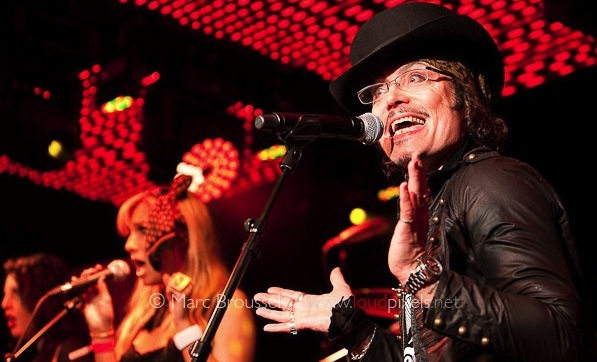
80s hero Adam Ant: on the road this year with The Good The Mad & The Lovely Posse, pictured by Marc Broussely
West Dean Festival, Polecats, rockabilly ,rock group,

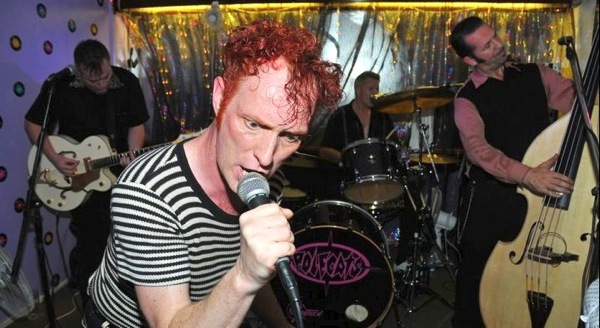
80s rockabilly band The Polecats: scheduled to play West Dean Festival, photographed last year by Steve Wadlan
FRONT PAGE

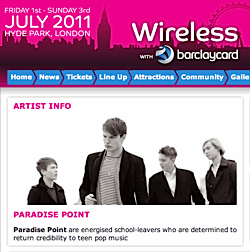
➤ Too cool to crow — Paradise Point just happen to be gigging in Hyde Park before Grace and Pulp

Paradise Point,O2Academy ,Wireless Festival ,livepop,Hyde Park, music festival

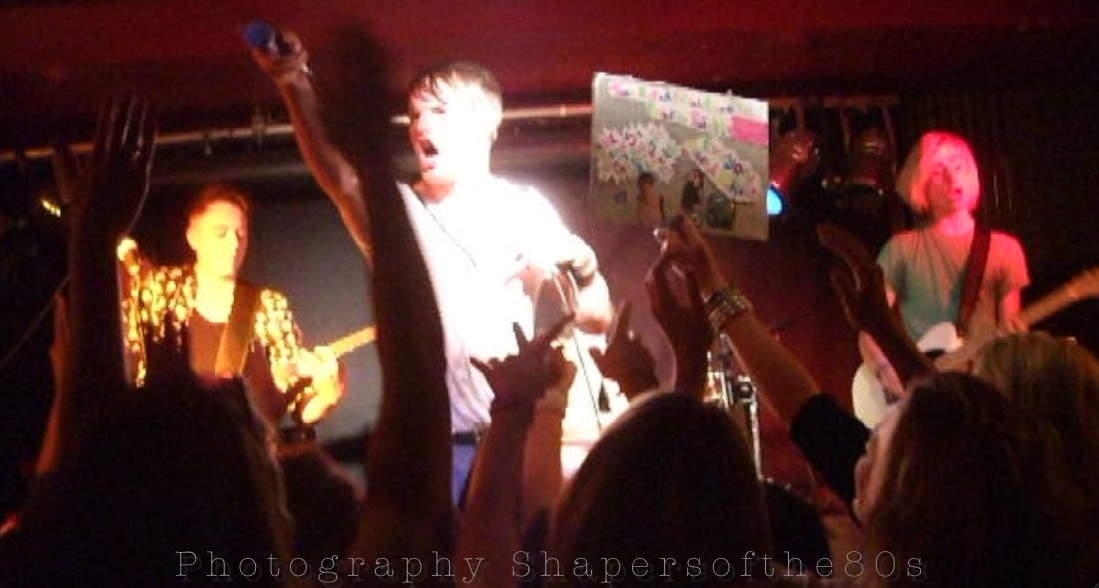
“It takes a minimum of four girls to start The Scream,” said Steve Dagger in the 80s: the old rule of pure-pop was certainly fulfilled at Islington’s sold-out O2Academy when Paradise Point headlined tonight. Cam Jones leads an encore of Run In Circles which basically the girls sang for him — in between screams. Roman Kemp at left, Adam Saunderson right © Shapersofthe80s

Wireless Festival ,Hyde Park, Paradise Point , 2011◼ THIS WEEK BASSIST ROMAN KEMP told Hemel FM: “We’ve only been around for eight months so we’re amazed by how it’s been going. The other day we were confirmed for the Wireless Festival on Sunday. We were amazed. Playing before Pulp!”

OK, a bit of artistic licence there. The club scene’s dynamic pure-pop teen band Paradise Point are scheduled to strike up at exactly 15:20 in Hyde Park, which is about four hours before Grace Jones goes on, to be followed by Jarvis Cocker’s band Pulp who top the bill at the three-day fest. All the same, Kemp wasn’t exactly overdoing the crowing rights. This gig is a huge coup for a bunch of live 18-year-old popsters without a recording deal.

➢ Wireless Festival runs July 1–3 in Hyde Park, London,
with Black-Eyed Peas, Chemical Brothers and Pulp
headlining a bill of 91 acts across four stages

Paradise Point, O2Academy,Steve Dagger, Martin Kemp,Wireless Festival

In the audience for Paradise Point at Islington’s O2Academy: Spandau manager Steve Dagger and Martin Kemp vote Roman Kemp’s band a hit. So no surprises there, then.

Call of the Wyld is a blogger who “tracks young, new and exciting bands as they emerge” and last month he wrote: “This lot are sex on legs and even if they weren’t actually any good they would still find it hard to walk on stage without being shrieked at. Fortunately their music is excellent too. These are real pop gems — certainly 80s inflected, but delivered with a whomp and panache that would put a lot of other acts to shame. The Only One is a track that is going to get them a lot of attention.” As a taster or three, view PP’s live debut last November (below), videoed by Shapersofthe80s, scan our first PP concert review and give the Hemel FM interview a spin:/%20

FRONT PAGE

1981 ➤ Ballet on Broadway, leading the British invasion of America, spring 1981

On this day 30 years ago, 21 Blitz Kids, average age 21, took Manhattan by storm. Spandau Ballet provided the new British electropop, the Axiom design collective provided the radical London fashion show, while Tina Turner and Robert de Niro joined the coolest audience in New York City to witness the new sounds and new styles of Swinging London…

 Spandau Ballet, Blitz Kids, Jim Fourratt, Axiom fashion,Sade Adu,British invasion,

First published in the first issue of New Sounds New Styles in July 1981

Click here to read what happened for seven days in May
when the Ballet hit Broadway

FRONT PAGE

1980 ➤ How Duran Duran’s road to stardom began in the Studio 54 of Birmingham

Duran Duran, Berrow Brothers, Rum Runner, New Romantics,Nick Egan,video, All You Need Is Now

Duran Duran as full-on Romantics: Betty Page thought only co-founder Nick Rhodes (second right) passed the bouffant test convincingly

❚ ON OR ABOUT THIS DAY IN 1980 (MAYBE) some say Duran Duran signed their contract with EMI. The band seem mysteriously unable to remember when, so guesses might run from Dec 9 because Andy Taylor recalls the news of John Lennon’s death ruining his breakfast in London, and possibly Dec 22, date of a celebratory gig at Birmingham’s Cedar Club. However, the first official book, Their Story by Kasper de Graaf, places the signing firmly at 5 January 1981. According to co-manager Paul Berrow, the contract paid out a £28,000 advance (£90,000 in today’s money).

As the house band of the New Romantics in Britain’s second city, Birmingham, they were styled locally by Kahn & Bell, photographed by Paul Edmond, and managed by Paul and Michael Berrow, owners of the glitzy Rum Runner nightclub on Broad Street.

The Berrows had inherited the family business from their influential bookmaker father who had opened the club in the Swinging 60s and the sickly odours of Brut and Estee Lauder still lingered. Inspired directly by a visit to New York’s Studio 54, the brothers refurbished the Rum Runner in 1979 with state-of-the-art mirror-tiled walls and zigzags of neon. They then introduced a playlist heavily flavoured with Moroder-style imports and the American club-funk championed by the Nile Rodgers band Chic, whose string of chart hits was restoring credibility to disco music following the ridicule inflicted by the low-rent movie Saturday Night Fever. But how to become the Studio 54 of the Midlands?

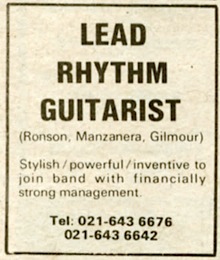
Enter a band called Duran Duran in January 1980, armed with a four-song demo recorded at Bob Lamb’s studio which included Rio as a work in progress. The DD line-up were offered the club as daytime rehearsal space and jobs by night, including deejaying for Nick Rhodes. Roger Taylor recalls that the brothers “were looking for a band that was a cross between Gino Soccio, Genesis and Chic” — all the more curious that they made many attempts to contact Steve New to recruit the Rich Kids guitarist into the band, but they heard nothing from him.

Duran Duran, Meolody Maker, Andy Taylor

The Melody Maker ad that landed Andy Taylor in April 1980: unearthed by Duran fan Figital

Inevitably the lineup was rationalised and by the summer Andy had been recruited (“They were quite blatant,” Andy told Rolling Stone much later. “They said, ‘We’re posers. We want a good-looking poser band”). Then came Simon Le Bon as singer. According to him: “They had this thing about being between Chic and the Sex Pistols, but I thought they were more like in between Roxy Music and the Sex Pistols.” The band were searching for a musical direction.

Meanwhile as the rival nightclub Barbarella’s fell from favour, the Birmingham poser scene was reinventing itself in local bars around the peacock clothes designers Jane Kahn, Patti Bell and a veteran of Billy’s club in Soho, Martin Degville, who was commuting to London weekly to run a branch of his shop in Kensington Market. That summer the Rum Runner gave over Tuesdays to a Bowie/Roxy night. Sounds familiar? Enter journalist Betty Page and the rest is history.

Within three years Duran Duran’s synth-pop had made The Fab Five one of the handful of British supergroups dominating the global stage. Duran can claim to have led the MTV-driven “Second British Invasion” of the United States from the autumn of 1981 with their raunchy and cinematic videos, and over 30 years enjoyed 21 singles in the Billboard Hot 100 and sales of 100m records.

BETTY PAGE OF SOUNDS RECALLS HOW SHE WAS
INVITED TO “DISCOVER” DURAN DURAN

Betty Page, Sounds, Beverley Glick

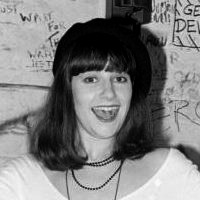
Betty Page in youthful bloom, more recently identified as Beverley Glick

In September 1980 in the pages of the music weekly, Sounds, Betty had slapped the label “New Romantics” on Spandau Ballet, house band of London’s Blitz club and then received a call from the hungry manager of this Brummie band called Duran Duran…

Paul Berrow was a smooth operator. ‘Come to the Rum Runner,’ he said of the club he co-owned with his brother Michael. ‘We’ve got a scene going on up here to put the Blitz to shame, and a band to go with it.’ Clever, I thought. He had singled me out to be the first journalist to write about his group. And they actually wanted to be called New Romantics! Nick was the most obviously New Romantic — a bouffant blond David Sylvian lookalike who sported extravagantly frilly shirts and shiny suits — but the style sat rather uncomfortably on the others.

The alarmingly pretty, floppy-fringed bassist John Taylor drew the line at satin shirts and a shoulder sash. ‘We were never meant to be bagged in with any elitist scene,’ said John, the pretty one. ‘The main chunk of our audience in Birmingham is those people,’ said Nick, the bouffant one, ‘but we’re not as tied to it as Spandau obviously are. When people come to see us we’d much sooner they dance and have a good time rather than dress up in the clothes and just stare… © Beverley Glick

➢ Read Betty Page’s retrospective survey of the New Romantics
– I Was There, originally published in Record Collector in 2004

ARCH-RIVAL MANAGER’S VERDICT ON DURAN

Years after both bands had achieved superstar status, Steve Dagger, the manager of Spandau Ballet, wrote this nugget summarising Duran Duran’s contribution to the 80s music scene. It was published in a partwork published by The Sunday Times in 1997 titled 1000 Makers of Music, which spanned all genres from classical to pop:

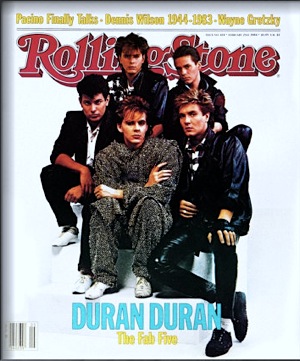
Rolling Stone, Duran Duran,Fab Five,Second British Invasion Duran were among a new group of artists who provided a glittering, sexy contrast to the prevailing dull corporate pop-punk of the 1970s. Taking their influence from the art-school underground of electronics/Ferry/Bowie, they came to prominence as the Birmingham ‘it’ band at the same time Spandau Ballet reigned over a similar scene in London. After an awkward but successful period as the Birmingham ‘answer to’, Duran metamorphosed in 1982 into a sleek, glamorous international entity with the seminal album Rio, having perfected a distinctive Duran sound fusing synths and guitar licks over post-disco rhythm. Inspired songs such as Hungry Like the Wolf were accompanied by cinematic videos, together creating an electric pop culture moment. After being derided for years, Britain had produced a group America could not ignore: Duran surfed in on the newly conceived MTV to conquer the States. They continue to make great British records and should recently have won a Novello for their lament to the 1980s, Ordinary World. [Key work: Is There Something I Should Know? (1983)]

❏ View this hilarious early video of white-faced New Romantics doing their wobbly dances to Duran Duran’s first single Planet Earth, performed at the Rum Runner in 1980 (now remastered in high quality). Note the hijacked Warren Street Jive in the official promo video sequences shot much later in a studio . . .

FRONT PAGE

1980 ➤ The day Spandau signed on the line and changed the sound of British pop

Spandau Ballet, Virginia Turbett,Chrysalis,Steve Dagger, New Romantics

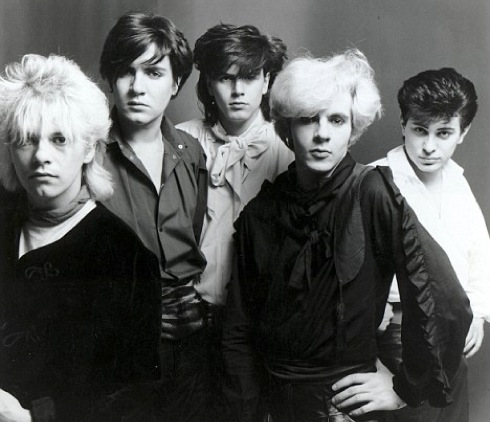
The way they wore: Spandau Ballet minutes before signing their record record deal in October 1980. Photographed at London’s Waldorf Hotel © by Virginia Turbett

◼ AS THE COOLEST CULT LEADERS OF 1980, Spandau Ballet’s songwriter Gary Kemp claimed: “We want the band to be at all times the most contemporary statement we could possibly make on modern London.” In the face of the post-punk new wave, it took courage to decide to play fresh sexy dance music in a corporate landscape dominated by adult-oriented rock supergroups. In the event, the five boys from the Angel, Islington, quickly assumed the role of houseband to the Blitz club and by placing the bass guitar and the bass drum at the front of the sound made it hip once more to play pop.

Spandau Ballet were being managed by their onetime schoolmate Steve Dagger, aged only 23, while three record labels competed to secure them. On this day 30 years ago they signed a deal with Chrysalis Records and walked into the future clutching an advance cheque for £85,000 — at the time, a record sum for an untried band that had played all of eight bookings and had refused to cut demo discs.

“We were strong, it was a real gang, a real team mentality. It was: We’re Spandau Ballet, who the f*** are you?” — John Keeble, Spandau drummer

By breaking all the industry rules, Spandau triggered a fashion and dance music movement that had been evolving in the nightclubs of Britain. At the very moment that the Blitz closed its doors, the press dubbed their followers the New Romantics, and a slipstream of more than 100 new image bands was born. The new sounds and new styles of this, the last of the Babyboomer generation, went on to dominate the international landscape of pop and over the next three years put more British acts in the US Billboard charts than the 1960s ever achieved.

ELSEWHERE ON SHAPERS OF THE 80s

➢ Oct 16, 1980: One week in the private worlds of the new young
➢ Birth of the New Romantics and the band who made it hip to play pop
➢ How the rhythm of the pop charts changed

Spandau Ballet, The Makers,The Cut,Roots, Dame Alice Owens

Tony Hadley fronts The Makers: Spandau as a school band playing to the fourth form at Dame Alice Owens — grabbed from video

➢ VIEW ♫ Early footage of Spandau Ballet in the Young Guns documentary from 2000
➢ New Romantics: I Was There — ex-Sounds hackette Betty Page’s recollections for Record Collector, written with the benefit of hindsight in 2004

FRONT PAGE