Tag Archives: photography

➤ RIP Lou Reed… Today we lost another legend

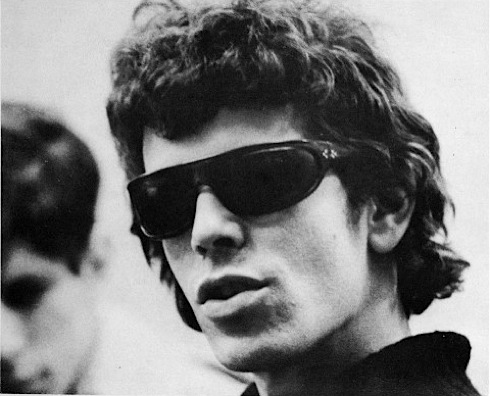
Lou Reed, Velvet Underground

Lou Reed on his bare-bones guitar style: “One chord is fine. Two chords are pushing it. Three chords and you’re into jazz”

“He was a master” – David Bowie today
on his old friend

➢ Lou Reed, Velvet Underground leader and rock pioneer
who helped shape nearly fifty years of rock music
– Rolling Stone tribute, Oct 27:

After splitting with the Velvets in 1970, Reed traveled to England and, in characteristically paradoxical fashion, recorded a solo debut backed by members of the progressive-rock band Yes. But it was his next album, 1972’s Transformer, produced by Reed-disciple David Bowie, that pushed him beyond cult status into genuine rock stardom. Walk On the Wild Side, a loving yet unsentimental evocation of Warhol’s Factory scene, became a radio hit (despite its allusions to oral sex) and Satellite of Love was covered by U2 and others. Reed spent the Seventies defying expectations almost as a kind of sport. 1973’s Berlin was brutal literary bombast while 1974’s Sally Can’t Dance had soul horns and flashy guitar. In 1975 he released Metal Machine Music, a seething all-noise experiment his label RCA marketed as avant-garde classic music, while 1978’s banter-heavy live album Take No Prisoners was a kind of comedy record in which Reed went on wild tangents and savaged rock critics by name… / Continued at Rolling Stone

“Lou Reed… said that the first Velvet Underground
record sold 30,000 copies in the first five years.
But that was such an important record for
so many people, I think everyone who bought one
started a band!” – Brian Eno, 1982

➢ Alexis Petridis says Reed was capable of writing perfect pop songs – in Monday’s Guardian:

Their 1967 debut The Velvet Underground And Nico is the single most influential album in rock history. Certainly, it’s hard to think of another record that altered the sound and vocabulary of rock so dramatically, that shifted its parameters so far at a stroke. Vast tranches of subsequent pop music exist entirely in its shadow: it’s possible that glam rock, punk, and everything that comes loosely bracketed under the terms indie and alt-rock might have happened without it, but it’s hard to see how…

… the four gruelling songs that make up side two of his 1973 concept album Berlin are quite astonishing expressions of coldness and cruelty… [but] he could write songs that were impossibly moving, that spoke of a tenderness and sensitivity: the lambent, peerless Pale Blue Eyes; Halloween Parade’s heartbreaking lament for New York’s gay community, devastated by Aids; his meditation on death, Magic And Loss… / Continued at Guardian Online

➢ Reed’s own website with his last portrait
taken earlier this month

Click any pic to launch carousel

➢ In this firey Telegraph interview from 2011, Reed and Metallica defended their controversial collaboration album Lulu to Neil McCormick

➢ “Lou Reed is to 1970s New York as the poet Baudelaire was to 1850s Paris” – ft.com

➢ Wide-ranging 1995 conversation between novelist Paul Auster and Lou Reed, who reveals his rarely seen good-humoured side – online at Dazed & Confused

➢ Punk old-timer Legs McNeil on how, despite acting like a grump, the Velvet Underground front man was beloved – The Daily Beast

➢ “Second only to Bob Dylan in his impact on rock and roll’s development” – Variety

Lou Reed, Mick Rock,photography

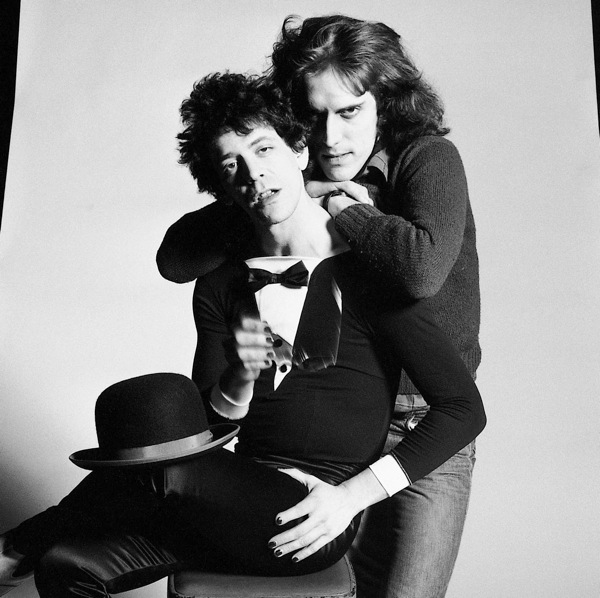
Lou Reed and his favourite British photographer Mick Rock in 1975

➢ Lou Reed and Mick Rock were a great double act: The Quietus talks to them about their enduring relationship and a new book of photos, 2013

➢ Mick Rock talks to Galore magazine about the limited edition of Transformer, his photobook of Lou Reed pix from 1972 to 1980 (Genesis Publications)

FRONT PAGE

1983 ➤ A turning point in David Hockney’s vision of the world

rel="nofollow"

Hockney wielding his Pentax in London, July 10, 1983: having devoted two years to photography, in this his second week on a trip to Britain, a further new canvas in the studio confirms a return to painting. Photograph © by Shapersofthe80s

❚ 30 YEARS AGO THIS WEEK the British painter David Hockney made a discovery so monumental that he called it “a truer way of seeing”. I’d gone to interview him about the education cuts Margaret Thatcher was inflicting on British art schools and found myself receiving an exhilarating tutorial while the artist tested his new ideas.

“Have you been to the cubism exhibition at the Tate?” Hockney enthused during a trip to London from his home in Los Angeles. “I’ve been seven times! Suddenly I see cubism differently, more clearly… That’s what I’m only starting to grasp. Cubism is about another way of seeing the world, a truer way. But the moment you grasp it, you can’t give it up.”

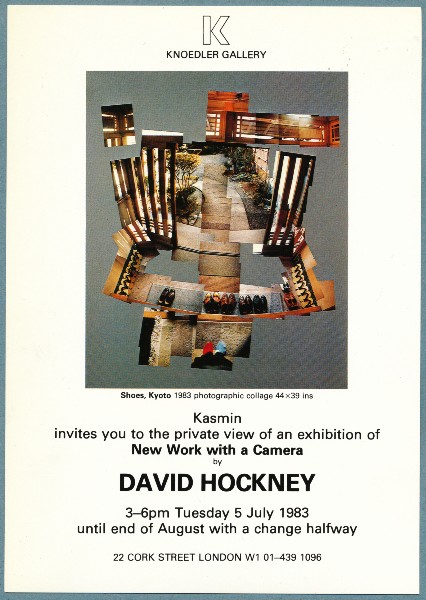
Photography had preoccupied Hockney for the previous couple of years and in the week of his 46th birthday, we’d met at a Cork Street gallery during the hanging of his show New Work With A Camera, fresh from its Los Angeles run. Yet on two visits to his Kensington studio that week, fresh canvases on the easel signalled that Hockney had returned to painting. He said: “I had to deal with the ideas that are bubbling away. Cubism is hard enough to grasp, but it’s even harder to do, which actually is why not many people have been able to do anything with it. Starting to paint again is very refreshing.”

Four days later when the resulting interview appeared in the London Evening Standard, he’d been again to the Tate and said on the telephone: “Your article is pretty much the first time I have talked about this – of course I’ve discussed these things with friends but the article does make it clear to people.”

rel="nofollow"

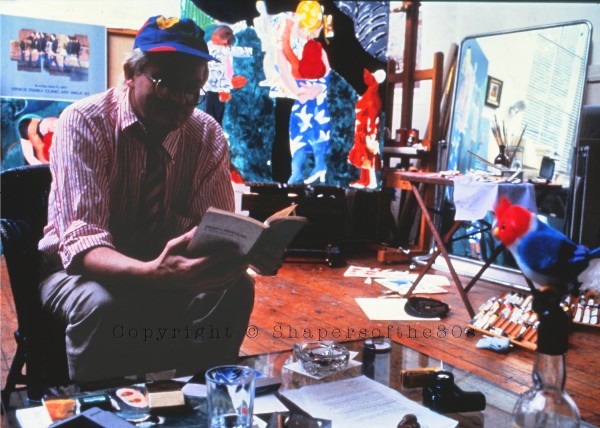
Hockney with fresh paintings in his London studio, July 3, 1983: so keen to deal with his new ideas, he reads aloud from a book about Marcel Proust’s theories of vision. Photographed © by Shapersofthe80s

He added: “You must go to the Tate retrospective [The Essential Cubism], it’s marvellous. You go from one cubist picture to another and another. In other galleries, like Moma, you might have one cubist room but go to the Tate show because you’ll never see so many cubist paintings together again. I found I began to develop this way of seeing them, it’s very rich. You do have to stand in front of the Picassos and spend time looking. When you’re physically in front of a cubist painting, once you start looking, especially the early analytical ones, it slowly reveals itself. It doesn’t pounce off the wall.”

The next day, when I returned to his studio with a camera, Hockney had begun yet another huge cubistic canvas which seriously took the breath away. It was a privilege to view the unfinished paintings with their images outlined in charcoal and he remarked that few people get to see inside the studio. I made sure to snap the 1,001 mementoes and influences scattered throughout the space suggestive of a restless imagination. The three substantial conversations I was fortunate to enjoy that week remain a turning point in my own appreciation of art. By a stroke of fate, my presence had provided the artist with a sounding board at the very moment when he urgently needed to kick around some bold new thoughts.

➢ Click through to read the full fascinating interview with Hockney, in an elision of two pieces first published in the Evening Standard, July 8, 1983, and The Face, Sept 1983

David Hockney,New Work With A Camera, photography, London, 1983

Fresh from its Los Angeles run: Invitation to Hockney’s latest show of three-dimensional photo collages in London, 1983

FRONT PAGE

➤ Another eyeopener from always-there Ridgers

photography,exhibition, Derek Ridgers

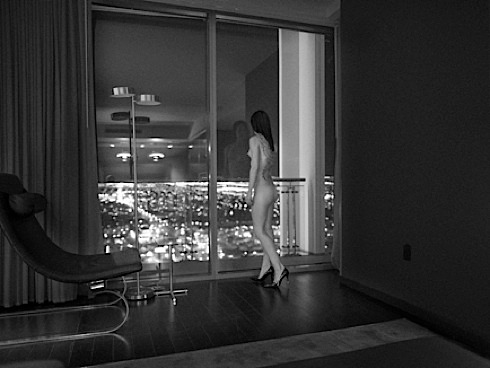
Natassia Doubleoseven, Las Vegas 2012 – photography © Derek Ridgers


❚ PUNK AND CLUB PHOTOGRAPHER Derek Ridgers has a new show titled Afternoon At The Seven Palms And Other Stories which opened this week at The Society Club in Soho.

At his blog Ridgers writes: This is my first foray into the world of a very mild form of erotica. It’s really more like naked portraits. I’m not at all sure how it’ll go down but Babette and Carrie have been very encouraging. The above photograph is of the mysterious and exotic secret agent Natassia Doubleoseven. There are two photographs of her in the show (I’d better not tell you her real name in case she has me eliminated)… The Society Club is a small but trendy cafe/ bookstore/ gallery and it’s run by Babette and Carrie, who have both been very supportive. Some afternoons I go there and have a chat and a coffee and stare out of the window … / Continued online

➢ The Society Club is at 12 Ingestre Place, London W1F OJF

FRONT PAGE

➤ Webb’s flipside of the 80s fashion revolution as seen last night at the ICA

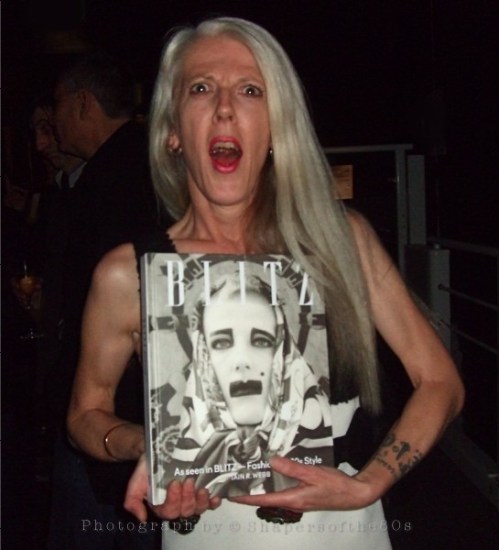
Cover girl: Scarlett Cannon at last night’s book launch . . . and covered in 1985 by photographer David Hiscock, scarfed by Hermès

CLICK ANY PIC TO LAUNCH CAROUSEL:


+++
❚ LAST NIGHT DIEHARD 80s FASHIONISTAS celebrated the launch of an elegant hardback with far greater ambitions than most coffee-table photobooks. It’s a glorious personal CV posing as one man’s record of five energetic years. It doesn’t quite knock the sensationalist Casanova off his perch as the master memoirist, but Iain R Webb’s chutzpah certainly takes your breath away.

As Seen in BLITZ, Fashioning ’80s Style is among the most unabashed, single-minded, focused works of diarism you are likely to have read. In capturing his output as a fashion journalist, this book aspires to present social history expressed through fashion. He brings a new twist to the well-tried technique of oral history, because the 100+ collaborators who contribute to this book are constantly telling the author how marvellous he is, but in the second-person singular. They are talking to “you”, meaning “me”, the author whose name appears on the cover, Iain R Webb.

Its 272 pages record a series of testimonials: “You pulled so many creative people round you” … “We did it because you asked us to” … “You jump-started my career as a photographer” … “You were one of our earliest supporters” … “You had different ways of shooting things” … “You were doing the opposite of high fashion and glamour” … “You showed me a life that was different” … “You were so beautiful and excitingly aloof” … “I would have done anything you asked” … “You were the person who ––”.

There is no place in Webb’s memoir for Eng Lit’s Unreliable Narrator, or for self-doubt or inner struggle. His worldview is confirmed at every turn. Assertion is all: The 80s – we did it my way. We, the readers, are soon rocking on our heels at the sheer brass-necked cheek of it all!

Having said which, consider the credentials of everyone involved. They amount to a Who’s Who of the fashion shapers of the 80s: Jasper Conran, John Galliano, Jean Paul Gaultier, Katharine Hamnett, Marc Jacobs, Stephen Jones, Calvin Klein, Barry Kamen, Baillie Walsh, Martine Sitbon, Princess Julia, Nick Knight, David LaChapelle and many more.
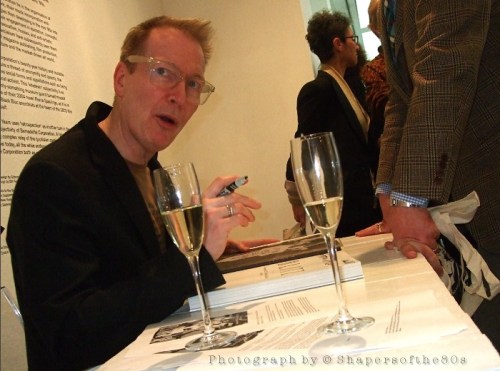
Iain R Webb, fashion,photography, books

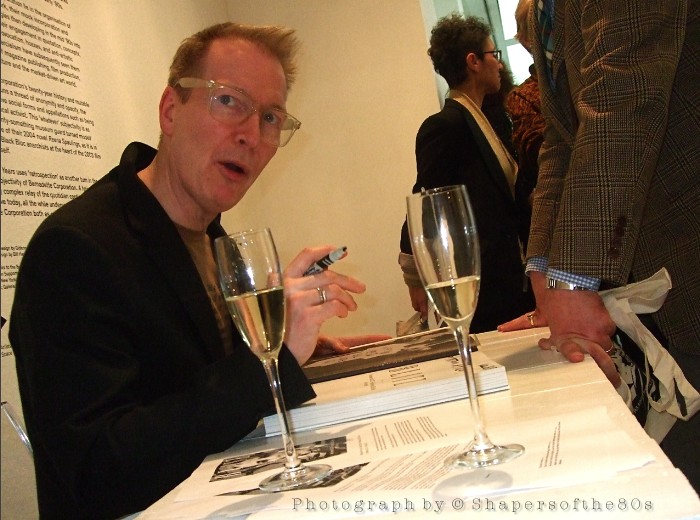
The author last night: Iain R Webb signing his book with lavish tributes to his former colleagues

We’ve heard enough about George O’Dowd’s tawdry version of events. Finally we have a much-needed corrective view of the youth cultural revolution that fired up the Swinging 80s. As Seen in BLITZ celebrates Webb’s own unique take on the decade of egotism through the pages he produced. We hear the voices of his co-stars – the photographers, designers, models and stylists who supported him as a lynchpin fashion editor – all dissecting the nuances of their subversive visions.

The whole momentum of post-punk street style during the decade’s dawn, 1980-83, is what drew the eyes of the world’s fashion industries back to Britain and put London Fashion Week on the agenda of every serious commentator twice a year.

While studying fashion design at St Martin’s, Webb was at the centre of London’s nightlife crowd at the now-legendary club called the Blitz – very much one of the 20 key Blitz Kids, as the media tagged them. He rightly claims: “At the dawn of a hedonistic club scene that saw the birth of the New Romantics … on the pages of Blitz, The Face and i-D, a new breed of young iconoclasts hoped to inspire revolution.” These were three new magazines, soon dubbed “style bibles”, which gave journalistic expression to the fertile innovations in UK pop culture and defined the era.

Blitz was a desultory magazine, almost entirely devoid of character in its early years. It was launched in 1980 with a title that its owner says seemed “catchy”, utterly oblivious to the pivotal club-night of the same name and the precocious youth-quake putting London back at the centre of the pop universe. It took until about 1983 for Webb to recognise the gap in the market for radical and purposeful fashion journalism and to infiltrate Blitz, the magazine.
Iain R Webb, As Seen in BLITZ, fashion, books, photography

Webb’s ICA launch: the author sets the style for the evening. After Godot, out of skip? I stand corrected: After Wild Boys, out of Burroughs

Webb beavered his way up to becoming its fashion editor from Feb 1985 to August 1987 and was often given 20 pages a month to be filled with his “singular vision if they were to be taken seriously”. Webb’s USP was an “ongoing love/hate relationship with the fashion industry. It was not about selling a look, it was about saying something”. He expressed his ethos on a T-shirt in a 1986 photo shoot: “We’re Not Here to Sell Clothes”. When he was headhunted to join the London Evening Standard in 1987, his shoes at Blitz were filled by Kim Bowen, Queen Bee of the Blitz Kids, herself the wildest child in the club.

Webb’s purpose, he writes, “has always been to inspire or provoke, engage or enrage” and his images “manipulated fashion to explore ideas of transformation, beauty, glamour and sex”. His book brims with attitude and evidence that the fashion world did indeed tilt slightly on its axis during the 80s – as eye-witness accounts confirm in entertaining archive interviews.

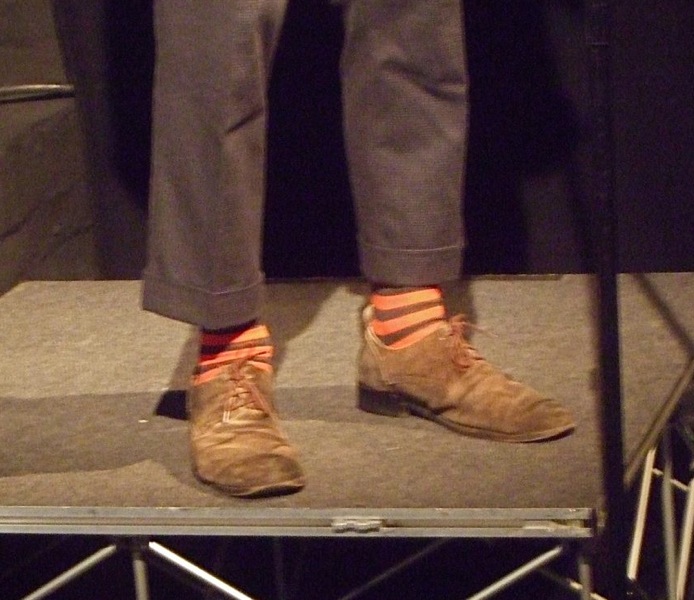
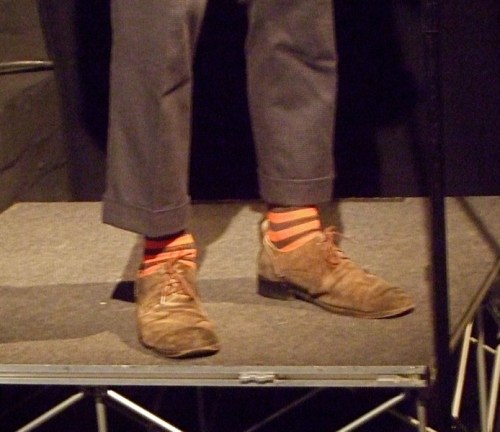
How does an author cap all this? At his launch party last night at the Institute of Contemporary Arts, the savviest fashion editor of his day sported an awkward grey suit, and a battered pair of lucky suede shoes, every inch Beckett’s absurd tramps waiting for Godot, looking to all the world as if he’d spent the night in a skip. Anti-fashion to a T. Who’d have thought Webb had once held plumb posts at Harpers & Queen, The Times and Elle? And won the Fashion Journalist of The Year Award in both 1995 and 1996. And remains Professor of Fashion at the RCA and Central Saint Martins!
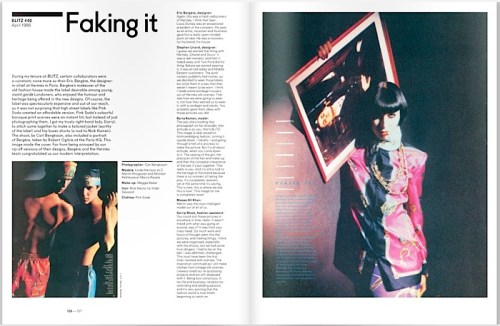
Iain R Webb, As Seen in BLITZ, fashion, books, photography

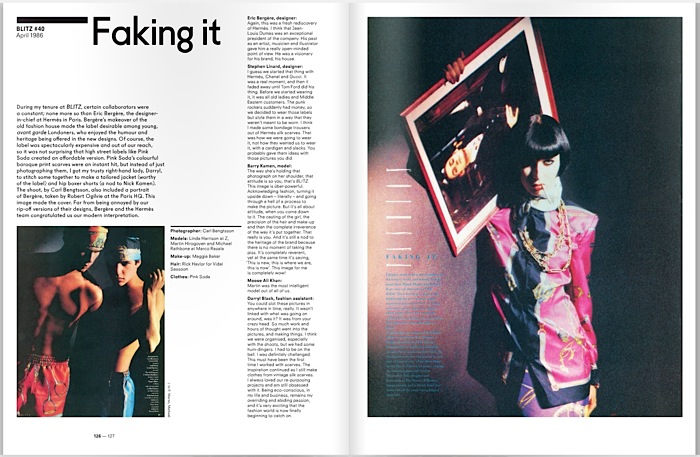
As Seen in BLITZ, 1986: classic Hermès scarves redeployed as boxer shorts and tailored jacket. Model Barry Kamen says says the female model’s attitude is so Webb, so BLITZ

❚ THIS BEAUTIFUL PHOTOBOOK, As Seen in BLITZ, precipitates a weekend of events at London’s ICA. Today there is a pop-up show in the ICA Theatre curated by the author Iain R Webb to display his own highly confessional memorabilia, plus a series of talks with special guests, film screenings.

In the darkened theatre only the 80s ephemera are visible as you enter: an array of toplit boxes on tables, containing notebooks, diary pages, sketches and name-droppy correspondence. These relics of a career lie in plain wooden showcases – “vitrines” would be an overstatement – more like pauper’s coffins. They amount to a novel kind of runway show of “my creations”. On one sheet of paper, Webb outlines his vision as fashion editor of Blitz, explaining London’s appeal: “The young English inherit a fight-back spirit, whilst the old fall sleepily into a heritage of traditional and quality goods … Of late the two have begun to merge, and the results have ensured the envy of the rest of the world.” Another note identifies the icing on a girl’s wardrobe as “an abundance of dishevelled accessorising – 1985 is a time to be ALIVE”.

➢ Webb’s As Seen in BLITZ discounted from £35 to £21

➢ The Victoria & Albert Museum exhibition Club to Catwalk: London Fashion in the 1980s runs from July 10, 2013 to Feb 16, 2014

FRONT PAGE

1983 ➤ A True romance aboard Spandau’s triumphal Thames riverboat

Spandau Ballet,1983, tour, Gary Kemp

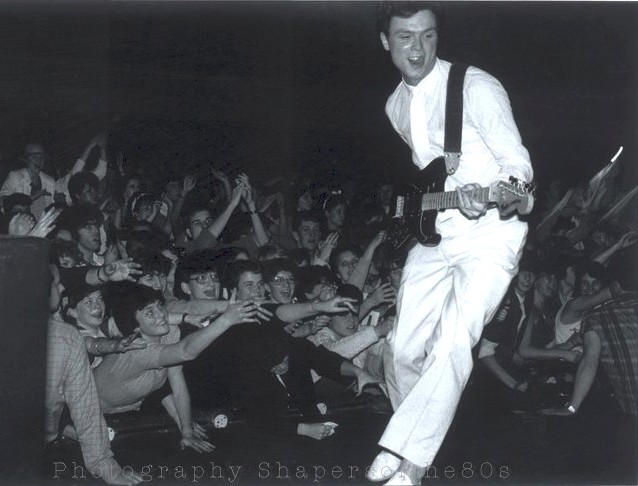
Spandau over Bournemouth, 1 April 1983: Gary Kemp teases the screamers at the Good Friday show in the Pavilion Theatre. © Shapersofthe80s

❚ YES IT’S 30 YEARS SINCE Spandau Ballet scored their only No 1 chart hit single with True, coinciding with their epic “Spandau Over Britain Tour”. By May 3, True the album reached No 1, while the single remained at No 1 as well. The band’s official website is celebrating with a month of recollections from 1983 and asking UK fans to offer their own memories. Naturally Shapersofthe80s was there on the waterfront and has a few inside stories of its own.

The month-long tour ended in triumph at London’s Royal Festival Hall 30 years ago today, on Friday April 29, because True hit the top spot in the UK singles chart and the night before Spandau topped the bill on Top of the Pops – only two weeks after its release. After the London gig there followed a right old knees-up for friends and family aboard a Thames riverboat. As it cast off Shapersofthe80s was onboard and snapped a True romance as Steve “Spiny” Norman took to the dance floor with bass-player Martin Kemp, while Steve’s mum Sheila tried to muscle in. Here are our snaps, never seen before.

CLICK ANY PIC TO LAUNCH CAROUSEL:

The band’s third album True, produced by Tony Swain and Steve Jolley, had preceded the tour and was to yield several chart hits across the world, Gold among them. The tour moved on to Europe in the summer and to North America in the autumn, when Shapersofthe80s will have some wild eye-witness scenes to report – laters…

➢ May 1 update: all five members of Spandau Ballet have agreed to an individual ‘TRUE’ Twitter Q&A session with fans, according to the official Spandau website – Q&A sessions start at 8pm (BST) on the official Spandau Twitter account, not their personal accounts, as follows: Gary May 3, Martin May 6, John May 7, Steve May 9, Tony tbc.

➢ 30th anniversary interview with Gary Kemp
at UK Official Charts website

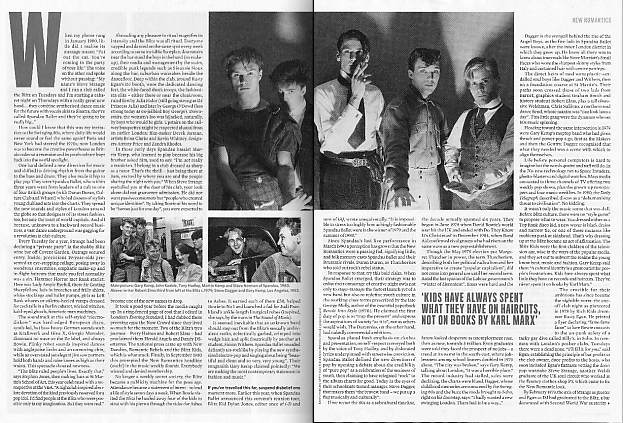
The Observer OMM Oct 4, 2009

The Observer OMM Oct 4, 2009

HOW IT ALL BEGAN FOR
THE ANGEL BOYS

➢ Read the story of Spandau Ballet,
the Blitz Kids and the birth of the New Romantics
in my feature at The Observer

➢ Photographer Neil Matthews, another friend of Spandau from their earliest days, has been celebrating with an exhibition of his popstar photos titled My 80s Through the Lens, at The Great British Restaurant, 14 North Audley Street, London W1K 6WE. All images can be viewed online and are for sale in limited editions printed on smart archival paper. As well as Spandau, his subjects include Bananarama, Blue Rondo, Bauhaus, Haysi Fantayzee, Malcolm McLaren, The Jam, Nick Heyward, Bow Wow Wow and more.

FRONT PAGE