Tag Archives: New Romantics

1980 ➤ Club to Catwalk: when fashion became an arena for all the arts

V&A ,fashion,Club to Catwalk , BodyMap, Scarlett Cannon, Monica Curtin,

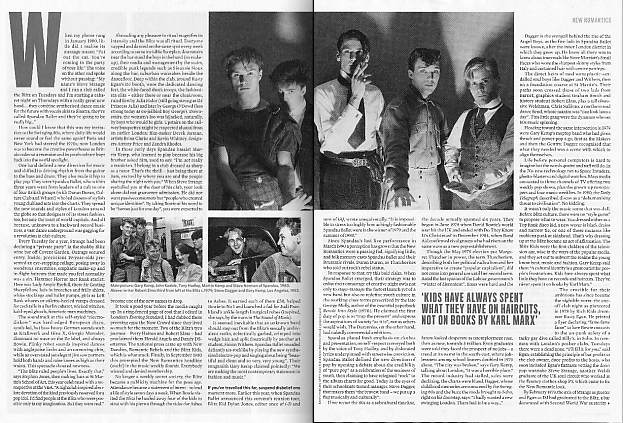
Monica Curtin’s 1985 pic of Scarlett Cannon as “key identity” for the V&A Club to Catwalk show… Outfit by BodyMap’s AW 1984 collection, Cat in the hat takes a rumble with a techno fish. Stylist John Derry-Bunce. Background painting Simon Josebury. Hair and makeup Jalle Bakke

❚ “FASHION???” SCOFFED THE FASHION EDITOR of a leading women’s magazine who shared my flat in 1980, after meeting one of the more ornamental Blitz Kids over our breakfast table. “Those aren’t even clothes!” Yet within five years she was as keen as every other editor to be featuring BodyMap, Galliano, Jones, Auburn, Hogg, Hamnett, Bernstock Speirs et al. Scroll forward 30 years and London’s world-beating decorative arts museum, the V&A, weighs in with a necessary exhibition reappraising the UK’s style revolution of the 80s. What’s coming under scrutiny in its dedicated fashion galleries are the unique silhouettes of that extravagant shape-shifting decade and the clubland forces that moulded them. Only two weeks to go before Club to Catwalk, London Fashion in the 1980s, and there’s one crucial tipping point at its heart: the moment fashion became style.

Let’s hand over to fashion guru Iain R Webb, one of the central figures who defined his generation and whose impressive book As Seen in Blitz was published last month. Here’s a taste of the mighty personal essay he has written for the summer issue of the V&A Magazine…

V&A Magazine summer issue: the 80s deconstructed by Iain R Webb

V&A Magazine summer issue: the 80s deconstructed by Iain R Webb

Webb writes: “ The 1980s were all about being photographed. We dressed as if every day were a photo shoot and every night a party (it usually was). But there was another revolution happening.

The advent of the stylist who approached fashion as an artistic construct was something new. Alongside the contributors to BLITZ, The Face and i-D (Ray Petri, Judy Blame, Caroline Baker, Helen Roberts, Beth Summers, Simon Foxton, Mitzi Lorenz, Maxine Siwan and Caryn Franklin among them) were two thought-provoking arbiters whose importance is often overlooked. Michael Roberts at Tatler and Amanda Grieve at Harper’s and Queen added a subversive edge to their respective glossy titles. Roberts poking fun at old-school mores while Grieve (later Harlech) befriended St Martin’s graduate John Galliano and helped create the romantic whirlwind that shaped fashion for decades to follow.

Club to Catwalk, exhibition, London, Fashion,1980s, V&AThe images produced by all these stylists merged fashion and art, questioned the accepted ideals of beauty and social status and enjoyed a sense of experimentation. Their vanguard imagery often highlighted specific issues such as the superficiality of fashion and consumerism with humour.

“At that time there was a group of stylists who were as creative as the designers, if not more so,” remembers PR Lynne Franks, who represented BodyMap, Katharine Hamnett and Wendy Dagworthy. “It prompted the question: What came first, the styling or the clothes? It was very spontaneous, like playing dress-up.”

Stefano Tonchi, editor of W magazine, then editor of Westuff, an alternative style periodical published in Florence, says: “Fashion was no longer fashionable. Style was used to describe many areas of the creative arts that came together. It made for a new category. Music dictated a lot of the emerging trends and there was experimentation in both photography and graphic design, but fashion was where these exciting changes were most evident. Think of the BodyMap fashion shows, they weren’t just about the clothes but involved music, graphic design and theatre… ”


➢ Revolt into Style Revisited: continued at Webb’s blog

V&A ,fashion,Club to Catwalk , BodyMap, Scarlett Cannon, Monica Curtin,

Showing in Club to Catwalk: Cotton dress by Willy Brown, 1980… Fallen Angel suit
 by John Galliano,
1985. © Victoria and Albert Museum, London

➢ Elsewhere at Shapers of the 80s: Eight for ’84 –
BodyMap flavour of the season topping the labels international buyers tip for success

Above: Needlessly doomy spin-off video from the V&A exhibition
Club to Catwalk in 2013

FRONT PAGE

➤ The Norman-Egan squad blitzes sunny Ibiza

Steve Norman, Neil Matthews , Flexipop!

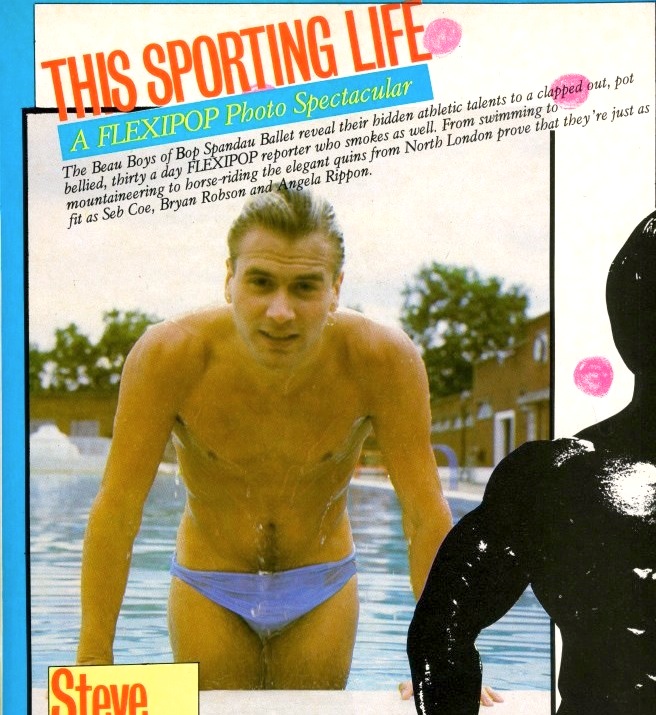
Steve Norman snapped by Neil Matthews for Flexipop! The location is Parliament Hill lido in north London in 1981. In the caption fit Steve Norman reports: “I love scuba diving. Funnily enough, I’ve never caught one yet.”

❚ A GREAT MUSICAL PARTNERSHIP lands on the Mediterranean island of Ibiza tomorrow. Fresh from their pop-up jam sessions at the Cannes film fest, two former 80s Blitz Kids – Spandau Ballet’s sax-percussionist Steve Norman plus Visage drummer and club deejay Rusty Egan – continue their working holiday in the sun. Getaway hedonists can catch their storming double act at the Nassau Beach Club on Playa D’en Bossa, fortnightly on Mondays until September.

It’s a trick they’ve been pulling at smart parties and corporate events ever since Spandau asked Egan to introduce their Reformation reunion tour performances at London’s O2 in 2009. There, as a warm-up before the show, the deejay reminded audiences of the synth soundtrack to the New Romantic era – electronic Blitz Club classics by The Normal, Gina X, Kraftwerk and the like. The chemistry was apt: Egan was co-founder of the original 80s Blitz club-night, while Spandau Ballet emerged from its members in 1979 as the house band who put the rhythms of the new decade into the charts.

After the Reformation tour, Norman and Egan teamed up to develop a deejay-led set enhanced with live saxophone, percussion and any other instruments the versatile Steve laid his hands on.

Nassau Beach Club, Steve Norman, Ibiza,performance

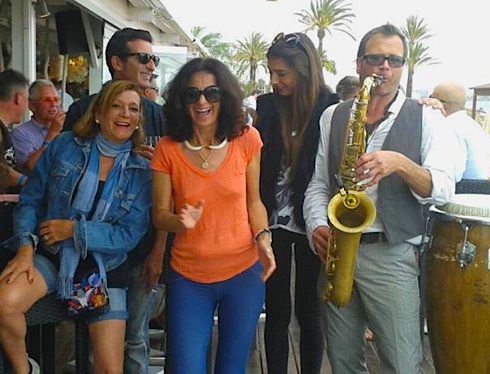
May 28 update: no sign of first-night nerves as Steve makes friends at Nassau Beach Club. Photograph from Kitita Pastrana (centre)

On the phone from Cannes this week Steve said: “We’re playing soulful deep house, four on the floor. With me vibing on top of Rusty’s music, it gives an audience something to focus on. It’s always nice to see somebody hit hell out of the bongos!”

For Steve this kind of bongo-bashing started in 1988. “My mate Deuce Barter said I should come down to his Passion club in Maidenhead and meet Joe Becket. We went head to head in a battle of the bongos playing live over house music and we hit it off. On the strength of that battle I asked Joe if he would like to join Spandau Ballet on the 1989-90 tour. He was gobsmacked.” Later, Joe Bongo was to become the regular percussionist in Steve’s band Cloudfish after Spandau split.

In 1993 Steve made his home in Ibiza and during 12 years there he introduced his idea of improvising live with the deejay at a club residency in San Antonio. “It was an extension of my antics with Spandau. I’m the one who moved around the stage. I’d climb up on a speaker with my sax, flying by seat of my pants, feeling very exposed up there, so I’d pull out all the stops.”

These days, though billing themselves as Electronic Beach Club, Steve insists the musical collaboration with Egan is “definitely not to be lumped in with the retro movement”. EBC have moved on from 80s sounds to contemporary club music, interspersed with current mixes of classic tracks.

He says: “I do play Spandau mixes. In an uptempo version of True by Deep Mind I just lay down the sax and Rusty drops in the Oakenfold mix and I switch to heavy percussion. We also do Fade to Grey mixed up with Magic Fly. That’s his little nod to the original Visage.”

Spandau Ballet remixed above, vintage Visage remixed below

+++
Last autumn, Steve scoped out the Nassau Beach Club during his first visit to Ibiza in four years and he’s basing himself there with Rusty for the summer. “It’s my second home, where I left a little piece of me. It’s where my son Jack was brought up and daughter Lara was born and I struggle to accept I’m not still there. I’m trying to convince Mrs Preston Norman to come out and drag herself away from the dog and cat at our cottage in Hampshire.

Nassau Beach Club

Nassau Beach Club

“What’s new on Ibiza is this idea of beach clubs. I remember when the Blue Marlin was just a few tables and chairs on the sand, now it’s become a nightclub on the beach. These places are springing up all over the island. After chilling out by day, people are ready to go for it by night. At the Nassau Club there’s a stage area on the beach where Rusty plays a set 5-8pm, with me raising the tempo.”

Creatively, the Norman-Egan team want to make more music together. Steve says: “I’ve done a sax track on Rusty’s album project and we still hope to do a track together.” On July 18 Steve will be a “gun for hire” joining an all-star supergroup called Holy Holy at the massive Latitude Festival in Suffolk, when London’s ICA presents Bowiefest, a celebration of the Ziggy/Aladdin year of 1973. The line-up so far features Clem Burke of Blondie, James Stevenson of Generation X, Gary Stondage of Big Audio Dynamite, Traci Hunter and Maggi Ronson on BVs.

Speculation grows around another reunion by Spandau Ballet. What can be confirmed is the epic documentary film by Scott Millaney, Soul Boys of the Western World, due out next spring. Steve promises his own exclusive discovery. “I found an old home movie from 1977 made by my dad on Standard 8. You see us pre-Spandau all performing up the road from Tony’s for the Queen’s Silver Jubilee celebrations – at a street party.” Busking, obviously!

THIS SUMMER’S SUN-AND-SEA SOUNDS

Rusty Egan, DJ, Nassau Beach Club, Ibiza

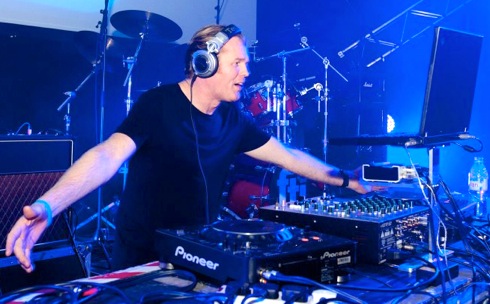
Rusty Egan in action with his Traktor Scratch Pro

❏ Hot from Rusty Egan on his Lilo: “I’m playing chilled beach mixes and remixes of classic tracks like True by Deep Mind, and electro pop such as Kate Bush’s This Woman’s Work (Echoes Remix), some cool house with Grass Is Greener’s Start Again, and Lewis Lastella’s remixes of Depeche Mode’s Enjoy The Silence and New Order’s Blue Monday.”

Kate Bush remixed above, Depeche Mode remixed below


+++
➢ Footnote to the top pic – In Dec 1980 Flexipop! was launched as a plastic 7-inch disc with an overexcitable magazine attached. It was invented by music journalists Tim Lott and his business partner at the time, Barry Cain. It made the career of “Smudger” Neil Matthews, one-third of the official New Romantic photography contingent (along with Graham Smith and Shapersofthe80s), and his pix were exhumed late last year in archive form at a Flexipop Facebook page.

FRONT PAGE

➤ Webb’s flipside of the 80s fashion revolution as seen last night at the ICA

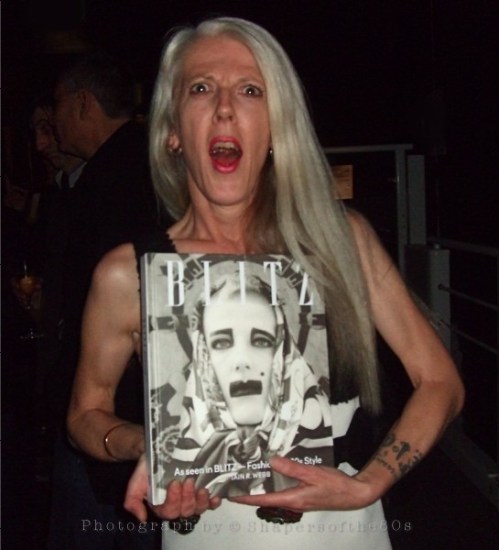
Cover girl: Scarlett Cannon at last night’s book launch . . . and covered in 1985 by photographer David Hiscock, scarfed by Hermès

CLICK ANY PIC TO LAUNCH CAROUSEL:


+++
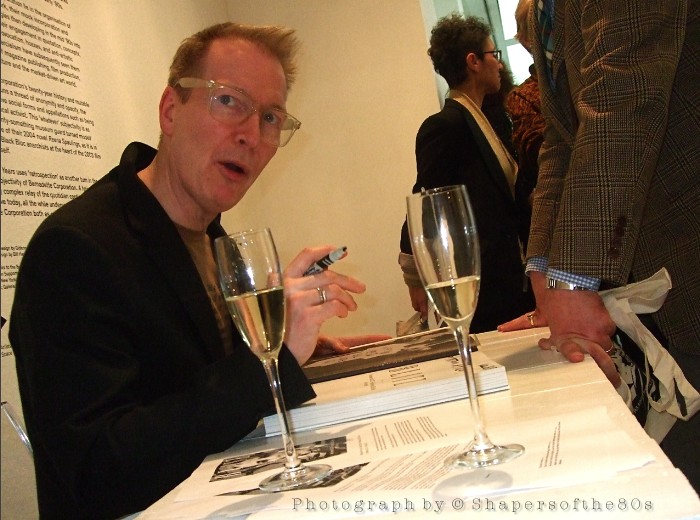
❚ LAST NIGHT DIEHARD 80s FASHIONISTAS celebrated the launch of an elegant hardback with far greater ambitions than most coffee-table photobooks. It’s a glorious personal CV posing as one man’s record of five energetic years. It doesn’t quite knock the sensationalist Casanova off his perch as the master memoirist, but Iain R Webb’s chutzpah certainly takes your breath away.

As Seen in BLITZ, Fashioning ’80s Style is among the most unabashed, single-minded, focused works of diarism you are likely to have read. In capturing his output as a fashion journalist, this book aspires to present social history expressed through fashion. He brings a new twist to the well-tried technique of oral history, because the 100+ collaborators who contribute to this book are constantly telling the author how marvellous he is, but in the second-person singular. They are talking to “you”, meaning “me”, the author whose name appears on the cover, Iain R Webb.

Its 272 pages record a series of testimonials: “You pulled so many creative people round you” … “We did it because you asked us to” … “You jump-started my career as a photographer” … “You were one of our earliest supporters” … “You had different ways of shooting things” … “You were doing the opposite of high fashion and glamour” … “You showed me a life that was different” … “You were so beautiful and excitingly aloof” … “I would have done anything you asked” … “You were the person who ––”.

There is no place in Webb’s memoir for Eng Lit’s Unreliable Narrator, or for self-doubt or inner struggle. His worldview is confirmed at every turn. Assertion is all: The 80s – we did it my way. We, the readers, are soon rocking on our heels at the sheer brass-necked cheek of it all!

Having said which, consider the credentials of everyone involved. They amount to a Who’s Who of the fashion shapers of the 80s: Jasper Conran, John Galliano, Jean Paul Gaultier, Katharine Hamnett, Marc Jacobs, Stephen Jones, Calvin Klein, Barry Kamen, Baillie Walsh, Martine Sitbon, Princess Julia, Nick Knight, David LaChapelle and many more.
Iain R Webb, fashion,photography, books

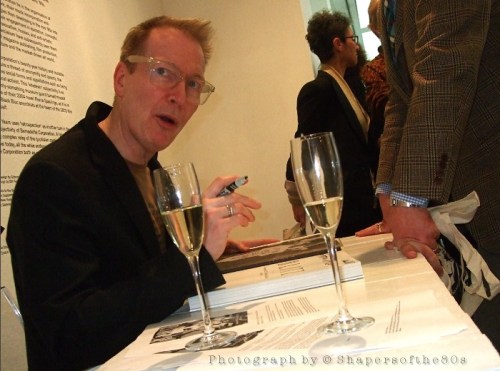
The author last night: Iain R Webb signing his book with lavish tributes to his former colleagues

We’ve heard enough about George O’Dowd’s tawdry version of events. Finally we have a much-needed corrective view of the youth cultural revolution that fired up the Swinging 80s. As Seen in BLITZ celebrates Webb’s own unique take on the decade of egotism through the pages he produced. We hear the voices of his co-stars – the photographers, designers, models and stylists who supported him as a lynchpin fashion editor – all dissecting the nuances of their subversive visions.

The whole momentum of post-punk street style during the decade’s dawn, 1980-83, is what drew the eyes of the world’s fashion industries back to Britain and put London Fashion Week on the agenda of every serious commentator twice a year.

While studying fashion design at St Martin’s, Webb was at the centre of London’s nightlife crowd at the now-legendary club called the Blitz – very much one of the 20 key Blitz Kids, as the media tagged them. He rightly claims: “At the dawn of a hedonistic club scene that saw the birth of the New Romantics … on the pages of Blitz, The Face and i-D, a new breed of young iconoclasts hoped to inspire revolution.” These were three new magazines, soon dubbed “style bibles”, which gave journalistic expression to the fertile innovations in UK pop culture and defined the era.

Blitz was a desultory magazine, almost entirely devoid of character in its early years. It was launched in 1980 with a title that its owner says seemed “catchy”, utterly oblivious to the pivotal club-night of the same name and the precocious youth-quake putting London back at the centre of the pop universe. It took until about 1983 for Webb to recognise the gap in the market for radical and purposeful fashion journalism and to infiltrate Blitz, the magazine.
Iain R Webb, As Seen in BLITZ, fashion, books, photography

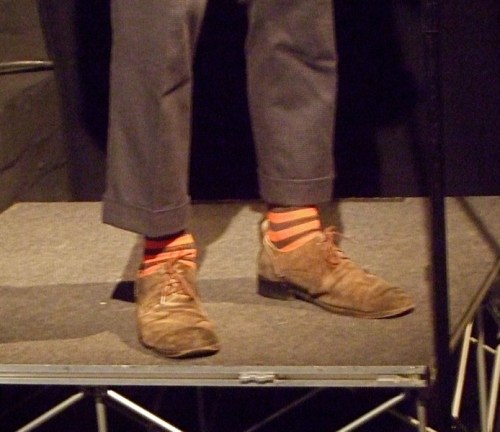
Webb’s ICA launch: the author sets the style for the evening. After Godot, out of skip? I stand corrected: After Wild Boys, out of Burroughs

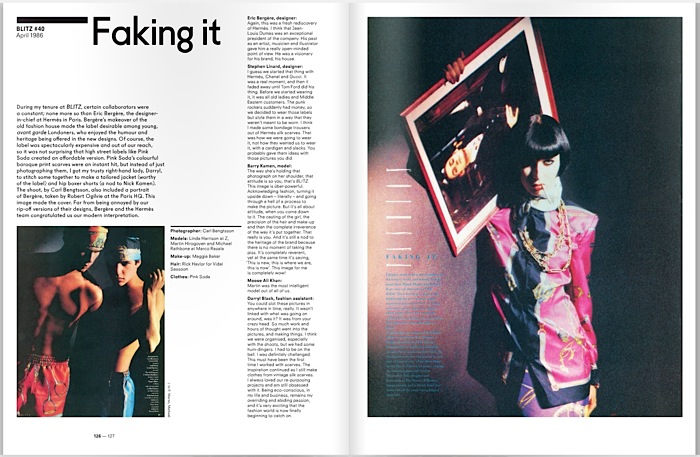
Webb beavered his way up to becoming its fashion editor from Feb 1985 to August 1987 and was often given 20 pages a month to be filled with his “singular vision if they were to be taken seriously”. Webb’s USP was an “ongoing love/hate relationship with the fashion industry. It was not about selling a look, it was about saying something”. He expressed his ethos on a T-shirt in a 1986 photo shoot: “We’re Not Here to Sell Clothes”. When he was headhunted to join the London Evening Standard in 1987, his shoes at Blitz were filled by Kim Bowen, Queen Bee of the Blitz Kids, herself the wildest child in the club.

Webb’s purpose, he writes, “has always been to inspire or provoke, engage or enrage” and his images “manipulated fashion to explore ideas of transformation, beauty, glamour and sex”. His book brims with attitude and evidence that the fashion world did indeed tilt slightly on its axis during the 80s – as eye-witness accounts confirm in entertaining archive interviews.

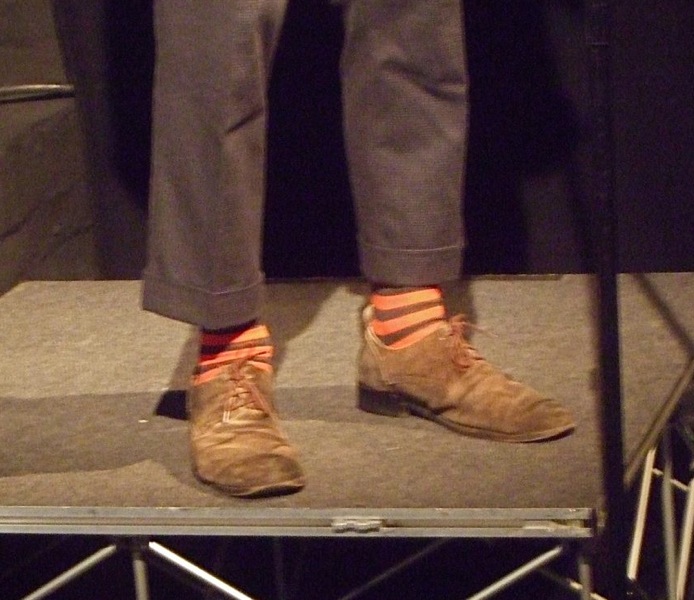
How does an author cap all this? At his launch party last night at the Institute of Contemporary Arts, the savviest fashion editor of his day sported an awkward grey suit, and a battered pair of lucky suede shoes, every inch Beckett’s absurd tramps waiting for Godot, looking to all the world as if he’d spent the night in a skip. Anti-fashion to a T. Who’d have thought Webb had once held plumb posts at Harpers & Queen, The Times and Elle? And won the Fashion Journalist of The Year Award in both 1995 and 1996. And remains Professor of Fashion at the RCA and Central Saint Martins!
Iain R Webb, As Seen in BLITZ, fashion, books, photography

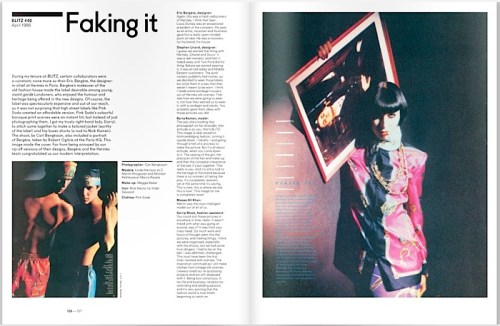
As Seen in BLITZ, 1986: classic Hermès scarves redeployed as boxer shorts and tailored jacket. Model Barry Kamen says says the female model’s attitude is so Webb, so BLITZ

❚ THIS BEAUTIFUL PHOTOBOOK, As Seen in BLITZ, precipitates a weekend of events at London’s ICA. Today there is a pop-up show in the ICA Theatre curated by the author Iain R Webb to display his own highly confessional memorabilia, plus a series of talks with special guests, film screenings.

In the darkened theatre only the 80s ephemera are visible as you enter: an array of toplit boxes on tables, containing notebooks, diary pages, sketches and name-droppy correspondence. These relics of a career lie in plain wooden showcases – “vitrines” would be an overstatement – more like pauper’s coffins. They amount to a novel kind of runway show of “my creations”. On one sheet of paper, Webb outlines his vision as fashion editor of Blitz, explaining London’s appeal: “The young English inherit a fight-back spirit, whilst the old fall sleepily into a heritage of traditional and quality goods … Of late the two have begun to merge, and the results have ensured the envy of the rest of the world.” Another note identifies the icing on a girl’s wardrobe as “an abundance of dishevelled accessorising – 1985 is a time to be ALIVE”.

➢ Webb’s As Seen in BLITZ discounted from £35 to £21

➢ The Victoria & Albert Museum exhibition Club to Catwalk: London Fashion in the 1980s runs from July 10, 2013 to Feb 16, 2014

FRONT PAGE

1983 ➤ A True romance aboard Spandau’s triumphal Thames riverboat

Spandau Ballet,1983, tour, Gary Kemp

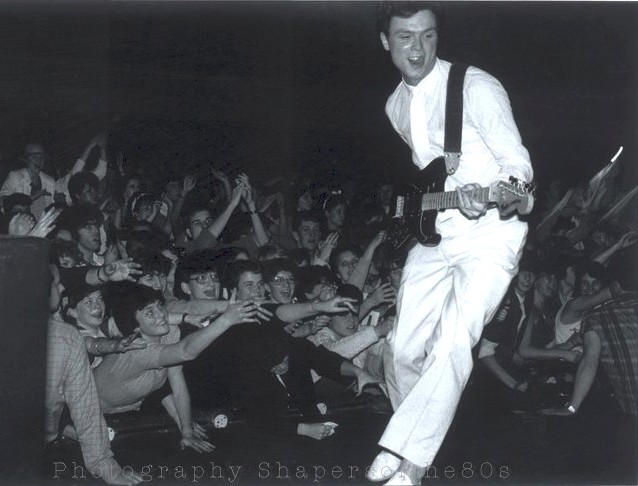
Spandau over Bournemouth, 1 April 1983: Gary Kemp teases the screamers at the Good Friday show in the Pavilion Theatre. © Shapersofthe80s

❚ YES IT’S 30 YEARS SINCE Spandau Ballet scored their only No 1 chart hit single with True, coinciding with their epic “Spandau Over Britain Tour”. By May 3, True the album reached No 1, while the single remained at No 1 as well. The band’s official website is celebrating with a month of recollections from 1983 and asking UK fans to offer their own memories. Naturally Shapersofthe80s was there on the waterfront and has a few inside stories of its own.

The month-long tour ended in triumph at London’s Royal Festival Hall 30 years ago today, on Friday April 29, because True hit the top spot in the UK singles chart and the night before Spandau topped the bill on Top of the Pops – only two weeks after its release. After the London gig there followed a right old knees-up for friends and family aboard a Thames riverboat. As it cast off Shapersofthe80s was onboard and snapped a True romance as Steve “Spiny” Norman took to the dance floor with bass-player Martin Kemp, while Steve’s mum Sheila tried to muscle in. Here are our snaps, never seen before.

CLICK ANY PIC TO LAUNCH CAROUSEL:

The band’s third album True, produced by Tony Swain and Steve Jolley, had preceded the tour and was to yield several chart hits across the world, Gold among them. The tour moved on to Europe in the summer and to North America in the autumn, when Shapersofthe80s will have some wild eye-witness scenes to report – laters…

➢ May 1 update: all five members of Spandau Ballet have agreed to an individual ‘TRUE’ Twitter Q&A session with fans, according to the official Spandau website – Q&A sessions start at 8pm (BST) on the official Spandau Twitter account, not their personal accounts, as follows: Gary May 3, Martin May 6, John May 7, Steve May 9, Tony tbc.

➢ 30th anniversary interview with Gary Kemp
at UK Official Charts website

The Observer OMM Oct 4, 2009

The Observer OMM Oct 4, 2009

HOW IT ALL BEGAN FOR
THE ANGEL BOYS

➢ Read the story of Spandau Ballet,
the Blitz Kids and the birth of the New Romantics
in my feature at The Observer

➢ Photographer Neil Matthews, another friend of Spandau from their earliest days, has been celebrating with an exhibition of his popstar photos titled My 80s Through the Lens, at The Great British Restaurant, 14 North Audley Street, London W1K 6WE. All images can be viewed online and are for sale in limited editions printed on smart archival paper. As well as Spandau, his subjects include Bananarama, Blue Rondo, Bauhaus, Haysi Fantayzee, Malcolm McLaren, The Jam, Nick Heyward, Bow Wow Wow and more.

FRONT PAGE

➤ Visage: out of the 80s frying pan into the 21st-century fire

Steve Strange, Visage,Shameless Fashion

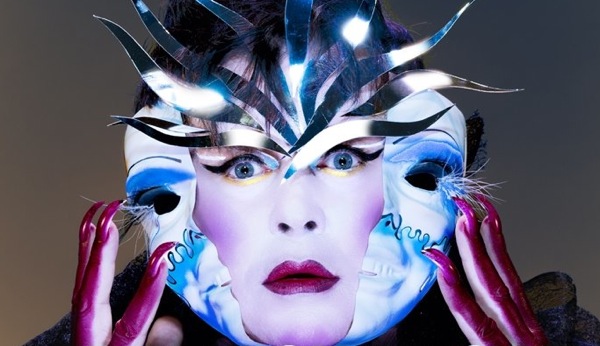
The face of Visage today: Steve Strange behaving shamelessly. Peter Ashworth Photography. Makeup by Lara Himpelmann

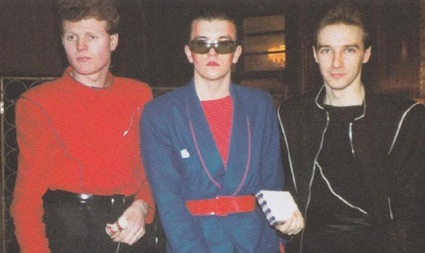
Visage 1979: Rusty Egan, John McGeoch, Barry Adamson, Dave Formula, Billy Currie, Steve Strange, Midge Ure. Photographed © by Sheila Rock

Visage 1979: Rusty Egan, John McGeoch, Barry Adamson, Dave Formula, Billy Currie, Steve Strange, Midge Ure. Photographed © by Sheila Rock

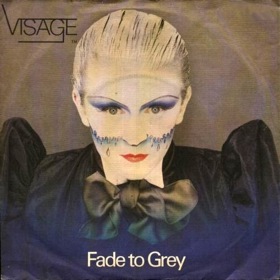
❚ THE STUDIO BAND VISAGE were central to defining the electropop sounds of 1980 thanks to the musical nous of Midge Ure, who had bought his first synthesiser in 1978 because he felt synths “embodied a kind of nostalgia for the future”. He’d been faffing around with Glen Matlock, Steve New and drummer Rusty Egan in the 60s-flavoured one-hit power pop group Rich Kids, and sensed an appetite in the zeitgeist for a more soulful version of Kraftwerk plus a return to melody. Intent on making vibrant dance music for the “visa age”, Ure dreamed up the name Visage, complete with simplified face as its logo,  for an new experimental band. Initially Ure rehearsed updating In The Year 2525, using up some spare Rich Kids time booked in an EMI studio. There he played around on synth and drum machine, then asked Egan to take over the drums.

They co-opted Rusty’s flamboyant Welsh pal Steve Strange as face-painted frontman to give visual expression to a range of what were being called “moderne” fashions. Dressing up in the face of a grinding economic recession was the destiny that Bowie’s children were to fulfil. Visage’s songs captured the sidelong humour and knowing irony that came to characterise the 80s, while their explosive backbeats, electronic fills and synth riffs changed the vocabulary of British chart pop. This TV generation dreamed in both sound and vision.

Supercool in ’78: Egan, Strange and Ure establish Visage

What Strange lacked in vocal proficiency he made up for in promotional value, since he soon became a walking advertisement for the cooler-than-cool clothes shop PX in Covent Garden where he was an assistant. Run by Stephane Raynor and Helen Robinson, they more than any other designers in 1980 set the template for New Romantics fashion, favouring oversized chemises, medieval doublets, breeches and frilly lace. The shop’s followers were soon dubbed posers, and the Pose Age was born. Disposable identities, portable events, looks not uniforms – for his disciples, Bowie’s imperatives became the norm.

As a studio project the original Visage lineup never played live, and was probably a case of too many cooks. In 1979 it took in four more musicians (Billy Currie, John McGeoch, Dave Formula, Barry Adamson), all of whom had loyalties to existing bands, while the creative drive came from Ure and Currie. Even so, Currie was persuading the restless Ure to help resurrect the synth band Ultravox following John Foxx’s departure. By 1982, when Ure quit Visage in favour of Ultravox, Visage had enjoyed four top-20 singles hits in the UK, two top-twenty albums with Visage and The Anvil, and a smattering of international hits with Fade to Grey.

As we now know, Ure went on to mastermind the Band Aid fundraising hit single in 1984, then the worldwide Live Aid charity concert with Bob Geldof, and duly earned himself an OBE.

Visage, Fade to Grey,albumsIn 1984 a Visage lineup comprising Strange and Egan along with newer members Andy Barnett, Steve and Gary Barnacle put out a so-so third album, but when it flopped they soon called it a day. The truth was that Visage failed to invest single-mindedly in themselves as a musical enterprise: their progress simmered rather than blazed as individuals pursued their own favoured goals. Occasional tracks sizzled on the dancefloor – In the Year 2525, Fade to Grey, Mind of a Toy, Night Train – but the band lacked unity and commitment.

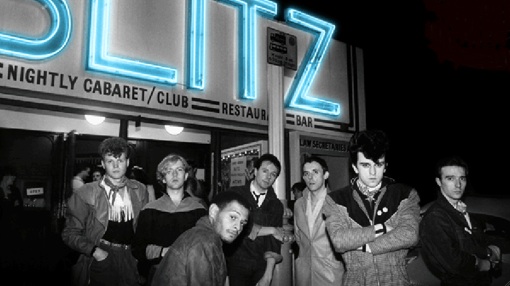
❚ NOBODY CAN DENY STRANGE’S FIZZ and chutzpah which in 1979 coralled a disparate group of post-punk no-wavers and outcast fashionistas when he co-hosted the agenda-setting Neon Night at the Blitz Club in Covent Garden. It lit up London in an explosion of inventive fashion, gender-bending and ridiculous hair. As the club’s stand-out stars suddenly became media celebrities, these exponents of modern dance and stance began forcing the pace of change across the creative industries. Rusty Egan proved to be a mould-breaking deejay who often added his own Syndrum accompaniment at the turntable, and his live mixing did much to change the sound of clubland music. During the early 80s the pair went on to reshape London nightlife at two notable venues, Club for Heroes in Baker Street and the Camden Palace. At the end of the decade, dance music as we knew it was swept aside by the craze for E’s and rave. Egan then set out to make a fine reputation deejaying on London’s boutique nightclub circuit, while Strange can claim a ghosted autobiography as full of fantasy and foggy memories as you’d expect from an arch-poser who’d been out on the town every night for 20 years.

Roll forward to 2010. John Pitcher, who fronts a music services provider called MRC, established a Blitz Club record label and an associated website, and Strange and Egan launched it in January 2011 by throwing a Return to the Blitz party at the site of the former club. The event raised a few media ripples but little groundswell and only three remixes have been released in as many years. With 80s band revivals making waves all around them, that old Blitz magic had lost its charm. Egan said this week: “Pitcher registered everything for us, so he owns everything, including the website and the Visage brand.” Growing personal differences hindered collaboration between the three. These worsened last year when Egan made allegations that Strange had squandered a substantial sum of accrued Visage royalties paid via Strange and that he failed to share them among the original band lineup. This week Egan said: “Try telling John McGeoch’s daughter her dad’s [share] was spent by Strange.”

Visage, Steve Barnacle, Steve Strange, Lauren Duvall , Robin Simon

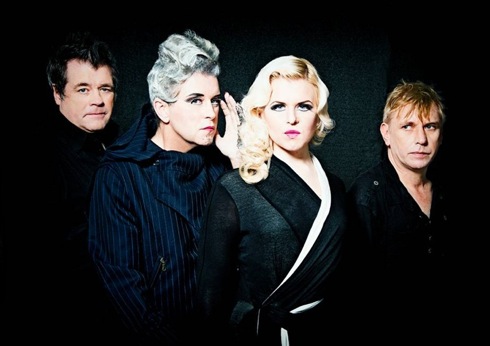
Visage 2013: Steve Barnacle, the inimitable Steve Strange, Lauren Duvall and Robin Simon. Photography © by David Levine

When Strange proposed reviving the band name of Visage after almost 30 years, neither Ure nor Egan could see the point and they disputed Strange’s right to do so. Ure told an American newspaper in January: “Visage was always something Rusty Egan and I created and controlled. The idea of doing a Visage 2 was never appealing to me so I wasn’t interested. I walked away from Visage when it got ridiculous and supremely hedonistic and I will probably leave it that way.” In response to Strange’s claim on German TV last November that Ure was collaborating on a new album together, Ure tweeted: “He is deluded if he thinks that. He knows that isn’t happening.”

EARLIER BACKGROUND

➢ 2013, A couple of slaps in the Visage
as Strange and Egan squabble

Rusty Egan remains aggrieved that Strange has not resolved recent differences. He is angry that Strange should make any claim to creative input into Visage’s lyrics and music, and maintained this week: “Strange had nothing to do with the music in The Blitz or Visage.” In January Egan said: “There has never been a Visage album without me. It’s my group and Strange is a singer. He is not Visage.”

Yet for all this, and Strange’s sad personal saga of ill-health, the vocalist has doggedly set about persuading a new circle of supporters to bring Visage back to life. In the face of widespread disbelief – the garrulous Strange’s little weakness, after all, has always been for exaggeration and melodrama – last year he announced a new “Visage” lineup, with a gorgeous singer called Lauren Duvall, plus Steve Barnacle (fretless bass) and Robin Simon (guitar). Keyboardist Mick MacNeil, from Simple Minds, was enlisted to contribute on a range of vintage analogue synthesisers which include an early Moog Source.

At last, what is being called a fourth “Visage” album titled Hearts and Knives is due to be released on May 27.

“It has been 29 years since the last Visage album and during that period it often seems like we have all lived through several lifetimes,” says Strange. Indeed, “bruised and wounded” declare the rueful lyrics of Shameless Fashion, the new group’s first single, available this week. It isn’t clear whether this refers to the very many contributors we see jostling for credits on the new “Visage” packaging. The Visage 2013 camp is probably keeping fingers crossed.

➢ A free download of the new single Shameless Fashion is available from today at the Visage website

➢ 1980 at the Blitz, Strange days, strange nights, strange people

FRONT PAGE