Tag Archives: Neville Brody

➤ Six magazines that changed the course of postwar British journalism

journalism, Picture Post, influencers, magazines pre-war

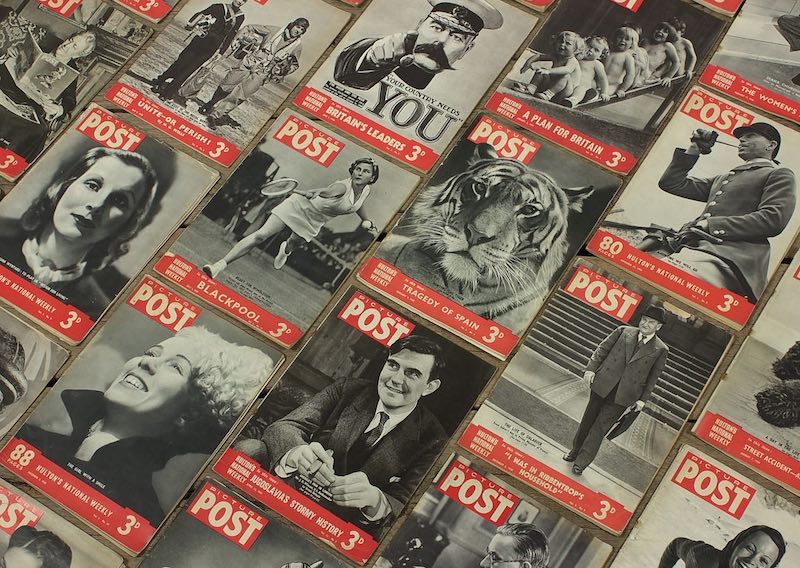
Picture Post covers from 1938 onwards

[This post was among the first to be published at
Shapersofthe80s in March 2009]

PICTURE POST 1938-57

The pioneer of photo-reportage. At the height of its powers during the Second World War this was the most widely read periodical in the country, selling 1,950,000 copies a week. Its inspirational editor from 1940 Tom Hopkinson recruited the photographers Bill Brandt, Bert Hardy, Kurt Hutton, Felix Man, Francis Reiss, Thurston Hopkins, John Chillingworth, Grace Robertson, Leonard McCombe. Staff writers included MacDonald Hastings, Lorna Hay, Sydney Jacobson, J. B. Priestley, Lionel Birch, James Cameron, Fyfe Robertson, Anne Scott-James, Robert Kee and Bert Lloyd; freelance contributors included George Bernard Shaw, Dorothy Parker and William Saroyan.

SUNDAY TIMES MAGAZINE 1962-today

The first colour supplement to be published as a weekly addition to a UK newspaper. The first editor was Mark Boxer. From the outset, “photographer first” was the benchmark and required serious investment in photo-reportage from the world’s trouble spots. Michael Rand, its art director for 30 years from 1962, said the credo was “grit plus glamour – fashion juxtaposed with war photography and pop art”. He went on to champion the work of such photographers as Terry O’Neill, Brian Duffy, Richard Avedon, Eugene Richards, Diane Arbus, Mary Ellen Mark. The magazine featured images from the Vietnam war by the photographer Don McCullin, a photo-essay on the Vatican by Eve Arnold, many portraits and photo-essays by Lord Snowdon, and Bert Stern’s final photoshoot with Marilyn Monroe, among many other photographic collections.

NEW SOCIETY 1962-1988

A weekly magazine of social inquiry and cultural comment, it drew on the disciplines of sociology, anthropology, psychology, human geography, social history and social policy, and it published wide-ranging social reportage. The cultural commentator Robert Hewison wrote that New Society became “a forum for the new intelligentsia” created by the expansion of higher education in Britain from the early 1960s. The editor Paul Barker (1968–86) was described by the labour historian Eric Hobsbawm as the “most original of editors”.

NOVA 1965-75

Launched under the slogan A new kind of magazine for the new kind of woman, Nova created its own unique niche in the British consumer magazine market under gifted editor Dennis Hackett, together with visionary art director Harri Peccinotti. They swiftly established their magazine as an influential must-read for the movers and shakers of Swinging London, among men as well as the original target audience of women becoming devotees of its heady mixture of social issues and cutting-edge fashion and modern lifestyle features. Nova’s agenda of journalistically taboo subjects included contraception, abortion, cancer, race, homosexuality, divorce and royal affairs, invariably boosted by stylish and provocative cover images, making it a rarity among magazines. Ultimately Nova had more male readers than female.
[Nova incidentally is where my own career began – DJ, creator of Shapersofthe80s]

RADIO TIMES 1968-88

Programme listings magazine transformed with provocative feature articles under editor Geoffrey Cannon and art director David Driver to create Britain’s biggest weekly magazine sale which rocketed as TV itself became the mass medium, from 8 million to 11.2 million for the Christmas edition of 1988.

THE FACE 1980-2004

In 1980, Nick Logan, a respected ex-editor of NME, staked his house on launching a new magazine that was to make style the focus of youth culture, as much as music. The Face was quickly dubbed Britain’s “style bible”. Even with a top monthly sale of only 120,000, it had an impact not only on the pop press, but the mainstream media too which spawned style pages in newspapers and magazines and “yoof” TV shows across the enlarged landscape of broadcasting. His influential art director Neville Brody single-handedly revolutionised the way magazines were conceived while contributing many new fonts to the canon.
FRONT PAGE

2025 ➤ Here’s to those Faces who created a new breed of journalism for the 1980s

Swinging 80s, Club Culture, Nick Logan, Steve Dagger, photography, exhibitions, London, National Portrait Gallery, Face Magazine,

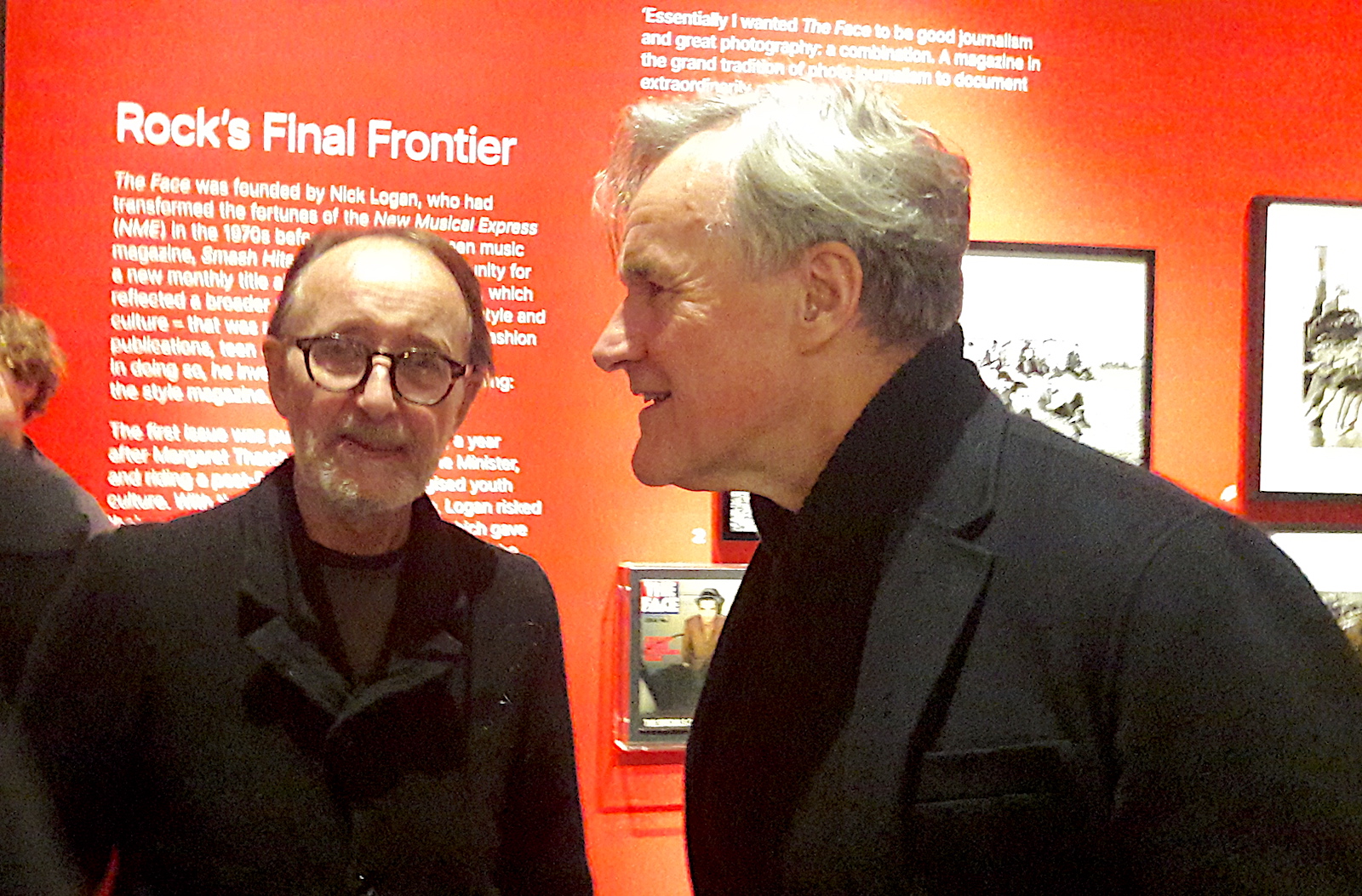
Kings among influencers: Nick Logan and Steve Dagger, at the NPG private view. (Photo © Shapersofthe80s)

❚ AN EXCEPTIONAL CHAMPAGNE PARTY last night launched a compelling exhibition celebrating The Face magazine’s role as Britain’s “style bible” (*see below) for just over 20 years. A thorough display of photos and glass-boxed showcases of the magazine itself confirmed what a revolution in fashion and design took place between 1980 and 2004. And London’s National Portrait Gallery invited several generations of survivors to revisit their contributions, chief among them Nick Logan, founding owner and editor of The Face, as sociable yet bashful as he’s ever been, along with his partner Mia.

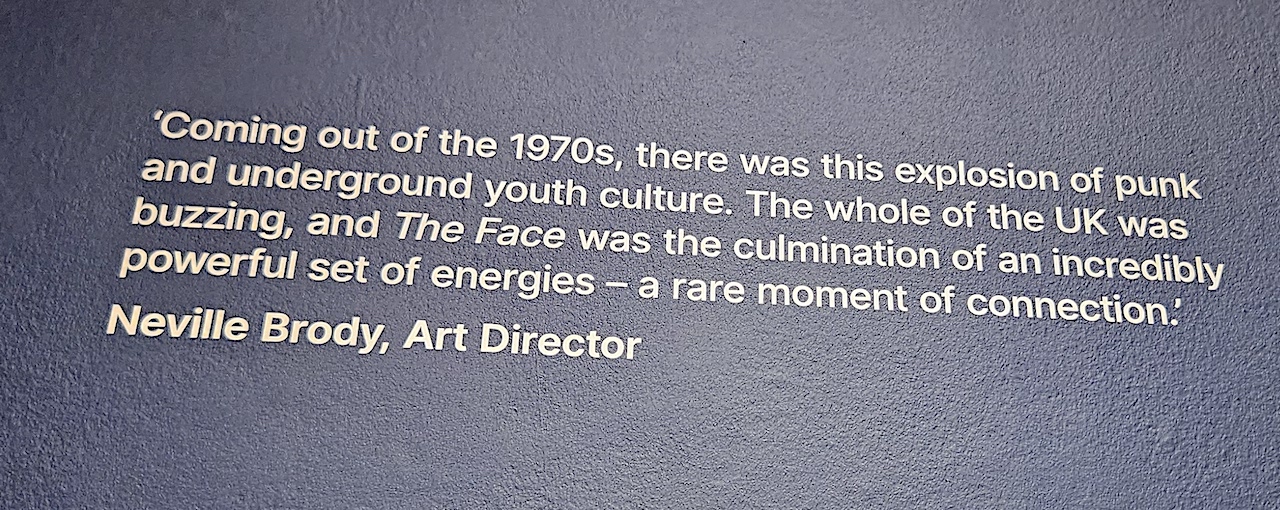
His gift, apart from investing £3,500 of his savings, was to put cool design and quality writing to the fore, at a time when Britain’s four weekly rock newspapers were a very narrowly acquired taste. Logan’s brief also went way beyond music into all aspects of culture and anthropology. That’s the main reason that both he and his radical designer Neville Brody – *who in five years established an inspired new visual language in print – both reject the description “style bible”, just as none of the New Romantics has ever owned up to that name dumped on them by the media.

Click any pic to enlarge in a slideshow:

No less a king influencer was Steve Dagger whose band Spandau Ballet changed the dreary noise of 70s pop into a new kind of dance music for the 80s. Two more such kings who helped shape the Swinging 80s were the St Martin’s graduate milliner Stephen Jones whose hats graced the heads of the first Blitz Kids then went on adding bazzazz to designer collections across the globe… And Peter Ashworth whose super-lit photographs have captured musical and fashionable excess just as far across the globe ever since.

Other vintage faces included Lesley White (the first front-desk copytaster at The Face’s various offices), St Martin’s star fashionista Fiona Dealey, clubland deejay Jeremy Healey, film-maker and musician Jamie Morgan, pioneering music journalist Paul Simper, and Derek Ridgers the straight-up photographer whose pictures illustrated many of my own nightlife reports in The Face’s early years.

Swinging 80s, Club Culture, photography, exhibitions, London, National Portrait Gallery, Face Magazine, Nick Logan, Neville Brody, Kathryn Flett

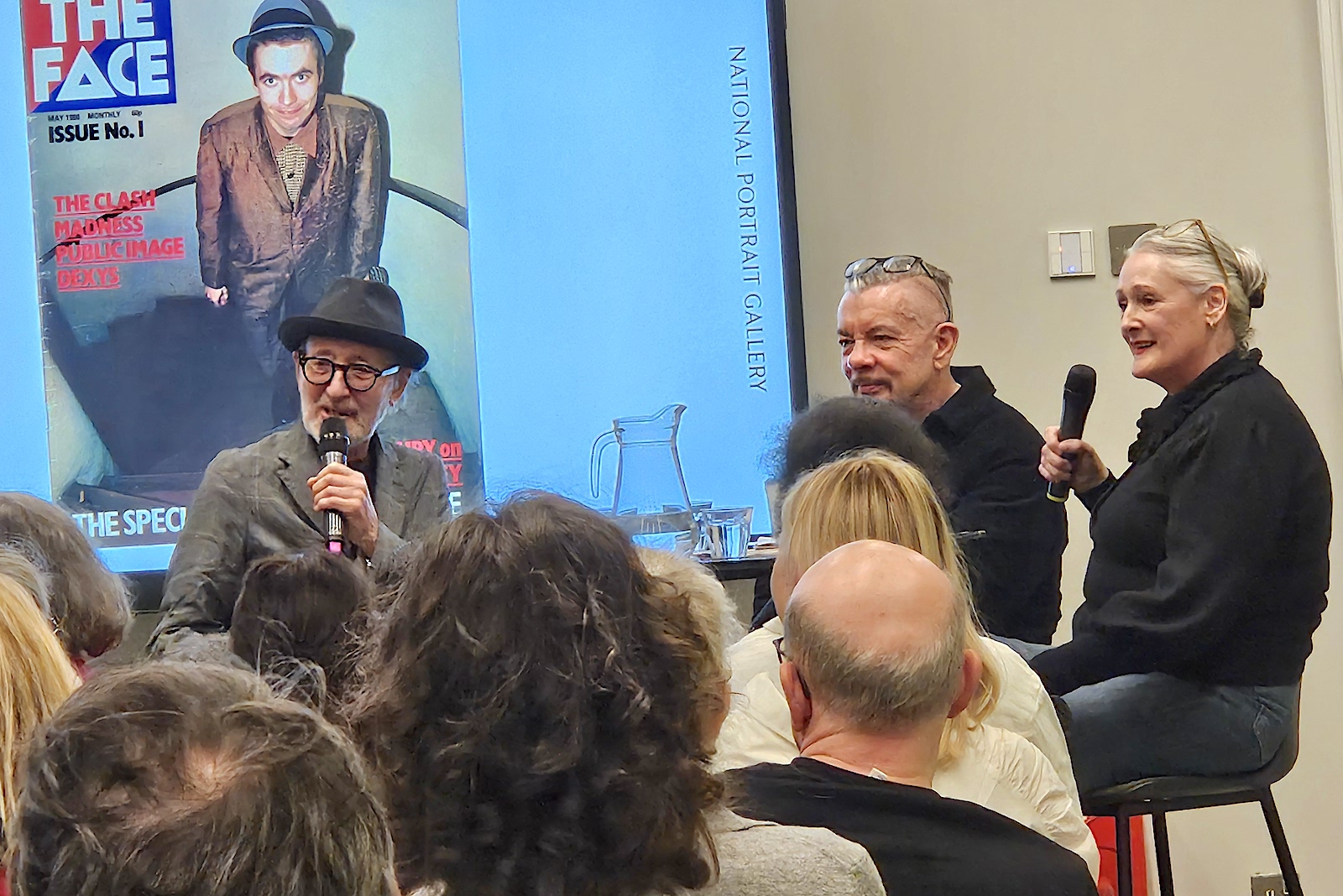
NPG talk about the Face exhibition: editor Nick Logan, art director Neville Brody and from 1987 the mag’s first fashion editor Kathryn Flett. (Photo © Shapersofthe80s)

Swinging 80s, Club Culture, photography, exhibitions, London, National Portrait Gallery, Face Magazine, Chris Sullivan, Ollie O'Donnell

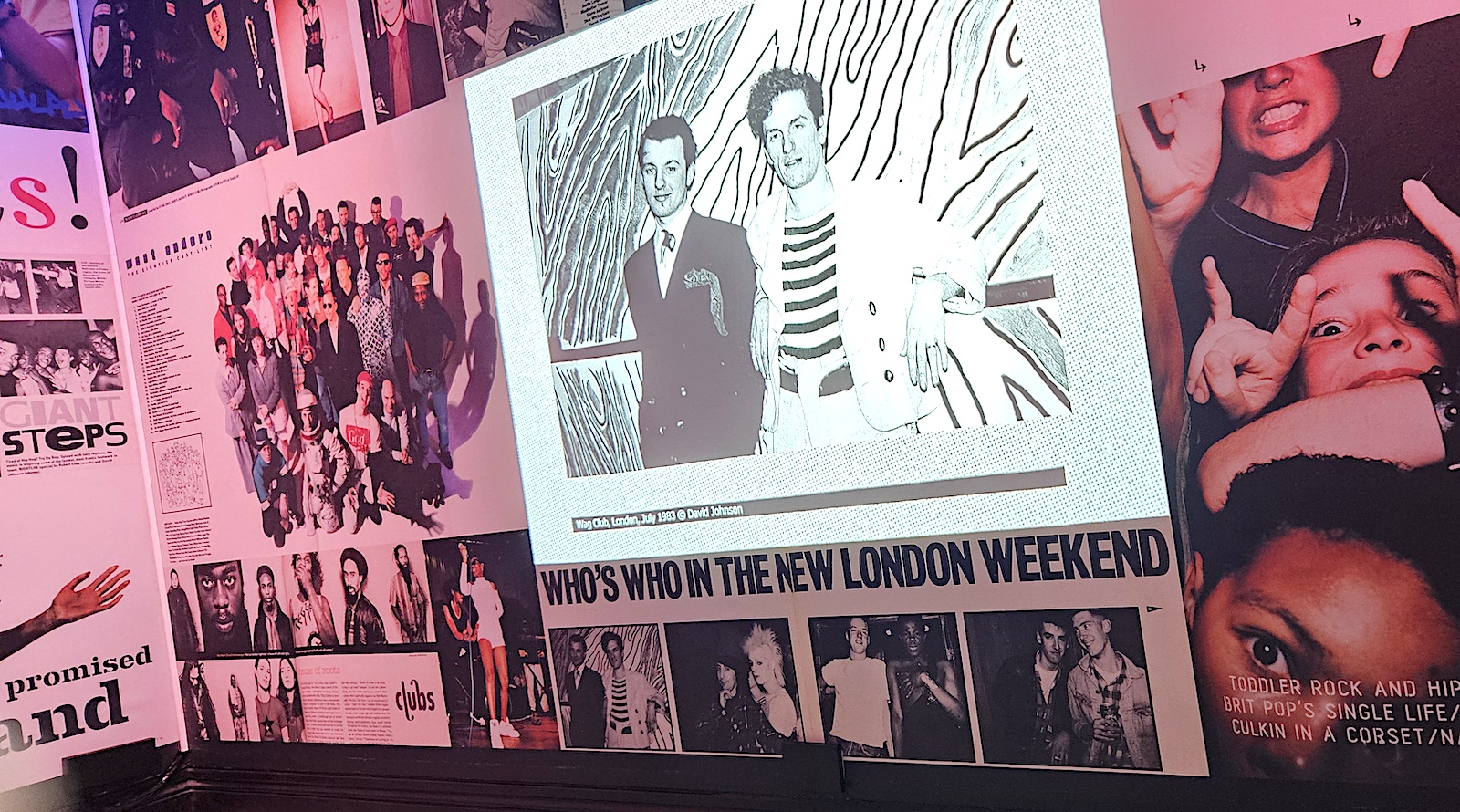
Face exhibition video display: Who’s Who in clubland reportage by Yours Truly, featuring Chris Sullivan and Ollie O’Donnell. (Photo © Shapersofthe80s)

➢ The Face Magazine: Culture Shift exhibition
(20 February–18 May 2025 at the National Portrait Gallery) brings together the work of 80 photographers, featuring 200 photographs as a unique opportunity to see many of these images away from the magazine page.

Swinging 80s, Club Culture, photography, exhibitions, London, National Portrait Gallery, Face Magazine, Neville Brody,

Wise words from the man who subverted graphic design. (Photo © Shapersofthe80s)

➢ Previously at Shapersofthe80s:
1980, Power brokers of the fourth estate

➢ Also at Shapersofthe80s: 1980, How three wizards
met at the same crossroad in time

FRONT PAGE

1980 ➤ Birth of The Face: magazine that launched a generation of stylists and style sections

❚ WHEN NICK LOGAN, A FORMER EDITOR OF THE NME, launched The Face in May 1980 little did he realise it would become the decade’s “style bible” and one of the six great postwar magazines to change the course of British journalism. The Face married music, popular culture, politics and street style with radical art direction and new fonts by Neville Brody. It paid peanuts to a select bunch of savvy and passionate writers, photographers and “stylists” who gave the word a fresh meaning (almost entirely lost today) and inspired an avalanche of imitators in mainstream media, retail, advertising and beyond.

The Face, magazine, 1984, men in skirtsItself dubbed “the world’s best-dressed magazine”, The Face broke with mainstream complacency by actively inventing or giving focus to entire movements that combined clothes, music and attitude. Many came to define the 80s – from The Cult With No Name which was eventually rechristened New Romantics, the Hard Times ripped Levi ensemble, the Burberry-loving Casuals, and the “bad boy” Buffalo silhouette created by Ray Petri and Jamie Morgan. This, if any, became the urban male uniform of the mid-80s, and was celebrated only last winter by an issue of Arena Homme + magazine, art directed by Brody who designed for the occasion two custom typefaces called Buffalo and Popaganda.

At its peak The Face sold 100,000 copies monthly. Brody moved on in 1986 and Logan in 1999, though the title endured until 2004. Logan launched Arena in 1986 as a men’s monthly, soon edited by Dylan Jones, who today edits GQ UK. The British edition of Arena endured until 2009.

➢➢ The birth of The Face — Read the first article introducing Nick Logan’s new magazine, in the Evening Standard on May 1, 1980

HOW THE TWO KEY SHAPERS BEHIND THE FACE SAW IT

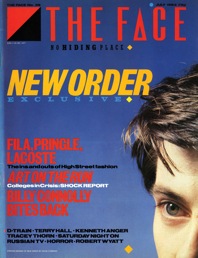
The Face, magazines, July 1983, New Order, Art on the Run❚ NICK LOGAN, publisher of The Face, was a working-class journalist from East London “People said you couldn’t then call a magazine anything as obscure as just The Face… I didn’t see why Tatler should have good paper and good photography and it should be denied to people like me.”

❚ NEVILLE BRODY on art-directing the early Face “It was a big laboratory. The New Order cover was a picture of the lead singer, and it wasn’t that great, a bright blue background. I said to Nick this picture was so shit and he said, Why don’t you crop it off the corner of the page? All you saw was the top left-hand corner of his face – immediately so commercial, and no other commercial magazine would have done anything like it. Great courage is what set his magazine apart.”

➢➢ Launching the style decade Lively social analysis in BBC Radio 4’s anniversary documentary starring all the usual suspects: on iPlayer until May 13

FRONT PAGE

➤Six magazines that changed the course of postwar British journalism

journalism, Picture Post, influencers, magazines pre-war

Picture Post covers from 1938 onwards

[This post was first published at Shapers in March 2009]

PICTURE POST 1938-57

The pioneer of photo-reportage. At the height of its powers during the Second World War this was the most widely read periodical in the country, selling 1,950,000 copies a week. Its inspirational editor from 1940 Tom Hopkinson recruited the photographers Bill Brandt, Bert Hardy, Kurt Hutton, Felix Man, Francis Reiss, Thurston Hopkins, John Chillingworth, Grace Robertson, Leonard McCombe. Staff writers included MacDonald Hastings, Lorna Hay, Sydney Jacobson, J. B. Priestley, Lionel Birch, James Cameron, Fyfe Robertson, Anne Scott-James, Robert Kee and Bert Lloyd; freelance contributors included George Bernard Shaw, Dorothy Parker and William Saroyan.

SUNDAY TIMES MAGAZINE 1962-today

The first colour supplement to be published as a weekly addition to a UK newspaper. The first editor was Mark Boxer. From the outset, “photographer first” was the benchmark and required serious investment in photo-reportage from the world’s trouble spots. Michael Rand, its art director for 30 years from 1962, said the credo was “grit plus glamour – fashion juxtaposed with war photography and pop art”. He went on to champion the work of such photographers as Terry O’Neill, Brian Duffy, Richard Avedon, Eugene Richards, Diane Arbus, Mary Ellen Mark. The magazine featured images from the Vietnam war by the photographer Don McCullin, a photo-essay on the Vatican by Eve Arnold, many portraits and photo-essays by Lord Snowdon, and Bert Stern’s final photoshoot with Marilyn Monroe, among many other photographic collections.

NEW SOCIETY 1962-1988

A weekly magazine of social inquiry and cultural comment, it drew on the disciplines of sociology, anthropology, psychology, human geography, social history and social policy, and it published wide-ranging social reportage. The cultural commentator Robert Hewison wrote that New Society became “a forum for the new intelligentsia” created by the expansion of higher education in Britain from the early 1960s. The editor Paul Barker (1968–86) was described by the labour historian Eric Hobsbawm as the “most original of editors”.

NOVA 1965-75

Launched under the slogan A new kind of magazine for the new kind of woman, Nova created its own unique niche in the British consumer magazine market under gifted editor Dennis Hackett, together with visionary art director Harri Peccinotti. They swiftly established their magazine as an influential must-read for the movers and shakers of Swinging London, among men as well as the original target audience of women becoming devotees of its heady mixture of social issues and cutting-edge fashion and modern lifestyle features. Nova’s agenda of journalistically taboo subjects included contraception, abortion, cancer, race, homosexuality, divorce and royal affairs, invariably boosted by stylish and provocative cover images, making it a rarity among magazines. Ultimately Nova had more male readers than female.
[Nova incidentally is where my own career began – DJ, creator of Shapersofthe80s]

RADIO TIMES 1968-88

Programme listings magazine transformed with provocative feature articles under editor Geoffrey Cannon and art director David Driver to create Britain’s biggest weekly magazine sale which rocketed as TV itself became the mass medium, from 8 million to 11.2 million for the Christmas edition of 1988.

THE FACE 1980-2004

In 1980, Nick Logan, a respected ex-editor of NME, staked his house on launching a new magazine that was to make style the focus of youth culture, as much as music. The Face was quickly dubbed Britain’s “style bible”. Even with a top monthly sale of only 120,000, it had an impact not only on the pop press, but the mainstream media too which spawned style pages in newspapers and magazines and “yoof” TV shows across the enlarged landscape of broadcasting. His influential art director Neville Brody single-handedly revolutionised the way magazines were conceived while contributing many new fonts to the canon.

FRONT PAGE