Tag Archives: Interview

2010 ➤ Duran no turkey: here’s the Bacofoil video, plus two tracks premiered at East Village Radio

♫ View Nick Egan’s studio video of
All You Need Is Now in HD

All You Need Is Now, Duran Duran, video, Nick Egan,John Taylor, Simon Le Bon
❚ UNVEILED TODAY: the Nick Egan directed video for All You Need Is Now, the new single by 80s supergroup Duran Duran — which was available worldwide on iTunes from Dec 8. The nine-track digital album of the same name, produced by Mark Ronson is the band’s 13th in a studio. Ronson has called it the “imaginary follow-up to Rio that never was”. An expanded LP with additional original tracks will be released in March 2011 in various formats.

Duran Duran, Mediterranea❏ Update AYN debuts at No 6 on Billboard’s Alternative Albums Chart Jan 5. DD will be the featured artist on VH1’s Top 20 Spin on Jan 30.

❏ Here’s the new Duran track Mediterranea at beach-bum tempo, streamed live from East Village Radio on Dec 10:

It’s on the EP From Mediterranea With Love, an iTunes release in Europe, here premiered on the bumbling Mark Ronson’s show at East Village Radio, NYC, when Le Bon and Rhodes had a battle to get a word in edgeways. Whatever his gifts in a recording studio, the music producer is fudge as a broadcaster. Also, it’s not for him to tell us his own production is “amazing”, durr! Ronson, stick to the day job and leave the criticism to the big beasts who can tell a hawk from a handsaw. As it happens, the new tune proves to be classic DD.

❏ Another premiere streamed from East Village Radio — why this new album track is called The Man who Stole a Leopard (feat Kelis) is finally revealed by ITN newscaster Nina Hossein:

Nick Rhodes, Duran Duran , All You Need Is Now

No regrets: Nick Rhodes in the AYN video

➢ Read Crispin Kott’s 9/10-star review of the Duran album from Pop Matters

➢ Nick Rhodes is the man from Duran — Evening Standard interview Dec 9, 2010 … Is Rhodes at all embarrassed by his 18-year-old self? “Not even slightly. When we were teenagers, the world was pretty grey. You want something more exciting — to travel, to see what’s out there.”

FRONT PAGE

1980 ➤ How Duran Duran’s road to stardom began in the Studio 54 of Birmingham

Duran Duran, Berrow Brothers, Rum Runner, New Romantics,Nick Egan,video, All You Need Is Now

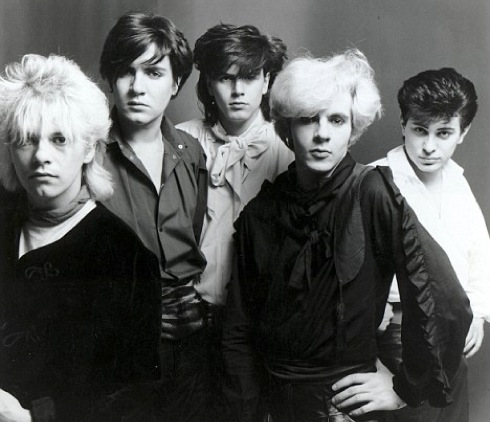
Duran Duran as full-on Romantics: Betty Page thought only co-founder Nick Rhodes (second right) passed the bouffant test convincingly

❚ ON OR ABOUT THIS DAY IN 1980 (MAYBE) some say Duran Duran signed their contract with EMI. The band seem mysteriously unable to remember when, so guesses might run from Dec 9 because Andy Taylor recalls the news of John Lennon’s death ruining his breakfast in London, and possibly Dec 22, date of a celebratory gig at Birmingham’s Cedar Club. However, the first official book, Their Story by Kasper de Graaf, places the signing firmly at 5 January 1981. According to co-manager Paul Berrow, the contract paid out a £28,000 advance (£90,000 in today’s money).

As the house band of the New Romantics in Britain’s second city, Birmingham, they were styled locally by Kahn & Bell, photographed by Paul Edmond, and managed by Paul and Michael Berrow, owners of the glitzy Rum Runner nightclub on Broad Street.

The Berrows had inherited the family business from their influential bookmaker father who had opened the club in the Swinging 60s and the sickly odours of Brut and Estee Lauder still lingered. Inspired directly by a visit to New York’s Studio 54, the brothers refurbished the Rum Runner in 1979 with state-of-the-art mirror-tiled walls and zigzags of neon. They then introduced a playlist heavily flavoured with Moroder-style imports and the American club-funk championed by the Nile Rodgers band Chic, whose string of chart hits was restoring credibility to disco music following the ridicule inflicted by the low-rent movie Saturday Night Fever. But how to become the Studio 54 of the Midlands?

Enter a band called Duran Duran in January 1980, armed with a four-song demo recorded at Bob Lamb’s studio which included Rio as a work in progress. The DD line-up were offered the club as daytime rehearsal space and jobs by night, including deejaying for Nick Rhodes. Roger Taylor recalls that the brothers “were looking for a band that was a cross between Gino Soccio, Genesis and Chic” — all the more curious that they made many attempts to contact Steve New to recruit the Rich Kids guitarist into the band, but they heard nothing from him.

Duran Duran, Meolody Maker, Andy Taylor

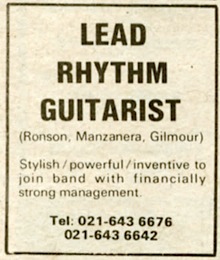
The Melody Maker ad that landed Andy Taylor in April 1980: unearthed by Duran fan Figital

Inevitably the lineup was rationalised and by the summer Andy had been recruited (“They were quite blatant,” Andy told Rolling Stone much later. “They said, ‘We’re posers. We want a good-looking poser band”). Then came Simon Le Bon as singer. According to him: “They had this thing about being between Chic and the Sex Pistols, but I thought they were more like in between Roxy Music and the Sex Pistols.” The band were searching for a musical direction.

Meanwhile as the rival nightclub Barbarella’s fell from favour, the Birmingham poser scene was reinventing itself in local bars around the peacock clothes designers Jane Kahn, Patti Bell and a veteran of Billy’s club in Soho, Martin Degville, who was commuting to London weekly to run a branch of his shop in Kensington Market. That summer the Rum Runner gave over Tuesdays to a Bowie/Roxy night. Sounds familiar? Enter journalist Betty Page and the rest is history.

Within three years Duran Duran’s synth-pop had made The Fab Five one of the handful of British supergroups dominating the global stage. Duran can claim to have led the MTV-driven “Second British Invasion” of the United States from the autumn of 1981 with their raunchy and cinematic videos, and over 30 years enjoyed 21 singles in the Billboard Hot 100 and sales of 100m records.

BETTY PAGE OF SOUNDS RECALLS HOW SHE WAS
INVITED TO “DISCOVER” DURAN DURAN

Betty Page, Sounds, Beverley Glick

Betty Page in youthful bloom, more recently identified as Beverley Glick

In September 1980 in the pages of the music weekly, Sounds, Betty had slapped the label “New Romantics” on Spandau Ballet, house band of London’s Blitz club and then received a call from the hungry manager of this Brummie band called Duran Duran…

Paul Berrow was a smooth operator. ‘Come to the Rum Runner,’ he said of the club he co-owned with his brother Michael. ‘We’ve got a scene going on up here to put the Blitz to shame, and a band to go with it.’ Clever, I thought. He had singled me out to be the first journalist to write about his group. And they actually wanted to be called New Romantics! Nick was the most obviously New Romantic — a bouffant blond David Sylvian lookalike who sported extravagantly frilly shirts and shiny suits — but the style sat rather uncomfortably on the others.

The alarmingly pretty, floppy-fringed bassist John Taylor drew the line at satin shirts and a shoulder sash. ‘We were never meant to be bagged in with any elitist scene,’ said John, the pretty one. ‘The main chunk of our audience in Birmingham is those people,’ said Nick, the bouffant one, ‘but we’re not as tied to it as Spandau obviously are. When people come to see us we’d much sooner they dance and have a good time rather than dress up in the clothes and just stare… © Beverley Glick

➢ Read Betty Page’s retrospective survey of the New Romantics
– I Was There, originally published in Record Collector in 2004

ARCH-RIVAL MANAGER’S VERDICT ON DURAN

Years after both bands had achieved superstar status, Steve Dagger, the manager of Spandau Ballet, wrote this nugget summarising Duran Duran’s contribution to the 80s music scene. It was published in a partwork published by The Sunday Times in 1997 titled 1000 Makers of Music, which spanned all genres from classical to pop:

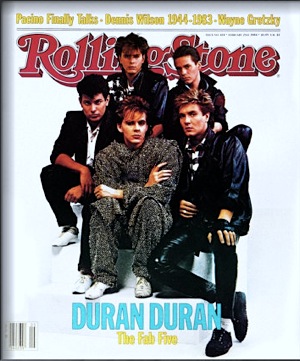
Rolling Stone, Duran Duran,Fab Five,Second British Invasion Duran were among a new group of artists who provided a glittering, sexy contrast to the prevailing dull corporate pop-punk of the 1970s. Taking their influence from the art-school underground of electronics/Ferry/Bowie, they came to prominence as the Birmingham ‘it’ band at the same time Spandau Ballet reigned over a similar scene in London. After an awkward but successful period as the Birmingham ‘answer to’, Duran metamorphosed in 1982 into a sleek, glamorous international entity with the seminal album Rio, having perfected a distinctive Duran sound fusing synths and guitar licks over post-disco rhythm. Inspired songs such as Hungry Like the Wolf were accompanied by cinematic videos, together creating an electric pop culture moment. After being derided for years, Britain had produced a group America could not ignore: Duran surfed in on the newly conceived MTV to conquer the States. They continue to make great British records and should recently have won a Novello for their lament to the 1980s, Ordinary World. [Key work: Is There Something I Should Know? (1983)]

❏ View this hilarious early video of white-faced New Romantics doing their wobbly dances to Duran Duran’s first single Planet Earth, performed at the Rum Runner in 1980 (now remastered in high quality). Note the hijacked Warren Street Jive in the official promo video sequences shot much later in a studio . . .

FRONT PAGE

➤ Miss Parkin regrets that she said no to Cary… and can’t wait to meet Orson, Lee and Walter

Molly Parkin, Mollywood,Barrington De La Roche, Chelsea Arts Club

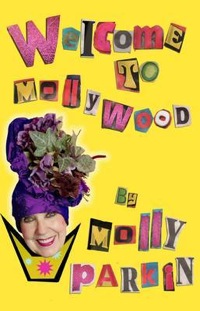
Molly Parkin at her book launch with Barrington De La Roche. Photograph by Inesa and Barrington De La Roche © Dark Theatre

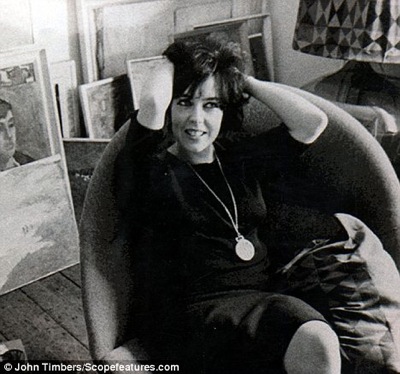
Molly Parkin,Mollywood, Chelsea Arts Club❚ AS ALL READERS OF SHAPERSOFTHE80s should know, the godhead of all things stylish is not “the Posing Doughnut” as gossip columns were once wont to call Steve Strange, but our true icon, Molly Parkin. If you need reminding why, click on the Giants Who Went Before.

Molly has been a font of mischief and outrage for almost eight decades and the 80s were no exception. Yesterday she wowed a launch party at the Chelsea Arts Club for her newest auto-exposé, Welcome to Mollywood, about which actor turned nightclub buccaneer Robert Pereno has said: “Well done Moll.” A couple of newspaper pieces this week give the flavour of a life thoroughly well lived, so click away…

The Sunday Telegraph’s new men’s mag asked Moll for 12 things every man should know about women, and here is one of them:

“You should think of women as goddesses. I regard myself as a goddess. Even if you pluck a few flowers from a neighbour’s garden after dark and bring them in, that is a small gesture towards the goddess. It’s a question of nourishing that romantic spark that was between you when you first got together.”

And the Daily Mail — who else? — trailed a serialisation with this bait: “Molly Parkin’s racy confessions turn to her wild affairs with George Melly, John Mortimer and a host of others”. Among her regrets, Moll writes:

“I regret not accepting Cary Grant’s offer of an evening out in London, when he was flying back to the States the next morning… And I’d like to say to the late Orson Welles, Lee Marvin and Walter Matthau, whom I’ve always fancied more than any of the pretty boys of Hollywood: ‘I’m on my way’.”

Molly Parkin, John Timbers

In her heyday: Molly aged 29 at her first art exhibition. Photographed © by John Timbers

FRONT PAGE

➤ How Keith Richards’s life of debauchery became an inexplicable sign of alien invasion at The Times

Keith Richards, autobiography, sex-and-drugs-and-rock-and-roll

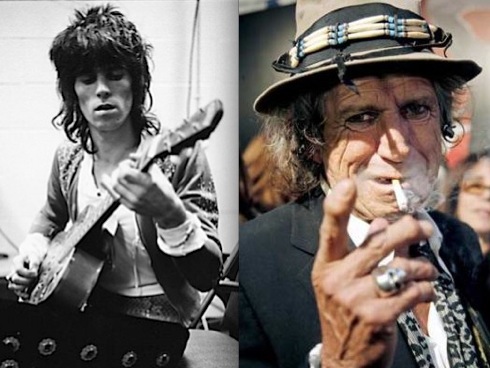
Boy into man: Keith Richards in 1969 and after 40 years of living the life (EPA). Note in particular the hat and read on...

❚ BY THE MID-60S THE ROLLING STONES had become global superstars, though demonised for the raw sexuality of their songs and performance style. Guitarist Keith Richards is the man whose debauchery epitomises the ethos of sex-and-drugs-and-rock-and-roll, and on October 26 his “long-awaited” autobiog called Life is published by Weidenfeld & Nicolson. As if the UK’s tenth richest musician needed the cash — he is worth £175m in The Sunday Times Rich List — reports say he received an advance of £4.8m ($7.3m!!!) after a bidding war for the text, written with James Fox.

It amounts to a tawdry sequence of profane, drug-fuelled, low-life anecdotes from which nobody emerges with much integrity, like a bunch of amoral delinquents. Quite what excited The Times of London to devote three days-worth of space to this book is beyond comprehension. Under the headline Muddy Waters, Saturday’s main editorial in the paper actually damned the Richards yarn as “filthy” and “depraved”, while seeking to justify serialising massive chunks on the ground that “the music of the Rolling Stones has endured”, thanks to the band’s “sheer work ethic” !!! (Since they didn’t rise up to ridicule this lavish serialisation, we can only assume the entire staff of The Times has been zombified under Plan 9 from Outer Space.)

Almost the whole front page of The tabloid Times trailed the Richards extracts with the stark headline “Sex, drugs and me”. Highest common denominators, evidently, for Her Majesty’s newspaper of record. And a spectacular nadir for dignity in the Thunderer’s 225-year history.

As a time-saving service to discriminating readers of Shapersofthe80s, here are the juiciest bits, but be warned — do not raise your expectations above the navel. Ready with the sickbag, James!

In Friday’s interview with 66-year-old Richards, 35-year-old Caitlin Moran called the book a “total hoot” and through its sordid junkie haze introduced us to every mother’s idea of the son-in-law from hell. Right from chapter one, she said, he’d worn a hat made of drugs (“There was a flap at the side in which I’d stowed hash, Tuinals and coke”) and driven a car made of drugs (“I’d spent hours packing the side-panel with coke, grass, peyote and mescaline”).

Moran reports that Richards “gave up heroin in 1978, after his fifth bust, and he reveals today that he has finally given up cocaine, too — in 2006, after he fell from a tree in Fiji and had to have brain surgery:

❏ “Yeah, that was cocaine I had to give up for that,” he says, with a sigh. “You’re like: ‘I’ve got the message, oh Lord’.” He raps on the metal plate in his head. It makes a dull, thonking sound. “I’m just waiting for them to invent something more interesting, ha ha ha. I’m all ready to road-test it when they do.”

Throughout the Moran interview, he was of course smoking Marlboros and drinking vodka. His idea of totally clean, presumably.
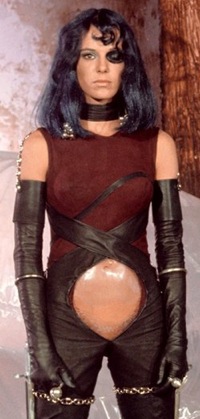
Anita Pallenberg ,Barbarella

Anita Pallenberg in the Roger Vadim film Barbarella, 1968

In Saturday’s Times serialisation of Life, Richards recalls the Stones’s founding guitarist Brian Jones, who originally proposed the band’s name in 1962 and was to drown needlessly at the age of 27 in circumstances that remain unclear. He was neurotic, suffered from deteriorating health, he pushed friendships to the limit and treated women despicably. In Marrakesh in 1967 he and his girlfriend Anita Pallenberg had reached the end of their tethers. Richards writes:

❏ “They’d beaten the shit out of each other. And of course Brian starts trying to take Anita on for 15 rounds… Once again he breaks two ribs and a finger… Then Brian dragged two tattooed whores down the hotel corridor and into the room, trying to force Anita into a scene, humiliating her in front of them. He flung food at her. At that point Anita ran into my room… She was in tears. She didn’t want to leave but she realised that I was right when I said that Brian would probably try to kill her.”

Having “stolen” Anita Pallenberg from Jones to become Richards’s common-law wife, back in the 1970s some reciprocal bed-hopping took place between Richards and Mick Jagger’s girl Marianne Faithfull, and between Anita and Mick. This was when Richard learned his best friend was a disappointment in the sack, giving rise to his verdict on the over-rated Jagger jewels:

❏ “[Anita] had no fun with his tiny todger. I know he’s got an enormous pair of balls, but it doesn’t quite fill the gap, does it?”
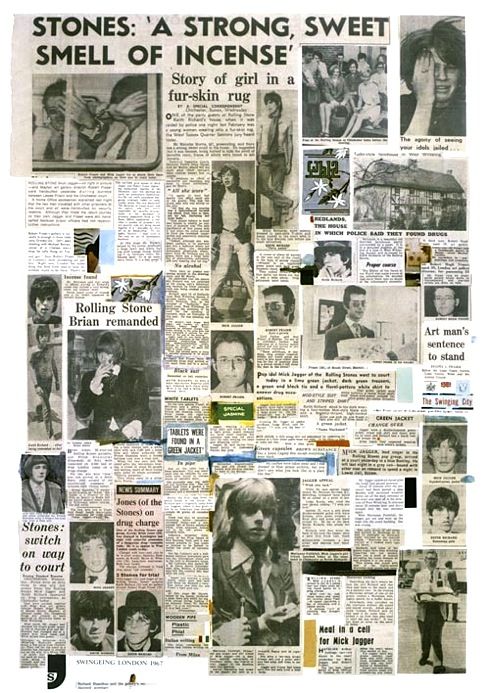
Swingeing London 67 — Poster 1967-8: One of pop artist Richard Hamilton’s protest pictures in his Swingeing London series, commenting on the severe judgment passed on his friend, gallery owner Robert Fraser, and popstar Mick Jagger, for possession of drugs. (Photolithograph © Richard Hamilton published by ED912, in Tate collection)
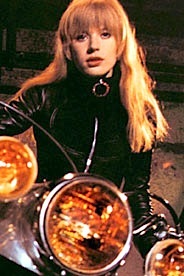
Marianne Faithfull, Girl on a Motorcycle

Marianne Faithfull in the British film Girl on a Motorcycle, 1968

Life describes in detail the fabled 1967 drug bust at the Richards Sussex house, Redlands [reported in the collage above], which became a totemic cause célèbre when William Rees-Mogg — the down-with-the-kids editor of The Times — took on the crusty old establishment by denouncing the harsh jail sentences which followed. Richards writes that the raid was “a collusion between the News of the World and the cops, but the shocking extent of the stitch-up, which reached to the judiciary, didn’t become apparent until the case came to court”. He also sets the record straight on the role of a legendary Mars bar:

❏ “[Marianne Faithfull] had taken a bath upstairs, and I had this huge fur rug, and she just wrapped herself up in that. How the Mars bar got into the story I don’t know. There was one on the table — there were a couple, because on acid you get sugar lack and you’re munching away. And so she’s stuck for ever with the story of where the police found that Mars bar. And you have to say she wears it well.”
Etc etc etc etc

➢ “The Mars bar was a very effective piece of demonizing” — Marianne Faithfull in her own autobiography. More pictures and background at Another Nickel In The Machine

➢ Who was the Redlands informer? — All about the police drugs raid on Keith Richard’s home on Feb 12, 1967 at the History of Rock Music
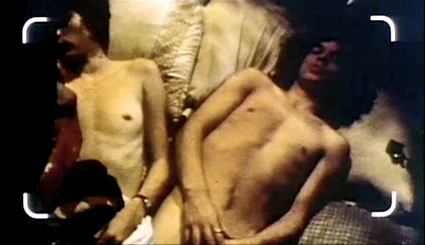
Michele Breton ,Mick Jagger, Performance, films

“The most sexually charged film ever”: the androgynous Michele Breton and Mick Jagger in Performance, 1970

➢ Judge the Jagger todger for yourself at Another Nickel: Anita’s footage of Mick’s meat and two veg filmed during the making of Performance at 81 Powis Square in 1968

➢ Rolling Stone magazine has more Richards book excerpts plus slideshow on October 28, 2010
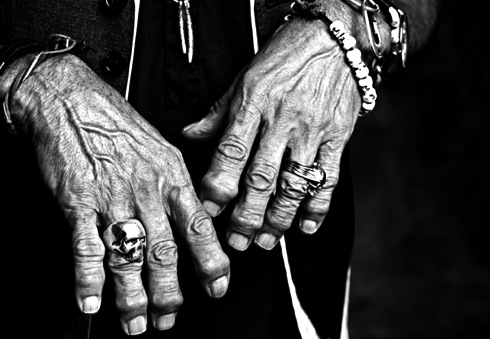
Keith Richards, David Courts , Bill Hackett, skull ring,

The guitarist’s hands in 2010, photographed © by Mario Sorrenti: the original skull ring that has become a rock-and-roll icon was given to Richards by London goldsmiths David Courts and Bill Hackett as a birthday present in 1978

FRONT PAGE

➤ Egan on Bowie’s legacy: ‘It’s not rocket science and it is music’

Today The Thin White Duke walks tall again — the god, the brand, the signifier — the three-in-one trinity that is David Bowie fired up one of the great transformative albums of the 70s, Station to Station. His 10th in a studio, it is now re-released in special edition 3-CD box set.

Bowie as The Man Who Fell to Earth, a 1976 film by Nicolas Roeg, based on the Walter Tevis novel about a humanoid alien who crash-lands on Earth. © Rex

This month the German journalist Finn Johannsen interviewed the club deejay and co-founder of the Blitz Club, Rusty Egan for the Nokia blog, Sounds Like Me. He discusses Bowie’s seminal role in 70s and 80s music, describes a typical night out at the Blitz, and what today’s clubbers can take from such an innovative chapter of music-making. Here’s a taster…

Rusty Egan, Blitz club

Rusty Egan at the Blitz, 1980: rare pic of him spinning the discs

FJ — David Bowie was always famous for continuously reinventing his career, but did this phase particularly appeal to you?

RE — Bowie’s Berlin years I believe were the foundation of the Blitz club playlist. Via Bowie I found Kraftwerk, and that lead to Neu!, Can, Cluster and Krautrock, as it was called. Bryan Ferry then led to the work of Brian Eno, and his ambient series … All this music lead to the basis of my collection. If you join the dots Bowie, Eno, Iggy, Kraftwerk, Mick Ronson, Lou Reed.

FJ — It is obvious that Bowie was heavily influenced by German experimental groups like Kraftwerk or Neu! How much of them can be found in Low and Heroes?

RE — Massive influences. Bowie is a SONGWRITER. Without songs you have music. The Germans made amazing music without lyrics. It was experimental because of the instruments used and the long, long tracks. Bowie took the basis of this experimental music and the growing feelings evoked by Möbius, Cluster, Can, Neu! and went into Hansa studios by the Wall and with Brian Eno created the Berlin sound. Heroes sung in German as Helden is a perfect example. Six minutes long, but what were the instruments used? Can you hear guitar, bass and drums? Nothing but a long, long tone changing and changing… It’s not rocket science and it is music.

➢ Read the full Egan interview at Sounds Like Me

FRONT PAGE