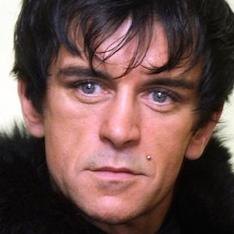
2019 ➤ For three nights only, Ziggy’s stylist Freddie stars in his own musical

David Bowie, pop music, Freddie Burretti, costume, designer, modelling,

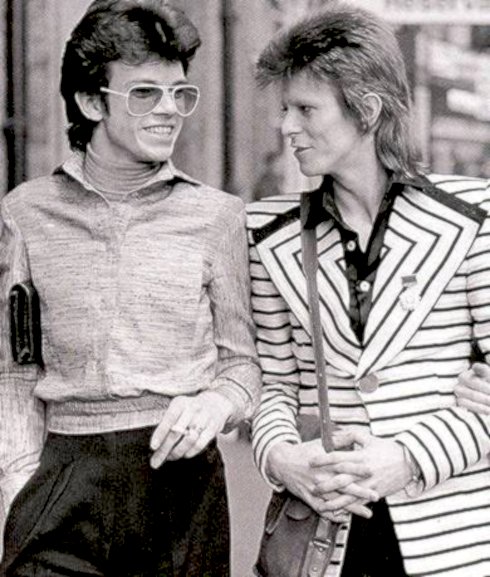
1973: Stylist Freddie Burretti with David Bowie sporting the boldly striped suit of the moment, designed by Freddie

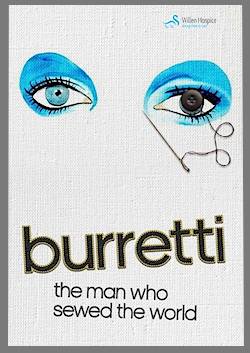
AND NOW THE MUSICAL. Brace yourselves for Burretti The Man Who Sewed The World, featuring a new band, The Spiders from Bletchley, and starring 40 unpaid local performers at their theatre in the Buckinghamshire town where Freddie Burretti spent his teens as a Mod. You remember: he’s the little-known whizz who designed, if not the red haircut, most of the on-and-off-stage clothes for Ziggy Stardust and is today compared to leaders of British fashion such as Westwood and McQueen. The stage musical is the dream of writer Lee Scriven who remains as infatuated with David Bowie’s early struggle for stardom as the 23-year-old Bowie himself was infatuated with the handsome 19-year-old tailor he met one Sunday in the Sombrero (aka Yours or Mine), London’s trendiest gay disco and celebrity haunt in Kensington.
Paul J Macdonald, Chrysalis Theatre, Bletchley, The Man Who Sewed The World, Freddie Burretti, Lee Scriven, David Bowie, pop music, musical, theatre,

Poster for Lee Scriven’s new musical

Remember too how Bowie had single-mindedly survived nine failed bands during ten years of struggle before Ziggy soared into orbit, and even that took three years to achieve following his first chart hit Space Oddity.

The instant chemistry between Bowie as performer and Freddie as his stylist amounted to what DB called telepathy: “because whatever I think of in my mind, he produces for real”. Freddie had all the flamboyance of a six-foot-tall out gay man in 1970, the first year of gay liberation in the UK. During their intimate four-year partnership, Freddie’s highly sexualised and bravura costumes were like no others in pop.

Much of this was the theme of a biographical movie directed by Scriven four years ago, titled Starman: Freddie Burretti – The Man Who Sewed The World, in which interviews with friends and colleagues pieced together the jigsaw that saw Freddie being invited by Angie Bowie to come to live with her and David at Haddon Hall. As Lee said today, despite various re-edits, potential backers “politely passed” on turning his “demo” version documentary into a feature movie and the result is this new stage musical as a community workshop production aimed at raising money for charity. “Not a West End musical, more a West Bletchley one, like another ‘demo’ version,” he said modestly.
Freddie Burretti, costume, designer, modelling, David Bowie,

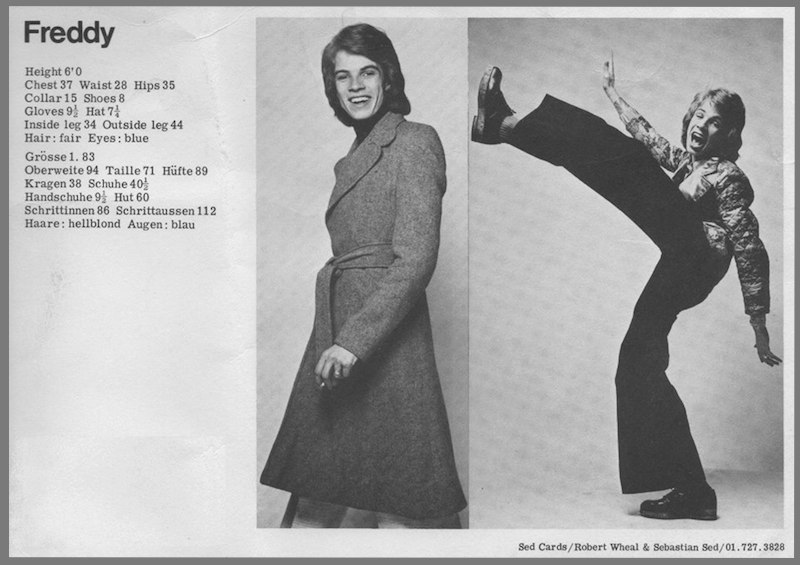
1972: Freddie Burretti’s card advertising his talents as a model

Lee has written a script that pays homage to Freddie, captures his teenage growing pains as a homosexual and his escape to London, where he meets the one-hit pop singer. Lee found himself reluctant to put words into the mouth of the future international icon he respectfully calls “Mr Bowie” so instead renamed him Bobby Jones, the only fictitious character in the show. His infatuation is such that he creates a new band in which to showcase Freddie as “the next Mick Jagger”, which proves to be a non-starter. Instead Freddie applies his genius to reinventing Bobby’s own image as a Starman who electrifies the world in 1972 when he reaches Top of the Pops clad in Freddie’s spangly one-piece jumpsuit and confirms his uniqueness as a superstar.

Having changed the show’s title to now emphasise its subject as Burretti himself, Lee said of its origins: “I had to get it out of my system and suddenly realised, Hang on, this is a Billy Elliot story of self-discovery. In fact, the narrative is so strong, it’s like Everybody’s Talking About Jamie [currently running in London] but frankly a lot stronger!”

➢ View Burretti’s designs in the image gallery
for the V&A’s exhibition David Bowie Is

The show is directed by musical polymath Caz Tricks, and embraces sounds of the era such as Desmond Dekker and the Trojan label, and of course some surprising Bowie numbers. Lee recruited “a great little band I’ve worked with” as The Spiders from Bletchley, led by the onetime Stray guitarist Del Bromham, plus choreography from Alex Kent, an Edinburgh Festival veteran, and Jack Sullivan, fresh out of uni. Lee added: “The mood is very Buzzcocks, very edgy.”

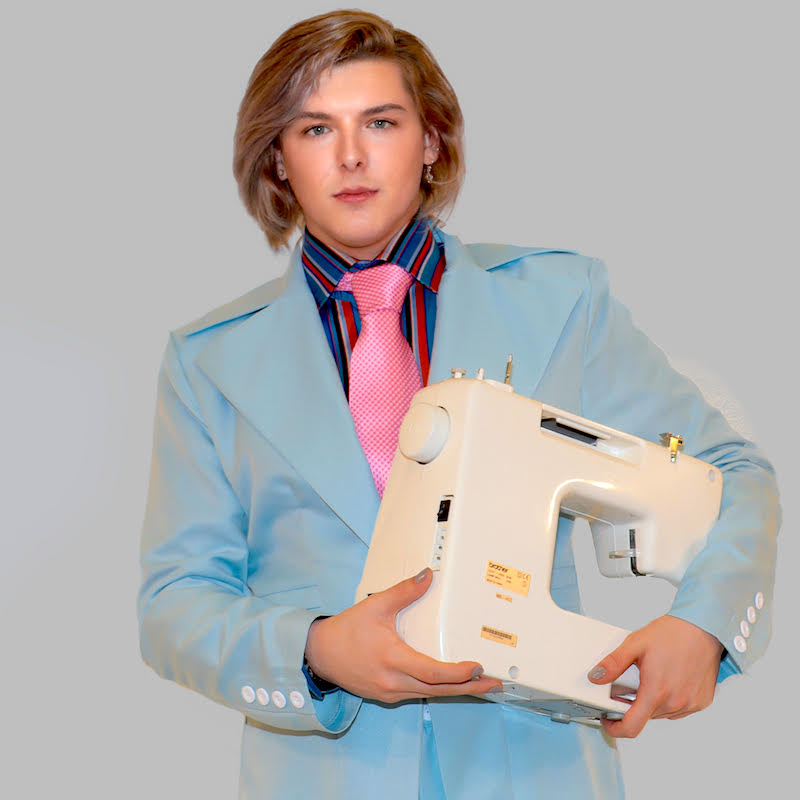
Hardly off-stage throughout is local lad Paul J Macdonald in his first gig starring as Burretti. He proves to be an ace dancer – as indeed was Freddie himself who caught many an eye in his white Spandex hotpants on London’s first uplit dancefloor at the Sombrero.

Burretti: The Man Who Sewed The World runs at the Chrysalis Theatre, Milton Keynes MK15 9JY on May 16–18, 2019. Tickets cost £15 by calling 0333 666 3366 or by booking online here
Paul J Macdonald, Chrysalis Theatre, Bletchley, The Man Who Sewed The World, Freddie Burretti, Lee Scriven, musical, theatre,

2019: Paul J Macdonald playing Freddie Burretti in The Man Who Sewed The World
➢ Previously at Shapers of the 80s: Burretti movie adds an epic and essential chapter to the Bowie story

➢ Previously at Shapers of the 80s: A feast of Bowie-ana
served in waffeur-thin slices – Any Day Now,
Kevin Cann’s new book about Bowie

FRONT PAGE

1967 ➤ Secret of how Scott Walker achieved a new adult voice as he went solo

Obituaries, tributes, interview, Scott Walker, pop music,

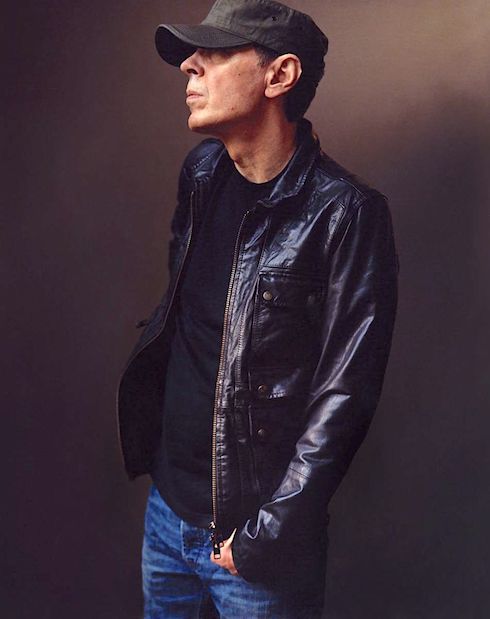
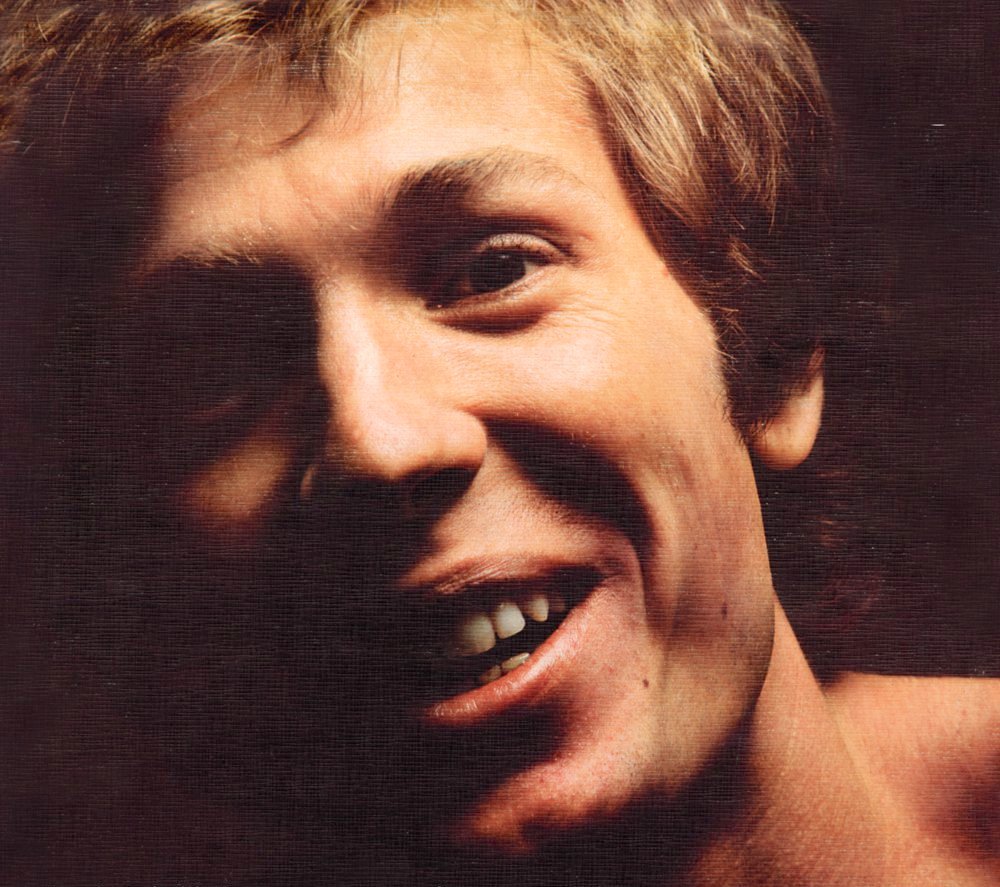
Scott Walker in 1970: still transitioning from pop idol to icon

ONE OF THE MOST RESPECTED singers of our age died on Friday in London aged 76: the US-born Noel Scott Engel, who became a British citizen in 1970.

I interviewed him as Scott Walker in 1967 for Britain’s “first teenage newspaper”, titled Cue and published by IPC. At that very moment he was transitioning from teen idol into a more serious solo icon with his first album Scott, released in September and featuring the brilliant rendering of Brel’s angsty songs My Death and Amsterdam. For him the last straw had been to appear that April in the Walker Brothers trio on the Sunday-night TV variety show hosted by Bob Monkhouse at the London Palladium, and on viewing it Scott decided to split. Among his solo moves that December he released as his first single the risqué Jackie, from the new album Scott 2 (another Brel co-composition with louche themes that caused the BBC to ban it from airplay). As it headed up the UK pop chart, we met during rehearsals for Scott’s appearance on a TV Christmas special at ABC’s Teddington studios.

He lived in Marylebone at the time, had split from the Brothers (who were not actually blood brothers), gone into a monastery to study Gregorian chants and then set about starting an idiosyncratic solo career. He hated both the idea of being a pinup and his all too evident “pop-star” good looks. His most startling admission to me was that he was drinking “a bottle of wine and a bottle of Scotch a day” – in order to coarsen his baritone voice, he said! Scott recorded four seminal albums, Scott 1 to 4 and then disappeared.

In 1984 came Climate Of Hunter, the first of an experimental and challenging series of albums over many years, with titles such as Tilt 1995, The Drift 2006 and Bish Bosch 2012. All of them broke the rules of regular music and back in the day I listened to each album twice and remain gobsmacked today. (There’s a great video clip, shown above in the 30th Century Man trailer, of a percussionist punching a side of raw pork to achieve the exact kind of thwack Scott sought for the song Clara on The Drift.)

In recent years Scott could often be seen in my local supermarket in west London doing the shopping with his partner Beverly. Older and gaunter, he pulled his baseball cap down over his face but it was quite obvious to perhaps six other shoppers marking him that we knew who he was and as respectful fans we kept our distance. Scott is survived by his daughter, Lee, his granddaughter, Emmi-Lee, and Beverly.

BOWIE 1997: “MY IDOL SINCE I WAS A KID”

➢ Rock enigma Scott Walker dies aged 76 – BBC obituary

➢ Scott Walker obituary by Adam Sweeting – Pop singer who rose to fame in the 1960s and went on to become an enigmatic solo artist

Obituaries, tributes, interview, Scott Walker, pop music, Jarvis Cocker

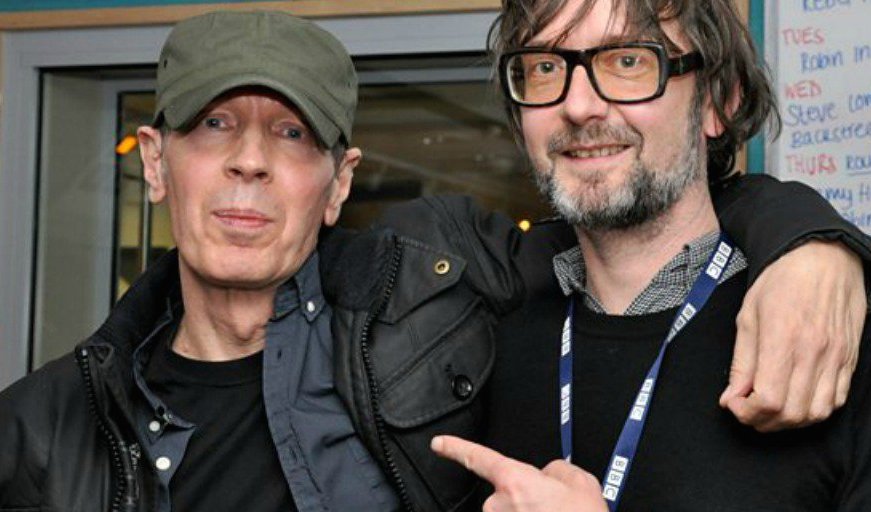
Scott Walker with Jarvis Cocker in 2017: a rich conversation about Scott’s life and times ensued (BBC)

➢ The Songs of Scott Walker – watch for this programme to become available at BBC iPlayer: Jarvis Cocker welcomes Scott Walker back to the Sunday Service ahead of the late-night BBC Prom celebrating his music, which took place at the Royal Albert Hall on Tuesday 25 July 2017. Includes the moment Walker made David Bowie cry on air.

➢ 30 Century Man (2007), directed by Stephen Kijack: Comprehensive survey of Scott’s life from his early days as a jobbing bass player on the Sunset Strip in which he describes his “lost years” in terms of creativity. Premiered at the 2006 London Film Festival followed by the 2007 Berlin International Film Festival. Available from Amazon on Blue-Ray and DVD.

Scott Walker, obituary, singer,

Among the last official photos of Scott by Jamie Hawkesworth. (Source 4AD)

➢ Previously at Shapers of the 80s: The on-off brotherly rivalry that drove John and Scott Walker apart

FRONT PAGE

➤ Elms the storyteller on why some stories are ‘too good to check’

Dalston, books, London, talks, Robert Elms, London Made Us, 5x15, slums, Canongate,

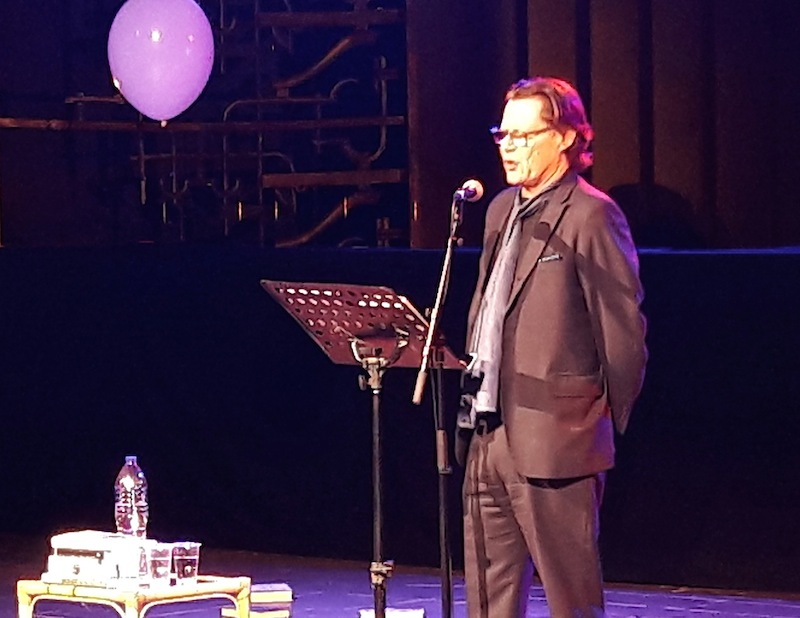
Robert Elms with fire in his belly: Talking last night in a 5×15 event at EartH (Evolutionary Arts Hackney). (Photo: Shapersofthe80s)

SENTIMENTAL AS EVER, onetime Blitz Kid now broadcaster Robert Elms – the professional cockney not born within the sound of Bow Bells – marshalled his gorblimey vowels and glottal stops at a 5×15-minute live talk last night in Hackney, in trendy east London, to argue for a return to the down-at-heel west London he was born into 59 years ago. He invoked postwar bomb-sites as instructive playgrounds, the punk explosion as his most life-enhancing event, the squats in disused houses with freezing outside WCs that characterised his upbringing in Notting Hill and still more squats for fostering the creativity of his teenaged peers who dreamed up the New Romantics movement. . . He poured scorn on the developers who have transformed sectors of London into swish modernity and urged the need for new slums to teach flaky young millennials the facts of life.

Bob, once an amiable young man, has matured into an Angry Old Man yet the fire in his belly aimed to persuade us that deep-down he actually loves this contradictory city. An interview he gave to last month’s GQ signals the flavour of his new book, London Made Us: A Memoir of a Shape-Shifting City (from Canongate Books):

“What I certainly wasn’t hoping to do was out-Peter-Ackroyd Peter Ackroyd,” laughed Elms [referring to our capital city’s most distinguished historian]. What he did do – “because I’m not a proper historian and this is not a textbook” – was focus on the stories that seem too slight, or too fanciful, for the grander almanacs. “Some of them might not bear taking apart. My theory with all the stories in the book is: they’re too good to check” . . . Other sections are filled with incidents that are unique to Elms after decades living around London, from Burnt Oak to Holborn to Camden. There’s the incident when money rains from the sky near the soon-to-be British Library, or the story of the monkey jazz band in Notting Dale, “a troupe of 13 simian swingers to entertain the happy flappers” who escaped their captivity, some of them ending up as far away as Rugby…/ Continued at GQ online

Last night’s event was all about plugging new books. In Bob’s case it provided an excellent incentive to attend his next performance, much longer than 15 minutes on April 2.

➢ An Evening with Robert Elms at Waterstone’s in
Tottenham Court Road

➢ Nostalgic protest against the sanitisation of London – review by Nicholas Lezard in the Evening Standard

➢ Elms isn’t afraid of nostalgia in this part memoir, part cultural history. Is he pining for his youth? asks Fiona Sturges in the Guardian review

➢ Elms has written about one of London’s most successful,
and most forgotten, mass murderers
: Interview with David Levesley from the March issue of GQ

FRONT PAGE

2019 ➤ George Michael’s art for sale: funky, X-rated and naughty as you’d expect

Antony Gormley, Christie’s London, auction, art, George Michael, sex,

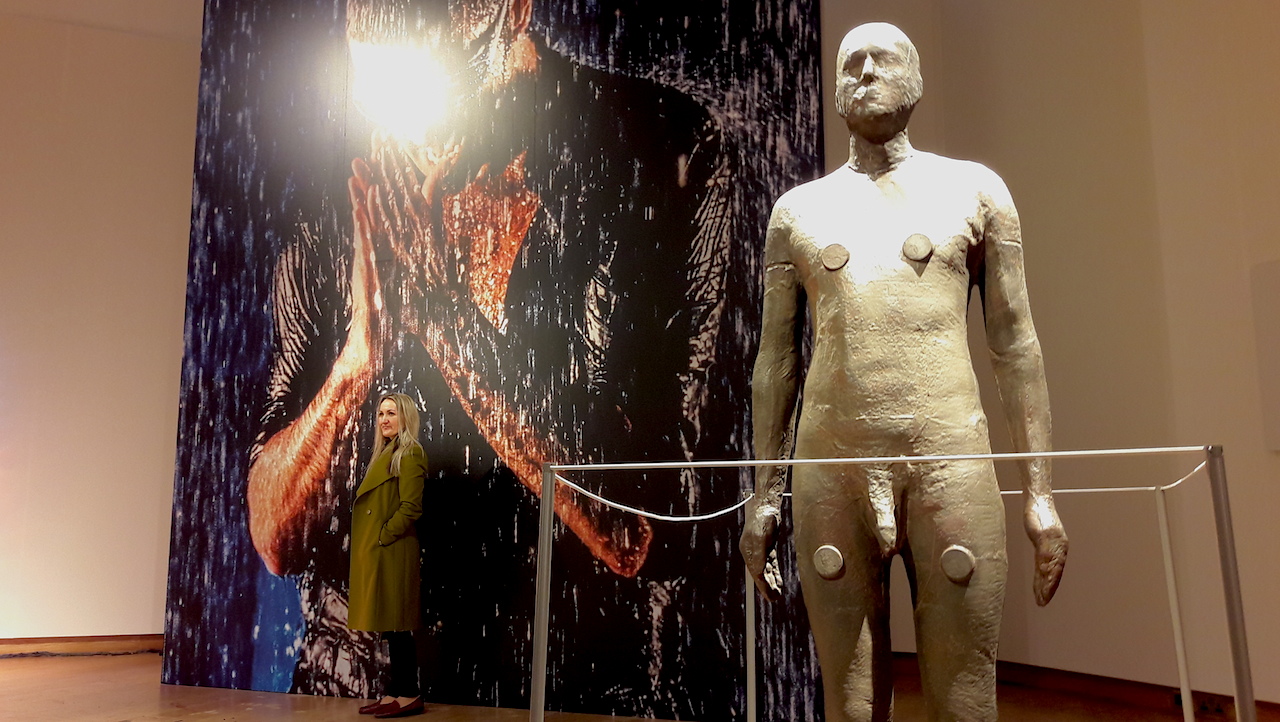
Visitor posing at Christie’s London beside George Michael backdrop – at right, Another Time III (2007), cast iron statue by Antony Gormley

PARENTS BEWARE! The extraordinary exhibition of singer George Michael’s art collection currently showing in London would in any other medium be X-rated, yet at Christie’s the auctioneers it comes without any parental PG warning despite displaying images of rats copulating and a team game between naked men ejaculating. It delivers the highest genitalia count in auction-house memory: we see at least 40 penises, 27 vaginas and photographs of 108 positions of the “Karmasutra” enacted by a rubber-clad woman and a garden gnome. These are extraordinary counts for a show numbering 174 artworks. They go under the hammer this week in two auctions.

The penises, let’s hasten to add, are not George’s own. The biggest and probably most prestigious penis on show is attached to Lot No 1, cast in iron and belonging to Antony Gormley, Britain’s most respected living sculptor, famed for casting himself life-sized and naked, here under the title Another Time III (upper estimate £250,000). Another set of male genitalia is confected with typical bawdiness by Sarah Lucas from coiled wire, appropriately titled O Nob (est £25,000).

Other contributors to the penis count in Thursday’s prestigious evening sale include, inevitably, Gilbert & George, the Chapman brothers and Sam Taylor-Johnson, who are all trumped by a clutch of dildos in Tim Noble & Sue Webster’s Dirty Narcissus sculpture in silicone rubber.

Click any pic below to enlarge all in a slideshow

Running simultaneously is Christie’s larger online auction which ends on Friday, where Tracey Emin is a major contender by offering many scribbled vaginas but is beaten hands-down by the artist named only as Linder, a Liverpudlian graphic designer known for her radical feminist photomontages, here offering a gallery of naked Pretty Girls.

Some would say George Michael’s collection of art reflects fairly his obsession with sex and death (the skull count is notable, too). In addition to a soundtrack of his music, the exhibition’s loudspeakers beam out audio clips of George freely eff-wording and describing his sexual proclivities at high volume in every gallery, all in the best possible taste, as Kenny Everett would have said.

By the time we’ve taken in the many shiny works of “art” involving much glitz and a lot of tat, The George Michael Collection must be one of the most tacky shows to have been hosted by a leading auctioneer for years.

Ouch! That sounds far too judgemental for the 21st century, doesn’t it? So let’s hear from his admirers, posted on the Christie’s website. The singer’s former partner Kenny Goss tells us that George started collecting art after meeting artists such as Damien Hirst, Tracey Emin, Marc Quinn and Michael Craig-Martin: “The art collection was part of him. The YBAs’ openness and honesty about life, death and sex were a huge part of his world.”

Sue Webster, who is well represented in the collection with collaborator Tim Noble, commented on the “sexual nature” of many of the works George Michael bought. “But it’s all got two sides to it, a darkness and a light – and George’s music worked on many levels like that, so I can see the attraction.”

Click any pic below to enlarge all in a slideshow

Photographer Mary McCartney believes the collection is quintessentially George Michael in that it consists of art that’s impossible to ignore. “He was very impactful,” she says of the man who had 15 number-one singles in Britain and America, and sold 125 million records over the course of his career. “[The collection] shows a lot of his character; there are a lot of brave pieces with an opinion.”

The critic Andrew Graham-Dixon concludes: “Traditionally there’s a very strong connection between British pop and Brit art. When the YBAs first came to prominence they did so almost like rock stars.” He goes further by suggesting that Tate Modern would not have opened had it not been for the YBA generation. “They transformed British culture,” he insists. Much as George Michael did with his music.

So – there’s the other side of the coin. Tit for tat.

➢ Results for The George Michael Collection Evening Auction, from 7pm on March 14

UPDATE: THE LIVE SALE NOTCHES £9,264,000

Tracey Emin, Christie’s London, auction, art, George Michael,

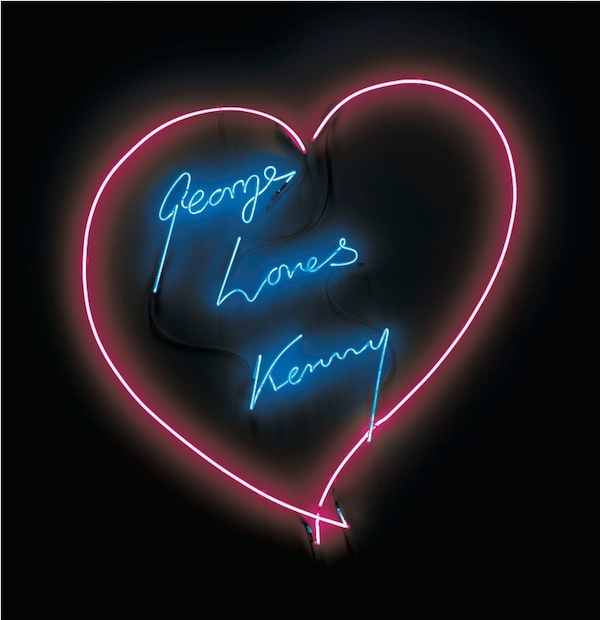
Neon heart by Tracey Emin, 2007: after competitive bidding, it realised £374,250

❏ Many George Michael fans were clearly bidding all round the world from Singapore to New York during Thursday’s live televised auction at Christie’s London of 61 works from the singer’s art collection, so for some items the bids were brisk and keen.

Four prominent Brits raised the highest six-figure sums: two iconic Damien Hirst formaldehyde works realised £911,250 and £875,250, while paintings by Bridget Riley and Cecily Brown fetched £791,250 each and the Antony Gormley sculpture £431,250.

The surprise sensations of the show were two pieces by Tracey Emin: her acrylic abstract painting on canvas Hurricane (2007, size 72 x 72in) was estimated by the auctioneer at £120k-180k and actually realised £431,250. . . and Tracey’s neon heart containing the message George Loves Kenny (2007, size 42x42in) which was estimated to be worth £40k-60k, yet after a suspenseful round of bidding finally realised £347,250 !

Another sensation was Noble & Webster’s Excessive Sensual Indulgence (1999), a dazzling, flashing array of 312 coloured UFO reflector caps, lamps and holders, which was estimated at £30k-50k, but went on to fetch £237,500.

Closing the two-hour sale, the final lot by former Blitz Kid Cerith Wyn Evans also exceeded expectations. An elegant wall-hanging neon sign titled And if I don’t meet you no more… (2006) had been estimated at £10k-15k, yet went for £68,750. Proceeds are going to extend the singer’s philanthropic legacy.

PLUS £2MILLION MORE ONLINE

❏ Update – Proceeds from Friday’s online auction of 111 items totalled £2,045,375. Probably the most impressive sum raised was for Harland Miller’s oil on large canvas Penguin book cover, “Death, What’s in it for Me?” which realised £212,500. A superb Aubusson tapestry titled Pallidweave (one in an edition of three) by Rupert Norfolk went for the absolute bargain price of £15,000.

➢ Results for The George Michael Collection
Online Auction, March 8–15

➢ Virtual tour online of the George Michael exhibition at Christie’s

FRONT PAGE

2019 ➤ Sounds of the 70s still cool in the heart of Soho

70s soul, jazz-funk, Soho, Old Compton Brasserie, Andy Polaris,
Eighties singer Andy Polaris was knocked back this month
to hear one cool track after another play out in a Soho eaterie
and he quickly synthesised a playlist from the dozen best
– here’s a taste from his website Apolarisview. . .

What’s unique about my dozen best tracks? Obviously they all formed the backbone of the funk and soul soundtrack to my teen years in the 1970s when I would hear them on the dancefloors of the Lacy Lady, Croc’s, Racquel’s, Gold Mine, and on Radio London’s Robbie Vincent show and on Capital Radio’s Greg Edwards session. What’s amazing is that only this month I heard some of them playing out at the newish if retro-styled Old Compton Brasserie as the most credible playlist in Soho that night. It reminded me of the pre-disco cocktail bars in Covent Garden which became our favourite haunts at the time.

Seventies jazz-funk in a millennial eaterie for an audience of all ages? You wonder how many ears present during this evening knew that every tune was a gem from the golden age of club music. The Brasserie’s funky dozen kicked off with Rufus feat. Chaka Khan Once You Get Started (1974) – The track that brought Chaka Khan to my attention in the UK. I was sent the vinyl import album Rufusized before its UK release. . . / Discover the whole playlist at Apolarisview>

FRONT PAGE