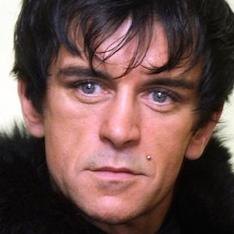
1984 ➤ Band Aid, when pop made its noblest gesture but the 80s ceased to swing

Band Aid , Do They Know It’s Christmas?

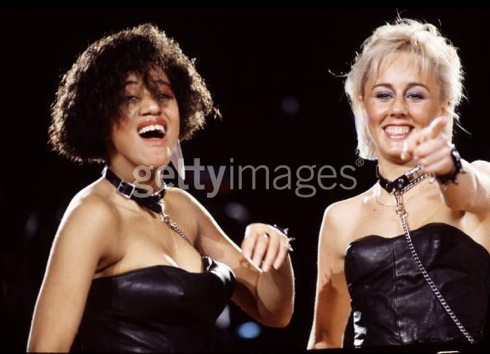
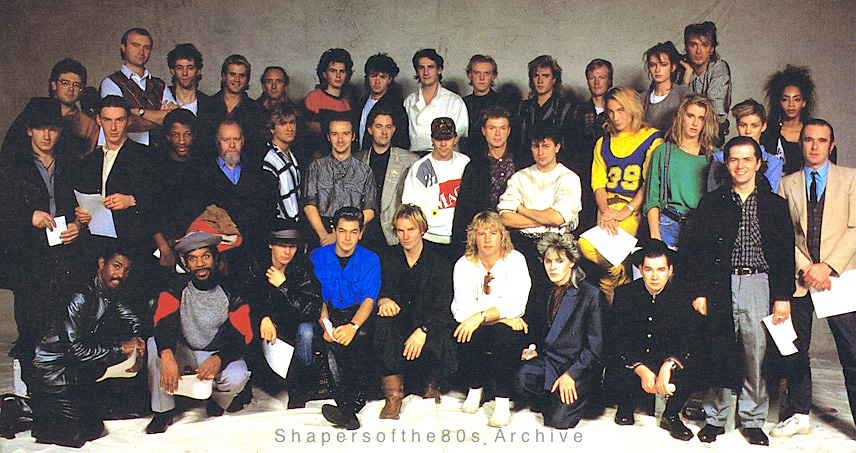
The Band Aid band, Nov 25, 1984: most of the pop stars who performed, plus artist Peter Blake who created the record sleeve for Do They Know It’s Christmas?

◼︎ TODAY WAS THE DAY IN 1984 THEY RECORDED the song that became, for 13 years, the biggest selling UK single of all time. Do They Know It’s Christmas was released four days later, stayed at No 1 for five weeks, sold over three million copies and raised significant funds for famine relief in Africa. The project lead naturally the next year to Live Aid, the biggest globally televised rock concerts ever, viewed by two billion people in 60 countries, who coughed up still more dollars. It is estimated that Live Aid raised £150m (about $283m). Last year a poll of 5,000 people, who were surveyed across Europe, named Live Aid as the most important music event of the past 30 years. The hit single sold for £1.35, of which 96 pence went to the fund. Rerecordings of the song charted again in 1985 and 1989.

The idea for Band Aid was proposed by one man, Bob Geldof, since granted an honorary knighthood but in 1984 a musician down on his luck, who enlisted the much more successful go-getter, Ultravox’s Midge Ure (who remains unknighted for no good reason), to bring the dream to fruition as its producer. They created a megagroup from 45 of the biggest hitters in British music, who included the supergroups dominating world charts at the time — Culture Club, Duran Duran, Spandau Ballet, Wham! — plus AOR giants Sting, Genesis and U2, plus Kool and the Gang from the States. In a sea of mullets and bleached highlights, rival musicians united under the name Band Aid in a daring act of charity that was unprecedented in the competitive commercial arena.

Band Aid,Bob Geldof ,Midge Ure,SARM

Leaders of the Band Aid pack in 1984: Bob Geldof and Midge Ure outside SARM Studios in London. © Pictorial Press

The enterprise marked the end of an era, as this website documents. The Band Aid collaboration signalled the final chapter of the innovation which Shapersofthe80s believes defined the Swinging 80s as six dynamic years of subcultural initiative between 1978 and 1984. Britain’s visual kaleidoscope of cults was exactly what fed MTV from its launch in 1982 and loosened the stranglehold that music radio had previously enjoyed in the USA. The unlikely Band Aid scrum of Britain’s rival image bands who had risen on the same new wave  substantially defined a new show-business elite who had come to epitomise mainstream tastes.

 Michael Buerk , Ethiopia

Michael Buerk in his BBC report from Ethiopia

Nobody can doubt the uniqueness of the pop fraternity’s gasp of altruism through Band Aid. Geldof had been genuinely distressed by the now landmark teatime TV report broadcast on October 23, 1984, by Michael Buerk, a popular BBC journalist. It still makes for grim viewing. In Ethiopia 7m people were threatened by famine, and 40,000 refugees had converged on the town of Korem in the hope of finding food and medical aid.

The film footage shocked the world and Buerk’s opening words still resonate today: “Dawn, and as the sun breaks through the piercing chill of night on the plain outside Korem, it lights up a Biblical famine, now, in the 20th century. This place, say workers here, is the closest thing to hell on earth…”

CONTRARY VERDICTS ON BAND AID

Morrissey, 1985 — “I’m not afraid to say that I think Band Aid was diabolical. Or to say that I think Bob Geldof is a nauseating character. Many people find that very unsettling, but I’ll say it as loud as anyone wants me to. In the first instance the record itself was absolutely tuneless. One can have great concern for the people of Ethiopia, but it’s another thing to inflict daily torture on the people of England. It was an awful record considering the mass of talent involved. And it wasn’t done shyly, it was the most self-righteous platform ever in the history of popular music.”

The World Development Movement described the Band Aid lyrics in 2004 as “patronising, false and out of date” and regretted it did not “provide a more accurate reflection of Africa and its problems”.


❏ IN THEIR RESPECTIVE AUTOBIOGRAPHIES, Ultravox’s Midge Ure and Spandau Ballet’s Gary Kemp provide entertaining and detailed accounts of the Band Aid venture, spiced with the frankness that comes from hindsight . . .
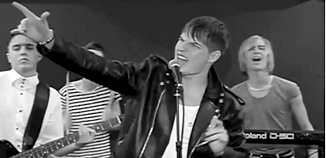
➢ Ure and Kemp on the shenanigans
that led up to Band Aid

FRONT PAGE

➤ If Paradise Point aren’t the pop tip for 2011, you decide who is!


❚ HIT ACT, HOT VIDS SHOT BY YOURS TRULY. Here’s the first public sighting of livepop band of the moment Paradise Point, in concert on Friday at Steve Strange’s club-night in Soho. Those crazy Neo Romantics were larging it at The Face, along with a bunch of proud parents from the previous showbiz generation. These concert vids capture two of PP’s four debut singles, Run in Circles, and Tears, all tracks downloadable at their MySpace page. Aren’t the kids doing well!

➢ CLICK FOR THE FIRST FULL REVIEW
OF PARADISE POINT’S DEBUT

“…The singer swivels 90 degrees, one hand grips his thigh, his legs are a-tremble, his arms stretch to there measuring the extent of his despair, his entire body emotes its socks off. He’s intense, handsome and fit, as his gymnastics confirm. He is the vocal storm at the centre of a pool-table-sized stage at the club Punk in central London, and the energy beaming off it is fierce…”

“… PP’s music is the magnet and their lyrics are your reward. Wait till you get home and play the band’s downloads and pay attention to the words. They prick the teen heart and they pull at everyone’s. These lyrics share some of the emotional intelligence of Morrissey & Marr, who can reduce you to jelly in a phrase, yet PP avoid the confessional mode and so spare us the Mancunian melancholy.”

FRONT PAGE


➤ How Roman Kemp helped his dad Martin to pick up the bass again

Paradise Point in rehearsal, above: Roman, Johnnie, Cameron, Adam

❚ “I’M THRILLED FOR ROMAN’S BAND. It’s one of the most exciting bands I’ve heard for a while. They’ve been rehearsing downstairs in my games room for the past year and they’ve turned out really well. Their sound reminds me a lot of Duran Duran, but the singer Cameron looks like Tony Hadley when he was younger and he’s got the vibe of Tony. He’s got a great voice, very expressive — he’s got a long way to go this boy.”

Roman Kemp, Martin Kemp, Paradise Point, livepop,The Face club

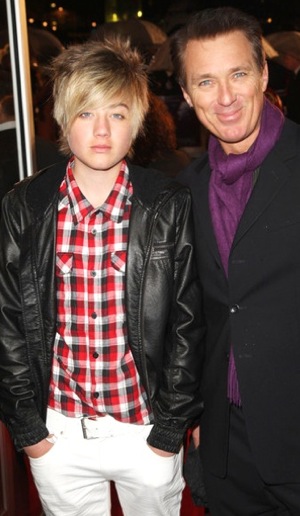
On the town: Roman and Martin Kemp a couple of years back. Photograph © Dave Hogan

OK, if that sounds like a doting father, yes it is. Martin Kemp is best known as one of British TV’s most popular actors after his stint as a villain in the leading soap, EastEnders, but the past year of course was spent touring as bass player with Spandau Ballet, his reformed 80s supergroup.

This Friday, the fourpiece called Paradise Point is unveiled at London’s coolest club-night, The Face, and Martin’s 17-year-old son Roman Kemp follows his father by opting to play bass. This group’s claim to novelty is that they all play their instruments live and their music is pop. They are the vanguard for a return to real Brit pop.

Martin says: “I’m just pleased for Roman that he’s in a proper band, rather than a boyband where five people stand up singing while working out when they’re going to sit on the stools. His band is very polished. If I think of the level Spandau had reached at their age, they’re well ahead of us, much more polished than Spandau were then.

“They look fantastic as well. It’s a band that’s made for girls to pin on their walls, which we haven’t had for a long time. That’s what needs to come around again.

“The whole thing of saying ‘Let’s be famous’ before you have a reason to be famous has meant being in a boyband is much easier than putting in the time and effort, learning to play your instrument, then finding mates who can play bass and the drums, bringing round the gear. That whole thing is a slog. But what you get out of that setup is a bonding experience with your band, which you’ve all been through. And that has disappeared at the moment. For me, it’s nice to see Roman inside a band where he’s got some real mates.”

Paradise Point, Cameron Jones, Firework,livepop
➢ Teen musicians call time for
 Cowell and his X-culture — First interview with Roman Kemp on
Paradise Point’s livepop debut this week

Paradise Point are determined to return credibility to teen pop music by playing their own instruments live onstage. They offer a determined farewell to the X-culture inflicted on the singles charts by Simon Cowell and his cloned songbirds. PP have had enough of manufactured pop idols and prancing boybands

Spandau Ballet had already broken up by the time Roman was born but with a pop-star mother too — Shirlie Holliman from Wham! — there was always music in the house. Martin says: “I taught him to play guitar when he was about six, then he got into rap for a while. Like all kids, this killed learning any kind of instrument, because they’re into the gangsta rap words.

“Then he picked up his guitar again and now he’s playing bass. He’s doing all right. He’s got a much better ear than I have, it’s brilliant. To tell you truth, when I was going back on tour with Spandau, after 19 years out, I couldn’t work out how I used to do some of the riffs. So I got Roman down to listen to the Spandau track to work out the fingering.

“He’s turning into a good bass player, a lot like John Taylor. Yes, from Duran! I don’t mind who he wants to turn into. If your kids go into the entertainment business, success isn’t about how much money you make — it’s about turning your hobby into your job. For me, that is success. If he can do that fantastic.”

So, Martin, are you coming down to The Face to see Paradise Point? “Absolutely. I’ll be roadying. Back to my original job with Spandau.”

➢ Four audio tracks and more by Paradise Point at MySpace
➢ Four audio tracks by Paradise Point at Facebook
➢ On the road with Martin: Shapersofthe80s’ coverage of Spandau Ballet’s 2009-10 Reformation tour

Pepsi & Shirlie, Holliman, Roman Kemp

Musical family: Roman Kemp’s mum Shirlie (right) in her glory days beside Pepsi with Wham!

FRONT PAGE

1918 ➤ War: the 20th-century way to build a new world

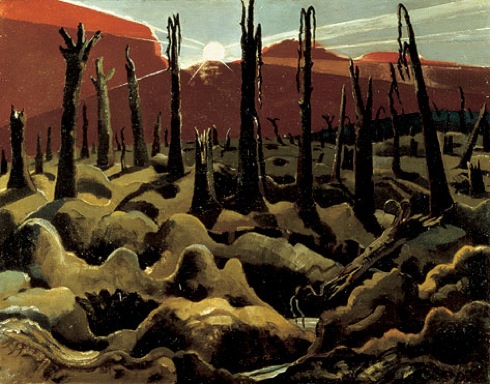
We Are Making a New World,  Paul Nash,Imperial War Museum,Robert Hughes, Shock of the New

We Are Making a New World, 1918: war artist Paul Nash’s ironic vision of the Western Front (Imperial War Museum, London)

❏ Robert Hughes laments the effects of war in The Shock of The New, his 1980 BBC series on modern art (6 minutes)

Robert Hughes , Sylvia Shap,Smithsonian Institute

Robert Hughes (1981): detail from portrait of the critic by Sylvia Shap (Smithsonian Institute)

❚ “IF YOU ASK where is the Picasso of England or the Ezra Pound of France, there is only one probable answer: still in the trenches.”

In 1980 the no-nonsense art critic Robert Hughes was standing in the former waste-land created in France by sustained bombardment between 1914 and 1918. He was presenting the milestone TV epic, The Shock of the New, which spanned the 20th century in eight hour-long episodes described recently by one critic as “the greatest series on art ever made”. Just as Jacob Bronowski’s powerful documentary series The Ascent of Man had transformed how new generations thought about science in 1973, so too did the Australian-born Hughes for art.  He had already been the critic for the weekly Time magazine for ten years, and the insight, wit and accessibility evident in his TV series confirmed his status as the world’s leading voice on contemporary art.

“World War One destroyed an entire generation,” Hughes maintained in episode two, titled The Powers That Be. “We don’t know and we can’t even guess what might have been painted or written if the war had never happened. As for the waste of minds, we know the names of some who died: among the painters, Umberto Boccioni, Franz Marc, August Macke; the sculptor Henri Gaudier-Brezska; the poets Isaac Rosenberg and Wilfred Owen. But for every one whose name survives there must have been scores, possibly hundreds of those who never had a chance to develop.”

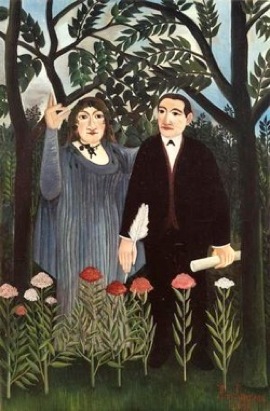
Guillaume Apollinaire ,Henri Rousse

Muse Inspiring the Poet (1909): Henri Rousseau’s painting of French poet Guillaume Apollinaire and Marie Laurencin (Art Museum of Basle)

Today being Remembrance Sunday — the closest to “the eleventh hour of the eleventh day of the eleventh month” in 1918 when the Allies confirmed the cease-fire by signing an Armistice — the BBC not only recalled “the pity of war” through the familiar poems of England’s romantic realists Owen and Siegfried Sassoon. Radio 4 also shocked us with a slice of the French poet so avantgarde as to bravely interlace his awe at the nightmare spectacle of the trenches with themes of eroticism, mechanization and other modernist speculation — Guillaume Apollinaire, the man who gave us the word surrealism. He too had sustained a serious shrapnel wound fighting in the trenches, and died just before Armistice Day.

“Ah Dieu! que la guerre est jolie,” he declared in 1915, which can be roughly translated into English as “Oh! What a lovely war” but unlike the anti-war stage musical of that name created by English Theatre Workshop producer Joan Littlewood, and the subsequent film, Apollinaire’s line was devoid of irony. His first war poem, The Little Car written in August 1914 after he’d driven into Paris to find mobilisation being announced, contained these prescient lines:

We said farewell to an entire epoch
Furious giants were rising over Europe
Eagles were leaving their eyries expecting the sun
Voracious fish were rising from the depths
Nations were rushing towards some deeper understanding
The dead were trembling with fear in their dark dwellings

Dogs were barking towards the frontiers
I went bearing within me all those armies fighting
I felt them rise up in me and spread over the regions through which they wound
The forests and happy villages of Belgium
Francorchamps its l’Eau Rouge and its springs
A region where invasions always take place
Railway arteries where those who were going to die
Saluted one last time this colourful life
Deep oceans where monsters were stirring
In old shipwrecked hulks
Unimaginable heights where man fights
Higher than the eagle soars
There man fights man
And falls like a shooting star

Within me I felt skilful new beings
Building and organising a new universe
A merchant of amazing opulence and prodigious stature
Was laying out an extraordinary display
And gigantic shepherds were leading
Great silent flocks that grazed on words
While every dog along the road barked at them

➢ Listen to Radio 4’s Oh What a Lively War — Martin Sorrell explores the work of Guillaume Apollinaire
➢ The Shock of the New: Art and the Century of Change
— Robert Hughes’s book updated and still on sale

FRONT PAGE

➤ The Princess known as Julia becomes an art object for sale

Ben Ashton, Princess Julia ,

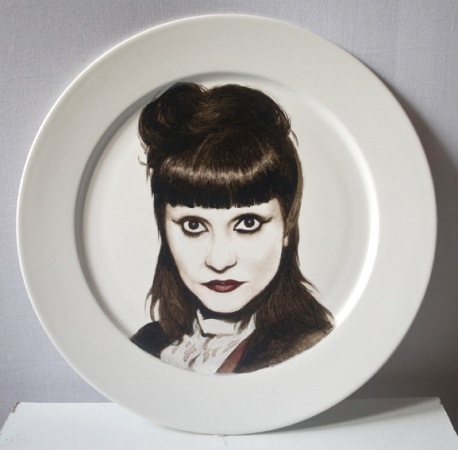
One of Ben Ashton’s unique Princess Julia hand-painted plates on sale at the House of Voltaire pop-up shop. Image courtesy of Simon Oldfield Gallery

❚ PRINCESS JULIA, deejay, former Blitz Kid and a work of living art in daily life, has now been immortalised in the form of a pair of hand-painted ceramic plates. They are newly created by 27-year-old Slade graduate Ben Ashton, a painter and performance artist whose themes include celebrity and voyeurism. The plates go on sale priced £1,250 each in a pop-up shop being run by Studio Voltaire, a not-for-profit independent arts organisation that provides education and studio space in London. Throughout the month, familiar faces from the arts and fashion worlds will be fronting the shop. Julia herself plans to attend on Sunday 21st.

An exclusive edition of canvas bags with leather details, £120, by Stefania Pramma is available through Studio Voltaire online

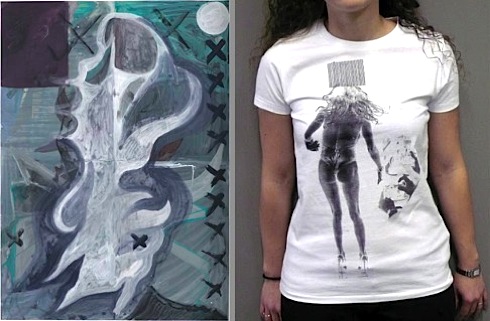
The House of Voltaire is a fund-raising outlet open until Dec 4 in the heart of Mayfair selling a diverse selection of limited editions and original pieces by leading contemporary artists. Gift notions include creative Christmas cards by Cary Kwok, editioned T-shirts by Clunie Reid, lambswool blankets by Renee So, a David Noonan screenprint and splendid canvas tote bags by Darbyshire & Spooner.

Studio Voltaire produces portfolios and affordable editions (£50-£100 per print) of such artists as Linder, Cerith Wyn Evans, Spartacus Chetwynd, Mark Titchner, Dawn Mellor, Daniel Sinsel, Ryan Gander, Hilary Lloyd and Mark Leckey. These are on sale through the Studio’s online gallery.

For Ashton himself the portraits of Julia are the start of a year-long collaboration with other creative talents in The Bloomsbury Studio, a subsidised space opened in 2008 by Simon Oldfield, a 32-year-old former lawyer turned gallerist. Part of his gallery’s profits go to support charitable organisations such as the Whitechapel Gallery and the Contemporary Art Society in its centenary year.

➢ House of Voltaire pop-up shop — Upstairs at Rupert Sanderson, 
19 Bruton Place, London W1 (Nov 11-Dec 4, Mon–Sat 11am-7pm, Sun 12-6pm)
➢ Studio Voltaire online gallery and shop
➢ Inquire about Ben Ashton’s work through the Simon Oldfield Gallery where he has a solo show Feb 11-March 19

Joel Croxson,Clunie Reid, House of Voltaire

At the pop-up House of Voltaire: unique works donated by painters such as Joel Croxson, left, and silkscreened 100% cotton T-shirts by Clunie Reid

➢ Watch artist Ben Ashton live in his Bloomsbury studio

FRONT PAGE