Category Archives: Tributes

➤ Captured in 1983: the Westwood-McLaren showdown

Over two weeks I watched fashion gurus Westwood
and McLaren go their separate ways. Daggers-drawn,
they both talked exclusively to the Evening Standard…
Mine were the final pix of them together

Paris fashion, 1983, Vivienne Westwood, Malcolm McLaren, Worlds End, post-punk

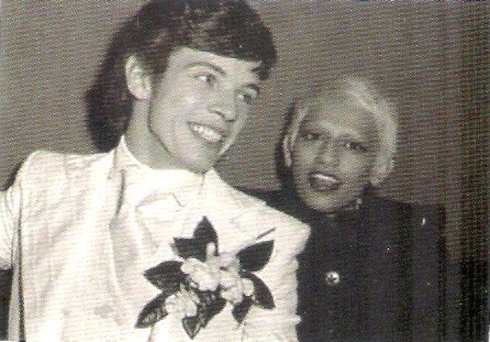
Their last dance, Paris 1983… Westwood says: “Malcolm has one more chance to be good.” McLaren says: “I’m not incapable of designing the next collection myself.” Photographed © by Shapersofthe80s

➢ Click here to read my enhanced version about the day
the King and Queen of Outrage realised
the end was nigh, in 1983

First published in the Evening Standard, 4 Nov 1983

➢ Obituary for Dame Vivienne Westwood 1941-2022 at The Guardian

➢ BBC’s in-depth tribute to Vivienne – the godmother of punk

FRONT PAGE
2022 ➤ Finally, a blue heritage plaque to honour the Rum Runner

heritage plaque, Richard Whittingham, DJDick, Birmingham, nightlife, Swinging 80s, Rum Runner,

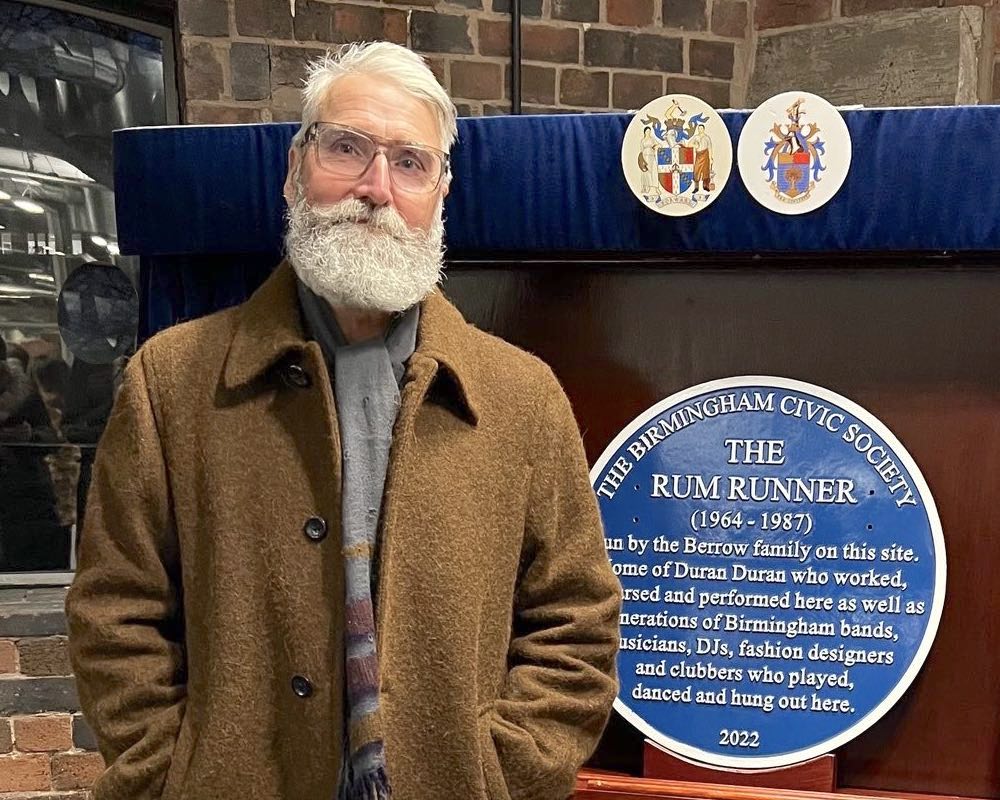
At the unveiling: Richard Whittingham beside the new plaque. (Photo by Adam Regan)

❚ NOT ONLY WAS A PLAQUE unveiled this month before the Lord Mayor of Birmingham to underline the importance of its key nightclub during the Swinging 80s, namely the Rum Runner. . . But the star of the occasion was clearly its deejay, judging from the immediate stream of affection from fans and friends that is appearing online alongside his bearded photo at the event, now aged 62. They said he’d flown in from Lapland especially.

At the age of 19 Richard Whittingham – aka, DJDick – was one of Britain’s most savvy club deejays, reading the tastes of Britain’s second largest city and trying to broaden them to embrace the new dance music like Duran Duran’s which was rapidly filling the post-punk vacuum. For my Nightlife column in the magazine New Sounds New Styles, Dick told me back then: “I’ve been trying to break the funk here for ages but nobody’s into it. The customers aren’t into it and the owners aren’t into anyone taking over their own night. I’m just buying the funk for the day when I have more freedom.”

Click any pic to enlarge:

He found all the glamorous dressing up led by Birmingham’s Kahn & Bell boutique crazily entertaining,  but he admitted what so many clubbers in the Eighties also did about not feeling safe on the streets. When the BBC’s One Show asked in 2011 what he would have worn at the Rum Runner, he replied: “Zoot suits, the odd frilly shirt, winklepickers of course – I had to hide them, to take them out of the house in a bag, and then put them on, because my mother thought they were trouble shoes.” [See interview in video clip below.] Today Dick describes himself as a carpenter and joiner, though he still deejays for occasional events.

Also at the plaque’s preview for the Lord Mayor of Birmingham, Councillor Maureen Cornish, and members of the sponsoring charity the Birmingham Civic Society, we see many local characters pictured at Facebook’s website The Rum Runner – Birmingham, which curiously fails to identify anybody by name! We’ve already guessed that the bearded one is DJDick. Another in the green coat caught wielding a mic and parting the curtains has to be Paul Berrow, one of the brothers who owned the Rum Runner, formerly of Wandering Star Pictures and Tritec Music in the Eighties.

The new plaque is attached to a modern building called Rum Runner Works, set back off Broad Street where the entrance once stood, today located between the  Solomon Cutler pub and the Walkabout sports bar. In the Eighties the council planned to turn Birmingham into a major conference city with developments including the ICC and Symphony Hall. The Rum Runner was demolished in 1987 to make way for the Hyatt Regency Hotel, which opened in summer 1990.

Click any pic to enlarge:

➢ Visit The Rum Runner – Birmingham website at Facebook

Photos displayed here were taken by Neil Drakeford, Debra Warren and Adam Regan who said: “Lovely to see this legendary Brummie club getting a much-deserved blue plaque. The club launched so many careers but none more relevant to me than this great man” [DJdick].

LISTEN TO DJDICK LIVE AT THE RUM RUNNER:

DJDick, 1983, RumRunner, live music,
At Dick Whittingham’s website we can listen to two recordings of him deejaying at the Rum Runner in 1983. These were donated on his 40-something birthday by Mark “Mack” McDonald, an old friend from way back.

VIEW THE BBC ONE SHOW FROM 2011:

➢ Previously at Shapersofthe80s:
1981, Birth of Duran’s Planet Earth

FRONT PAGE

➤ Fond farewells to Joe Allen who revolutionised London’s restaurant scene

Joe Allen, obituaries,Covent Garden, New York City, Orso, restaurants, tributes, theatreland,

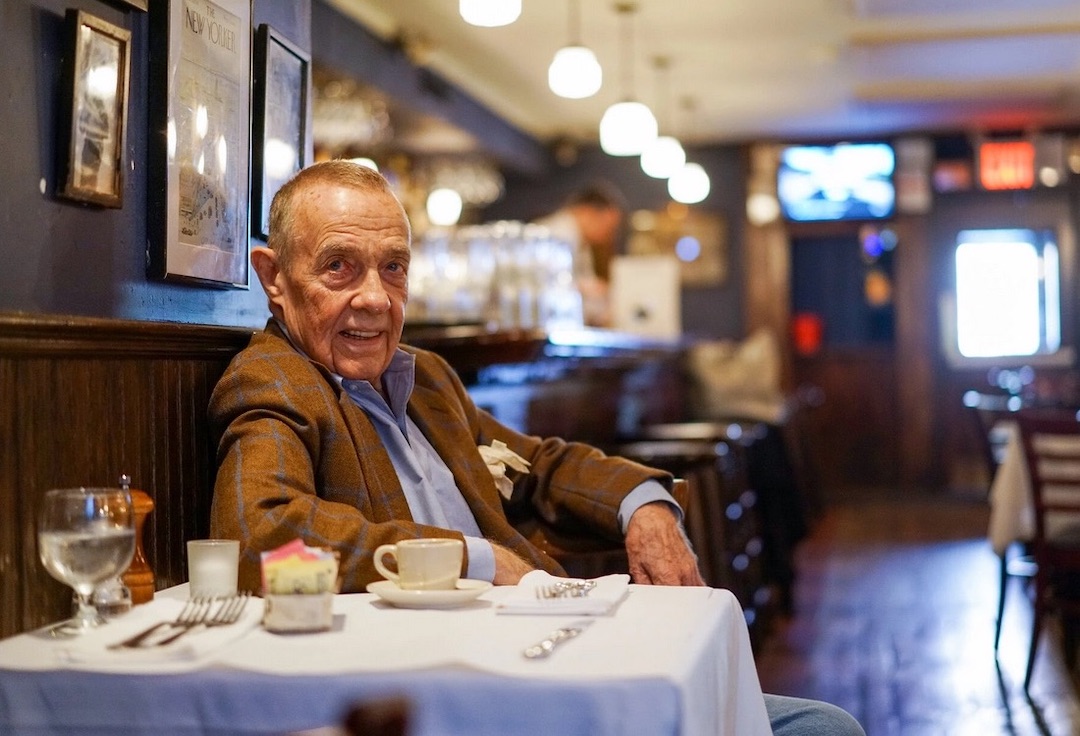
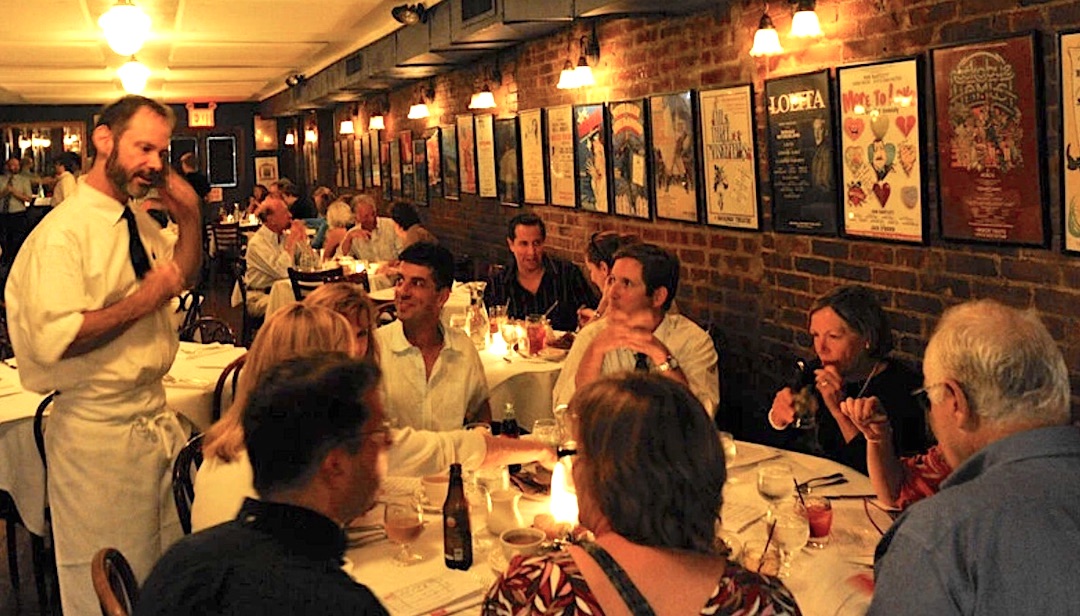
Joe Allen at his regular spot at Joe Allen NYC, opened in 1965, before his block was christened Restaurant Row. (Photo: Todd Heisler/The New York Times)

❚ JOE ALLEN, THE RESTAURATEUR who splashed bazzazz across theatreland, has died aged 87. His photograph confirms the memory of him being a double for Humphrey Bogart, who as Rick also sat alone at his own table in the film Casablanca – though Lauren Bacall always denied any similarity! He pioneered his empire in 1965 with two outlets in New York City on a strip of West 46th Street that would become known as Restaurant Row. Then in 1972 he took the Joe Allen brand to Paris and in 1977 to London, opening both Joe Allen’s in a former orchid warehouse, as well as Orso’s Italian brasserie, during the revival of Covent Garden which had idled since 1974 when the vegetable market moved out.

Immediately lunchtimes became social hubs for publishers from Bloomsbury and newspaper hacks from Fleet Street, both a short walk away. By night both places were packed with stars coming on from their West End shows and I only ever managed to sit on star table No 1 once which was in 1984 when I met Hollywood’s legendary Dorian Gray, the actor Hurd Hatfield, visiting from his home in Ireland, who told a very bawdy joke (sorry, unrepeatable)! On Saturday nights Andrew Neil, editor of The Sunday Times from 1983 to 1994, held court round a large table at Orso with his top team awaiting a courier bringing first-edition proofs for the next day’s paper.

Joe Allen’s personal style was laconic, his restaurants unpretentious and clublike, from red brick walls to an inexpensive hamburger-led menu, and waiting staff who were invariably resting actors. Most famously the walls were lined with theatre posters – of productions that had flopped. Notable patrons have included A-listers such as Al Pacino, Stephen Sondheim, Elaine Stritch, Elizabeth Taylor, Sean Connery and Sir Ian McKellen, while the restaurants maintained a strict no-photograph policy to protect the privacy of its high-profile guests.

Though Joe himself was very visible during the first year in London, often sitting at the table beside the kitchen, in fact the day-to-day operation was run by the baker Richard Polo as a partner, who died in 2019.

❏ Joseph Campbell Allen, born 20 Feb 1933, died 7 Feb 2021.

Joe Allen, Covent Garden, New York City, Orso, restaurants, tributes, theatreland,

Informality the keynote: Joe Allen’s restaurant on West 46th Street. (Photo: Robert Stolarik/The New York Times)


➢ Less about the food than about the atmosphere – Obituary by Joyce Purnick in the NY Times: “West 46th Street’s proximity to New York’s theater district made it viable, and Mr Allen, concluding that actors, directors, writers and theater patrons would always want to eat, created a relaxed pub aimed at attracting the theater crowd. There was nothing quite like the restaurant in the mid-1960s, and it took off.”

➢ Remembering Joe Allen, who fed Broadway in untheatrical style – by Peter Khoury in the NY Times: “Even before Joe opened Joe Allen, he was a partner in an Upper East Side restaurant called Allen’s. If you watch the 1965 Jack Lemmon comedy How to Murder Your Wife, you’ll see a few shots of a handsome, dark-haired bartender there. That’s Joe.”

➢ A magnet for actors, journalists and royalty – Obituary in The Times of London: “Allen kept a flat in Chelsea, visiting London several times a year. Business meetings occupied his mornings. At night he perched at the end of the bar quietly draining a case of his favourite American imported beers and observing more than conversing with a studied determination not to “inflict myself on the customers”. If he sat at a table it was always the worst one in the house.”

Joe Allen, Covent Garden, New York City, Orso, restaurants, theatreland,

Poster wall of flop shows at Joe Allen’s: at centre, “Got Tu Go Disco” a short-lived musical from 1979. (Photo: Sara Krulwich)

FRONT PAGE

2020 ➤ Farewell Daniella, the girl who inspired Ziggy’s fiery hair

Daniella Parmar, David Bowie

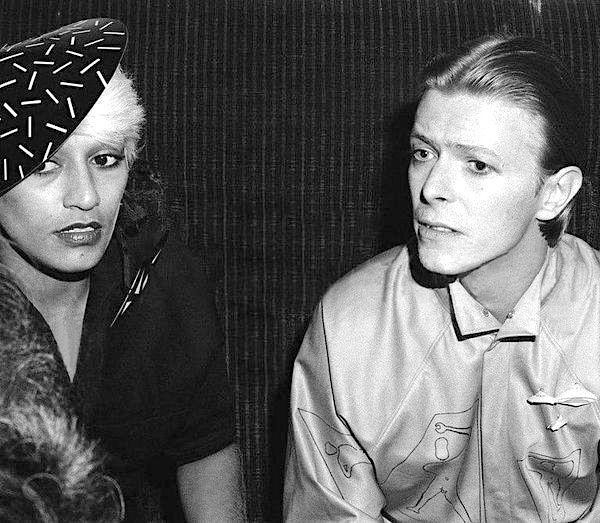
Daniella Parmar, stylistic inspiration for Bowie. . . She became part of David’s 1971 entourage and is seen here with him during one of his rare visits to the Blitz Club in late ’79. David wears a Modern Classics jumpsuit by Willy Brown, as featured on the cover of his Feb ’80 single Alabama Song, which had as its B-side an acoustic version of Space Oddity recorded in Dec ’79. Choreographer and co-director of Bowie concerts, Toni Basil, was also sitting to David’s left. (Photo: Robert Rosen)

❚ THE TEENAGED GIRL who inspired David Bowie to give Ziggy Stardust livid red hair died this month from cancer at her home in Worthing. Daniella Parmar belonged to the circle of “piss-elegant champagne-drinking” young night-owls who Bowie met with his wife Angie at London’s Sombrero nightclub in 1971. During this Hunky Dory period he was wearing the Mr Fish man-dress and had long cascades of blond hair.

The pals included “fun-loving glamour girl” Wendy Kirby and her flatmate Freddie Burretti (Bowie’s handsome costume designer, who went on to create Ziggy’s exotic and sexual one-piece outfits). Daniella was of Indian extraction and noted for her emphatic eye make-up and top-to-toe style with special focus on her hair – in 2002 Bowie confirmed that its constantly changing colour had convinced him “of the importance of a synthetic hair colour for Ziggy”.

Wendy says: “We were the ‘young dudes’ who shaved off our eyebrows just for camp, because you could paint them on higher up — that gave us a strange unearthly look which David adopted. He was always open to suggestions and went through our wardrobes like a magpie!”

Freddi Burretti, Daniella Parmar

Melody Maker Awards, October 1973: Daniella Parmar with Freddie Burretti, who collected the award for Bowie. (Photo: Kevin Cann collection)

The Ziggy Stardust tour was already on the road when Bowie decided on the dramatic change of hairstyle. On 17 March 1972 they were to play at the Town Hall in Birmingham when a photographer called Mick Rock turned up to interview Bowie. They hit it off so well he soon became his official photographer. Kevin Cann’s seminal account of Bowie’s early life, Any Day Now, recalls that crucial day. . .

For the show his hair has been dyed light red and styled by Suzi Fussey, but David tells Rock he is going to make his hair ‘even redder’. Swayed by his Sombrero friend Daniella’s use of different hair dyes, not long after the Birmingham performance David shows Fussey the exact tone he desires in a photograph of model Marie Helvin in a recent fashion magazine. Fussey applies a bright red colour-fast dye and spikes the crown with Guard, a strong setting lotion. The Ziggy hairstyle is born.

Daniella became an intimate member of the Bowie household, playing nanny to their son Zowie, and shared the Bowies’ last Christmas party in Britain before they departed for the USA in March 1974.

One of Daniella’s last public outings was in 2015 at the premiere of Lee Scriven’s film titled Starman: Freddie Burretti – The Man Who Sewed The World. She died a fortnight ago on 3 November and friends report that the funeral chapel was decorated with pictures of her with David.

Daniella Parmar , Wendy Kirby, David Bowie

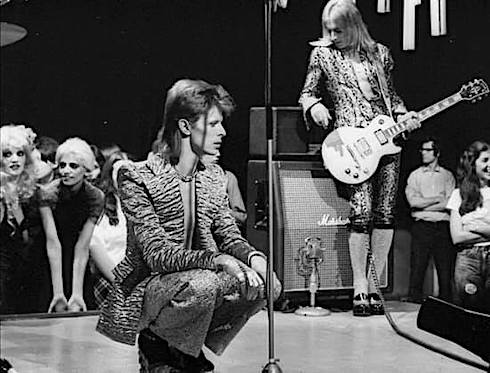
Recording Jean Genie for Top of the Pops, 1973: Bowie and Mick Ronson on-stage with support team of Wendy Kirby and Daniella Parmar at left. (BBC)

➢ Previously at Shapers of the 80s:
2010, Kevin Cann’s book – A feast of Bowie-ana
served in waffeur-thin slices

➢ Previously at Shapers of the 80s:
2011, I danced in Bowie’s Jean Genie video but
have never seen it, says his friend Wendy

➢ Previously at Shapers of the 80s:
2015, Burretti movie adds an epic and essential
chapter to the Bowie story

FRONT PAGE

➤ Farewell Kansai the fashion genius who breathed the same colours as Bowie

Fashion, Japan, designer, stage costumes, Kansai Yamamoto, David Bowie,

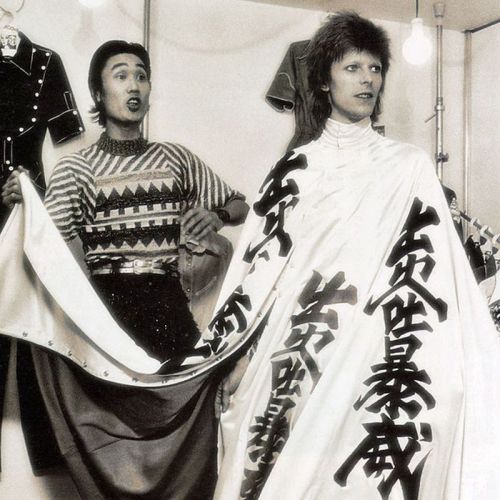
Yamamoto’s second-best-ever tear-away garment, 1973: A white kimono-inspired floor-length cape, emblazoned with Japanese kanji letters spelling out “David Bowie” phonetically, but also translating to “One who spits out words in a fiery manner”. Bowie was the first Western artist to use a hikinuki quick costume-change by dramatically ripping off the cape to reveal his leotard beneath. (Photography Asahi Shimbun)

The Japanese fashion designer Kansai Yamamoto – known for styling David Bowie and creating some of Ziggy Stardust’s most flamboyant outfits – died last week of leukaemia aged 76. He went on to be a huge influence on a generation of younger talents from Jean Paul Gaultier to Hedi Slimane and also worked with Elton John and Stevie Wonder. Here are extracts from some tributes…

➢ Yamamoto obituary in The Times of London, 28 July 2020:

When Kansai Yamamoto first saw David Bowie descending to the stage on a disco ball, he felt a physical sensation that was like a “chemical reaction”. It was 1973. Because a friend had pleaded with him to stop what he was doing in Tokyo and come to New York, the Japanese designer had taken a 13-hour flight and then rushed from JFK airport to a front-row seat at Radio City Music Hall. When Yamamoto saw Bowie wearing one of his colourful outfits, he thought the long journey had been worth it.

He said: “He was wearing all black and then all of a sudden that disappeared and he was wearing full colour. It was very dramatic and the audience all rose to their feet, so there was a standing ovation right at the beginning. I found David’s aesthetic and interest in transcending gender boundaries shockingly beautiful. It felt like the beginning of a new age.” Yamamoto would go on to play a full part in ushering in this new age… / Continued at Times Online

Fashion, Japan, designer, stage costumes, Kansai Yamamoto, David Bowie

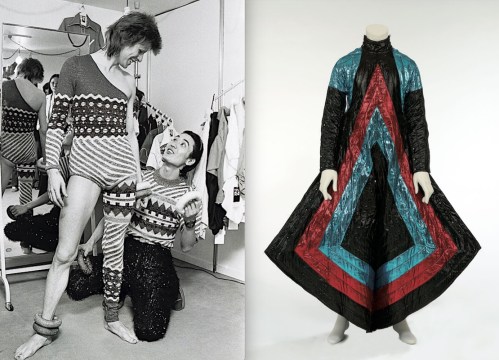
LEFT – A fitting for Bowie in Japan, 1973: The elaborate clash of prints on his asymmetric knitted leotard are derived from the tattoo patterns of yakuza (organised crime syndicates). Kansai Yamamoto himself sports a matching mock turtleneck. Plus doughnut rings for wrists and ankles. (Photography Tajima Kazunal) . . . RIGHT – Space Samurai for Bowie, 1973: The metallic-looking suit in padded satin evokes the split-skirt hakama worn by Japanese samurai as armour. Designed by Kansai Yamamoto for the Aladdin Sane tour. (Bowie Archive)

➢ From the fashion section of The New York Times, 27 July 2020:

Kansai Yamamoto, the unapologetically flamboyant fashion designer whose love of color, unfettered imagination and exploration of genderless dressing caught the eye of David Bowie and helped define the look of his alter ego, Ziggy Stardust, died on July 21 in Japan.

Kansai, as Mr Yamamoto was generally known, was not as well known as some of his more high-profile Japanese fashion contemporaries, including Yohji Yamamoto, Issey Miyake and Rei Kawakubo of Comme des Garçons. But it was Kansai who led the way for a generation of Japanese design talents to make their mark on the Western industry.

In 1971, he was among the first Japanese designers to show in London — a full decade before Ms Kawakubo and the other Mr Yamamoto. His signature aesthetic of sculptural shapes, clashing textures and prints, and eye-popping color combinations attracted industry attention.

Kansai’s debut collection was splashed across the cover of Harpers & Queen magazine with the tagline “Explosion from Tokyo” and his growing profile led to collaborations with the decade’s most important musician showmen, including Elton John and Stevie Wonder in addition to Mr Bowie, with whom he formed a longstanding creative relationship.

“Color is like the oxygen we are both breathing in the same space,” Kansai once said of his work with Mr Bowie… / Continued at NYT online

“When David wore my women’s clothes, people
were very surprised. My clothes were designed
to be worn by women. When I think of it,
it was a bizarre thing for him to do”
– Kansai Yamamoto

➢ From the fashion section of The Guardian, 27 July 2020:

Kansai Yamamoto was known for his singular aesthetic of bold, avant-garde designs, clashing colours and patterns that often incorporated elements from Japanese culture. His long-standing artistic partnership with Bowie would go on to inspire many younger fashion designers, including Jean Paul Gaultier, Hedi Slimane and Raf Simons, and became a major reference for modern gender-defying fashion.

Bowie was attracted to Yamamoto’s ability to design excessive, sculptural pieces which seemed unconstrained by the confines of gender. In turn, Yamamoto was impressed by Bowie’s ability to put this aesthetic in mainstream popular culture. It also helped that Bowie was slim enough to wear sample size. He said: “My clothes were normally made for professional models – this was the first time they had been used for an artist or singer”… / Continued at Guardian online

Fashion, Japan, designer, stage costumes, Kansai Yamamoto, David Bowie,

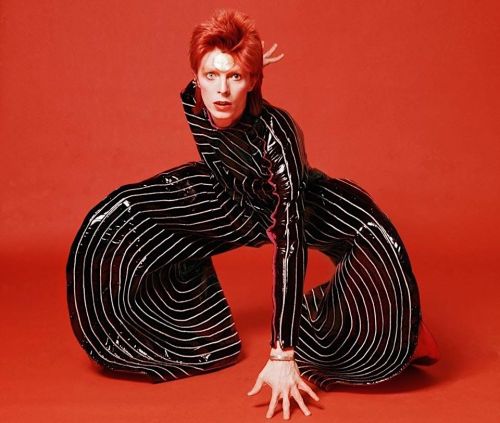
Yamamoto’s favourite creation for Bowie, 1973: The sculptural Tokyo Pop black vinyl jumpsuit with sequinned stripes and bowed legs is the best tear-away garment ever made. It was inspired by hikinuki, the quick-change technique for kabuki actors to be suddenly revealed wearing a different outfit – in Bowie’s case his flame-red skimpy Woodland Creatures jumpsuit on the Aladdin Sane tour. (Photography Masayoshi Sukita)

“Why was Andy Warhol obsessed with canned food?
Every artist has his own thing going on.
I often use Japanese motifs and sometimes wonder
if I’m choosing them because I’m Japanese”
– Kansai Yamamoto

FRONT PAGE