Category Archives: Social trends

1666 ➤ Pepys reveals a courtly fashion in the ashes of the Great Fire of London

Great Fire of London , Museum of London , Samuel Pepys

The Great Fire of London 1666, looking west from a boat near Tower Wharf. The painting depicts Old London Bridge, Old St Paul’s and the Tower of London. (Dutch School, probably 17th century, Museum of London prints)

◼ THE DIARY OF SAMUEL PEPYS might have been written for radio. Today’s eye-witness drama on BBC Radio 4 had plain Mr Pepys reliving the Great Fire of London which destroyed 75% of the City in September 1666, while confirming the essence of a great diary: that the events pictured and people’s voices are so vivid you needn’t think twice about believing them – even the apparent sincerity of the dandiest of all English kings, Charles II, rolling up his sleeves and “pulling together” among the citizen fire fighters in the street.
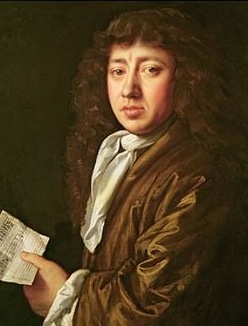
Samuel Pepys

The obsessive diarist: Portrait of Samuel Pepys 1666, by John Hayls (National Portrait Gallery, London)

His humble employee, the civil servant Mr Pepys, was careful not to remind readers that His Maj was obliged to give his royal permission first before property-owners’ homes could be torn down to halt the march of the flames (the common practice in those days), a nuance which resulted in the Lord Mayor of London, Sir Thomas Bloodworth, emerging as the dithering fall guy in the history books. After all, the fire did start in the shop of the king’s own baker, Thomas Farynor, in Pudding Lane.

A more amusing footnote to history was revealed by today’s drama and this was the king’s perfectly serious response once the fire had been defeated. On October 8 Mr Pepys wrote in his diary: “The king hath yesterday in Council declared his resolution of setting a fashion for clothes, after so much is lost. It will be a vest, and it is to teach the nobility thrift, and will do good.”

A week later, Mr Pepys reports: “The king begins to put on his vest, and I did see several persons of the House of Lords and Commons too, great courtiers, who are in it; being a long cassocke close to the body, of black cloth, and pinked with white silke under it, and a coat over it, and the legs ruffled with black riband like a pigeon’s leg; it is a very fine and handsome garment. It is a fashion, the king says; he will never change.”

➢ Pepys: Fire of London – the terrific Radio 4 drama
is repeated 3 Sept 2016 and then on BBC iPlayer for the next week

Within a month news came to the English court that Louis XIV, the king of France, had put all his footmen and servants in this same dress as a livery. “Vests were put on at first by the King to make Englishmen look unlike Frenchmen; but at the first laughing at it, all ran back to the dress of French gentlemen.” All of which made Pepys “mightie merry, it being an ingenious kind of affront”, adding for appearance’s sake, “and yet makes me angry”.

Of course Charles changed his dress many times after his solemn assumption of a lifelong garment. The 17th century was a restless, trying time in men’s dress. “They had lost the doublet, and had not found the skirted coat, and stood ready to take a covering from any nation of the earth,” wrote the costume historian Alice Morse Earle.

Charles II , Nell Gwyn

Could this be the black vest as royal fashion statement? Charles II and Nell Gwyn, painted by Edward Matthew Ward, 1854 (detail, V&A collection)

The famous vest is said to be represented in a portrait of Lord Arlington, by Sir Peter Lely, but it’s hard to find much resemblance to Pepys’ description, or indeed any other contemporary portraits to capture this contribution to royal fashion. What we do find however is a 19th-century painting by Edward Matthew Ward, of Charles courting his mistress Nell Gwyn in an unusually all-black ensemble, a very sober expression of Charles’ innate flamboyance as the leader of fashion in his Restoration court. Can this be the black memorial vest?

More usual royal swagging and drapery in this portrait, Charles II of England by Simon Verelst (The Royal Collection)

Typically the king favoured swagging and drapery in his daywear: Charles II of England by Simon Verelst (The Royal Collection)

The timing of Ward’s painting is right. As an actress – a profession the king had legalised for women – Nell was very much in favour with the Merry Monarch before and after the Great Fire, and gave birth to two sons by the king in 1670 and 1671 (among at least twelve illegitimate children that he acknowledged by various mistresses).

Compared with the king’s usual love of ornament, Ward’s rare depiction of simplicity in black may indeed be the monarch’s gesture of sympathy toward the losses inflicted by the Great Fire. Pepys reports that the cost in lost rent from the houses burnt was £600,000 per year, which would represent at least £115 million in today’s money.
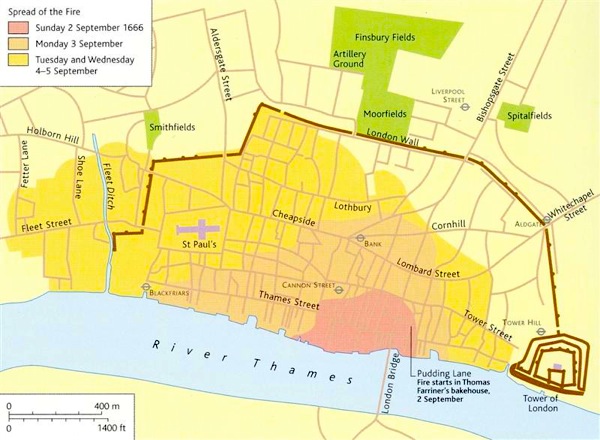
Great Fire of London, map

Colours show the progress of the Great Fire of London: it began on the night of September 2, 1666, on Pudding Lane, in the shop of Thomas Farynor, baker to King Charles II. It raged for four days, destroyed three-quarters of the City’s wooden buildings, and spread even beyond the medieval walls to the west. (Museum of London)
FRONT PAGE

➤ 14,000 words on Bowie’s album – responding to Bowie’s own 42 words telling what it’s all about

❚ AND YOU WON’T STOP READING THEM! A novelist asked David Bowie to explain his comeback album. In his own way, Bowie uttered his first public words on the subject: 42 of them.

Rick Moody,reviews,David Bowie, The Next Day,pop music,Britishness

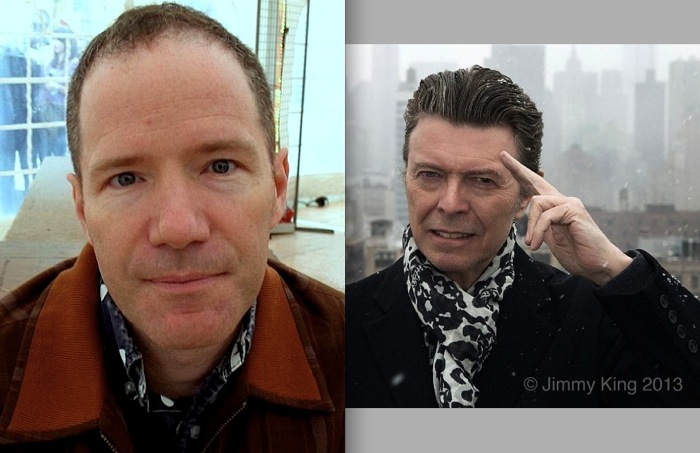
Rick Moody photographed by Seamus Kearney … and a salute from Bowie at 66

“Never has an album been quite as resistant to interpretation as The Next Day,” writes Rick Moody, the 51-year-old American author, tipped by New Yorker magazine as one of its “20 writers for the 21st century”. So he asked Bowie for some clues! We offer a few teasers here to entice you in, but no spoilers. The original piece is so rewarding, you won’t regret setting aside half an hour of your time to devour it… Moody talks of cocktail napkins, albatrosses, a sequence of ghosts and the pressure to be à la mode … of chanson, of papal indulgences, of hatred of rhyme, the ancient temple in Rome, quintessential Britishness, rethinking certainties and the world at war…

SHAPERS OF THE 80S OFFERS AN EXTRACT
FROM HIS MONUMENTAL ANALYSIS

➢ Rick Moody dissects Bowie’s new album with the help of its creator in 14,000 words published yesterday. Read the full essay at the pop-cultural web platform, The Rumpus

BY RICK MOODY: I am writing these lines because The Next Day, the album by David Bowie, is the unlikeliest masterpiece of the recent popular song, the best album by an otherwise retired classic rock artist in many, many years. It kicks the shit out of that recent spate of albums by Neil Young and Crazy Horse, it is better than anything the Stones did since Tattoo You … [etc etc etc]

It’s a remarkable and completely unpredictable masterpiece by a guy in his later sixties, an album that doesn’t sound like anything else happening in 2013, except that it sounds, in some ways, like a lot of the very best work David Bowie has done … [etc etc etc]

In the environment of Taylor Swift and Justin Bieber and One Direction, David Bowie sounds like a titan, like a behemoth of song, but it’s not only because of his context, it’s because he made a great album, which has more passion in each composition than most people manage in entire albums … [etc etc etc]

I wanted to understand the lexicon of The Next Day, and so I simply asked if he would provide this list of words about his album… and yet astonishingly the list appeared, and it appeared without further comment, which is really excellent, and exactly in the spirit of this album, and the list is far better than I could ever have hoped.

David Bowie, The Next Day, Where Are We Now?,video

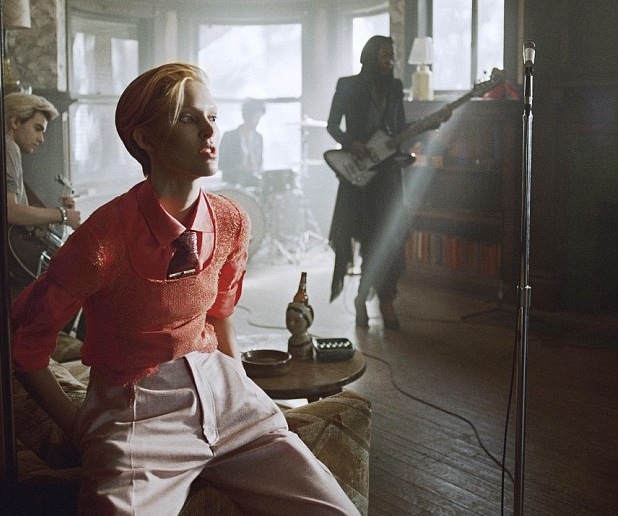
Having asked Where Are We Now? in his first comeback single this year, Bowie’s second posed other enticing questions in a sexually ambiguous video for The Stars (Are Out Tonight) (ISO Records)

BOWIE’S LIST

Effigies

Indulgences

Anarchist

Violence

Chthonic

Intimidation

Vampyric

Pantheon

Succubus

Hostage

Transference

Identity

Mauer

Interface

Flitting

Isolation

Revenge

Osmosis

Crusade

Tyrant

Domination

Indifference

Miasma

Pressgang

Displaced

Flight

Resettlement

Funereal

Glide

Trace

Balkan

Burial

Reverse

Manipulate

Origin

Text

Traitor

Urban

Comeuppance

Tragic

Nerve

Mystification

It’s a great list, and it has the word chthonic on it, and this is one of my very favorite words, and you have to admit, additionally, chthonic is a great word, and all art that is chthonic is excellent art, and art that has nothing chthonic about it, like, let’s say, ‘Don’t Worry, Be Happy’, that is art that’s hard to withstand
➢ Rick Moody continues at The Rumpus

POSTSCRIPT VIA IAN HUNTER

+++
❏ Rick Moody: They have no idea how easy it would be to stop. Still, this neglects the loss you would feel about retirement… Ian Hunter, the British singer-songwriter and Bowie’s acquaintance for whom he once wrote All the Young Dudes, had a song on this subject, on his comeback album called Rant (2001), the song being Dead Man Walking (What am I supposed to do now?/ Crawl down the hole of monotony?/ The silence is deafening/ The phone never rings)

FRONT PAGE

➤ Visage: out of the 80s frying pan into the 21st-century fire

Steve Strange, Visage,Shameless Fashion

The face of Visage today: Steve Strange behaving shamelessly. Peter Ashworth Photography. Makeup by Lara Himpelmann

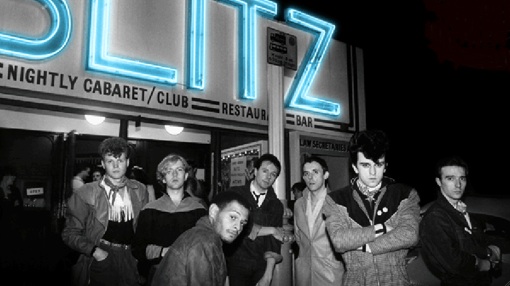
Visage 1979: Rusty Egan, John McGeoch, Barry Adamson, Dave Formula, Billy Currie, Steve Strange, Midge Ure. Photographed © by Sheila Rock

Visage 1979: Rusty Egan, John McGeoch, Barry Adamson, Dave Formula, Billy Currie, Steve Strange, Midge Ure. Photographed © by Sheila Rock

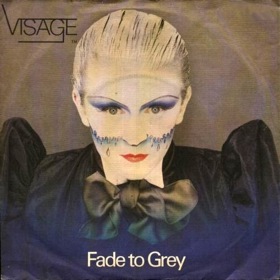
❚ THE STUDIO BAND VISAGE were central to defining the electropop sounds of 1980 thanks to the musical nous of Midge Ure, who had bought his first synthesiser in 1978 because he felt synths “embodied a kind of nostalgia for the future”. He’d been faffing around with Glen Matlock, Steve New and drummer Rusty Egan in the 60s-flavoured one-hit power pop group Rich Kids, and sensed an appetite in the zeitgeist for a more soulful version of Kraftwerk plus a return to melody. Intent on making vibrant dance music for the “visa age”, Ure dreamed up the name Visage, complete with simplified face as its logo,  for an new experimental band. Initially Ure rehearsed updating In The Year 2525, using up some spare Rich Kids time booked in an EMI studio. There he played around on synth and drum machine, then asked Egan to take over the drums.

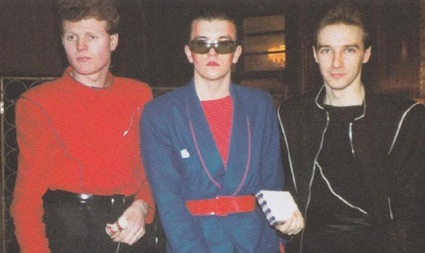
They co-opted Rusty’s flamboyant Welsh pal Steve Strange as face-painted frontman to give visual expression to a range of what were being called “moderne” fashions. Dressing up in the face of a grinding economic recession was the destiny that Bowie’s children were to fulfil. Visage’s songs captured the sidelong humour and knowing irony that came to characterise the 80s, while their explosive backbeats, electronic fills and synth riffs changed the vocabulary of British chart pop. This TV generation dreamed in both sound and vision.

Supercool in ’78: Egan, Strange and Ure establish Visage

What Strange lacked in vocal proficiency he made up for in promotional value, since he soon became a walking advertisement for the cooler-than-cool clothes shop PX in Covent Garden where he was an assistant. Run by Stephane Raynor and Helen Robinson, they more than any other designers in 1980 set the template for New Romantics fashion, favouring oversized chemises, medieval doublets, breeches and frilly lace. The shop’s followers were soon dubbed posers, and the Pose Age was born. Disposable identities, portable events, looks not uniforms – for his disciples, Bowie’s imperatives became the norm.

As a studio project the original Visage lineup never played live, and was probably a case of too many cooks. In 1979 it took in four more musicians (Billy Currie, John McGeoch, Dave Formula, Barry Adamson), all of whom had loyalties to existing bands, while the creative drive came from Ure and Currie. Even so, Currie was persuading the restless Ure to help resurrect the synth band Ultravox following John Foxx’s departure. By 1982, when Ure quit Visage in favour of Ultravox, Visage had enjoyed four top-20 singles hits in the UK, two top-twenty albums with Visage and The Anvil, and a smattering of international hits with Fade to Grey.

As we now know, Ure went on to mastermind the Band Aid fundraising hit single in 1984, then the worldwide Live Aid charity concert with Bob Geldof, and duly earned himself an OBE.

Visage, Fade to Grey,albumsIn 1984 a Visage lineup comprising Strange and Egan along with newer members Andy Barnett, Steve and Gary Barnacle put out a so-so third album, but when it flopped they soon called it a day. The truth was that Visage failed to invest single-mindedly in themselves as a musical enterprise: their progress simmered rather than blazed as individuals pursued their own favoured goals. Occasional tracks sizzled on the dancefloor – In the Year 2525, Fade to Grey, Mind of a Toy, Night Train – but the band lacked unity and commitment.

❚ NOBODY CAN DENY STRANGE’S FIZZ and chutzpah which in 1979 coralled a disparate group of post-punk no-wavers and outcast fashionistas when he co-hosted the agenda-setting Neon Night at the Blitz Club in Covent Garden. It lit up London in an explosion of inventive fashion, gender-bending and ridiculous hair. As the club’s stand-out stars suddenly became media celebrities, these exponents of modern dance and stance began forcing the pace of change across the creative industries. Rusty Egan proved to be a mould-breaking deejay who often added his own Syndrum accompaniment at the turntable, and his live mixing did much to change the sound of clubland music. During the early 80s the pair went on to reshape London nightlife at two notable venues, Club for Heroes in Baker Street and the Camden Palace. At the end of the decade, dance music as we knew it was swept aside by the craze for E’s and rave. Egan then set out to make a fine reputation deejaying on London’s boutique nightclub circuit, while Strange can claim a ghosted autobiography as full of fantasy and foggy memories as you’d expect from an arch-poser who’d been out on the town every night for 20 years.

Roll forward to 2010. John Pitcher, who fronts a music services provider called MRC, established a Blitz Club record label and an associated website, and Strange and Egan launched it in January 2011 by throwing a Return to the Blitz party at the site of the former club. The event raised a few media ripples but little groundswell and only three remixes have been released in as many years. With 80s band revivals making waves all around them, that old Blitz magic had lost its charm. Egan said this week: “Pitcher registered everything for us, so he owns everything, including the website and the Visage brand.” Growing personal differences hindered collaboration between the three. These worsened last year when Egan made allegations that Strange had squandered a substantial sum of accrued Visage royalties paid via Strange and that he failed to share them among the original band lineup. This week Egan said: “Try telling John McGeoch’s daughter her dad’s [share] was spent by Strange.”

Visage, Steve Barnacle, Steve Strange, Lauren Duvall , Robin Simon

Visage 2013: Steve Barnacle, the inimitable Steve Strange, Lauren Duvall and Robin Simon. Photography © by David Levine

When Strange proposed reviving the band name of Visage after almost 30 years, neither Ure nor Egan could see the point and they disputed Strange’s right to do so. Ure told an American newspaper in January: “Visage was always something Rusty Egan and I created and controlled. The idea of doing a Visage 2 was never appealing to me so I wasn’t interested. I walked away from Visage when it got ridiculous and supremely hedonistic and I will probably leave it that way.” In response to Strange’s claim on German TV last November that Ure was collaborating on a new album together, Ure tweeted: “He is deluded if he thinks that. He knows that isn’t happening.”

EARLIER BACKGROUND

➢ 2013, A couple of slaps in the Visage
as Strange and Egan squabble

Rusty Egan remains aggrieved that Strange has not resolved recent differences. He is angry that Strange should make any claim to creative input into Visage’s lyrics and music, and maintained this week: “Strange had nothing to do with the music in The Blitz or Visage.” In January Egan said: “There has never been a Visage album without me. It’s my group and Strange is a singer. He is not Visage.”

Yet for all this, and Strange’s sad personal saga of ill-health, the vocalist has doggedly set about persuading a new circle of supporters to bring Visage back to life. In the face of widespread disbelief – the garrulous Strange’s little weakness, after all, has always been for exaggeration and melodrama – last year he announced a new “Visage” lineup, with a gorgeous singer called Lauren Duvall, plus Steve Barnacle (fretless bass) and Robin Simon (guitar). Keyboardist Mick MacNeil, from Simple Minds, was enlisted to contribute on a range of vintage analogue synthesisers which include an early Moog Source.

At last, what is being called a fourth “Visage” album titled Hearts and Knives is due to be released on May 27.

“It has been 29 years since the last Visage album and during that period it often seems like we have all lived through several lifetimes,” says Strange. Indeed, “bruised and wounded” declare the rueful lyrics of Shameless Fashion, the new group’s first single, available this week. It isn’t clear whether this refers to the very many contributors we see jostling for credits on the new “Visage” packaging. The Visage 2013 camp is probably keeping fingers crossed.

➢ A free download of the new single Shameless Fashion is available from today at the Visage website

➢ 1980 at the Blitz, Strange days, strange nights, strange people

FRONT PAGE

➤ Linard’s twist on classic Levi – add the kitchen sink

➢ Blitz magazine recalled on the V&A blog:

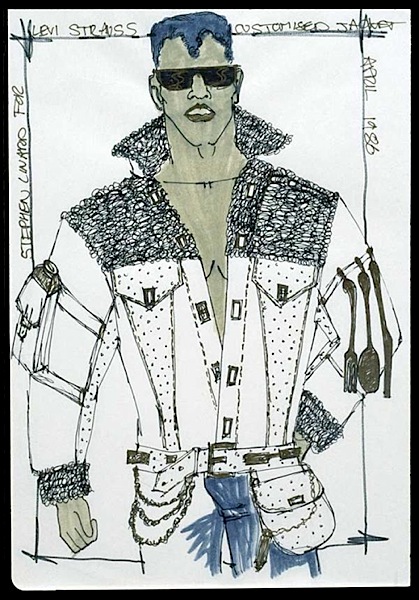
The Blitz designer collection of Levis denim jackets celebrates some of the most talented and creative designers working out of London in 1986 and it has been 27 years since London’s V&A museum last displayed them. These unique jackets were commissioned by the 80s style magazine Blitz in 1986 and customised by a host of top designers, including John Galliano, Vivienne Westwood, Bernstock Speirs and Paul Smith. In quirky twists on the classic Levis denim number, the 21 jackets, of which the V&A owns nine, push the boundaries of the term ‘customisation’. Onetime Blitz Kid Stephen Linard experimented by attaching a leather backpack and cutlery to his…

Blitz Kids, Stephen Linard, fashion,exhibition, Club to Catwalk ,V&A,,

Sketch on paper, Stephen Linard, Great Britain, 1986. Museum no. AAD/19972/34 © Victoria and Albert Museum, London/Stephen Linard

Seven of the nine jackets in the V&A’s collection will be on display in the summer exhibition Club to Catwalk, London Fashion in the 1980s (opening July 10), in addition to a loan of Zandra Rhodes’s jacket, which has been recently reunited with the group, and a Stephen Jones hat that was customised as part of the same project. The jackets will be displayed alongside many of their original sketches and a video wall which will show footage of the 1986 fashion gala… / Continued online

FRONT PAGE

➤ Glenda Jackson silences Tories in Commons tirade against Thatcher

Glenda Jackson ,video, Commons ,debate, Thatcher

Glenda Jackson lets rip: click on image to run video in a new window

By far the most heinous demonstration of Thatcherism was across the whole country in metropolitan areas where every shop doorway became the bedroom, the living room, the bathroom for the homeless. They grew in their thousands, and many of those homeless people had been thrown out onto the streets from the closure of the longterm mental hospitals. It was called care in the community. What it effectively was was no care at all in the community.

During her era London became a city Hogarth would have recognised. Everything I had been taught to regard as a vice was under Thatcherism in fact a virtue: greed, selfishness, no care for the weaker. Sharp elbows, sharp knees, they were the way forward.” – Glenda Jackson MP, in today’s Parliamentary debate which “considered the matter of tributes to the Baroness Thatcher”

London, Gin Lane, Hogarth, prints

Gin Lane (1751) by English artist William Hogarth: shocking scenes of infanticide, starvation, madness, decay and suicide in London

➢ “If the measure of a great political leader is the extent to which they leave a footprint on those that follow, Margaret Thatcher, for better or worse, was a great leader,” writes Patrick Wintour in The Guardian – “David Cameron has never been able quite to embrace or reject her politics. He, like many of his contemporaries, has almost internalised the trauma of her premiership and ejection from Downing Street in 1990… / Continued online

➢ The politicised argument over how to remember the former prime minister is not about the past,” writes Jonathan Freedland in The Guardian – “The wider Tory tribe seems determined to use the nine-day limbo between her passing and her funeral to define Thatcher in death in a way that would have seemed impossible, if not outright absurd, in life…” / Continued online

FRONT PAGE