Category Archives: Pop music

➤ 80s shapers win 2010 New Year Honours for fashion, music and walking in space

Katharine Hamnett, Fashion Aid

Fashion Aid 1985: Katharine Hamnett’s dazzling style, plus slogans

❚ IN THE FASHION WORLD, protest T-shirt designer Katharine Hamnett, 63, and Raymond Kelvin, 55 (founder of Ted Baker), are appointed CBEs, an order of chivalry granted twice a year by the British monarch for exceptional public service. Hamnett graduated from Saint Martin’s School of Art in 1969. Ten years on, she launched the Katharine Hamnett label and her first protest T-shirts bearing slogans such as Choose life, Worldwide nuclear ban now, Preserve the rainforests, Save the world. The British Fashion Council declared her designer of the year in 1984, when her designs became popular with pop stars including Wham! and Madonna. That year she famously met the then-prime minister Margaret Thatcher at a Downing Street party wearing a T-shirt proclaiming “58% don’t want Pershing” (the US ballistic missile). The meeting made news across the world and Vogue called it one of the most iconic moments in fashion. Hamnett remembers: “She didn’t notice it at first, but then she looked down and made a noise like a chicken. Then quick as a fishwife she said: ‘Oh well we haven’t got Pershing here, so maybe you are at the wrong party’, which I thought was rather rude as she had invited me.”

➢ New Year Honours reported by the BBC
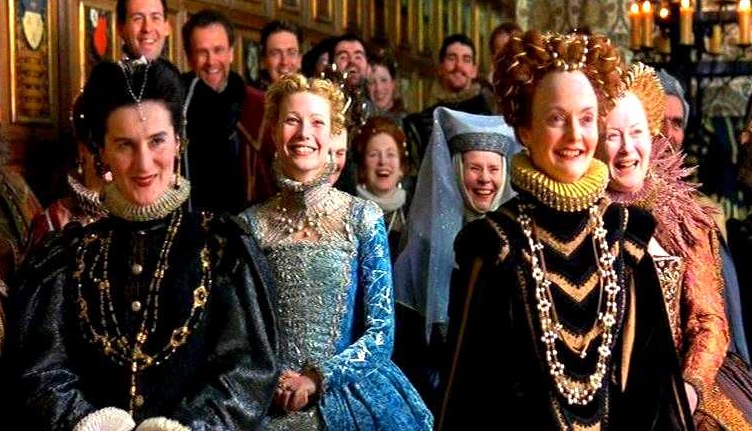
Sandy Powell, Gwyneth Paltrow, Shakespeare in Love, OBE, Oscars

Gwyneth Paltrow sports her blue number from Shakespeare in Love: Sandy Powell’s costumes drew on half a century of Elizabethan design

❚ OSCAR-WINNING COSTUME DESIGNER SANDY POWELL, 50, receives an OBE for services to the film industry. She studied theatre design at Saint Martin’s and won her third Oscar earlier this year for The Young Victoria. Her previous wins were for Shakespeare In Love, in 1999 and The Aviator, in 2005. Of her job, she once said: “A costume designer’s contribution is to help make some believable characters, that’s all.”
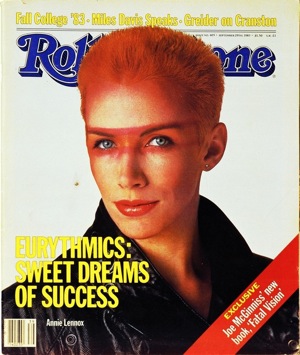
Annie Lennox, Eurythmics, Rolling Stone

Annie Lennox: Cover girl in 1983. Photographed by C J Camp © Time Inc

❚ ABERDEEN-BORN SINGER ANNIE LENNOX, 56, is appointed an OBE for work fighting Aids and poverty in Africa. As one half of the Eurythmics, she brought her own unique voice and style to the music scene in 1981 with the hit Sweet Dreams, and later Thorn in My Side and Walking on Broken Glass. Today she is an Oxfam ambassador and, inspired by Nelson Mandela, founded her SING campaign to raise awareness of Aids in Africa. She said of her OBE: “It either means I’ve done something terribly right — or they’ve done something terribly wrong.”

➢ Entertainment honours reported by the BBC

Buggles, Video Killed the Radio star, Trevor Horn

Trevor Horn, left, as one half of Buggles, 1979

❚ RECORD PRODUCER TREVOR HORN, 61, who dominated orchestral pop in the 80s, receives a CBE, as does Howard Goodall, 52, National Ambassador for Singing, who created theme tunes for TV shows that included Blackadder. During Horn’s influential career his epic treatment made ABC’s The Lexicon of Love one of the masterpieces of 1980s pop, and enhanced hits by Frankie Goes to Hollywood on his own ZTT label, the Pet Shop Boys, Robbie Williams, Tina Turner, Simple Minds and Grace Jones’s mesmerising Slave To The Rhythm. He was named best producer at the Brit awards in 1983, 1985 and 1992, and won a Grammy in 1995 when Seal’s Kiss from a Rose was named record of the year.

❚ TALKING OF BLACKADDER, its producer John Lloyd, 59, also becomes a CBE — he also oversaw the landmark 80s comedy series Not The Nine O’Clock News and Spitting Image.

BRITISH ASTRONAUT RECALLS
THE SMELL OF SPACE

Atlantis, Nasa, Piers Sellers,shuttle, STS-112 crew portrait

Atlantis shuttle crew, summer 2002: Sandra Magnus, David Wolf, Pamela Melroy, Jeff Ashby, Piers Sellers, and the Russian cosmonaut Fyodor Yurchikhin © Nasa

❚ HE WAS NEVER A NEW ROMANTIC, but astronaut Piers Sellers, 55, from Crowborough, East Sussex, is from the same generation. He is one of the nine Brits who have flown in space and he receives an OBE for services to science. Dr Sellers had to become an American citizen to be considered by Nasa, and then flew three missions aboard the shuttles Atlantis and Discovery in 2002, 2006 and again this year. He has carried out six spacewalks to continue the assembly and maintenance of the International Space Station. With the shuttle programme coming to an end, Dr Sellers — who took a degree in ecology and a PhD in climate simulation — is set to return to Nasa Goddard to resume his science pursuits.

Nasa, patch,space shuttle,Atlantis, STS112

Nasa patch for Atlantis mission STS112

When I met him and the Atlantis crew at the US embassy in London, touring the world in 2004 to talk up the Nasa programme following the Columbia shuttle disaster, the most startling thing he said was that space had a unique smell of its own: “Like burning steel.” The most shocking aspect of this observation is how the smell is transmitted. Smells comprise minute particles of material, which stimulate the sensory receptors in the nose. They could be as small as molecules, or ions, but to notice them at all space-walking astronauts must inevitably have brought them inside the shuttle from the exterior working environment of space. You hesitate to mention the word “alien”, but surely these particles have the potential to infect us earthlings with, er, whatever?

Each of the crew seemed to have been handpicked for their social skills, so during the party I questioned them all on the nature of this smell. Unprompted, every astronaut provided roughly similar descriptions of the smell of space — a mixture of sharp, smoky, acrid, burned metallic odours that permeate their Orlan space suits.

Michael Fossum,Piers Sellers, spacewalk,Nasa, space shuttle, Discovery, mission STS121

British astronaut Piers Sellers during the third spacewalk from the shuttle Discovery, July 2006: photographed by Michael Fossum, whose reflection is visible in the visor

When I asked mission commander Jeffrey Ashby about the risks of contamination, he said that in the early days of space flight, astronauts were always quarantined on returning to Earth and kept under observation for many days. With the passing of the years, and a marked absence of spiny creatures bursting out of people’s chests, quarantine was simply abandoned. The reasoning is that the extreme temperatures in the vacuum of space (+270 degrees C to –270 degrees C) would have exterminated any viral threats — especially the searing heat that had created the smell of space by burning the shuttle’s steel exterior, similar to that from an arc-welding torch used to repair heavy equipment. Yes, but, I hear you say: What about the cockroach?


➢ More from Nasa on the smell of space

FRONT PAGE

1980 ➤ As Spandau play in Heaven, all around we can hear the new sounds of 1981

Spreading the New Romantic message, including clothes by PX: Spandau Ballet play Heaven, Dec 29, 1980. Photographed © by Shapersofthe80s

❚ SIX WEEKS IN THE CHARTS with their debut single, To Cut a Long Story Short, on this day in 1980 Spandau Ballet play at Heaven, the biggest disco in London, and probably in Europe. Their average age is 20. A year after their unveiling at the Blitz club, this is still only the band’s tenth public date, and only their second concert since signing to Chrysalis in October. Their policy is to maintain an air of exclusivity, to thwart the backward rock press by playing admission-by-invitation dates in nightclubs rather than conventional rock venues, and to rely on stylish videos to stress the message that here was a new generation of new sounds and, equally important, new styles. Take it on trust that for the whole of 1980 Spandau Ballet had been the most achingly fashionable pop group on the planet, dressed by the designers of the moment. Significantly, as the first club band to win a record deal, they had been the only New Romantics to appear on Christmas Day’s year-ending edition of Top of The Pops, the BBC’s flagship music show. (Yes, Adam and the Ants also appeared, but he was “glam-punk”, important distinction, as Marco Pirroni confirms.)

On Dec 20, Visage, the Blitz club’s seven-piece studio line-up had entered the singles chart with Fade to Grey. The same week saw Le Kilt’s Christmas party, the new New Romantic club that had opened almost as soon as Steve Strange’s clubnights at the Blitz had ceased. Le Kilt’s co-host Chris Sullivan had murmured something about putting together a band he called Blue Rondo à La Turk. Not to be outdone, i-D’s cub editor Perry Haines had mentioned not only a band he was managing, Alix Sharkey’s Stimulin, but tonight in Heaven he now talks of his involvement with Duran Duran, the Rum Runner house band we’d all run into at Spandau’s November show in Birmingham.

Depeche Mode, Daniel Miller, Dreaming of Me, synthpop

Basildon’s finest: Depeche Mode recorded their first single, Dreaming of Me, in December 1980, after a verbal contract with Daniel Miller’s synth-driven label Mute

Here too is Daniel Miller, an anarchic electronic musician with his own label called Mute and a recording studio in an old church where he had set up all his synthesisers. Only last night he’d been watching Depeche Mode, an unsigned teenage band from Essex, playing the Bridge House pub in east London where they were regulars — he’d heard them play their technopop tune Dreaming of Me, helped them record it and they’d all agreed it would make a great first single.

All round us in UK clubland platoons of amazingly young bands making dance music were lining up to storm the charts in the New Year. By the spring, Spandau Ballet was staging the first Blitz invasion of America with a live concert plus fashion show by a gang of Blitz Kids whose average age was 21. During 1981 the group decided against a tour as being “too rocky”, and played only 10 live dates in the whole year — OK, plus a fortnight at the Ku club in Ibiza that summer, which counted as one booking. While the movement took root, staying cool seemed to suit the style of the times.

FRONT PAGE

1980s ➤ So many shapers shaped the decade that people think was all down to Margaret Thatcher

A handful of key books this year have added to our estimations of that much demonised decade, the 1980s, and to our understanding of its cultural shifts. Shapersofthe80s has of course always drawn a distinction between the youthful creativity of the earlier Swinging 80s, and the ethos that finally took hold in Britain and earned the name of “Thatcherism”

Loadsamoney, Harry Enfield, Thatcherism1980s

Emblem of the 80s: Harry Enfield’s yob character, Loadsamoney. © Rex features

➢ Rejoice, Rejoice!: Britain in the 1980s,
by Alwyn W Turner (Aurum Press, 426 pages)

Alwyn Taylor, Rejoice!,1980s,book❏ A SHARP AND WITTY ANALYSIS of the 80s came this year from cultural historian, Alwyn Turner. Its savage title Rejoice! Rejoice! echoes the triumphal cry that burst from the lips of prime-minister-turned-warrior-queen Margaret Thatcher in 1982 when victory was declared over Argentina in the Falklands War (910 dead, 1,965 casualties). Reviewing the book in The Sunday Times, Dominic Sandbrook wrote: “One of the pleasures of Alwyn Turner’s breathless romp through the 1980s is that it overflows with unusual juxtapositions and surprising insights. Who knew, for example, that not only Alan McGee’s Creation Records but the bawdy magazine Viz were set up with money from Thatcher’s Enterprise Allowance Scheme, dismissed at the time as a feeble attempt to disguise the horrors of mass unemployment?

“Where this book really shines is on the intersections between politics and popular culture… For Turner, the defining characteristic of the 1980s was its obsession with size: big money, big hair, big issues, big politics. But what also emerges from his account is the sheer, unashamed nastiness of public life during the Thatcher years. This was a time, after all, when Thatcher’s cheerleader [disc-jockey] Kenny Everett publicly joked about kicking [the elderly opposition leader] ‘Michael Foot’s stick away’, while thousands chanted ‘Ditch the bitch’ at anti-government demonstrations.

“It is a refreshing surprise, however, to read a book on the 1980s in which Thatcher, while naturally dominant, does not entirely drive out all other voices. As Turner admits, the Iron Lady cast a larger shadow over national life than any other prime minister since Churchill: the style magazine i-D, a quintessential product of the decade, called her ‘almost a fact of nature’. But the results of her revolution were mixed at best, and the irony is that in many ways her policies had the opposite effect from what she hoped.”

Turner is not alone in presenting Harry Enfield’s comic character Loadsamoney as the emblematic figurehead for Thatcherism, a swaggering slob waving a fistful of banknotes while yelling, “Look at my wad!”. In the Financial Times Francis Wheen follows through: “Even if many Britons eventually accepted [Thatcher’s] economic remedies, Turner infers in his history of the 1980s, Rejoice! Rejoice!, ‘culturally the country was unconvinced’. Ideals of enterprise were all very well but winning at all costs, with no thought for the loser and no care for the way one played the game, ‘seemed somehow wrong’. The British still sided with heroic failures and doomed underdogs such as the hopeless ski-jumper Eddie (the Eagle) Edwards.”

30-UP FOR A CLUBBING TREASURE

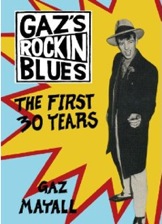
➢ Gaz’s Rockin’ Blues: The First 30 Years,
by Gaz Mayall (direct from Trolley, 280pp)

Gaz Mayall, Jarvis Cocker, Radio 2,

Gaz Mayall on 6Music: celebrating his 30th clubbing anniversary talking with Jarvis Cocker on The Sunday Service in October. © BBC

❏ GAZ MAYALL IS one of UK clubbing’s national treasures, and the paperback Gaz’s Rockin’ Blues is a nostalgic first-person collection of great club photos and comic-strip flyers that tell their own tale of London’s oldest continuous club-night, where Tracey Emin was once the cloakroom girl. The lad in the hat, who has kept his tiny nightspot jumping since July 3, 1980, supplies a brief but breathless string of anecdotes about live guests such as Prince Buster, Desmond Dekker and Joe Strummer. Gaz was one of the pathfinders who perfected the then brilliant notion of throwing a party every Thursday and playing his favourite rebel dance-tunes. As the 22-year-old Gaz told Shapersofthe80s that year: “People come here for good music”, which essentially meant his own heritage as a kid raised amid rock royalty and steeped in ska, reggae, rockabilly, rock and R’n’B.

Gaz's Rockin Blues, book, 1980sOn his club’s 30th anniversary, Kate Hutchinson wrote in Time Out: “It’s still going strong: you’ll find throngs of people swinging to guest live bands and DJs every Thursday night at the Soho basement dive St Moritz. It’s also the kind of hangout that keeps new generations coming, so the crowd always stays fresh. Those who aren’t old enough to go yet can mingle with everyone else at Gaz’s sound-system at Notting Hill Carnival, where he’s been causing a roadblock since 1982, or at his stage at Glastonbury, which he has run for the past three years.”

SHUFFLING BETWEEN STRAVINSKY AND ARMSTRONG

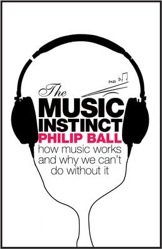
➢ The Music Instinct : How Music Works and Why We Can’t Do Without It, by Philip Ball (Bodley Head, 464pp)
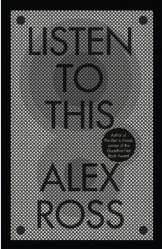
➢ Listen to This, by Alex Ross (Fourth Estate, 400pp)

The Music Instinct, Philip Ball, books❏ TWO IMPRESSIVE BOOKS THIS YEAR have dissected how music works its magic. They are not posited on the 80s at all, though they may well be emergent phenomena of our era of musical diversity. Critics heaped praise on Philip Ball’s The Music Instinct, an engaging survey by a popular science writer. Bee Wilson in The Sunday Times called it a “wonderful account of why music matters, why it wrenches our souls and satisfies our minds and sometimes drives us crazy”. In The Guardian Steven Poole praised Ball’s “deft analyses of the limitations of attributing ‘emotion’ to music, or considering it as a ‘language’ (Lévi-Strauss: if music is a language, it is an ‘untranslatable’ one)”. And the Amazon reviewer Steve Mansfield liked the author’s scope “by drawing his examples from across the spectrum of music, equally comfortable discussing and occasionally comparing music as diverse as J.S. Bach, John Coltrane, Eliza Carthy, gamelan orchestras, ragas, Schoenberg, and the Sex Pistols”.

Alex Ross, Listen to This, books❏ IN 2008 ALEX ROSS, music critic for The New Yorker, landed an unlikely bestseller with his gripping survey of 20th-century music, The Rest is Noise, plus a torrent of highbrow praise. This year he packages some choice essays under the title Listen To This, which David Smyth in the London Evening Standard said “ranges even more widely, making century-spanning, triple-jumping connections in the same way his shuffling iPod leaps from Stravinsky to Louis Armstrong. Coming from a background of listening to nothing but classical music in his teens and discovering rock’n’roll in adulthood, Ross can explain the brute appeal of, say, Radiohead’s Creep in a way that makes you feel your mind enlarging as you read”.

TWO WHO CHANGED THE CHARTS

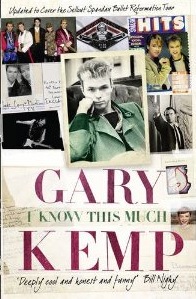
➢ I Know This Much: From Soho to Spandau,
by Gary Kemp (Fourth Estate, 320pp)

➢ If I Was, by Midge Ure with Robin Eggar
(Virgin Books, 288pp)

Gary Kemp, I Know This Much❏ FOR A MUSICIAN, the music really tells the life story. It’s rare for many of them to try to flesh out the story in prose, let alone as autobiography. Two who starred centre stage in 1980 were Ultravox’s Midge Ure and Spandau Ballet’s Gary Kemp, and though their accounts of the early transformative years of the decade weren’t actually first published this year, their paperback reprints continue to act as intelligent correctives to the hyperbole that accompanies some of the 30th-anniversary air-punching.

Songwriter Gary Kemp surprised many when last year’s autobiography, I Know This Much, proved so eloquent, encouraging rock writer Paul Du Noyer
to claim that it “sets a new standard for rock memoirs”. One of Amazon’s top reviewers, Mr Steve Jansen, believed that Kemp’s perceptive memories of a London now transformed make a “a touching testament to spiritual growth”. He wrote: “Kemp is able to reflect with great poignancy on a young man’s journey into, and through the shining city of dreams. In Kemp’s case that city, metaphorically, but more often literally — and literary in its evocation — is unmistakably London, and the metropolis is ever present like a ghost, framing his actions and attitude.”

The prominent journalist Robert Sandall of The Sunday Times, who died in July, had made Kemp’s his book of the year: “A sharply observed account by a quintessential London musician. Kemp exudes confidence, candour and a keen appreciation of the capital’s club culture.” This year’s paperback edition brought the story up to date with a postscript on his band’s reunion.

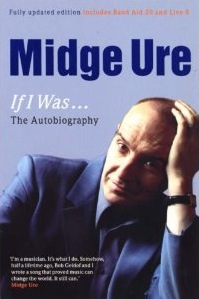
Midge Ure, If I Was❏ MIDGE URE IS THE OTHER eye-witness to the birth of Blitz culture, and his memoir, If I Was, hasn’t been out of print since published in 2004, and a revised edition is slated for next summer. Here, the musician tells with exceptional vigour a no-holds-barred story of his own journey from impoverished Glasgow childhood to new-wave superstar .

Amazon reviewer Lisby writes: “Ure writes fluidly and conversationally, imparting the kind of tactile detail that takes readers to the place and time of which he speaks. Ure is astonishingly honest, yet never vindictive. He is, in his prose, much as he is in his lyrics, a good person trying to be a better one while hoping the same for us all.” Another Amazon regular called thedouses adds: “Midge’s autobiography is a very well written, frank and honest book, which offers a fascinating insight into his own career and life but also other notable musical figures of the 80s and 90s music scenes in Britain, as well as providing background to the Band Aid and Live Aid events. He doesn’t use the opportunity to settle scores as so many of his contemporaries have done.”

Apart from being a busy wizard stirring the magic cauldron from which emerged many musical innovations in the 80s, Ure here establishes his central role in the production of Band Aid’s charity single, Do They Know It’s Christmas?, which led to Live Aid, the globally televised rock concert in 1985 which raised millions for famine relief.

NOT FORGETTING…

David Bowie, 1975 ➢ Any Day Now: David Bowie The London Years (1947-1974), by Kevin Cann (Adelita, 336 pages) was reviewed here on Dec 11. “Being a Bowie fan for almost 40 years I am flabbergasted. Many, many never before seen pictures” — Amazon reviewer Peter Gooren

FRONT PAGE

2010 ➤ Duran no turkey: here’s the Bacofoil video, plus two tracks premiered at East Village Radio

♫ View Nick Egan’s studio video of
All You Need Is Now in HD

All You Need Is Now, Duran Duran, video, Nick Egan,John Taylor, Simon Le Bon
❚ UNVEILED TODAY: the Nick Egan directed video for All You Need Is Now, the new single by 80s supergroup Duran Duran — which was available worldwide on iTunes from Dec 8. The nine-track digital album of the same name, produced by Mark Ronson is the band’s 13th in a studio. Ronson has called it the “imaginary follow-up to Rio that never was”. An expanded LP with additional original tracks will be released in March 2011 in various formats.

Duran Duran, Mediterranea❏ Update AYN debuts at No 6 on Billboard’s Alternative Albums Chart Jan 5. DD will be the featured artist on VH1’s Top 20 Spin on Jan 30.

❏ Here’s the new Duran track Mediterranea at beach-bum tempo, streamed live from East Village Radio on Dec 10:

It’s on the EP From Mediterranea With Love, an iTunes release in Europe, here premiered on the bumbling Mark Ronson’s show at East Village Radio, NYC, when Le Bon and Rhodes had a battle to get a word in edgeways. Whatever his gifts in a recording studio, the music producer is fudge as a broadcaster. Also, it’s not for him to tell us his own production is “amazing”, durr! Ronson, stick to the day job and leave the criticism to the big beasts who can tell a hawk from a handsaw. As it happens, the new tune proves to be classic DD.

❏ Another premiere streamed from East Village Radio — why this new album track is called The Man who Stole a Leopard (feat Kelis) is finally revealed by ITN newscaster Nina Hossein:

Nick Rhodes, Duran Duran , All You Need Is Now

No regrets: Nick Rhodes in the AYN video

➢ Read Crispin Kott’s 9/10-star review of the Duran album from Pop Matters

➢ Nick Rhodes is the man from Duran — Evening Standard interview Dec 9, 2010 … Is Rhodes at all embarrassed by his 18-year-old self? “Not even slightly. When we were teenagers, the world was pretty grey. You want something more exciting — to travel, to see what’s out there.”

FRONT PAGE

1980 ➤ How Duran Duran’s road to stardom began in the Studio 54 of Birmingham

Duran Duran, Berrow Brothers, Rum Runner, New Romantics,Nick Egan,video, All You Need Is Now

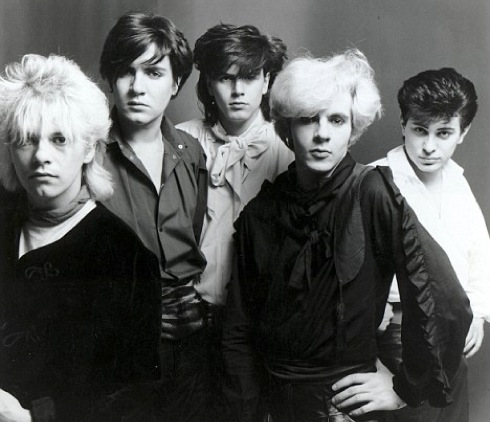
Duran Duran as full-on Romantics: Betty Page thought only co-founder Nick Rhodes (second right) passed the bouffant test convincingly

❚ ON OR ABOUT THIS DAY IN 1980 (MAYBE) some say Duran Duran signed their contract with EMI. The band seem mysteriously unable to remember when, so guesses might run from Dec 9 because Andy Taylor recalls the news of John Lennon’s death ruining his breakfast in London, and possibly Dec 22, date of a celebratory gig at Birmingham’s Cedar Club. However, the first official book, Their Story by Kasper de Graaf, places the signing firmly at 5 January 1981. According to co-manager Paul Berrow, the contract paid out a £28,000 advance (£90,000 in today’s money).

As the house band of the New Romantics in Britain’s second city, Birmingham, they were styled locally by Kahn & Bell, photographed by Paul Edmond, and managed by Paul and Michael Berrow, owners of the glitzy Rum Runner nightclub on Broad Street.

The Berrows had inherited the family business from their influential bookmaker father who had opened the club in the Swinging 60s and the sickly odours of Brut and Estee Lauder still lingered. Inspired directly by a visit to New York’s Studio 54, the brothers refurbished the Rum Runner in 1979 with state-of-the-art mirror-tiled walls and zigzags of neon. They then introduced a playlist heavily flavoured with Moroder-style imports and the American club-funk championed by the Nile Rodgers band Chic, whose string of chart hits was restoring credibility to disco music following the ridicule inflicted by the low-rent movie Saturday Night Fever. But how to become the Studio 54 of the Midlands?

Enter a band called Duran Duran in January 1980, armed with a four-song demo recorded at Bob Lamb’s studio which included Rio as a work in progress. The DD line-up were offered the club as daytime rehearsal space and jobs by night, including deejaying for Nick Rhodes. Roger Taylor recalls that the brothers “were looking for a band that was a cross between Gino Soccio, Genesis and Chic” — all the more curious that they made many attempts to contact Steve New to recruit the Rich Kids guitarist into the band, but they heard nothing from him.

Duran Duran, Meolody Maker, Andy Taylor

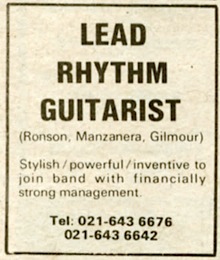
The Melody Maker ad that landed Andy Taylor in April 1980: unearthed by Duran fan Figital

Inevitably the lineup was rationalised and by the summer Andy had been recruited (“They were quite blatant,” Andy told Rolling Stone much later. “They said, ‘We’re posers. We want a good-looking poser band”). Then came Simon Le Bon as singer. According to him: “They had this thing about being between Chic and the Sex Pistols, but I thought they were more like in between Roxy Music and the Sex Pistols.” The band were searching for a musical direction.

Meanwhile as the rival nightclub Barbarella’s fell from favour, the Birmingham poser scene was reinventing itself in local bars around the peacock clothes designers Jane Kahn, Patti Bell and a veteran of Billy’s club in Soho, Martin Degville, who was commuting to London weekly to run a branch of his shop in Kensington Market. That summer the Rum Runner gave over Tuesdays to a Bowie/Roxy night. Sounds familiar? Enter journalist Betty Page and the rest is history.

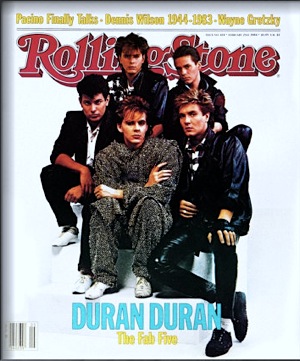
Within three years Duran Duran’s synth-pop had made The Fab Five one of the handful of British supergroups dominating the global stage. Duran can claim to have led the MTV-driven “Second British Invasion” of the United States from the autumn of 1981 with their raunchy and cinematic videos, and over 30 years enjoyed 21 singles in the Billboard Hot 100 and sales of 100m records.

BETTY PAGE OF SOUNDS RECALLS HOW SHE WAS
INVITED TO “DISCOVER” DURAN DURAN

Betty Page, Sounds, Beverley Glick

Betty Page in youthful bloom, more recently identified as Beverley Glick

In September 1980 in the pages of the music weekly, Sounds, Betty had slapped the label “New Romantics” on Spandau Ballet, house band of London’s Blitz club and then received a call from the hungry manager of this Brummie band called Duran Duran…

Paul Berrow was a smooth operator. ‘Come to the Rum Runner,’ he said of the club he co-owned with his brother Michael. ‘We’ve got a scene going on up here to put the Blitz to shame, and a band to go with it.’ Clever, I thought. He had singled me out to be the first journalist to write about his group. And they actually wanted to be called New Romantics! Nick was the most obviously New Romantic — a bouffant blond David Sylvian lookalike who sported extravagantly frilly shirts and shiny suits — but the style sat rather uncomfortably on the others.

The alarmingly pretty, floppy-fringed bassist John Taylor drew the line at satin shirts and a shoulder sash. ‘We were never meant to be bagged in with any elitist scene,’ said John, the pretty one. ‘The main chunk of our audience in Birmingham is those people,’ said Nick, the bouffant one, ‘but we’re not as tied to it as Spandau obviously are. When people come to see us we’d much sooner they dance and have a good time rather than dress up in the clothes and just stare… © Beverley Glick

➢ Read Betty Page’s retrospective survey of the New Romantics
– I Was There, originally published in Record Collector in 2004

ARCH-RIVAL MANAGER’S VERDICT ON DURAN

Years after both bands had achieved superstar status, Steve Dagger, the manager of Spandau Ballet, wrote this nugget summarising Duran Duran’s contribution to the 80s music scene. It was published in a partwork published by The Sunday Times in 1997 titled 1000 Makers of Music, which spanned all genres from classical to pop:

Rolling Stone, Duran Duran,Fab Five,Second British Invasion Duran were among a new group of artists who provided a glittering, sexy contrast to the prevailing dull corporate pop-punk of the 1970s. Taking their influence from the art-school underground of electronics/Ferry/Bowie, they came to prominence as the Birmingham ‘it’ band at the same time Spandau Ballet reigned over a similar scene in London. After an awkward but successful period as the Birmingham ‘answer to’, Duran metamorphosed in 1982 into a sleek, glamorous international entity with the seminal album Rio, having perfected a distinctive Duran sound fusing synths and guitar licks over post-disco rhythm. Inspired songs such as Hungry Like the Wolf were accompanied by cinematic videos, together creating an electric pop culture moment. After being derided for years, Britain had produced a group America could not ignore: Duran surfed in on the newly conceived MTV to conquer the States. They continue to make great British records and should recently have won a Novello for their lament to the 1980s, Ordinary World. [Key work: Is There Something I Should Know? (1983)]

❏ View this hilarious early video of white-faced New Romantics doing their wobbly dances to Duran Duran’s first single Planet Earth, performed at the Rum Runner in 1980 (now remastered in high quality). Note the hijacked Warren Street Jive in the official promo video sequences shot much later in a studio . . .

FRONT PAGE