Category Archives: North America

➤ 80s shapers win 2010 New Year Honours for fashion, music and walking in space

Katharine Hamnett, Fashion Aid

Fashion Aid 1985: Katharine Hamnett’s dazzling style, plus slogans

❚ IN THE FASHION WORLD, protest T-shirt designer Katharine Hamnett, 63, and Raymond Kelvin, 55 (founder of Ted Baker), are appointed CBEs, an order of chivalry granted twice a year by the British monarch for exceptional public service. Hamnett graduated from Saint Martin’s School of Art in 1969. Ten years on, she launched the Katharine Hamnett label and her first protest T-shirts bearing slogans such as Choose life, Worldwide nuclear ban now, Preserve the rainforests, Save the world. The British Fashion Council declared her designer of the year in 1984, when her designs became popular with pop stars including Wham! and Madonna. That year she famously met the then-prime minister Margaret Thatcher at a Downing Street party wearing a T-shirt proclaiming “58% don’t want Pershing” (the US ballistic missile). The meeting made news across the world and Vogue called it one of the most iconic moments in fashion. Hamnett remembers: “She didn’t notice it at first, but then she looked down and made a noise like a chicken. Then quick as a fishwife she said: ‘Oh well we haven’t got Pershing here, so maybe you are at the wrong party’, which I thought was rather rude as she had invited me.”

➢ New Year Honours reported by the BBC

Sandy Powell, Gwyneth Paltrow, Shakespeare in Love, OBE, Oscars

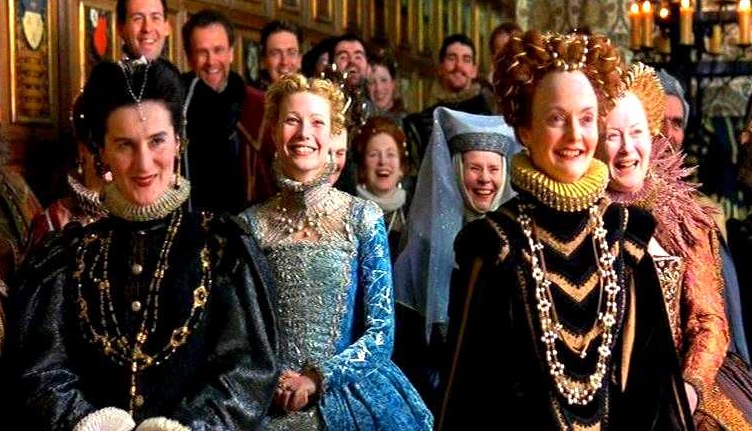
Gwyneth Paltrow sports her blue number from Shakespeare in Love: Sandy Powell’s costumes drew on half a century of Elizabethan design

❚ OSCAR-WINNING COSTUME DESIGNER SANDY POWELL, 50, receives an OBE for services to the film industry. She studied theatre design at Saint Martin’s and won her third Oscar earlier this year for The Young Victoria. Her previous wins were for Shakespeare In Love, in 1999 and The Aviator, in 2005. Of her job, she once said: “A costume designer’s contribution is to help make some believable characters, that’s all.”

Annie Lennox, Eurythmics, Rolling Stone

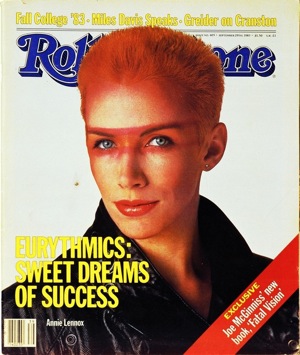
Annie Lennox: Cover girl in 1983. Photographed by C J Camp © Time Inc

❚ ABERDEEN-BORN SINGER ANNIE LENNOX, 56, is appointed an OBE for work fighting Aids and poverty in Africa. As one half of the Eurythmics, she brought her own unique voice and style to the music scene in 1981 with the hit Sweet Dreams, and later Thorn in My Side and Walking on Broken Glass. Today she is an Oxfam ambassador and, inspired by Nelson Mandela, founded her SING campaign to raise awareness of Aids in Africa. She said of her OBE: “It either means I’ve done something terribly right — or they’ve done something terribly wrong.”

➢ Entertainment honours reported by the BBC

Buggles, Video Killed the Radio star, Trevor Horn

Trevor Horn, left, as one half of Buggles, 1979

❚ RECORD PRODUCER TREVOR HORN, 61, who dominated orchestral pop in the 80s, receives a CBE, as does Howard Goodall, 52, National Ambassador for Singing, who created theme tunes for TV shows that included Blackadder. During Horn’s influential career his epic treatment made ABC’s The Lexicon of Love one of the masterpieces of 1980s pop, and enhanced hits by Frankie Goes to Hollywood on his own ZTT label, the Pet Shop Boys, Robbie Williams, Tina Turner, Simple Minds and Grace Jones’s mesmerising Slave To The Rhythm. He was named best producer at the Brit awards in 1983, 1985 and 1992, and won a Grammy in 1995 when Seal’s Kiss from a Rose was named record of the year.

❚ TALKING OF BLACKADDER, its producer John Lloyd, 59, also becomes a CBE — he also oversaw the landmark 80s comedy series Not The Nine O’Clock News and Spitting Image.

BRITISH ASTRONAUT RECALLS
THE SMELL OF SPACE

Atlantis, Nasa, Piers Sellers,shuttle, STS-112 crew portrait

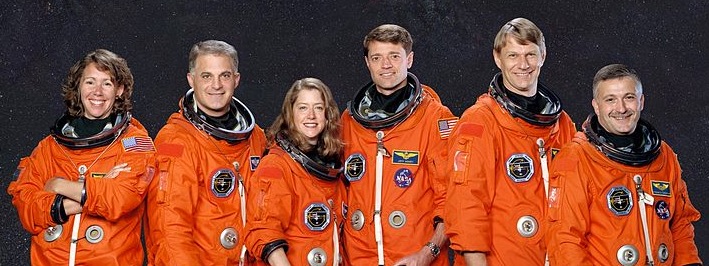
Atlantis shuttle crew, summer 2002: Sandra Magnus, David Wolf, Pamela Melroy, Jeff Ashby, Piers Sellers, and the Russian cosmonaut Fyodor Yurchikhin © Nasa

❚ HE WAS NEVER A NEW ROMANTIC, but astronaut Piers Sellers, 55, from Crowborough, East Sussex, is from the same generation. He is one of the nine Brits who have flown in space and he receives an OBE for services to science. Dr Sellers had to become an American citizen to be considered by Nasa, and then flew three missions aboard the shuttles Atlantis and Discovery in 2002, 2006 and again this year. He has carried out six spacewalks to continue the assembly and maintenance of the International Space Station. With the shuttle programme coming to an end, Dr Sellers — who took a degree in ecology and a PhD in climate simulation — is set to return to Nasa Goddard to resume his science pursuits.

Nasa, patch,space shuttle,Atlantis, STS112

Nasa patch for Atlantis mission STS112

When I met him and the Atlantis crew at the US embassy in London, touring the world in 2004 to talk up the Nasa programme following the Columbia shuttle disaster, the most startling thing he said was that space had a unique smell of its own: “Like burning steel.” The most shocking aspect of this observation is how the smell is transmitted. Smells comprise minute particles of material, which stimulate the sensory receptors in the nose. They could be as small as molecules, or ions, but to notice them at all space-walking astronauts must inevitably have brought them inside the shuttle from the exterior working environment of space. You hesitate to mention the word “alien”, but surely these particles have the potential to infect us earthlings with, er, whatever?

Each of the crew seemed to have been handpicked for their social skills, so during the party I questioned them all on the nature of this smell. Unprompted, every astronaut provided roughly similar descriptions of the smell of space — a mixture of sharp, smoky, acrid, burned metallic odours that permeate their Orlan space suits.

Michael Fossum,Piers Sellers, spacewalk,Nasa, space shuttle, Discovery, mission STS121

British astronaut Piers Sellers during the third spacewalk from the shuttle Discovery, July 2006: photographed by Michael Fossum, whose reflection is visible in the visor

When I asked mission commander Jeffrey Ashby about the risks of contamination, he said that in the early days of space flight, astronauts were always quarantined on returning to Earth and kept under observation for many days. With the passing of the years, and a marked absence of spiny creatures bursting out of people’s chests, quarantine was simply abandoned. The reasoning is that the extreme temperatures in the vacuum of space (+270 degrees C to –270 degrees C) would have exterminated any viral threats — especially the searing heat that had created the smell of space by burning the shuttle’s steel exterior, similar to that from an arc-welding torch used to repair heavy equipment. Yes, but, I hear you say: What about the cockroach?

➢ More from Nasa on the smell of space

FRONT PAGE

1980 ➤ How Duran Duran’s road to stardom began in the Studio 54 of Birmingham

Duran Duran, Berrow Brothers, Rum Runner, New Romantics,Nick Egan,video, All You Need Is Now

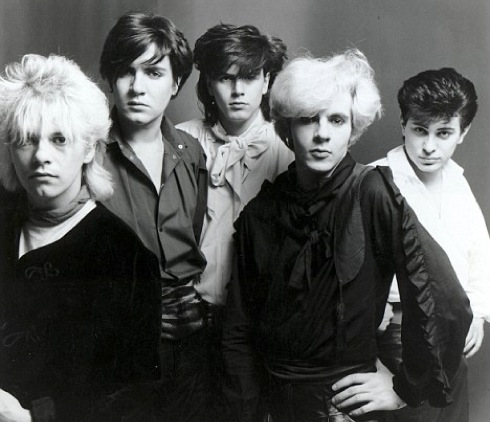
Duran Duran as full-on Romantics: Betty Page thought only co-founder Nick Rhodes (second right) passed the bouffant test convincingly

❚ ON OR ABOUT THIS DAY IN 1980 (MAYBE) some say Duran Duran signed their contract with EMI. The band seem mysteriously unable to remember when, so guesses might run from Dec 9 because Andy Taylor recalls the news of John Lennon’s death ruining his breakfast in London, and possibly Dec 22, date of a celebratory gig at Birmingham’s Cedar Club. However, the first official book, Their Story by Kasper de Graaf, places the signing firmly at 5 January 1981. According to co-manager Paul Berrow, the contract paid out a £28,000 advance (£90,000 in today’s money).

As the house band of the New Romantics in Britain’s second city, Birmingham, they were styled locally by Kahn & Bell, photographed by Paul Edmond, and managed by Paul and Michael Berrow, owners of the glitzy Rum Runner nightclub on Broad Street.

The Berrows had inherited the family business from their influential bookmaker father who had opened the club in the Swinging 60s and the sickly odours of Brut and Estee Lauder still lingered. Inspired directly by a visit to New York’s Studio 54, the brothers refurbished the Rum Runner in 1979 with state-of-the-art mirror-tiled walls and zigzags of neon. They then introduced a playlist heavily flavoured with Moroder-style imports and the American club-funk championed by the Nile Rodgers band Chic, whose string of chart hits was restoring credibility to disco music following the ridicule inflicted by the low-rent movie Saturday Night Fever. But how to become the Studio 54 of the Midlands?

Enter a band called Duran Duran in January 1980, armed with a four-song demo recorded at Bob Lamb’s studio which included Rio as a work in progress. The DD line-up were offered the club as daytime rehearsal space and jobs by night, including deejaying for Nick Rhodes. Roger Taylor recalls that the brothers “were looking for a band that was a cross between Gino Soccio, Genesis and Chic” — all the more curious that they made many attempts to contact Steve New to recruit the Rich Kids guitarist into the band, but they heard nothing from him.

Duran Duran, Meolody Maker, Andy Taylor

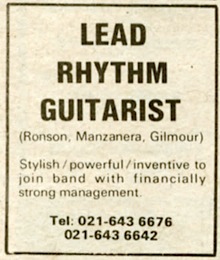
The Melody Maker ad that landed Andy Taylor in April 1980: unearthed by Duran fan Figital

Inevitably the lineup was rationalised and by the summer Andy had been recruited (“They were quite blatant,” Andy told Rolling Stone much later. “They said, ‘We’re posers. We want a good-looking poser band”). Then came Simon Le Bon as singer. According to him: “They had this thing about being between Chic and the Sex Pistols, but I thought they were more like in between Roxy Music and the Sex Pistols.” The band were searching for a musical direction.

Meanwhile as the rival nightclub Barbarella’s fell from favour, the Birmingham poser scene was reinventing itself in local bars around the peacock clothes designers Jane Kahn, Patti Bell and a veteran of Billy’s club in Soho, Martin Degville, who was commuting to London weekly to run a branch of his shop in Kensington Market. That summer the Rum Runner gave over Tuesdays to a Bowie/Roxy night. Sounds familiar? Enter journalist Betty Page and the rest is history.

Within three years Duran Duran’s synth-pop had made The Fab Five one of the handful of British supergroups dominating the global stage. Duran can claim to have led the MTV-driven “Second British Invasion” of the United States from the autumn of 1981 with their raunchy and cinematic videos, and over 30 years enjoyed 21 singles in the Billboard Hot 100 and sales of 100m records.

BETTY PAGE OF SOUNDS RECALLS HOW SHE WAS
INVITED TO “DISCOVER” DURAN DURAN

Betty Page, Sounds, Beverley Glick

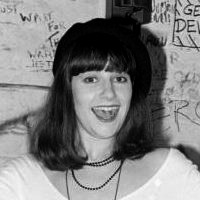
Betty Page in youthful bloom, more recently identified as Beverley Glick

In September 1980 in the pages of the music weekly, Sounds, Betty had slapped the label “New Romantics” on Spandau Ballet, house band of London’s Blitz club and then received a call from the hungry manager of this Brummie band called Duran Duran…

Paul Berrow was a smooth operator. ‘Come to the Rum Runner,’ he said of the club he co-owned with his brother Michael. ‘We’ve got a scene going on up here to put the Blitz to shame, and a band to go with it.’ Clever, I thought. He had singled me out to be the first journalist to write about his group. And they actually wanted to be called New Romantics! Nick was the most obviously New Romantic — a bouffant blond David Sylvian lookalike who sported extravagantly frilly shirts and shiny suits — but the style sat rather uncomfortably on the others.

The alarmingly pretty, floppy-fringed bassist John Taylor drew the line at satin shirts and a shoulder sash. ‘We were never meant to be bagged in with any elitist scene,’ said John, the pretty one. ‘The main chunk of our audience in Birmingham is those people,’ said Nick, the bouffant one, ‘but we’re not as tied to it as Spandau obviously are. When people come to see us we’d much sooner they dance and have a good time rather than dress up in the clothes and just stare… © Beverley Glick

➢ Read Betty Page’s retrospective survey of the New Romantics
– I Was There, originally published in Record Collector in 2004

ARCH-RIVAL MANAGER’S VERDICT ON DURAN

Years after both bands had achieved superstar status, Steve Dagger, the manager of Spandau Ballet, wrote this nugget summarising Duran Duran’s contribution to the 80s music scene. It was published in a partwork published by The Sunday Times in 1997 titled 1000 Makers of Music, which spanned all genres from classical to pop:

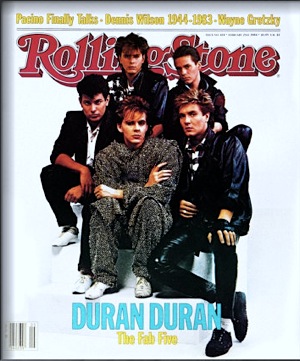
Rolling Stone, Duran Duran,Fab Five,Second British Invasion Duran were among a new group of artists who provided a glittering, sexy contrast to the prevailing dull corporate pop-punk of the 1970s. Taking their influence from the art-school underground of electronics/Ferry/Bowie, they came to prominence as the Birmingham ‘it’ band at the same time Spandau Ballet reigned over a similar scene in London. After an awkward but successful period as the Birmingham ‘answer to’, Duran metamorphosed in 1982 into a sleek, glamorous international entity with the seminal album Rio, having perfected a distinctive Duran sound fusing synths and guitar licks over post-disco rhythm. Inspired songs such as Hungry Like the Wolf were accompanied by cinematic videos, together creating an electric pop culture moment. After being derided for years, Britain had produced a group America could not ignore: Duran surfed in on the newly conceived MTV to conquer the States. They continue to make great British records and should recently have won a Novello for their lament to the 1980s, Ordinary World. [Key work: Is There Something I Should Know? (1983)]

❏ View this hilarious early video of white-faced New Romantics doing their wobbly dances to Duran Duran’s first single Planet Earth, performed at the Rum Runner in 1980 (now remastered in high quality). Note the hijacked Warren Street Jive in the official promo video sequences shot much later in a studio . . .

FRONT PAGE

1980 ➤ The Lennon we knew: unfulfilled talent with a genius for making friends the world over

John Lennon, Yoko Ono, New York City, 1980,Allan Tannenbaum

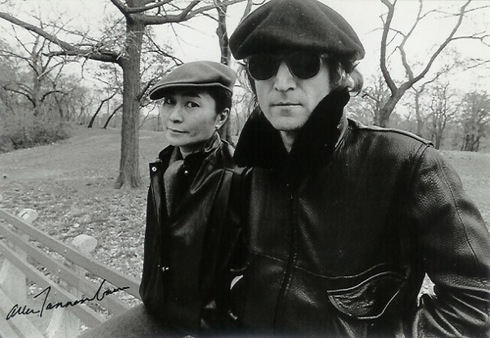
The last pictures: Allan Tannenbaum photographed John Lennon and Yoko Ono throughout November 1980, the month before the murder. The couple were emerging from a self-imposed five-year seclusion to prepare for the release of Double Fantasy, Lennon’s final album

❚ ON THIS DAY IN 1980, ex-Beatle John Lennon, one the few gods in the international pantheon of pop, was shot dead in a New York City street, aged 40. Today it’s impossible to describe convincingly the impact of The Beatles throughout the exhilarating decade we call the Swinging 60s, when their songs themselves became barometers of change.
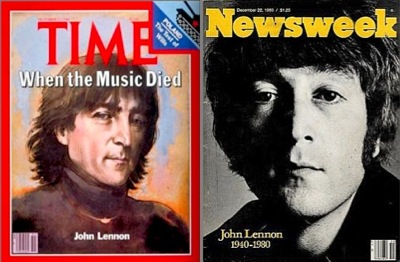
John Lennon death,Time magazine, Newsweek, 30th anniversary
Here is how music journalist and Beatles expert Paul Du Noyer encapsulated the contribution of the Lennon & McCartney partnership (1957-1970) in a mighty partwork published by The Sunday Times in 1997 titled 1000 Makers of Music:

“Whether measured in statistics or simply the love of the common people, the Beatles’ achievement looks unbeatable. And the engine of it all was the songwriting team of John Lennon and Paul McCartney. Before them, nobody dreamt that rock and roll would spawn enduring songs or that English rock could rule the world. Musically illiterate, the two Liverpool teenagers began by aping their American heroes and grew into writers of prolific originality. From the sunny simplicities of She Loves You, or A Hard Day’s Night, to the artful ingenuity of Penny Lane and Strawberry Fields Forever, they dazzled at every turn. Each was rocker and balladeer, lyricist and composer. They were a marriage of truth and beauty: Lennon soul-baring and verbally acrobatic (Norwegian Wood, I Am the Walrus); McCartney having the greater gift for melody (Yesterday, Hey Jude). Mostly they wrote alone, but raised one another’s game. Neither displayed the same consistency after the split [in 1970]. They lacked anyone with the nerve to say ‘Why don’t you change that bit?’ Their key work was A Day In the Life, 1967.”

➢ An index to Paul Du Noyer’s
published work on The Beatles

Today The Beatles hold the records for selling more albums in the United States than anybody else, and they head Billboard’s all-time top-selling Hot 100 list of singles artists, compiled in 2008. At home The Beatles have enjoyed more number one albums in the UK charts than anyone.

In the 60s, the mass media we know had scarcely left the starting line. This was a simpler era when any globally successful pop group was a novelty. When Beatlemania burst, it was a bombshell. The Fab Four, as the band were dubbed, found themselves writing many new rules in the celebrity game which fan worship then transmuted into the cultural phenomenon called Beatlemania — hordes of girls who stalked, pounced and screamed in frenzy — all accurately parodied in Dick Lester’s effervescent films, Help! and A Hard Day’s Night, based on the Beatles’ sudden worldwide fame. It also resulted in a deranged fan shooting his hero Lennon dead.

Beatlemania 1965, LHR

Typical Beatlemania: the band fly out from Heathrow bound for Austria and public vantage points are abrim with fans. Picture from Getty

Such sway did The Beatles hold, that their Merseyside cheek inspired provincial British pop groups not only to dare take on the unimaginative impresarios of the London entertainment mafia for whom blandness was the key to an act’s success, but then to take on the world showbiz mafia dominated by America, where within corporate frameworks artistic spontaneity might actively be indulged. The Beatles’ music — like the self-expressiveness of rock and roll — had a passion that chimed with the forces of grassroots social change, of liberation, emancipation, the debunking of authority figures, and the reform of cobwebbed institutions such as government, church and unions, all of which had been under attack by the stormtroopers of the satire movement since its dawn in 1960 with Beyond the Fringe.

The early Beatles hits captured the essential “sunny simplicities” of pop, though these acquired darker overtones as the decade matured and the increasingly “affluent society” of the West drew criticism from the New Left. By 1968, the daftness of the hippy dream saw The Beatles setting up Apple Corps. In 25-year-old Paul McCartney’s words this was to be “a business with a social and cultural environment where everyone gets a decent share of the profits. I suppose it’ll be like a sort of Western Communism”. Whateva.
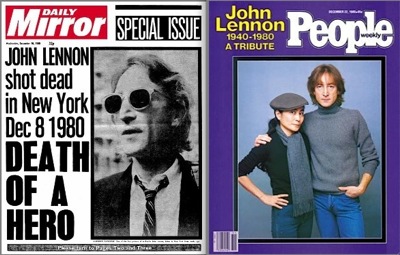
John Lennon death, Daily Mirror, people magazine, 30th anniversary
One secret to The Beatles becoming fab was being born in the port city of Liverpool, which had long bred its own resilient sense of humour. The band empathised with the working-class values of their community in ways the few young bloods in London’s middle-aged mainstream media found refreshing. Their heritage also included Liverpool’s role as the “New York of Europe” and home to Britain’s oldest Black African community. Little Richard and Berry Gordy’s Motown were in their blood, and The Beatles maintained the noble trade between Britain and North America which has seen each enhance and export the other’s music in a continuing chain of call-and-response since World War 2.

The songwriting partnership of Lennon & McCartney was unique, as also was their distinct vocal style absorbed from heroes such as Ben E King, and they transformed popular music utterly, never to be equalled. In his most infamous article, The Times’s music critic William Mann concluded in 1963: “They have brought a distinctive and exhilarating flavour into a genre of music that was in danger of ceasing to be music at all.” [See more, below]

Lennon’s own undoubted greatness was co-dependent on McCartney. Moreover, it becomes impossible to estimate the loss to music caused by his early death, when many people feel that, despite his wit and intelligence, his shortcomings hindered him from fully realising his true potential. This was the unsentimental verdict of journalist Maureen Cleave — who had known The Beatles since writing the first significant piece about them — as expressed in her frank and moving obituary for The Observer magazine in December 1980.

Beatles, life magazine, tribute
My other Evening Standard colleague who knew Lennon well during the Beatles’ later years is Ray Connolly, Liverpudlian author of many illuminating articles on Lennon. Connolly was due to meet him the day after he was shot. (“The last phone call I made before going to bed was to the Lennons’ apartment in New York to tell them that I would be in New York at lunchtime the following day.”) He agrees the Beatle was no saint, but he was “someone who wrote and played rock and roll music better than virtually anyone else”. In addition: “When he died millions of people mourned the loss of a friend. His real genius was in his ability to communicate. He was to perfection a creature of his times.”

In his instant paperback published by Fontana within two months of Lennon’s shooting, Connolly writes:
“[The American composer] Aaron Copland once said that when future generations wanted to capture the spirit of the 60s all they would have to do was to play Beatle records. That’s true, but I would go further. Future historians will find that understanding of the 60s and the 70s widened immeasurably by focusing on the life of John Lennon. From Liverpool war baby to killer’s victim just across the road from Central Park, Lennon’s every interest told a story of the times. The widespread grief at his death was compared with the mourning which followed the assassination of President Kennedy [in 1963]. No one should have been surprised, though many were.”

One of the reasons was that “Lennon chose the role of anti-hero for much of his life, casting off the trappings of glamour, throwing aside the shell of lovable immortality. John Lennon would never have made a politician. Political heroes are pragmatists. That is their job. John Lennon had no time for pragmatism. He was outspoken about everything and everybody, and then bore the consequences for his outrageousness.”
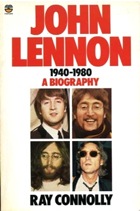
Ray Connolly, John Lennon biography, Fontana— Extracted from John Lennon 1940-1980, a biography by Ray Connolly (Fontana 1981). For many more interviews with all the Beatles, visit Connolly’s website and archive that includes Lennon: The Lost Interviews in which the journalist claims that “arguably one of Lennon’s most inspired acts was his deliberate destruction of The Beatles in 1969”. Connolly’s latest novel The Sandman arose from his years writing about rock music, not least about John Lennon and the Beatles, and is now available on Kindle

HARMONIC ORIGINALITY AND RICHNESS
UNKNOWN TODAY

In 1000 Makers of Music critic Ian MacDonald summarised the contribution of the Beatles as a band:
“As expressive of England in the 1960s as the music of Benjamin Britten in the 1950s, The Beatles made some of the world’s best music during their decade (1960-1970)… from the infectious melodies of their early beat-group years, through the LSD adventure of their central period (Revolver, 1966, and their key work Sgt Pepper’s Lonely Hearts Club Band, 1967). Each member of this Liverpool foursome made a vital contribution to a sound that blended boldness of melody and rhythm with a harmonic originality and richness of detail unknown in today’s pop… The Beatles redefined pop, revolutionised studio recording and completely dominated the culture of the 1960s. Their influence remains omnipresent.”
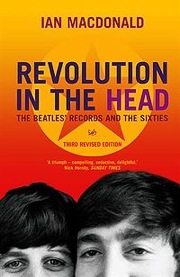
Ian MacDonald, Revolution in the Head, Lennon death, 30th anniversary— Ian MacDonald was the author of the monumental song-by-song analysis, Revolution in the Head: The Beatles Records and the Sixties (Pimlico).

His real name was Ian MacCormick and the book is worth consulting also for his essay Fabled Foursome, Disappearing Decade, on the social effects of the 1960s.

FOOTNOTES TO HISTORY

Richard Williams’s obituary for Ian MacDonald (1948-2003) in the Guardian noted: “Probably no other critic — not even the late William Mann of The Times, with his famous mention of pandiatonic clusters — contributed more to an enlightened enjoyment of the work of The Beatles than Ian MacDonald, who has died aged 54. In his book Revolution In The Head, first published in 1994, MacDonald carefully anatomised every record The Beatles made, drawing attention to broad themes, particular examples of inspiration and moments of human frailty alike. What could have been a dry task instead produced a volume so engagingly readable, so fresh in its perceptions and so enjoyable to argue with that, in an already overcrowded field, it became an immediate hit.”

Sample William Mann’s legendary and hilarious critique of Beatles technique from 1963:
“… One gets the impression that they think simultaneously of harmony and melody, so firmly are the major tonic sevenths and ninths built into their tunes, and the flat submediant key switches, so natural is the Aeolian cadence at the end of Not A Second Time (the chord progression which ends Mahler’s Song of the Earth) … Those submediant switches from C major into A flat major, and to a lesser extent mediant ones (eg, the octave ascent in the famous I Want To Hold Your Hand) are a trademark of Lennon-McCartney songs … The other trademark of their compositions is a firm and purposeful bass line with a musical life of its own; how Lennon and McCartney divide their creative responsibilites I have yet to discover, but it is perhaps significant that Paul is the bass guitarist of the group.”

➢ Extracted from What Songs The Beatles Sang
by William Mann, music critic of The Times

➢ William Mann’s monumental review of the Sgt Pepper album in 1967: The Beatles revive hopes of progress in pop music

FRESH INSIGHTS INTO BOY AND MAN

Over the past year Lennon’s life has twice been intelligently dramatised. In Nowhere Boy, visual artist Sam Taylor-Wood made her film debut directing several exceptional acting perfomances in an emotionally convincing evocation of Lennon’s adolescence during the austere 1950s, based on a novel by Lennon’s sister. For BBC television, Edmund Coulthard directed Lennon Naked, an unsentimentally credible account of Lennon’s confronting the desperate emotional crossroad that caused him to destroy the Beatles and abandon his wife and son for Yoko Ono.

DISILLUSIONED LENNON ON SELLING OUT

“When we played straight rock, there was nobody to touch us in Britain. As soon as we made it [as The Beatles], the edges were knocked off us, and Brian put us in suits. But we sold out. The music was dead before we even went on the theatre tour of Britain [Feb-June 1963, supporting other acts such as Roy Orbison]. We had to reduce an hour or two of playing to 20 minutes and go on and repeat the same 20 minutes every night. The Beatles’ music died there. As musicians we killed ourselves then.”

➢ John Lennon speaking in The New York Years
— this week’s BBC Radio 2 documentary by Susan Sarandon

Lennon’s Aunt Mimi Smith on his music
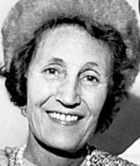
Aunt Mimi Smith, John Lennon“He used to drive me mad with his guitar playing, and I’ll always remember telling him, ‘The guitar’s all right for a hobby, John, but it won’t earn you any money’.”
➢ View the complete 1981 video interview
with Aunt Mimi

➢ 20 most underrated John Lennon tracks in NME Dec 14, 2010
Beatlemania, Hard Day's Night,

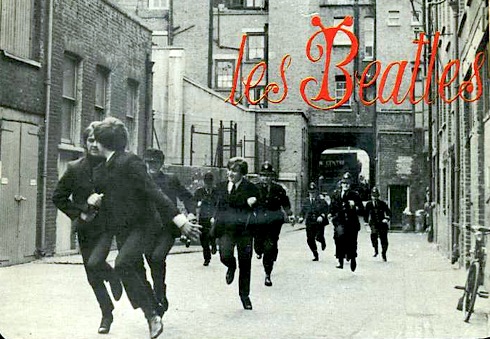
Beatlemania: the band on the run from fans and police in Dick Lester’s 1964 film A Hard Day’s Night

FRONT PAGE

➤ Rottweiler Dawkins croons his way into our hearts and minds

❚ IT’S NOT RAP AS WE KNOW IT, but here’s the music video of the week — Professor Richard Dawkins crooning his anti-creationist taunts like some born-again Craig David. Also known as “Darwin’s Rottweiler”, Dawkins is one of 10 distinguished thinkers remixed into song to spread enlightenment in A Wave of Reason, a musical compilation of soundbites preaching spiritual fulfilment through scepticism. It’s either shrill or lethal depending on your viewpoint, but does teeter on the brink of characterising the boffins as just as zealous as the believers. In its first three days online this vid has scored 120,340 views! (Click through to YouTube to read the “lyrics” in full. And yes, that is Darwin’s tree of life sprouting at 1:55.)

♫ There is a new wave of reason
Sweeping across America, Britain, Europe, Australia
South America, the Middle East and Africa.
There is a new wave of reason
Where superstition had a firm hold ♫
— Richard Dawkins

This is the seventh instalment in the Symphony of Science music video series, which aims to bring scientific ideas to the public in a novel way, through the medium of music. The mission of John Boswell, its Washington-based producer, is to fight people’s growing and irrational addiction to such pseudosciences as astrology and homeopathy. A sad paradox of the first era to be driven by digital technology is that scientists find it necessary to stand up and actively argue that a scientific worldview is as enlightening as blind faith!

Boswell, an electronic musician, was inspired initially by the American cosmologist Carl Sagan who became a global TV superstar during the 1980s, and the series has grown to embrace many other popularisers such as David Attenborough, in distinctly less strident vein than this week’s effort. In January Attenborough starred in The Unbroken Thread, a beautiful and lyrical tribute to planet Earth. Other eggheads in the series include Brian Cox, Jacob Bronowski, Bertrand Russell, Sam Harris, Michael Shermer, Lawrence Krauss, Jane Goodall, Carolyn Porco, Richard Feynman and James Randi, the stage magician and notorious sceptic best known for challenging the “woo-woo” of the paranormal.

➢ Richard Dawkins is an atheist and critic of creationism and so-called “intelligent design”
➢ Join the Brights movement where the worldview is free of supernatural and mystical elements
➢ Dip into The Third Culture at edge.org where the world’s leading scientists, artists and creative thinkers answer a new Big Question every year — in 2010 it was “How is the internet changing the way you think?”

FRONT PAGE

➤ Hear a clip from Duran Duran’s new album — lucky No 13?

Duran Duran, Roger Taylor, John Taylor, Katharine Hamnett

Duran’s Roger Taylor and John Taylor: delivering the new Hamnett message. Photographed © by Roger Dekker

❚ DURAN DURAN ANNOUNCE THEIR 13th ALBUM, the Mark Ronson-produced, nine-track All You Need Is Now, to be released via iTunes on December 21 and in stores on CD and vinyl in February 2011. Keyboardist and original member Nick Rhodes says: “It’s the best record we’ve made in over two decades.” Fingers must be very tightly crossed in view of their last album attempt.

Nick Rhodes, Duran Duran, Dazed & Confused, synthesisers

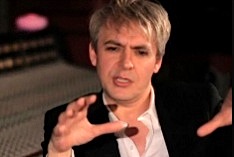
Nick Rhodes: “videos for every track”

True Shapers of the 80s will recall the glory days of Duran Duran — Rio, Girls on Film and Hungry Like the Wolf — when the Brummie New Romantics were one of Britain’s half-dozen supergroups among the MTV generation. Their champagne lifestyle videos such as Rio, shot on 35mm film, set new standards for extended pop promos during the British invasion of American charts — over the years Duran have claimed 21 singles in the Billboard Hot 100.

Rhodes says of the new album: “We will be making videos for every track, which is something we certainly haven’t done since the very beginning.” This week Duran’s Taylors, Roger and John, were pictured in Katharine Hamnett T-shirts (in an echo of her Choose Life message in the 80s) in Roger Dekker’s photo shoot for the album.

Simon Le Bon, Red Carpet Massacre,

“Humpty” Le Bon during the 2008 Massacre

The venture results from a 2008 collaboration in Paris between Mark Ronson and all four original members of DD — John Taylor, Roger Taylor, Nick Rhodes and Simon Le Bon. In Ronson’s words this is the “imaginary follow up to Rio that never was”. The band also promises a spring world tour to promote the album.

Well, they’re going to have to do miles better than the tedious Red Carpet Massacre album a couple of years back which was an utter chart failure. The tour saw a portly Le Bon gallumphing breathless around the stage in his skinny-fit outfit like a trussed-up Humpty-Dumpty, well past it. The obvious lack of chemistry between singer and musicians was an embarrassment all round, sadly recorded for posterity by VH1. Unsurprisingly, Duran’s five-year contract with Epic Records was not renewed in 2009, and they are currently fending for themselves.

Facebook commenters are already calling for Le Bon to shed his current beard. What about some weight too? Even then, the old fella will need a shot of Viagra.

Duran Duran, logo
♫ Hear a clip from Duran Duran’s single Being Followed,
which is set for release a week ahead of the new album

FRONT PAGE