Category Archives: Media

2010 ➤ Step up Martin Kemp – movie mogul

Martin Kemp,Jonathan Sothcott, Black and Blue Films,Expose

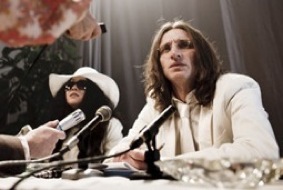
Kemp and Sothcott: director and producer with Hammer Horror in mind

❚ ANOTHER DAY, ANOTHER DOLLAR. Who’s this relaxed and expansive dude sitting in smart restaurant with his business partner talking about their upcoming horror movie? Yes, in the week that his band of 80s popsters Spandau Ballet wind up their year-long reunion tour with a posh send-off concert at Newmarket racecourse, bass player Martin Kemp presses the button marked Publicity for his next project.

Martin Kemp, The Glittering Prizes, TV

Kemp at 15: scene-stealing in The Glittering Prizes

At the ripe old age of 48 he’s now a writer and director of films, which might seem a logical next step after a lifetime of watching how it’s done. His long list of acting credits stretches back to that first child-star cameo in the coolest TV serial of 1976, The Glittering Prizes, which made an international star of Tom Conti, after which Kemp made his mark as those folk villains Reggie Kray in The Krays and Steve Owen in EastEnders.

Even while his pop career was being reanimated with Spandau, Kemp had formed a British company called Black and Blue Films in partnership with 30-year-old producer Jonathan Sothcott and actor Billy Murray, a familiar face from TV soaps. In a video interview with Kemp he says his directorial debut is a remake of a notorious 1976 video nasty called Exposé, given the new title of Stalker (click through for trailer). It’s an old dark house psycho-drama, with plenty of blood, if clips from the new version are any indication. “People start dying,” says Sothcott and Kemp adds: “All in one house. That’s a good premise for low-budget film.”

Expose, Black and Blue Films, Anna Brecon, Martin Kemp

Anna Brecon in Exposé: says it all

That was the cleverest lesson Kemp learned about screenplays, Sothcott maintains: “He wrote it low-budget! So we could shoot it fast and cheap, which so many writers in this country don’t do.”

For Kemp, the hardest challenge as a director was to keep the story rolling. “That’s what I learned on Exposé, pacing the story. That’s where I’ve seen lots of my friends fall down on their first feature, never on the acting or photography – it is telling the story.

“This is my 40th year in entertainment, so it’s nice to mark it with a something new. Every project throws up different problems that you have to solve – directing means you have to solve everybody else’s as well.”

Sothcott lays his own cards on the table: “The model I’m trying to rip off with Black and Blue is Hammer [the much-loved tongue-in-cheek horror studio of the 50s and 60s, which churned out gothic potboilers calculated to make audiences laugh as much as scream]. Next year I hope we’ll be making six crime-horror-comedy movies that will sell all round the world – stuff that isn’t just Brit-centric. Stuff that’s fun.”

Despite the chaotic economic climate, Kemp maintains that their company is thriving. “We’ve had a funny couple of years. All around us are production companies closing down, not able to get money, and we’ve had possibly the best two years ever. We’ve got Just For the Record [see trailer below, a Spinal Tap-type spoof, but of the film industry: “This wouldn’t have happened on Grange Hill”] and we’re in talks about another couple of films. Exposé was so much fun, I can’t wait to do my next.”

Watch out also for Dead Cert, a fast-moving vampire frightener starring cockney Craig Fairbrass: “Kill ’em, that’s the only thing we can do.”
FRONT PAGE

1966 ➤ When John Lennon became US public enemy number one

Beatles, burnings, Alabama,more popular than Jesus

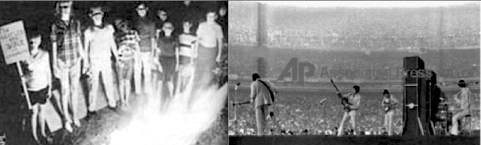
Birmingham, Alabama in 1966: a warm welcome awaits The Beatles

Beatles, tour, USA 1966, burnings, Shea Stadium,more popular than Jesus

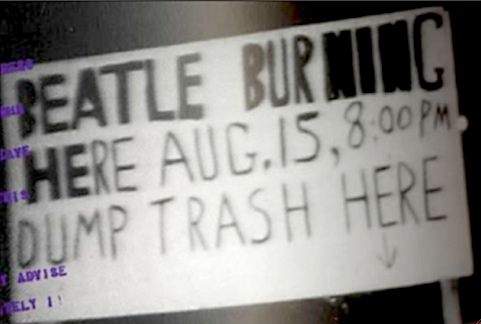
From the extreme right to another: God-fearing fans burn Beatles records in the Bible Belt in 1966 . . . while 45,000 more pack Shea Stadium in New York City. (Picture by AP)

❚ FAME FASCINATES NOW NO LESS THAN IT DID THEN. Interest in John Lennon intensifies this year because it brings the 70th anniversary of his birth and the 30th of his murder in New York. There, a prestigious 70th birthday celebration is being held at Radio City Music Hall on September 25 starring The Fab Faux, a premier-league tribute band. Soon after, Liverpool goes into overdrive for two whole months of Lennon worship.

Lennon Naked, BBC, drama, Naoko Mori

Lennon Naked, an unflattering new drama-doc: Christopher Eccleston stars as John Lennon with Naoko Mori as Yoko Ono. © BBC

Tonight and tomorrow BBC4 steals a march with Lennon Naked, a robust drama-documentary charting the musician’s activities from 1967 to 1971, a turbulent period which included the dissolution of The Beatles as the most popular group in pop history, huge enough to have pioneered the stadium concert. The sudden death in 1967 of gifted Beatles manager Brian Epstein was devastating for each of the Fab Four – Lennon most of all. He leaned ever more heavily on the bewitching catalyst for change in his own fortunes, the artist Yoko Ono, whom he had met the previous November in London.

With Beatlemania at its height, and the Fabs the coolest ambassadors for Swinging London, 1966 had precipitated its own trauma. Not only was Lennon taking his first steps exploring the not-yet fashionable halucinatory drug LSD, but in July a bombshell exploded in his lap, as The Beatles’ world tour was about to descend on 14 cities in North America.

An interview was published in an American teen magazine in which he boldly asserted of The Beatles’ fame: “We’re more popular than Jesus now.” Across the American Bible-belt and beyond, God-fearing Christians were outraged. Anti-Beatle demonstrations and public burnings of their records ensued, the Ku Klux Klan – a right-wing hate group – vowed vengeance and death threats were reported. Such was the pressure on the whole entourage that when a fan threw a lit firecracker onstage in Memphis and it went off, the Beatles’ press agent Tony Barrow recalls: “All of us at the side of the stage, including three Beatles on stage, all looked immediately at John Lennon. We would not at that moment have been surprised to see that guy go down.”

Though repeated apologies were issued at press conferences across the States, after the San Francisco concert on August 29, 1966, the whole furore persuaded the band to stop touring ever again.

The now notorious “Jesus” quote had arisen in conversation with the British journalist Maureen Cleave, a clear-sighted interviewer on the London Evening Standard where it had been first published without raising an eyebrow in the increasingly secular UK. Today, Shapersofthe80s republishes her riveting account of her tour of Lennon’s Weybridge home, which set out to explore the then novel phenomenon of four popstars who were so famous they couldn’t set foot in public without being mobbed. Thanks to the trust the Fab Four placed in her, Cleave sought to put Beatlemania under the microscope by interviewing John, George, Paul and Ringo separately and successively, under the series title How Does a Beatle Live? Lennon, for one, would ask when you rang, “What day is it?” – with genuine interest.

➢➢ Click to read the original article on Lennon,
How Does a Beatle Live?

Maureen Cleave, The Beatles, Evening Standard,more popular than Jesus

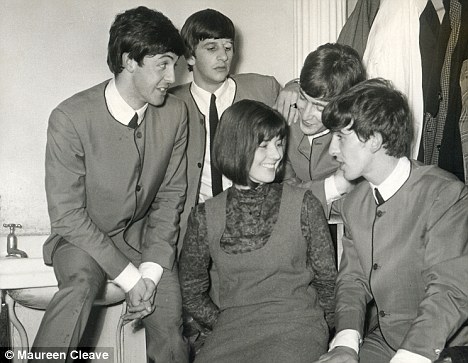
Maureen Cleave recalls: “Ringo used to say the only place he felt safe was in the lavatory; so the Standard once took a photograph of them all there, with Paul sitting on the washbasin.” She never mentions that she was sitting in the middle.

➢➢ Beatles pics from 1966 – Daily Mirror slideshows

FRONT PAGE

2010 ➤ Duffy, the man who shot Aladdin Sane

❚ BRIAN DUFFY, THE PHOTOGRAPHER who helped to capture the spirit of the Swinging 60s, has died. Among the many showbiz stars he shot was David Bowie, and if any images deserve to be called iconic, these do. Known to friends and colleagues by his surname alone, Duffy was a rival of David Bailey and Terence Donovan throughout the 1960s. Film producer Lord Puttnam said Duffy helped push the stultifying conservatism of the 1950s into permanent retreat. Duffy is also famed for once burning part of his work in a bin in 1979.

➢➢ Read the full BBC News report

David Bowie, Aladdin Sane, Brian Duffy

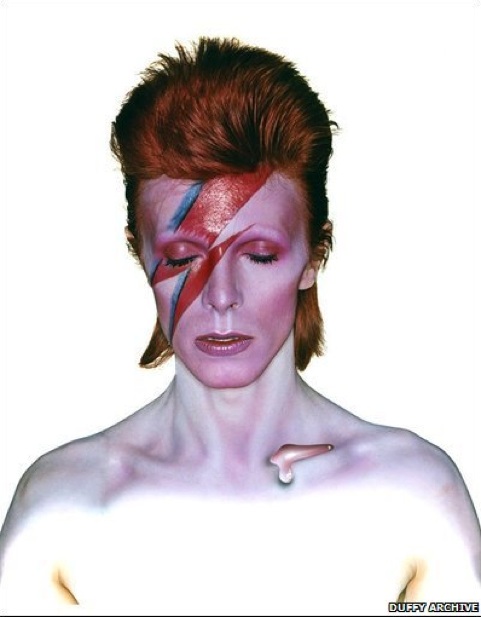
Duffy shot three album covers for Bowie, here Aladdin Sane, 1973, artfully created long before Photoshop had been invented. © The Duffy Archive Limited

Vogue, Brian Duffy, photographer

In May 2003, Vogue magazine paid tribute to Bowie by dressing up Kate Moss in some of his original costumes. A nod to the 1973 Duffy photo graced its cover, which Vogue’s editor Alexandra Shulman said was his favourite cover of all time (see Iconic Photos, below). Right, the photographer Duffy at his lightbox

David Bowie, Lodger, Brian Duffy, Derek Boshier

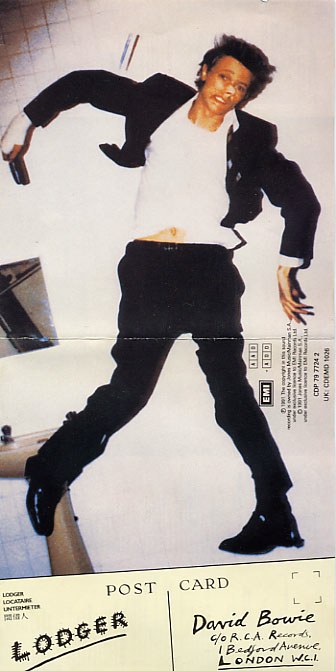
Bowie’s Lodger album, 1979, photograph © The Duffy Archive Limited. Artist Derek Boshier wrote: “The cover for Lodger was a collaboration between David, the photographer Duffy, and myself. I loved the resolution to the problem of David being photographed falling. Shooting him from above, on a specially made table built to match the falling form. The table was designed to be completely obscured by David’s body”

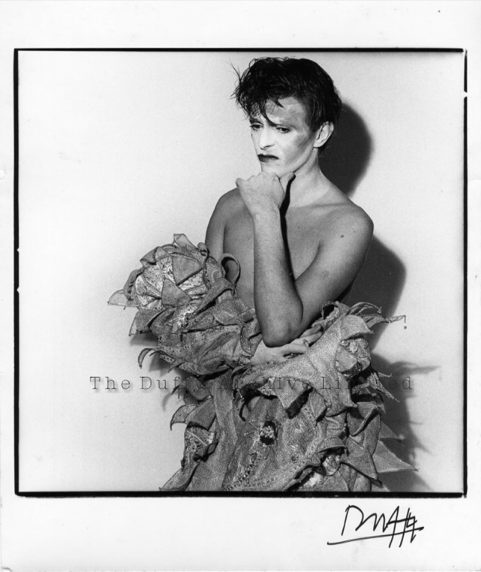
Brian Duffy, David Bowie, Scary Monsters

Duffy’s shoot for Bowie’s Scary Monsters album, 1980 © The Duffy Archive Limited

David Bowie, Brian Duffy

Bowie by Duffy, 1980: not chosen for Scary Monsters and published only once, in a blog last September. © The Duffy Archive Limited

➢➢ Sara Wiseman, Duffy’s archive assistant, wrote last September in her blog:

“Whereas Duffy’s more iconic images such as his Aladdin Sane cover, have been retouched, consciously selected and then admired by many to achieve such status, I love the fact that this one [shot but not chosen for Scary Monsters and never before been published] was forgotten for thirty years and for that reason I loved discovering it. I could perhaps align the thrill to that of finding buried treasure. There is something about Bowie’s unperfected facial expression that gets me every time. In a way I find the photograph to be extremely revealing in that it humanizes Bowie. This scornful look which, was not included in his contrived and manufactured public image, lowers him from the elevated, almost superhuman level of the pop/rock star. What we have before us here, is a man in a ridiculous costume looking pretty indifferent.

“I asked Duffy what his thoughts on the photograph were: ‘You like it? Yes me too. You may have noticed that in many of my male portraits my subjects look as if they’re on the verge of smacking me … ha! (Duffy acquired a reputation, of which he is proud, for being a bit of an anarchist.) That was my technique, I would say something to rile them or wind them up. It won me some great photographs – full of genuine male aggression. You may also notice that the same can not be said for my female portraits!’ ”

☐ ☐ ☐


➢➢ Visit Duffy’s website

➢➢ Surviving contact sheets from the Aladdin Sane session
➢➢ Famous, Infamous and Iconic Photos
➢➢ Derek Boshier Art

THE TRIBUTES

➢➢ Fearlessly innovative photographer who in countless striking images helped to define the mood and style of the Swinging Sixties – The Times, June 5, 2010
❏ Duffy, Bailey and Donovan invented a new documentary style of fashion photography, and fed off each other’s creativity. Duffy produced a body of work that spanned everything from portraits and reportage to advertising — he was one of the few photographers to have shot two Pirelli calendars, and successfully undertook campaigns for brands including Smirnoff, Aquascutum and Benson & Hedges, for whom he created a series of surreal advertisements in 1977.

➢➢ Central figure in the visual revolution that echoed the wider changes in British society during the 1960s – The Daily Telegraph, June 6, 2010
❏ With David Bailey and Terence Donovan, he formed what was dubbed the “Black Trinity” by Norman Parkinson, the photographer whose pastoral style seemed to embody all that the young trio wanted to challenge. If Bailey was the most creative of them, and Donovan the most amusing, the art school-trained Duffy was the most provocative and intellectual. “Before 1960 the fashion photographer was tall, thin and camp,” he reflected. “But we three were different: short, fat and heterosexual.”

➢➢ One of the “terrible trio” with David Bailey and Terence Donovan who broke the mould of fashion photography – The Guardian, June 6, 2010
❏ The three men became far more famous than many of the models with whom they worked, and were – for a while – bigger than the glossy magazines that published their pictures. The photographer Norman Parkinson called Duffy, Bailey and Donovan the “black trinity”. There was some merit in the label. The cravat-wearing old guard felt threatened by these freewheeling young men in leather jackets, who took their models on to the streets and snapped them with newfangled, small 35mm cameras.

➢➢ Brian Duffy: The Man Who Shot The 60s by George’s Journal

FRONT PAGE

2010 ➤ After Queen quits, who can save EMI – private equity boss or creative maverick?

Formed in 1931, EMI is Britain’s oldest record company and the fourth-largest business group in the industry. Its future looks uncertain, after losing many key acts, the latest to defect being Queen. Talking to Pete Paphides in today’s Times, leading music industry talents describe how to rescue the once-mighty label. Here’s a taste …

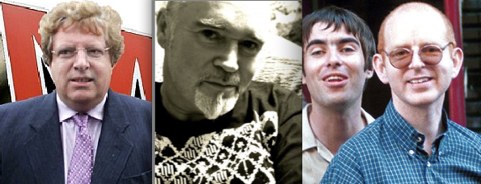
Guy Hands, Marc Marot, Alan McGee

Private equity boss Guy Hands … and the creatives Marc Marot, and Alan McGee, Svengali behind Oasis

❚ WHAT DO PEOPLE TALK ABOUT when they talk about EMI these days? According to Alan McGee, the sometime supremo of Creation Records: “They talk about debt, covenants and pension funds. What they never seem to talk about is the music. That’s the problem at the moment.”

And the solution? For a label that arouses the same feelings in music fans that Cadbury arouses in chocoholics, the worrying answer is that it may be too late for one. Even by the beleaguered imprint’s own recent standards, May was an extraordinary month. With Radiohead, the Rolling Stones and Paul McCartney long gone, one of EMI’s last remaining “legacy” brands, Queen — or what remains of them — decided to take their business elsewhere.

Admittedly, the label that Guy Hands’s private equity firm Terra Firma bought for far too much money [reportedly £2.4bn, $3.5bn] in 2007 managed to secure another £105 million from his backers … What sent morale into freefall, however, were Hands’s press utterances, which seemed to single out the number of artists signed to the label as the source of its inefficiency. “One of the issues we will be addressing is the sheer size of our roster,” Hands said …

[Marc Marot, former managing director at Island Records, today head of a management company helping emerging acts] – “It’s crazy that EMI should not be top of my shopping list. But the fact is that there’s no sense that this is a label with an A&R strategy. The idea that you only sign the acts that are sure to succeed is naive.”

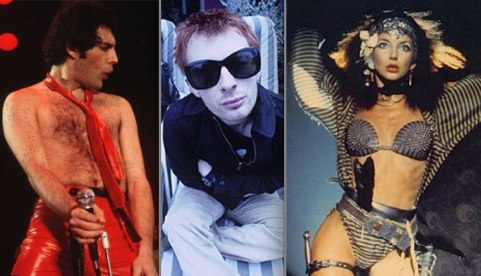
Freddie Mercury, Radiohead, Kate Bush

Made by EMI: Queen’s Freddie Mercury, Radiohead’s Thom Yorke, Kate Bush

“You need a maverick quality to run a label,” says Mike Batt, whose Dramatico imprint is currently home to Katie Melua, Carla Bruni and Marianne Faithfull. “You know you’ll lose on some acts, but it doesn’t matter as long as you have enough to gain with.”

“These days,” McGee says, “you identify [EMI] with a guy who runs a f***ing hedge fund [sic]. It could find another Beatles and it wouldn’t make any difference because it wouldn’t want to sign to them.” Asked if he could turn the label around, the man who discovered Oasis says: “Pretty f***ing easily.”

➢➢ Can EMI pick up the pieces?
– Read Pete Paphides in full in The Times, June 2, 2010

FRONT PAGE

2010 ➤ Index of posts for May

Steve New, Rich Kids, Revolver,Index May 2010, Shapersofthe80s➢ Spider-woman Bourgeois created her art as meditations on sexuality

➢ Foxx celebrates his life as the Duchamp of electropop

➢ Rich Kid Steve New (left, aka Stella Nova) dies at 50

➢ Just the birthday present Steve Strange really wanted this week of all weeks

➢ ‘A triumph’ – George’s verdict before transmission of his biopic

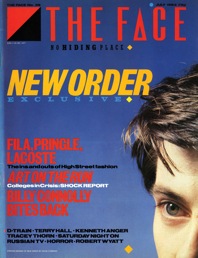
The Face, magazines, July 1983, New Order, Art on the Run➢ Ex-Blitz Kids give their verdicts on Worried About the Boy

➢ Three key men in Boy George’s life

➢ Can Generation Y be bovvered to vote?

➢ Lest we forget, on this day Britain sank the Belgrano

➢ Birth of The Face: magazine that launched a generation of stylists and style sections

FRONT PAGE