Category Archives: Media

➤ 80s shapers win 2010 New Year Honours for fashion, music and walking in space

Katharine Hamnett, Fashion Aid

Fashion Aid 1985: Katharine Hamnett’s dazzling style, plus slogans

❚ IN THE FASHION WORLD, protest T-shirt designer Katharine Hamnett, 63, and Raymond Kelvin, 55 (founder of Ted Baker), are appointed CBEs, an order of chivalry granted twice a year by the British monarch for exceptional public service. Hamnett graduated from Saint Martin’s School of Art in 1969. Ten years on, she launched the Katharine Hamnett label and her first protest T-shirts bearing slogans such as Choose life, Worldwide nuclear ban now, Preserve the rainforests, Save the world. The British Fashion Council declared her designer of the year in 1984, when her designs became popular with pop stars including Wham! and Madonna. That year she famously met the then-prime minister Margaret Thatcher at a Downing Street party wearing a T-shirt proclaiming “58% don’t want Pershing” (the US ballistic missile). The meeting made news across the world and Vogue called it one of the most iconic moments in fashion. Hamnett remembers: “She didn’t notice it at first, but then she looked down and made a noise like a chicken. Then quick as a fishwife she said: ‘Oh well we haven’t got Pershing here, so maybe you are at the wrong party’, which I thought was rather rude as she had invited me.”

➢ New Year Honours reported by the BBC
Sandy Powell, Gwyneth Paltrow, Shakespeare in Love, OBE, Oscars

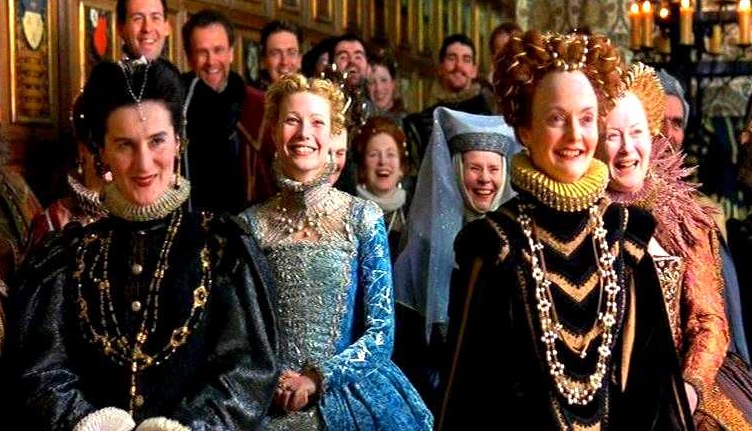
Gwyneth Paltrow sports her blue number from Shakespeare in Love: Sandy Powell’s costumes drew on half a century of Elizabethan design

❚ OSCAR-WINNING COSTUME DESIGNER SANDY POWELL, 50, receives an OBE for services to the film industry. She studied theatre design at Saint Martin’s and won her third Oscar earlier this year for The Young Victoria. Her previous wins were for Shakespeare In Love, in 1999 and The Aviator, in 2005. Of her job, she once said: “A costume designer’s contribution is to help make some believable characters, that’s all.”
Annie Lennox, Eurythmics, Rolling Stone

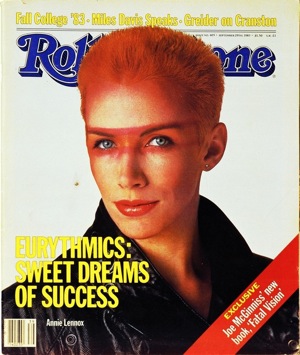
Annie Lennox: Cover girl in 1983. Photographed by C J Camp © Time Inc

❚ ABERDEEN-BORN SINGER ANNIE LENNOX, 56, is appointed an OBE for work fighting Aids and poverty in Africa. As one half of the Eurythmics, she brought her own unique voice and style to the music scene in 1981 with the hit Sweet Dreams, and later Thorn in My Side and Walking on Broken Glass. Today she is an Oxfam ambassador and, inspired by Nelson Mandela, founded her SING campaign to raise awareness of Aids in Africa. She said of her OBE: “It either means I’ve done something terribly right — or they’ve done something terribly wrong.”

➢ Entertainment honours reported by the BBC

Buggles, Video Killed the Radio star, Trevor Horn

Trevor Horn, left, as one half of Buggles, 1979

❚ RECORD PRODUCER TREVOR HORN, 61, who dominated orchestral pop in the 80s, receives a CBE, as does Howard Goodall, 52, National Ambassador for Singing, who created theme tunes for TV shows that included Blackadder. During Horn’s influential career his epic treatment made ABC’s The Lexicon of Love one of the masterpieces of 1980s pop, and enhanced hits by Frankie Goes to Hollywood on his own ZTT label, the Pet Shop Boys, Robbie Williams, Tina Turner, Simple Minds and Grace Jones’s mesmerising Slave To The Rhythm. He was named best producer at the Brit awards in 1983, 1985 and 1992, and won a Grammy in 1995 when Seal’s Kiss from a Rose was named record of the year.

❚ TALKING OF BLACKADDER, its producer John Lloyd, 59, also becomes a CBE — he also oversaw the landmark 80s comedy series Not The Nine O’Clock News and Spitting Image.

BRITISH ASTRONAUT RECALLS
THE SMELL OF SPACE

Atlantis, Nasa, Piers Sellers,shuttle, STS-112 crew portrait

Atlantis shuttle crew, summer 2002: Sandra Magnus, David Wolf, Pamela Melroy, Jeff Ashby, Piers Sellers, and the Russian cosmonaut Fyodor Yurchikhin © Nasa

❚ HE WAS NEVER A NEW ROMANTIC, but astronaut Piers Sellers, 55, from Crowborough, East Sussex, is from the same generation. He is one of the nine Brits who have flown in space and he receives an OBE for services to science. Dr Sellers had to become an American citizen to be considered by Nasa, and then flew three missions aboard the shuttles Atlantis and Discovery in 2002, 2006 and again this year. He has carried out six spacewalks to continue the assembly and maintenance of the International Space Station. With the shuttle programme coming to an end, Dr Sellers — who took a degree in ecology and a PhD in climate simulation — is set to return to Nasa Goddard to resume his science pursuits.

Nasa, patch,space shuttle,Atlantis, STS112

Nasa patch for Atlantis mission STS112

When I met him and the Atlantis crew at the US embassy in London, touring the world in 2004 to talk up the Nasa programme following the Columbia shuttle disaster, the most startling thing he said was that space had a unique smell of its own: “Like burning steel.” The most shocking aspect of this observation is how the smell is transmitted. Smells comprise minute particles of material, which stimulate the sensory receptors in the nose. They could be as small as molecules, or ions, but to notice them at all space-walking astronauts must inevitably have brought them inside the shuttle from the exterior working environment of space. You hesitate to mention the word “alien”, but surely these particles have the potential to infect us earthlings with, er, whatever?

Each of the crew seemed to have been handpicked for their social skills, so during the party I questioned them all on the nature of this smell. Unprompted, every astronaut provided roughly similar descriptions of the smell of space — a mixture of sharp, smoky, acrid, burned metallic odours that permeate their Orlan space suits.

Michael Fossum,Piers Sellers, spacewalk,Nasa, space shuttle, Discovery, mission STS121

British astronaut Piers Sellers during the third spacewalk from the shuttle Discovery, July 2006: photographed by Michael Fossum, whose reflection is visible in the visor

When I asked mission commander Jeffrey Ashby about the risks of contamination, he said that in the early days of space flight, astronauts were always quarantined on returning to Earth and kept under observation for many days. With the passing of the years, and a marked absence of spiny creatures bursting out of people’s chests, quarantine was simply abandoned. The reasoning is that the extreme temperatures in the vacuum of space (+270 degrees C to –270 degrees C) would have exterminated any viral threats — especially the searing heat that had created the smell of space by burning the shuttle’s steel exterior, similar to that from an arc-welding torch used to repair heavy equipment. Yes, but, I hear you say: What about the cockroach?

➢ More from Nasa on the smell of space

FRONT PAGE

1980 ➤ Secrets revealed about the SAS, arming Afghanistan and death of the tanner

Yes Minister, Nigel Hawthorne, Paul Eddington

Rt Hon James Hacker MP (right): “This is a democracy, and the people don’t like it.” — Civil servant Sir Humphrey Appleby: “The people are ignorant and misguided.” — Hacker: “Humphrey, it was the people who elected me.” (From Yes Minister, BBC TV’s satirical sitcom set in Westminster, launched Feb 25, 1980)

❚ PREVIOUSLY SECRET UK GOVERNMENT RECORDS are routinely declassified after 30 years. Cabinet documents for 1980 were released by the National Archives at noon today, Dec 30 2010. Here’s a selection of titbits most of us have been unaware of…

➢ SAS to be given immunity for killing foreigners — The televised storming of the Iranian embassy building in London in 1980 boosted the SAS’s international prestige and generated invitations to deploy them on overseas hostage rescue missions. (Guardian)

➢ Margaret Thatcher in cover-up after Czech spy exposed John Stonehouse — Did you know that John Stonehouse, the former Labour minister who “did a Reggie Perrin” and vanished abroad, was said to have been a spy? (Guardian)

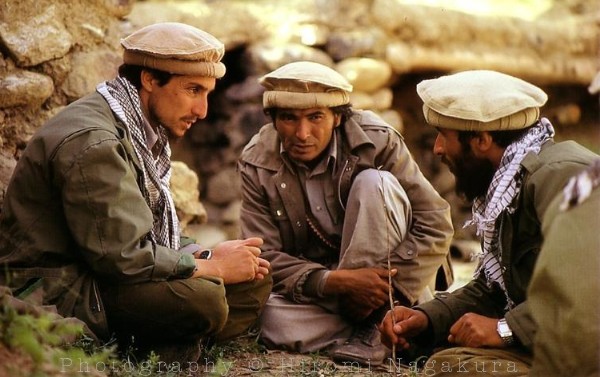
➢ Britain secretly agreed to back Afghan resistance fighters after the Soviet invasion of their country — One faction of the Mujahideen fighters, who were also covertly funded by the CIA, went on to become founding members of the al-Qaeda terrorist network. (Daily Telegraph)

➢ Unflappable Douglas Hurd stunned into silence during Afghan revelations — UK Confidential on the BBC iPlayer

Ahmad Shah Massoud ,Afghanistan, 1983, Nagakura

Ahmad Shah Massoud (left): on the ground in Afghanistan in the Panjshir province of Afghanistan 1983. Photographed © by Hiromi Nagakura

❏ Listen online to BBC Radio 4’s response to today’s revelations in an excellent edition of UK Confidential chaired by Martha Kearney. After hearing that western powers had decided in 1980 to provide “discreet support for Afghan guerrilla resistance”, former Labour minister Roy Hattersley and former BBC chief political correspondent John Sergeant wrong-foot Douglas Hurd who had been a foreign office minister at the time. How much aid was spent on arms? Had we armed the wrong people? Kearney herself notes that “arms were going to Shah Massoud” (later dubbed “the Afghan who won the Cold War”.) Twice Hurd is forced into silence, as he formulates his eventual reply: “I’m not saying. Of course I’m not saying.” Terrific radio, from the 32-minute mark.

Other topics include Margaret Thatcher’s patrician scolding by Harold Macmillan… her furious row with the Bank of England… her moderate reaction to early trade-union strikes … and how the government tackled an Iranian warship on the River Tyne.

➢ Cabinet ministers feared 30 years ago that MPs were abusing their expenses — Margaret Thatcher was warned that there was a “grave risk of serious public scandal” over Parliamentary allowances and that some politicians may have to be prosecuted. (Daily Telegraph)

Harold Macmillan, Supermac, Vicky

Harold Macmillan: depicted as Supermac by the cartoonist Vicky

➢ Macmillan’s 11-page private warning to Margaret Thatcher — “Supermac”, the Conservative prime minister from 1957-63, sent a remarkable letter criticising the PM’s economic strategy. (Guardian)

➢ The sixpence was killed off to raise £3.5m by melting down the old coins — Margaret Thatcher ordered the “death of the tanner”, introduced in 1551 and made obsolete by the decimalisation of sterling. The last coins were struck in 1967. (Daily Telegraph)

FRONT PAGE

1980s ➤ So many shapers shaped the decade that people think was all down to Margaret Thatcher

A handful of key books this year have added to our estimations of that much demonised decade, the 1980s, and to our understanding of its cultural shifts. Shapersofthe80s has of course always drawn a distinction between the youthful creativity of the earlier Swinging 80s, and the ethos that finally took hold in Britain and earned the name of “Thatcherism”

Loadsamoney, Harry Enfield, Thatcherism1980s

Emblem of the 80s: Harry Enfield’s yob character, Loadsamoney. © Rex features

➢ Rejoice, Rejoice!: Britain in the 1980s,
by Alwyn W Turner (Aurum Press, 426 pages)

Alwyn Taylor, Rejoice!,1980s,book❏ A SHARP AND WITTY ANALYSIS of the 80s came this year from cultural historian, Alwyn Turner. Its savage title Rejoice! Rejoice! echoes the triumphal cry that burst from the lips of prime-minister-turned-warrior-queen Margaret Thatcher in 1982 when victory was declared over Argentina in the Falklands War (910 dead, 1,965 casualties). Reviewing the book in The Sunday Times, Dominic Sandbrook wrote: “One of the pleasures of Alwyn Turner’s breathless romp through the 1980s is that it overflows with unusual juxtapositions and surprising insights. Who knew, for example, that not only Alan McGee’s Creation Records but the bawdy magazine Viz were set up with money from Thatcher’s Enterprise Allowance Scheme, dismissed at the time as a feeble attempt to disguise the horrors of mass unemployment?

“Where this book really shines is on the intersections between politics and popular culture… For Turner, the defining characteristic of the 1980s was its obsession with size: big money, big hair, big issues, big politics. But what also emerges from his account is the sheer, unashamed nastiness of public life during the Thatcher years. This was a time, after all, when Thatcher’s cheerleader [disc-jockey] Kenny Everett publicly joked about kicking [the elderly opposition leader] ‘Michael Foot’s stick away’, while thousands chanted ‘Ditch the bitch’ at anti-government demonstrations.

“It is a refreshing surprise, however, to read a book on the 1980s in which Thatcher, while naturally dominant, does not entirely drive out all other voices. As Turner admits, the Iron Lady cast a larger shadow over national life than any other prime minister since Churchill: the style magazine i-D, a quintessential product of the decade, called her ‘almost a fact of nature’. But the results of her revolution were mixed at best, and the irony is that in many ways her policies had the opposite effect from what she hoped.”

Turner is not alone in presenting Harry Enfield’s comic character Loadsamoney as the emblematic figurehead for Thatcherism, a swaggering slob waving a fistful of banknotes while yelling, “Look at my wad!”. In the Financial Times Francis Wheen follows through: “Even if many Britons eventually accepted [Thatcher’s] economic remedies, Turner infers in his history of the 1980s, Rejoice! Rejoice!, ‘culturally the country was unconvinced’. Ideals of enterprise were all very well but winning at all costs, with no thought for the loser and no care for the way one played the game, ‘seemed somehow wrong’. The British still sided with heroic failures and doomed underdogs such as the hopeless ski-jumper Eddie (the Eagle) Edwards.”

30-UP FOR A CLUBBING TREASURE

➢ Gaz’s Rockin’ Blues: The First 30 Years,
by Gaz Mayall (direct from Trolley, 280pp)

Gaz Mayall, Jarvis Cocker, Radio 2,

Gaz Mayall on 6Music: celebrating his 30th clubbing anniversary talking with Jarvis Cocker on The Sunday Service in October. © BBC

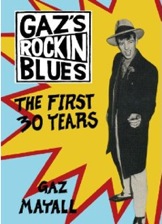
❏ GAZ MAYALL IS one of UK clubbing’s national treasures, and the paperback Gaz’s Rockin’ Blues is a nostalgic first-person collection of great club photos and comic-strip flyers that tell their own tale of London’s oldest continuous club-night, where Tracey Emin was once the cloakroom girl. The lad in the hat, who has kept his tiny nightspot jumping since July 3, 1980, supplies a brief but breathless string of anecdotes about live guests such as Prince Buster, Desmond Dekker and Joe Strummer. Gaz was one of the pathfinders who perfected the then brilliant notion of throwing a party every Thursday and playing his favourite rebel dance-tunes. As the 22-year-old Gaz told Shapersofthe80s that year: “People come here for good music”, which essentially meant his own heritage as a kid raised amid rock royalty and steeped in ska, reggae, rockabilly, rock and R’n’B.

Gaz's Rockin Blues, book, 1980sOn his club’s 30th anniversary, Kate Hutchinson wrote in Time Out: “It’s still going strong: you’ll find throngs of people swinging to guest live bands and DJs every Thursday night at the Soho basement dive St Moritz. It’s also the kind of hangout that keeps new generations coming, so the crowd always stays fresh. Those who aren’t old enough to go yet can mingle with everyone else at Gaz’s sound-system at Notting Hill Carnival, where he’s been causing a roadblock since 1982, or at his stage at Glastonbury, which he has run for the past three years.”

SHUFFLING BETWEEN STRAVINSKY AND ARMSTRONG

➢ The Music Instinct : How Music Works and Why We Can’t Do Without It, by Philip Ball (Bodley Head, 464pp)
➢ Listen to This, by Alex Ross (Fourth Estate, 400pp)

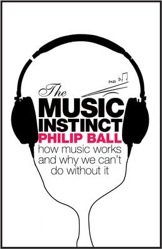
The Music Instinct, Philip Ball, books❏ TWO IMPRESSIVE BOOKS THIS YEAR have dissected how music works its magic. They are not posited on the 80s at all, though they may well be emergent phenomena of our era of musical diversity. Critics heaped praise on Philip Ball’s The Music Instinct, an engaging survey by a popular science writer. Bee Wilson in The Sunday Times called it a “wonderful account of why music matters, why it wrenches our souls and satisfies our minds and sometimes drives us crazy”. In The Guardian Steven Poole praised Ball’s “deft analyses of the limitations of attributing ‘emotion’ to music, or considering it as a ‘language’ (Lévi-Strauss: if music is a language, it is an ‘untranslatable’ one)”. And the Amazon reviewer Steve Mansfield liked the author’s scope “by drawing his examples from across the spectrum of music, equally comfortable discussing and occasionally comparing music as diverse as J.S. Bach, John Coltrane, Eliza Carthy, gamelan orchestras, ragas, Schoenberg, and the Sex Pistols”.

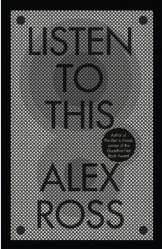
Alex Ross, Listen to This, books❏ IN 2008 ALEX ROSS, music critic for The New Yorker, landed an unlikely bestseller with his gripping survey of 20th-century music, The Rest is Noise, plus a torrent of highbrow praise. This year he packages some choice essays under the title Listen To This, which David Smyth in the London Evening Standard said “ranges even more widely, making century-spanning, triple-jumping connections in the same way his shuffling iPod leaps from Stravinsky to Louis Armstrong. Coming from a background of listening to nothing but classical music in his teens and discovering rock’n’roll in adulthood, Ross can explain the brute appeal of, say, Radiohead’s Creep in a way that makes you feel your mind enlarging as you read”.

TWO WHO CHANGED THE CHARTS

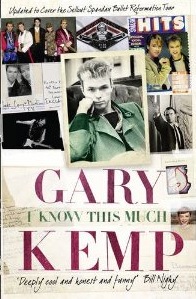
➢ I Know This Much: From Soho to Spandau,
by Gary Kemp (Fourth Estate, 320pp)

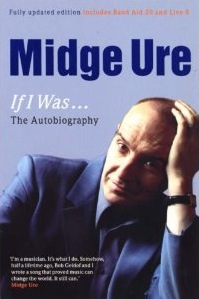
➢ If I Was, by Midge Ure with Robin Eggar
(Virgin Books, 288pp)

Gary Kemp, I Know This Much❏ FOR A MUSICIAN, the music really tells the life story. It’s rare for many of them to try to flesh out the story in prose, let alone as autobiography. Two who starred centre stage in 1980 were Ultravox’s Midge Ure and Spandau Ballet’s Gary Kemp, and though their accounts of the early transformative years of the decade weren’t actually first published this year, their paperback reprints continue to act as intelligent correctives to the hyperbole that accompanies some of the 30th-anniversary air-punching.

Songwriter Gary Kemp surprised many when last year’s autobiography, I Know This Much, proved so eloquent, encouraging rock writer Paul Du Noyer
to claim that it “sets a new standard for rock memoirs”. One of Amazon’s top reviewers, Mr Steve Jansen, believed that Kemp’s perceptive memories of a London now transformed make a “a touching testament to spiritual growth”. He wrote: “Kemp is able to reflect with great poignancy on a young man’s journey into, and through the shining city of dreams. In Kemp’s case that city, metaphorically, but more often literally — and literary in its evocation — is unmistakably London, and the metropolis is ever present like a ghost, framing his actions and attitude.”

The prominent journalist Robert Sandall of The Sunday Times, who died in July, had made Kemp’s his book of the year: “A sharply observed account by a quintessential London musician. Kemp exudes confidence, candour and a keen appreciation of the capital’s club culture.” This year’s paperback edition brought the story up to date with a postscript on his band’s reunion.

Midge Ure, If I Was❏ MIDGE URE IS THE OTHER eye-witness to the birth of Blitz culture, and his memoir, If I Was, hasn’t been out of print since published in 2004, and a revised edition is slated for next summer. Here, the musician tells with exceptional vigour a no-holds-barred story of his own journey from impoverished Glasgow childhood to new-wave superstar .

Amazon reviewer Lisby writes: “Ure writes fluidly and conversationally, imparting the kind of tactile detail that takes readers to the place and time of which he speaks. Ure is astonishingly honest, yet never vindictive. He is, in his prose, much as he is in his lyrics, a good person trying to be a better one while hoping the same for us all.” Another Amazon regular called thedouses adds: “Midge’s autobiography is a very well written, frank and honest book, which offers a fascinating insight into his own career and life but also other notable musical figures of the 80s and 90s music scenes in Britain, as well as providing background to the Band Aid and Live Aid events. He doesn’t use the opportunity to settle scores as so many of his contemporaries have done.”

Apart from being a busy wizard stirring the magic cauldron from which emerged many musical innovations in the 80s, Ure here establishes his central role in the production of Band Aid’s charity single, Do They Know It’s Christmas?, which led to Live Aid, the globally televised rock concert in 1985 which raised millions for famine relief.

NOT FORGETTING…

David Bowie, 1975 ➢ Any Day Now: David Bowie The London Years (1947-1974), by Kevin Cann (Adelita, 336 pages) was reviewed here on Dec 11. “Being a Bowie fan for almost 40 years I am flabbergasted. Many, many never before seen pictures” — Amazon reviewer Peter Gooren

FRONT PAGE

2010 ➤ Duran no turkey: here’s the Bacofoil video, plus two tracks premiered at East Village Radio

♫ View Nick Egan’s studio video of
All You Need Is Now in HD

All You Need Is Now, Duran Duran, video, Nick Egan,John Taylor, Simon Le Bon
❚ UNVEILED TODAY: the Nick Egan directed video for All You Need Is Now, the new single by 80s supergroup Duran Duran — which was available worldwide on iTunes from Dec 8. The nine-track digital album of the same name, produced by Mark Ronson is the band’s 13th in a studio. Ronson has called it the “imaginary follow-up to Rio that never was”. An expanded LP with additional original tracks will be released in March 2011 in various formats.

Duran Duran, Mediterranea❏ Update AYN debuts at No 6 on Billboard’s Alternative Albums Chart Jan 5. DD will be the featured artist on VH1’s Top 20 Spin on Jan 30.

❏ Here’s the new Duran track Mediterranea at beach-bum tempo, streamed live from East Village Radio on Dec 10:

It’s on the EP From Mediterranea With Love, an iTunes release in Europe, here premiered on the bumbling Mark Ronson’s show at East Village Radio, NYC, when Le Bon and Rhodes had a battle to get a word in edgeways. Whatever his gifts in a recording studio, the music producer is fudge as a broadcaster. Also, it’s not for him to tell us his own production is “amazing”, durr! Ronson, stick to the day job and leave the criticism to the big beasts who can tell a hawk from a handsaw. As it happens, the new tune proves to be classic DD.

❏ Another premiere streamed from East Village Radio — why this new album track is called The Man who Stole a Leopard (feat Kelis) is finally revealed by ITN newscaster Nina Hossein:

Nick Rhodes, Duran Duran , All You Need Is Now

No regrets: Nick Rhodes in the AYN video

➢ Read Crispin Kott’s 9/10-star review of the Duran album from Pop Matters

➢ Nick Rhodes is the man from Duran — Evening Standard interview Dec 9, 2010 … Is Rhodes at all embarrassed by his 18-year-old self? “Not even slightly. When we were teenagers, the world was pretty grey. You want something more exciting — to travel, to see what’s out there.”

FRONT PAGE

2010 ➤ A feast of Bowie-ana served in waffeur-thin slices

David Bowie, review,Curious magazine, Any Day Now,Brian Ward,Arnold Corns,Man Who Sold The World,Mr Fish,Freddi Burretti, Ziggy Stardust,Yours or Mine,Malcolm Thomson

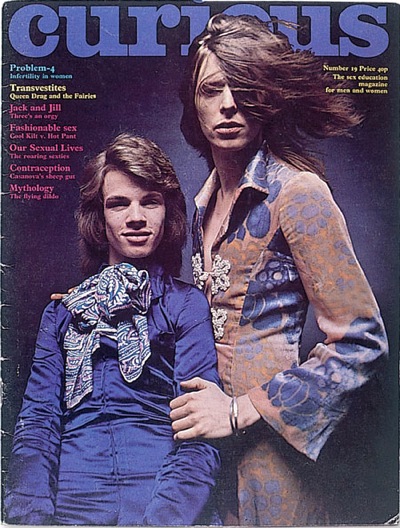
Candid cover for Curious magazine from 1971: Bowie spotted the dress designer Fred Burrett (aka Rudi Valentino) at the Kensington disco Yours or Mine wearing white spandex hot pants. He became a close friend Bowie determined would be “the next Mick Jagger” in a specially created band called The Arnold Corns. In the event, as Freddi Burretti he made Ziggy Stardust’s outfits from the first quilted jumpsuit onward… Bowie here drags up in the Mr Fish “man-dress” that appears on the sleeve for The Man Who Sold The World — one of many mementoes in Any Day Now, Kevin Cann’s new book about Bowie. Photographed © by Brian Ward

❚ DAVID BOWIE HAS BEEN THE SINGLE MOST INFLUENTIAL FORCE IN POPULAR MUSIC SINCE [Fill in the benchmark of your choice, eg:] Mozart/ Schubert/ Marie Lloyd/ Gershwin/ Little Richard/ Sondheim/ Spinal Tap. In which case, this Christmas there can be no better present for anybody with the slightest interest in the godlike creator of Ziggy Stardust than Kevin Cann’s new photobook Any Day Now, The London Years 1947-1974 (Adelita, £25).

It is impossible adequately to acknowledge the trainspotterish, yet deeply rewarding scope of this sheer labour of love that has amassed 850 pictures — friends, lovers, costumes, contracts, doodles, laundry bills, performances, candid snaps — on 336 pages. Why, it even has a backstage photo I’ve never seen of the day I met Bowie at the London Palladium when he sang Space Oddity for charity (and met the cult ukulele player Tiny Tim, going on to record one of his B-sides, Fill Your Heart, on Hunky Dory).

This book is a feast of Bowie-ana served up like La Grande Bouffe, in ever more tempting waffeur-thin slices. Cann is a veteran chronicler of the pop star’s work and here neither attempts a long-form biography, nor detracts from Nicholas Pegg’s much more musically appreciative survey, The Complete David Bowie, last updated in 2006. Any Day Now is more a chronology that feels as if it has an entry for every day in the star’s first three decades, running to 140,000 words (original interviews, press reports, eye-witness accounts), all diced and dispersed through the calendar. Contributions include a foreword by Kenneth Pitt, Bowie’s gifted manager 1967-1970.

Any Day Now, Kevin Cann, Adelita

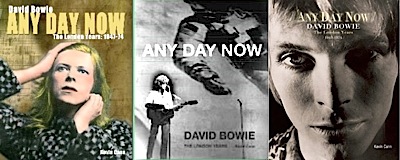
Early cover designs for Any Day Now, publicised during the past year. At centre, the Palladium performance of Space Oddity

A typical spread [see below] might contain six images and as many short items, some of which are set in a font so small as to demand a magnifying glass for reading. An efficient index helps you to pick your topic and start panning for gold.

So for example, the “seminal” filmed version of Space Oddity, Bowie’s biggest hit, that has been exhumed then forgotten four times in the past 40 years, is finally accounted for in all its charmingly improvised glory. Since 2005, we have been able nonchalantly to click on YouTube to view this paradigm of all pop videos dating from before the word was invented. Yet originally it was a mere segment in a half-hour TV film about Bowie titled Love You Till Tuesday (LYTT) and directed by Malcolm Thomson.

While America was testing its first unmanned Apollo Lunar Module in 1968, the Space Oddity segment was of course inspired by that year’s visionary 70mm movie release, Stanley Kubrick’s 2001 A Space Odyssey. Cann’s chronology documents Thomson filming what Bowie evidently intended as a tongue-in-cheek spoof from its conception in Oct ’68 to wrap in Feb ’69. Bowie wrote the song itself, a forelorn meditation on love and fame, as his own love-life was falling apart and after viewing the Kubrick film “while stoned” (allegedly) that January, six months before the first Moon landing.

Ultimately in a studio in Greenwich, Bowie dons a barely-plausible zip-up silver space suit, blue visored helmet and Major Tom breast-plate while Samantha Bond and Suzanne Mercer as Barbarella-esque astro angels (more ’68 iconography), flaunting ludicrous blonde wigs and diaphanous gowns, simulate weightlessness among inflatable plastic furniture. It’s a modest little dig at Swinging 60s ephemera to set beside Barbarella, Blow-up and the incomparable Modesty Blaise.

Despite the single spending 14 weeks in the charts in 1969 and reaching No 5, Cann reports, TV networks showed “no interest” in the film, LYTT, containing this musical jewel, so it did not have its first public airing until 1972, on the BBC’s Old Grey Whistle Test. It then vanished until 1975 and the re-issue of Space Oddity when the clip was supplied as a promo to broadcasters, which doubtless helped the song’s progress to No 1 in the charts. Even then, the film clip did not receive a release until an album of same name, LYTT, came along in 1984. We then had an even longer wait until a DVD release in 2005 delivered the remastered version we enjoy today.

Not many people know this, 1 – In the same month, Feb 1969, Bowie auditioned for the hippy stage musical Hair! Twice! [Any Day Now, page 146]

Not many people know this, 2 – The book’s timeline ends in 1974 because Bowie left the UK on March 29 that year, aged 27, and has never resumed residency here since. Sob! Onboard the SS France bound for New York, the harmonica legend and Gershwin protege Larry Adler gives a recital. When the crew hear that Bowie is not going to do likewise while aboard and express their disappointment, Bowie gives them an impromptu performance in the canteen: 10 songs including Space Oddity. A few crew members took instruments and they played with him. What a jam session that must have been!

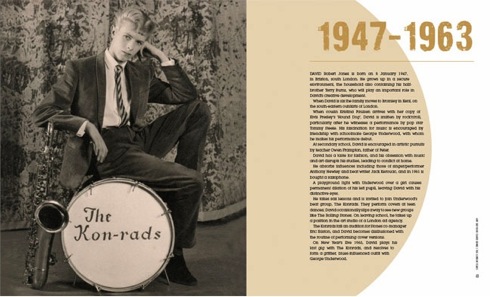
Any Day Now, Bowie, Kevin Cann,Kon-rads,Bowie

Spread from Any Day Now, the new book about Bowie’s formative years: here seen in his David Jones era when he formed his first band the Kon-rads at the age of 15

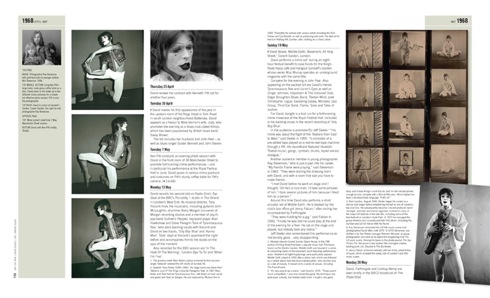
Melissa Alaverdy,Lindsay Kemp,Bowie , Any Day Now, Kevin Cann, Adelita

Another spread from Any Day Now, designed by Melissa Alaverdy: Bowie learning white-faced mime under Lindsay Kemp

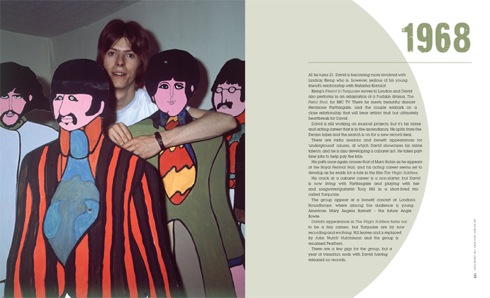
Melissa Alaverdy , Any Day Now, Kevin Cann, Adelita,Bowie,Beatles

Another spread from Any Day Now, designed by Melissa Alaverdy: Bowie is seen here with Yellow Submarine-era Beatles

➢ Why there will never be another David Bowie — Caspar Llewellyn-Smith says Lady Gaga has got it wrong if she thinks the Thin White Duke’s brilliance comes down merely to striking a decent pose (from The Observer, Oct 10, 2010)

➢ Review in the Guardian: Two Bowie biographies shed new light on the career of pop’s greatest chameleon, but the man himself remains elusive

FRONT PAGE