Category Archives: Culture

2010 ➤ Barcelona: Spandau wow lifelong fans in their other spiritual home

Steve Norman, Barcelona

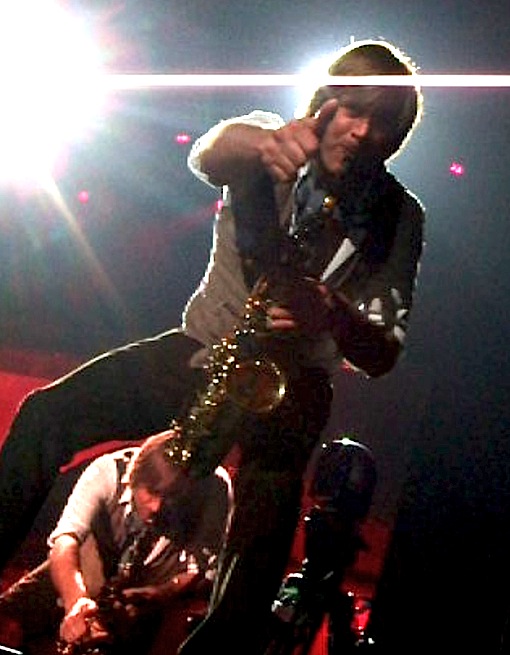
Steve Norman doppelgangers in BCN: live in yer face at front of stage and caught on the video backdrop. Pictured © by Shapersofthe80s

➢➢ View the video of Normski’s live sax break here

❚ STEVE NORMAN GIVES A THUMBS-UP to Shapersofthe80s during one of his dirrrty sax solos on Friday in the closing stages of the European leg of Spandau Ballet’s Reformation world tour. The band had to take in Spain, obviously, and we were there along with their families who weren’t going to miss a weekend in Barcelona – and that included two grannies, Steve’s mum Sheila and Tony Hadley’s mum Josie, both of whom once cut fine figures on the dance floors of yore.

During the Swinging 80s the cosmopolitan and leafy capital of the “autonomous community” of Catalonia – proud to have its own language and its own parliament – became the hippest city on the continent. Any number of London’s pop cognoscenti from Sade to writer Robert Elms made their homes in Barcelona and those who didn’t made this global city a civilised holiday destination to rival the naked hedonism of Ibiza or the Costa Brava. For the Spanish, Spandau enlivened the pop scene at exactly the right moment…

➢➢ Click to continue reading full reports
on the Barcelona contingent

FRONT PAGE

2010 ➤ OMM goes out celebrating all our heritages

Caspar Llewellyn Smith, OMM

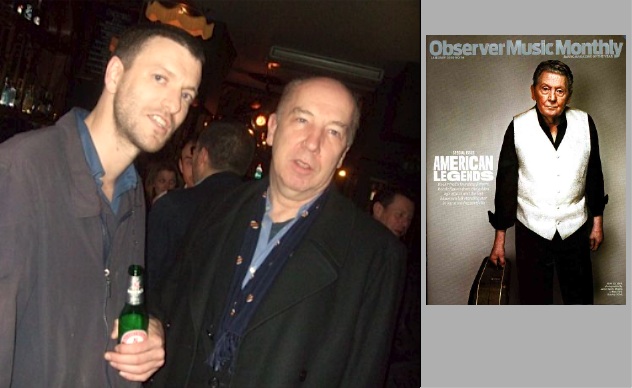
So farewell, then, OMM: editor Caspar Llewellyn Smith with Neil Spencer, iconic ex-editor of the NME, at the wake for the “anything goes” music mag (right). Main photograph © by Shapersofthe80s

❚ “AN ERROR,” said Neil Spencer, who edited the NME during the 1980s, passing verdict on this week’s closure of the Observer Music Monthly as part of a cost-cutting revamp of the world’s oldest Sunday newspaper, The Observer. “It broke the rules and went where other music magazines do not.”

Caspar Llewellyn Smith edited OMM from its launch in September 2003, since when OMM has patrolled the whole musical waterfront, excelling in its considered reportage of the indigenous musics of the third world, while also applying intelligent ears to chart fodder. Its respect for heritage was signalled the minute Spandau Ballet reformed last year. Caspar said: “We need to know the real story of the New Romantics – to overturn the view that it was a silly pop fad.” Unsurprisingly he quickly assembled a mélange of veteran contributors who included Spencer, Peter Culshaw and world-music guru Charlie (The Sound of the City) Gillett.

“A lot of Caspar’s peers haven’t got the same breadth of taste,” said freelance writer Sophie Heawood at last night’s farewell bash at the Albert and Pearl in Islington. “He’s someone who knows where the culture’s beautiful stuff is going on. Where eyes and ears are concerned, his can be trusted.”

Out of 76 issues Caspar said he was over-ruled from above on only two cover images, which is pretty nigh miraculous on a national newspaper. One of his favourite covers announced an unexpectedly revealing 2005 interview with Noel Gallagher, conducted with total irreverence by comedian and total Noel fan, David Walliams. Gallagher admitted to knowing “everything there is to know” about country and western music, and gave an appreciative nod to the 80s: “What struck me was that the boy bands of the day such as Spandau Ballet and Duran Duran could all play their instruments. It’s so far removed from the bands of today like Westlife and Boyzone, who are utter shit.”

Ambrose Campbell

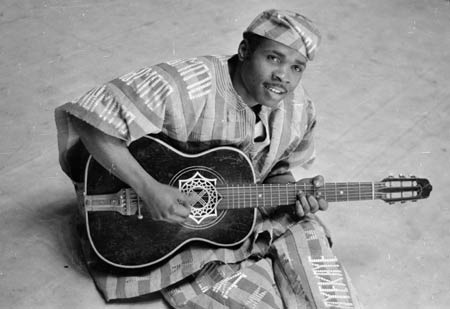
Ambrose Campbell: bandleader who died in 2006

Caspar is also chuffed to have championed British rapper Dizzee Rascal since the first OMM. Later, he brought the rapper Roots Manuva together in conversation about black Britain with octogenarian Ambrose Campbell, who led Britain’s first African band The West African Rhythm Brothers in 1945.

Last Sunday’s final issue of OMM features a superb portfolio profiling 21 founding fathers of rock ’n’ roll, blues, jazz and country – from Jerry Lee Lewis and Little Richard, Smokey Robinson and Chuck Berry, to Wanda Jackson and Dave Brubeck – and Observer readers sprinted online to start mewling dissent.

Lewis was photographed last year by Jamie-James Medina for the final cover (above). Inside, Ray Davies of the Kinks recalls his first sight of the hellfire pianist on British TV in 1957: “I’d literally never seen anything like it. He had that long curly hair and he was playing with one leg up on the piano. He looked like a complete punk, but really cool at the same time.”

If you missed Caspar Llewellyn Smith’s savvy defence of his own musical odyssey, Pop Life: A Journey by Sofa, you’ll find it still in print here.)

➢➢ Click here to visit Observer Music Monthly

FRONT PAGE

2010 ➤ Lady Gaga spices up i-D’s 30th birthday

❚ A LIGHTNING-FAST PHOTOSHOOT with Lady Gaga (above) was previewed before Christmas at Showstudio, the showcase website directed since 2000 by Nick Knight. Today Knight ranks among the world’s most original fashion photographers, but his association with i-D, launched as a street-style magazine in 1980, goes back to its earliest days. On i-D’s fifth birthday he photographed 100 “People of the 80s” (➢➢ link below) who had all appeared in the magazine’s formative issues.

During December 2009, as part of his Fashion Revolution exhibition at London’s Somerset House, Knight photographed a further 100 of London’s current creative leaders — including models, actors, musicians, artists and Lady Gaga — in the space of 20 days.

Nick Knight, People of the 80s, i-D fifth anniversary,

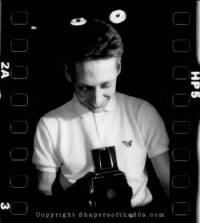
The snapper snapped: Nick Knight caught framing up yours truly during the i-D shoot, June 6, 1985. Photographed © by Shapersofthe80s

Knight says: “We started saying that we were going to do five portraits a day, so we did five one the first day and we thought it felt too easy. So we pushed it to 10, it felt reasonable, but then we sort of let things happen and we were looking at 20 a day!”

The 100 portraits are slated for inclusion in i-D’s 30th anniversary issue later this year, with video portraits captured from each of the sitters viewable on Showstudio in the weeks before publication.

➢➢ For more pix and the full monty on i-D’s metamorphosis from stapled fanzine to international fashion glossy, read on here…

FRONT PAGE

1978 ➤ To the edge and back with the lovely Julia

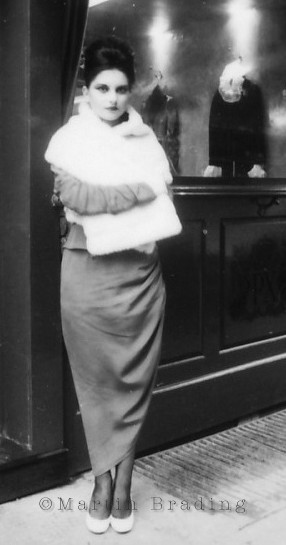
❚ PRINCESS JULIA IS A NATIONAL TREASURE. After three decades, she remains one of the UK’s coolest dance deejays, music editor at i-D and co-runs The P.i.X fanzine. She is as beautiful and immaculately attired as she was in the Swinging 80s. In those days Julia Fodor turned heads as the star sales assistant in PX, Helen Robinson’s inspirational New Romantic clothes shop in Covent Garden.

Nouvelle vague, Feb 1980: Julia outside PX, designer Helen Robinson’s home of New Romantic fashion. Photographed © by Martin Brading

Stunningly coiffed in a beehive hairdo, she could have stepped out of a French nouvelle vague movie – until she opened her mouth. “’Ello dahhlin’,” she greeted you, in broad Eliza Doolittle Cockney.

Once Steve Strange had put Julia in the cloakroom at the Blitz in 1979, her unique style ensured her a place at the centre of all the press coverage the club provoked, as well as in the Visage video for Fade to Grey. As one of the few true Blitz Kids, Julia never ventured into public without her Look.

This month, Julia began a photo-blog called The World of Princess Julia to record her nightlife activities in London and abroad – for her deejay residency at Queen in Paris, she has enjoyed being delivered to work by cross-Channel helicopter. Her first blog post introduces us to her life of what some might call notoriety. Here’s a taste, in Julia’s own words…

A lot of tinsel, that’s London, we love
our veneer, we love our sleaze

❚ I’M EIGHTEEN, ’78, [Covent Garden is] still boarded up ready for gentrification, coming down soon though. I work in a shop – PX. There’s a rehearsal space downstairs, band music bleeds up, Chrissie’s down there with her Pretenders, she tells me all about it. One day Michael Jackson came by, another time some local kids locked us in for a laugh, it was Cameron McVey and his mates.

I had a “look” then, one of many. I hobbled around in tight, tight skirts and high, high heels from Seditionaries. I took speed and learnt to smoke. I had a good beehive. What’s his name, Paul [Smith] from up north moved into Floral Street, Paul Howie and Lynne Franks had jumpers in Long Acre. There was nothing else round there then shop wise.

We had Bowie on, we played Kraftwerk, we kept a lookout for new music, new makeup, the future, futuristic. Dance moves, soul static robot. Berlin, film-noir. London ’79, cross-dressing melting vista of possibilities. No money, poverty breeds creativity, that’s what they say. Nevertheless perhaps it’s true, especially in London where people seem to gravitate towards seeking out an identity more vital than the one they’ve left behind. I did the same, left north London and headed uptown, central, on the Piccadilly line. London’s built on ley-lines, heard someone say that somewhere, I think it’s true because there’s certain energy here in London…

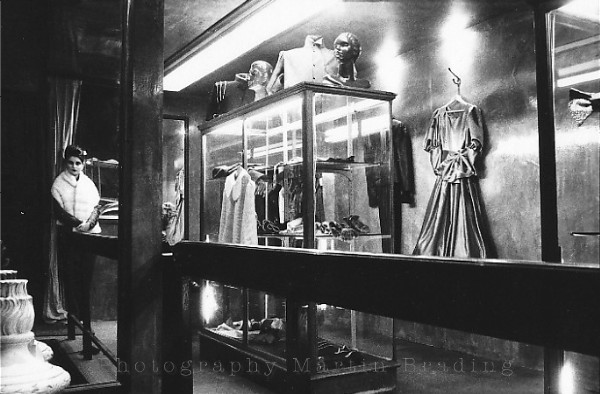
PX moves into Endell Street in Feb 1980: New Romantic satin gowns, Fauntleroy collars – and Julia. Photographed © by Martin Brading

FRONT PAGE

2010 ➤ ‘Missing Link’ Kids roar back to life

Rich Kids, rich memories: Gary Kemp joins Glen Matlock, left, with Midge Ure and Steve New to the right. Rusty Egan on drums is masked by the bright lights. Ropy mobile picture © by Shapersofthe80s

Rich Kids, rich memories: Gary Kemp joins Glen Matlock, left, with Midge Ure and Steve New to the right. Rusty Egan on drums is masked by the bright lights. Ropy mobile pic © by Shapersofthe80s

❚ RICH KIDS ARE USUALLY WRITTEN OFF as “a short-lived, much-hyped rock band from London”, founded in 1977 by songwriter and bassist Glen Matlock, after he quit The Sex Pistols more enamoured with 60s sounds than 70s. Indeed the Kids were a one-hit wonder with only one eponymous single ever making the lower reaches of the charts, for five weeks in 1978. Yet with hindsight, they are today dubbed by the cognoscenti such as Spandau Ballet songwriter Gary Kemp and his band’s manager Steve Dagger as the “Missing Link” between punk and the New Romantics movement – an admission that was absolutely verboten in Spandau’s early days.

All of which made a one-off reunion gig at the Islington Academy last night, Jan 7, 2010, a curious footnote to history. For in the audience were some of the coolest clubbers from the 1970s scene, as enthusiastic as schoolboys, snapping away on their phonecams. Everybody, of course, was now hitting paunchy middle age, both onstage and off, and it took several numbers before the band got into its power-pop stride.

The occasion was poignant. Matlock and his mates were staging a charity benefit for fellow Kids guitarist Steve New who is fighting ill health. As in the old days, Midge Ure turned out on lead vocals with Rusty Egan on drums. Then for Ghosts of Princes in Towers, Spandau’s Kemp received a warm welcome by joining his iconic heroes wearing Romantic plaid trews and jamming on guitar. The other occasional Kids member, ex-Clash guitarist Mick Jones, supported last night’s bill in his noisy incarnation as Carbon/Silicon with fellow punk Tony James.

Rich Kids 1978

Tell-tale signs: Rich Kids began pushing pop in new directions in 1978, first with their name and their lyrics, reinforced with colourful 60s-style clothes and moptop haircuts – just look at Rusty’s barnet

So what was the missing link during the post-punk vacuum? The tell-tale signs are all over the early photos of Rich Kids and especially in their very Mod-flavoured 1978 debut on Top of the Pops that epitomised power pop, viewable in this video. The ex-Pistol Matlock favoured melody, the glam popster Ure favoured electronics while both revered the Small Faces as gods from the 1960s. In Mojo magazine last month, Ure said: “What Glen did back then by asking me to come and join the band was incredibly brave. He could have chosen any cool, punky young guitarist-singer in London – I mean, there were thousands of them. Instead he chose this teenybop, bubble-gum type guy, therefore making things incredibly difficult for himself… I suppose the Rich Kids were the Humble Pie of our day: not The Herd and Small Faces, but the Pistols and Slik – you couldn’t get anything more opposite.”

Marching Men: Rich Kids’ single, 1978

At last night’s gig, fashionista Graham K Smith, formerly of New Sounds New Styles, drew a stark contrast between the look flouted by the Kids and the black-or-black prescribed by the punk fashion police. “The Rich Kids were fops. They were absolutely going against the dour sartorial styles of the time. Their hair was long, shaggy, grown-out pudding bowls. Matlock was in velvet jackets and baggy, piratical shirts (at least two years before Vivienne’s seminal pirate collection). Midge was in pink and red towelling nursery garb, and the immaculate Steve New was pushing the boundaries in pink leopardskin-print drainpipes, with his updated take on 1974’s mohair jumper vibe. In retrospect, the Kids are the link between early 70s glam, and the full-on fop explosion of the early 80s.”

It’s the fortunes of the Kids’ shifting yet highly talented personnel and their projects which make them significant. As writer Simon Mills “from Smash Hits” (launched 1978) said last night: “Can you name all the bands Midge Ure has been in?” From Slik in 1974 onwards, this Scottish weathervane has graced more than half a dozen, see here. As a DJ Egan of course pioneered the electrosynth dance sounds that were to transform UK clubbing, splitting with the guitar-led Rich Kids to form the synth-led group Visage in 1978 with Ure and Steve Strange, who quickly established himself as the popinjay of New Romance. It was Ure’s vocals that eventually established one of the seminal sounds of the 80s with the band Ultravox, who also set a benchmark for pop videos by shooting on celluloid to achieve a cinematic effect, notably with Vienna in 1981.

Last night, after breaking a few sticks on his drumkit, Egan had the last word: “I’ll be glad to get back to deejaying.”

➢➢ Click here to watch Ghosts of Princes in Towers
➢➢ Click here to watch the concert finale
➢➢ Click here for Phil Singleton’s full review and masses of pix

Rich Kids 2010

Last bow: Rich Kids and friends at the Academy. Mobile pic © by Graham K Smith

FRONT PAGE