Tag Archives: Visage

➤ Visage: out of the 80s frying pan into the 21st-century fire

Steve Strange, Visage,Shameless Fashion

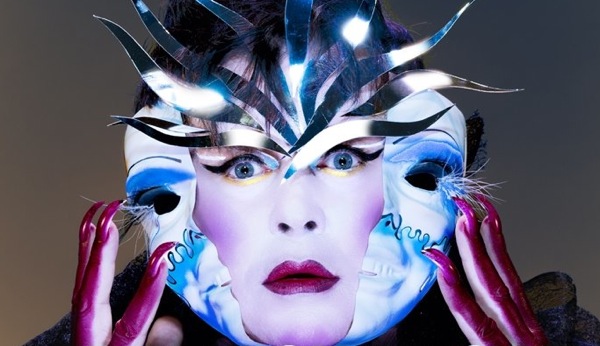
The face of Visage today: Steve Strange behaving shamelessly. Peter Ashworth Photography. Makeup by Lara Himpelmann
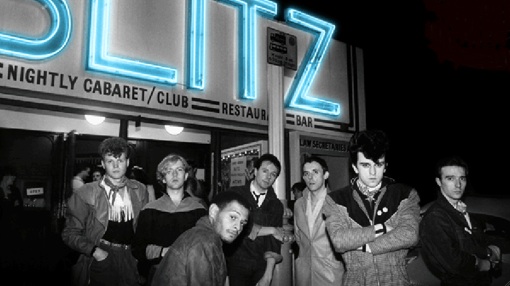
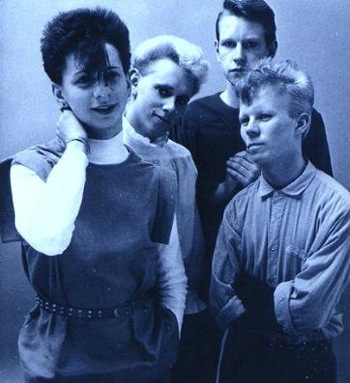
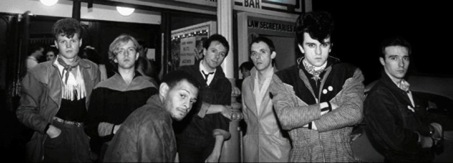
Visage 1979: Rusty Egan, John McGeoch, Barry Adamson, Dave Formula, Billy Currie, Steve Strange, Midge Ure. Photographed © by Sheila Rock

Visage 1979: Rusty Egan, John McGeoch, Barry Adamson, Dave Formula, Billy Currie, Steve Strange, Midge Ure. Photographed © by Sheila Rock

❚ THE STUDIO BAND VISAGE were central to defining the electropop sounds of 1980 thanks to the musical nous of Midge Ure, who had bought his first synthesiser in 1978 because he felt synths “embodied a kind of nostalgia for the future”. He’d been faffing around with Glen Matlock, Steve New and drummer Rusty Egan in the 60s-flavoured one-hit power pop group Rich Kids, and sensed an appetite in the zeitgeist for a more soulful version of Kraftwerk plus a return to melody. Intent on making vibrant dance music for the “visa age”, Ure dreamed up the name Visage, complete with simplified face as its logo,  for an new experimental band. Initially Ure rehearsed updating In The Year 2525, using up some spare Rich Kids time booked in an EMI studio. There he played around on synth and drum machine, then asked Egan to take over the drums.

They co-opted Rusty’s flamboyant Welsh pal Steve Strange as face-painted frontman to give visual expression to a range of what were being called “moderne” fashions. Dressing up in the face of a grinding economic recession was the destiny that Bowie’s children were to fulfil. Visage’s songs captured the sidelong humour and knowing irony that came to characterise the 80s, while their explosive backbeats, electronic fills and synth riffs changed the vocabulary of British chart pop. This TV generation dreamed in both sound and vision.
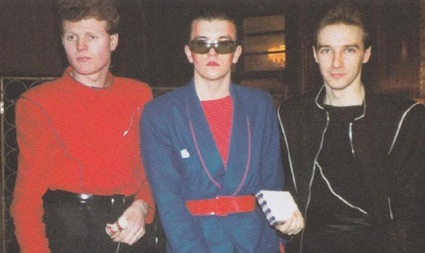
Supercool in ’78: Egan, Strange and Ure establish Visage

What Strange lacked in vocal proficiency he made up for in promotional value, since he soon became a walking advertisement for the cooler-than-cool clothes shop PX in Covent Garden where he was an assistant. Run by Stephane Raynor and Helen Robinson, they more than any other designers in 1980 set the template for New Romantics fashion, favouring oversized chemises, medieval doublets, breeches and frilly lace. The shop’s followers were soon dubbed posers, and the Pose Age was born. Disposable identities, portable events, looks not uniforms – for his disciples, Bowie’s imperatives became the norm.

As a studio project the original Visage lineup never played live, and was probably a case of too many cooks. In 1979 it took in four more musicians (Billy Currie, John McGeoch, Dave Formula, Barry Adamson), all of whom had loyalties to existing bands, while the creative drive came from Ure and Currie. Even so, Currie was persuading the restless Ure to help resurrect the synth band Ultravox following John Foxx’s departure. By 1982, when Ure quit Visage in favour of Ultravox, Visage had enjoyed four top-20 singles hits in the UK, two top-twenty albums with Visage and The Anvil, and a smattering of international hits with Fade to Grey.

As we now know, Ure went on to mastermind the Band Aid fundraising hit single in 1984, then the worldwide Live Aid charity concert with Bob Geldof, and duly earned himself an OBE.
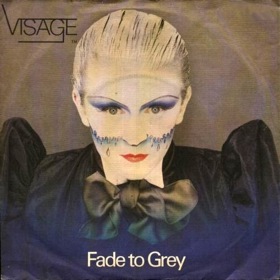
Visage, Fade to Grey,albumsIn 1984 a Visage lineup comprising Strange and Egan along with newer members Andy Barnett, Steve and Gary Barnacle put out a so-so third album, but when it flopped they soon called it a day. The truth was that Visage failed to invest single-mindedly in themselves as a musical enterprise: their progress simmered rather than blazed as individuals pursued their own favoured goals. Occasional tracks sizzled on the dancefloor – In the Year 2525, Fade to Grey, Mind of a Toy, Night Train – but the band lacked unity and commitment.

❚ NOBODY CAN DENY STRANGE’S FIZZ and chutzpah which in 1979 coralled a disparate group of post-punk no-wavers and outcast fashionistas when he co-hosted the agenda-setting Neon Night at the Blitz Club in Covent Garden. It lit up London in an explosion of inventive fashion, gender-bending and ridiculous hair. As the club’s stand-out stars suddenly became media celebrities, these exponents of modern dance and stance began forcing the pace of change across the creative industries. Rusty Egan proved to be a mould-breaking deejay who often added his own Syndrum accompaniment at the turntable, and his live mixing did much to change the sound of clubland music. During the early 80s the pair went on to reshape London nightlife at two notable venues, Club for Heroes in Baker Street and the Camden Palace. At the end of the decade, dance music as we knew it was swept aside by the craze for E’s and rave. Egan then set out to make a fine reputation deejaying on London’s boutique nightclub circuit, while Strange can claim a ghosted autobiography as full of fantasy and foggy memories as you’d expect from an arch-poser who’d been out on the town every night for 20 years.

Roll forward to 2010. John Pitcher, who fronts a music services provider called MRC, established a Blitz Club record label and an associated website, and Strange and Egan launched it in January 2011 by throwing a Return to the Blitz party at the site of the former club. The event raised a few media ripples but little groundswell and only three remixes have been released in as many years. With 80s band revivals making waves all around them, that old Blitz magic had lost its charm. Egan said this week: “Pitcher registered everything for us, so he owns everything, including the website and the Visage brand.” Growing personal differences hindered collaboration between the three. These worsened last year when Egan made allegations that Strange had squandered a substantial sum of accrued Visage royalties paid via Strange and that he failed to share them among the original band lineup. This week Egan said: “Try telling John McGeoch’s daughter her dad’s [share] was spent by Strange.”
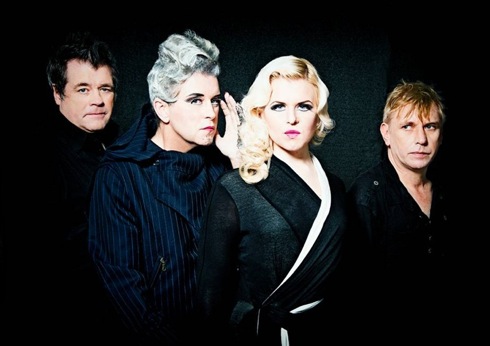
Visage, Steve Barnacle, Steve Strange, Lauren Duvall , Robin Simon

Visage 2013: Steve Barnacle, the inimitable Steve Strange, Lauren Duvall and Robin Simon. Photography © by David Levine

When Strange proposed reviving the band name of Visage after almost 30 years, neither Ure nor Egan could see the point and they disputed Strange’s right to do so. Ure told an American newspaper in January: “Visage was always something Rusty Egan and I created and controlled. The idea of doing a Visage 2 was never appealing to me so I wasn’t interested. I walked away from Visage when it got ridiculous and supremely hedonistic and I will probably leave it that way.” In response to Strange’s claim on German TV last November that Ure was collaborating on a new album together, Ure tweeted: “He is deluded if he thinks that. He knows that isn’t happening.”

EARLIER BACKGROUND

➢ 2013, A couple of slaps in the Visage
as Strange and Egan squabble

Rusty Egan remains aggrieved that Strange has not resolved recent differences. He is angry that Strange should make any claim to creative input into Visage’s lyrics and music, and maintained this week: “Strange had nothing to do with the music in The Blitz or Visage.” In January Egan said: “There has never been a Visage album without me. It’s my group and Strange is a singer. He is not Visage.”

Yet for all this, and Strange’s sad personal saga of ill-health, the vocalist has doggedly set about persuading a new circle of supporters to bring Visage back to life. In the face of widespread disbelief – the garrulous Strange’s little weakness, after all, has always been for exaggeration and melodrama – last year he announced a new “Visage” lineup, with a gorgeous singer called Lauren Duvall, plus Steve Barnacle (fretless bass) and Robin Simon (guitar). Keyboardist Mick MacNeil, from Simple Minds, was enlisted to contribute on a range of vintage analogue synthesisers which include an early Moog Source.

At last, what is being called a fourth “Visage” album titled Hearts and Knives is due to be released on May 27.

“It has been 29 years since the last Visage album and during that period it often seems like we have all lived through several lifetimes,” says Strange. Indeed, “bruised and wounded” declare the rueful lyrics of Shameless Fashion, the new group’s first single, available this week. It isn’t clear whether this refers to the very many contributors we see jostling for credits on the new “Visage” packaging. The Visage 2013 camp is probably keeping fingers crossed.

➢ A free download of the new single Shameless Fashion is available from today at the Visage website

➢ 1980 at the Blitz, Strange days, strange nights, strange people

FRONT PAGE

1980 ➤ As Spandau play in Heaven, all around we can hear the new sounds of 1981

Spreading the New Romantic message, including clothes by PX: Spandau Ballet play Heaven, Dec 29, 1980. Photographed © by Shapersofthe80s

❚ SIX WEEKS IN THE CHARTS with their debut single, To Cut a Long Story Short, on this day in 1980 Spandau Ballet play at Heaven, the biggest disco in London, and probably in Europe. Their average age is 20. A year after their unveiling at the Blitz club, this is still only the band’s tenth public date, and only their second concert since signing to Chrysalis in October. Their policy is to maintain an air of exclusivity, to thwart the backward rock press by playing admission-by-invitation dates in nightclubs rather than conventional rock venues, and to rely on stylish videos to stress the message that here was a new generation of new sounds and, equally important, new styles. Take it on trust that for the whole of 1980 Spandau Ballet had been the most achingly fashionable pop group on the planet, dressed by the designers of the moment. Significantly, as the first club band to win a record deal, they had been the only New Romantics to appear on Christmas Day’s year-ending edition of Top of The Pops, the BBC’s flagship music show. (Yes, Adam and the Ants also appeared, but he was “glam-punk”, important distinction, as Marco Pirroni confirms.)

On Dec 20, Visage, the Blitz club’s seven-piece studio line-up had entered the singles chart with Fade to Grey. The same week saw Le Kilt’s Christmas party, the new New Romantic club that had opened almost as soon as Steve Strange’s clubnights at the Blitz had ceased. Le Kilt’s co-host Chris Sullivan had murmured something about putting together a band he called Blue Rondo à La Turk. Not to be outdone, i-D’s cub editor Perry Haines had mentioned not only a band he was managing, Alix Sharkey’s Stimulin, but tonight in Heaven he now talks of his involvement with Duran Duran, the Rum Runner house band we’d all run into at Spandau’s November show in Birmingham.

Depeche Mode, Daniel Miller, Dreaming of Me, synthpop

Basildon’s finest: Depeche Mode recorded their first single, Dreaming of Me, in December 1980, after a verbal contract with Daniel Miller’s synth-driven label Mute

Here too is Daniel Miller, an anarchic electronic musician with his own label called Mute and a recording studio in an old church where he had set up all his synthesisers. Only last night he’d been watching Depeche Mode, an unsigned teenage band from Essex, playing the Bridge House pub in east London where they were regulars — he’d heard them play their technopop tune Dreaming of Me, helped them record it and they’d all agreed it would make a great first single.

All round us in UK clubland platoons of amazingly young bands making dance music were lining up to storm the charts in the New Year. By the spring, Spandau Ballet was staging the first Blitz invasion of America with a live concert plus fashion show by a gang of Blitz Kids whose average age was 21. During 1981 the group decided against a tour as being “too rocky”, and played only 10 live dates in the whole year — OK, plus a fortnight at the Ku club in Ibiza that summer, which counted as one booking. While the movement took root, staying cool seemed to suit the style of the times.

FRONT PAGE

30 years ago today ➤ First survey of their private worlds as the new young trigger a generation gap

John Maybury, Marek Kohn,Blitz culture,  ZG

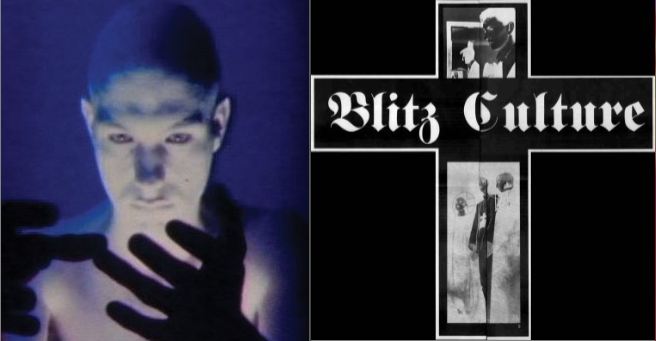
Left, film-maker John Maybury in Tortures That Laugh © John Maybury 1978, artist’s collection; right, graphic from ZG magazine, issue one, 1980

❚ THE BLITZ CLUB SCENE EVOLVED RAPIDLY during the summer of 1980 as media coverage caught up, and it became clear that the New Romantics were not the only social group making waves. In the London Evening Standard’s On The Line column I had been following the Blitz Kids all year and, unsurprisingly, my nocturnal antics raised eyebrows at the Standard by day. “Do they talk sort of funny?” colleagues would ask about my bizarre playmates, meaning did they say “Leave it aht” instead of “OK yah”? Over time the generation gap I was reporting caught the attention of the Standard’s perceptive film critic Alexander Walker, who couldn’t read enough about Britain’s self-possessed youth movement. “Not so much a generation gap,” he observed sagely. “More a genus gap!” In this respect, the parallels with the digital natives of today’s Generation Y are spooky.

A key difference was the naked ambition of the media-savvy Blitz Kids who shunned rock music as a stone-age relic. They were spreading inspiration through Britain’s clubland, even as Steve Strange’s Tuesday nights at the Blitz ended suddenly on October 14, as also did Hell, their Thursday offshoot. Key players were changing trains. That very week Spandau Ballet had signed their first record deal, while I had been darting daily from concert to club to Kensington Market surveying the many competing expressions of youthful endeavour, then trying to persuade the editor Charles Wintour that A Significant Youthquake Was About To Break.

A month earlier during London fashion week I’d only just scraped into print with my first Pose Age report showing Melissa Caplan’s unisex tabards which were being worn to shock. “You’re making this up,” raged one senior editor whose veto against publishing was over-ruled by Wintour. Now I was proposing that this sweeping survey for On The Line should make a spectacular centre spread in the paper. Yet the eye-searing kids in our pictures were a bridge too far even for the enlightened Wintour, who sent me a memo saying it was all “Rather too esoteric for us”. Under protest, he finally conceded splitting the survey between two separate pages a week apart.

By Christmas Spandau’s single became a chart hit, along with Fade to Grey by Visage, fronted by Steve Strange. We could not know then how quickly Britain’s clubbing grapevine was to hurtle yet more clubland bands into the charts, many unveiled by sharp young managers the same age as the talent. Or that 1981 would soon be spinning like a New Romantic dynamo.

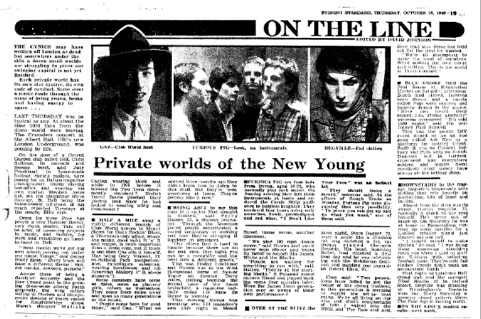
Evening Standard, Oct 16, 1980

First published in the Evening Standard, Oct 16, 1980

THE CYNICS may have written off London as dead in 1980 but somewhere under the skin a dozen small worlds are struggling to prove our swinging capital is not yet finished. Each private world has its own star system and its own code of conduct. Some steer a scenic route through the maze of being young, broke and having energy to spare. . .

➢ Click to continue reading
One week in the private worlds of the new young

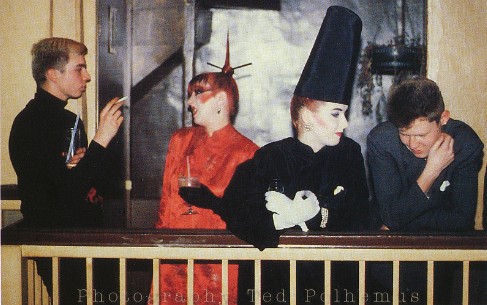
Shaping ambitions at the Blitz in 1980: Lee Sheldrick, Melissa Caplan, Kim Bowen and Bob Elms

FRONT PAGE

2010 ➤ Rusty decrees who’s in, who’s out and what’s up

Rusty Egan

Egan today: “slower and warmer”

On Feb 22, 2010 Rusty Egan – onetime Blitz club deejay and livewire promoter today – gave a long assessment of current trends to the website of Glasswerk, the new music promotors. Here’s one squib:

❚ “VISAGE STARTED AS A COLLECTION of my favourite musicians currently available to make music for me to play at the Blitz club. I had a sound in my head and heart and wanted to make people dance and think and to send them on a trip during the evening…

“I would love to create a Visage 2010. What would I need? Creativity in the writing and the performance of the vocal. If I were to compile a CD of amazing music from all genres and play it in a club it would be slower, warmer and melodic and the lyrics would have to have meaning… Imagine Massive Attack, Portishead and Beth Ditto on vocals and the clarity of Kraftwerk… plus Calvin Harris and Deadmau5 and Chris Lake remixes. These people have the soul and the right structure for me. Chase & Status, Pendulum have the excitement…”

FRONT PAGE

2010 ➤ Feast of remixes on new ‘Very Best’ of Visage album

Visage 1980 outside the Blitz: Rusty Egan, John McGeoch, Barry Adamson, Dave Formula, Billy Currie, Steve Strange, Midge Ure. Picture © by Sheila Rock

❚ MARCO PIRRONI, GARY KEMP AND BROADCASTER GARY CROWLEY were among the 80s faces who turned out for last night’s launch of a new CD compilation, The Face: The Very Best of Visage which goes on sale March 8. It contains 15 Visage tracks including new 2010 remixes of classic New Romantic dance anthems. To celebrate the 30th anniversary of their first chart hit from 1980, Fade to Grey, there are no less than four versions onboard (one by Michael Gray of The Weekend and Borderline, and another by Ministry of Sound deejay Lee Mortimer), plus remixes of Mind of a Toy, The Anvil, and a 12-inch dance mix of the single Visage.

Fronting their “Evening of sublime 80s self-indulgence” club-night in Chelsea were two 80s clubbing wizards Chris Sullivan and Rusty Egan (read more) who was the drummer with Visage and the Rich Kids.

Supercool in ’78: Egan, Strange and Ure establish Visage

Egan also became a deejay because he hated those flash guys who talked incessantly over the music in discos. He wanted to pioneer a new kind of synth-driven British electro-diskow and sought inspiration in Germany from the likes of Kraftwerk and avantgarde producer Konrad “Conny” Plank. In 1979, the Blitz club-night in London became his sounding board and it went on to inspire a vast slipstream of new British bands who changed the sound of the charts during the early 80s.

Along with Egan, Visage’s founding members in 1978 were the Blitz greeter Steve Strange, and musical polymath Midge Ure, who simultaneously became the lead singer with Ultravox in April 1979. Echoes of their pioneering electropop resonate in the charts today through acts such as Lady Gaga, La Roux, Little Boots and MGMT.

➢➢ Steve Strange celebrates the launch of The Face album at London’s Green Carnation on March 19

➢➢ Read about the fashion show Steve Strange and Rusty Egan took to Paris in 1982

FRONT PAGE