Tag Archives: Tributes

1980 ➤ The Lennon we knew: unfulfilled talent with a genius for making friends the world over

John Lennon, Yoko Ono, New York City, 1980,Allan Tannenbaum

The last pictures: Allan Tannenbaum photographed John Lennon and Yoko Ono throughout November 1980, the month before the murder. The couple were emerging from a self-imposed five-year seclusion to prepare for the release of Double Fantasy, Lennon’s final album

❚ ON THIS DAY IN 1980, ex-Beatle John Lennon, one the few gods in the international pantheon of pop, was shot dead in a New York City street, aged 40. Today it’s impossible to describe convincingly the impact of The Beatles throughout the exhilarating decade we call the Swinging 60s, when their songs themselves became barometers of change.

John Lennon death,Time magazine, Newsweek, 30th anniversary
Here is how music journalist and Beatles expert Paul Du Noyer encapsulated the contribution of the Lennon & McCartney partnership (1957-1970) in a mighty partwork published by The Sunday Times in 1997 titled 1000 Makers of Music:

“Whether measured in statistics or simply the love of the common people, the Beatles’ achievement looks unbeatable. And the engine of it all was the songwriting team of John Lennon and Paul McCartney. Before them, nobody dreamt that rock and roll would spawn enduring songs or that English rock could rule the world. Musically illiterate, the two Liverpool teenagers began by aping their American heroes and grew into writers of prolific originality. From the sunny simplicities of She Loves You, or A Hard Day’s Night, to the artful ingenuity of Penny Lane and Strawberry Fields Forever, they dazzled at every turn. Each was rocker and balladeer, lyricist and composer. They were a marriage of truth and beauty: Lennon soul-baring and verbally acrobatic (Norwegian Wood, I Am the Walrus); McCartney having the greater gift for melody (Yesterday, Hey Jude). Mostly they wrote alone, but raised one another’s game. Neither displayed the same consistency after the split [in 1970]. They lacked anyone with the nerve to say ‘Why don’t you change that bit?’ Their key work was A Day In the Life, 1967.”

➢ An index to Paul Du Noyer’s
published work on The Beatles

Today The Beatles hold the records for selling more albums in the United States than anybody else, and they head Billboard’s all-time top-selling Hot 100 list of singles artists, compiled in 2008. At home The Beatles have enjoyed more number one albums in the UK charts than anyone.

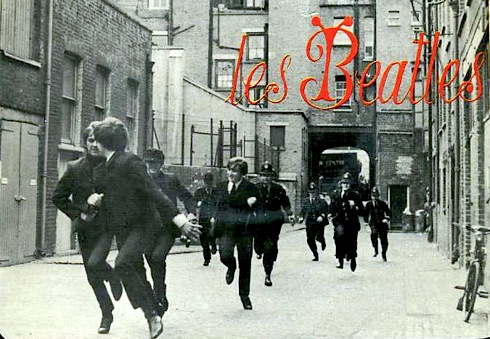
In the 60s, the mass media we know had scarcely left the starting line. This was a simpler era when any globally successful pop group was a novelty. When Beatlemania burst, it was a bombshell. The Fab Four, as the band were dubbed, found themselves writing many new rules in the celebrity game which fan worship then transmuted into the cultural phenomenon called Beatlemania — hordes of girls who stalked, pounced and screamed in frenzy — all accurately parodied in Dick Lester’s effervescent films, Help! and A Hard Day’s Night, based on the Beatles’ sudden worldwide fame. It also resulted in a deranged fan shooting his hero Lennon dead.

Beatlemania 1965, LHR

Typical Beatlemania: the band fly out from Heathrow bound for Austria and public vantage points are abrim with fans. Picture from Getty

Such sway did The Beatles hold, that their Merseyside cheek inspired provincial British pop groups not only to dare take on the unimaginative impresarios of the London entertainment mafia for whom blandness was the key to an act’s success, but then to take on the world showbiz mafia dominated by America, where within corporate frameworks artistic spontaneity might actively be indulged. The Beatles’ music — like the self-expressiveness of rock and roll — had a passion that chimed with the forces of grassroots social change, of liberation, emancipation, the debunking of authority figures, and the reform of cobwebbed institutions such as government, church and unions, all of which had been under attack by the stormtroopers of the satire movement since its dawn in 1960 with Beyond the Fringe.

The early Beatles hits captured the essential “sunny simplicities” of pop, though these acquired darker overtones as the decade matured and the increasingly “affluent society” of the West drew criticism from the New Left. By 1968, the daftness of the hippy dream saw The Beatles setting up Apple Corps. In 25-year-old Paul McCartney’s words this was to be “a business with a social and cultural environment where everyone gets a decent share of the profits. I suppose it’ll be like a sort of Western Communism”. Whateva.
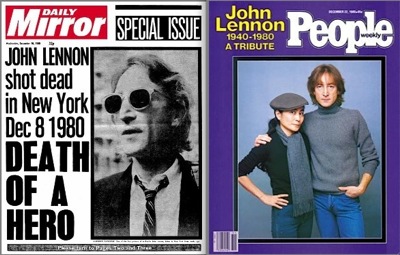
John Lennon death, Daily Mirror, people magazine, 30th anniversary
One secret to The Beatles becoming fab was being born in the port city of Liverpool, which had long bred its own resilient sense of humour. The band empathised with the working-class values of their community in ways the few young bloods in London’s middle-aged mainstream media found refreshing. Their heritage also included Liverpool’s role as the “New York of Europe” and home to Britain’s oldest Black African community. Little Richard and Berry Gordy’s Motown were in their blood, and The Beatles maintained the noble trade between Britain and North America which has seen each enhance and export the other’s music in a continuing chain of call-and-response since World War 2.

The songwriting partnership of Lennon & McCartney was unique, as also was their distinct vocal style absorbed from heroes such as Ben E King, and they transformed popular music utterly, never to be equalled. In his most infamous article, The Times’s music critic William Mann concluded in 1963: “They have brought a distinctive and exhilarating flavour into a genre of music that was in danger of ceasing to be music at all.” [See more, below]

Lennon’s own undoubted greatness was co-dependent on McCartney. Moreover, it becomes impossible to estimate the loss to music caused by his early death, when many people feel that, despite his wit and intelligence, his shortcomings hindered him from fully realising his true potential. This was the unsentimental verdict of journalist Maureen Cleave — who had known The Beatles since writing the first significant piece about them — as expressed in her frank and moving obituary for The Observer magazine in December 1980.

Beatles, life magazine, tribute
My other Evening Standard colleague who knew Lennon well during the Beatles’ later years is Ray Connolly, Liverpudlian author of many illuminating articles on Lennon. Connolly was due to meet him the day after he was shot. (“The last phone call I made before going to bed was to the Lennons’ apartment in New York to tell them that I would be in New York at lunchtime the following day.”) He agrees the Beatle was no saint, but he was “someone who wrote and played rock and roll music better than virtually anyone else”. In addition: “When he died millions of people mourned the loss of a friend. His real genius was in his ability to communicate. He was to perfection a creature of his times.”

In his instant paperback published by Fontana within two months of Lennon’s shooting, Connolly writes:
“[The American composer] Aaron Copland once said that when future generations wanted to capture the spirit of the 60s all they would have to do was to play Beatle records. That’s true, but I would go further. Future historians will find that understanding of the 60s and the 70s widened immeasurably by focusing on the life of John Lennon. From Liverpool war baby to killer’s victim just across the road from Central Park, Lennon’s every interest told a story of the times. The widespread grief at his death was compared with the mourning which followed the assassination of President Kennedy [in 1963]. No one should have been surprised, though many were.”

One of the reasons was that “Lennon chose the role of anti-hero for much of his life, casting off the trappings of glamour, throwing aside the shell of lovable immortality. John Lennon would never have made a politician. Political heroes are pragmatists. That is their job. John Lennon had no time for pragmatism. He was outspoken about everything and everybody, and then bore the consequences for his outrageousness.”

Ray Connolly, John Lennon biography, Fontana— Extracted from John Lennon 1940-1980, a biography by Ray Connolly (Fontana 1981). For many more interviews with all the Beatles, visit Connolly’s website and archive that includes Lennon: The Lost Interviews in which the journalist claims that “arguably one of Lennon’s most inspired acts was his deliberate destruction of The Beatles in 1969”. Connolly’s latest novel The Sandman arose from his years writing about rock music, not least about John Lennon and the Beatles, and is now available on Kindle

HARMONIC ORIGINALITY AND RICHNESS
UNKNOWN TODAY

In 1000 Makers of Music critic Ian MacDonald summarised the contribution of the Beatles as a band:
“As expressive of England in the 1960s as the music of Benjamin Britten in the 1950s, The Beatles made some of the world’s best music during their decade (1960-1970)… from the infectious melodies of their early beat-group years, through the LSD adventure of their central period (Revolver, 1966, and their key work Sgt Pepper’s Lonely Hearts Club Band, 1967). Each member of this Liverpool foursome made a vital contribution to a sound that blended boldness of melody and rhythm with a harmonic originality and richness of detail unknown in today’s pop… The Beatles redefined pop, revolutionised studio recording and completely dominated the culture of the 1960s. Their influence remains omnipresent.”

Ian MacDonald, Revolution in the Head, Lennon death, 30th anniversary— Ian MacDonald was the author of the monumental song-by-song analysis, Revolution in the Head: The Beatles Records and the Sixties (Pimlico).

His real name was Ian MacCormick and the book is worth consulting also for his essay Fabled Foursome, Disappearing Decade, on the social effects of the 1960s.

FOOTNOTES TO HISTORY

Richard Williams’s obituary for Ian MacDonald (1948-2003) in the Guardian noted: “Probably no other critic — not even the late William Mann of The Times, with his famous mention of pandiatonic clusters — contributed more to an enlightened enjoyment of the work of The Beatles than Ian MacDonald, who has died aged 54. In his book Revolution In The Head, first published in 1994, MacDonald carefully anatomised every record The Beatles made, drawing attention to broad themes, particular examples of inspiration and moments of human frailty alike. What could have been a dry task instead produced a volume so engagingly readable, so fresh in its perceptions and so enjoyable to argue with that, in an already overcrowded field, it became an immediate hit.”

Sample William Mann’s legendary and hilarious critique of Beatles technique from 1963:
“… One gets the impression that they think simultaneously of harmony and melody, so firmly are the major tonic sevenths and ninths built into their tunes, and the flat submediant key switches, so natural is the Aeolian cadence at the end of Not A Second Time (the chord progression which ends Mahler’s Song of the Earth) … Those submediant switches from C major into A flat major, and to a lesser extent mediant ones (eg, the octave ascent in the famous I Want To Hold Your Hand) are a trademark of Lennon-McCartney songs … The other trademark of their compositions is a firm and purposeful bass line with a musical life of its own; how Lennon and McCartney divide their creative responsibilites I have yet to discover, but it is perhaps significant that Paul is the bass guitarist of the group.”

➢ Extracted from What Songs The Beatles Sang
by William Mann, music critic of The Times

➢ William Mann’s monumental review of the Sgt Pepper album in 1967: The Beatles revive hopes of progress in pop music

FRESH INSIGHTS INTO BOY AND MAN

Over the past year Lennon’s life has twice been intelligently dramatised. In Nowhere Boy, visual artist Sam Taylor-Wood made her film debut directing several exceptional acting perfomances in an emotionally convincing evocation of Lennon’s adolescence during the austere 1950s, based on a novel by Lennon’s sister. For BBC television, Edmund Coulthard directed Lennon Naked, an unsentimentally credible account of Lennon’s confronting the desperate emotional crossroad that caused him to destroy the Beatles and abandon his wife and son for Yoko Ono.

DISILLUSIONED LENNON ON SELLING OUT

“When we played straight rock, there was nobody to touch us in Britain. As soon as we made it [as The Beatles], the edges were knocked off us, and Brian put us in suits. But we sold out. The music was dead before we even went on the theatre tour of Britain [Feb-June 1963, supporting other acts such as Roy Orbison]. We had to reduce an hour or two of playing to 20 minutes and go on and repeat the same 20 minutes every night. The Beatles’ music died there. As musicians we killed ourselves then.”

➢ John Lennon speaking in The New York Years
— this week’s BBC Radio 2 documentary by Susan Sarandon

Lennon’s Aunt Mimi Smith on his music
Aunt Mimi Smith, John Lennon“He used to drive me mad with his guitar playing, and I’ll always remember telling him, ‘The guitar’s all right for a hobby, John, but it won’t earn you any money’.”
➢ View the complete 1981 video interview
with Aunt Mimi

➢ 20 most underrated John Lennon tracks in NME Dec 14, 2010
Beatlemania, Hard Day's Night,

Beatlemania: the band on the run from fans and police in Dick Lester’s 1964 film A Hard Day’s Night
FRONT PAGE

1925-2010 ➤ Tony Curtis — for ever hot

 Some Like It Hot,Marilyn Monroe, Tony Curtis , Jack Lemmon

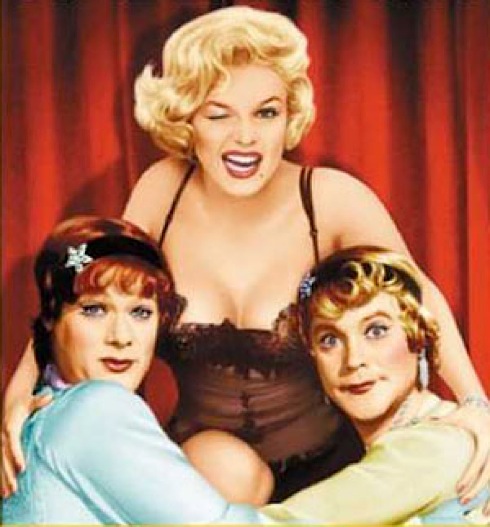
Billy Wilder’s Some Like It Hot, 1959: Marilyn Monroe as Sugar, Tony Curtis and Jack Lemmon disguised as Josephine and Daphne, two jazz musicians on the run from the mob in the Roaring 20s

❚ “THE PERFECT FILM COMEDY” — Some Like It Hot was voted the best comedy film of all time by the American Film Institute. Hilarious in every way, the whole movie is finely scripted, subtly acted and lovingly directed by Billy Wilder. He elicited performances from Tony Curtis and Jack Lemmon that set a benchmark for all cross-dressers who followed. Today, after a Hollywood career spanning more than 120 films, blue-eyed Tony died peacefully, a star.

Some Like It Hot, Tony Curtis,Cary Grant

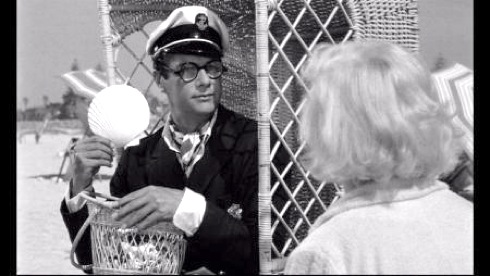
Glorious pastiche: Curtis in his other role as a Cary Grant lookalike in Some Like It Hot

Marilyn: “You own a yacht? Which one is it? The big one?”
Curtis/Grant: “Certainly not! With all the unrest in the world, I don’t think anybody should have a yacht that sleeps more than twelve.”


Daphne: “How *do* they walk in these things?”
Josephine: “It must be the way the weight is distributed.”
[Enter Marilyn]
Daphne: “Look at that! The way she moves! Just like Jello on springs. I tell ya, it’s a whole different sex.”

FRONT PAGE

➤ Anna declares McQueen a pioneer of dreams and drama

St Paul’s Cathedral, McQueen, ceremony, Anna Wintour,Hilary Alexander

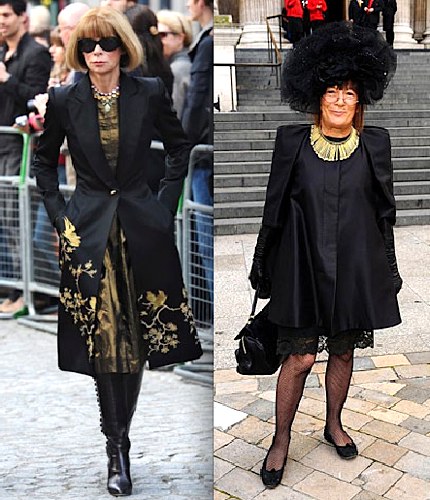
A hint of gold from the doyennes attending St Paul’s Cathedral for the McQueen ceremony: Anna Wintour, Vogue editor, and Hilary Alexander, Daily Telegraph fashion director. Photographs © Glenn Copus/PA/Getty

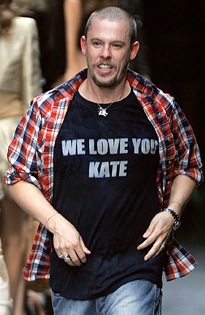
WITH LONDON FASHION WEEK IN FULL SWING, hundreds of leading fashionistas gathered in St Paul’s Cathedral today for a ceremony in memory of Alexander McQueen. A taxi driver’s son who grew up in London’s East End, he became Britain’s most confrontational, unfettered and theatrical designer. He died in February aged 40, having been appointed a CBE and named British Designer of the Year four times by the British Fashion Council.

St Paul’s Cathedral, Alexander McQueen, London Fashion Week, ceremony,  tributes,

Alexander McQueen: enfant terrible of the runway

The world’s most powerful arbiter of fashion, Vogue editor Anna Wintour, led today’s tributes. Models Kate Moss and Naomi Campbell, actress Sarah Jessica Parker, muse Daphne Guinness and designer Stella McCartney were among the congregation, which also included relatives and former colleagues of McQueen.

Anna Wintour is the English-born daughter of Charles — editor of the Evening Standard during the Swinging 60s when his London paper achieved international acclaim. After removing her sunglasses, something she rarely does in public, Anna paid a moving tribute to McQueen: “He was a complex and gifted young man who, as a child, liked nothing more than watching the birds from the roof of his east London tower block.

Bjork, Alexander McQueen, memorial,

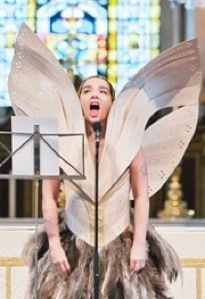
Bjork performing Gloomy Sunday

“He had an 18-year-long career of pioneering his dreams and dramas. He cared what people thought of his clothes but not of him. He never appeared at ease with himself and hated to travel away from his beloved London.”

Björk sang the haunting hymn Gloomy Sunday, which reflects on the horrors of modern culture, and there were also addresses from jeweller Shaun Leane, model Annabelle Neilson, McQueen’s nephew Gary Hulyer and milliner Philip Treacy. Composer and pianist Michael Nyman and the London Community Gospel Choir gave musical performances.

➢ Fuller Evening Standard report of the McQueen service, plus gallery

➢ Backstage with Hilary — Cheek and effervescence spice the Telegraph doyenne’s videos and reports of the autumn shows in New York, London and Milan

➢ “My father really decided for me that I should work in fashion” — Anna Wintour in The September Issue. Out this week on DVD, the most gripping movie ever about editorial decisionmaking, OK, on the world’s most powerful fashion magazine, but for that very reason, junking $50k’s worth of photography is a measure of that power. [“Knocks All the President’s Men into a cocked hat” — Shapersofthe80s]

FRONT PAGE

1984 ➤ 2010, RIP Big Frank and Little Frank. You’ll be missed. You know you will, you really will

Frank Sidebottom, comedian, Little Frank, Timperley, Manchester
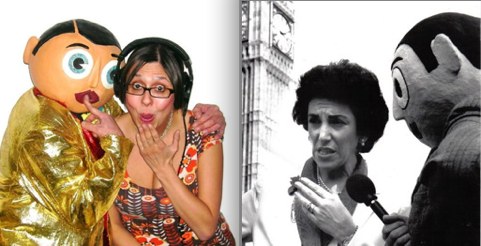
❚ TIMPERLEY COMEDY LEGEND FRANK SIDEBOTTOM IS NO MORE. The man in the papier-mâché head like a Max Fleischer cartoon has been revealed only in death to have been aka Chris Sievey. Almost entirely unknown to the effete south of England, Lancastrian icon Frank was unleashed on the world through a record given away with the video game The Biz, presciently created by Sievey for the pioneering ZX Spectrum computer in 1984.

Only last week, he launched a comedy song for the World Cup, titled Three Shirts on My Line. Campaigns to Make Frank No 1 in the pop charts have begun at twitter.com/MakeFrank1 and at the Facebook group Let’s get Frank Sidebottom in the charts, which is bursting with tribute images. The Manchester Evening News reports that Frank is facing a pauper’s funeral after dying virtually penniless, so visitors to this impromptu Facebook page have already established a fund, being helped by Guardian writer and former bandmate Jon Ronson who asks for donations to go via this Paypal account: jonelle1929@gmail.com. [Appeal now closed, see update below]

Frank Sidebottom, Three Shirts On My Line, World Cup, Nick Hilditch, tributes

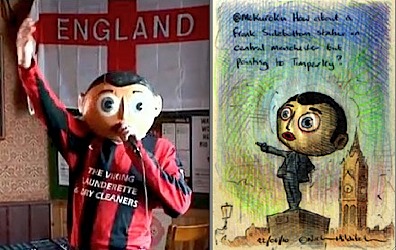
Official unofficial World Cup song launch: Frank at The Salutation pub in Manchester last month. Right, Nick Hilditch’s concept for a statue in Albert Square, pointing to Timperley

Frank Sidebottom zoomed to cult status through comedy records on the Regal Zonophone label and his broadcasts on Radio Timperley for Manchester Radio Online. Within minutes his stand-up routine rocketed him to 80s superstardom, accompanied by Little Frank, a puppet who was his deadringer. From 1986 he had his own comic strip in an anarchic children’s comic called Oink! which was top-shelved by many newsagents. He regularly reported for the regional TV news programme, Granada Reports, graduating to his own ITV showcase, Frank Sidebottom’s Fantastic Shed Show.

Sidebottom, whose fame was greatest during the late 1980s, can truly claim to have put on the map such names as Timperley, St Helen’s, Altrincham FC, Mrs Merton, Mark Radcliffe and most notoriously Chris Evans. Among the final appearances of Big Frank and Little Frank was the living test card shown on late-night television in Greater Manchester on Channel M.

Sievey left a daughter, Asher, 31 and two sons, Stirling, 31, and Harry, 18, who still lives with Sievey’s ex-wife Paula. Frank’s catchphrase was “The Robins aren’t Bobbins”. Another one was “You know it is, it really is”.

Frank Sidebottom, Edwina Currie, Cheshire FM

Sidebottom the broadcaster: Frank meets Vicky at Cheshire FM . . . and interviews MP Edwina Currie for Granada TV

➢➢ Genuinely a genius – Manchester’s showbusiness stars lead the tributes
➢➢ Longtime friend Mick Middles recalls Frank’s creator, first encountered as frontman of The Freshies, an off-kilter power pop band
➢➢ “A curious line in daft Bontempi songs” – The Guardian obit, June 22
➢➢ VIEW ♫ ♫ Frank Sidebottom explaining Three Shirts on my Line, his unofficial World Cup 2010 song, at the Monarch in Camden Town last December

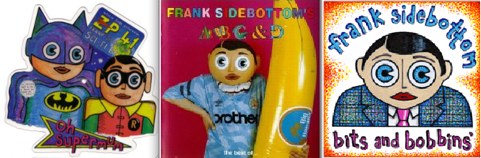
Frank Sidebottom, discography

Find the complete Sidebottom discography at Frank’s interweb site

➢➢ Frank’s World, the official official site
➢➢ Complete Sidebottom discography at Frank’s interweb fan site run by Russ
➢➢ Frank Sidebottom at MySpace
➢➢ VIEW ♫ ♫ Chris Sievey and the Freshies in the studio recording Bouncing Babies – a poptastic treasure from 1981
➢➢ VIEW The Magical Timperley Tour – Frank Sidebottom takes a load of people on an amazing bus tour through his home village of Timperley . . .

➤ Update: fan fund totals £21,240
for Frank’s send-off

Chris Sievey, Frank Sidebottom, funeral

Chris, aka Frank

❚ FRIDAY JULY 2 IS THE DATE for Chris Sievey’s funeral. A private service for family and friends will be held at Altrincham Crematorium to celebrate the life of the man who created the cult hero Frank Sidebottom. It is being funded by donations from an internet campaign. Within six days of his death from cancer, donations to the funeral fund saved Sidebottom’s creator from a pauper’s funeral. More than 2,500 supporters signed up to the Facebook group Frank’s Fantastic Funeral, with Twitter claiming 3,400 followers. The appeal fund closed on Sunday June 27 at £21,240.

His son Stirling, 31, said the private funeral would give those who knew his dad the chance to mourn the man behind the mask. “The funeral is for friends and family of Chris. We want to hold a celebration of Frank within the next couple of weeks. We are looking at venues, including Manchester town hall.” [More at the Manchester Evening News]

➢➢ UPDATE: A fresh assessment of Chris Sievey, the little-known creator of Frank Sidebottom

❚ IGNORED BY THE MAINSTREAM ALL HIS LIFE, the cult comedian cum cod pop star finally made headline news in death. Plenty of people didn’t get Sidebottom. The first time he appeared at Liverpool University, he bombed. “Did Sievey like being Frank? Yes. Would he prefer to have been a Beatle? Yes.” – Simon Hattenstone in The Guardian, June 26, 2010

➢➢ Radio Presenter Mark Radcliffe describes the “real affection” evident at the funeral of his close friend Chris Sievey

❚ THE END OF THE SERVICE for Sievey at Altrincham Crematorium, July 2, was marked by the Beach Boys hit God Only Knows. A celebration of his life, titled Frank’s Fantastic Farewell, is being held in Castlefield Arena on July 8, 7-10pm, admission free.

➢➢ UPDATE: 5,000 people pack into Castlefield Arena for a tribute evening of laughter and song – MEN July 9

FRONT PAGE

2010 ➤ Ure rallies support for Japan’s bassist Karn

Mick Karn, ex-Japan, bass player

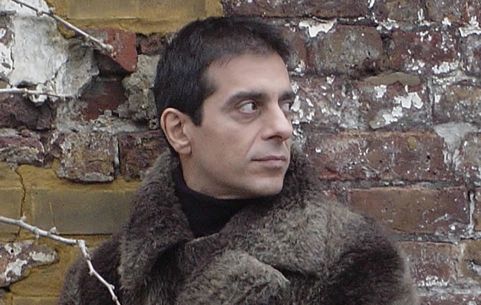
Mick Karn: former 80s popstar today struggling to make ends meet

❚ BITTER-SWEET NEWS TO HEAR THAT MIDGE URE has leapt straight into the breach to organise a benefit concert [See update at foot of this post] for Mick Karn, the former bass-player with 80s hit group Japan. Karn’s website has announced that he has been diagnosed with “advanced stages of cancer” and is struggling to pay his medical bills in Cyprus where he lives with wife and child.

One aspect of this sad news is to be reminded that not all chart-topping “popstars” become millionaires, especially the drummers and sax-players and guitarists who don’t get a chance to write lyrics, which is what generate the big money in royalties. The typical pop group makes two albums in as many years. As hugely influential pathfinders for the glam-into-synth-pop era, Japan had a very good run: over eight years, six studio albums and one live, plus umpteen compilations. Yet the pop industry is not noted for its pension schemes.

Midge Ure, Mick Karn, After a Fashion

Ure and Kahn: Fashion single in 1983

Another aspect of this week’s news is to be starkly reminded of our own mortality. Mick Karn will be “only” 52 on his birthday next month. When Michael Jackson died last June, he was “only” 50 and more than a few among our pop pals from the Swinging 80s generation said they suddenly felt the hairs prickle on the backs of their necks. Jacko was exactly their age. So was Steve (Stella) New when he died last month, at “only” 50.

What seems to chill us is the threat of the Big C. For most of the past three decades various forms of heart disease have been the most common cause of death in the UK. But whether as a result of dietary change or gym culture, circulatory diseases have shown the greatest decline, while life expectancy at birth has increased by six years on average to 79. It’s often said that if the heart doesn’t get you in the end, cancer will, but what’s little appreciated is that cancer is the prime cause of death among men when they’re younger – in their thirties. From there on, cardiovascular causes and, curiously, geography become more decisive. So, given a man’s susceptibility, perhaps we ought not to be surprised when cancer claims him earlier in life than a woman.

“We understand death for the first time when he puts his hand upon one whom we love,” it is said. “Only” 50, if we’ve come this far, brings ever more frequent intimations of our own mortality, that tilt us from the Wordsworthian vision towards a more pragmatic view of our role as a toiler in the scheme of things. The hot-blooded proclamations of Jimmy Dean, Pete Townshend and Roger McGough starts sounding like romantic indulgence: “Live fast, die young”? You have to be kidding! “Hope I die before I get old”? Oh no, you don’t really! “Let me die a young man’s death”? Absolutely not! As the grand old man of British sculpture, Henry Moore, told The Face shortly before he died at 88: “The work is what’s important, and I haven’t got much time left.”

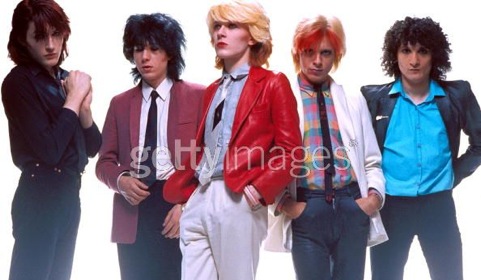
Japan, pop group,

Japan in May 1979: Steve Jansen, Richard Barbieri, David Sylvian, Mick Karn, Rob Dean. Photographed © by Fin Costello

So all power to Midge Ure for grasping the nettle and planning to celebrate a life not yet fully run. He has urged fans to give Karn both “financial help and emotional help”. In addition, Ure, as the joint-founder of Band Aid, 1984’s fund-raising supergroup, is well versed in how to organise a benefit for Karn. BBC 6Music reports: “While no acts are confirmed yet for the concert, which is to take place some time this year, Ure has his sights on reuniting Japan for the show.” (Karn’s website later said these had not been Midge’s words.)

Ure said of Karn’s diagnosis: “The situation is not very good. The cancer has spread, he is going through chemo right now — but surrounded by family and friends, he has a positive attitude.”

❚ IN 1982 WHEN PETE TOWNSHEND WAS PUTTING TOGETHER a supergroup to launch the first Prince’s Trust Gala, he chose Karn for the line-up and described him as by far the best bassist in the UK. This event was the showcase that led to his collaborations with Kate Bush, Joan Armatrading, Pete Murphy (Dalis Car, 1984), Midge (the chart single After a Fashion, 1983) and many more. The intervening years have yielded 13 solo albums, among which The Tooth Mother (1995) is a standout for its juzz-funky innovation.

Of Karn’s musicianship, Ure said: “Until I heard Japan, I had never heard a bass guitar played like that. It was almost like playing a lead instrument, incredibly percussive and melodic, something that inspired me.”

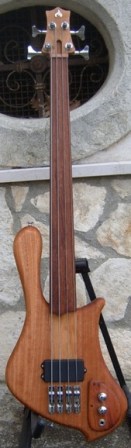
Prometeus Guitars, Italy, Armando Pugliese, auction

Mick Karn Appeal – This Fretless
Bass could be yours

Armando Pugliese from Prometeus Guitars in Italy has kindly agreed to donate the proceeds from the auction of a fretless bass guitar to Karn’s appeal – either the bass pictured here, which he lovingly made for himself, or one built to your spec. This a serious instrument worth a high three-figure sum. Auction ends Friday June 25.
[Update: Auction now ended. Winning bid, 1502 Euros.]

O

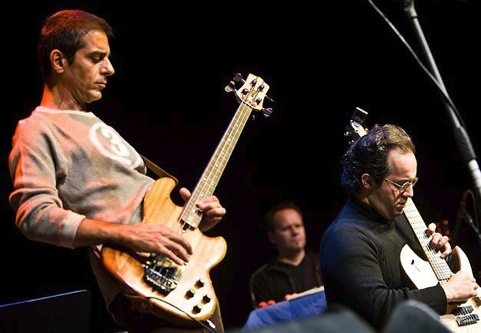
Karn’s unusual fretless bass technique is at once surreal, exotic and sinuous, practised in the early days on an aluminum-necked Travis Bean instrument. His best friend guitarist David Torn once said: “It’s like if Bootsy was Moroccan.”

Motown’s James Jamerson insisted that the bass can actually drive a melody, and Karn agrees. It was one of the hallmarks of Japan’s music. The group was founded in 1974 (when Karn was 15) with schoolmates in south London: David Sylvian, David’s younger brother Steve Jansen, and Richard Barbieri. They decided to play Roxy-ish art-rock, both pre-punk and despite punk. By 1979 and the release of their pivotal third album, the synth-driven Quiet Life, Japan’s long hair, glam make-up and progressive melodies saw them branded as New Romantics in all but club membership. In reality they presaged the UK’s edgy new pure pop by going off on their own musical tangent with Sylvian’s sardonic crooning, quirky Eastern influences and saxophone arrangements.

Talk of a reunion might just be a bridge too far, given the deep personal tensions that drove Karn and Sylvian apart in 1982. In 2006, Karn told Beatmag: “For all four of us to agree would be nigh-on impossible. But there’s something I’d really, really enjoy about being on stage with them again, and I’d enjoy playing the old Japan songs again, with my fellow bandmates. That was an enjoyable period of my life, and I’d like to experience it again.”

➢ Extract from Mick Karn’s response on his website, June 14:

“Your comments and well wishes have left me speechless, in the same way that our news had affected you. The support and love you give me is felt by all of us here, every day . . .

“At the time of first posting my news I was striving to obtain a medical card that would pay for treatment here in Cyprus and I am pleased to say that in recent days, since becoming officially diagnosed through a series of specific tests, the state will now take care of my basic medical costs . . . Donations that have been received will remain in a fund which will be used to augment the state care  . . .

“Words cannot truly express the full scope of my gratitude and feeling of good fortune to have so many friends, both near and far.”

➢ Another response on his website, Sept 3:

“Thanks to the appeal fund, Mick and his family were able to move to London where he is currently being treated. This really wouldn’t have possible without the support of Mick’s friends and all of you who have raised money for the fund. When it’s appropriate, there will be further updates. Mick also hopes to work with Peter Murphy on a follow up to their Dali’s Car album, The Waking Hour, towards the end of September.”

Mick Karn, Japan, bass player, re:VOX, interview, autobiography, album

Karn at home: searching music, candid memories

➤ Latest reflections by the restless Karn on a road well travelled

O

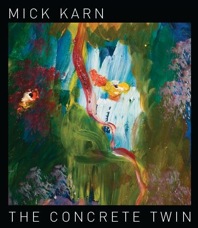
❚ MICK KARN GIVES AN INTERVIEW to Rob Kirby in the next issue of re:VOX, a pocket magazine dedicated to 80s electronica. The guitarist says of the restless and searching quality in much of his latest album, The Concrete Twin, which was released in January: “My recordings are always a way of dealing with unresolved issues, most of them mentioned in the book [his autobiography] . . . It’s impossible not to hear music wherever you go. Everything I hear will eventually turn into an influence on some level, subconsciously.”

Mick Karn, album, The Concrete Twin,download, CDWho, or what, is The Concrete Twin of the album’s title (£7.99 as a download, £17.49 as CD from Karn’s site)? It brings to mind the self-sculpture of Antony Gormley. Karn, who has been admired as a sculptor for 30 years alongside riding the music industry rollercoaster, says: “I guess it’s the closest I’ll come to mixing music with sculpture. The concrete twin is another self we all have. The ‘hard’ side of us that can withstand all the trials and tribulations that life has to offer.”

What prompted you to commit your thoughts on your past life so candidly to the book, Japan and Self Existence (£16.96 from Lulu), which has roused strong reactions? Was it the relocation to Cyprus? “Just tired of meeting so many people that have the wrong idea, and that well-known people can have the same human flaws as anyone else. I feel glad that people know the truth due to the book, but contented, no. I’m never contented. It’s my motivation for carrying on. Self-publishing was the last option. Debi spent three years on my behalf, approaching every publisher that we could think of. The reaction was always positive, but the explanation the same: too many biographies by musicians on the market.”

❏ Extracts from Musique Concrete, an interview with Mick Karn in re:VOX #9, on sale in late June at £1.50 from Rob Kirby, 2 Bramshott Close, London Road, Hitchin, Herts SG4 9EP.

➢ Mick Karn’s own website – Download his latest album The Concrete Twin, order his autobiography, view his sculpture online (“amazingly accomplished” – John Russell-Taylor)

➢ Honorable tension: Karn gives a substantial interview to music journalist Anil Prasad in 1996 for Innerviews, the web’s longest-running music magazine. Extract here . . .

On the line-up for Japan’s 1989 reunion as Rain Tree Crow: “We really wanted a soloist and a guitarist. David Torn was my first choice. I recommended him to everyone. It looked as if it was going to happen for a while. But the David Sylvian we’d always known was one of complete control. That made it very difficult for us to work with him. And that was another reason why the band just couldn’t work. We found that as more time went by, the more and more control David [Sylvian] wanted to take — to the point of not wanting David Torn to come into the picture, because he decided to take care of the guitar himself . . .”

➢ VIEW ♫ ♫ Japan on Top Ten New Romantics – Paul Morley: “There was a wonderful moment when it happened for Japan with the album Ghosts, when us serious NME people embraced them, because they seem to have left behind the weird clothing and the makeup” !!! Oh yes.

FRONT PAGE