Tag Archives: Tributes

➤ Martin Rushent — the man who made stars of the Human League — is dead

Martin Rushent , electronic music, British pop, swinging 80s,

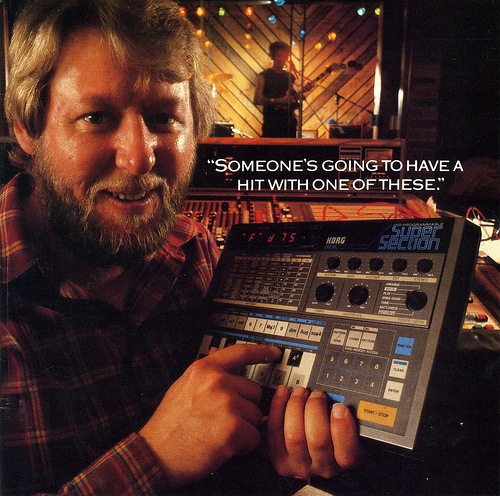
Martin Rushent with Korg Super Section programmable sequencer (1985)

❚ A TRUE SHAPER OF THE 80s DIED YESTERDAY. Martin Rushent, the mould-breaking UK music producer, was 63 when he suffered a heart attack at his home in Berkshire. What he stamped on 80s electronica was a rhythmic template of synths and drum machines that came to characterise much mainstream pop, notably The Human League’s breakthrough album Dare in 1981, which spent 71 weeks in the UK chart, and became a worldwide smash. Rushent was known as a hard taskmaster. He insisted on bringing the Sheffield-based band south to escape the “unhealthy atmosphere” of Monumental Studios oop north, and his influence was not immediately welcomed by the League’s leader Phil Oakey, following the early band’s split and reconfiguration in 1980.
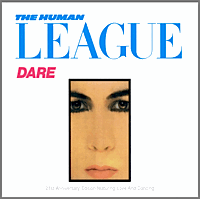
Dare, The Human League,album, pop music, Martin RushentIt began with their first single The Sound of the Crowd [see video below] which peaked at No 12. Rushent was a pioneer of the remix, who decided to improve on the League’s original version of Dare by creating 1982’s Love And Dancing, a complete makeover of the original album. It went to No 3 in the LP chart and is today regarded as his game-changing calling card. As with the Stranglers earlier, Rushent achieves a razor-sharp clarity for each instrument, here dominated by the electronics he so believed in. The Scottish pop group Altered Images also enjoyed chart hits thanks to Rushent’s production. He was named Best British producer in the 1982 BRIT Awards.
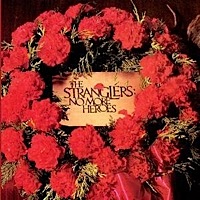
The Stranglers,rock music,No More HeroesMany also regard Rushent as the best new-wave producer of the late 70s through his work with The Stranglers, Britain’s longest-surviving rock band from that post-punk era (he produced their first three albums which would become both commercial and classic, Rattus Norvegicus, No More Heroes and Black and White), as well as Gen X, Buzzcocks, XTC, 999 and Hazel O’Connor. Other acts he engineered earlier in the 70s were T.Rex, David Essex, Fleetwood Mac, Yes and Shirley Bassey.

Rushent custom-built a £250,000 high-tech recording studio at his home near Reading where, he said, “The air-conditioning alone cost me £35,000”. Here ex-Buzzcock Pete Shelley made his debut album Homosapien (1981) as a solo artist for Rushent’s record label Genetic. This had its London office a couple of floors up from the legendary Blitz club where Rusty Egan and Steve Strange ushered in the New Romantics movement in 1979. Egan says that Rushent facilitated two Visage tracks, Tar and Frequency 7 (“recorded in his garage in 1979”).

His 37-year-old first son Tim says his father hated playing by any accepted rules of the game and brought irreverence to the production process. His musical signature was to add a sophisticated mix of vibrance and colour, so beefing up the musical temperature higher than a band managed to achieve for themselves. He cites The Human League’s first No 1 hit Don’t You Want Me, and Fascination (as well as Altered Images’ Happy Birthday album track). Dad’s tactic had been to bring into The Human League punk rocker Jo Callis from the Rezillos to act as a co-writer and catalyst.
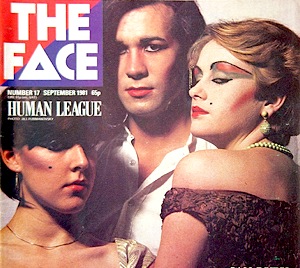
Human League, Phil Oakey, Joanne Catherall ,Susan Sulley

The Human League, 1981: Phil Oakey and the girls he immortalised in that lyric, Joanne Catherall and Susan Sulley

BBC journalist Linda Serck recalls how Rushent made clear who was boss when he met The Human League: “They were under the impression that I was going to work on what they’d done so far and improve that and carry on. I said, ‘No I’m not doing that, we’re starting again’, which was a bit of a shock for Phil [Oakey]. He argued about that but I said, ‘No, if I’m going to produce you, you’re going to do what I tell you to do’. This is my attitude to everybody I produce, it’s a sort of democratic dictatorship!”

Tragically for producer and band, the end came abruptly after three years’ hard work. In a moment of pique, backing singer Susan Sulley (famously discovered while at school dancing “in a cocktail bar”) asked the perfectionist Rushent, who was old enough to be her father: “What do you know about what young people want?” In any normal workplace this would be grounds for her dismissal. In this case, the insult detonated the end of a lucrative, million-selling business partnership.

Today, Rushent leaves his wife, Ceri, and four children from two marriages.

➢ “When producer Martin Rushent took the Human League’s leaden new song and turned it into pop gold, the band hated it” — A revealing interview with Sound On Sound, 2010

♫ Peaches by The Stranglers — “Bass sound?! I asked him one time how he got that bass sound, he said: I turned everything up” — James Rushent, his second son, a musician.

♫ Three days ago Martin Rushent listened to two of his own tracks at his MySpace page: In Your Arms Again (from 2007) and Itchy Hips (2006).

+++

AMONG TRIBUTES FLOODING IN TODAY

Hugh Cornwell , The Stranglers,Hugh Cornwell (left), vocalist and guitarist with The Stranglers: “ It is with great sadness that I hear of Martin Rushent’s passing. He was a vibrant and gifted individual who was able to extract the essence of what The Stranglers began with, and translate it into something that could be played on radios across the UK. It was obviously no one-off success, as he was later to show with The Human League. I remember him fondly.

Midge Ure of Ultravox “ He saw the potential in synthesisers and a future in electronic music. Sad loss for all music.

Visage drummer Rusty Egan: “ Martin, Midge Ure, Barry Adamson, Billy Currie, Dave Formula, John McGeogh, myself and Steve Strange all hanging in your house in summer of 1979 recording our debut album VISAGE … Because YOU believed … THANK YOU … You were a total genius, and like all geniuses before you, you had a crazy life but an amazing body of work … I am welling up remembering your kindness and love for music…
➢ Listen to Rusty Egan’s set of Martin Rushent re-mixes from the 80s dancefloor newly uploaded to Soundcloud

Altered Images drummer ‘Tich’ Anderson: “ I’ll remember all those hours in Genetic studios fondly. Sorry for crashing your Jaguar. xxxxxx You were a genius Martin.

Visage vocalist Steve Strange: “ Martin one was not only a genius but as a 17-year-old making his first record, he was a true role model, inspiration and guiding figure. He signed our first record Tar to his record label and for us, started the ball rolling. We owe him so much. Thank you.

Tim Rushent, son and sound producer: “ As many of you know I had a VERY fractious relationship with my Dad. But I never doubted his work as a producer, friend and raconteur. Feeling even more proud of him professionally today than I have done for 37 years.

➢ Pay your own tribute at the Facebook page Martin Rushent Memories

Prof Ben Rosamond, Uni of Copenhagen: “ Just under 36 minutes of music, but thousands of hours in the making. According to Simon Reynolds in Rip it Up, Love and Dancing consisted of 2,200 main edits and a further 400 small edits. There were so many splices that the mastertape was close to disintegration. The work of a genius. Others have said this, but it’s true for me as well. Martin, you fashioned the soundtrack of my teenage years and so many of the melodies and musical phrases that pop in and out of my adult consciousness are yours. Thank you. Rest in peace.

Heather Priestley, anaesthetic ODP, London: “ Martin you were a much loved legend, RIP. I haven’t felt this sad since losing John Peel, like you, part of my youth and the music that made me who I am today.

➢ Telegraph obituary: “Rushent forged a new way of sequencing and programming synthesiser-based music — in the process pioneering the technique of sampling”


FRONT PAGE

2011 ➤ The on-off brotherly rivalry that drove John and Scott Walker apart

Walker Brothers,

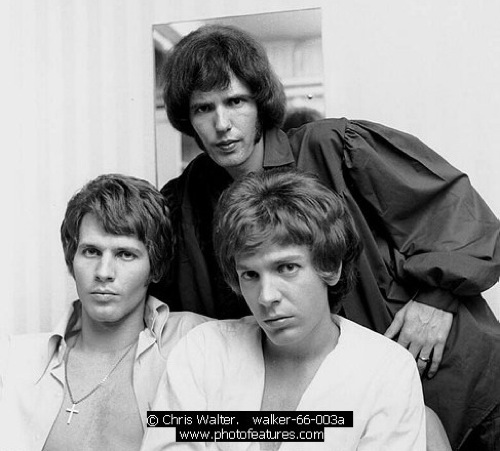
Frost is in the air at the height of their success in 1966: Walker Brothers John and Scott at front, with drummer Gary playing peacemaker

◼ IN 1966 JOHN WALKER was one of the biggest heart-throbs on the British pop scene as joint vocalist in a trio of sexy American dudes called The Walker Brothers. Their No 1 UK chart hits were the Bacharach and David song Make It Easy on Yourself and six months later, The Sun Ain’t Gonna Shine (Anymore) by Crewe and Gaudio. When John Walker died from cancer this weekend (Saturday May 7, 2011) at the age of 67, his former bandmate, the drummer Gary paid tribute to John as founder of the group and its original lead singer: “He was also a fantastic guitarist which a lot of people didn’t realise. He was a compassionate song-writer and a gentleman with lots of style.”

Sadly, as far as Google search can reveal, the third Brother, Scott, has apparently chosen to remain silent in the wake of John’s death.

Having relocated to Swinging London in 1965 when the UK ruled pop music, the soft-crooning Walkers were quickly besieged by frenzied female fans, whose adulation increased pressures emerging within the band. Scott’s soaring baritone voice established him as the lead singer, and the management persuaded both vocalists to abandon instruments onstage, leaving John stripped of a major aspect of his live performance. The band split awkwardly after a miserable farewell UK tour in 1967 which itself was hijacked by the “obscene and vulgar” supporting act, the Jimi Hendrix Experience (Jimi’s own quote). Scott’s disgust is vividly described in the 1994 biography Scott Walker, A Deep Shade of Blue.


+++
Walker Brothers, ImagesIn his 2009 book The Walker Brothers: No Regrets, co-authored with Gary, John Walker wrote: “Most people don’t realise that it was I who chose the songs that would become The Walker Brothers’ biggest-selling singles… I was aware that things had changed a lot: Scott had become the lead singer of the group… Now that he was singing lead, I enjoyed the opportunity to create some unusual harmonies.” Yet the new pecking order wrankled.

The charismatic frontman Scott Walker embarked on a solo career, putting out five albums between 1967 and 1969 with much commercial success, despite his confused mission to shake off the trappings of pop stardom. He had settled in Europe and during the ensuing decades adopted the lifestyle of a recluse, while his broody, inspirational voice and commitment to “serious” post-pop music has yielded further landmark albums and sustained a cult following worthy of a guru.

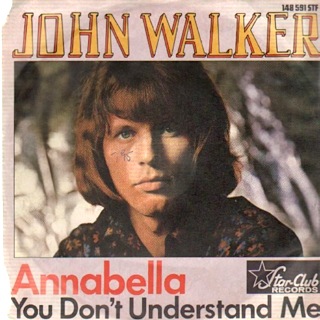
John Walker, Annabella, musicstack,60s popAfter the split, John released a single, Annabella, co-written by Graham Nash, which was a Top 30 hit in the UK, and an album, If You Go Away. Itchy feet and eager media reunited The Walker Brothers in 1975, and the hot comeback group released No Regrets, a single and album which proved hits for the fledgling GTO label. Two more albums followed in London to bring the band’s studio total to seven. But Scott’s legendary stage-fright resulted in lucrative tour offers being turned down, much to John’s exasperation.
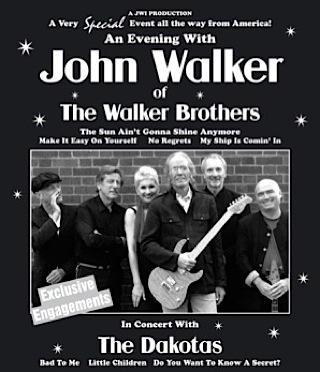
Over the next couple of years, Scott says, “Everybody got sick of each other again”, while according to John the trio “just drifted apart”, after which he returned to the States and Gary Walker settled in England, both to assume lower profiles as musicians and producers. John Walker became a publisher and ran a recording studio in California, and in recent years resumed touring Britain as part of an annual Silver 60s show. His last appearance was at Croydon’s Fairfield Halls in May 2010, ending a 12-date sprint only months before his cancer was diagnosed.

John Walker, UK tour 2010, Dakotas,Just for the record, the Walkers were of course not really brothers but the stage name is how the world will remember John Maus, Scott Engel, and Gary Leeds. As a teenager John had worked with greats such Ritchie Valens, Glen Campbell and Phil Spector. As 21-year-olds in 1964, the three Californians came together in response to the feverish mid-60s pop scene where moptop hair and cheekbones to die for cast them as readymade pop idols. Their effortless balladeering backed by a huge lush orchestra brought to the UK pop charts much-needed sophistication, of the kind the US had in abundance, so success was less marked in their homeland.
There isn’t much good footage of The Walker Brothers live, but the Land Of 1000 Dances clip [above] from German TV in 1966 is sensational evidence of John’s own onstage talents as he emulates Jaggeresque gyrations (Gary on drums). Likewise, in the rarely seen clip from the California TV show Hollywood A Go Go in 1965 [V-0759, below, from 17 minutes in, with “Tiny” Rogers on drums], the rendering of Cottonfields displays Scott’s breathtaking insouciance on bass. He and John could easily pass for brothers and their simmering appeal is self-evident. Great moves by the studio audience, too.

In the end the tensions were always between John’s country instincts and Scott’s idiosyncratic wish not to be typecast as a popstar. (In an interview with me in 1967 for Britain’s “first teenage newspaper”, titled Cue and published by IPC, Scott confessed that he drank a bottle of Scotch and a bottle of wine a day with the sole purpose, he claimed, of wanting to coarsen the baritone voice he thought sounded too sweet.)

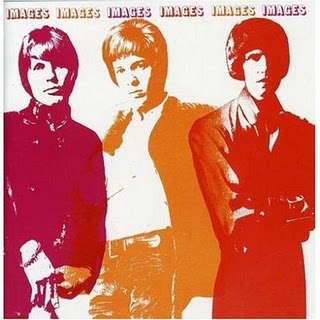
Mojo’s verdict on the Brothers’ 1967 album Images: “The swansong of America’s British chart crashers, too square for the freaks and too loose for the straights.” And of the second reunion album Lines (1976), AllMusic says: “Still uncertain of their true role in the exciting world of mid-1970s pop, the Walkers remained torn between the big balladeering which had served them so well in the past, and the more experimental (or, at least, new) stylings which Scott, at least, was imbibing elsewhere.” The Walkers made some great pop in their heyday, but were oh so vulnerable to the famously destructive power of “creative differences”.

+++
➢ Scott Walker has composed the music for a recital in music, dance and voice based on a Jean Cocteau monologue at the Royal Opera House’s Linbury Studio, June 17–25, 2011… The ROH preview says: “Jean Cocteau’s monologues provide the inspiration behind an evening of opera and dance from ROH Associate Artist Aletta Collins and director Tom Cairns. They explore the inspirational synergy of music, dance and voice along with Cocteau’s themes of possession and abandonment. In Duet for One Voice, a world-premiere, Collins re-imagines Cocteau’s monologue Duet for One Voice for dancers, with a newly composed score by composer Scott Walker.”

➢ 2019, Elsewhere at Shapers of the 80s: Tributes on the death of Scott Walker

FRONT PAGE

1932–2011 ➤ Liz Taylor — glamour to a T

❚ ENGLISH-BORN DAME ELIZABETH TAYLOR, one of cinema’s biggest stars, the epitome of celebrity itself, has died in Los Angeles aged 79. As the woman of the age, she was renowned for her magnificent beauty, her fierce independence, her daring and insolence. Her most notable performances are seen in National Velvet, Cleopatra and Who’s Afraid of Virginia Woolf? — one of 12 films with the great British actor Richard Burton, in his day the highest-paid in Hollywood.  Taylor herself was the first woman to be cast in a $1m role, that of Cleopatra, pictured in the epic with Burton on the Time cover, below. He married her twice in possibly the longest-running love story in showbiz, marked by its passion and turbulence.

Elizabeth Taylor, Richard Burton, Life magazine, 1962Taylor won four Oscar nominations between 1958 and 1961, for Raintree County, Cat on a Hot Tin Roof, Suddenly Last Summer and triumphed at her fourth attempt with Butterfield 8. Of screen-acting she said: “I learned that you had to feel it in your gut, and your guts had to get in an uproar.”

Her own favourite movie was Mike Nichols’s caustic portrait of a car-crash marriage, Who’s Afraid of Virginia Woolf? (1966, above, nominated for 13 Academy Awards among which Taylor won Best Actress playing opposite her own husband Burton). Her beauty at age 18 is breath-taking as she plays a society girl alongside Montgomery Clift in the romantic drama A Place in the Sun (1951, below), directed by George Stevens. Beneath that a third clip shows Taylor giving full value as the mystery guest on the CBS television panel game What’s My Line? in 1954. It is a gem.

➢ A lustrous pinnacle of Hollywood glamour — the ultimate obituary by Mel Gussow in the New York Times

➢ The last film star: monster and empress, sweetheart and scold, idiot and wise woman — David Thomson in The Guardian

➢ “Married eight times to seven men… Other love goddesses, such as Hayworth, Turner and Gardner, were not in her league. Everything she did was news” — The Daily Telegraph obituary


FRONT PAGE

2011 ➤ Farewell Mick Karn, master of the bass and harbinger for the New Romantics

MICK KARN, the acclaimed exponent of the fretless guitar, died today in London from cancer. He was a founder member of the British art-rock band Japan, formed in 1974 with David Sylvian, Richard Barbieri, Rob Dean and Steve Jansen, heavily influenced by Bowie and Roxy. By their 1978 album Adolescent Sex, Japan had developed a unique visual style and innovative sound underpinned by Karn’s sensual bass. In all but club membership, Japan *were* the original New Romantic band

Mick Karn, Buddha, Commonwealth Institute, Steve Jansen Imageshop

Karn outside the Commonwealth Institute, Kensington (undated), photographed by © http://www.SteveJansen.com — Proceeds from the sale of Jansen’s photos have gone to help Mick in recent months

❏ Karn’s Facebook page notes this evening “Even on early Japan recordings, his highly distinctive fretless bass voice for which he is most renowned can be heard. By their swan song, critically acclaimed Tin Drum 1981, he was dubbed one of the best bass players in the world. He’d already supplied bass and sax work to Gary Numan’s Dance album and was the first Japan member with a solo record, Titles [hear audio below]. In 1983, Japan’s live album, Oil on Canvas, brought his playing to new ears: jazz legend Jan Garberek.”

❏ Update on Karn’s Facebook page, Jan 18 “Mick’s funeral service took place yesterday afternoon, Monday 17th January, in West London. The private ceremony was attended by close friends and family.”

➢ How Shapersofthe80s responded to the appeal for Mick Karn last June — plus Mick’s follow-up and background interviews

❏ Bassist John Taylor writes on the Duran Duran website “Nick and I first saw Japan at Barbarellas in Birmingham on their Obscure Alternatives tour and were blown away. They were so fresh, while every other band in town were tripping over each other in a rush to play the same three chords, Japan were brave in many ways. Mick changed my life in a good way. Quiet Life and Gentlemen Take Polaroids, Adolescent Sex and Tin Drum are amongst the best recordings made during the post-punk era in my view. Mick’s sax playing also was always interesting.

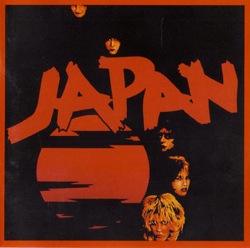
Adolescent Sex ,1978, Japan pop group, Mick Karn

Adolescent Sex, the 1978 album

❏ Review by Amy Hanson at AllMusic of Japan’s first album Adolescent Sex (1978) says “A remarkable debut, the set snarls with leftover punk intent, a few glam-rock riffs, and a wealth of electronics that not only reach back to the band’s youth, but also predate much of what would explode out of the next wave of British underground… [Later Hanson continues…] The ‘wow factor’ of an incredibly funky bass and guitar on The Unconventional, repeated again on Wish You Were Black, is not only a surprise but leaves one wondering if the band were closet Chic fans … A more exciting album than just about anything else they’d ever record, Japan were young, hungry, and more than a little rough around the edges. Despite the slick R&B work twined in, it’s important to remember that this band were in the sonic foothold of an early edgy era — groundbreakers at their own inception. ”

Japan pop group, 1978, Mick Karn

Japan in the late 70s: Rob Dean, Mick Karn, Richard Barbieri, Steve Jansen, David Sylvian

A/V tracks featuring Karn at YouTube

➢ Mick Karn, Sensitive (1982) — His first album as a solo artist displays his creativity after Japan’s split, accompanied by Japan drummer Steve Jansen and keyboardist Richard Barbieri

➢ Knights of the Opium Moon (ft Mick Karn) — Track 6 from the London electronic band Furiku’s debut album (Like a Freak, May 2010)… This has to be among Karn’s last musical collaborations. Karn’s own discography lists the four-track EP Love’s Glove as his last published recording in 2005. Dom Agius of Furiku tells Shapersofthe80s: “We were approached by Mick and his management in late 2006 via MySpace. They’d heard our work and invited us to remix a track of his. They sent over a selection of basslines but rather than do a conventional instrumental remix we decided — as long-term Japan and Mick fans — to write and record a new song — the “missing track off Tin Drum” if you will. So we sifted through, chopped and redited maybe six of the basslines together and then we wrote Knights of the Opium Moon over that. Mick and his management were thrilled with the results.”

➢ View TV interview with Mick Karn for Talkin’ Jazz c1993

➢ View video: JBK — Bestial Cluster Dutch TV session

➢ View video: Sons of Pioneers — The best-selling album Oil on Canvas was recorded live during Japan’s six sell-out nights at Hammersmith Odeon, in November 1982, on their last UK concert tour. Japan’s final live performance was on December 16 in Japan. Worsening personal differences persuaded the band members to go their separate ways virtually at the height of their creative and commercial success.

Japan pop group, Mick Karn, Hammersmith Odeon , 1982, Sounds ,Chris Dorley-Brown

Karn onstage at Hammersmith Odeon, November 17, 1982: Japan’s final UK tour. Photographed for Sounds © by Chris Dorley-Brown

FRONT PAGE

➤ Prescott says Postlethwaite’s Brassed Off speech inspired New Labour in 1997

Responding today to news of the death of actor Pete Postlethwaite, the former deputy prime minister John Prescott, has credited the 1996 film Brassed Off — about the struggles faced by a colliery brass band after the closure of their pit under a Conservative government — as the inspiration for a Labour regeneration programme for coalfield communities

Lord Prescott writes…

❚ I FIRST SAW BRASSED OFF in June 1997. The story, loosely based on the Grimethorpe Colliery Band, was moving but it was Pete Postlethwaite’s speech right at the end that had a deep effect on me. His character, band leader Danny, after spending his life wanting to win the national brass-band trophy, symbolically turns it down because he knows it’s the only way he can get publicity for the 1,000 miners who were sacked from his pit…

➢ Continue reading Pete Postlethwaite: an actor who
made others act — by John Prescott at Guardian online

❏ Tribute — In 2008, Pete Postlethwaite fell victim to the director Rupert Goold in his absurd updating of Shakespeare’s King Lear at the Everyman Theatre in Liverpool. At the actor’s prompting the production was revised slightly before moving to London’s Young Vic in 2009. The staging still hit the heights of am-dram self-consciousness, but Postlethwaite’s performance [see video trailer below] rose above his surroundings to be intensely affecting, as an abject monarch who seemed more a vulnerable man of the people.

❏ Daniel Day-Lewis, who played Postlethwaite’s son in 1993’s In the Name of the Father (for which they both earned Oscar nominations), and co-starred with him in 1992’s The Last of the Mohicans: “Pos was the one. As students, it was him we went to see on stage time and time again. It was him we wanted to be like: wild and true, lion hearted, unselfconscious, irreverent. He was on our side. He watched out for us. We loved him and followed him like happy children, never a breath away from laughter.”

Postlethwaite was acclaimed for other performances in films such as Stephen Spielberg’s The Lost World: Jurassic Park, Baz Luhrmann’s Romeo and Juliet and Bryan Singer’s The Usual Suspects.

➢ A face we won’t forget — Pete Postlethwaite, who died on Sunday, was one of our finest actors. Guardian film critic Peter Bradshaw recalls the unwitting role he played in the Northern Ireland peace process
➢ Blessed with one of the most remarkable faces of any British actor this past half century — Daily Telegraph obituary

➢ VIEW THE VIDEO: YOUNG VIC TRAILER FOR
POSTLETHWAITE AS LEAR…

Pete Postlethwaite,Tristram Kenton, King Lear

FRONT PAGE