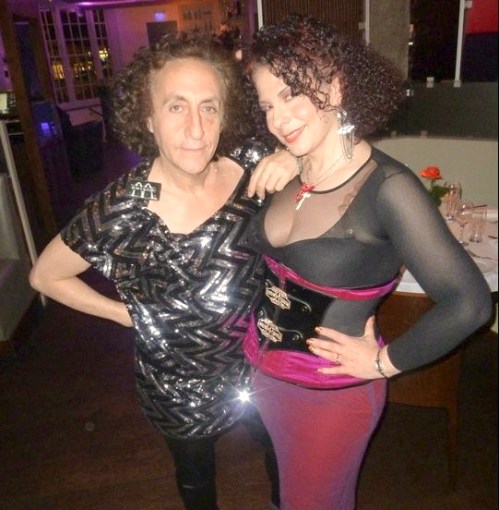
A frock to shock: nightlife entrepreneur Philip Sallon adds a diamante sparkle to Alice Shaw’s birthday dinner. Photograph by Alice
❚ LOOK WHO’S OUT ON THE TOWN! Here’s the first picture of the flamboyant Philip Sallon — a supernova in London’s nightlife firmament— since his three-week stay in hospital following a horrendous assault two months ago which left him unconscious on the pavement at Piccadilly Circus. He is pictured at the Chelsea restaurant Mare Moto where his close friend Alice Shaw was celebrating her birthday with a dinner last week. Alice reports: “He’s still treading carefully… Considering what he’s been through, he’s making remarkable progress. Philip suffered quite a major trauma, so it will be some time before he recovers fully.”
In that snazzy diamanté party frock (on the exclusive Primark label complete with an off-the-shoulder McDonald’s name badge), the veteran host of the 80s Mud club looks as sharp as rhinestone. On Tuesday Rusty Egan bumped into him at the London Club and Bar Awards where, he says, Sallon “cracked at least 10 cheesy jokes — so I think he’s back!”
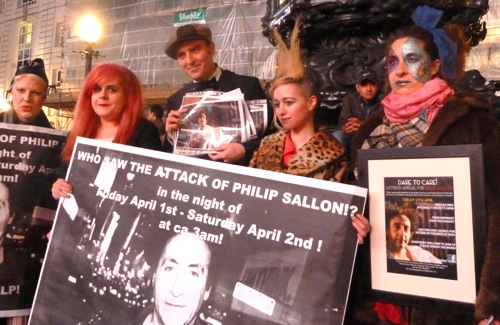
In the early hours of April 2 Sallon was thrown to the ground in a “martial arts move” outside Ripley’s Believe It or Not exhibition and had his skull fractured by a young thug. Alice and friends started campaigning to find Sallon’s assailant by setting up the Facebook page, Supporting Philip Sallon. Then two weeks after the attack they staged a Soho walkabout at the same time of night and this resulted in a witness giving a “very detailed description” of the suspect, said Detective Chief Inspector Mick Forteath of the Metropolitan Police. They are looking for a man aged about 20 who is approximately 6ft (1.8m) tall with an athletic build. He has broad shoulders and short black hair, and was wearing a tight, short-sleeved T-shirt which may be blue or light coloured, as well as blue jeans and black trainers.
A fortnight after Sallon’s attack: campaigners led here by composer Benjamin Till (centre) gather at Piccadilly Circus before seeking witnesses during a Soho walkabout. Photograph by Michael Peacock
After a brief conversation by the traffic lights outside Ripley’s, this man attacked Philip Sallon who was later found unconscious on the opposite side of Shaftesbury Avenue outside the exhibition. The suspect had made off up Coventry Street towards Leicester Square. Today, however, the Met said no arrests have been made in connection with this incident. Mick Forteath still urges anyone who is reluctant to contact the police to do so.
Sallon says he remembers little of the attack. “It was a severe blow to the head. From leaving home I remember nothing. It could have been some stranger who lashes out and just hates queers. But I also can’t rule out other possibilities.”
❏ If you have information about Philip Sallon’s assault on Saturday April 2 at about 3:15am, contact Westminster Serious Violence Team on 0207 321 9315, ref 65 1803/11, or Crimestoppers on 0800 555 111. No personal details are taken, information is not traced or recorded and you will not go to court.
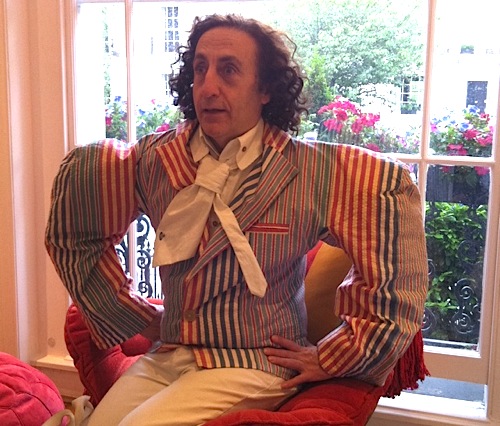
UPDATE JUNE 17: Hahahahahaha. Here’s the latest photo via Boy George’s TwitPics. Philip Sallon back on form — upholstered as a Regency armchair. You can’t convince us that little knock on the head in April has done him any harm at all. Hahahaha.
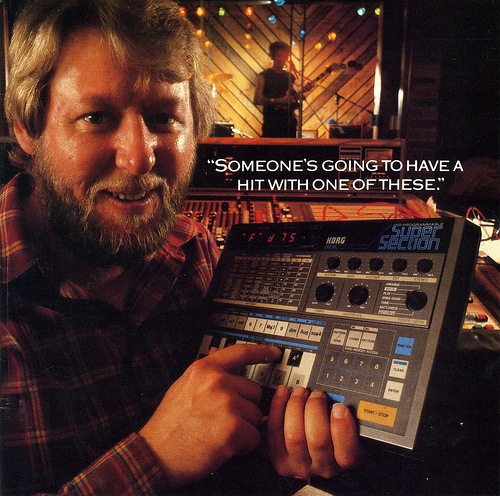
Martin Rushent with Korg Super Section programmable sequencer (1985)
❚ A TRUE SHAPER OF THE 80s DIED YESTERDAY. Martin Rushent, the mould-breaking UK music producer, was 63 when he suffered a heart attack at his home in Berkshire. What he stamped on 80s electronica was a rhythmic template of synths and drum machines that came to characterise much mainstream pop, notably The Human League’s breakthrough album Dare in 1981, which spent 71 weeks in the UK chart, and became a worldwide smash. Rushent was known as a hard taskmaster. He insisted on bringing the Sheffield-based band south to escape the “unhealthy atmosphere” of Monumental Studios oop north, and his influence was not immediately welcomed by the League’s leader Phil Oakey, following the early band’s split and reconfiguration in 1980.
It began with their first single The Sound of the Crowd [see video below] which peaked at No 12. Rushent was a pioneer of the remix, who decided to improve on the League’s original version of Dare by creating 1982’s Love And Dancing, a complete makeover of the original album. It went to No 3 in the LP chart and is today regarded as his game-changing calling card. As with the Stranglers earlier, Rushent achieves a razor-sharp clarity for each instrument, here dominated by the electronics he so believed in. The Scottish pop group Altered Images also enjoyed chart hits thanks to Rushent’s production. He was named Best British producer in the 1982 BRIT Awards.
Many also regard Rushent as the best new-wave producer of the late 70s through his work with The Stranglers, Britain’s longest-surviving rock band from that post-punk era (he produced their first three albums which would become both commercial and classic, Rattus Norvegicus, No More Heroes and Black and White), as well as Gen X, Buzzcocks, XTC, 999 and Hazel O’Connor. Other acts he engineered earlier in the 70s were T.Rex, David Essex, Fleetwood Mac, Yes and Shirley Bassey.
Rushent custom-built a £250,000 high-tech recording studio at his home near Reading where, he said, “The air-conditioning alone cost me £35,000”. Here ex-Buzzcock Pete Shelley made his debut album Homosapien (1981) as a solo artist for Rushent’s record label Genetic. This had its London office a couple of floors up from the legendary Blitz club where Rusty Egan and Steve Strange ushered in the New Romantics movement in 1979. Egan says that Rushent facilitated two Visage tracks, Tar and Frequency 7 (“recorded in his garage in 1979”).
His 37-year-old first son Tim says his father hated playing by any accepted rules of the game and brought irreverence to the production process. His musical signature was to add a sophisticated mix of vibrance and colour, so beefing up the musical temperature higher than a band managed to achieve for themselves. He cites The Human League’s first No 1 hit Don’t You Want Me, and Fascination (as well as Altered Images’ Happy Birthday album track). Dad’s tactic had been to bring into The Human League punk rocker Jo Callis from the Rezillos to act as a co-writer and catalyst.
The Human League, 1981: Phil Oakey and the girls he immortalised in that lyric, Joanne Catherall and Susan Sulley
BBC journalist Linda Serck recalls how Rushent made clear who was boss when he met The Human League: “They were under the impression that I was going to work on what they’d done so far and improve that and carry on. I said, ‘No I’m not doing that, we’re starting again’, which was a bit of a shock for Phil [Oakey]. He argued about that but I said, ‘No, if I’m going to produce you, you’re going to do what I tell you to do’. This is my attitude to everybody I produce, it’s a sort of democratic dictatorship!”
Tragically for producer and band, the end came abruptly after three years’ hard work. In a moment of pique, backing singer Susan Sulley (famously discovered while at school dancing “in a cocktail bar”) asked the perfectionist Rushent, who was old enough to be her father: “What do you know about what young people want?” In any normal workplace this would be grounds for her dismissal. In this case, the insult detonated the end of a lucrative, million-selling business partnership.
Today, Rushent leaves his wife, Ceri, and four children from two marriages.
♫ Peaches by The Stranglers — “Bass sound?! I asked him one time how he got that bass sound, he said: I turned everything up” — James Rushent, his second son, a musician.
♫ Three days ago Martin Rushent listened to two of his own tracks at his MySpace page: In Your Arms Again (from 2007) and Itchy Hips (2006).
+++
AMONG TRIBUTES FLOODING IN TODAY
Hugh Cornwell (left), vocalist and guitarist with The Stranglers: “ It is with great sadness that I hear of Martin Rushent’s passing. He was a vibrant and gifted individual who was able to extract the essence of what The Stranglers began with, and translate it into something that could be played on radios across the UK. It was obviously no one-off success, as he was later to show with The Human League. I remember him fondly. ”
Midge Ure of Ultravox “ He saw the potential in synthesisers and a future in electronic music. Sad loss for all music. ”
Visage drummer Rusty Egan: “ Martin, Midge Ure, Barry Adamson, Billy Currie, Dave Formula, John McGeogh, myself and Steve Strange all hanging in your house in summer of 1979 recording our debut album VISAGE … Because YOU believed … THANK YOU … You were a total genius, and like all geniuses before you, you had a crazy life but an amazing body of work … I am welling up remembering your kindness and love for music… ” ➢ Listen to Rusty Egan’s set of Martin Rushent re-mixes from the 80s dancefloor newly uploaded to Soundcloud
Altered Images drummer ‘Tich’ Anderson: “ I’ll remember all those hours in Genetic studios fondly. Sorry for crashing your Jaguar. xxxxxx You were a genius Martin. ”
Visage vocalist Steve Strange: “ Martin one was not only a genius but as a 17-year-old making his first record, he was a true role model, inspiration and guiding figure. He signed our first record Tar to his record label and for us, started the ball rolling. We owe him so much. Thank you.”
Tim Rushent, son and sound producer: “ As many of you know I had a VERY fractious relationship with my Dad. But I never doubted his work as a producer, friend and raconteur. Feeling even more proud of him professionally today than I have done for 37 years. ”
Prof Ben Rosamond, Uni of Copenhagen: “ Just under 36 minutes of music, but thousands of hours in the making. According to Simon Reynolds in Rip it Up, Love and Dancing consisted of 2,200 main edits and a further 400 small edits. There were so many splices that the mastertape was close to disintegration. The work of a genius. Others have said this, but it’s true for me as well. Martin, you fashioned the soundtrack of my teenage years and so many of the melodies and musical phrases that pop in and out of my adult consciousness are yours. Thank you. Rest in peace. ”
Heather Priestley, anaesthetic ODP, London: “ Martin you were a much loved legend, RIP. I haven’t felt this sad since losing John Peel, like you, part of my youth and the music that made me who I am today. ”
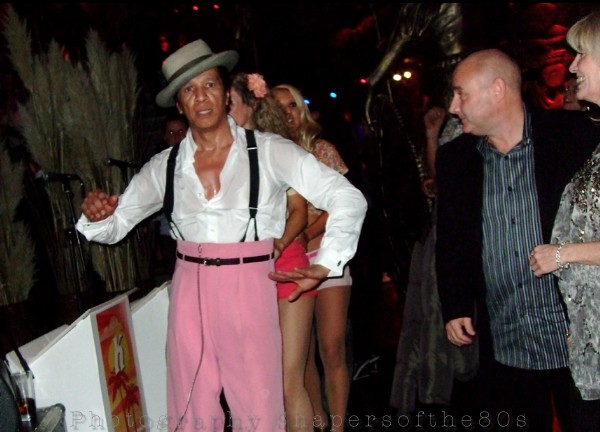
❚ “WHEN YOU SEE ME IN PINK, I’m ready for the funk.” Only one man can say that and keep a straight face while sporting a salmon-pink zoot-suit with its trousers right up to here, drape jacket right down to there, plus a slightly crazy hat. Bronx-born August Darnell aka Kid Creole is the next best thing to Fred Astaire in the immaculate performance stakes and despite his 60 years he was cutting as fine a figure as ever in London town last night with his blonde playmates the Coconuts, while his two yards of fine silver keychain flashed its own morse code in time with the wearer’s dance steps. His eight-piece band didn’t fluff a note during an hour-long finger-snappity set of the Kid’s turbo-charged trademark mix of latin, calypso, disco, swing, jazz and R&B dance rhythms.
[Come back for more after breakfast]
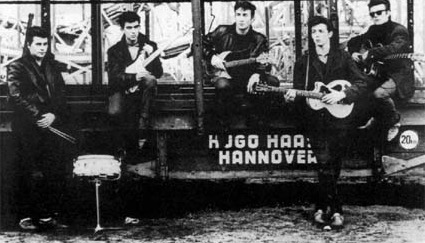
The Beatles’ beat look, 1960: honed in Hamburg by photographer Astrid Kirchherr who took this picture when guitarist Stuart Sutcliffe was in the lineup
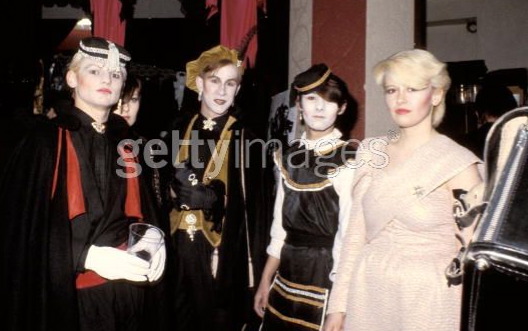
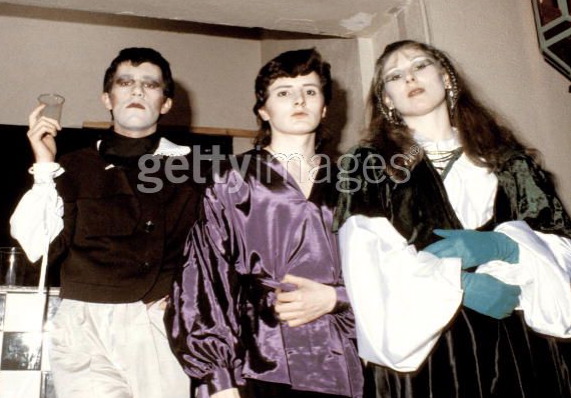
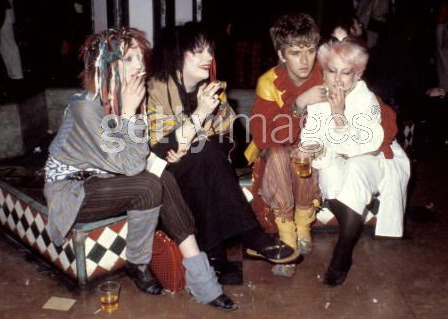
❚ VALENTINE’S DAY 1981 was not so much the Woodstock of the New Romantics movement, but more akin to a Scouts and Guides jamboree in a giant ornamental wigwam in north London. Instead of boasting proficiency in camping and camouflage, a few hundred suburban Romantics fluffed up their frills and plastered on the Pan Stik to parade their skills in masquerade and maquillage. The “People of Romance”, as the tickets described them, paid £3.50 for a long evening starting at 5pm. They were expected to hold their own as stars alongside the cult’s budding bands at a venue renamed for a day The People’s Palace.
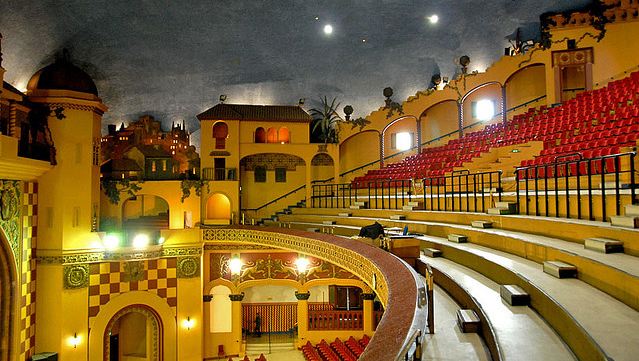
An auditorium in Finsbury Park made the perfect backdrop. When it opened in 1930, the Astoria was one of Europe’s flagship cinemas seating 3,000 people. Its gloriously kitsch interior architecture depicted an Andalusian village whose rooftops and twisted barley-sugar pillars climbed towards a horizon and the starlit indigo ceiling way above balcony level. For a decade from 1971 the theatre had become a live rock venue, hippily renamed the Rainbow, where finally the stalls had been deprived of seats in favour of dancing audiences. Later the very year it hosted the People’s Palace, the place was to fall into disuse for a decade and a half, before being rescued and restored by a Pentecostal church.
Thirty years ago today, posses of over-the-top Romantics incongruously wandered its vast auditorium and bars and cavernous Moorish lobby in search of photo opportunities. It seemed at times as if photographers outnumbered the cast. Richard Young, king of London’s celebrity snapperazzi, had arranged two sheets to create an impromptu studio where he was immortalising the generation who relished calling themselves posers, garbed from top to toe in bejewelled, befeathered lace and velvet and ridiculous hats.
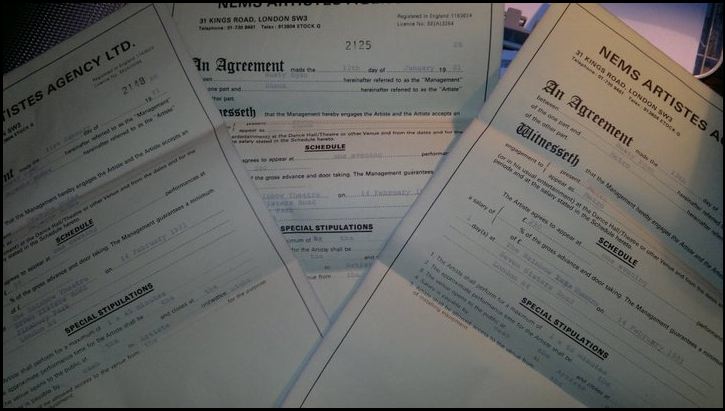
Performance contracts for the People’s Palace, 1981: Shock were paid £500, Metro £250 and Depeche Mode £50. Source: Rusty Egan archive
The soundtrack throughout was the latest electronic pop, spun on Rusty Egan’s turntables as well as played live onstage. On this Saturday Ultravox were arriving at No 2 in the singles chart with Vienna, and here at The People’s Palace they were topping a bill booked by the event’s promoters, Egan and Steve Strange, to capture the zeitgeist, even as the duo planned their next clubbing venture following the closure of their Blitz nights.
Much as Midge Ure protested about his band qualifying as New Romantics, in February ’81 any band toting synths ticked the box. Among supporting acts the then unknown Depeche Mode opened the live sets for a handsome fee of £50 in their first major performance off the clubbing circuit, one week before releasing their debut electro-single Dreaming of Me.
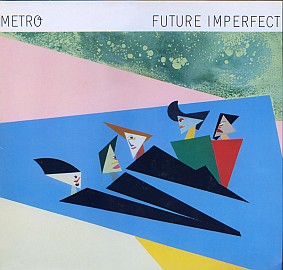
Peter Godwin revived the new-wave band-name Metro, surfing in on the strength of their 1980 album Future Imperfect, followed by the dance troupe Shock, dressed by Birmingham’s Kahn and Bell, as exponents of the robotic dance-style across Britain’s clubland where their single Angel Face was a dancefloor hit.
Steve Strange had hoped to stage a splashy fashion show too, though according to Judi Frankland — who had featured with her outfits in Bowie’s Ashes to Ashes video the previous summer and is visible second from right in the masthead for Shapersofthe80s — “The other designers pulled out at the last minute and as I was still under Steve’s spell he made me carry on and do a ‘show’ alone with a mere six outfits. When he pulled me onto the stage, ohhh that still makes me cringe! However the one good thing I got out of it was being on the same stage as my faves, still to this day, Depeche Mode. I keep bumping into lovely Dave Gahan every few years in the most unexpected places.”
Meanwhile most of the original Blitz Kids — who had animated the Bowie credo that behind a mask you can be anyone you wish — wouldn’t be seen dead at The People’s Palace. In the wake of chart success by Spandau Ballet and Visage, they were competing in a calculated dash towards fame and fortune in clubland, glossy mags and the music biz, whose singles charts by the summer of 1981 welcomed Landscape, Depeche Mode, Soft Cell, The Human League, OMD, Level42, Duran Duran, Heaven 17, Altered Images and Imagination.
Like Midge, we can argue ad finitum whether these acts all technically counted as the New Romantics bandwagon, but they did play dance music, not rock — which defines the reformation that fundamentally vanquished rock to change the sound of the 80s charts — and all benefited from the momentum, as ABC’s Martin Fry later acknowledged. Most of them would, however, set about shaking off the hollow Romantics label in favour of their own musical tastes as soon it had served its purpose. For the moment, like the Titanic heading unwittingly towards its iceberg, the preening Lord Foppingtons and Lady Buxoms at the Rainbow were unaware that theirs was the last real gasp of The Cult That Had Gone Too Far. By Valentine’s Day 1982, there were so many new fashion factions that they would never have turned up for the same ball.
➢ Choose “View full site” – then in the blue bar atop your mobile page, click the three horizontal lines linking to many blue themed pages with background article
MORE INTERESTING THAN MOST PEOPLE’S FANTASIES — THE SWINGING EIGHTIES 1978-1984
They didn’t call themselves New Romantics, or the Blitz Kids – but other people did.
“I’d find people at the Blitz who were possible only in my imagination. But they were real” — Stephen Jones, hatmaker, 1983. (Illustration courtesy Iain R Webb, 1983)
“The truth about those Blitz club people was more interesting than most people’s fantasies” — Steve Dagger, pop group manager, 1983
PRAISE INDEED!
“See David Johnson’s fabulously detailed website Shapers of the 80s to which I am hugely indebted” – Political historian Dominic Sandbrook, in his book Who Dares Wins, 2019
“The (velvet) goldmine that is Shapers of the 80s” – Verdict of Chris O’Leary, respected author and blogger who analyses Bowie song by song at Pushing Ahead of the Dame
“The rather brilliant Shapers of the 80s website” – Dylan Jones in his Sweet Dreams paperback, 2021
A UNIQUE HISTORY
➢ WELCOME to the Swinging 80s ➢ THE BLOG POSTS on this front page report topical updates ➢ ROLL OVER THE MENU at page top to go deeper into the past ➢ FOR NEWS & MONTH BY MONTH SEARCH scroll down this sidebar
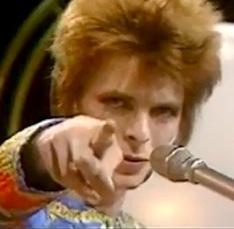
❏ Header artwork by Kat Starchild shows Blitz Kids Darla Jane Gilroy, Elise Brazier, Judi Frankland and Steve Strange, with David Bowie at centre in his 1980 video for Ashes to Ashes
VINCENT ON AIR 2026
✱ Deejay legend Robbie Vincent has returned to JazzFM on Sundays 1-3pm… Catch up on Robbie’s JazzFM August Bank Holiday 2020 session thanks to AhhhhhSoul with four hours of “nothing but essential rhythms of soul, jazz and funk”.
TOLD FOR THE FIRST TIME
◆ Who was who in Spandau’s break-out year of 1980? The Invisible Hand of Shapersofthe80s draws a selective timeline for The unprecedented rise and rise of Spandau Ballet –– Turn to our inside page
SEARCH our 925 posts or ZOOM DOWN TO THE ARCHIVE INDEX
UNTOLD BLITZ STORIES
✱ If you thought there was no more to know about the birth of Blitz culture in 1980 then get your hands on a sensational book by an obsessive music fan called David Barrat. It is gripping, original and epic – a spooky tale of coincidence and parallel lives as mind-tingling as a Sherlock Holmes yarn. Titled both New Romantics Who Never Were and The Untold Story of Spandau Ballet! Sample this initial taster here at Shapers of the 80s
CHEWING THE FAT
✱ Jawing at Soho Radio on the 80s clubland revolution (from 32 mins) and on art (@55 mins) is probably the most influential shaper of the 80s, former Wag-club director Chris Sullivan (pictured) with editor of this website David Johnson
LANDMARK FAREWELLS. . . HIT THE INDEX TAB UP TOP FOR EVERYTHING ELSE

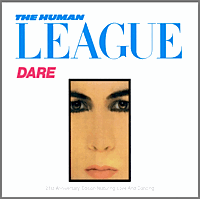 It began with their first single The Sound of the Crowd [see video below] which peaked at No 12. Rushent was a pioneer of the remix, who decided to improve on the League’s original version of Dare by creating 1982’s
 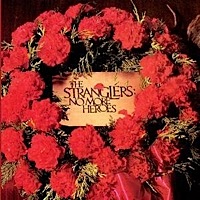 Many also regard Rushent as the best new-wave producer of the late 70s through his work with The Stranglers, Britain’s longest-surviving rock band from that post-punk era (he produced their first three albums which would become both commercial and classic, Rattus Norvegicus, No More Heroes and Black and White), as well as Gen X, Buzzcocks, XTC, 999 and Hazel O’Connor. Other acts he engineered earlier in the 70s were T.Rex, David Essex, Fleetwood Mac, Yes and Shirley Bassey.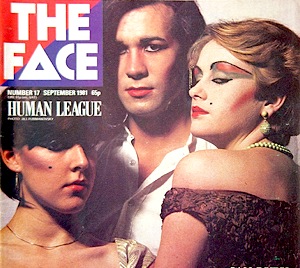
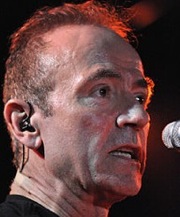 Hugh Cornwell (left), vocalist and guitarist with The Stranglers: “ It is with great sadness that I hear of Martin Rushent’s passing. He was a vibrant and gifted individual who was able to extract the essence of what The Stranglers began with, and translate it into something that could be played on radios across the UK. It was obviously no one-off success, as he was later to show with The Human League. I remember him fondly. ”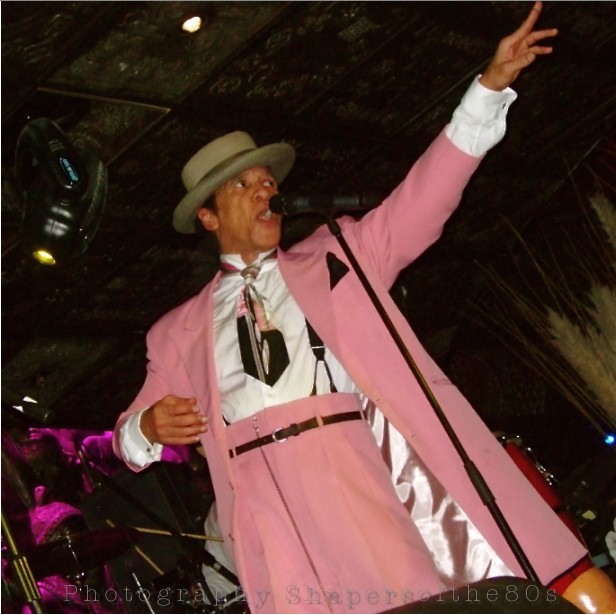





 ➢➢ Shapers of the 80s ➣➣