Tag Archives: Design Museum

2025 ➤ Here’s an extravaganza of a show to confirm the Blitz Kids’ place in history

Blitz Kids, Clubbing, exhibitions, Fashion, influencers, London, New Romantics, Swinging 80s, Youth culture, Blitz Kids, Design Museum,

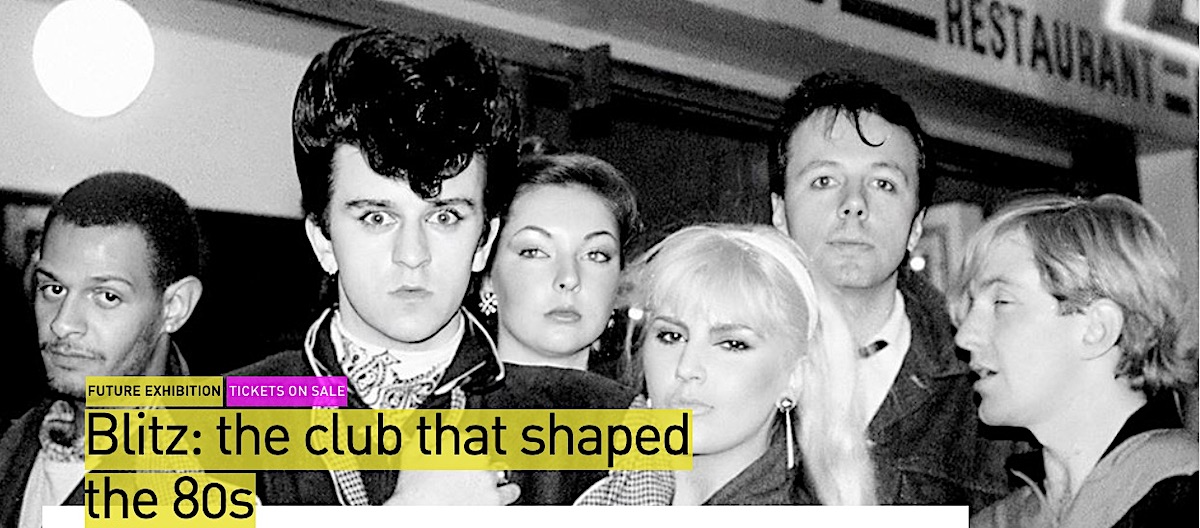
Blitz Club host Steve Strange: Posing outside his club with Visage and friends in 1979 – today promoting an exhibition. (Detail from photo by Sheila Rock)

❚ A HANDFUL OF EVER-STYLISH CLUBLAND POSERS stepped forward this week to help London’s Design Museum to announce its autumn exhibition titled Blitz: the club that shaped the 80s. It has been developed in close collaboration with the leading Blitz Kid and later costume designer Fiona Dealey, plus broadcaster Robert Elms, Spandau Ballet’s manager Steve Dagger and music executive Graham Ball, formerly one of Dagger’s firm – three clubland contemporaries who were the least like die-hard Blitz Kids! The trendy Tuesday clubnight which opened in Covent Garden’s Blitz wine bar in 1979 is best known as home to the New Romantics movement which revolutionised Eighties youth culture across fashion, music, media, film, art, design and retail.

The chapter some of us dubbed the Pose Age launched the careers of many talents, from hosts Steve Strange (who died in 2015) and deejay Rusty Egan to popstars Spandau Ballet, Visage, Boy George, Sade, Andy Polaris, and Marilyn, as well as key influencers Perry Haines, Chris Sullivan, Midge Ure, Iain Webb, and stylist Kim Bowen, couture milliner Stephen Jones and Game of Thrones costume designer Michele Clapton, deejay Princess Julia, Darla Jane Gilroy, Stephen Linard, Melissa Caplan, Judith Frankland, Dinny Hall, John Maybury, Cerith Wyn Evans, Simon Withers, Ollie O’Donnell, Richard Ostell, Paul Sturridge, Franceska King, Milly Dwit, Vivienne Lynn, Theresa Thurmer, Lesley Chilkes, David Holah and a hundred more.
Blitz Kids, Clubbing, exhibitions, Fashion, influencers, London, New Romantics, Swinging 80s, Youth culture, Blitz Kids, Design Museum,

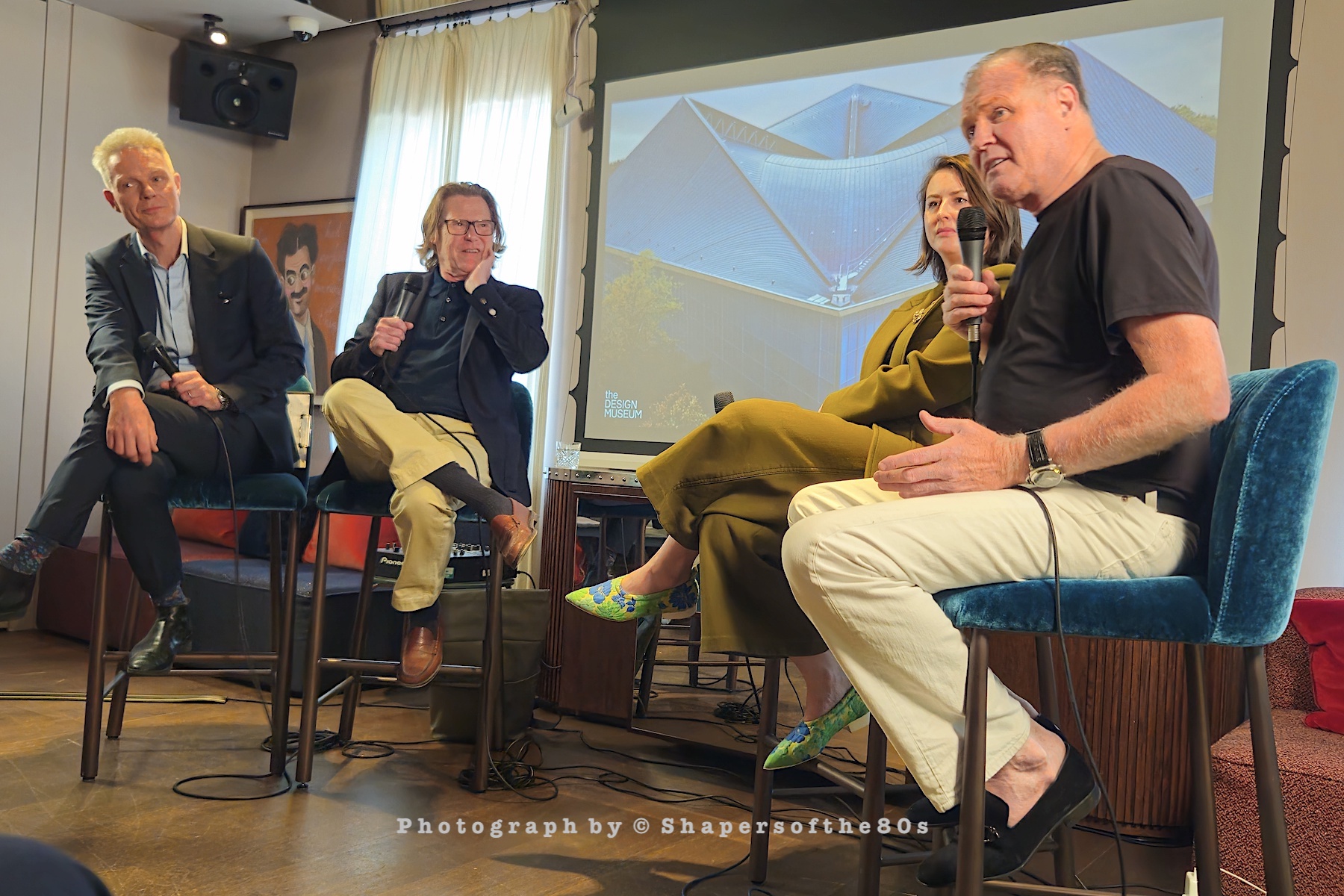
Press call: Tim Marlow, Robert Elms, Danielle Thom and Rusty Egan

The exhibition will feature over 250 items, many unseen by the public, ranging from clothing and accessories, design sketches, musical instruments, flyers, magazines, furniture, artworks, photography, vinyl records and rare film footage.

Yesterday’s press launch at the Groucho club proved one of the liveliest in a long while with spontaneous banter between the Museum director Tim Marlow, Robert Elms, Rusty Egan and curator Danielle Thom. They promised a sensory extravaganza which will surprise us when we walk into the exhibition.

Among other things, Elms reminded us how young his pals all were: “We were called Blitz Kids because we were kids, almost no one over the age of 21 – some of us 16/17… Most of us were really young and creative but also really mischievous. One of the things about the Blitz is that it’s sometimes portrayed as a bit po-faced, all these people posing – we were certainly doing that but it was anything but po-faced. It was scurrilous, dangerous, naughty, it was sexy, all those things.
Blitz Kids, Clubbing, exhibitions, Fashion, influencers, London, New Romantics, Swinging 80s, Youth culture, Blitz Kids, Design Museum,

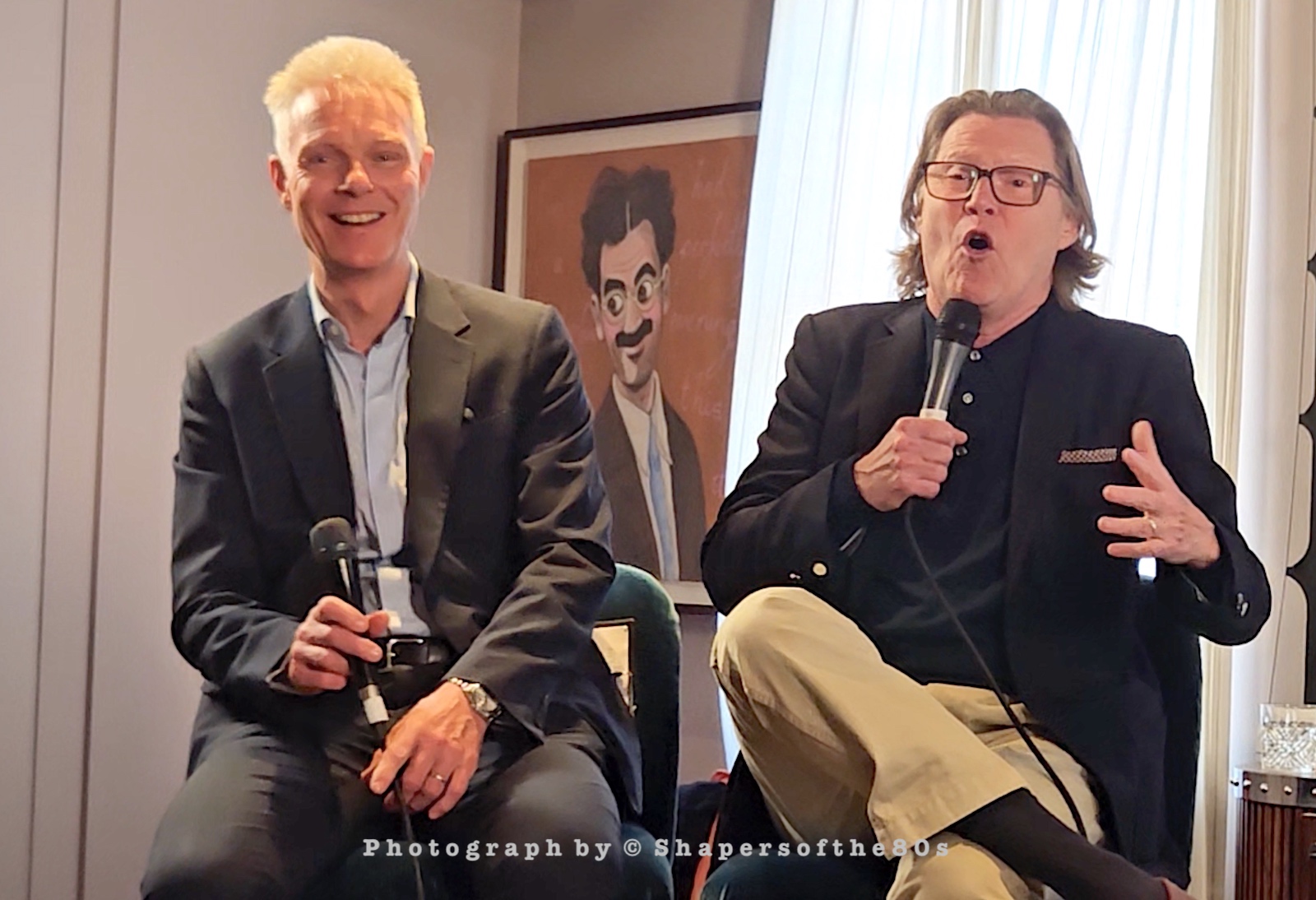
The Last Word: Robert Elms entertains museum director Tim Marlow (not to mention Groucho Marx, at rear)

“Rusty provided this wonderful backdrop. He never played too loud, so people could dance but at the front end you could still talk. I could get Steve Dagger in my ear saying ‘We’re going to take over the world!’ It wasn’t a disco but a club in the best sense of the word, of like-minded individuals.”

Egan proved as sentimental as ever, reminding us of the legacy of the 1970s: “A hundred kids were coming in on a Tuesday night in the Winter of Discontent. It was a very miserable time, it was also really miserable to be not sure if you’re a boy or a girl but ‘Hey man, Let’s go out into the night’ – and as a DJ I played songs which said ‘He was a she and then, Hey babe, take a walk on the wild side’ … Lyrics were very important as they were for the Rolling Stones in 1977 when disco was get up, stand up, boogie oogie. We wanted lyrics.”

Elms had the last word on the Blitz as the event came to an end: “My mates were quite cool. There were a couple of hundred Herberts and urchins, over-dressed, undervalued, who actually went on to define the decade. This is our place in history and this exhibition is overdue. It’s a recognition that this wasn’t just a load of silly kids with high hair.”
➢ Blitz: the club that shaped the 80s runs from
20 Sept 2025 until 29 March 2026 at the Design Museum
in Kensington. Tickets on sale now.

FRONT PAGE

➤ London Design Museum’s new home is a wow!

 Design Museum, Deyan Sudjic, Kensington, John Pawson, Architecture, London

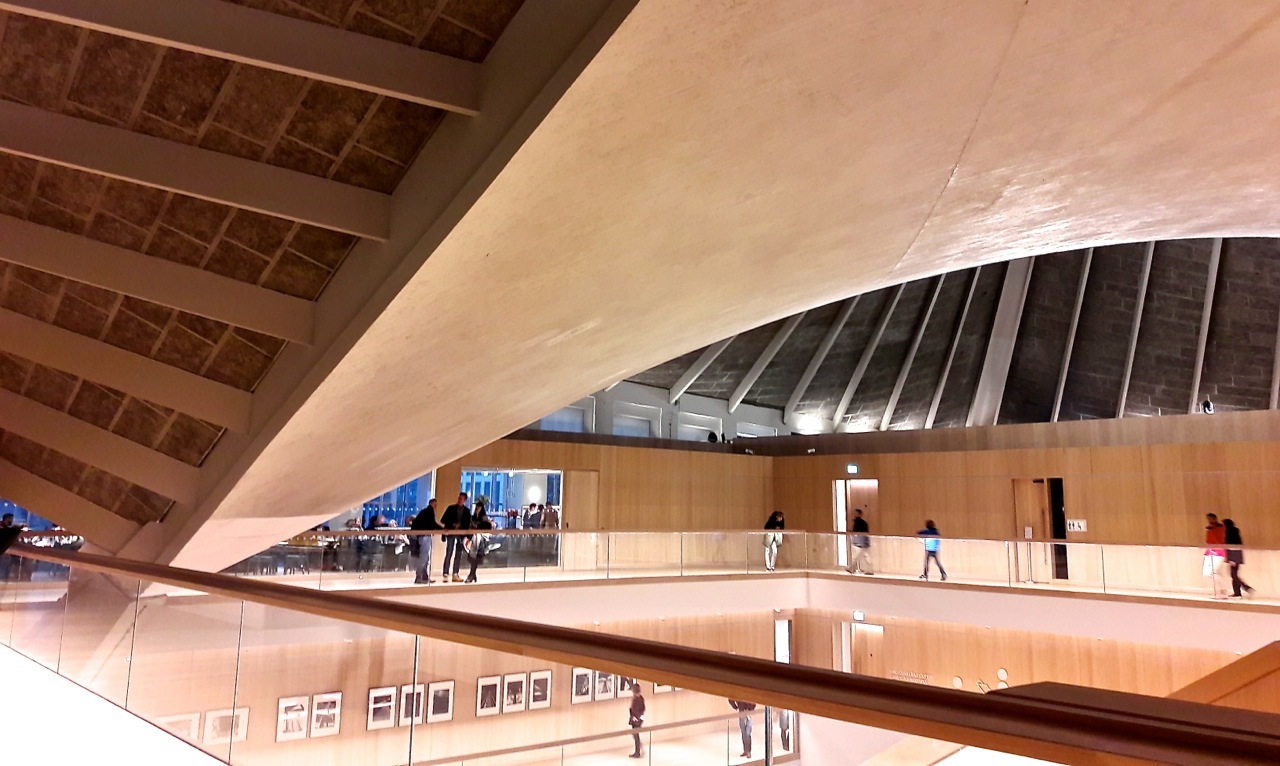
New home for the Design Museum: The former Commonwealth Institute’s hyperbolic paraboloid roof brings elegance and light to the museum. (Photographed by Shapersofthe80s)

TODAY THE UK’S WORLD-CLASS DESIGN MUSEUM under director Deyan Sudjic opened its doors at an inspirational new home in Kensington. Founded in 1989, the museum has spent 26 years at Shad Thames, near Tower Bridge, though the collection began in the pioneering Boilerhouse Project, located at the V&A museum as the brainwave of Britain’s giant influence on all things designed, Sir Terence Conran. There, the project mounted 20 exhibitions during its life from 1982 to 86 with the aim of helping to explain what design is to a non-specialist audience.

That ethos continues to deliver its visually stunning message in the former Commonwealth Institute, a listed 1962 building designed by modernist champion Robert Matthew, the elegance of which speaks for itself. John Pawson, a perfectionist and minimalist British architectural designer, led the £80-million remodelling of the redundant Kensington building and has worked miracles beneath the controversial hyperbolic paraboloid copper roof which dominates the sparse interior void. Here newly won access to daylight creates vistas that constantly reward the eye as you move from one balcony to another. The museum enjoys three times more space than its previous home.

Click any pic below to launch slideshow:


Signage is minimal so you have to hunt for further rewards: permanent collections on top floor (Designer Maker User) and in the basement; also upstairs, restaurant and members’ bar. Temporary exhibition space is on the ground floor and future themes will reflect contemporary design in every form from architecture and fashion to graphics, product and industrial design, digital media and transport.

The museum’s collection is an important record of the key designs that have shaped the modern world. It tells the history of mass production, from the manufacturing innovations of the 19th century up to the digital and making revolution of recent years.

This week’s opening exhibition, aptly titled Fear and Love: Reactions to a Complex World, presents an eclectic selection of baffling displays – “networked sexuality, sentient robots, slow fashion and settled nomads” – which require hard-working captions to explain some of their seemingly tenuous connections to design. Disgracefully, the museum has over-charged for admission, as if sponsors could not have shouldered the £14-per-head ticket price. Yes, £14! Major own goal for an opener.

Boilerhouse Project, Terence Conran, V&A , Design Museum,Kensington, Architecture, London

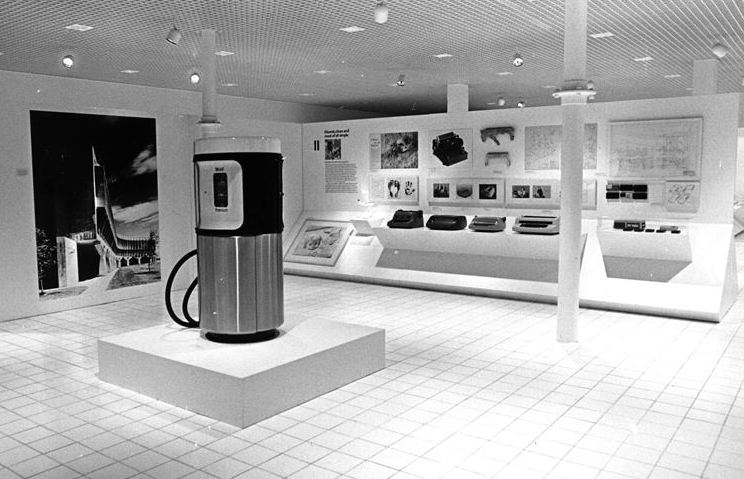
First Boilerhouse Project exhibition, Art and Industry, at the V&A: The origins of the Design Museum lie with the collection begun in 1982, which included this Mobil petrol pump designed by Eliot Noyes in 1968

➢ Fear and Love runs at the Design Museum until 23 April 2017. Tickets £14. Otherwise free 10–18h daily

➢ The story of designing London’s Design Museum

CONSTRUCTION DURING 2015:

FRONT PAGE

1980 ➤ Why Face founder Nick Logan said: Publish and be Dammers

The Face, magazines, style bible, Design Museum, Nick Logan,

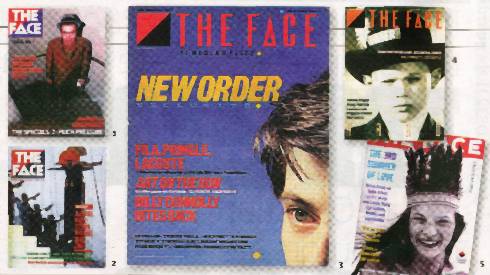
Five landmark issues: Without a cover-worthy photo, Nick Logan says of the New Order cover, July 1983, the radical crop was his suggestion. The “Shock report” on Thatcher’s art-school budget cuts was an epic piece of crisis reportage by yours truly. (Guardian collage)

❚ IN 1980, A RESPECTED EX-EDITOR OF NME staked his house on launching a new magazine that was to make style the focus of youth culture, as much as music. The Face was quickly dubbed Britain’s “style bible” and soon ranked among the half a dozen publications that had changed the direction of journalism since the Second World War. On Dec 1 London’s Design Museum announced that it had added The Face magazine (1980-2004) to its permanent collection, among other newcomers, the Sony Walkman and the AK47 rifle.

➢ In today’s Guardian, Nick Logan, the owner and founding editor of The Face, chooses five of its landmark covers, and explains why…

Issue 1, Jerry Dammers cover, May 1980 — This was the launch issue. I knew I could find something more current for a first cover than the Specials. But they embodied everything the magazine aspired to — they had a look, a passion, and great music — so there was never an alternative. In a sentimental way too, I owed 2 Tone a debt for the inspiration to pursue the idea. And, as it was my savings at risk, I could call it what I liked — after all, The Face was to be my escape from a career where too often I struggled to explain myself to publishers or committees. No focus groups here: I was purely, wholeheartedly, following instinct.
/ continued online

➢ The Evening Standard announces the launch of
The Face in May 1980

➢ 30th anniversary of the magazine that launched a generation of stylists and style sections

FRONT PAGE