Tag Archives: 1980s

➤ Shapersofthe80s is declared an “invaluable website” by British historian

“winter of discontent” ,  Leicester Square, strikes,

Britain’s infamous “winter of discontent” that brought down the Labour government in 1979: as public service workers went on strike, rubbish piled-up even in London’s Leicester Square
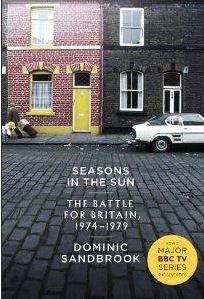
Seasons in the Sun,Battle for Britain, Dominic Sandbrook, books, history, Allen Lane,❚ AN “INVALUABLE WEBSITE” — this is the verdict on Shapersofthe80s by historian Dominic Sandbrook, author of the rich new cultural analysis, Seasons in the Sun: The Battle for Britain, 1974–1979. It’s a doorstep of a book, yet highly readable, which reveals numerous upbeat aspects to the chaotic decade many write off as worthless.

Chapter 31 is especially inspirational! Sandbrook gives generous credit to key characters who Shapersofthe80s has long maintained deserve recognition as movers and shapers pivotal to the energy of the 80s. And, having quoted chunks from our own texts, the historian gives due acknowledgement in his extensive bibliography. Indeed, the scope of his research is more impressive than for much other contemporary history, as Sandbrook not only cites political and economic mandarins, but also sifts fine detail from popular culture and eye-witness reportage across the whole social spectrum.

Sandbrook writes: “Behind the lurid news stories, the late 1970s were the decisive point in our recent history. Across the country, a profound argument about the future of the nation was being played out, not just in families and schools but in everything from episodes of Doctor Who to singles by the Clash. These years marked the peak of trade union power and the apogee of an old working-class Britain – but they also saw the birth of home computers, the rise of the ready meal and the triumph of a Grantham grocer’s daughter who would change our history for ever”

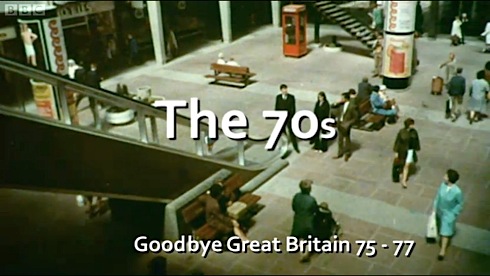
Seasons in the Sun is the fourth title in Sandbrook’s survey of postwar Britain. His unstuffy combination of high and low life is behind the BBC2 series The Seventies currently viewable live and on iPlayer.
BBC2 series The Seventies,Seasons in the Sun ,Dominic Sandbrook

Sandbrook’s Seasons in the Sun forms the basis of the current BBC2 TV series The Seventies

REVIEWS OF SEASONS IN THE SUN

❏ “The first three volumes of Dominic Sandbrook’s epic history of Britain between 1956 and 1979 were exceptionally good. The fourth, Seasons in the Sun, is magnificent … marked by its pace, style, wit, narrative and characterisation as by its exhaustive research.” — Roger Hutchinson, Scotsman

❏ “Sandbrook has created a specific style of narrative history, blending high politics, social change and popular culture … his books are always readable and assured, and Seasons in the Sun is no exception … Anyone who genuinely believes we have never been so badly governed should read this splendid book.” — Stephen Robinson, Sunday Times
1977, Jayaben Desai, Grunwick, strike, picket

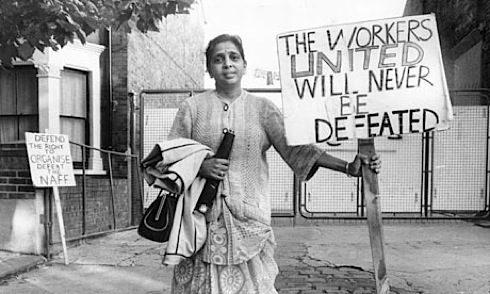
August 1977: Jayaben Desai, treasurer of the strike committee at the Grunwick photo-processing plant, had been picketing for a year, supported by white, male trade unionists while postmen blocked the company’s mail. (Photograph by Graham Wood/Getty)

EVEN WIDER PERSPECTIVE FROM LEADING PLAYWRIGHT

➢ Playwright David Edgar draws together the Sandbrook quartet in The Guardian, May 9, 2012: The 1970s was the moment when our century arrived… As Sandbrook insists, the women’s liberation movement was as much about Hull’s fishermen’s wives and female machinists at Ford Dagenham as feminist activists disrupting Miss World. In 1971, workers campaigning against the closure of Upper Clyde Shipbuilders borrowed the student tactic of the sit-in. As 1970s chronicler Andy Beckett argues, the gay groups who stood shoulder to shoulder with trade unionists outside Grunwick prefigured an alliance which “would become commonplace in the decade to come”. The identity politics that were to become such a satirised feature of the left of the 1970s arose not just out of campus and culture but class war… / continued at Guardian online

FRONT PAGE

➤ Quietly, quietly, lensman Ridgers talks about capturing life in the margins

Derek Ridgers, Ronnie Biggs, great train robbery,Rio de Janeiro,photography

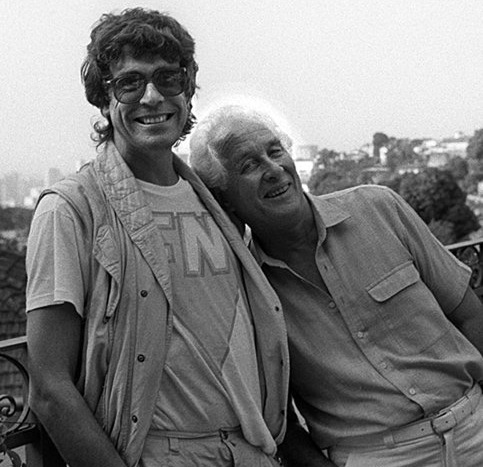
Derek Ridgers meets the fugitive Great Train Robber Ronnie Biggs in Rio, about 1985: “I played pool with Ronnie a few times and he was a lot better at it than I was. I suppose he had plenty of time to practise.” (Picture courtesy of Derek)

❚ WITH 35 YEARS OF EXPERIENCE, Derek Ridgers is one of the UK’s leading documentary photographers, notably of youth culture, its rock stars and its street tribes. “Derek Ridgers’ compulsion to photograph London clubs over two decades was an extraordinary one,” curator Val Williams wrote in his 2004 book, When We Were Young: Club and Street Portraits 1978–1987. Here were “transient beings moving across an urban landscape, flamboyant souls who cared more than anything about how they looked and whose greatest fear was of being ordinary. But it was the ordinariness that Derek Ridgers glimpsed in these costumed characters that makes his photographs so powerful.

Witchity club, London, 1979

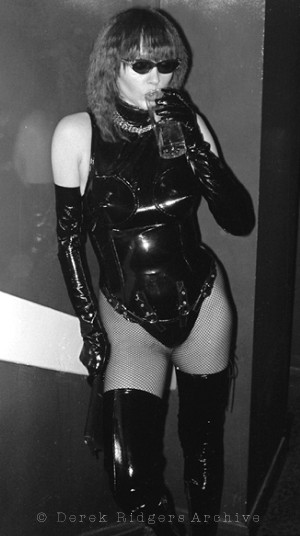
An era of conspicuous sexuality: clubber at Witchity, a David Claridge dive in 1979, photographed by Derek Ridgers

“Ridgers’ photographs are an undeliberate chapter in a decade of English social and cultural history which changed the way we thought about music, fashion and consumption. It was the decade of the handmade and the customised, of Oxfam shopping, conspicuous sexuality, of excess, wide success and dismal failure.” Well, that’s a point of view.

His earliest exhibitions in the 70s and 80s featured punk portraits and skinheads, and many seminal images of London’s clubland New Romantics. He has mainly worked for UK magazines and newspapers such as NME, The Face, The Independent, The Sunday Telegraph, Time Out and Loaded. He now runs the Derek Ridgers Archive where limited edition prints are for sale, and he blogs occasionally though thoughtfully at Ponytail Pontifications. Derek has always been the “quiet observer”. He collaborated only once with Shapersofthe80s and his fine shots can be seen on our inside page about the 1983 Face cover story, The making of UK club culture. He also brilliantly articulated what remains today the definitive description of Billy’s, the font of all 80s clubbing. You’ll read it in the feature.

Oomska, a new UK-based online arts and pop culture magazine, today asked Derek to share his views about photography. Here are some highlights:

Other than a camera, my favourite piece of equipment, if one could characterise it as such, is the sun.

❏ The digital age has probably added several years to my life expectancy — when I think about all the wasted time and expense of having clip tests made prior to getting the bulk of my colour film processed, I think I must have been mad.

❏ I love Garry Winogrand but some of his photographs (for instance the ones taken in the Ivar Theatre) suggest that he wasn’t necessarily always thinking about the art.

❏ It’s becoming harder and harder these days to earn a living as a professional photographer … I don’t particularly care.

❏ The most popular camera used on Flickr is now the iPhone 4. The rise of the hybrid consumer appliance will probably continue.

❏ For me it’s whatever works… Photoshop has brought all those darkroom techniques that took years to learn within the reach of everyone.

❏ A static image can still have more power than a moving one because you can live with it and study it and let its whole being seep into you and fix itself into your brain.

➢ Read the full Ridgers interview at Oomska

Derek Ridgers, photographer,Beat Route, clubbing

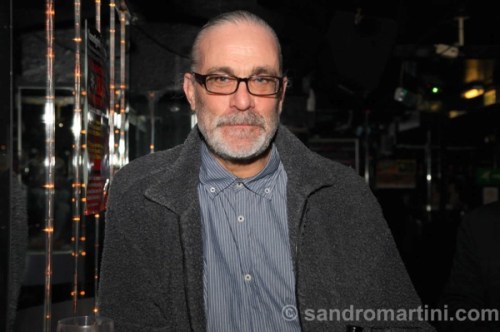
The snapper snapped: Derek Ridgers at last December’s party at the Beat Route reincarnation to launch somebody else’s photobook We Can Be Heroes. Snapped by Sandro Martini

FRONT PAGE

➤ Record numbers visit Shapersofthe80s for the best Blitz Kid photos and eye-witness memories

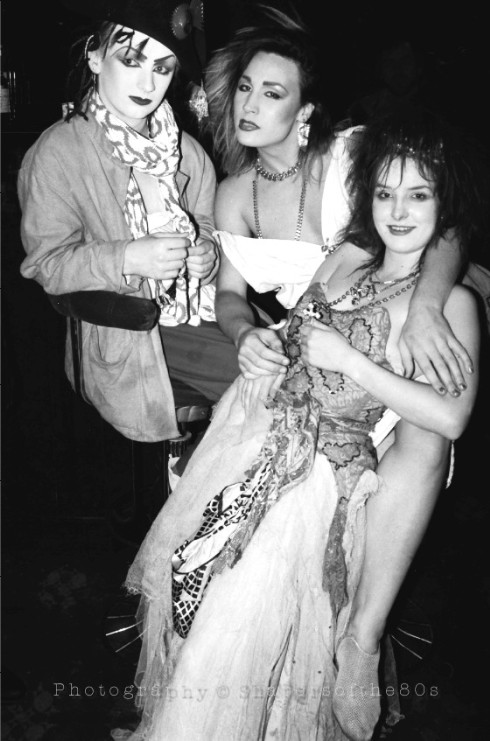
Planets club in Piccadilly, 1981: George O’Dowd before he became Boy, his sidekick and future singer Marilyn, and fashion goddess Kim Bowen. Photographed by Shapersofthe80s

❚ 2011 WAS A BUMPER YEAR for Shapersofthe80s. Visits to this website have doubled year on year, to a total of 174,658 page views during 2011. Also during the past six months, views increased by 40% over the previous six months — driven substantially by our exclusive pictures of Steve Norman’s wedding, and by exploring the heritage which informs We Can Be Heroes, Graham Smith’s definitive new photobook about 80s clubbing.

Of all topic areas, inevitably Blitz Kids and New Romantics have attracted most visits — about 16,000 views in total. Nightclubbing in the 80s came third with 11,000. Discover why, inside at Why them? Why then?

Most popular popstars viewed here in 2011 …

Martin Kemp, Steve Norman, NYC,Axiom,fashion

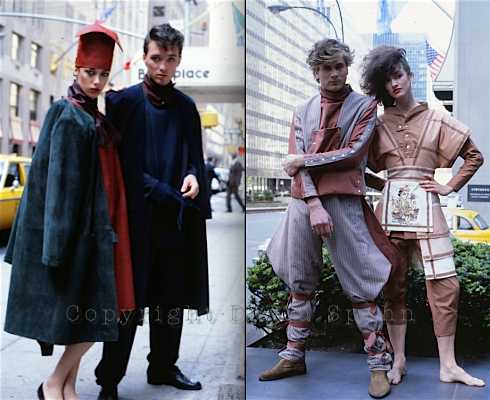
Lexington Avenue 1981: A fashion shoot features Martin Kemp wearing Demob and Steve Norman wearing Pallium, along with local girls. Photographed © by David Spahn

1 — Spandau Ballet — Total page views include Tony Hadley’s international tour with John Keeble, Steve Norman’s wedding, Martin Kemp’s cinematic triumphs and Gary Kemp as cultural pundit, as each of the band members has been pursuing his own interests since their farewell performance in July 2010.

2 — Boy George whose rise and fall seems Greek in its tragedic possibilities.

3 — Duran Duran who have patiently rebuilt their credibility over the past year. (Of their total page views here, almost half came in one day, yesterday*)

4 — Paradise Point — Britain’s brightest new pop musicians who mysteriously vanished from the stage almost as soon as they had published one of the most seductive videos of the year [see below].

5 — Sade whose long-awaited world tour slaked her fans’ thirst and gave her a No 1 album on both sides of the Atlantic.

6 — George Michael — another 80s survivor whose vulnerability almost renders him indestructible.

+++
Steady attractions at Shapersofthe80s are the post about John Rutter’s royal wedding anthem, and historically important interviews with the painter David Hockney (1983) and with Beatle John Lennon (1966).

++++++++++++

* It is an astonishing statistical exception that yesterday proved our busiest day of the year thanks entirely to Duran Duran sharing on Facebook the link to our choice of the 10 most creative tribute videos celebrating their comeback. So, despite our having followed Duran’s world tour since their newest album was launched in 2010, almost as many fans visited in a single day as during the entire year to date.
❏ iPAD, TABLET & MOBILE USERS PLEASE NOTE — You may see only a tiny selection of items from this wide-ranging website about the 1980s, not chosen by the author. To access fuller background features and site index either click on “Standard view” or visit Shapersofthe80s.com on a desktop computer. ➢ Click here to visit a different random item every time you click

FRONT PAGE