➤ In the face of Cowell X-culture, Polhemus discovers the style supermarket afresh

Street Style, Ted Polhemus, the Book Club, PYMCA,Viva Las Vegas Festival

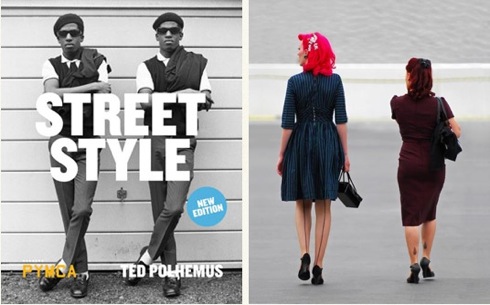
Street cred: Janette Beckman’s cover shot of the rude-boy twins, Chuka & Dubem Okonkwo, shot for The Face in London 1980. Right, two 50s fans at the Viva Las Vegas Festival, USA 2006. Photograph © Tim Scott/PYMCA

❚ IN ITS FIFTH ANNIVERSARY ISSUE, i-D MAGAZINE asked its photo-gallery of People of the 80s to sum up that year, 1985. Shapersofthe80s replied: “It is the year the style supermarket repackaged the previous four as an over-the-counter culture.” What was being signalled was the end of the Swinging 80s, the symbolic sub-cultural “decade” which had seen Soho become the crucible for new sounds and new styles as they broke free from the stadium-rock and post-punk past. 1985 saw a torrent of colour and attitude and tunes drive the mainstream of British youth culture that then came to characterise the “Thatcher decade”, at best personified by Stock Aitken Waterman, and at worst traduced by nightclub impresario Peter Stringfellow.

Ted Polhemus, Street Style, PYMCA

Polhemus as 70s hippie — wardrobe master for Starsky and Hutch, or his idea of irony?

Tonight in Shoreditch, the new London pool of cool, an eponymous exhibition opens to launch an updated edition of Street Style, the 1994 picture book by Ted Polhemus that celebrated the style-tribes which postwar Britain’s class-ridden society excelled at evolving, from mods and rockers, to goths and casuals, to ravers and what he called riot grrrls (which inevitably invoked the dread term bricolage, so much more cultural studies than saying DIY). Publication coincided then with a groovy exhibition around the V&A costume court.

Images and graphics from the new Street Style inevitably feature many of our original Shapers of the 80s, if current Facebook twitterings are any indication. These are being exhibited (Sep 30-Oct 31)  in the former Victorian warehouse in EC2 refurbished as The Book Club. Polhemus’s new publisher is PYMCA, the Photographic Youth Music Culture Archive which was established in 1997 by Jon Swinstead, brains behind Jockey Slut and Sleazenation. His aim was “to create a collection of images that capture the real essence of life as a young person”. PYMCA was launched this spring as a research resource, having teamed up with leading cultural commentators to offer detailed analyses of youth subcultures, music and movements around the world. Swinstead maintains: “PYMCA is both edgy and documentary and the newest material will visually reflect the hottest stuff happening among the youth of today.”

Next month Polhemus, the self-styled “anthropologist, author and photographer extraordinaire”, leads a discussion at The Book Club titled “Supermarket of Style in the 21st century” (Oct 27, tickets £8). This is the theme that introduces his new book and which he calls “his latest theory”. Well, better late than never! The supermarket has certainly entertained us for 25 years but a general consensus agrees that Britain’s youthful creative juices finally ran dry in the noughties as Cowell X-culture came to dominate our televised lives. Presumably Ted has fresh observations to offer…

Rockabilly, Paul Sturridge, Ted Polhemus,Dale Cammack, Susan Cammack

The no-socks “hard times” style promulgated by the itinerant Dirtbox club-nights: The ever-photogenic Paul Sturridge caught in 1984 with Dale and Susan Cammack, plus his Volvo Amazon outside the Chelsea Potter. From the Street Style exhibition at the V&A, photographed © by Ted Polhemus

AT THE EVENT, STURRIDGE CATCHES THE MOMENT . . .
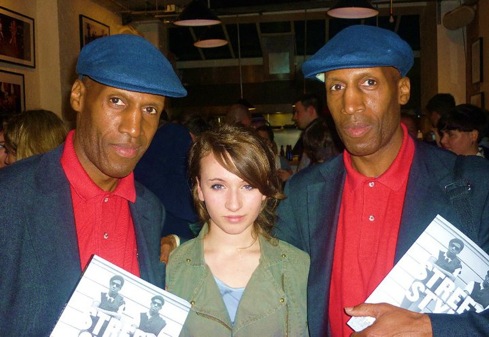
Chuka Okonkwo, Dubem Okonkwo , Theola Sturridge, Street Style

At the book launch: cover stars the Okonkwo twins with Theola Sturridge. Photograph © by Paul Sturridge
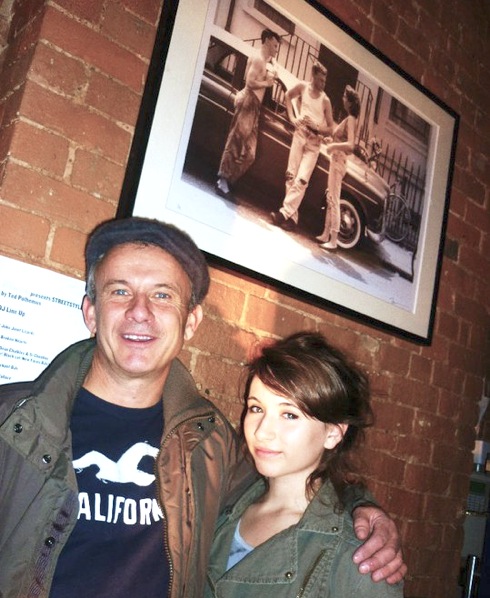
Theola Sturridge, Paul Sturridge, Street Style

A lifetime later: Paul Sturridge with daughter Theola beneath the photo of him in his “hard times” guise. Photograph © by Paul Sturridge
FRONT PAGE

➤ Six things some people might not know about Bowie

David Bowie, Mick Ronson, Ziggy

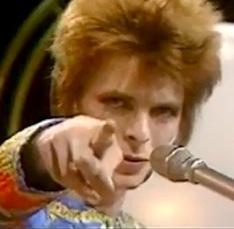
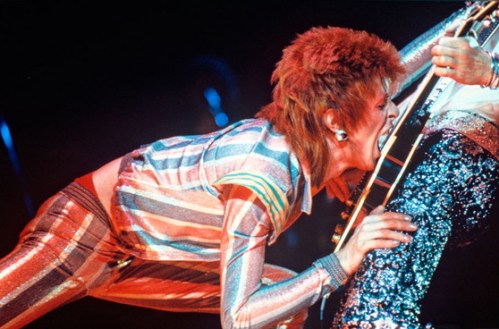
Ziggy shocker: Bowie goes down on Mick Ronson’s guitar in 1972

NME, 29 Sep 2010 WHAT MORE IS THERE TO SAY ABOUT BOWIE? To coincide with this week’s release of the mega-superduper collectable special edition 3-CD box set of Station to Station, an NME photo gallery of the godlike one reveals 50 things it thinks we don’t know about Bowie and here are five of them…

❏ A teenage Bowie was interviewed on a BBC programme as the founder of The Society for the Prevention of Cruelty to Long-haired Men. He complained: “It’s not nice when people call you darling and that.”

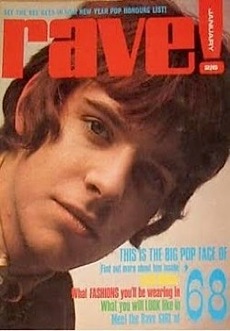
Peter Frampton, Herd, Face of 68,

Bowie’s best friend: Herd guitarist Peter Frampton, hailed by Rave as the Face of ’68

❏ Peter Frampton, of Baby I Love Your Way, was Bowie’s friend at school — his dad was head of the art department.

❏ Space Oddity gave Bowie his big break. This now-famous track was used by the BBC in its coverage of the moon landing in 1969. Bowie was practically unknown back then – the song became his first UK hit.

❏ According to a recent [? Jan 24] piece in The Observer, David Bowie’s iPod contains Lorraine Ellison’s Stay With Me, Dinner At Eight by Rufus Wainwright, and Gathering Storm by Godspeed You! Black Emperor.

❏ Below we see David Bowie at London’s Rules Restaurant, 1973, after receiving a presentation of six discs from RCA Records. The occasion? He had six albums in the charts that year.

David Bowie, Rules Restaurant, 1973, RCA Records, presentation

Bowie in 1973: bumper chart success

❚ HERE’S ONE OF OUR OWN: The boy wonder was profiled in 1967 by Fabulous 208 which tells us that at the age of 20 Bowie had already written more than 60 songs. Wowie!

FRONT PAGE

➤ Egan on Bowie’s legacy: ‘It’s not rocket science and it is music’

Today The Thin White Duke walks tall again — the god, the brand, the signifier — the three-in-one trinity that is David Bowie fired up one of the great transformative albums of the 70s, Station to Station. His 10th in a studio, it is now re-released in special edition 3-CD box set.

Bowie as The Man Who Fell to Earth, a 1976 film by Nicolas Roeg, based on the Walter Tevis novel about a humanoid alien who crash-lands on Earth. © Rex

This month the German journalist Finn Johannsen interviewed the club deejay and co-founder of the Blitz Club, Rusty Egan for the Nokia blog, Sounds Like Me. He discusses Bowie’s seminal role in 70s and 80s music, describes a typical night out at the Blitz, and what today’s clubbers can take from such an innovative chapter of music-making. Here’s a taster…

Rusty Egan, Blitz club

Rusty Egan at the Blitz, 1980: rare pic of him spinning the discs

FJ — David Bowie was always famous for continuously reinventing his career, but did this phase particularly appeal to you?

RE — Bowie’s Berlin years I believe were the foundation of the Blitz club playlist. Via Bowie I found Kraftwerk, and that lead to Neu!, Can, Cluster and Krautrock, as it was called. Bryan Ferry then led to the work of Brian Eno, and his ambient series … All this music lead to the basis of my collection. If you join the dots Bowie, Eno, Iggy, Kraftwerk, Mick Ronson, Lou Reed.

FJ — It is obvious that Bowie was heavily influenced by German experimental groups like Kraftwerk or Neu! How much of them can be found in Low and Heroes?

RE — Massive influences. Bowie is a SONGWRITER. Without songs you have music. The Germans made amazing music without lyrics. It was experimental because of the instruments used and the long, long tracks. Bowie took the basis of this experimental music and the growing feelings evoked by Möbius, Cluster, Can, Neu! and went into Hansa studios by the Wall and with Brian Eno created the Berlin sound. Heroes sung in German as Helden is a perfect example. Six minutes long, but what were the instruments used? Can you hear guitar, bass and drums? Nothing but a long, long tone changing and changing… It’s not rocket science and it is music.

➢ Read the full Egan interview at Sounds Like Me

FRONT PAGE

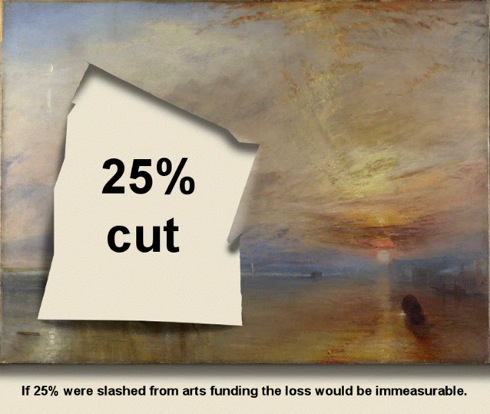
➤ Slashed! Wallinger’s knife demonstrates a 25% cut on a Turner masterpiece

Reckless ,Mark Wallinger, The Fighting Temeraire, Turner ,National Gallery, arts cuts, petition, protest

Reckless by Mark Wallinger. Thanks to Jed Butterfield and Bob Pain at Omni Colour http://www.omnicolour.com and Nicholas Penny at the National Gallery

❚ A NEW WORK BY TURNER PRIZE-WINNING ARTIST Mark Wallinger is released today as part of a campaign supported by more than 100 leading British artists against the government’s proposed funding cuts of the arts.

Mark Wallinger’s work shows a copy of the masterpiece, The Fighting Temeraire, 1839 by Joseph Mallord William Turner, in the collection of the National Gallery in London. A slash in the painting carries a notice “25% cut” and beneath it a caption reads: “If 25% were slashed from arts funding the loss would be immeasurable.”

Turner refused ever to sell The Fighting Temeraire — depicting the final journey of the 98-gun ship which played a distinguished role in Nelson’s victory at the Battle of Trafalgar in 1805 — until he finally donated it to the National Gallery. When the BBC asked the nation to nominate the greatest painting on show in UK museums and galleries, this came first with 25% of the votes.
Turner’s concern was to evoke a sense of loss as the great battleship was towed to the breaker’s yard.

The title of Mark Wallinger’s new work is Reckless. He explains: “I describe the cuts as a reckless adventure. In fact temeraire means reckless in French and by removing the obsolete ship from the scene I am rendering the painting wreckless.”

➢ Click for full petition details at 

savethearts-uk.blogspot.com

FRONT PAGE

➤ Anna declares McQueen a pioneer of dreams and drama

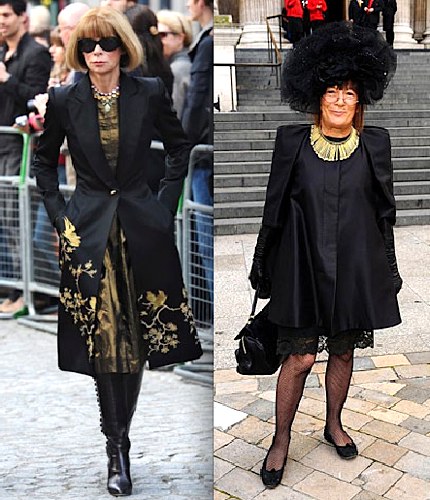
St Paul’s Cathedral, McQueen, ceremony, Anna Wintour,Hilary Alexander

A hint of gold from the doyennes attending St Paul’s Cathedral for the McQueen ceremony: Anna Wintour, Vogue editor, and Hilary Alexander, Daily Telegraph fashion director. Photographs © Glenn Copus/PA/Getty

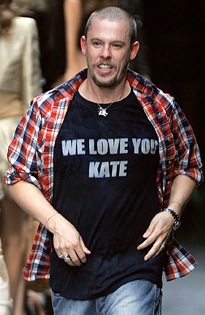
WITH LONDON FASHION WEEK IN FULL SWING, hundreds of leading fashionistas gathered in St Paul’s Cathedral today for a ceremony in memory of Alexander McQueen. A taxi driver’s son who grew up in London’s East End, he became Britain’s most confrontational, unfettered and theatrical designer. He died in February aged 40, having been appointed a CBE and named British Designer of the Year four times by the British Fashion Council.

St Paul’s Cathedral, Alexander McQueen, London Fashion Week, ceremony,  tributes,

Alexander McQueen: enfant terrible of the runway

The world’s most powerful arbiter of fashion, Vogue editor Anna Wintour, led today’s tributes. Models Kate Moss and Naomi Campbell, actress Sarah Jessica Parker, muse Daphne Guinness and designer Stella McCartney were among the congregation, which also included relatives and former colleagues of McQueen.

Anna Wintour is the English-born daughter of Charles — editor of the Evening Standard during the Swinging 60s when his London paper achieved international acclaim. After removing her sunglasses, something she rarely does in public, Anna paid a moving tribute to McQueen: “He was a complex and gifted young man who, as a child, liked nothing more than watching the birds from the roof of his east London tower block.

Bjork, Alexander McQueen, memorial,

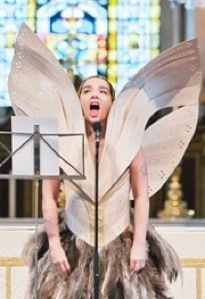
Bjork performing Gloomy Sunday

“He had an 18-year-long career of pioneering his dreams and dramas. He cared what people thought of his clothes but not of him. He never appeared at ease with himself and hated to travel away from his beloved London.”

Björk sang the haunting hymn Gloomy Sunday, which reflects on the horrors of modern culture, and there were also addresses from jeweller Shaun Leane, model Annabelle Neilson, McQueen’s nephew Gary Hulyer and milliner Philip Treacy. Composer and pianist Michael Nyman and the London Community Gospel Choir gave musical performances.

➢ Fuller Evening Standard report of the McQueen service, plus gallery

➢ Backstage with Hilary — Cheek and effervescence spice the Telegraph doyenne’s videos and reports of the autumn shows in New York, London and Milan

➢ “My father really decided for me that I should work in fashion” — Anna Wintour in The September Issue. Out this week on DVD, the most gripping movie ever about editorial decisionmaking, OK, on the world’s most powerful fashion magazine, but for that very reason, junking $50k’s worth of photography is a measure of that power. [“Knocks All the President’s Men into a cocked hat” — Shapersofthe80s]

FRONT PAGE